


Provincial Oak Buffet Deux Corps
A provincial oak buffet deux corps brings substantial French storage into a room, offering two distinct vertical sections built to last generations.
Provincial Oak Buffet Deux Corps
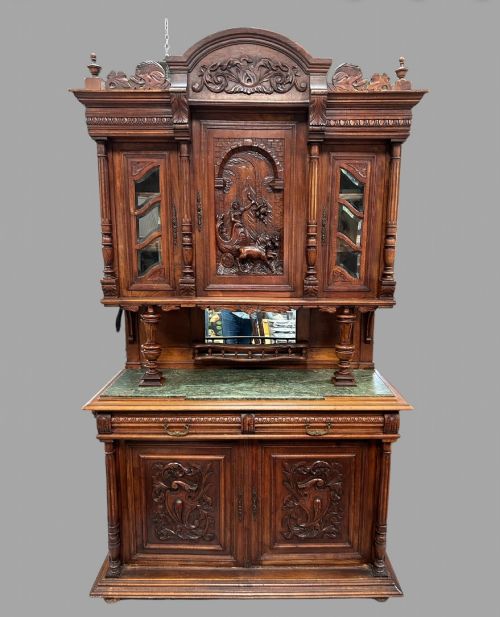
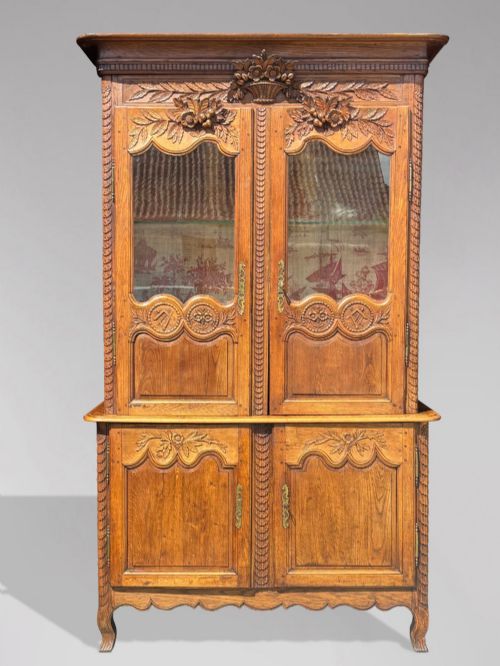
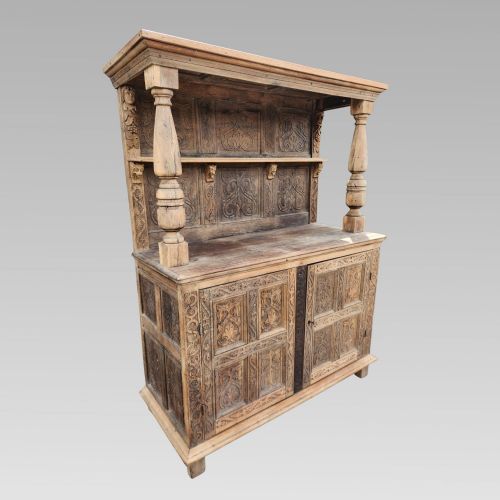
When you search for a provincial oak buffet deux corps, you are looking at large, two-tiered storage furniture originating from the regions of France. These impressive pieces combine a lower cupboard section with a matching upper cabinet, creating a commanding presence in a dining room or kitchen. The examples on this page span the eighteenth and nineteenth centuries, showing the enduring utility of traditional French cabinet-making.
You are most likely to meet nineteenth-century interpretations alongside genuine eighteenth-century pieces bearing Louis XV characteristics or regional Breton styling. The construction typically involves heavy timber framing, panelled doors, and carved decorative details that reflect local craft traditions. These items serve as functional cupboards, dressers, and sideboards designed to store household provisions and display tableware.
Materials and construction methods
The primary material across these listings is solid oak, complemented by occasional elements of walnut, burr walnut, glass, brass, and iron hardware. Cabinet-makers utilised traditional joinery techniques, including panelled construction and hand-carved ornamentation, to build sturdy double-bodied carcasses. Iron hinges and brass escutcheons secure the heavy doors while adding functional contrast to the warm timber.
Surface finishes rely on the natural grain of the wood, often developed through centuries of waxing and handling. Carved panels display regional motifs, ranging from simple geometric mouldings to elaborate figurative and floral reliefs associated with specific French districts.
The furniture styles represented across the inventory include French Provincial, Louis XV, French Renaissance Revival, French Chateau, and regional Breton.
Distinguishing quality in regional French furniture
Quality in a provincial oak buffet deux corps reveals itself in the depth and crispness of the hand-carving upon the panels and cornices. Superior examples display harmonious proportions between the upper and lower sections, where the scale of the mouldings balances the overall height.
The choice of timber selection also marks the distinction, with closely grained oak and well-figured panels indicating superior material sourcing. Furthermore, the integrity of the original construction, including the fit of the heavy doors and the survival of period brass or iron hardware, elevates the standing of a piece.
The Provincial Oak Buffet Deux Corps Glossary
- Buffet deux corps
- A traditional two-tiered French cupboard featuring a large lower cabinet surmounted by a slightly smaller upper section. This form provided substantial storage for dining rooms and kitchens.
- Louis XV
- A French design style spanning the eighteenth century, characterised by asymmetrical curves, naturalistic carvings, and scrollwork. Pieces from this period show lighter, more flowing lines than earlier heavy furniture.
- Breton
- A regional style originating from northwestern France, often featuring distinctive carved figures, spinning wheel motifs, and pegged construction. These elements reflect the maritime and rural traditions of the area.
- Panelled
- A method of construction where flat boards are fitted within a grooved wooden frame to accommodate the natural expansion and contraction of timber. This technique prevents warping in large furniture items.
- Cornice
- The decorative moulded projection that crowns the top of a tall cabinet or dresser. It frames the upper section and provides a finished architectural transition to the ceiling.
Provincial Oak Buffet Deux Corps: Frequently Asked Questions
What is a buffet deux corps?
A buffet deux corps is a traditional two-part French storage cabinet featuring a large lower cupboard base with a matching upper cabinet stacked above it. This vertical design maximises storage capacity while maintaining a structured architectural presence in a room.
These pieces were traditionally utilised in French homes for storing provisions, linens, and tableware. The split construction also allowed easier transport of such large furniture items.
How do I date an antique oak buffet?
Dating relies on examining the joinery methods, tool marks, hardware, and stylistic details such as carvings and mouldings. Eighteenth-century examples often feature pegged tenons and hand-cut panels, while nineteenth-century pieces may show machine-sawn elements.
Comparing regional styles like Louis XV or Breton provides further context, as specific decorative motifs gained popularity during distinct historical periods.
Where should I place a large French dresser?
A large French dresser requires a substantial wall with adequate clearance for its height and depth. Dining rooms and spacious kitchens serve as traditional locations, providing both a functional focal point and practical storage.
Ensure the room has stable humidity levels to protect the solid oak timber from excessive drying or moisture absorption over time.
How do I maintain an antique oak cabinet?
Maintenance involves applying a natural beeswax polish periodically to nourish the dry oak timber and preserve the surface sheen. Avoid placing the furniture in direct sunlight or near direct heat sources to prevent the wood from splitting.
Dust the carved panels gently with a soft cloth to keep the intricate details clear of accumulation without disturbing the patina.