





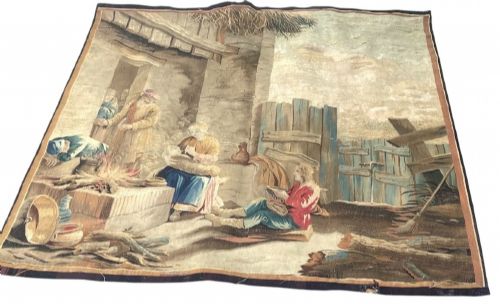
17th Century Tapestry Panel
A 17th century tapestry panel brings tactile depth and centuries of hand-woven narrative to an interior space.
17th Century Tapestry Panel
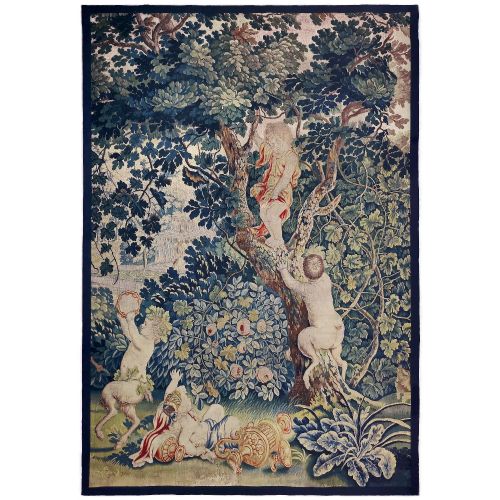
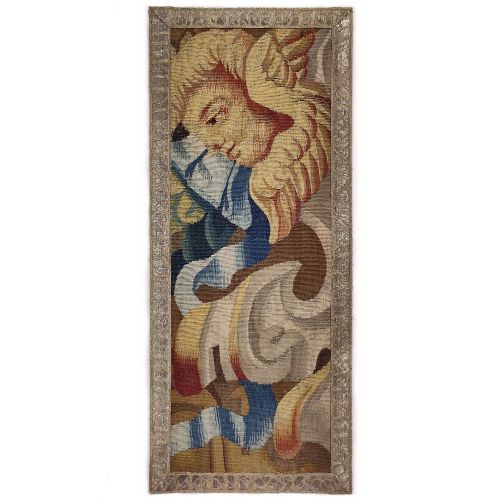
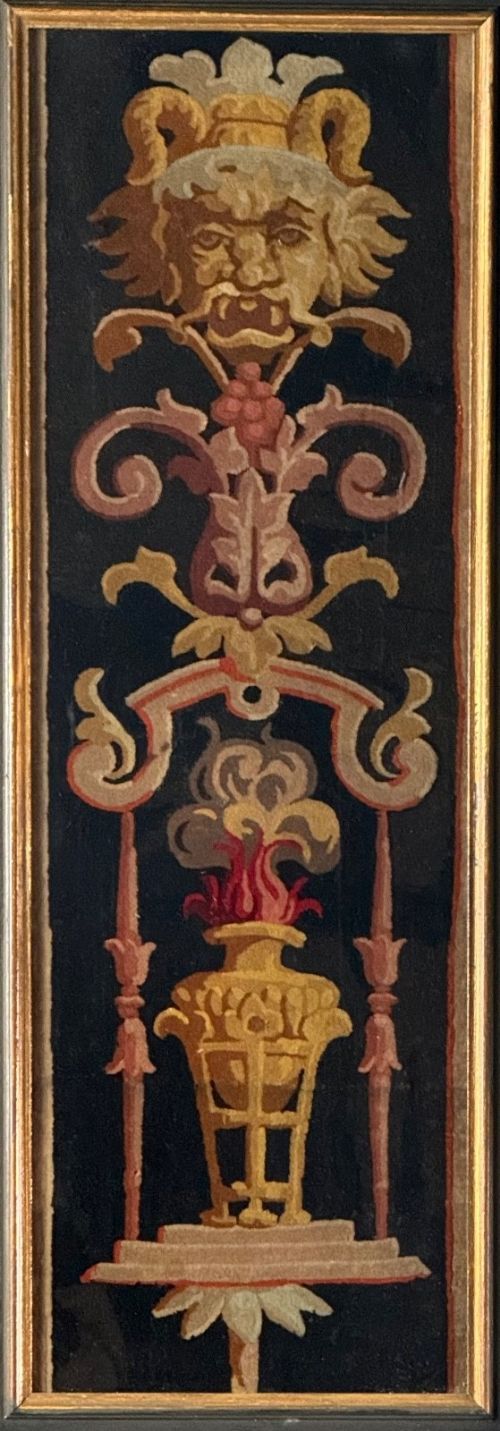
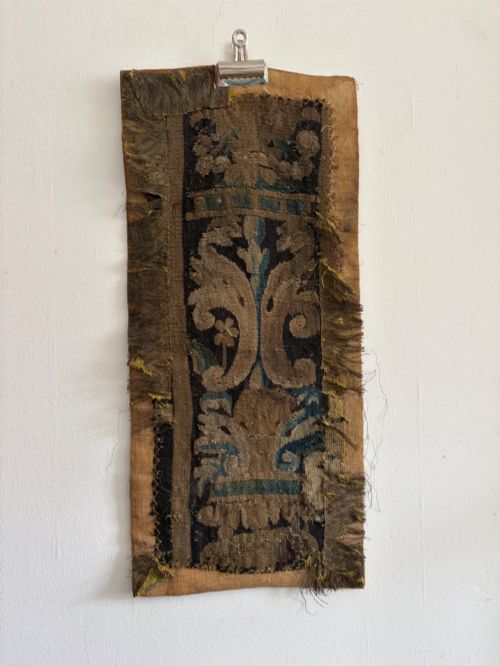
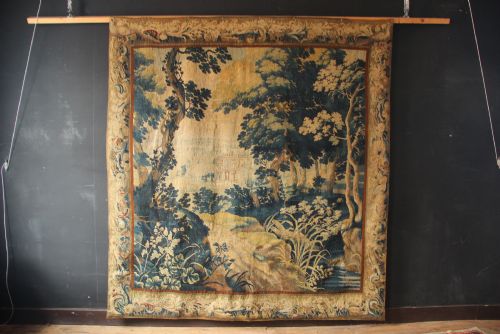
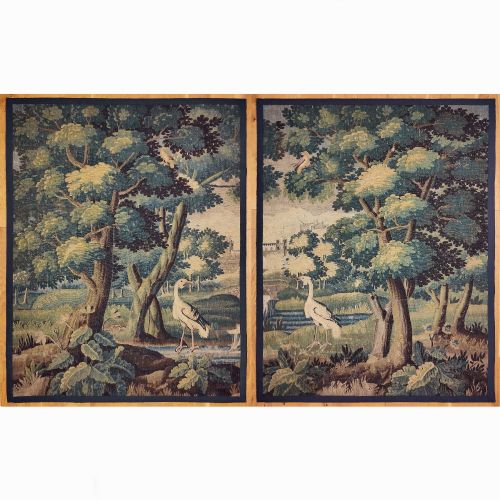
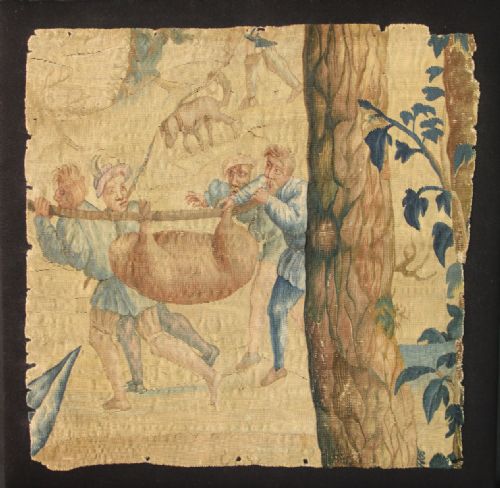
A 17th century tapestry panel represents a fragment or complete section of textile art originating mainly from Flemish, French, and English workshops during the Baroque period. These pieces frequently depict verdure landscapes, classical grotesques, or figural scenes woven for wealthy patrons to insulate stone walls and adorn grand chambers.
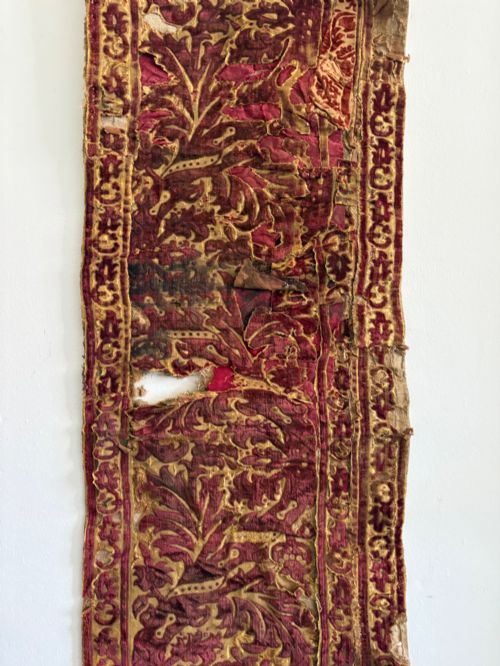
Buyers browsing this selection will encounter a diverse array of formats, ranging from long verdure borders and cushion covers to framed needlework pictures and beadwork fragments. Flemish and French examples dominate the offerings, often showing the lush foliage and woodland motifs characteristic of the era.
Beyond wall hangings, the inventory includes smaller textile items such as embroidered panels and stumpwork depicting historical figures like King Charles II. Each piece demonstrates the enduring versatility of seventeenth-century textiles repurposed over generations for domestic display.
Materials and construction
The primary materials recorded in these textiles are wool and silk, supplemented by linen backings and occasional wooden frames or glass beads for decorative needlework. Weavers utilised these fibrous mediums to build complex pictorial depths, employing silk for highlights and wool for heavier structural tones.
Workmanship spans traditional warp-and-weft weaving on looms to intricate hand embroidery and needlework techniques such as stumpwork. Many surviving panels incorporate wood and gilt wood framing or are mounted securely to linen to preserve fragile historic fragments.
17th Century Tapestry Panel Retail Price Guide 2026
Typical asking prices for 17th century tapestry panel among the pieces listed under this phrase on Sellingantiques today, from the lower quarter to the upper quarter. They describe what is for sale here now, not the wider market.
Listings feature materials such as wool, silk, linen, walnut, glass beads, and gilt wood across various seventeenth-century and eighteenth-century objects.
Quality variations in historic textiles
The distinction between standard and exceptional pieces rests upon the fineness of the weave, the complexity of the narrative design, and the survival rate of the original silk and wool yarns. Verdure panels with rich botanical detail and balanced proportions sit at a higher tier than heavily restored or simpler fragments.
Materials also dictate the grade of a textile, with pieces retaining vibrant natural dye colours and intricate silk detailing commanding greater visual presence. The integrity of the mounting, whether framed with glass beads or simply supported on linen, influences the overall presentation of the historic artwork.
The 17th Century Tapestry Panel Glossary
- Verdure
- A tapestry style featuring lush landscape foliage, trees, and foliage-filled backgrounds as the primary subject matter. These scenes often incorporate stylized plants and small animals.
- Stumpwork
- A raised embroidery technique popular in the seventeenth century that used padded stitches to create a three-dimensional effect. Figures and motifs literally stand proud of the linen ground.
- Grotesque
- A decorative style of painting and weaving consisting of elaborate, fanciful combinations of human, animal, and floral motifs. Originating in classical antiquity, it experienced a strong revival during the Baroque period.
- Warp
- The vertical threads held in tension on a loom before the horizontal weft is woven through them. In historic tapestries, these foundational threads are typically composed of sturdy wool or linen.
- Weft
- The horizontal threads passed back and forth through the warp to create the visible pattern and picture of the textile. Skilled weavers packed these dyed wool and silk threads tightly to obscure the underlying warp.
17th Century Tapestry Panel: Frequently Asked Questions
How were these panels originally displayed?
Seventeenth-century tapestries were primarily hung on stone or wood-panelled walls inside large aristocratic homes to provide both decorative splendour and insulation against the cold.
Over subsequent centuries, many large hangings were cut down into smaller panels, borders, or cushion covers to suit changing domestic fashions and smaller domestic interiors.
Can these textile panels be hung on walls today?
Yes, many collectors mount these historic fragments onto linen or display them behind glass within dedicated frames to protect the delicate fibres from dust and tension.
Careful positioning away from direct sunlight ensures the natural wool and silk dyes retain their remaining depth and character.
What is a verdure tapestry?
A verdure tapestry depicts a stylised woodland scene dominated by trees, leaves, plants, and occasionally small birds or animals rather than human historical narratives.
These landscape designs were immensely popular across Flemish and French workshops throughout the seventeenth century for creating tranquil interior atmospheres.
How do you distinguish Flemish work from English needlework?
Flemish pieces are typically woven on looms using wool and silk yarns to create large-scale pictorial or verdure compositions with rich tonal gradations.
English examples from the same era more frequently take the form of needlework pictures, stumpwork embroidery, or cushion covers worked by hand with wool and silk thread on a linen ground.