

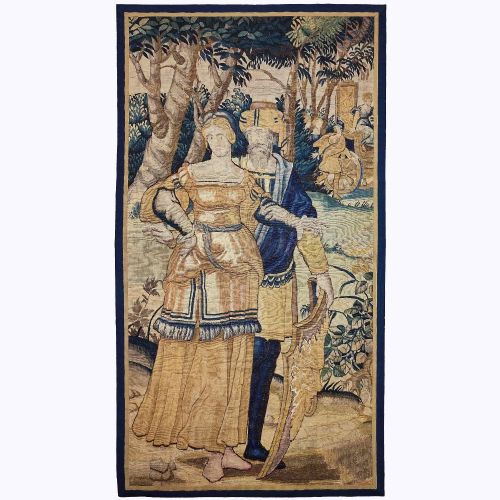


Figural Tapestry Panel
A figural antique tapestry panel brings centuries of woven narrative into a room, offering tactile historical depth and classical imagery.
Figural Tapestry Panel
A figural antique tapestry panel comprises woven, embroidered, or needlepoint textile art featuring human figures, spanning centuries from the sixteenth through the nineteenth century. These textile works appear in forms ranging from standalone wall art and wall hangings to framed textiles, cushion covers, and inset panels within carved oak firescreens.
The aesthetic expressions stretch across Flemish Renaissance, Baroque, Rococo Revival, and Victorian styles, originating from ateliers in Italy, France, Germany, and Flanders. Buyers frequently encounter smaller framed pieces, cushion covers, and nineteenth-century needlework interpretations alongside earlier fragments.
How they were made
The primary materials recorded in these panels are wool and silk, often worked upon a canvas or textile foundation by hand. Artisans utilised techniques of needlepoint, gros-point embroidery, and traditional weaving to build complex figural compositions.
Many surviving panels find subsequent housing within wooden frames of timber and oak, or serve as upholstery for cushion covers and functional items like firescreens, sometimes preserved beneath glass.
Figural Tapestry Panel Retail Price Guide 2026
Typical asking prices for figural tapestry panel among the pieces listed under this phrase on Sellingantiques today, from the lower quarter to the upper quarter. They describe what is for sale here now, not the wider market.
Little Red Riding Hood occasionally rubs shoulders with Tuscan noblemen and courtly maidens across the centuries.
What varies in quality
Quality rests upon the fineness of the needlework and the complexity of the figural depiction, distinguishing simple domestic embroidery from sophisticated workshop output. The handling of expression and proportion in subjects like noblemen, courtly maidens, or narrative scenes dictates the artistic success of the piece.
The integrity of the surviving wool and silk yarns, alongside the originality of the mounting within period timber frames or cushion structures, separates masterworks from heavily restored examples.
The Figural Tapestry Panel Glossary
- Gros-point
- A type of needlepoint embroidery worked on a coarse canvas using wool yarn. This stitch creates a durable, textured surface suited for furnishings and cushion covers.
- Needlework
- Hand-sewn decorative stitching applied to a foundation fabric. It encompasses various embroidery techniques seen across eighteenth and nineteenth-century panels.
- Flemish Renaissance
- An artistic style originating in Flanders during the sixteenth century. It is noted for rich, detailed narrative compositions executed in woven textiles.
- Firescreen
- A standing wooden piece of furniture designed to shield a room's occupants from the heat of an open hearth. Many incorporate decorative tapestry panels within carved timber frames.
Figural Tapestry Panel: Frequently Asked Questions
How do I hang a tapestry panel?
Most textile panels are best displayed when professionally framed behind glass to protect the delicate wool and silk fibres from atmospheric dust and handling.
Alternatively, larger unframed wall hangings require specialist sleeve or batten supports to distribute the weight evenly across the fabric without causing distortion.
How are seventeenth and nineteenth-century panels told apart?
Sixteenth and seventeenth-century pieces typically exhibit denser Flemish or Italian weaving techniques with complex mythological or historical narratives. Nineteenth-century revivals often utilise gros-point embroidery on canvas, featuring clearer Victorian or Rococo stylistic influences and brighter synthetic dye traces.
Examining the reverse of the panel, the spin of the yarn, and the foundational canvas provides clear indicators of period manufacturing methods.
Can I use antique tapestry cushion covers?
Seventeenth-century cushion covers were constructed for daily aristocratic use, but surviving examples require gentle treatment today. Placing them in low-traffic areas preserves the fragile wool and silk threads from abrasive wear.
They function best as decorative elements on stationary seating rather than items for daily lounging.