







17th Century Wool Needlework
These pieces of 17th century wool needlework bring tangible Baroque and Jacobean texture into a room through surviving textile art and soft furnishings.
17th Century Wool Needlework
When you search for 17th century wool needlework, you encounter historical textile art, wall art, and soft furnishings created during the Baroque and Jacobean periods. These items range from framed needlework pictures to decorative panels and domestic cushions.
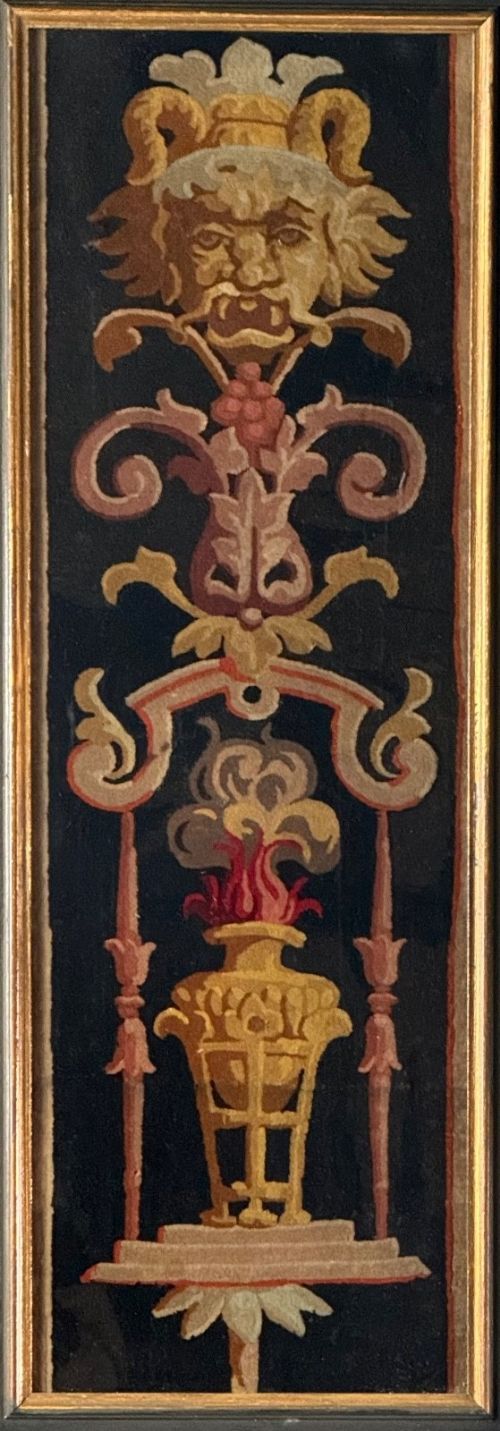
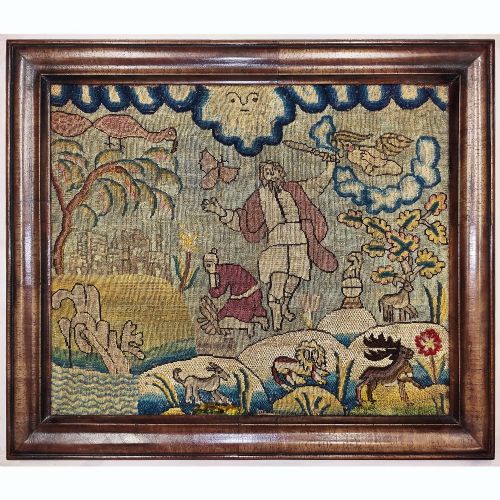
The most common formats on this page include tapestry cushion covers and North German tapestry cushions alongside English needlework pictures. Continental classical embroidered panels featuring masks and grotesques also appear within the selection.
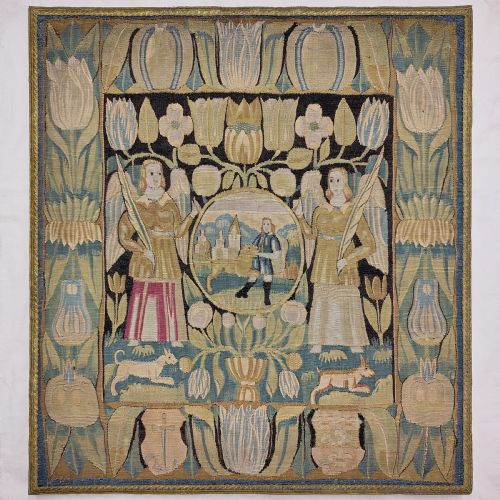
Most items belong firmly to the 17th century, though the broader span includes late 16th century North German tapestry work and occasional 18th century examples. The predominant styles reflect Stuart, Jacobean, and Baroque aesthetic traditions.
How these textiles were made
Maker execution relies primarily on wool and silk threads worked across linen foundations to build dense pictorial surfaces and decorative motifs. Artisans combined these soft materials with wooden supports and glass elements for framing or display.
Needlework techniques required careful hand stitching to render complex Renaissance and Baroque imagery, including classical masks and grotesque patterns. Cushion covers and framed panels demonstrate the sustained physical labour involved in period textile production.
17th Century Wool Needlework Retail Price Guide 2026
Typical asking prices for 17th century wool needlework among the pieces listed under this phrase on Sellingantiques today, from the lower quarter to the upper quarter. They describe what is for sale here now, not the wider market.
Object forms include wall art, tapestry cushion covers, framed textiles, and needlework pictures executed in Baroque and Jacobean styles.
What separates the fine examples
Quality rests upon the preservation of the original wool and silk threads within the textile art. Finer panels retain their pictorial clarity in depictions of classical figures and grotesque details.
Structural integrity across the linen ground and any associated wooden or glass elements dictates the success of a piece. Items that maintain strong chromatic depth and firm weave structure stand apart.
The 17th Century Wool Needlework Glossary
- Baroque
- A grand artistic style of the 17th century characterised by ornate detail and dynamic composition. It influences many embroidered panels and tapestry cushions.
- Jacobean
- The early 17th century design period spanning the reign of James I, often associated with rich floral and figurative needlework.
- Needlework picture
- A framed textile composition worked by hand in thread, functioning as wall art. These pieces preserve historical stitching techniques under glass.
- Tapestry cushion cover
- A functional soft furnishing textile designed to enclose a cushion pad. These covers showcase historic weaving and needlework traditions.
- Grotesque
- A style of decorative ornamentation featuring intertwined human and animal forms with foliage. This motif appears on continental classical embroidered panels.
17th Century Wool Needlework: Frequently Asked Questions
What is 17th century wool needlework?
These items are historic textiles created during the 17th century, utilising wool and silk threads on linen grounds. They include framed pictures, embroidered panels, and tapestry cushion covers.
They reflect the artistic styles of the period, such as Baroque and Jacobean designs, incorporating motifs like classical masks and grotesques.
How were these textile pieces used?
Textiles served both decorative and practical functions in historic interiors. Framed pictures and embroidered panels decorated walls as fine art.
Tapestry cushion covers provided soft furnishings for seating, combining domestic utility with elaborate handwork.
How do I live with antique needlework?
Protect antique wool and silk textiles from direct sunlight to prevent fading of the natural fibres. Position framed needlework pictures away from damp walls and excessive moisture.
Keep soft furnishings like tapestry cushions in areas of light use to preserve the fragile historical weave.
How do I tell periods apart?
Examine the stylistic cues and working methods visible in the textile art. Pieces from the late 16th or early 17th century often display distinct North German tapestry characteristics.
Stuart and Jacobean examples show specific approaches to figures and borders compared to later 18th century work.