

Framed Needlepoint Textile
These framed antique needlepoint textile pieces offer a glimpse into centuries of domestic needlework, bringing historic wool, silk, and canvas studies directly to your walls.
Framed Needlepoint Textile
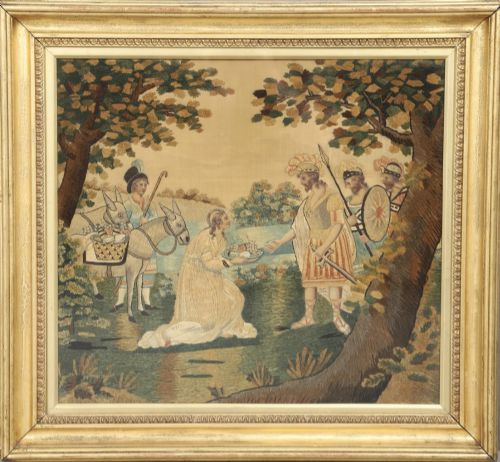
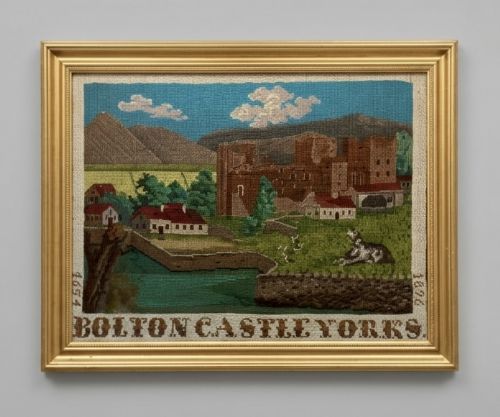
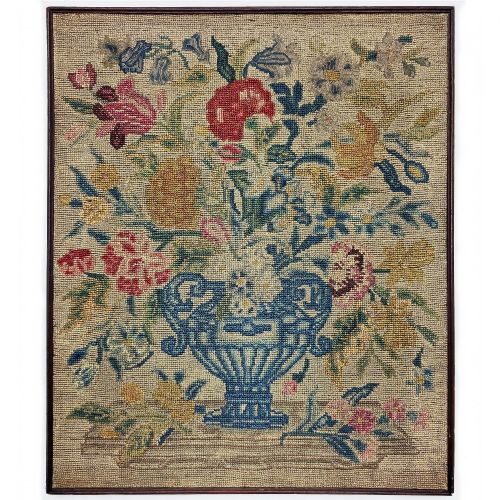
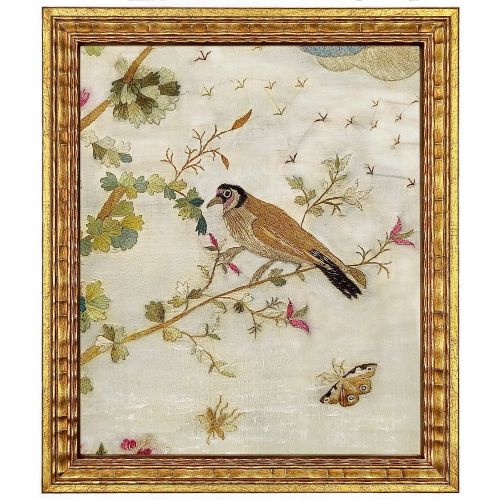
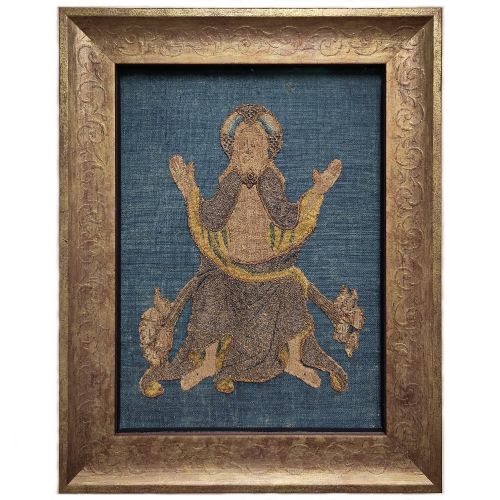
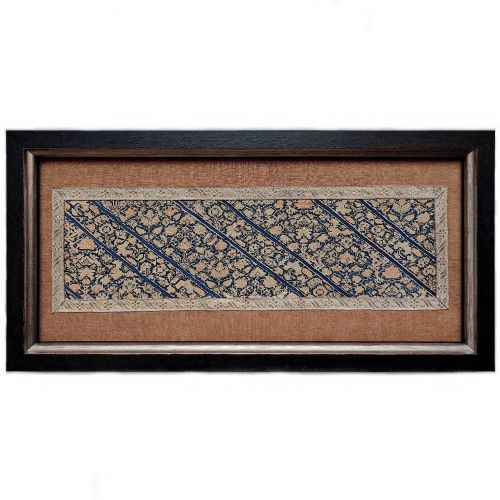
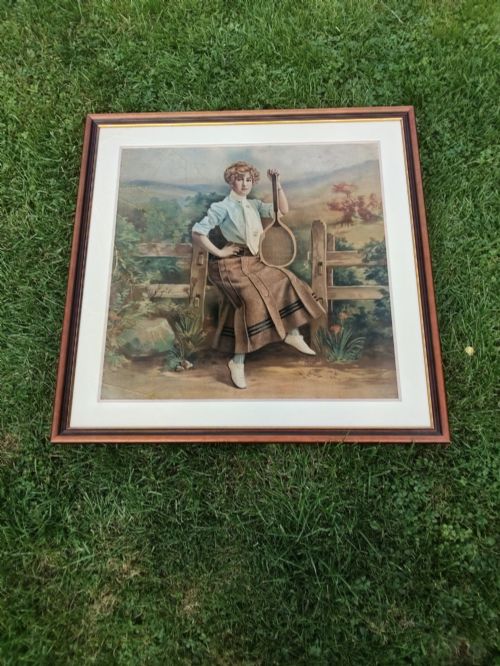
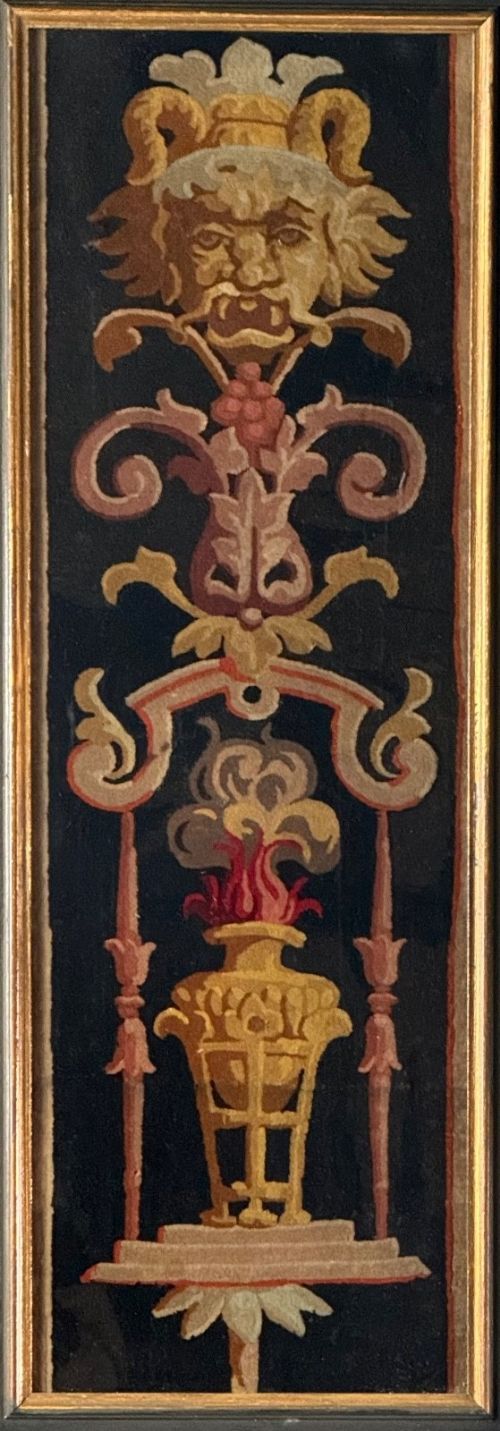
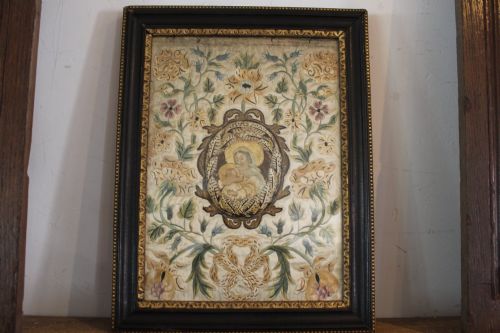
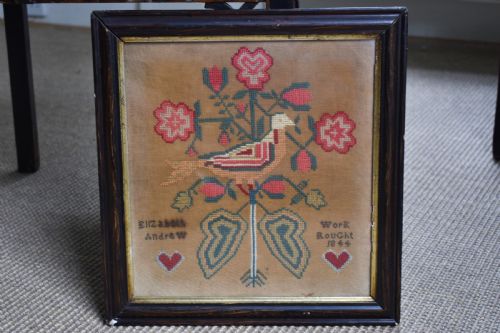
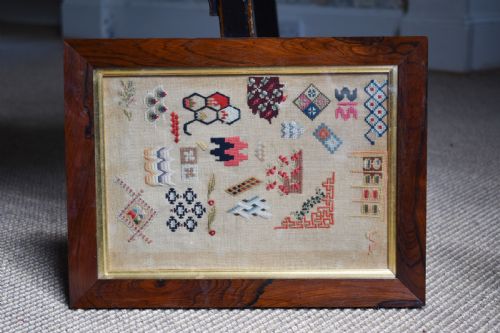
A framed antique needlepoint textile represents historical hand-stitched artistry, ranging from educational samplers and pastoral farming pictures to detailed animal portraits and classical panels. When searching this phrase, buyers encounter works executed across the seventeenth, eighteenth, nineteenth, and early twentieth centuries.
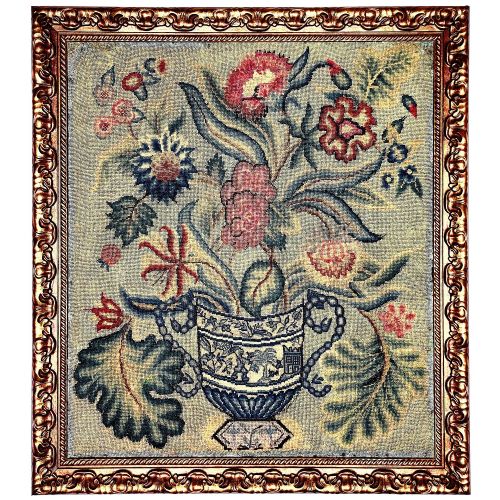
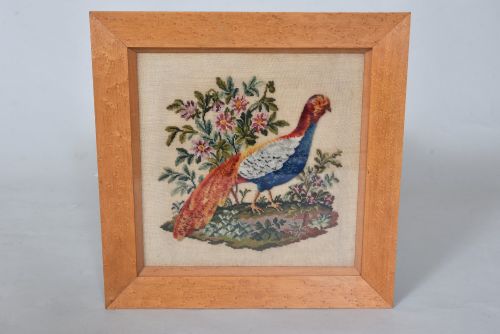
The most common examples on this page date from the Victorian and Georgian eras, taking the form of wool work samplers, floral studies, and framed silk embroideries. These historical textiles preserve domestic skill, often recording the names and ages of young makers alongside maps, birds, and domestic scenes.
How They Were Made
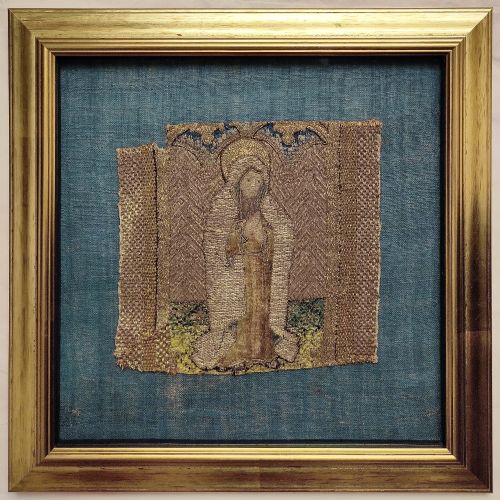
These works rely on foundation grounds of linen, canvas, or wool backing materials stitched using wool, silk thread, silk floss, and metal threads. Techniques span traditional cross-stitch samplers, plushwork, gros-point, and beadwork fragments executed by hand.
Framing forms an integral part of these survivals, with panels housed behind glass in original burr maple, gilt wood, faux tortoiseshell, and verre églomisé frames that protect the fragile embroidery within.
Framed Needlepoint Textile Retail Price Guide 2026
Typical asking prices for framed needlepoint textile among the pieces listed under this phrase on Sellingantiques today, from the lower quarter to the upper quarter. They describe what is for sale here now, not the wider market.
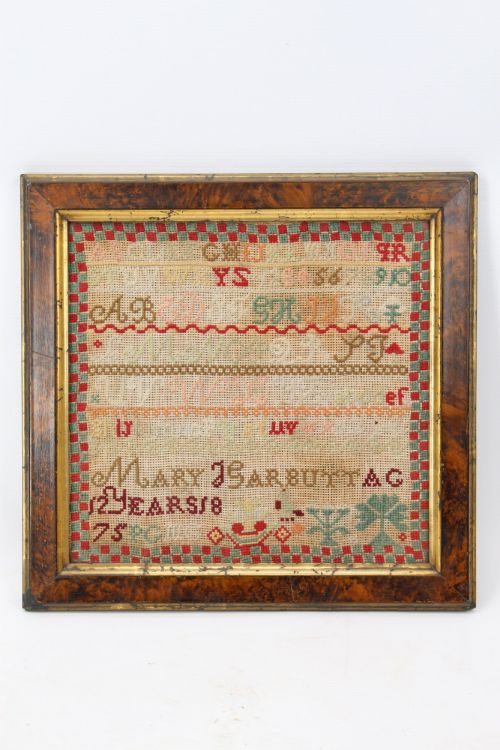
Stitched entirely by hand, a 19th-century needlework preserves the exact age of maker Mary J Garbutt, recorded precisely as twelve years old.
What Varies in Quality
Quality rests in the precision of the needlework, the complexity of the subject matter - such as figurative pastoral scenes or detailed maps versus basic alphabets - and the survival of the original frame type.
The choice of materials also elevates a piece, with fine silk threads, metal thread embellishments, and hand-painted silk details distinguishing high-status works from simpler wool-work representations.
The Framed Needlepoint Textile Glossary
- Sampler
- A piece of needlework produced as a demonstration or test of skill in various stitches, often featuring alphabets, numerals, and moral verses.
- Berlin Work
- A style of charted needlepoint embroidery using brightly coloured wools that became extremely popular during the nineteenth century.
- Verre Églomisé
- A process of applying gold or silver leaf to glass combined with engraving and painting, frequently used for historic picture frames.
- Plushwork
- A raised embroidery technique using looped stitches that are cut to create a velvet-like pile resembling animal fur.
- Gros-point
- A coarse, counted-thread needlepoint stitch worked on canvas that creates durable, textured background details in tapestries.
Framed Needlepoint Textile: Frequently Asked Questions
How do I date an old sampler?
Dating relies on stylistic clues, lettering styles, framing materials, and inscribed dates or names left by the maker. Many nineteenth-century and Georgian pieces explicitly record the age of the young embroiderer.
Examining the canvas weave and the type of wool or silk thread provides further confirmation of the period.
Were these always framed?
Most textile works were framed to protect delicate silk and wool stitches from dust, handling, and light damage. Original frames made of burr maple or gilt wood significantly contribute to the historic integrity of the piece.
Some panels retain their early glass and backing boards, indicating they have spent centuries on the wall.
How should I hang a textile?
Keep framed needlework away from direct sunlight to prevent the silk and wool threads from fading and losing their original colour. Maintaining stable indoor humidity protects both the antique wooden frame and the fabric foundation.
Ensure the piece hangs securely using appropriate fixings suited to the weight of the glass and timber frame.
What subjects are most common?
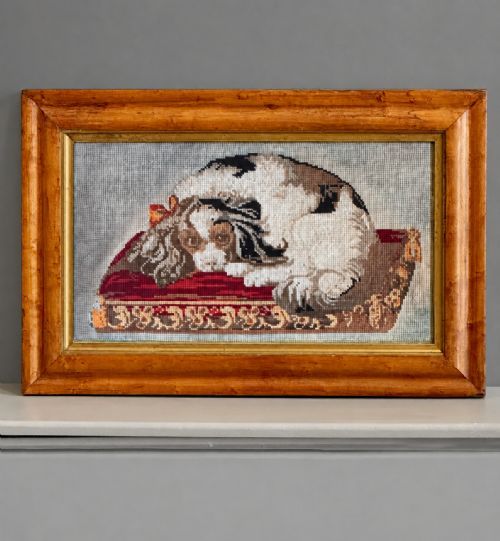
Educational alphabets, family registers, and maps form a large portion of the earlier pieces, alongside pastoral farming pictures and biblical scenes. Later nineteenth-century examples often depict animals, birds, and literary figures like Little Red Riding Hood.
Floral motifs and depictions of domestic pets remain enduringly popular across multiple decades.