





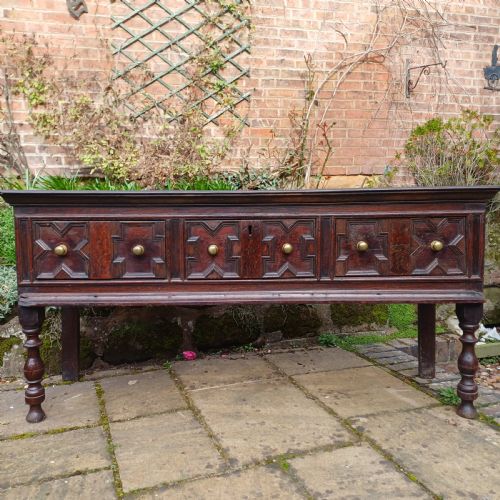

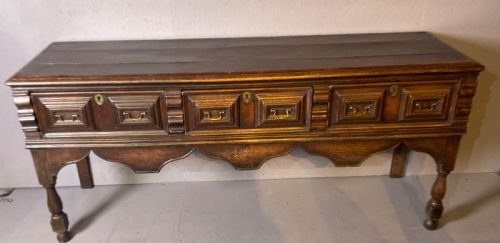
17th Century Sideboard
When you search for a 17th century sideboard, you enter a world of heavy timber furniture built for storage and display.
17th Century Sideboard
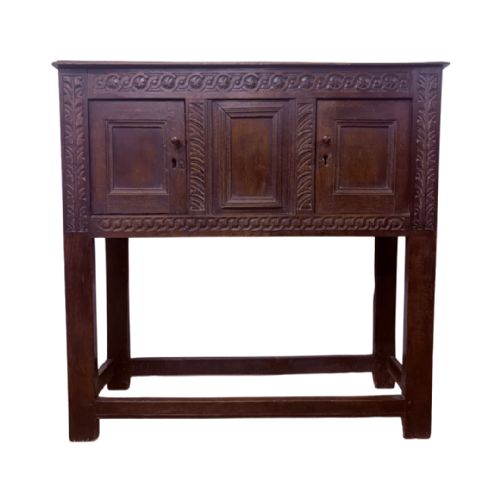
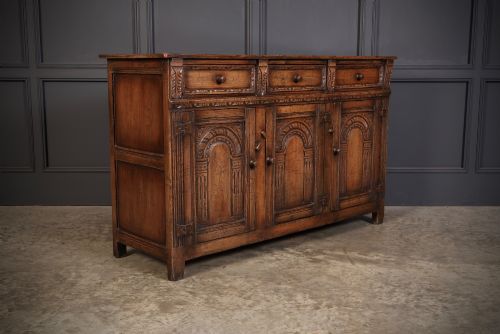
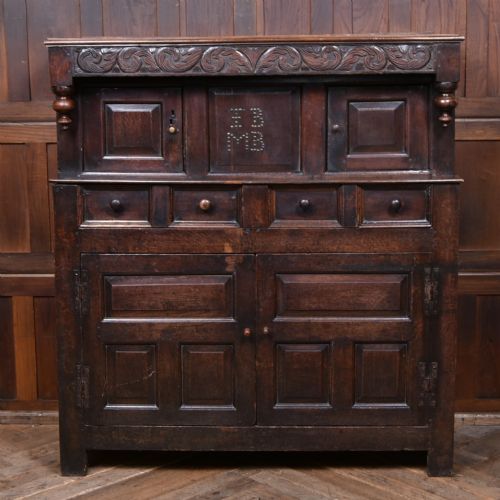
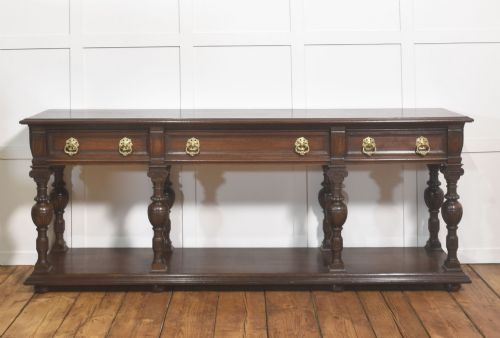
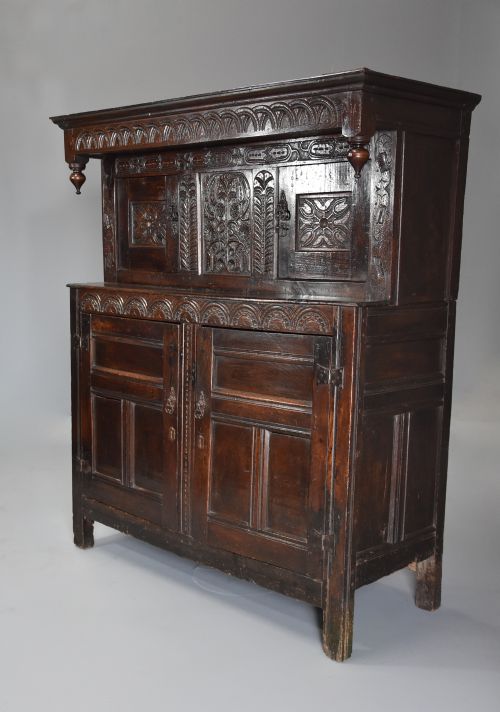
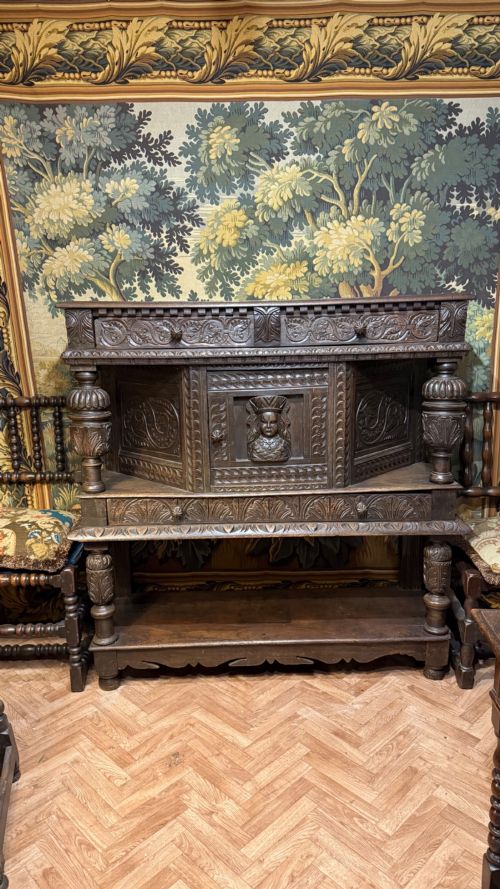
A 17th century sideboard encompasses a variety of heavy storage forms, including court cupboards, press cupboards, and dresser bases. These items served prominent functions in early domestic interiors, holding food, linen, and plate.
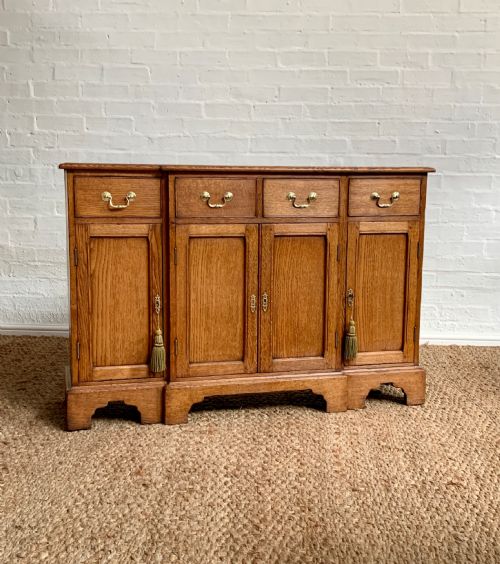
The pieces appearing on this page span authentic seventeenth-century examples alongside later revival interpretations from the Victorian era and the early twentieth century. Original period specimens share floor space with robustly constructed copies built in the Jacobean style.
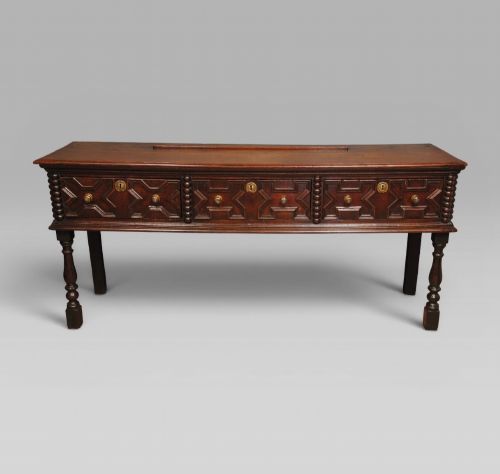
Regional British formats dominate the selection, featuring English, Welsh, and West Country pieces, alongside occasional continental examples in walnut and oak. Forms range from low servers with geometrically moulded drawer fronts to towering standing livery cupboards.
What Varies in Quality
Quality rests upon the integrity of the timber and the depth of the original carving. Pieces displaying crisp, deeply cut relief work and untouched period surfaces command higher regard than heavily restored examples.
The sophistication of the joinery and the presence of original hardware differentiate standard vernacular pieces from masterworks of the period. Proportion and scale also dictate distinction, particularly in smaller dresser bases and regional buffet forms.
Materials span native English oak and painted finishes alongside decorative accents of snakewood, ebony, and walnut.
The 17th Century Sideboard Glossary
- Court cupboard
- A two-stage enclosed piece of furniture used for storing and displaying plate and food. The upper section is typically recessed behind columns or corbels.
- Dresser base
- A low table-like cabinet featuring rows of drawers above cupboards, utilised for food preparation and storage. These form the direct ancestral lineage of the modern dining room sideboard.
- Livery cupboard
- A small ventilation-focused cabinet designed to hold rations of food or candles for night use. They frequently incorporate turned spindles to allow air circulation.
- Joined oak
- Furniture constructed using tightly fitted pegged joints rather than nails or modern glues. This method allowed the timber to expand and contract naturally over centuries.
- Geometric moulding
- Applied faceted wooden mouldings on drawer fronts and panels that create sharp, prismatic light effects. This technique defines much of the mid-seventeenth-century aesthetic.
17th Century Sideboard: Frequently Asked Questions
How do I spot a true period piece?
Examine the construction methods beneath the surface, looking for hand-pegged joints, adze marks, and timber shrinkage that aligns with age.
Original seventeenth-century pieces display authentic wear patterns and patination that modern workshops cannot easily replicate.
Can I use an antique oak cupboard in a modern kitchen?
These robust timber cabinets provide substantial storage for dishware, glassware, and dry goods in contemporary spaces.
Their dark oak tones and heavy proportions anchor modern rooms with historical gravity and texture.
What does Jacobean style mean?
The term references the decorative arts produced during the reign of James I, characterised by rigid symmetry and strapwork.
Revival furniture from later centuries often copied these heavy architectural motifs using older carving methods.