


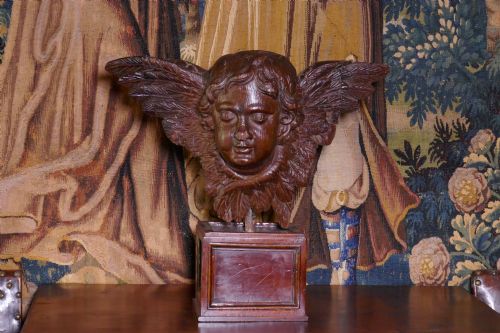
17th Century Oak Sculpture
17th century oak sculpture brings direct seventeenth-century craftsmanship into a room through figures, panels and architectural fragments carved from sturdy timber.
17th Century Oak Sculpture
When you search for 17th century oak sculpture, you encounter carved wooden figures, relief panels and architectural elements dating primarily from the seventeenth century alongside occasional later interpretations.
The objects on this page range from architectural salvage and wall reliefs to table lamps made from converted timber fragments.
Continental workshops and English carvers produced these works in styles spanning the Jacobean period, Flemish Renaissance and various regional manifestations of the Baroque.
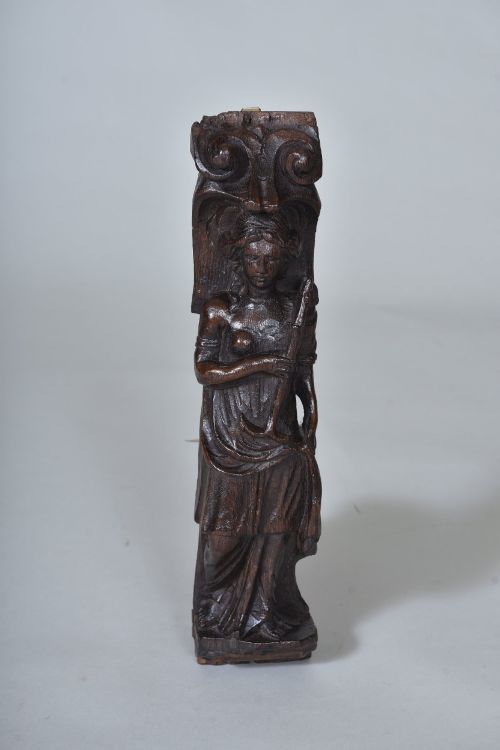
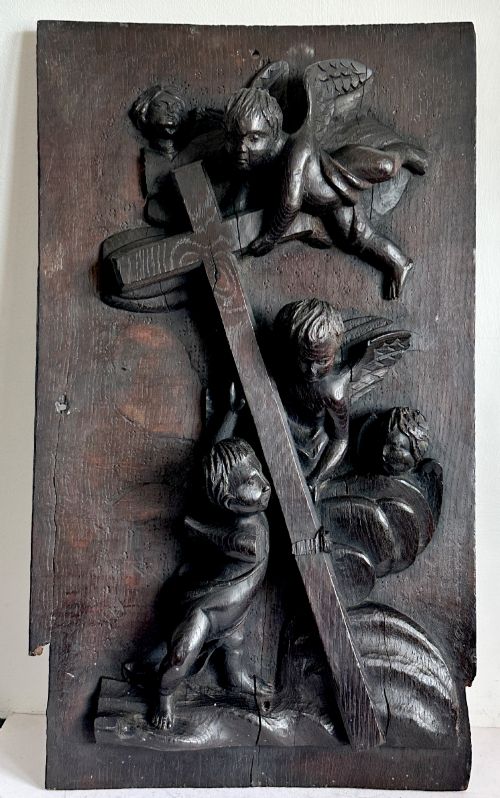
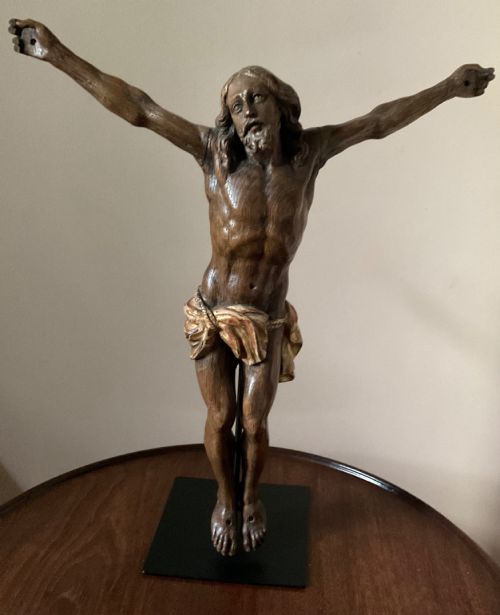
You are most likely to meet rectangular wall panels, figural caryatids and corbels depicting religious subjects, allegorical figures or classical details like Roman helmets.
Materials and technique
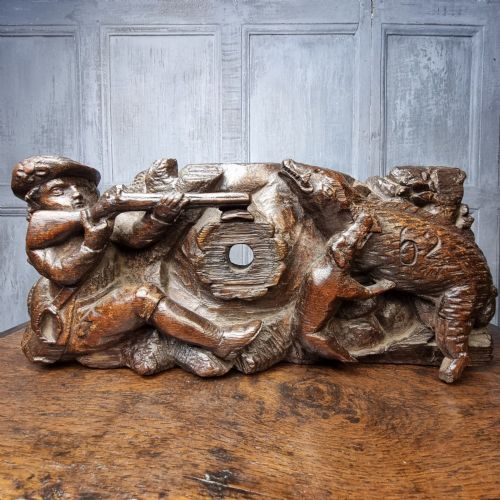
The primary material across these pieces is oak, selected for its durability and suitability for deep, robust carving by historical artisans.
Maker techniques involve hand carving the dense timber, sometimes complemented by parcel gilt highlights or incorporating elements of fabric and metal.
Surviving surfaces display the tool marks and patination expected from centuries of age, whether originating from English workshops or continental centres.
Object forms include architectural salvage, wall reliefs, sculptures, wood carvings, corbels and table lamps.
Assessing quality
Compositional complexity also separates works, with dynamic figural groupings or detailed allegorical panels requiring greater sculptural skill than repetitive architectural mouldings.
Completeness matters greatly, as original surfaces without extensive modern timber replacement retain higher artistic integrity.
Edward Pearce
The 17th Century Oak Sculpture Glossary
- Oak
- A hard, durable timber native to temperate regions, prized for centuries for furniture and architectural carving due to its strength and pronounced grain.
- Caryatid
- A carved architectural support taking the form of a female figure, often appearing in doorways and mantelpieces from the period.
- Corbel
- A structural piece of stone or wood projecting from a wall to carry a weight, frequently carved into figural or decorative shapes.
- Parcel Gilt
- A decorative technique where portions of an object receive a thin layer of gold leaf while other areas show the bare material beneath.
- Baroque
- A flamboyant artistic style originating in Rome during the early seventeenth century, characterised by drama, rich detail and exuberant movement.
17th Century Oak Sculpture: Frequently Asked Questions
Where were these pieces originally placed?
Many of these carvings originated as integral components of grand interiors, adorning church altarpieces, overdoors, wall panelling or structural timber frames.
Others functioned as standalone decorative reliefs or architectural supports within secular buildings across England and continental Europe.
Can I mount these panels on a wall?
Most wall panels and architectural fragments are robust enough for hanging, provided the mounting hardware is securely fastened to solid wall studs.
Given the weight of dense seventeenth-century timber, professional installation ensures the sculpture remains safely supported without straining the ancient wood.
How do I spot a later reproduction?
Genuine seventeenth-century pieces exhibit authentic tool marks, consistent historical oxidation and dry shrinkage cracks appropriate to age.
Reproductions often display uniform machine tooling, artificial distressing or surface colouring that lacks the natural depth accumulated over hundreds of years.