


17th Century Oak Carving
These pieces of 17th century oak carving bring deep texture, historic weight and honest craft directly into a modern interior.
17th Century Oak Carving
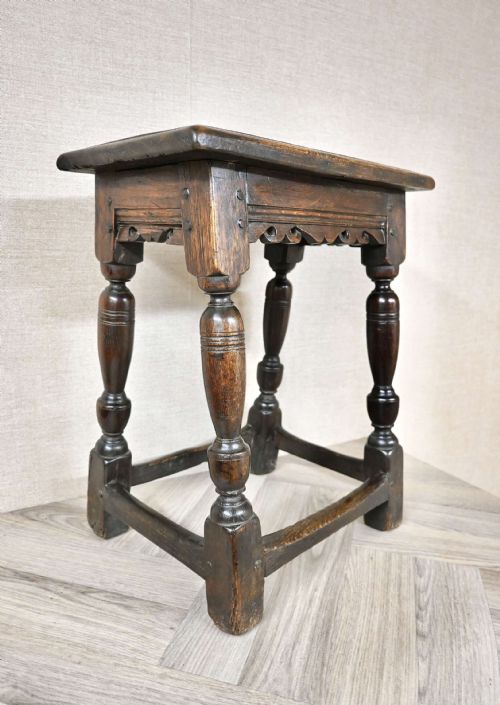
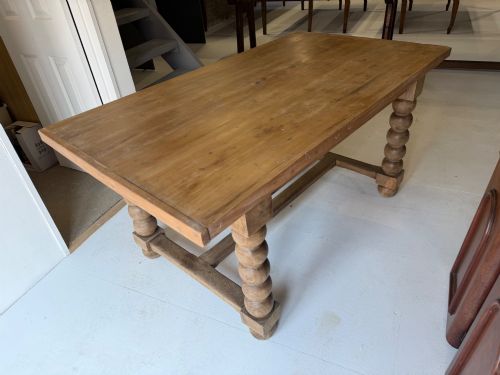
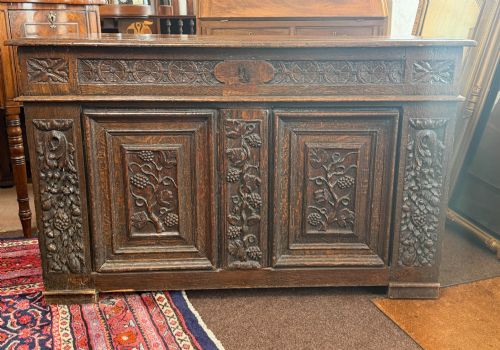
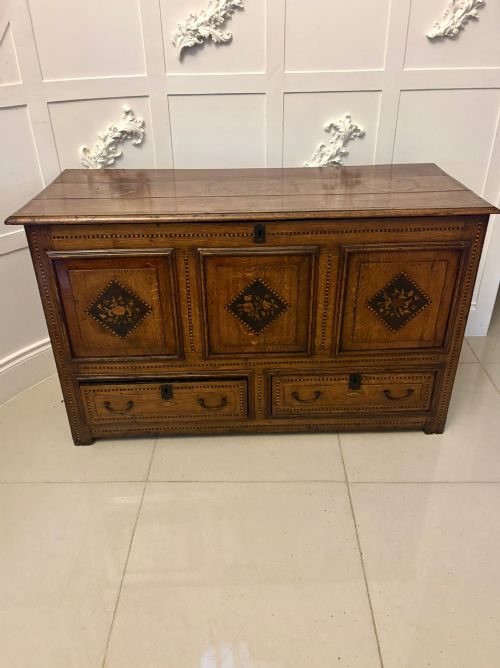
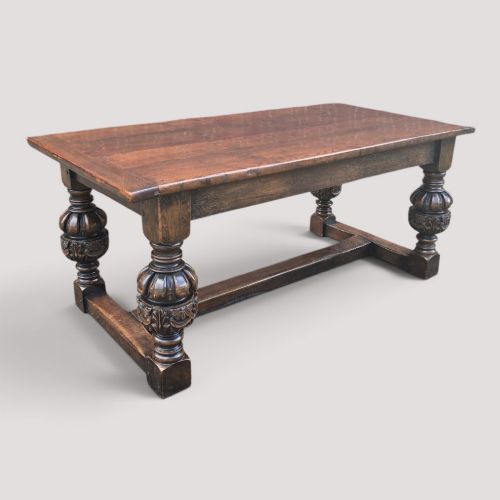
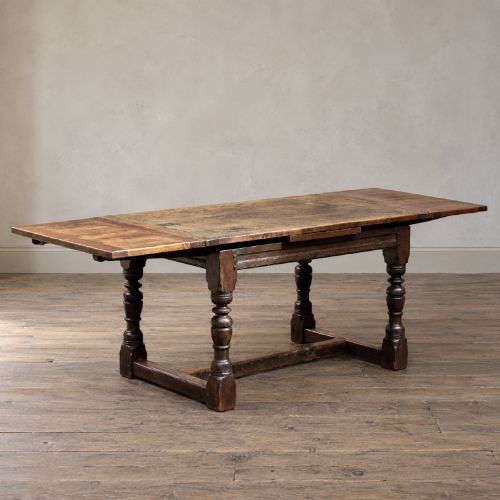
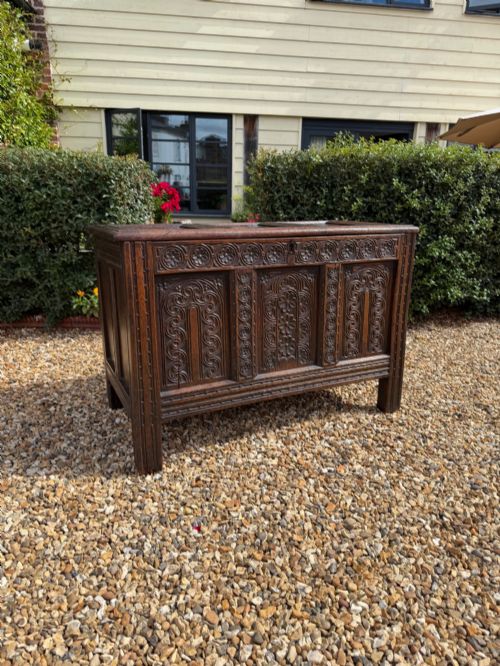
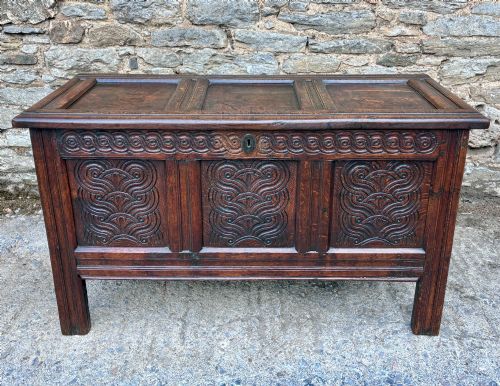
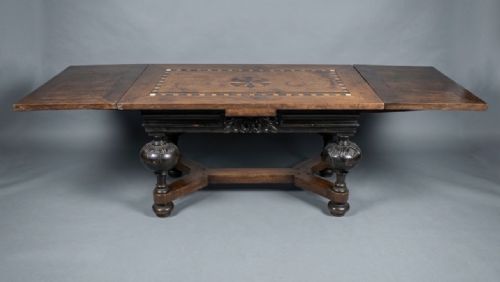
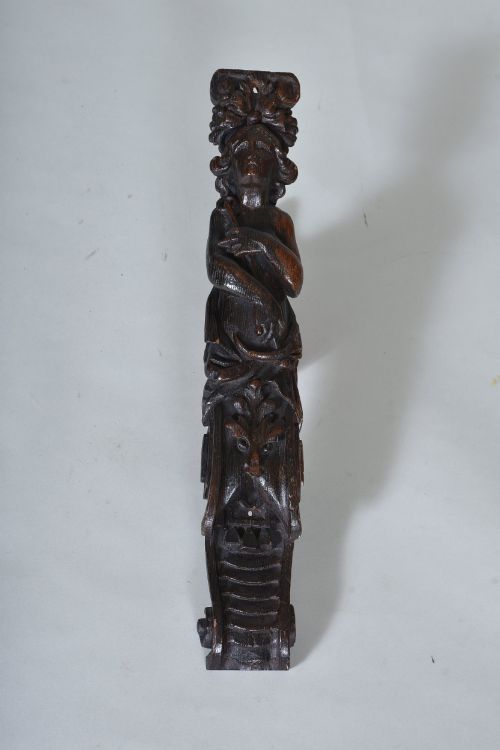
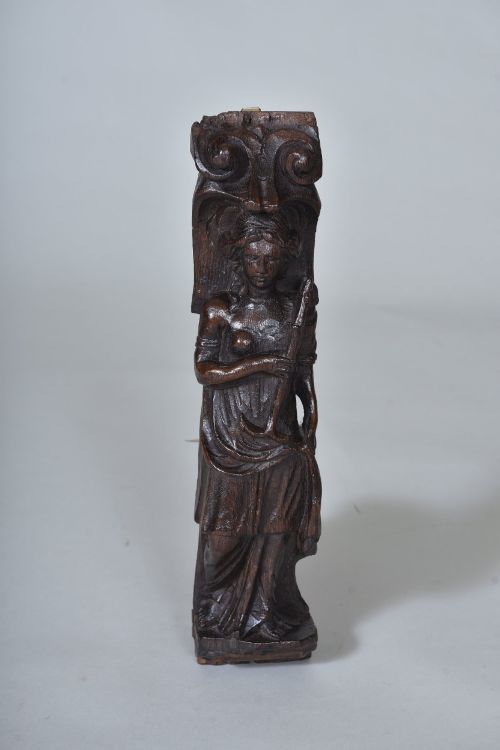
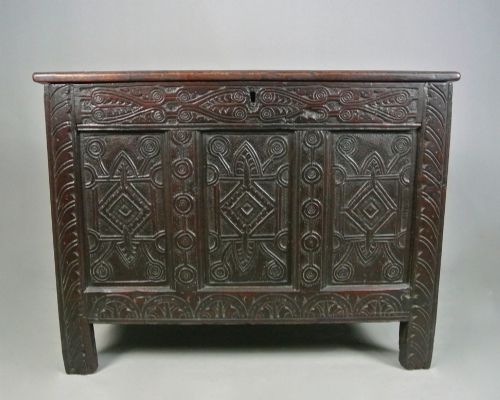
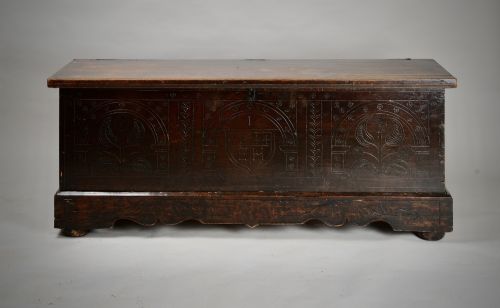
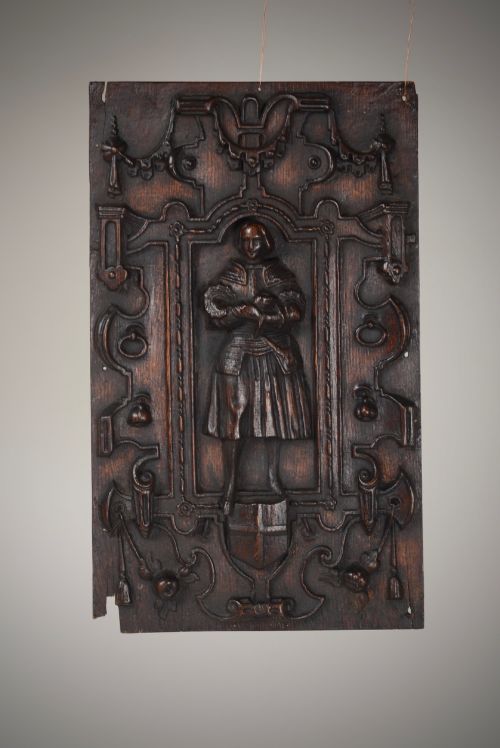
When you search for 17th century oak carving, you encounter architectural panels, figural reliefs, religious motifs, and structural furniture fragments originating from the Tudor, Jacobean, and Stuart eras. The most frequent forms on this page include solid oak coffers, joined chests, refectory dining tables, side tables, and individual carved panels depicting caryatids, floral lunettes, lions, and religious subjects.
These items range from authentic period work spanning the sixteenth to the eighteenth centuries through to revival pieces made in the nineteenth and early twentieth centuries. Buyers often meet heavy boarded chests and panelled box furniture that served domestic storage or ecclesiastical uses centuries ago, alongside decorative architectural fragments intended for wall display.
Materials and Construction
Makers built these pieces primarily from solid English and continental oak, utilising heavy timber frames joined by pegged mortise and tenon joints rather than metal fixings. Secondary materials such as beech, sycamore, walnut, iron, and brass appear in specific regional furniture and hardware, while decorative details frequently incorporate marquetry inlay and wood grain embellishments.
Carvers employed hand chisels and gouges directly into the seasoned oak to create high-relief panels, geometric guilloche, and figural scenes. Surfaces developed natural patination over centuries through daily use, wax application, and environmental exposure on the dense hardwood.
Listings feature solid oak, walnut, beech, and sycamore alongside iron and brass hardware across forms spanning coffers, armoires, and spice grinders.
Distinguishing Quality in Carved Oak
Quality rests upon the depth, clarity, and ambition of the hand carving, where spirited figural details or crisp geometric patterns elevate a piece far above utilitarian work. The integrity of the original timber frame, the presence of untouched patination, and the survival of early or original joinery also separate superior examples from heavily altered items.
Proportion and balance dictate the architectural success of larger functional forms like cupboards, chests of drawers, and coffers. Pieces displaying well-balanced scale, precise panel alignment, and deeply articulated carving demonstrate the hand of a more accomplished artisan.
The 17th Century Oak Carving Glossary
- Coffer
- A heavy wooden storage chest constructed with panelled sides and a hinged lid. These items served domestic and ecclesiastical storage needs throughout the period.
- Caryatid
- A sculpted female figure serving as an architectural support or decorative pillar. These carved elements appear frequently on high-status furniture and panels.
- Lunette
- A half-moon shaped decorative motif filled with carved foliage, fans, or geometric strapwork. This pattern is common on friezes and panels from the late seventeenth century.
- Marquetry
- The art of applying decorative pieces of wood veneer to a structure to form intricate patterns. This technique enhances flat surfaces on tables and coffers.
- Patina
- The glossy sheen and mellow colour developed on the surface of wood over long periods of handling and age. It serves as a key indicator of genuine surface maturity.
17th Century Oak Carving: Frequently Asked Questions
How do I spot a true period piece?
Examine the construction joints for hand-cut pegs, tool marks, and timber shrinkage that match sixteenth or seventeenth-century methods rather than machine production. Genuine items show consistent natural wear and patination across all structural surfaces.
Compare the style of the carving and hardware to documented examples from the Jacobean, Charles II, or William and Mary periods to confirm chronological consistency.
What rooms suit these carvings?
These dark wood items anchor traditional dining rooms, libraries, and hallways, adding architectural weight and historical contrast to neutral modern walls. Smaller panels and boxes fit easily onto sideboards or study shelves.
Keep wooden items away from direct heat sources and dramatic humidity shifts to protect the historical oak from splitting.
How should I clean my oak?
Dust the surfaces regularly with a soft, dry cloth to prevent grit accumulation in the carved recesses. Apply a traditional beeswax sparingly when the wood appears dry to nourish the grain.
Avoid modern liquid polishes, silicone sprays, and excessive water, which can soften the historic finish and degrade the natural patina.
Are revival pieces well made?
Nineteenth and early twentieth-century revival furniture utilised solid oak and traditional joining techniques to emulate earlier Jacobean and Stuart aesthetics. These items offer robust utility and skilled craftsmanship while remaining distinct from seventeenth-century originals.
Assess each piece on its own structural merits, timber quality, and carving execution rather than relying solely on the date of manufacture.