



17th Century Footstool
These 17th century footstool pieces combine sturdy oak, walnut, and elm frames with period textiles to anchor traditional rooms with authentic historical seating.
17th Century Footstool
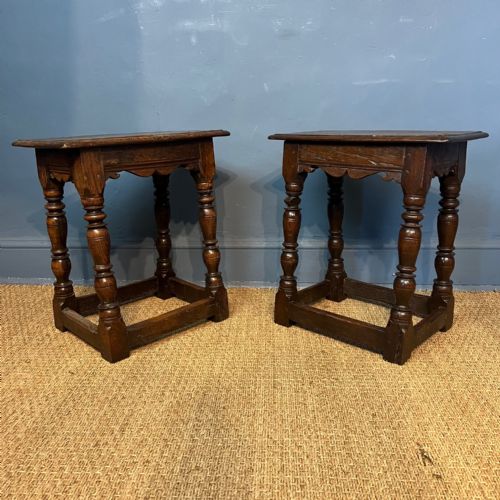
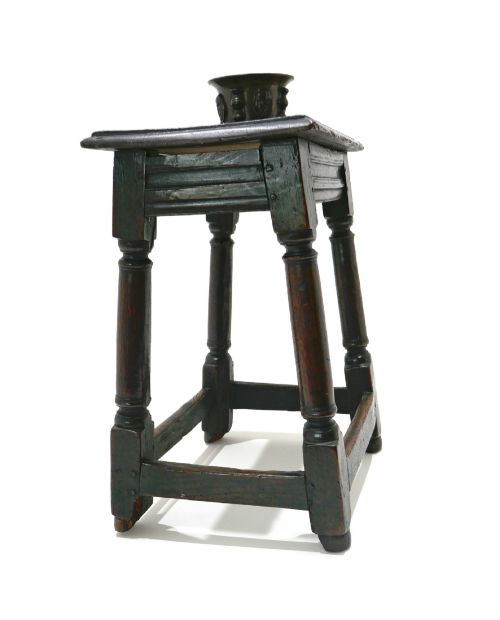
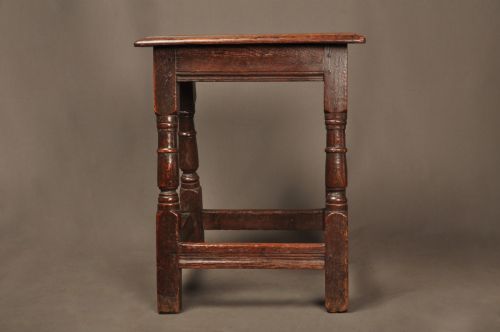
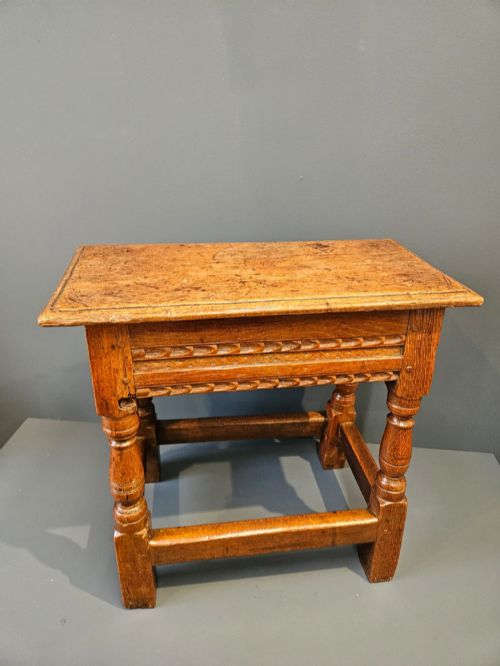
When you search for a 17th century footstool, you encounter low seating and joint stools adapted for the floor or domestic comfort across multiple historic periods. The selection on this page relies heavily on sturdy oak and elm construction, spanning the original 17th century through later revival eras like the Georgian period and the early twentieth century.
Forms vary from rectangular joint stools and square formats to long cane footstools and baroque shapes. Surviving examples often bridge centuries, showing Jacobean, Carolean, and William and Mary design influences executed in solid timber.
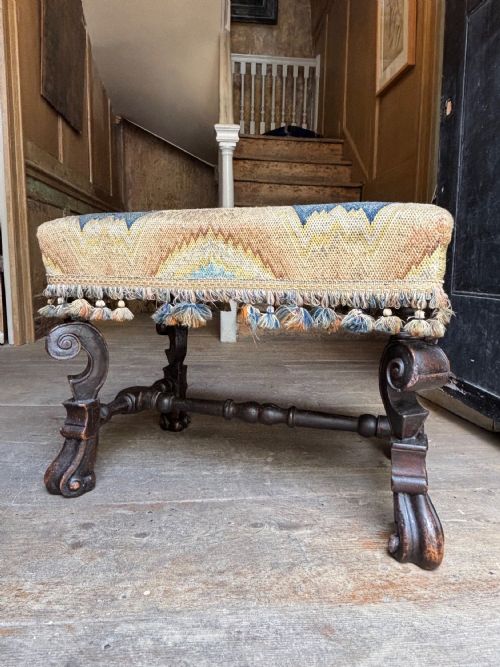
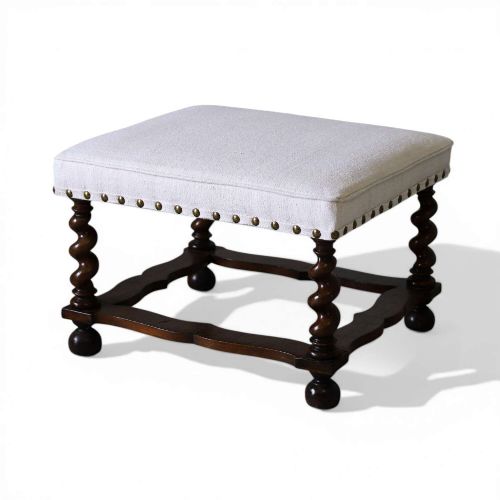
Buyers are most likely to meet oak joint stools and walnut frames equipped with period upholstery, tapestry, or linen coverings. The physical evidence demonstrates that these forms persisted long after the 17th century, incorporating revival styles right up to 1920.
Materials and Construction
Makers built these pieces primarily using solid oak, walnut, and elm joined with traditional timber framing techniques. Turnings such as barley-sugar legs appeared on later interpretations, while oyster-veneered stretchers added decorative surface detail to walnut frames.
Upholstered versions integrated fabric, textile, linen, and tapestry held with brass fixings, alongside cane panels for lighter seating surfaces. This combination of dense hardwood and tactile coverings ensured the structural resilience necessary for daily domestic use.
17th Century Footstool Retail Price Guide 2026
Typical asking prices for 17th century footstool among the pieces listed under this phrase on Sellingantiques today, from the lower quarter to the upper quarter. They describe what is for sale here now, not the wider market.
The listings combine solid oak, walnut, and elm with textile and cane coverings across Jacobean and William and Mary styles.
Assessing Quality and Character
The distinction between standard utility items and finer examples rests on the exuberance of the baroque form and the crispness of the turning. A Carolean stool of exuberant baroque form demonstrates superior sculptural ambition compared to a plain domestic joint stool.
The integration of decorative elements like oyster veneers and barley-sugar legs separates refined specimens from simpler rustic counterparts. Original materials and period upholstery further elevate a piece above later revival interpretations.
The 17th Century Footstool Glossary
- Joint Stool
- A sturdy wooden stool constructed with mortise and tenon joints rather than simple dowels. These heavy oak pieces served multiple domestic functions in seventeenth-century households.
- Carolean
- The artistic style spanning the reign of King Charles II from 1660 to 1685. It is characterised by rich baroque carving, exuberant forms, and scrollwork.
- Baroque
- An ornate European design style of the seventeenth and early eighteenth centuries. It emphasises grand scale, theatrical movement, and rich surface ornamentation.
- Oyster-Veneer
- Thin circular slices of branch wood arranged in decorative patterns resembling oyster shells. This technique decorated refined walnut furniture surfaces.
- Barley-Sugar
- A spiral turning technique resembling twisted confectionery. It became popular for table and stool legs during the late seventeenth century.
17th Century Footstool: Frequently Asked Questions
How were these stools used originally?
Historic households used these low seats near hearths or alongside larger chairs to rest feet off cold floors. They also served double duty as small tables or portable seating when rooms filled with guests.
Over time, utility expanded as craftsmen refined the frames with upholstery and decorative turnings to suit formal parlours.
Are all listed stools from the 17th century?
The inventory spans multiple eras, including original seventeenth-century pieces alongside eighteenth-century items, Georgian examples, and twentieth-century revivals. Each era reinterpreted the foundational forms using traditional timbers like oak and elm.
Examining the turning styles and construction methods helps clarify whether a piece is an authentic period survivor or a later revival.
What woods should I expect to find?
Solid oak forms the backbone of the joint stool tradition, offering exceptional weight and durability. Walnut also appears on finer baroque and William and Mary era pieces, often paired with veneers.
Secondary woods like elm sometimes appear in regional country pieces alongside structural members.
How do I live with antique stools?
These compact pieces fit easily beside modern upholstery as side tables or low seats. Their robust timber frames require minimal upkeep beyond normal dusting and occasional wax care for exposed wood.
Keeping upholstered and fabric elements away from direct sunlight protects the textiles from fading over time.