


Vintage Tapestry Stool
A vintage tapestry stool brings texture and historic character to a room, offering practical seating or foot support crafted in periods from the Victorian era onwards.
Vintage Tapestry Stool
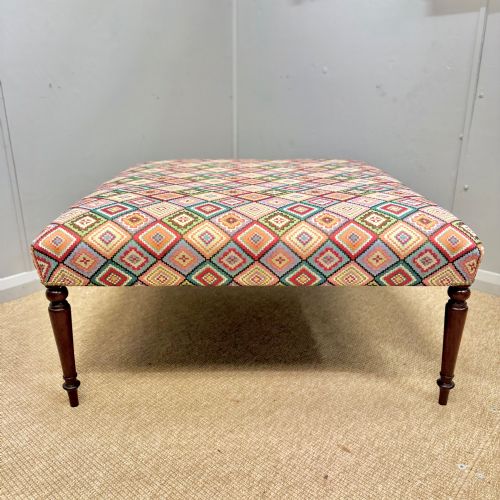
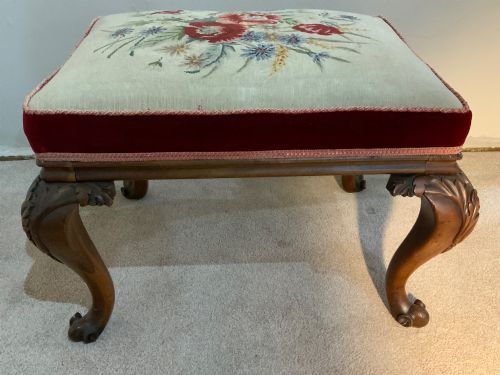
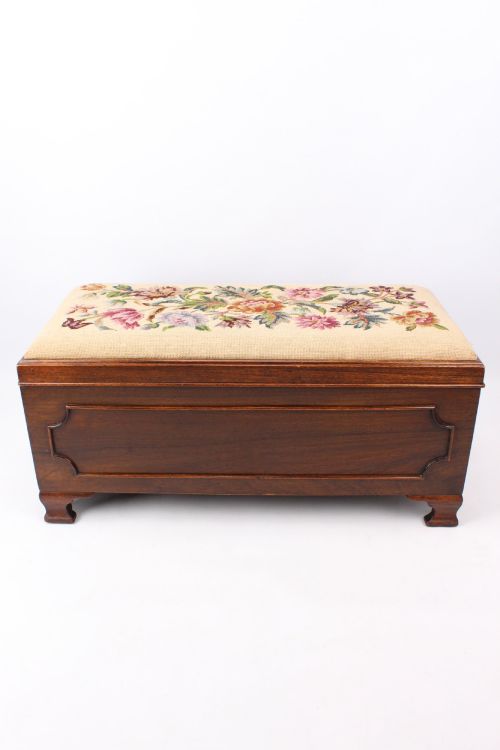
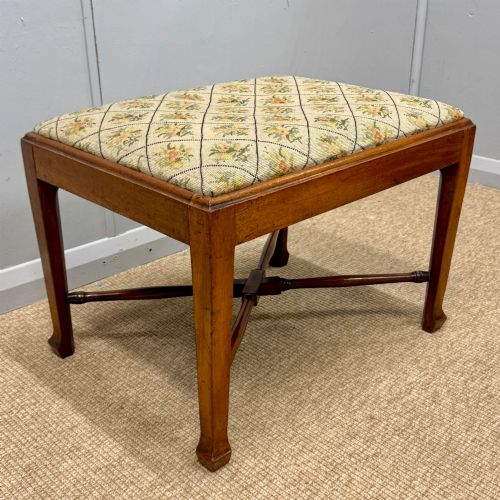
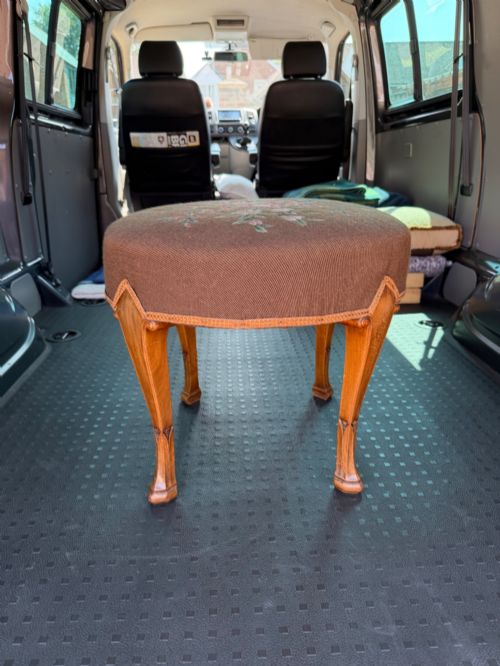
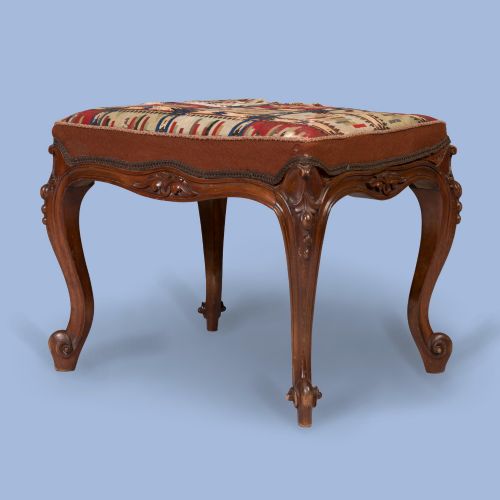
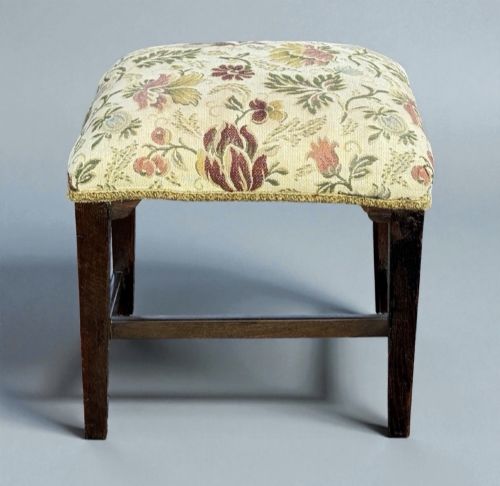
When you search for a vintage tapestry stool, you encounter a variety of low seating forms designed for the fireside, dressing table, or piano. The most common examples on this page date from the Victorian period through the early twentieth century, featuring upholstered tops worked in needlepoint or textile.
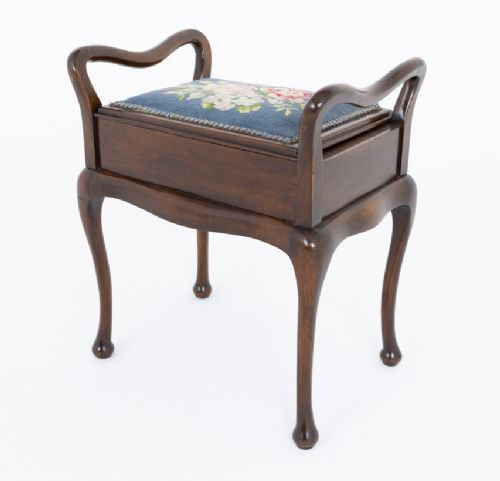
These pieces range from small footstools and dressing table stools to larger ottomans, centre stools, and piano stools with adjustable mechanisms. Alongside standard domestic forms, regional and revival designs such as Scottish Baronial, Chippendale Style, and Louis XIV Revival appear frequently.
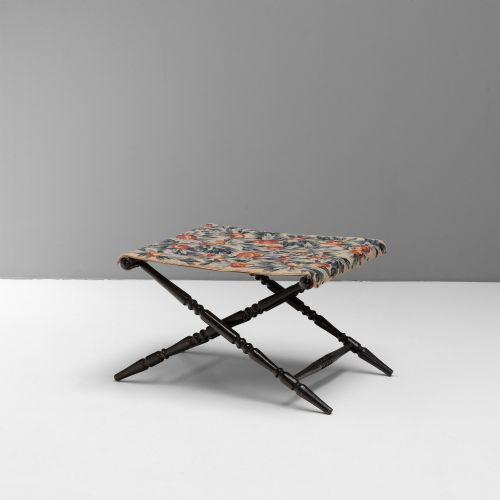
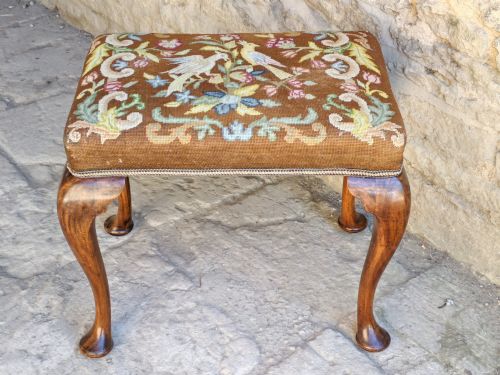
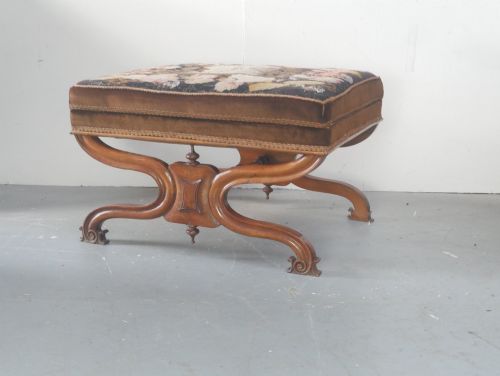
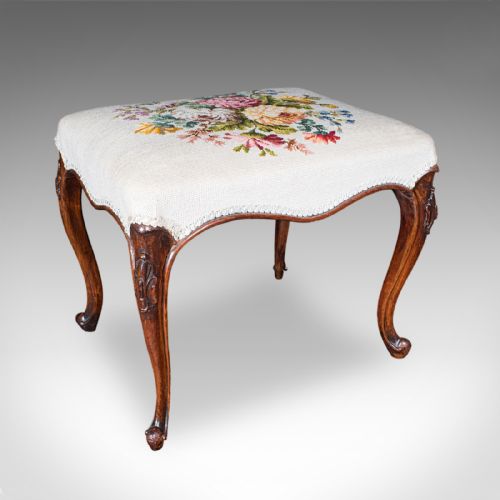
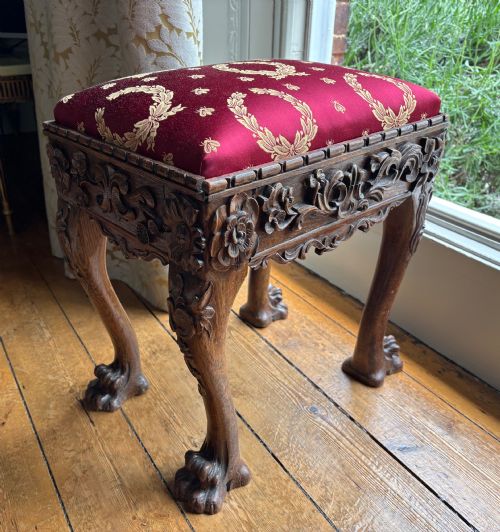
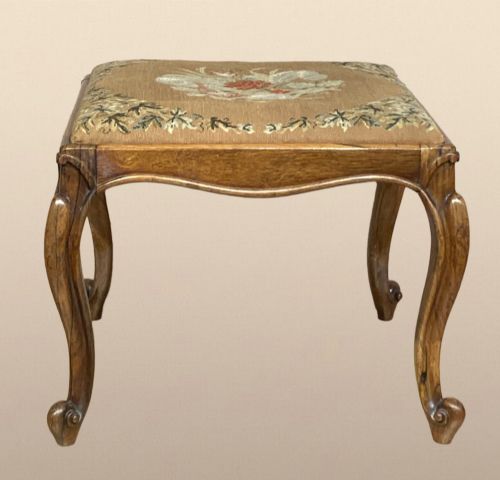
The underlying woodwork matches the aesthetic aspirations of its period, employing timber frames shaped into cabriole legs, cross stretchers, or carved supports. Textile covers vary from geometric patterns to detailed floral needlework, anchoring each piece in its specific decade of manufacture.
How they were made
Makers constructed the structural frames of these stools predominantly from dense hardwoods such as mahogany, walnut, and rosewood, occasionally utilising oak for earlier pieces. These timbers were turned, carved, or inlaid to form legs and stretchers capable of supporting daily use.
The seats combine traditional upholstery foundations with textile covers worked in wool, needlepoint, tapestry, kilim, or velvet. Brass details appear on adjustable piano stool mechanisms and castors, completing the assembly of wood, textile, and metal.
Periods represented span from the seventeenth century through to Edwardian and 1930s revival designs.
What varies in quality
The distinction between standard examples and superior pieces rests upon the ambition of the woodwork and the execution of the textile cover. Finely carved walnut or mahogany frames with detailed cabriole legs and cross stretchers signal higher workshop input than plain turned supports.
Needlepoint and tapestry seats demonstrate varying degrees of intricacy in needlework and design density. Pieces retaining crisp wood carving and finely worked original textiles occupy the upper tier of the range.
Hallett & Sons·Jas Shoolbred
The Vintage Tapestry Stool Glossary
- Needlepoint
- A type of canvas work embroidery utilised for seat covers and upholstery. This technique allows for dense, multicolored geometric or floral designs.
- Cabriole leg
- A furniture leg featuring a double curve, typically arching outward at the knee and tapering inward toward the foot. This shape is characteristic of revival and period seating.
- Cross stretcher
- Wooden rails connecting the legs of a stool near the base to provide additional stability. They often feature central bosses or decorative turnings.
- Kilim
- A flatwoven textile employed as an alternative upholstery covering on nineteenth-century footstools. These coverings introduce distinct tribal patterns to the seat top.
- Ottoman
- A low upholstered seat or bench without a back or arms, occasionally fitted with internal storage. Larger versions function as centre pieces or window seats.
Vintage Tapestry Stool: Frequently Asked Questions
What is a vintage tapestry stool used for?
These pieces function primarily as footstools by a fireside, dressing table seats, or piano benches. Their compact dimensions allow them to move easily between rooms.
Larger variants such as ottomans and centre stools provide additional seating or surface space within a living area.
How do I identify a Victorian tapestry stool?
Victorian examples typically feature dark timbers like walnut or mahogany, often shaped into cabriole legs or ornate frames. The upholstery relies on wool needlepoint or floral tapestry.
Examination of the timber frame and joinery beneath the upholstery generally confirms the mid-to-late nineteenth-century origin.
What is the difference between a piano stool and a footstool?
Piano stools are specifically proportioned for seating at an instrument and frequently incorporate mechanical height adjustment. Many nineteenth-century versions include revolving tops or screw mechanisms.
Footstools sit lower to the ground and remain static, designed purely to support the feet or serve as small decorative seats.
How should I care for a tapestry upholstery?
Wool and needlepoint textiles require gentle cleaning with a soft brush to remove dust from the woven fibres. Avoiding direct sunlight preserves the original colours of the wool.
Checking the stability of the wooden frame periodically ensures the piece remains sound for continued domestic use.