



17th Century Drop Leaf Table
A 17th century drop leaf table provides a clever folding surface rooted in centuries of vernacular domestic life.
17th Century Drop Leaf Table
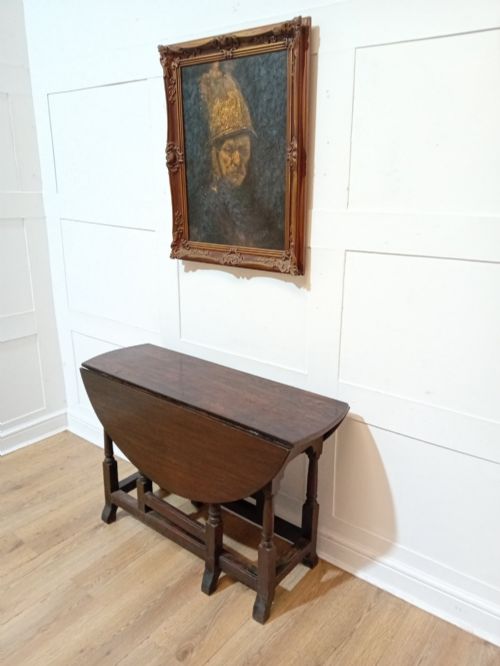
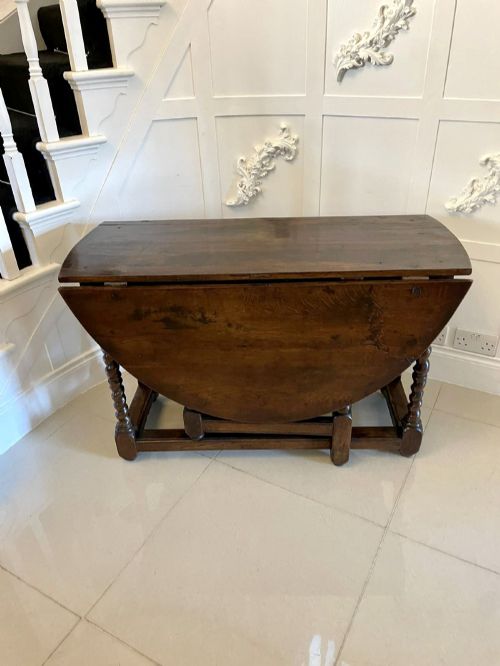
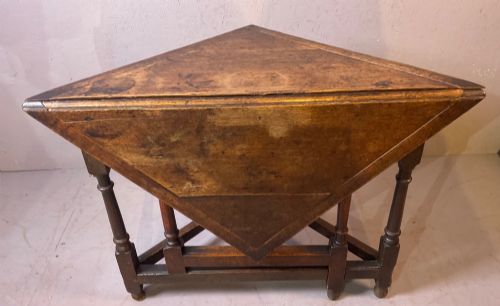
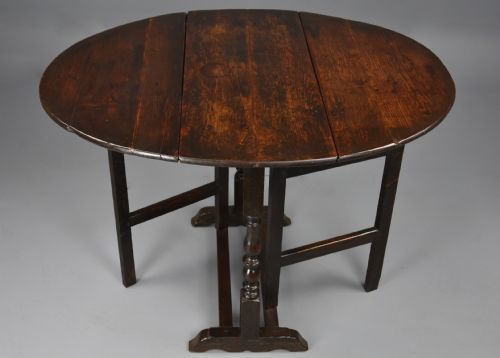
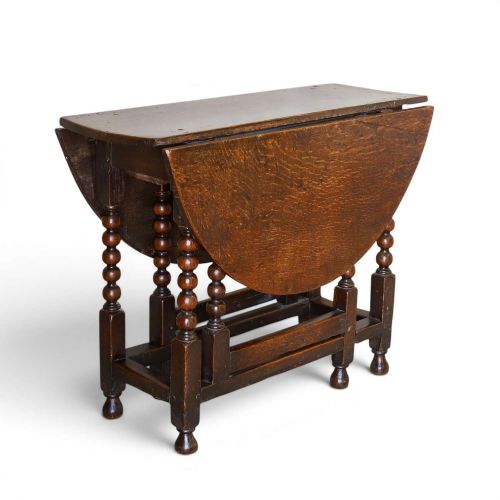
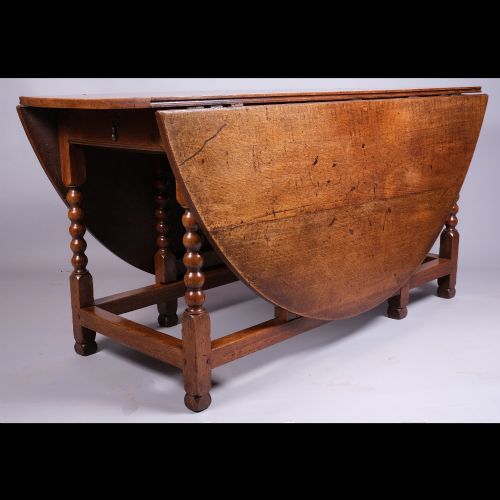
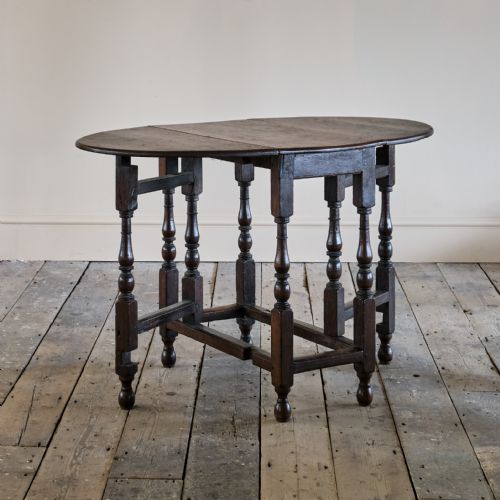
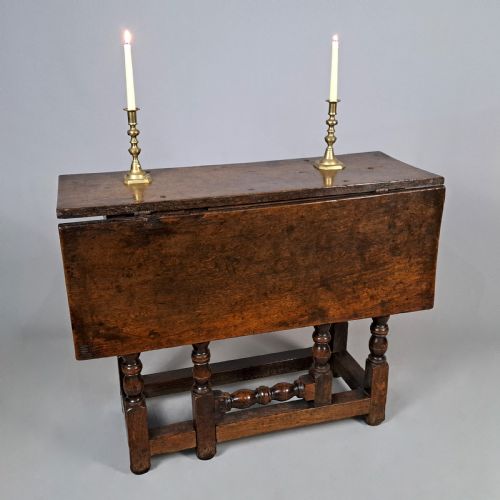
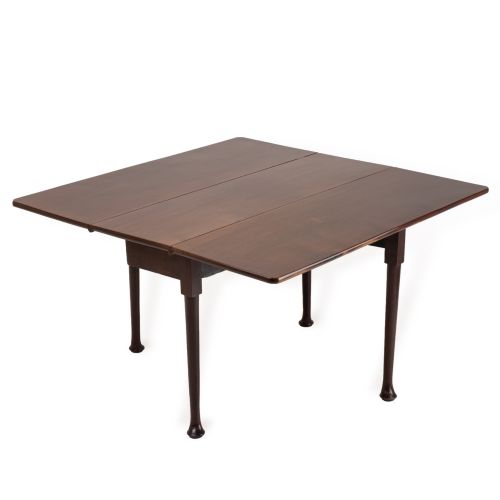
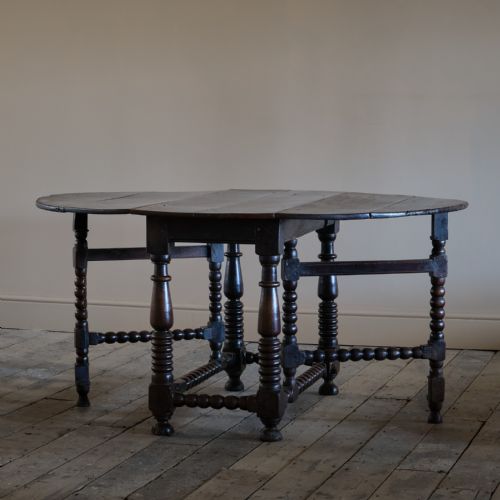
A 17th century drop leaf table typically appears as a gateleg table designed to expand from a compact footprint into a dining surface supported by swinging legs. The forms span smaller side tables and occasional pieces up to large dining tables intended for six or more people.
Most examples found in this selection originate from the 17th century, though later interpretations from the 18th and 19th centuries, alongside revival pieces, also appear. Oak dominates the material record, frequently accompanied by walnut, elm, and ash.
Makers constructed these tables to serve versatile functions within households, utilising hinged leaves that drop down when the extra space is unneeded. Variations range from simple vernacular constructions to elaborate dining formats with distinct turned supports.
Materials and construction
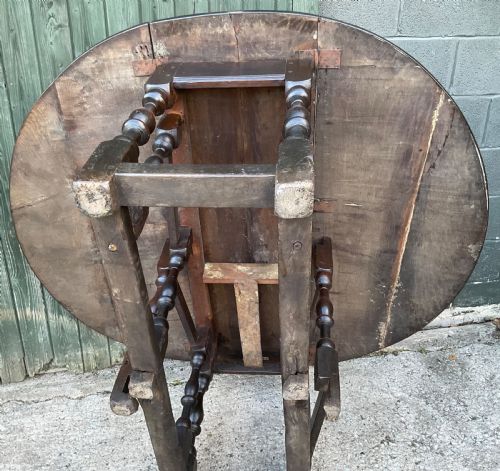
Makers relied primarily on solid oak, walnut, and elm, often combining secondary timbers like ash for structural framing and internal components. Planks were joined and secured to gateleg frames designed to pivot outward and support the hinged drop leaves.
Turning techniques defined the leg supports, incorporating distinctive bobbin turned or baluster post profiles. Iron and brass hardware appeared in the form of hinges and fasteners that enabled the folding action of the leaves.
Listings feature oak, walnut, elm, and ash across periods spanning the 17th century through the Victorian era.
Assessing quality
Quality rests upon the integrity of the timber and the retention of original surface patination accumulated over centuries of use. Tables displaying untouched, original finishes command greater appreciation than those altered by modern interventions.
Proportions and scale also dictate distinction, particularly in smaller side tables or grander dining formats that maintain balanced structural harmony. The precision of the turning on the legs and the stability of the swing-out gate mechanism further separate ordinary pieces from superior examples.
The 17th Century Drop Leaf Table Glossary
- Gateleg table
- A table with hinged leaves supported by one or more legs that swing outward on a gate-like framework. This design allows the surface area to expand or contract easily.
- Bobbin turned
- A type of turning on furniture legs resembling a series of spools or bobbins joined end to end. It represents a characteristic decorative technique of the 17th century.
- Baluster post
- A vertical support member shaped with a swelling profile reminiscent of an architectural baluster. These posts frequently form the main leg supports on substantial dining tables.
- Patina
- The surface sheen and coloration developed by wood over long periods through handling, polishing, and ageing. A fine patina indicates genuine historical depth.
- Vernacular
- Furniture made by local artisans for everyday domestic use, often adhering to regional traditions rather than court styles. These pieces emphasise practical function and local materials.
17th Century Drop Leaf Table: Frequently Asked Questions
How do I use a drop leaf table today?
These tables adapt easily to modern rooms by folding down against a wall to save space when not in use. Raising the leaves creates an immediate surface for dining or working.
Their sturdy timber construction handles daily use well, making them practical for kitchens, dining rooms, or living spaces.
What woods were used for these tables?
Oak is the predominant timber found in these pieces, valued for its strength and availability during the period. Walnut, elm, and ash appear frequently as well.
Makers often combined primary timbers for the top and leaves with sturdy secondary woods for the frame and gateleg mechanism.
How do I tell an original from a revival piece?
Examining the construction methods, tool marks, and wear patterns helps determine the true age of a piece. Period timber exhibits natural ageing and shrinkage that differ from later reproductions.
Reference materials and period styles such as Charles II or William and Mary provide further context for dating specific examples.
What is a gateleg mechanism?
The gateleg mechanism consists of a hinged leg that swings away from the central frame like a gate. This pivoting leg moves out to hold up the drop leaf when raised.
When the leaf is lowered, the leg swings back flush against the main body of the table.
Are these tables suitable for everyday dining?
Large formats accommodate multiple diners comfortably, while smaller versions function well as supper or side tables. The robust construction of solid oak or walnut supports regular seating.
Placing protective mats on the surface helps preserve the historical finish during daily meals.