9,678  PAGES BROWSED TODAY PAGES TODAY • 0 ANTIQUES UPLOADED TODAYNEW ARRIVALS
GIFTS
LATEST STOCK
Sort Order
Items Per Page
Browse Categories
Sort order
Relevant Links
Items per page
ID #SA1241359
FOR SALE
£7,950
Email Phone
Save
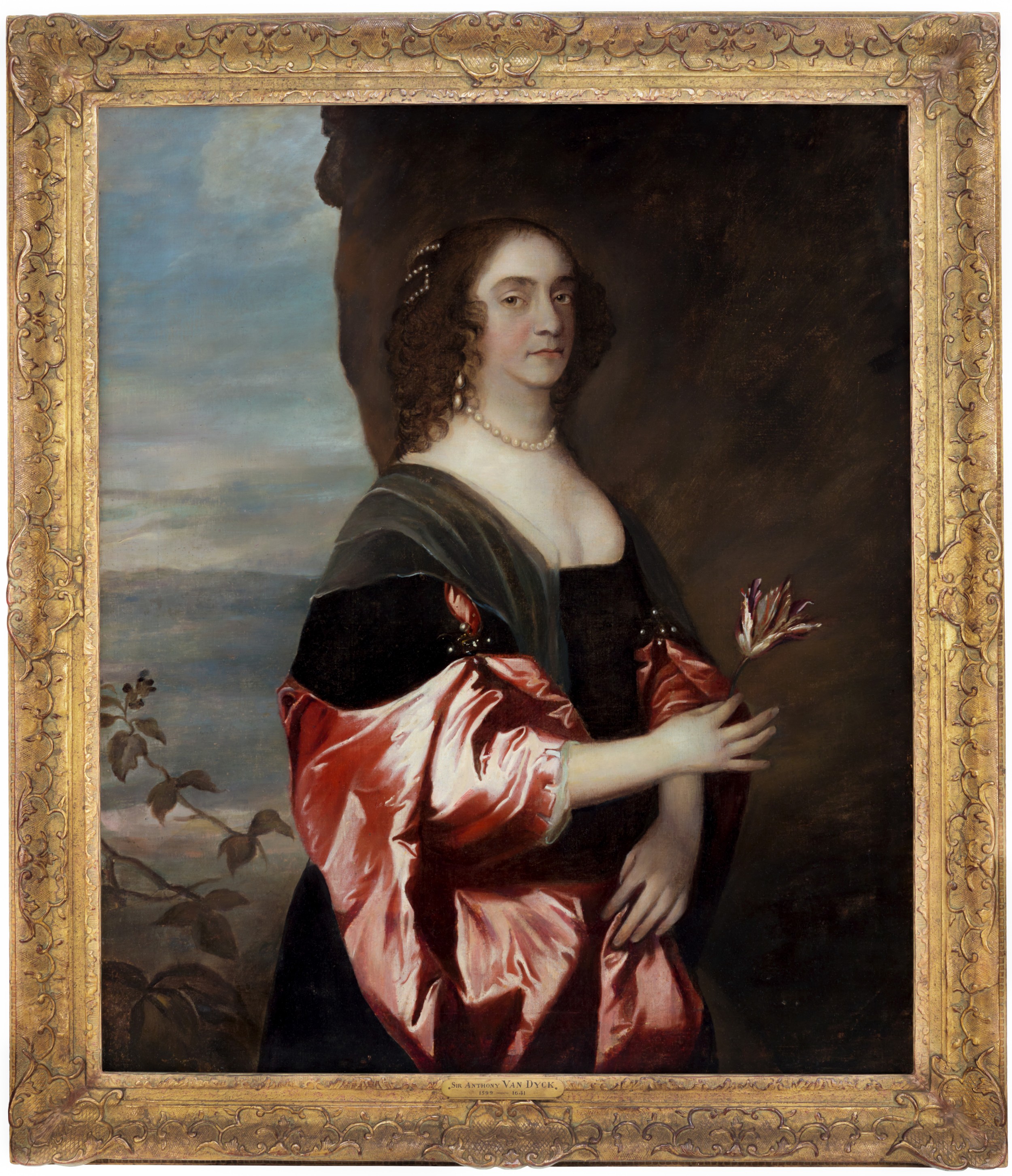
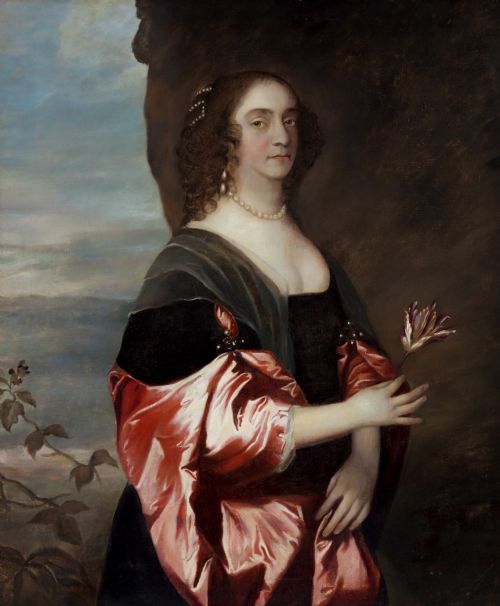
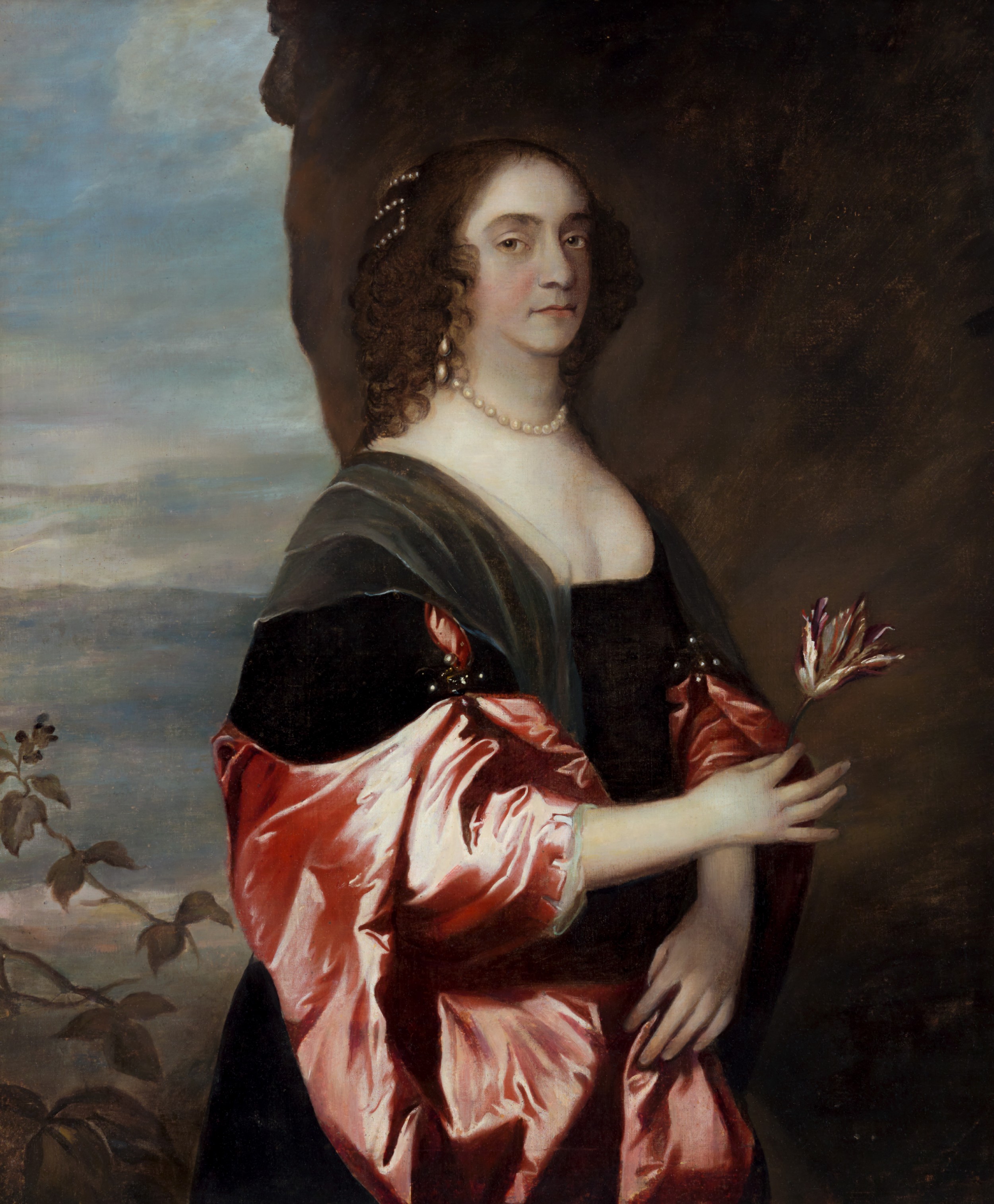
Portrait of a Lady, in a Black Dress with Red Satin Sleeves and Pearls C.1660–1680; English School, Oil on Canvas Painting
For sale by Titan Fine Art
for sale €9,302     $10,097
£7,950
Titan Fine Art

Titan Fine Art

Sellingantiques Verified Since Jul 2016
Browse dealers 24 items
  • About Us
    Specialist in 17th & 18thc portraits. Highly curated selection, museum-level research & pro conservation. Exceptional art, expertly vetted.
Id #SA1241359
PDF SHARE
SAVE

Portrait of a Lady, in a Black Dress with Red Satin Sleeves and Pearls C.1660–1680; English School, Oil on Canvas Painting

17th century
For Sale by Titan Fine Art
Description

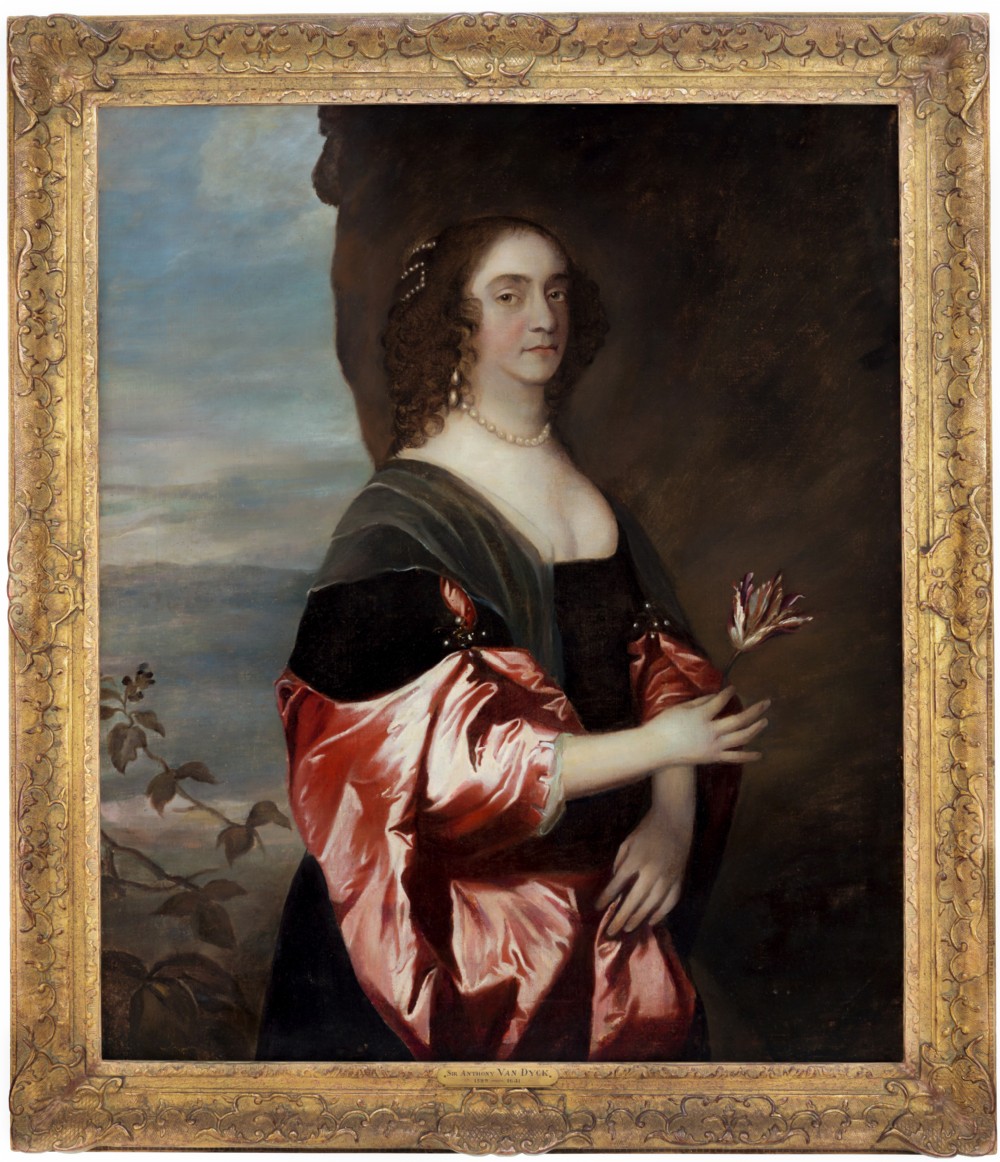
This striking portrait is a powerful example of Van Dyck’s lasting influence on English portraiture. At over a metre high, it has real presence—exactly the sort of work intended to command attention in a principal interior.

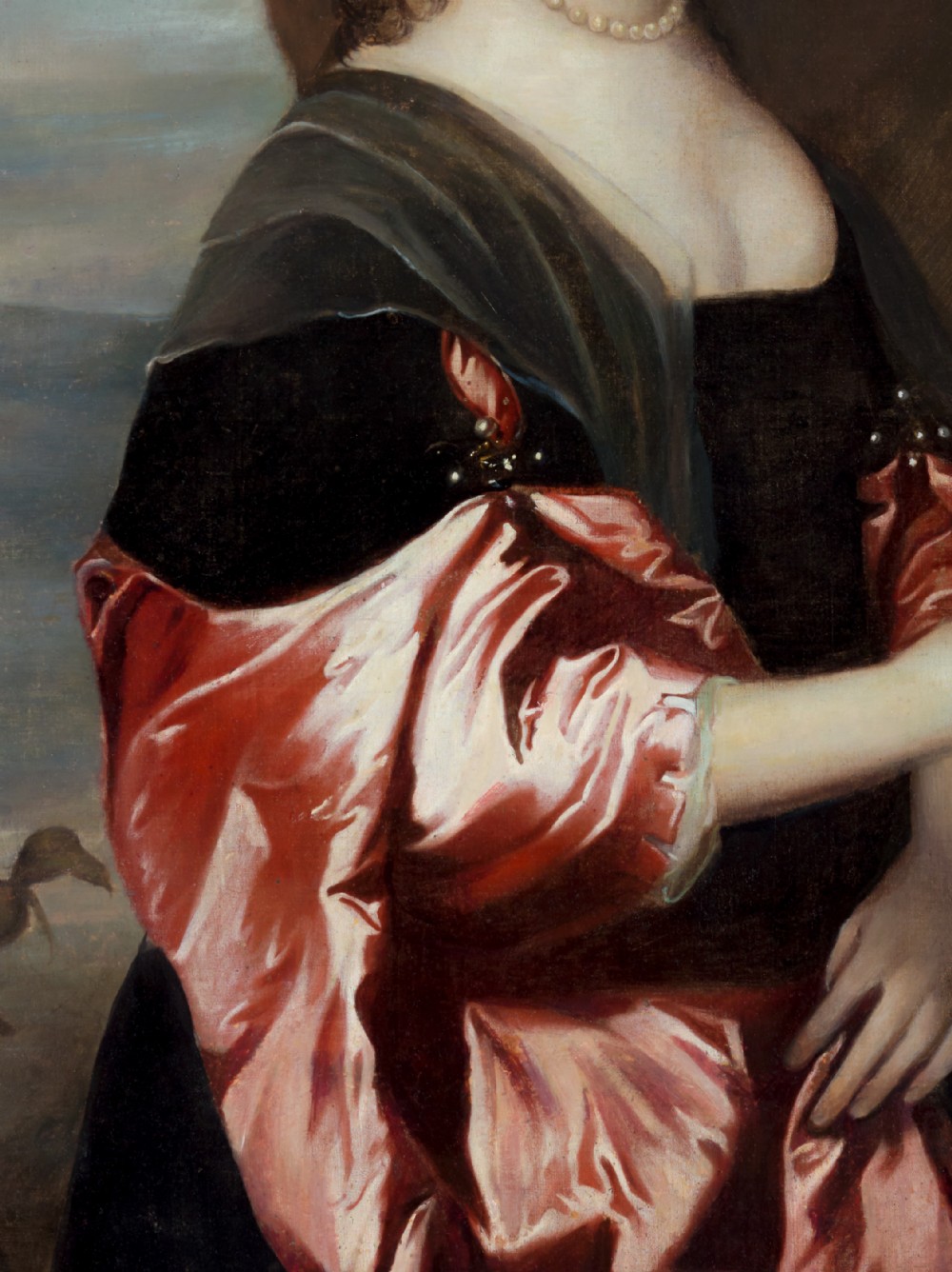
The sitter is shown half-length before a rocky landscape, a format rooted in Van Dyck’s inventions and widely adopted in England through the later seventeenth century. She wears a black silk bodice softened by a gauzy scarf, with pearls at the neck and ears. Her brilliant crimson satin sleeves, sharply highlighted, and her softly curled hair threaded with pearls all point to a date of circa 1660–1680, when English painters absorbed and reinterpreted Van Dyck’s idiom.

Though her identity is unknown, the portrait clearly represents a woman of the landed gentry or minor aristocracy—wealthy, established, and conscious of status, but not of the highest courtly rank. The absence of heraldry suggests it was made for private display within a country house, likely as part of a familial decorative scheme. Portraits of this type often formed part of a pair, marking marriage, inheritance, or the consolidation of an estate.

The work fits neatly into the broader Restoration portrait tradition. After Van Dyck’s death, his style became the foundation of English portraiture, with artists such as Lely adapting his formulas for a widening circle of provincial patrons. This painting draws directly on that tradition: the landscape setting, dignified pose, and emphasis on satin all reflect the practices of capable mid-century English painters working in Van Dyck’s wake.

Today, the portrait offers an appealing combination of scale, presence, and historical resonance. Its dramatic palette and elegant sitter make it highly versatile, while its clear connection to one of the most important strands of European portraiture gives it strong art-historical appeal. It is a work of genuine decorative and scholarly interest, capable of enhancing both an interior and a collection with authority.

Physical Dimensions
Height
132.5cm (52.17")
Width
114.5cm (45.08")
Depth
8cm (3.15")
Declaration

Titan Fine Art has dated this 17th Century Oil Portrait to the 17th Century.
Reference Numbers
Sellingantiques Reference
SA1241359
Dealers Notes

Much more info about this item at: www.titanfineart.com

In a market saturated with available paintings, Titan Fine Art offers a specially curated selection. Each piece is meticulously chosen based on technical merit, provenance, and decorative appeal, professionally conserved and researched, ensuring our clients view only the finest examples of British and European art.

With over 20 years of expertise and 1,000+ works placed with collectors and institutions, we are one of the most prolific specialists in 17th and 18th-century portraiture. We combine a scholarly approach with museum-level rigor to replace the uncertainty of the open market with absolute confidence.

Why Buy From Titan Fine Art?

• Expertly Curated Selection

We act as your expert eye, selecting only high-quality works that offer genuine historical and artistic value.

• Museum-Level Research

Each portrait is supported by extensive academic research, often exceeding 40 hours, to establish attribution, sitter identity, and historical context.

• Professional Conservation

All paintings are carefully cleaned and stabilised by professional conservators, and are presented ready to hang.

• Transparent Pricing

No buyer’s premium or hidden fees—unlike auction houses, where additional costs can add 25–35%.

• Export Pricing Advantage

Reduced pricing is available for works exported outside the UK.

• Specialist Global Shipping

We manage the entire process, including custom crating, export documentation, and fully tracked delivery worldwide.

• Buy with Confidence

A 7-day return policy and the option to pay in GBP, USD, or EUR for convenience and transparency.

• Original Period Frames

Many works retain their original carved and gilded frames, which are works of art in their own right and enhance both historical authenticity and decorative impact.

• Personal Advisory Service

We work directly with collectors and interior designers, offering guidance on selection, scale, and placement—including bespoke room mock-ups on request.

Subscribe to our monthly 'new item alert' to be the first to hear about new works

Description
This striking portrait is a powerful example of Van Dyck’s lasting influence on English portraiture.
“
At over a metre high, it has real presence—exactly the sort of work intended to command attention in a principal interior.
Titan Fine Art
fig 1. A seventeenth-century oil portrait of a lady wearing a black dress with red satin sleeves and pearls, housed in a carved gilded frame.
fig 1. Portrait of a Lady, in a Black Dress with Red Satin Sleeves and Pearls C.1660–1680; English School, Oil on Canvas Painting

The sitter is shown half-length before a rocky landscape, a format rooted in Van Dyck’s inventions and widely adopted in England through the later seventeenth century. She wears a black silk bodice softened by a gauzy scarf, with pearls at the neck and ears. Her brilliant crimson satin sleeves, sharply highlighted, and her softly curled hair threaded with pearls all point to a date of circa 1660–1680, when English painters absorbed and reinterpreted Van Dyck’s idiom.
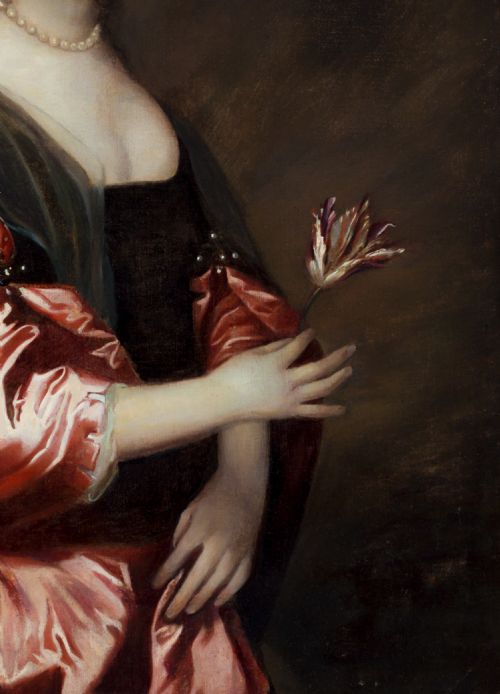
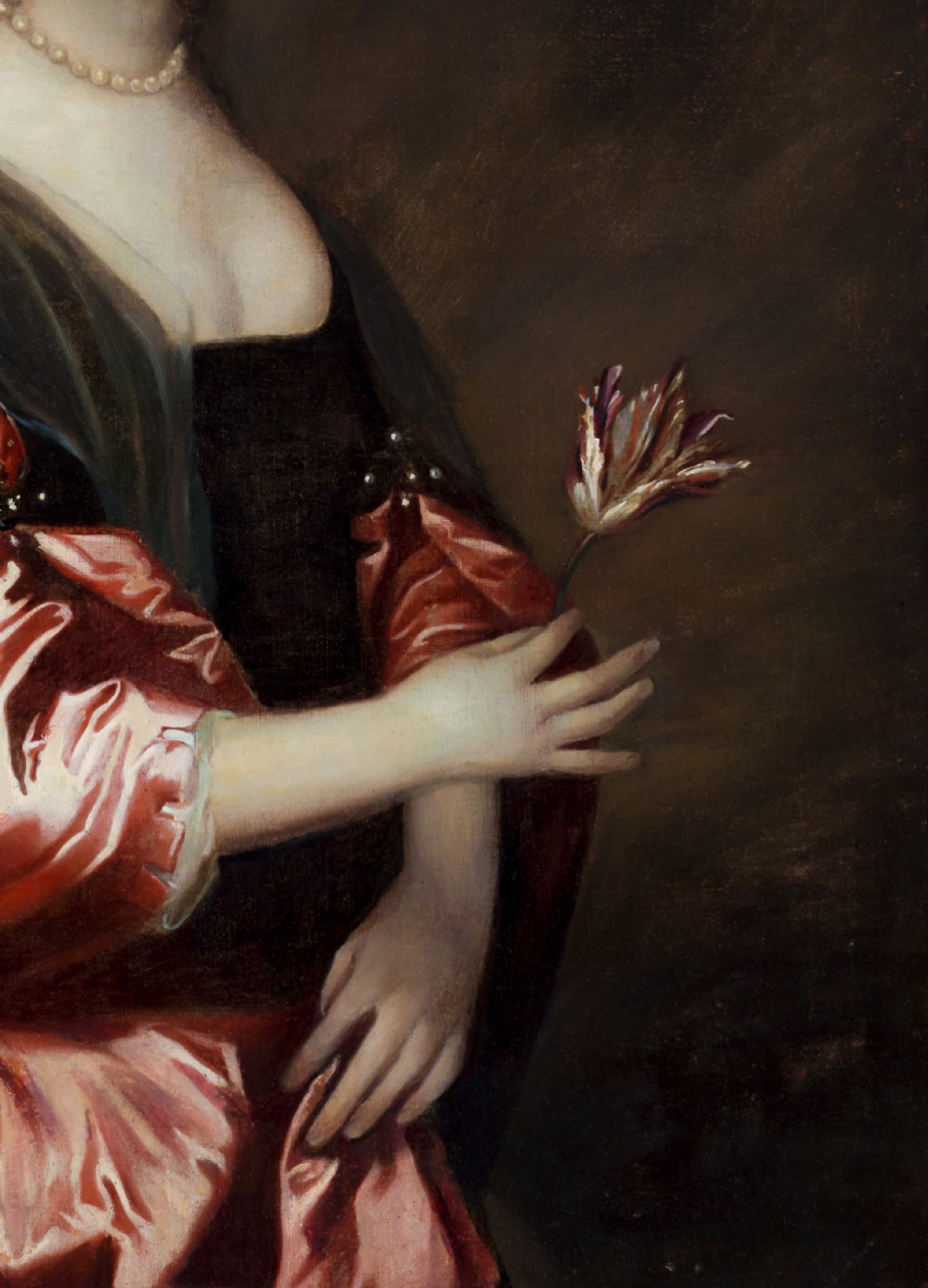
fig 2. A seventeenth-century oil portrait of a lady wearing a black dress with red satin sleeves and pearls, housed in a carved gilded frame.
fig 2. Portrait of a Lady, in a Black Dress with Red Satin Sleeves and Pearls C.1660–1680; English School, Oil on Canvas Painting

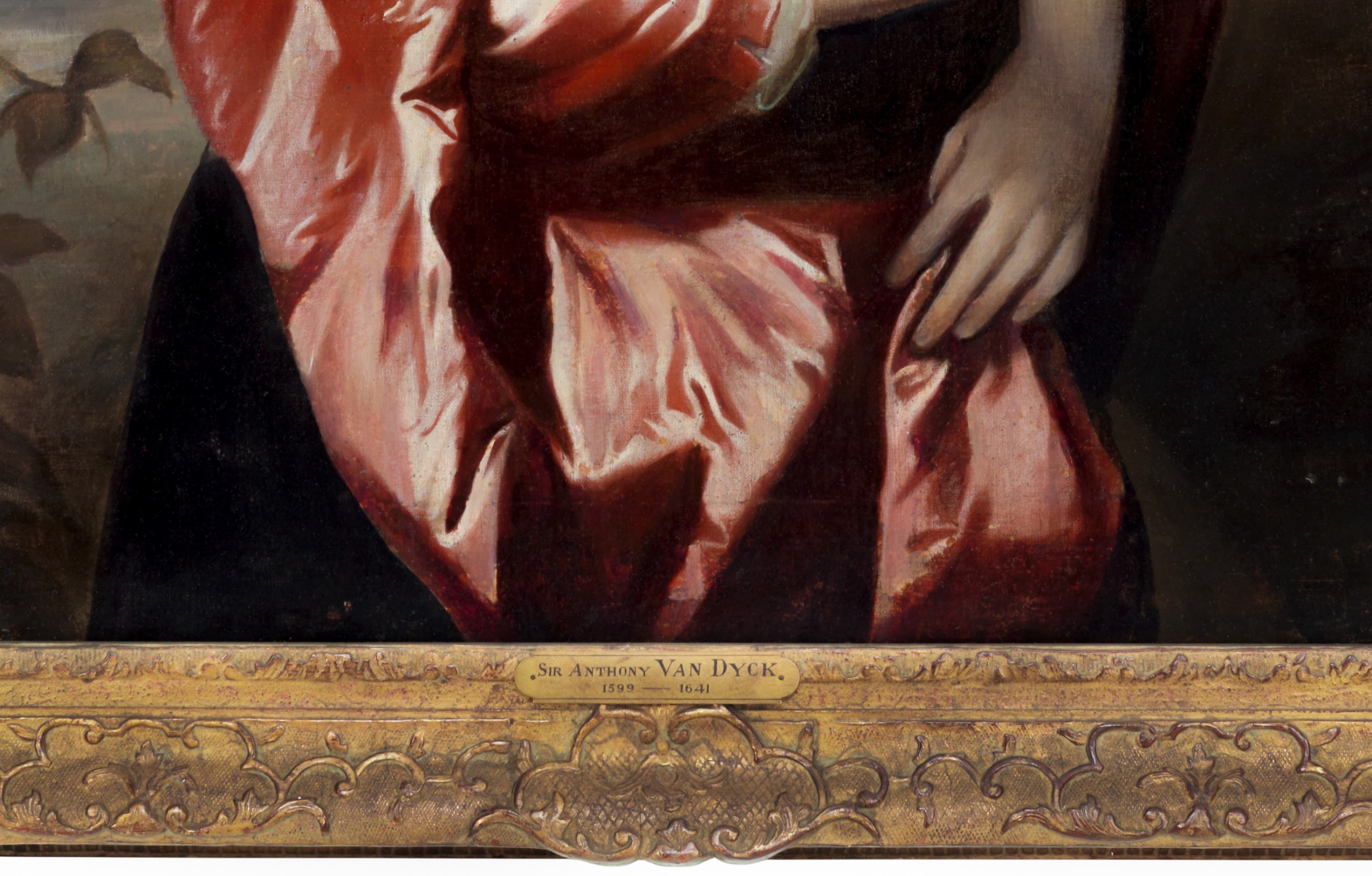
Though her identity is unknown, the portrait clearly represents a woman of the landed gentry or minor aristocracy—wealthy, established, and conscious of status, but not of the highest courtly rank. The absence of heraldry suggests it was made for private display within a country house, likely as part of a familial decorative scheme. Portraits of this type often formed part of a pair, marking marriage, inheritance, or the consolidation of an estate.
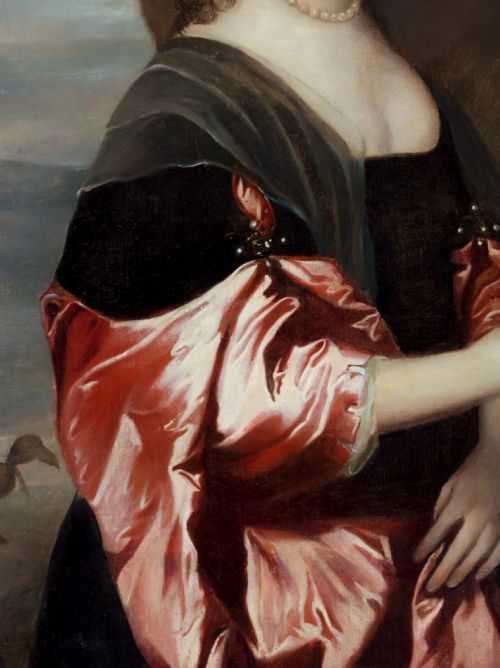
fig 3. A seventeenth-century oil portrait of a lady wearing a black dress with red satin sleeves and pearls, housed in a carved gilded frame.
fig 3. Portrait of a Lady, in a Black Dress with Red Satin Sleeves and Pearls C.1660–1680; English School, Oil on Canvas Painting

The work fits neatly into the broader Restoration portrait tradition. After Van Dyck’s death, his style became the foundation of English portraiture, with artists such as Lely adapting his formulas for a widening circle of provincial patrons. This painting draws directly on that tradition: the landscape setting, dignified pose, and emphasis on satin all reflect the practices of capable mid-century English painters working in Van Dyck’s wake.
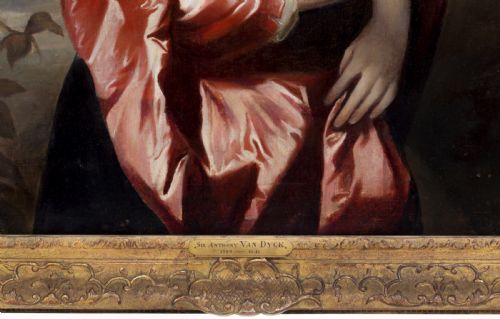
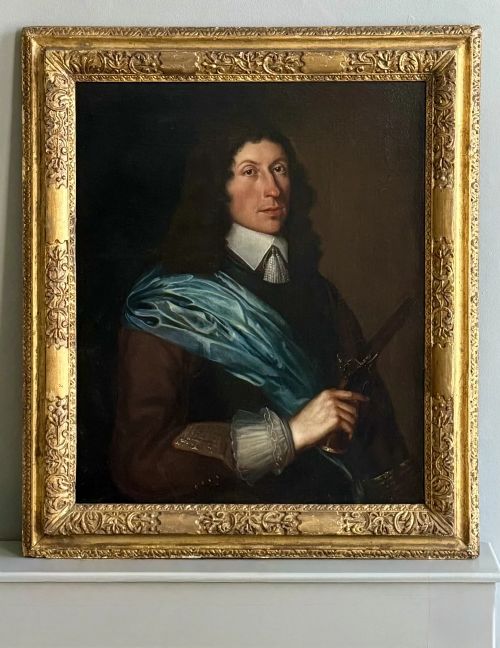
fig 4. A seventeenth-century oil portrait of a lady wearing a black dress with red satin sleeves and pearls, housed in a carved gilded frame.
fig 4. Portrait of a Lady, in a Black Dress with Red Satin Sleeves and Pearls C.1660–1680; English School, Oil on Canvas Painting

Today, the portrait offers an appealing combination of scale, presence, and historical resonance. Its dramatic palette and elegant sitter make it highly versatile, while its clear connection to one of the most important strands of European portraiture gives it strong art-historical appeal. It is a work of genuine decorative and scholarly interest, capable of enhancing both an interior and a collection with authority.

Height
132.5cm (52.17")
Width
114.5cm (45.08")
Depth
8cm (3.15")
Date of Manufacture

Titan Fine Art has dated this 17th Century Oil Portrait to the 17th Century.

Reference Numbers
Sellingantiques Ref
SA1241359
Titan Fine Art
Titan Fine Art
Sellingantiques verified Since Jul 2016

Specialist in 17th & 18thc portraits. Highly curated selection, museum-level research & pro conservation. Exceptional art, expertly vetted.

Dealer Profile

You can view the stock and full dealer information on the Titan Fine Art Profile Page
PDF SHARE
SAVE
A seventeenth-century oil portrait of a lady wearing a black dress with red satin sleeves and pearls, housed in a carved gilded frame.
1 / 5
Archive I A seventeenth-century oil portrait of a lady wearing a black dress with red satin sleeves and pearls, housed in a carved gilded frame.

Portrait of a Lady, in a Black Dress with Red Satin Sleeves and Pearls C.1660–1680; English School, Oil on Canvas Painting
Archive II A seventeenth-century oil portrait of a lady wearing a black dress with red satin sleeves and pearls, housed in a carved gilded frame. View II
Archive III A seventeenth-century oil portrait of a lady wearing a black dress with red satin sleeves and pearls, housed in a carved gilded frame. View III
Archive IV A seventeenth-century oil portrait of a lady wearing a black dress with red satin sleeves and pearls, housed in a carved gilded frame. View IV
Archive V A seventeenth-century oil portrait of a lady wearing a black dress with red satin sleeves and pearls, housed in a carved gilded frame. View V
FURTHER BROWSING

Visitors also looked at these ⇣

Enlarged Archival View
Telephone 07875 412 111
Location
London
United Kingdom
Dealer Profile Page sellingantiques.co.uk/titan
Verified Since Jul 2016
Items For Sale 24
Items Sold 402
Titan Fine Art
Titan Fine Art
Verified Since Jul 2016
View Dealer Info
Location: London, United Kingdom
Verified
Jul 2016
For Sale
24
Sold
402
A seventeenth-century oil portrait of a lady wearing a black dress with red satin sleeves and pearls, housed in a carved gilded frame.
Portrait of a Lady, in a Black Dress with Red Satin Sleeves and Pearls c.1660–1680; English School, Oil on canvas painting
Ref: SA1241359
A seventeenth-century oil portrait of a lady wearing a black dress with red satin sleeves and pearls, housed in a carved gilded frame.
Detail View 1
Detail View 2
Detail View 3
Detail View 4
Archival Detail
Every single antique dealer on our platform is individually approved by our internal team. We verify their professional trade history, ethical standards, and photographic quality to ensure a secure, high-standard buying environment. Upon joining, every dealer agrees to a strict 9-point code of conduct. While issues can occasionally arise, our dealers typically resolve them swiftly and directly with the buyer. In fact, since our founding in 2002, Sellingantiques has only had to step in to help resolve an issue on roughly five occasions—a true testament to the quality of our dealers and their dedication to your happiness.
Our dealers are highly experienced in packing and shipping fragile, high-value antiques. Because you are in direct contact with the dealer, you will be able to easily go through all available shipping and insurance options together to ensure your item arrives safely.
Antiques are the ultimate green purchase. By choosing historical pieces over newly manufactured goods, you completely eliminate the carbon footprint of modern mass production while preserving exceptional, timeless craftsmanship.
Written by Sellingantiques from the dealer’s photographs and listing
  • ObjectOil Paintings
  • Period17th century
  • StyleBaroque
  • MaterialOil on Canvas, Giltwood Frame
  • ColourRed and Black
  • MotifsRed satin drapery, Pearl jewellery, Carved giltwood frame, Muted landscape background
  • SizeH 132.5 cm (52 in) x W 114.5 cm (45 in) x D 8 cm (3 in)

This seventeenth-century oil on canvas painting represents an English School portrait from the Baroque period. The artwork depicts a woman wearing a black dress paired with brilliant crimson satin sleeves, pearl jewellery, and a gauzy scarf, set against a muted landscape background. Encased in a heavily decorated, carved giltwood frame with ornate scrolling mouldings along its outer edges, the composition displays rich red and black tones contrasting with dark shadows and a pale cloudy sky. The canvas measures 132.5 cm high, 114.5 cm wide, and 8 cm deep. In a contemporary home, this piece suits placement above the mantel in a principal interior such as a drawing room or study, where its traditional English Country House aesthetic commands attention. The framed portrait hangs securely on a wall to bring historical character and depth to a reception room or hallway. The physical structure combines oil paint on woven canvas with a solid timber gilded surround, presenting a half-length figure holding a small flower within a dark interior setting.

Restoration era portraiture from the late seventeenth century in Britain reflects fashion influences from the court of Charles II. Portraits during this period frequently depict subjects in dramatic satin drapery, rich colours, and pearls, often set against darkened backgrounds or idealised landscapes.

These artworks were executed using oil-based pigments ground from natural minerals and organic materials, applied directly onto hand-stretched linen or cotton canvas. Frames from this period were typically crafted from wood and finished with hand-carved detail and gold leaf gilding.

Authentic paintings of this era exhibit age-appropriate craquelure across the paint layer, natural oxidisation on the reverse of the canvas, and historical stretcher frames. Examining pigment composition and wood construction techniques under magnification also assists in verification.

A seventeenth-century portrait functions well as a focal point above a fireplace mantel or console table. Positioning the artwork alongside understated contemporary furniture creates a balanced contrast between historical narrative and modern geometry.

Canvas paintings require hanging away from direct sunlight, radiators, and areas of fluctuating humidity to prevent paint cracking or canvas distortion. Dusting should be conducted gently with a soft dry brush, while structural restoration should only be performed by a qualified conservator.
items
Add keywords to the filter
Price
£100
£250000
Era
Period
Style
Material
Origin
Stock Location
Recently Added
Online Payments
Categories