
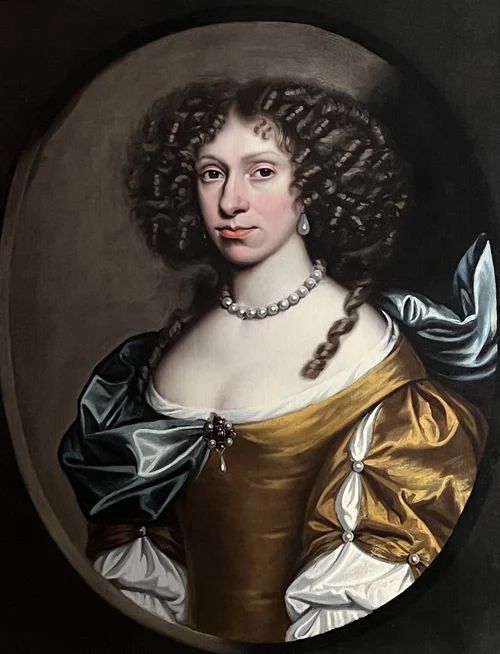


Historical Woman Oil Portrait
A historical woman oil portrait brings centuries of character into a room, offering a direct gaze from the past through layered oil paint on canvas.
Historical Woman Oil Portrait
A historical woman oil portrait captures female subjects across the seventeenth, eighteenth, and nineteenth centuries, spanning Georgian, Victorian, and Baroque sensibilities. These works range from formal depictions of named sitters like Ellen Napier and Catherine Hutton to anonymous genre scenes and masquerade studies.
Buyers will most frequently encounter nineteenth century and eighteenth century canvases framed in gilt wood or gilded wood. The selection includes regional iterations such as the Italian School alongside English School pieces, reflecting diverse domestic and continental traditions.
Subjects vary widely from seated ladies and young women to mothers with infants and artists' daughters. These oil paintings preserve historical dress, textiles, and social standing with remarkable permanence.
Materials and Technique
Painters applied oil paint directly onto stretched canvas or board surfaces, building depth through successive glazes and opaque layers. This medium allowed artists to render the subtle tones of skin and the rich textures of historical garments with precision.
Frames of gilded wood or gilt wood completed these works, often matching the period of the painting itself. The combination of durable oil on canvas and carved wood surrounds ensured these portraits survived across multiple centuries.
The listings span three centuries of portraiture, moving from seventeenth century seventeenth century academic works to Victorian oil on canvas pieces.
Assessing Quality
Execution of the sitter's face and hands separates routine portraiture from works of higher artistic ambition. Mastery of light and shadow in the oil paint determines how lifelike the subject appears.
The preservation of the original canvas and the integrity of the gilt wood frame contribute substantially to the standing of a piece. Attribution to a named hand or a distinct school also elevates the significance of the work.
David Scougall·John Robert Dicksee·Willem Johannes Martens·Balthasar Denner·William Wissing
The Historical Woman Oil Portrait Glossary
- Oil on Canvas
- A painting medium where pigments suspended in oil are applied to woven fabric stretched across a wooden frame. This technique became the standard support for fine portraiture from the Renaissance onward.
- Gilt Wood
- Wood treated with gold leaf or gold paint, commonly used to create ornate picture frames. It provides a reflective border that complements the dark tones of historical oils.
- Baroque
- An artistic style prevalent during the seventeenth century characterised by dramatic lighting and deep shadows. Portraits from this era display intense psychological presence.
- Genre Scene
- A painting that depicts aspects of everyday life by portraying ordinary people in non-specialised settings. These works offer insight into historical domestic routines.
- Victorian
- A period spanning the reign of Queen Victoria marked by distinct developments in academic portraiture. Works from this time often show meticulous attention to fabric and personal adornment.
Historical Woman Oil Portrait: Frequently Asked Questions
How do I identify the period of a portrait?
Examine the style of dress, hair, and framing materials, comparing them against documented historical periods like the eighteenth or nineteenth century. Sitters often wore contemporary fashions that date the canvas securely.
Brushwork and preparatory canvas techniques also offer clues to the era in which the artist worked.
Where should I hang an oil portrait?
Display these works away from direct sunlight and damp environments to protect the oil paint and the underlying canvas. Stable indoor temperatures prevent the gilt wood frame from cracking.
Placing the portrait at eye level in a principal room allows the subject's gaze to engage the space effectively.
What is the difference between named and anonymous sitters?
Portraits with identified sitters, such as Catherine Hutton or Mary Anne Sykes, carry documented biographical history that connects the artwork to specific historical records. Anonymous subjects rely purely on their aesthetic execution and period costume for context.
Both categories offer identical material qualities in their oil on canvas construction.
How do I care for antique oil paintings?
Dust the surface gently with a soft, dry brush and avoid using water or chemical cleaners on the paint layer. Professional conservators should handle any structural repairs to the canvas or gilt wood frame.
Keeping the environment stable preserves the integrity of the paint binders over time.