


A 2026 Guide by Sellingantiques
Early antique vintage watches started as bulky pocket instruments before evolving into wearable items.
Trench warfare forced a rapid shift. Soldiers needed time at a glance, soldering wire lugs onto pocket cases to hold straps.
Waterproofing attempts emerged during the nineteen-twenties. Cases with screw-down backs and crowns offered genuine protection against dust and moisture.
Look at the transition from key-wind to stem-wind mechanisms.
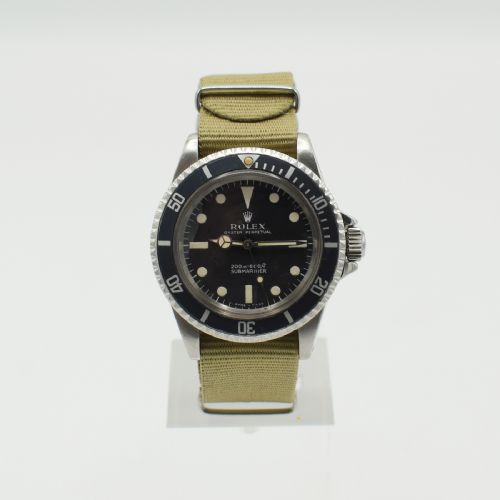
Hans Wilsdorf founded Rolex in 1905, establishing a reputation for early waterproof cases and automatic movements.
Patek Philippe operated from 1839 onwards. They are documented producing complex calendar and chronograph mechanisms in pocket and wrist formats.
Omega dates back to 1848 under Louis Brandt. The company supplied highly accurate chronometer-rated calibres for military and professional use over the following century.
The 2026 retail price guide for Antique Vintage Watches is drawn from a proprietary archive of over 1.1 million retail prices indexed by Sellingantiques since 2003. This guide relies exclusively on their own internal data; no external sources or auction records are used.
Analysing nearly 25 years of UK antique market history alongside current retail values, the data indicates that typical UK retail prices for Antique Vintage Watches range between £200 and £2,500. Entry-level prices generally fall under £200 and premium examples upwards of £2,500.
The movement drives the hands. Mechanical calibres require daily hand-winding or rely on a weighted rotor to wind automatically through wrist movement.
Luminous numerals often rely on radium or tritium paint. These degrade over decades, leaving a characteristic brownish-yellow patina on the dial.
Sub-seconds dials sit just above the six o'clock position. Central sweep seconds became more common later as internal gearing improved.
Hand-finishing sets older calibres apart. Watchmakers applied perlage or Geneva stripes directly to the metal bridges using traditional abrasive tools.
Case manufacturing shifted from forged three-piece assemblies to milled two-piece designs as waterproofing standards tightened.
Notice the hour markers. Early antique vintage watches use painted numerals, while later examples feature applied metal batons riveted through the dial plate.
"Early manufacturers frequently sold movements and dials separately for casing by local jewellers."
"Manual wind chronographs often have intricate column wheels inside. These act as a physical command centre, mechanically directing levers to start and stop the timing hands smoothly."
"Some mid-century dials curve steeply at the edges. This pie-pan shape accommodates the thickness of early automatic rotor modules underneath."
Based on almost 25 years of Sellingantiques UK antique market data, Antique Vintage Watches appeared 2810 times (out of 1,100,000 antiques) which gives it a rarity score of 57/100.
This score measures scarcity within the Sellingantiques archive only and is not a survey of the entire antiques market, so these statistics may not be indicative of the general availability of Antique Vintage Watches elsewhere.
Most mechanical movements have a natural stopping point.
Forcing the crown past this physical resistance breaks the spring. Stop winding upon feeling firm tension.
That behaviour usually points to dried oils inside the movement. Mechanical calibres require specific synthetic lubricants to keep the gear train running smoothly. Over decades, these oils evaporate or turn into a sticky residue.
The watch might tick while the mainspring has maximum tension, stopping as the power drops and friction takes over. A standard service to clean and re-oil the components normally resolves this issue.
A chronograph acts as a built-in stopwatch. It allows you to measure elapsed time independently of the main timekeeping hands.
Pushers on the side of the case start, stop and reset the sweeping seconds hand. Small sub-dials then tally up the elapsed minutes and hours.
Dial restorers can strip the original finish and reprint the markers. This process involves chemically removing the aged lacquer to reach bare metal before applying fresh paint and protective coatings.
Many collectors prefer leaving the aged surface intact. Once a dial is repainted, the historical record of its natural ageing is erased.
Please note: This Antique Vintage Watches guide and its associated pricing data are provided for general informational purposes only. It does not constitute formal financial, investment, or appraisal advice and should not be relied upon as the sole basis for any commercial activity, purchasing, or sales decisions. Sellingantiques.co.uk accepts no liability for any actions taken in reliance on this information. Always consult with a qualified professional or independent appraiser.
