


Antique Georgian Sofas
A long seat for two or more, made for the eighteenth-century English drawing room, sold today alongside the plainer joined settles and benches that served halls and inns.
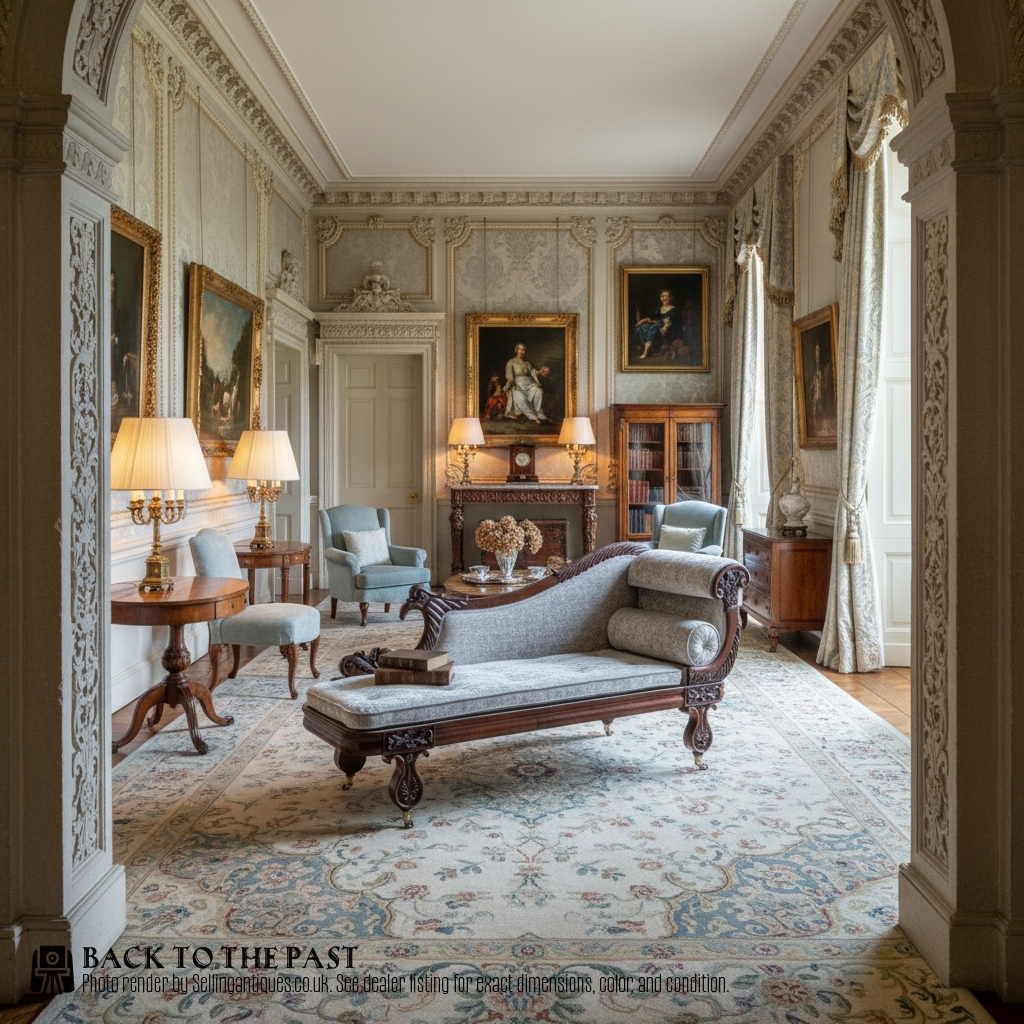
Antique Georgian Sofas
The heading covers upholstered sofas and settees, open chair-back and camel-back settees, chaise longues and daybeds, and joined oak settles and hall benches. Mahogany dominates the frames, appearing in nearly a third of titles, with oak a clear second and smaller showings of walnut, rosewood, satinwood, fruitwood, pine and giltwood.
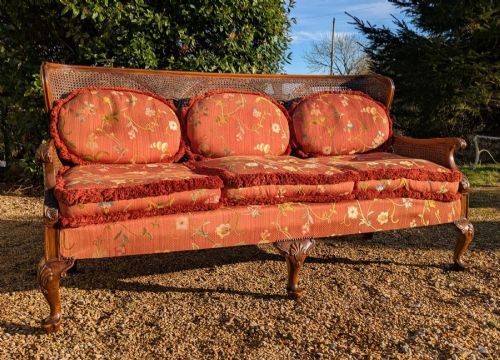
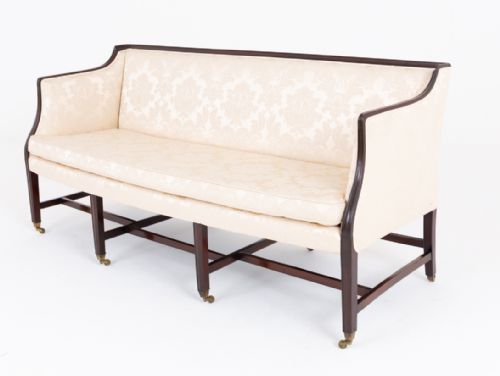
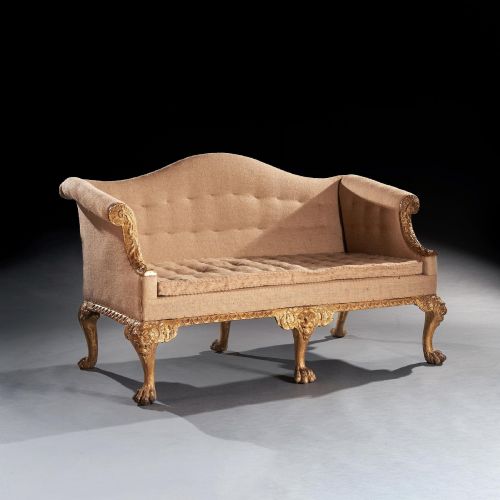
The piece you're most likely to meet is a mahogany-framed upholstered settee of two or three seats. Within that, the camel back is the single most-named shape, ahead of every other profile, followed by the chair-back settee with two, three or four open backs joined in a row. Regency qualifies about one title in seven.
Only part of the group is of Georgian date. A large slice is described as Georgian style, Georgian Revival or in the manner of, carrying dates from the 1890s to the 1930s, and decade tags for the 1900s, 1910s, 1920s and 1930s all turn up. Where a clean year is given on the Regency mahogany and chaise pieces, it clusters around 1810 to 1825.
The oak settles and hall benches form a quiet sub-population of their own, and they hold a bigger share of what has sold on Sellingantiques than of what is listed now. Coachman's, night watchman's, night porter's, tavern, panelled and Gothic examples all appear. They are older and plainer forms, built for passages rather than reception rooms.
Where The Range Splits
Date does most of the work. Eighteenth-century mahogany and giltwood sofas in the Chippendale and Hepplewhite manner sit at the head of the range, while pieces dated 1900 to 1940 and described as Georgian style or Georgian Revival gather through the lower and middle. The manner-of wording is a shape reference, not a date.
Timber and surface separate the rest. Giltwood, rosewood, brass-inlaid and painted-and-gilt examples sit high; plain oak settles and pine sit low, with mahogany spread across the whole range. Frame work counts too, so carved backs, fluted and serpentine rails, lion mask hairy paw feet and ball and claw feet all sit above a plain framed sofa.
Size and number push upward. Large appears in a dozen titles, four-seaters and country house sofas outrank small two-seaters and window seats, and pairs are unusual but present. A matched pair of Regency chaise longues and a pair of Chippendale revival settees both sit near the top.
Antique Georgian Sofas Retail Price Guide 2026
Typical UK retail prices for georgian sofas, calculated from the Sellingantiques database of over a million retail prices indexed since 2003. This retail price guide relies exclusively on Sellingantiques data; no external sources or auction records are used, so the figures do not describe the wider market.
Dates on Sellingantiques listings run from 1750 to 1940, though only thirty-six carry a clean year. The rest use period labels.
The Antique Georgian Sofas Glossary
- Settee
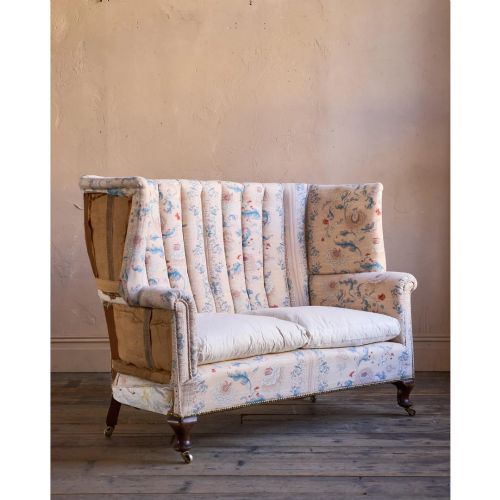
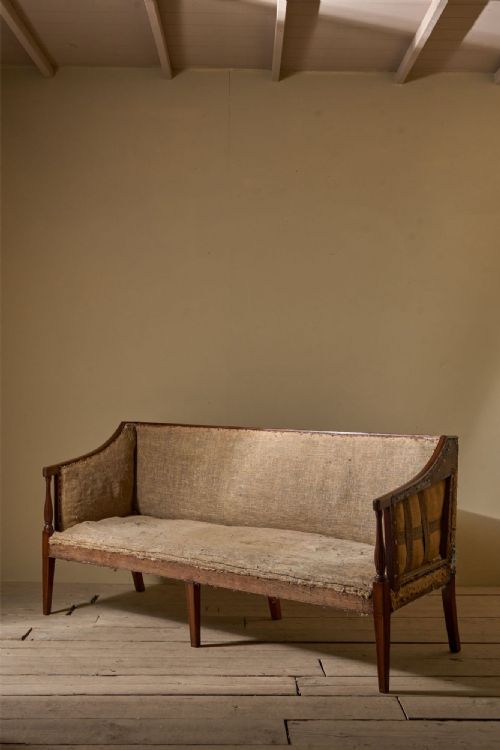
- A long seat with arms and a back, usually lighter and more upright than a sofa. The word appears in more than a fifth of titles here.
- Camel back
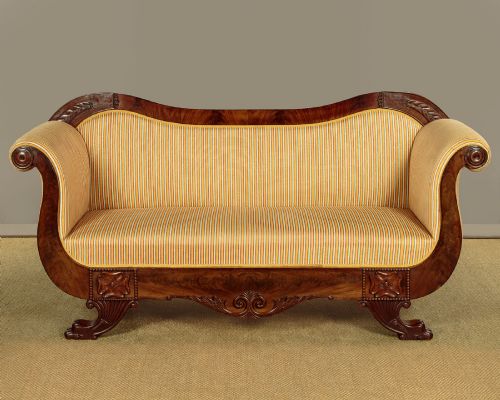
- A back with a humped, serpentine top rail. It's the most-named shape in the category, ahead of scroll ends and wing backs.
- Chair back settee
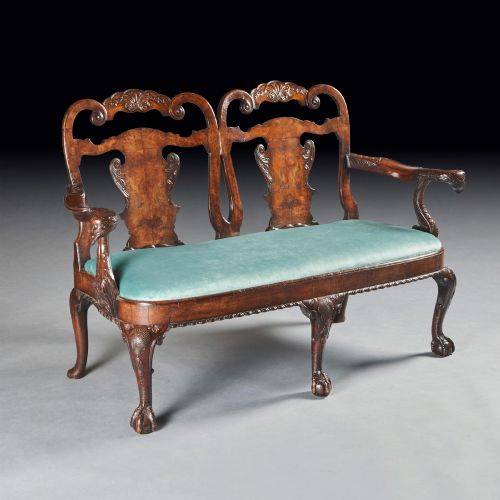
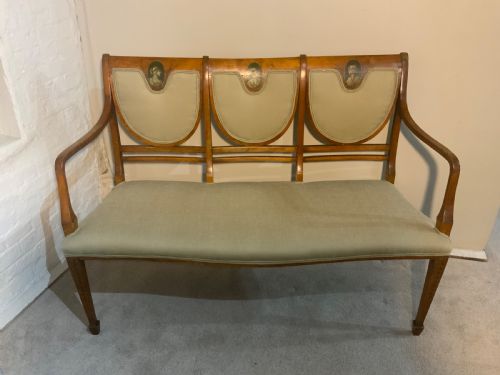
- An open back built from two, three or four chair backs joined in a row. Triple chair back and twin chair back both turn up as titles.
- Settle
- A joined bench with a high panelled back, usually oak. A coachman's settle is one with a hood or high enclosing back, named for waiting servants.
- Chaise longue
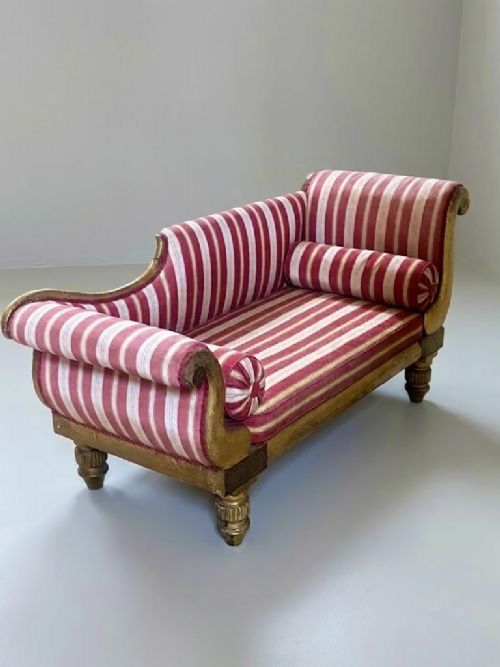
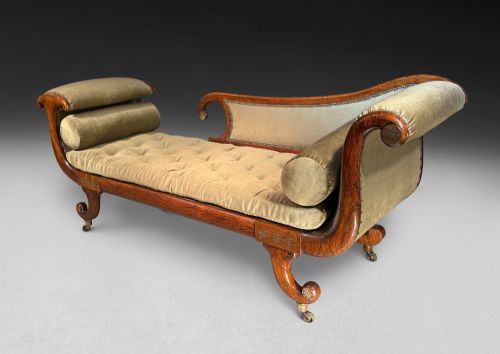
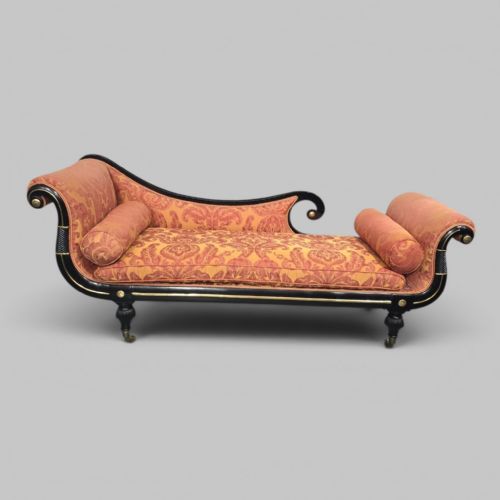
- A long single-ended reclining seat. Spelled lounge as often as longue in these titles, and a daybed is the related low form, long enough to lie on and generally without a full back.
- Simulated rosewood
- A cheaper timber painted or grained to imitate rosewood. Painted finishes turn up more than you might expect, alongside painted pine and painted-and-gilt work.
Antique Georgian Sofas: Frequently Asked Questions
Are all of these actually Georgian?
No. A meaningful share are later revival work, listed as Georgian style, Georgian Revival, George II Revival or Chippendale revival, with dates running from the 1890s into the 1930s.
The dated field is mostly a period label rather than a year. Georgian, 19th Century, Regency and 18th Century overlap heavily in it, and only around three dozen listings carry a clean year at all.
What shape turns up most often?
The camel back, a humped serpentine top rail, is named in fourteen titles and leads every other profile.
After it come the open chair-back settees, where two, three or four chair backs are joined in a row, then scroll ends and wing backs.
Why are oak settles listed under sofas?
They're long seats for two or more, so they sit under the same heading. Settle, oak settle and bench together account for a substantial slice of what has sold on Sellingantiques.
They come from a different world to the drawing room sofa: halls, inns and passages. Coachman's, night watchman's, night porter's, tavern and Gothic types all appear.
Which timbers do these frames use?
Mahogany leads, in roughly a third of titles, and oak follows some way behind.
Walnut, rosewood, satinwood, fruitwood, pine and giltwood make smaller showings, and simulated rosewood, a cheaper timber grained to look the part, appears three times.
How often do Georgian sofas come up for sale?
Around twenty come to market in a year on Sellingantiques.
Seventy-three different dealers have listed one, so this is furniture most dealers handle only occasionally rather than a stock line.
Do any carry a maker's name?
No. The evidence yields no maker candidates, and the two attribution-shaped titles are hedged with wording like possibly by and in the manner of.
In the manner of is a reference to shape, not an attribution and not a date. Chippendale and Hepplewhite are used the same way, to describe an open back or a shield back.