


A 2026 Guide by Sellingantiques
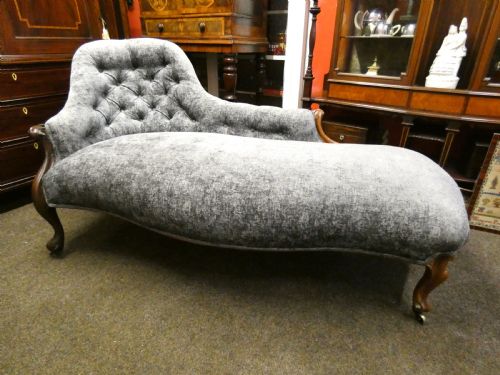
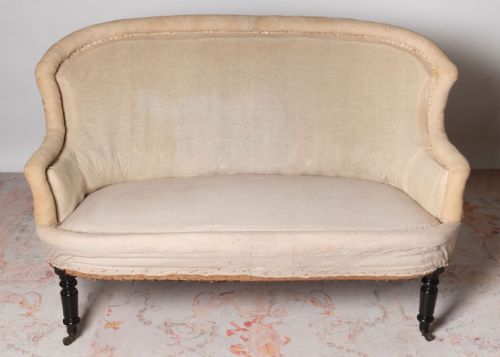
Elegant Regency French Empire-style Sofa, Circa 1820, Regency
Priced at £640 from WelshAntiques
Seating for multiple people developed alongside the rise of the French salon system in the seventeenth century.
Look at the back shapes. Carcase changes track the shift from stiff wall-aligned seating to movable, intimate conversation groups.
The earliest forms were essentially widened armchairs.
Provincial makers copied Parisian styles, scaling them down for smaller country rooms.
A gradual softening of lines continued throughout the eighteenth century, ending in the deep-seated comfort of the Louis XV period.
Georges Jacob stamped numerous late eighteenth-century seat frames, supplying carved mahogany and painted beech examples to the royal household.
Jean-Baptiste Tilliard is documented making fluid, deeply carved Louis XV seating with prominent cartouche motifs.
Do not ignore unsigned work. Many provincial chair makers produced excellent frames without ever adopting the Parisian guild stamping system.
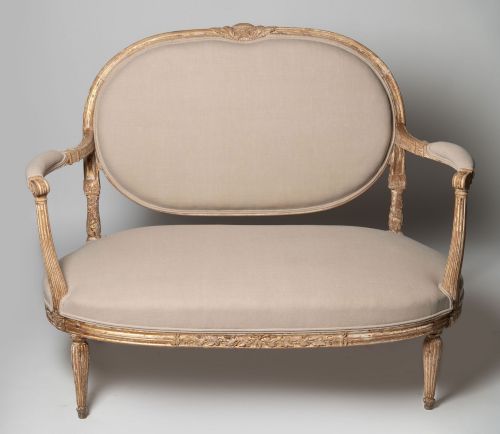
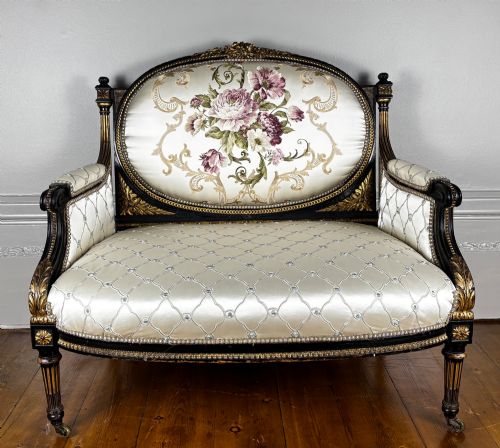
French Walnut Two Seat Sofa, 1880
Priced at £995 from Fernyhough Antiques Ltd
The 2026 retail price guide for Antique French Sofas is drawn from a proprietary archive of over 1.1 million retail prices indexed by Sellingantiques since 2003. This guide relies exclusively on their own internal data; no external sources or auction records are used.
Analysing nearly 25 years of UK antique market history alongside current retail values, the data indicates that typical UK retail prices for Antique French Sofas range between £900 and £2,800. Entry-level prices generally fall under £900 and premium examples upwards of £2,800.
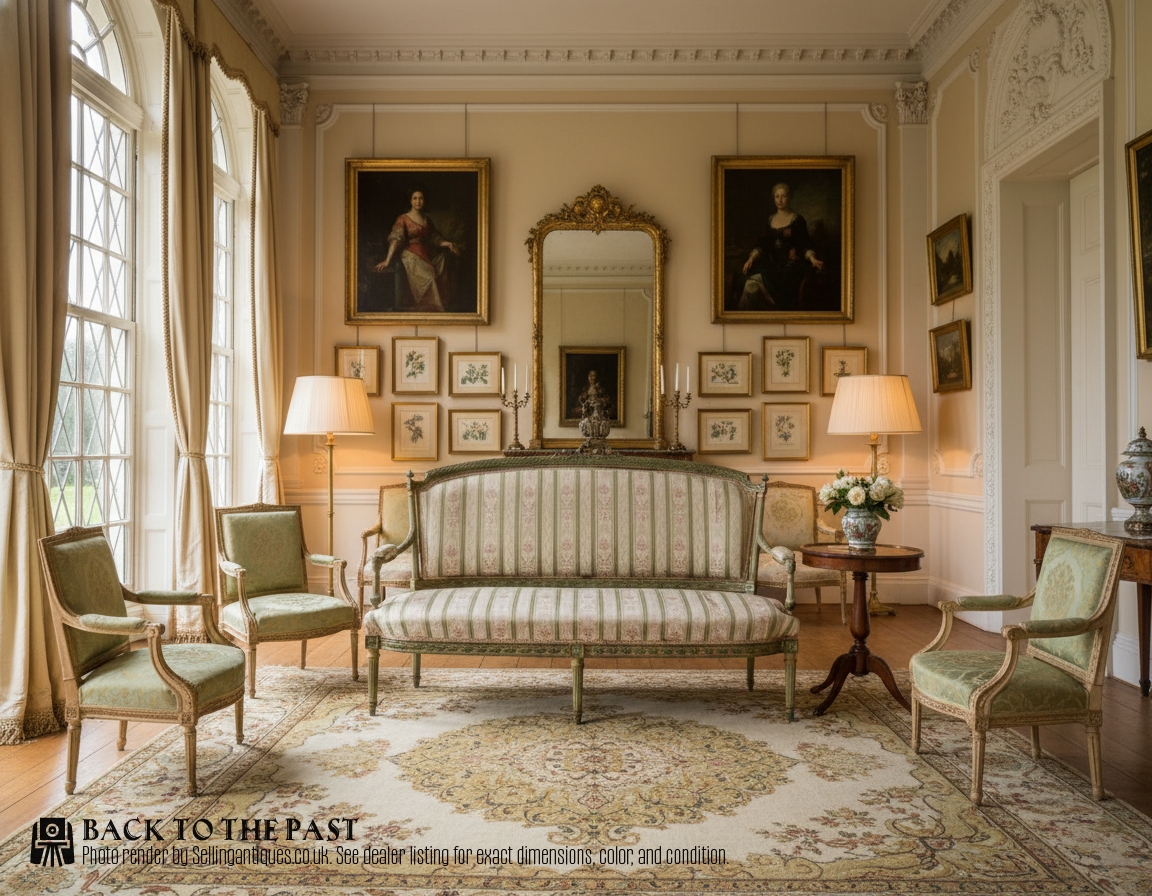
Exposed timber frames trace the entire silhouette. The wood encloses the upholstered back and seat rather than disappearing beneath fabric.
Look for central cresting motifs. The top rail usually rises to a carved focal point above the middle sitter.
Padded armrests known as manchettes soften the wooden arms on most traditional antique French sofas.

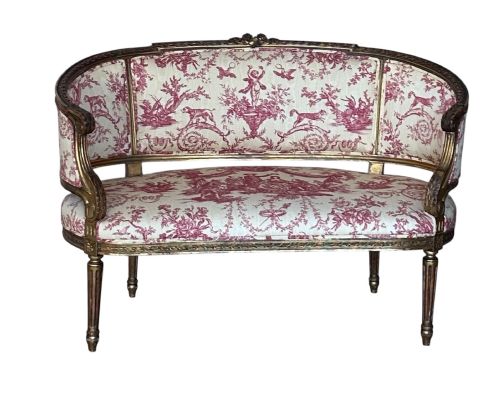
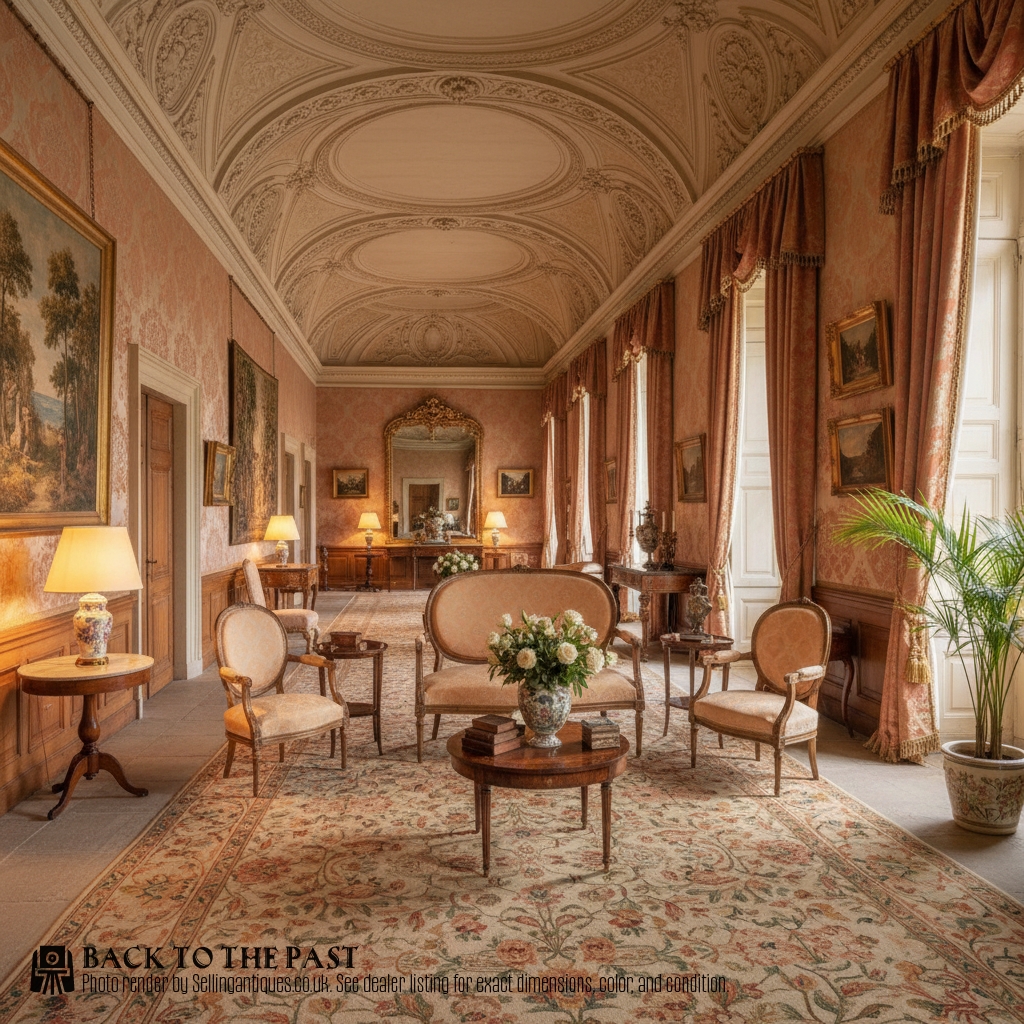
Large French Louis Xv Style Carved Upholstered Walnut Sofa, 1910
Priced at £1,895 from Burgett Langfield Decorative Antiques
Pegged mortise and tenon joints hold the seat rails to the legs. The wooden pegs are driven in off-centre to pull the joint tight.
Turn a frame upside down. You will see heavy linen webbing tacked across the base to support the seat materials.
Hand-carved mouldings run along the exposed wood. Menuisiers cut these directly into the solid timber after assembling the basic carcase.
"Certain models were built with closed, high-sided ends specifically to keep winter draughts away from the sitters."
"Matching chairs often accompanied them. Salons were designed as complete suites with the sofa acting as the focal point."
"Winter and summer covers were a real practice. Some estates kept different fabric sets to rotate with the seasons."
Based on almost 25 years of Sellingantiques UK antique market data, Antique French Sofas appeared 1723 times (out of 1,100,000 antiques) which gives it a rarity score of 71/100.
This score measures scarcity within the Sellingantiques archive only and is not a survey of the entire antiques market, so these statistics may not be indicative of the general availability of Antique French Sofas elsewhere.
It refers to a basket-shaped frame. The back curves around smoothly in a continuous line to meet the armrests without any sharp corners.
This form became popular in the eighteenth century. Sitters found the curved ends comfortable for resting against while turning to face someone else.
Start by looking at the leg shapes. Straight, fluted legs point to the late eighteenth century, while curved cabriole legs indicate earlier decades.
The carving also helps. Symmetrical geometric patterns suggest later neoclassical tastes. Asymmetrical floral work usually means an earlier frame.
Check underneath for circular saw marks. Hand-sawn timber in the hidden carcase is a good sign of age.
You are likely looking at a piece built to sit beneath a window. Tall backs block natural light, so makers designed low-profile seating for exterior walls.
They also sat in front of large mirrors. The low back allowed the mirror glass to remain visible, reflecting light back into the room.
These are sometimes called confidantes if the ends are partitioned off. The low height keeps the room feeling open.
That is an intentional design. The small upholstered pads on the armrests are called manchettes. They provide somewhere soft to rest your elbows while keeping the carved wooden arm supports visible.
If the fabric ran all the way to the back, it would hide the timber joints. French menuisiers wanted their carving seen, so they rarely covered the entire arm.
Please note: This Antique French Sofas guide and its associated pricing data are provided for general informational purposes only. It does not constitute formal financial, investment, or appraisal advice and should not be relied upon as the sole basis for any commercial activity, purchasing, or sales decisions. Sellingantiques.co.uk accepts no liability for any actions taken in reliance on this information. Always consult with a qualified professional or independent appraiser.
