

A 2026 Guide by Sellingantiques
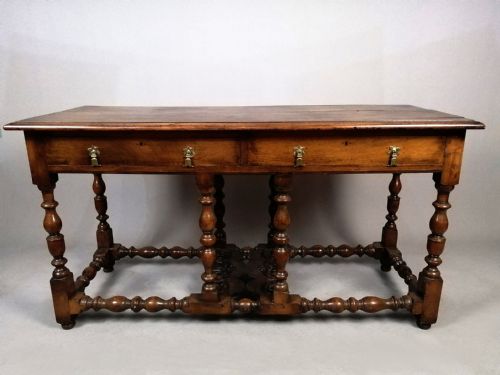
Robert Adam popularised the form during the late eighteenth century by joining a central table with flanking pedestal cupboards to create a single cohesive serving station.
Early Georgian examples often lacked the integrated upper shelving systems that became standard on later Welsh dressers.
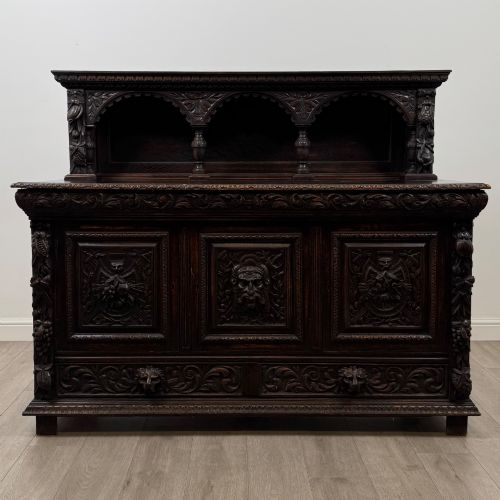
Look at how Victorian cabinetmakers expanded the design into a massive dining room focal point.
Storage needs drove the shift towards deeper carcases to hold vast quantities of formal dining ware.
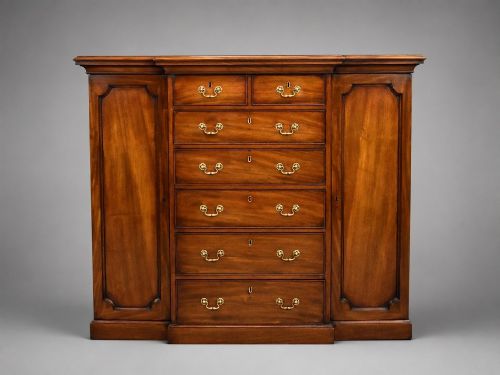
Thomas Chippendale supplied grand mahogany sideboard dressers to wealthy clients, outfitting them with intricate stringing and brass mounts.
Gillows of Lancaster stamped many of their sturdy late Georgian dining pieces along the top edges of drawer fronts.
Scottish cabinetmaker William Trotter favoured dark rosewood and heavy turned reeded legs for his Regency variations.
The 2026 retail price guide for Antique Sideboard Dressers is drawn from a proprietary archive of over 1.1 million retail prices indexed by Sellingantiques since 2003. This guide relies exclusively on their own internal data; no external sources or auction records are used.
Analysing nearly 25 years of UK antique market history alongside current retail values, the data indicates that typical UK retail prices for Antique Sideboard Dressers range between £1,000 and £3,600. Entry-level prices generally fall under £1,000 and premium examples upwards of £3,600.
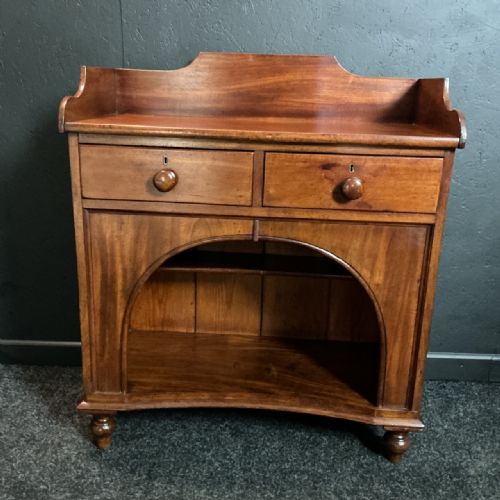
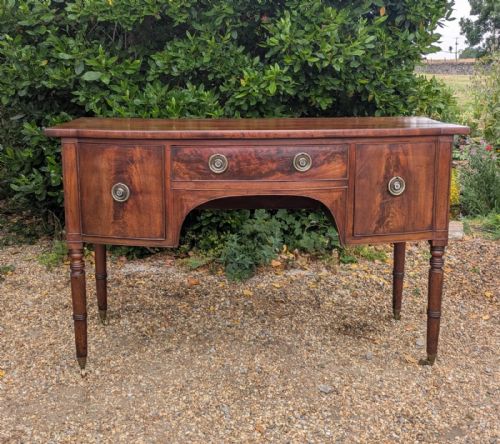
Central napery drawers pull out smoothly above a recessed arch that was originally designed to hold a freestanding brass-bound wine cooler during formal dinners.
Flanking deep cupboards frequently contain partitioned cellaret drawers lined in lead to chill bottles.
Notice the protective brass gallery rails mounted along the back edge to stop plates slipping down the wall.
Dovetail joints evolved steadily from coarse wide cuts on early oak dressers to very fine narrow pins on later Regency mahogany versions.
Cabinetmakers began hiding structural joins behind applied mouldings to create a seamless facade across the whole carcase.
Turn the piece around to see the hand-planed backboards fixed horizontally with forged iron nails.
"Some large designs break down into three separate sections for easier transport up tight Victorian staircases."
"Secret catches occasionally release false drawer fronts, revealing hidden compartments for storing household silver out of sight."
"Look for small sliding trays fitted inside the central drawer, designed specifically to sort different sizes of cutlery."
Based on almost 25 years of Sellingantiques UK antique market data, Antique Sideboard Dressers appeared 6414 times (out of 1,100,000 antiques) which gives it a rarity score of 28/100.
This score measures scarcity within the Sellingantiques archive only and is not a survey of the entire antiques market, so these statistics may not be indicative of the general availability of Antique Sideboard Dressers elsewhere.
Take them off the drawer fronts first if you can. It stops polish marking the wood and saves the surrounding finish from chemical damage.
Use a soft cloth and a mild metal polish. Work it into the details gently, then buff the brass back to a dull shine. Don't aim for a bright mirror finish on old metal.
Most late Victorian and Edwardian sideboard dressers were built in two pieces. The mirrored back simply rests on the base and is secured by metal brackets or screws behind the carcase.
You can detach it easily without harming the structural integrity of the base. Keep the screws and the top section together somewhere dry in case you ever want to reunite them. The base works well as a standalone credenza.
Wine bottles. The deeper flanking drawers are cellarets, often lined with lead to keep liquids cool and prevent condensation from rotting the timber.
Some retain their internal wooden dividers to stop bottles clinking together when the drawer is opened.
That gap is shrinkage. Solid timber panels expand and contract with seasonal humidity changes in the room.
If central heating dries the air too much, the wood pulls apart along the grain. It is a natural process rather than structural failure. Keep it away from direct heat sources like radiators to stop the split widening.
Never fill the gap with modern wood filler. When the seasons change and the wood swells, rigid fillers will force the frame apart and cause damage.
Please note: This Antique Sideboard Dressers guide and its associated pricing data are provided for general informational purposes only. It does not constitute formal financial, investment, or appraisal advice and should not be relied upon as the sole basis for any commercial activity, purchasing, or sales decisions. Sellingantiques.co.uk accepts no liability for any actions taken in reliance on this information. Always consult with a qualified professional or independent appraiser.
