


A 2026 Guide by Sellingantiques
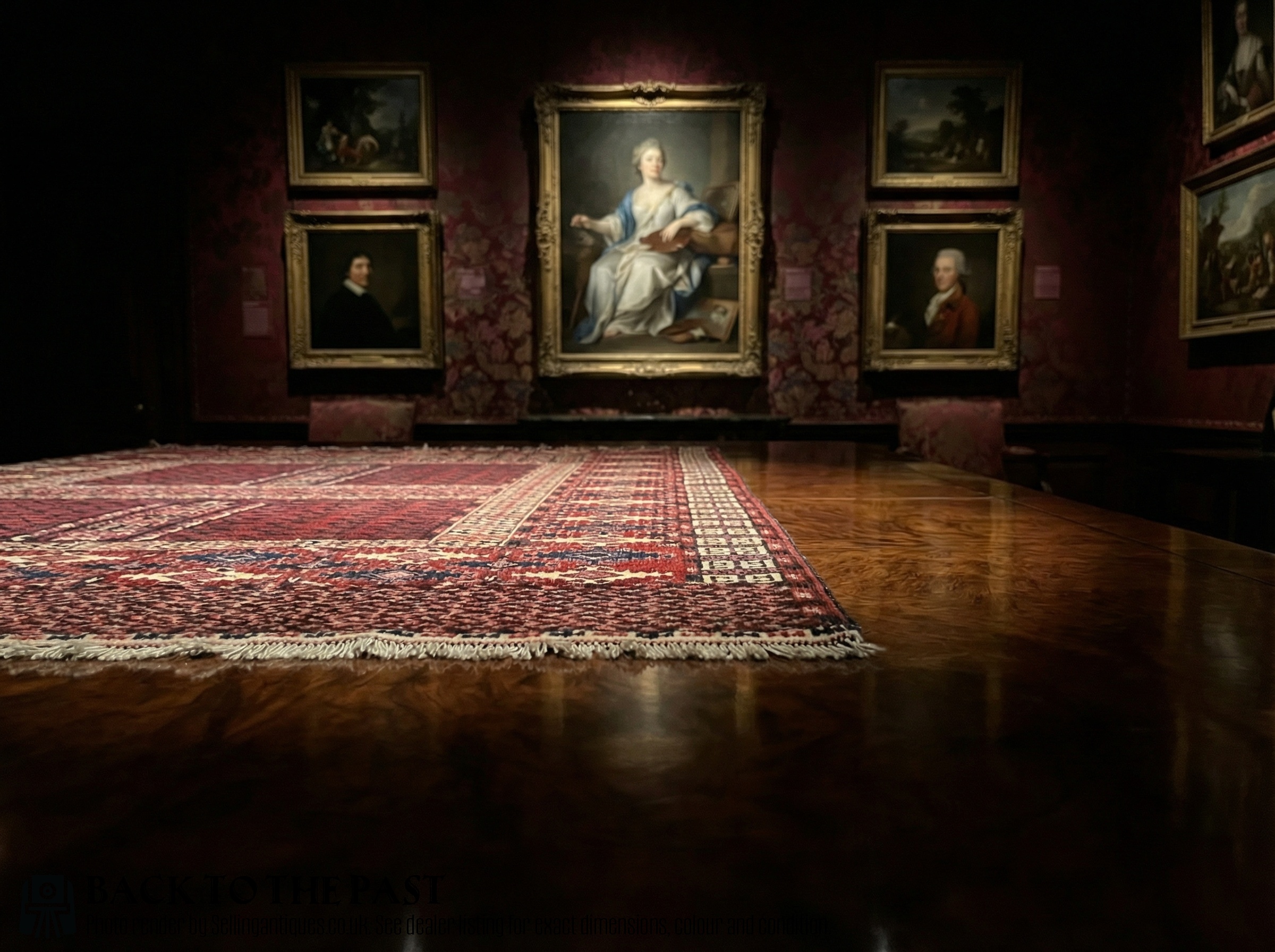
Tekke Turkmen Ensi Circa 1900, 1900
Priced at £550 from Estate Antiques
Antique Turkmen rugs emerged from the vast steppes of Central Asia, where nomads wove them for daily yurt life.
Look at the repeating motifs to identify the weaving tribe. Specific patterns belong to specific groups.
Russian expansion changed the region. Commercial trade slowly took over from domestic production during the late nineteenth century.
Generations of women passed these techniques down. They wove on portable horizontal looms that packed up quickly.
Tekke weavers produced tightly knotted pieces. Their distinctive round guls often appear on a bright red ground.
Look for diamond-shaped medallions with serrated edges on a browner red ground to identify Yomut work.
The Ersari group typically wove larger designs. Their knotting often feels looser compared to other tribal output.
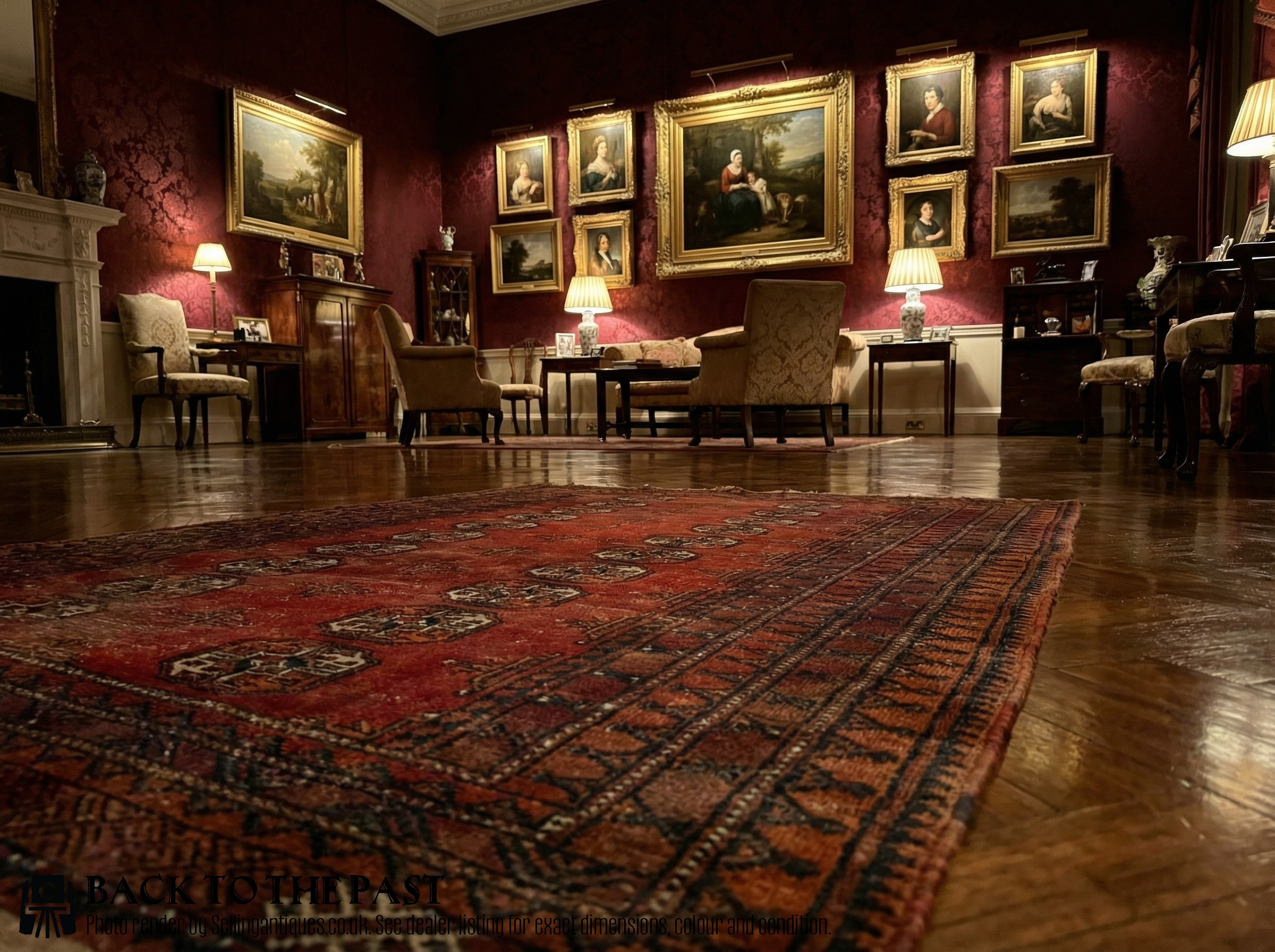
Red Tekke Turkmen Carpet, 1900
Priced at £475 from Baggott & Co.
The 2026 retail price guide for Antique Turkmen Rugs is drawn from a proprietary archive of over 1.1 million retail prices indexed by Sellingantiques since 2003. This guide relies exclusively on their own internal data; no external sources or auction records are used.
Analysing nearly 25 years of UK antique market history alongside current retail values, the data indicates that typical UK retail prices for Antique Turkmen Rugs range between £800 and £4,500. Entry-level prices generally fall under £800 and premium examples upwards of £4,500.
Repeating geometric medallions dominate the field. Dealers call these shapes guls.
The colour palette leans heavily on rich reds and browns. Dark blues and ivory add contrast.
Notice the multiple borders framing the central design. They usually feature smaller, trailing vine or star patterns.
Nomads relied on collapsible horizontal looms. These frames sat flat on the ground and moved easily between seasonal camps.
Knot density varies wildly among the different tribes. Some small tent bags have hundreds of knots per square inch.
Feel the flexibility of the handle. Hand-spun wool and natural foundation threads give the structure a supple drape.
"They wove shaped doorway hangings called ensis. These covered the yurt entrance and featured specific cross-shaped layouts."
"Camels wore special trappings during wedding processions. Weavers made pentagonal knee pieces just for these occasions."
"The dyes age well. A good madder red softens into a warm brick tone rather than fading away."
Based on almost 25 years of Sellingantiques UK antique market data, Antique Turkmen Rugs appeared 1222 times (out of 1,100,000 antiques) which gives it a rarity score of 78/100.
This score measures scarcity within the Sellingantiques archive only and is not a survey of the entire antiques market, so these statistics may not be indicative of the general availability of Antique Turkmen Rugs elsewhere.
Vacuum both sides on a low suction setting. Turn the rug face down first, as this beats the loose grit out of the foundation.
Never use standard carpet shampoos. If a spill happens, blot it with a damp cloth and contact a specialist restorer.
Low pile is normal for something that has spent a century on the floor. Many collectors prefer to leave honest wear alone, provided the structure remains stable.
Reweaving large sections involves stripping out the old foundation and replacing the knots. It changes the character of the piece and often looks stiff.
Focus on conservation rather than restoration. A professional can secure any loose threads to stop the damage spreading, which preserves the original fabric.
A kilim end refers to the flat-woven section at either end of the rug. It has no pile.
Weavers create this band to lock the knots firmly in place. It acts as a bumper against fraying.
That change is called abrash. It happens because nomadic weavers dyed their wool in small batches over open fires, leading to natural variations in the hue.
When light hits the pile from different angles, these subtle colour shifts become obvious. It is a feature of traditional hand-spun wool rather than a flaw.
Please note: This Antique Turkmen Rugs guide and its associated pricing data are provided for general informational purposes only. It does not constitute formal financial, investment, or appraisal advice and should not be relied upon as the sole basis for any commercial activity, purchasing, or sales decisions. Sellingantiques.co.uk accepts no liability for any actions taken in reliance on this information. Always consult with a qualified professional or independent appraiser.
