
There are no results to show on this page for that combination of filters:
Antique Kurdish Rugs in Scotland
A 2026 Guide by Sellingantiques
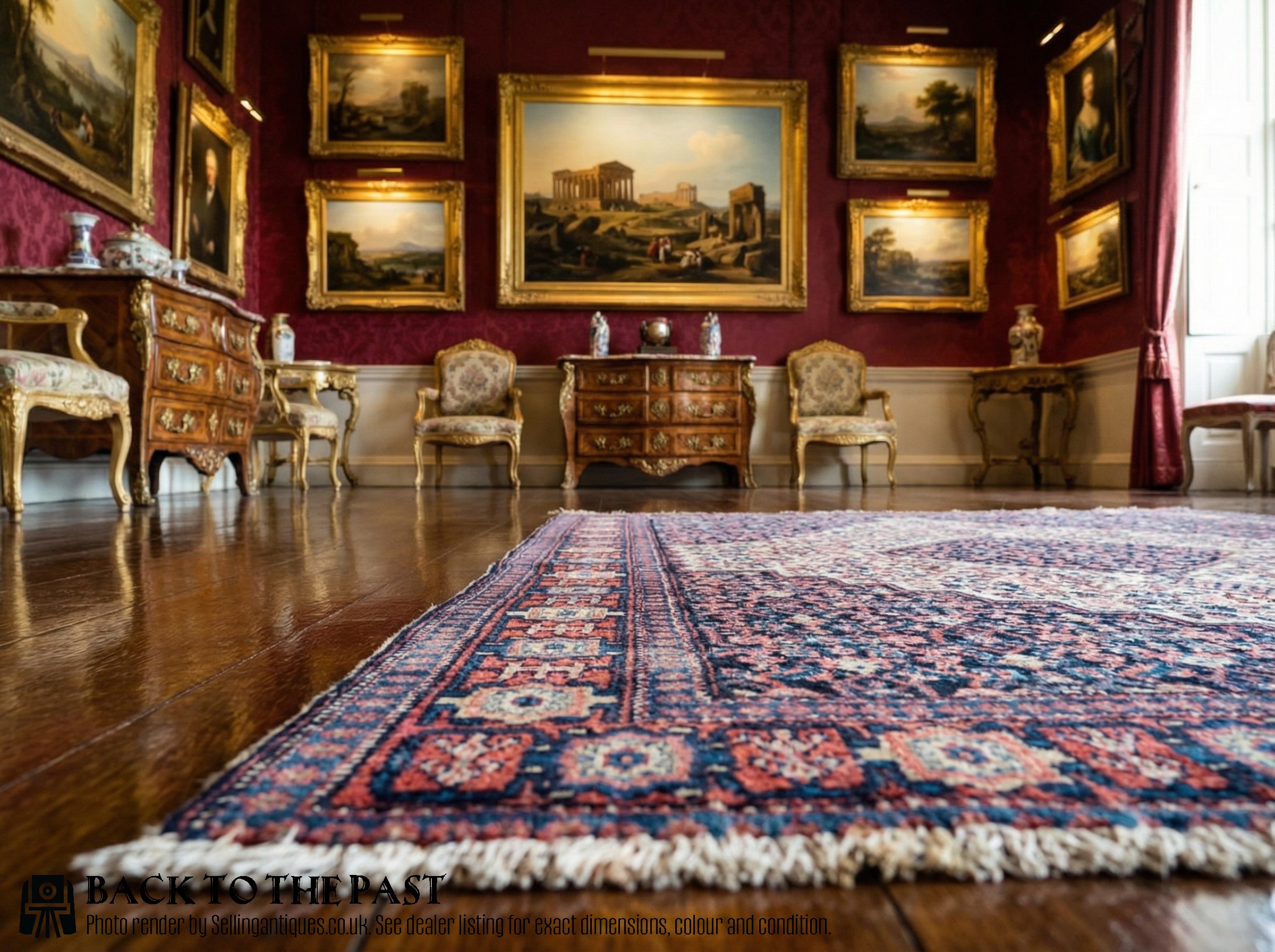
Antique Kurdish Senneh Rug. 135cm X 102cm., 1900
Priced at £325 from Country House and Eastern Interiors
Nomadic tribes and settled villagers wove these stout textiles across a vast mountainous region.
Regional borders shifted often between empires over the centuries, yet local weaving practices and tribal motifs stayed consistent across generations.
Woven strictly for hard everyday domestic use rather than as commercial exports for Western living rooms.
Look for distinct tribal variations depending on whether the piece originated in the Sanandaj area or much further north near Mount Ararat.
Women directed the looming process and passed down specific family patterns without relying on written guides or formal cartoons.
Specific named makers rarely appear in this tradition, as the work was communal and unsigned.
Jaff Kurds are known for their distinctive diamond-lattice bag faces and small scatter rugs.
Weavers in the Senneh region produced unusually fine, single-wefted pieces that contrast sharply with the heavier mountain output seen elsewhere in the area.
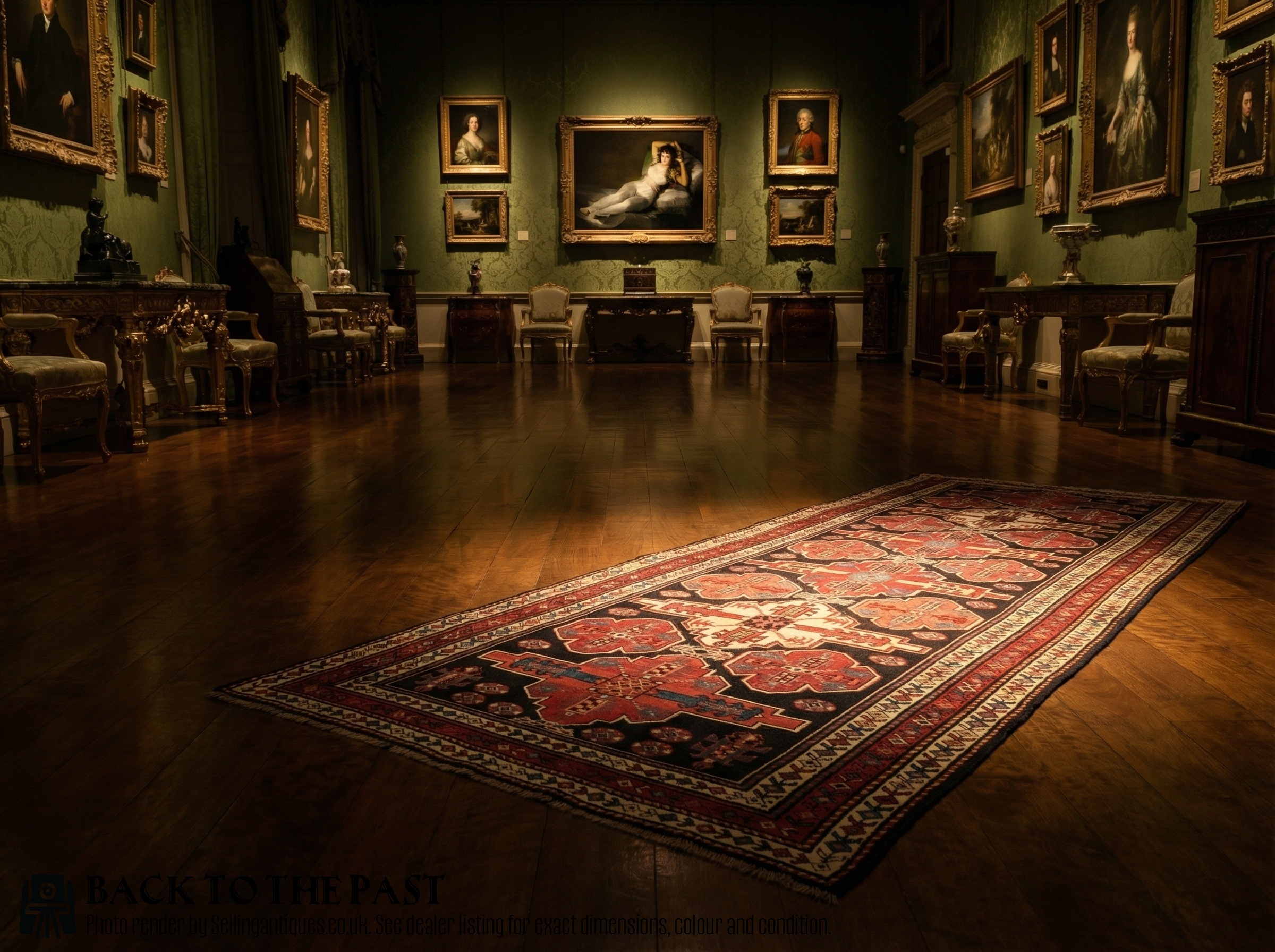
Antique Kurdish Long Rug Kelleh. 291cm X 127cm., 1900
Priced at £795 from Country House and Eastern Interiors
The 2026 retail price guide for Antique Kurdish Rugs is drawn from a proprietary archive of over 1.1 million retail prices indexed by Sellingantiques since 2003. This guide relies exclusively on their own internal data; no external sources or auction records are used.
Analysing nearly 25 years of UK antique market history alongside current retail values, the data indicates that typical UK retail prices for Antique Kurdish Rugs range between £700 and £4,300. Entry-level prices generally fall under £700 and premium examples upwards of £4,300.
Heavy chunky knots give antique Kurdish rugs a fleshy handle that separates them from tighter city weaves.
Mina Khani floral lattices and oversized geometric medallions often dominate the central field.
Expect broad selvedges wrapped in dark goat hair along the edges, designed to protect the rug against harsh floor surfaces.
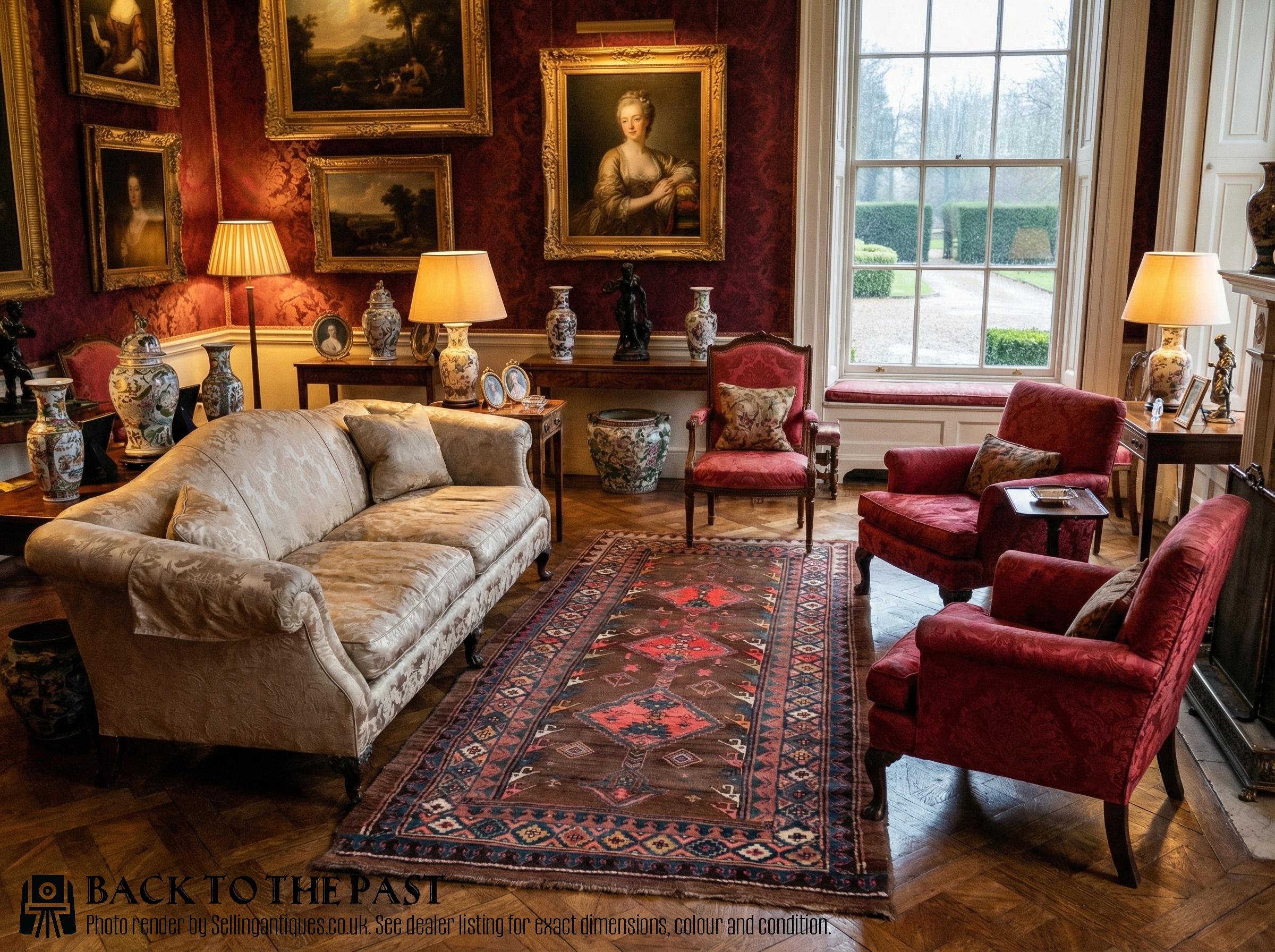
Antique Kurdish Long Rug. 252cm X 124cm., 1920
Priced at £450 from Country House and Eastern Interiors
Horizontal ground looms allowed nomadic families to dismantle their equipment quickly when moving to seasonal pastures.
Settled village weavers favoured upright looms. This framework let them weave wider antique Kurdish rugs with more uniform tension across the warp.
Thick woollen wefts were often dyed brown or red before being beaten down heavily with a comb.
"Some weavers incorporated small protective talismans or spontaneous animal figures hidden deep within the dense geometric borders."
"The heavy goat hair bindings along the sides naturally repel local pests from attacking the wool."
"Many long runners were woven specifically to line the edges of traditional felt tents during harsh mountain winters."
Based on almost 25 years of Sellingantiques UK antique market data, Antique Kurdish Rugs appeared 619 times (out of 1,100,000 antiques) which gives it a rarity score of 88/100.
This score measures scarcity within the Sellingantiques archive only and is not a survey of the entire antiques market, so these statistics may not be indicative of the general availability of Antique Kurdish Rugs elsewhere.
It refers to a repeating floral trellis pattern. You often see it covering the entire main field, made up of four round blossoms arranged around a central diamond.
The design spreads outwards in an endless repeat. Weavers used it heavily in the Senneh and Saujbulagh areas.
Irregular shapes are standard for village and nomadic weaving. A wonky shape usually means the weaver used a horizontal ground loom on uneven terrain.
When tension on the warp threads changes during the weaving process, the sides naturally pull in or bow out. Sometimes they packed the wefts tighter on one side than the other.
Dealers expect a bit of curvature. It adds character to the piece and shows it was made by hand rather than pinned to a rigid factory frame.
Yes, a good pad prevents the rug from slipping on hard floors. It also reduces friction between the knots and the ground.
A proper cushion takes the daily impact of footsteps, helping the wool pile last much longer.
That colour shift is called abrash. It happens when the weaver runs out of a specific batch of dyed wool and starts using a new batch dyed on a different day.
Natural dyes like indigo take differently depending on the water temperature and the mineral content of the dye bath. Even wool from the same flock absorbs pigment unevenly.
Collectors look for these horizontal bands of colour. They break up large blocks of field colour and give the textile a visually layered surface.
Please note: This Antique Kurdish Rugs guide and its associated pricing data are provided for general informational purposes only. It does not constitute formal financial, investment, or appraisal advice and should not be relied upon as the sole basis for any commercial activity, purchasing, or sales decisions. Sellingantiques.co.uk accepts no liability for any actions taken in reliance on this information. Always consult with a qualified professional or independent appraiser.
