
A 2026 Guide by Sellingantiques
Production began in the 1750s under William Duesbury. He built the Nottingham Road factory into a ceramics powerhouse.
Competing directly with Sèvres. Antique Derby plates from the late eighteenth century often copied French shapes and ground colours.
Look for the crown and crossed batons mark. It usually indicates the period after King George III granted the factory royal recognition.
Around 1811, Robert Bloor took over the works. Output quickly shifted towards heavier, highly decorated tableware.
Royal Crown Derby emerged much later in a different factory. Do not confuse late nineteenth-century production with the older wares.
Between 1774 and 1796, William Billingsley worked there. He developed a distinctive method of painting roses by washing colour on and wiping it away.
During the 1780s, Zachariah Boreman painted landscapes. His scenes use a muted palette of greys and soft greens.
John Brewer joined in the 1790s. Camp scenes and detailed shipping subjects are often attributed to his hand.
The 2026 retail price guide for Antique Derby Plates is drawn from a proprietary archive of over 1.1 million retail prices indexed by Sellingantiques since 2003. This guide relies exclusively on their own internal data; no external sources or auction records are used.
Analysing nearly 25 years of UK antique market history alongside current retail values, the data indicates that typical UK retail prices for Antique Derby Plates range between £100 and £1,200. Entry-level prices generally fall under £100 and premium examples upwards of £1,200.
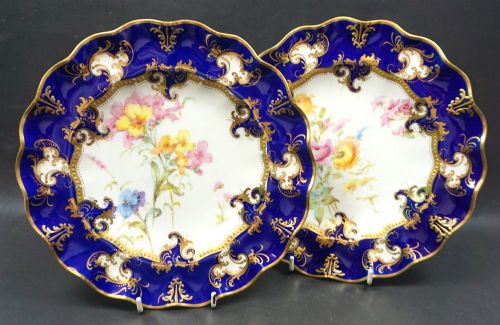
Painted central reserves frequently feature botanical specimens or topographical landscapes. The factory employed specialist painters for these specific subjects.
Wide borders decorated with gilding are standard on late eighteenth-century examples. Neoclassical swags and urns feature heavily.
Check the foot rim. Antique Derby plates often have three small unglazed patches on the base where they rested on kiln supports.
Workers used press-moulding to form the clay over plaster shapes. This ensured uniform sizing across a large dinner service.
Multiple trips to the muffle kiln were required for hand-painted enamels. Different colours fixed at different temperatures.
Expect simple lobed edges on early rims. Later nineteenth-century examples feature heavy gadrooning and complex pierced borders.
"Hidden numbers often sit near the foot rim. These pattern marks match up with original factory drawing books still held in archives."
"Potters experimented constantly with the clay body recipe. They mixed local minerals to improve the translucency of the finished ware."
"Aristocrats sometimes had plate shapes named after them when they commissioned the first service in a new style."
Based on almost 25 years of Sellingantiques UK antique market data, Antique Derby Plates appeared 209 times (out of 1,100,000 antiques) which gives it a rarity score of 96/100.
This score measures scarcity within the Sellingantiques archive only and is not a survey of the entire antiques market, so these statistics may not be indicative of the general availability of Antique Derby Plates elsewhere.
Red marks usually indicate a slightly later production date. The factory switched from blue or puce marks to red around the start of the nineteenth century.
During the Bloor period, workmen painted the crown and crossed batons in a bright iron red. These marks were sometimes applied quite hastily.
The tint comes from the specific glaze recipe used during the late eighteenth century. Factory workers added a tiny amount of cobalt to the liquid glaze mixture to counteract the natural yellow tone of the clay.
Sometimes this cobalt pooled thicker in the crevices or around the foot rim. It leaves a faint blue tinge that collectors look for on earlier wares.
Hand washing in warm water is safe. Use a mild soap and a soft cloth.
Never soak them. Dirty water seeps into the unglazed paste and causes permanent stains.
Many landscape subjects were left untitled. The artists frequently worked from generic prints or composed romantic scenes from imagination rather than painting specific local views.
When the factory did paint a real location, they often wrote the name on the reverse in blue script. If there is no title, it is usually a generic composition meant to evoke a rural mood.
Please note: This Antique Derby Plates guide and its associated pricing data are provided for general informational purposes only. It does not constitute formal financial, investment, or appraisal advice and should not be relied upon as the sole basis for any commercial activity, purchasing, or sales decisions. Sellingantiques.co.uk accepts no liability for any actions taken in reliance on this information. Always consult with a qualified professional or independent appraiser.
