

A 2026 Guide by Sellingantiques
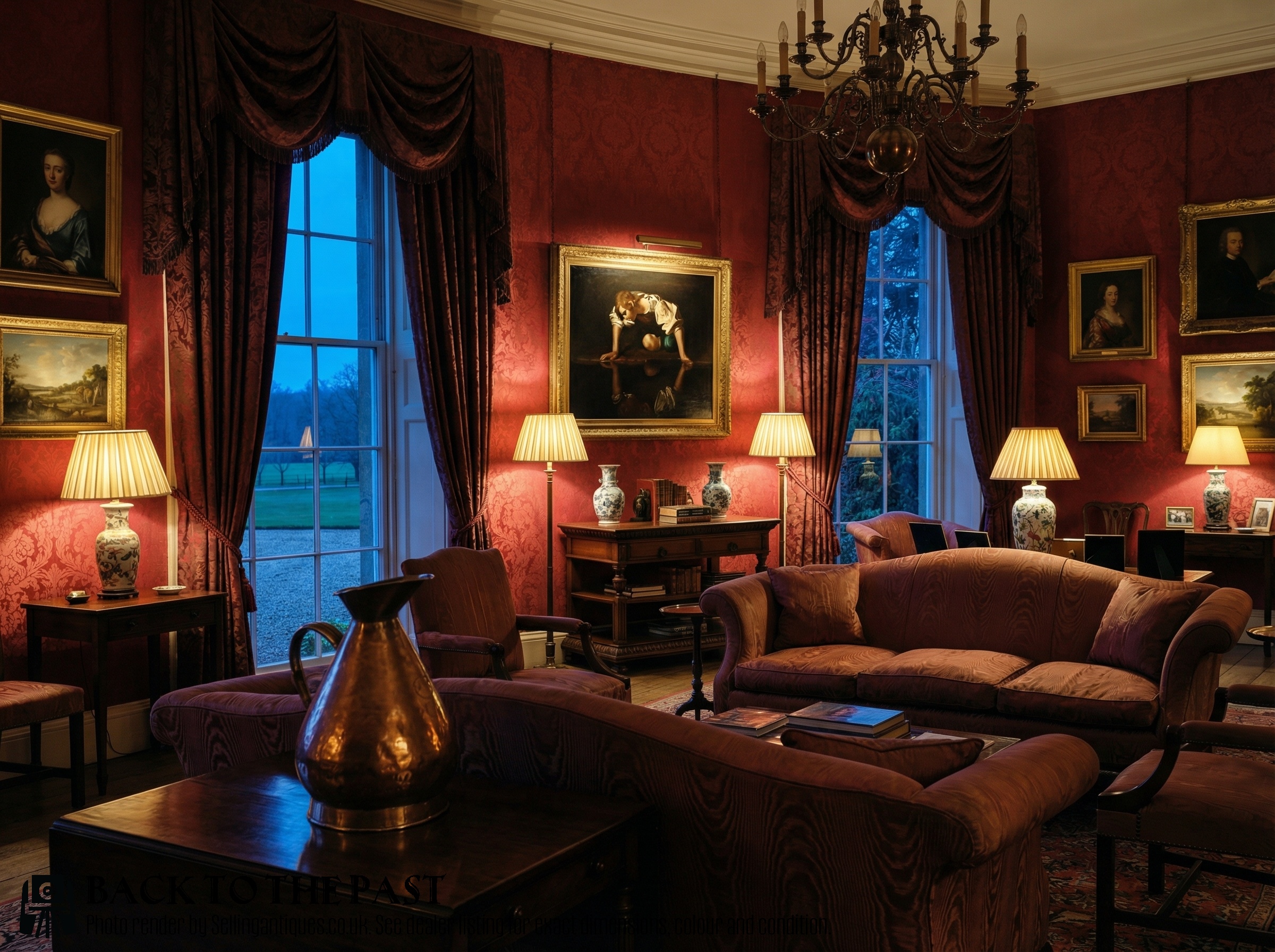
19th Century Copper Haystack Two Gallon Measure, 19th Century
Priced at £345 from Shackladys Antiques
Standardisation laws drove the production of antique measures across Europe.
Inspectors carried bronze master vessels from town to town to test local tavern capacities.
Look for verification marks stamped near the rim. Often these show the reigning monarch's cipher.
Dry goods required different shapes than liquids. Grain merchants favoured wide, shallow wooden drums.
Copper became the standard material for issuing naval grog rations.
James Yates supplied a large share of the Birmingham pewter trade in the mid-nineteenth century. His touchmarks appear on thousands of surviving pub vessels.
Scottish production centred around Glasgow and Edinburgh guilds. Pewterers there stamped their town arms on the base inside.
Many copper pieces lack a maker's name. Regional coppersmiths simply supplied their local markets without signing the work.
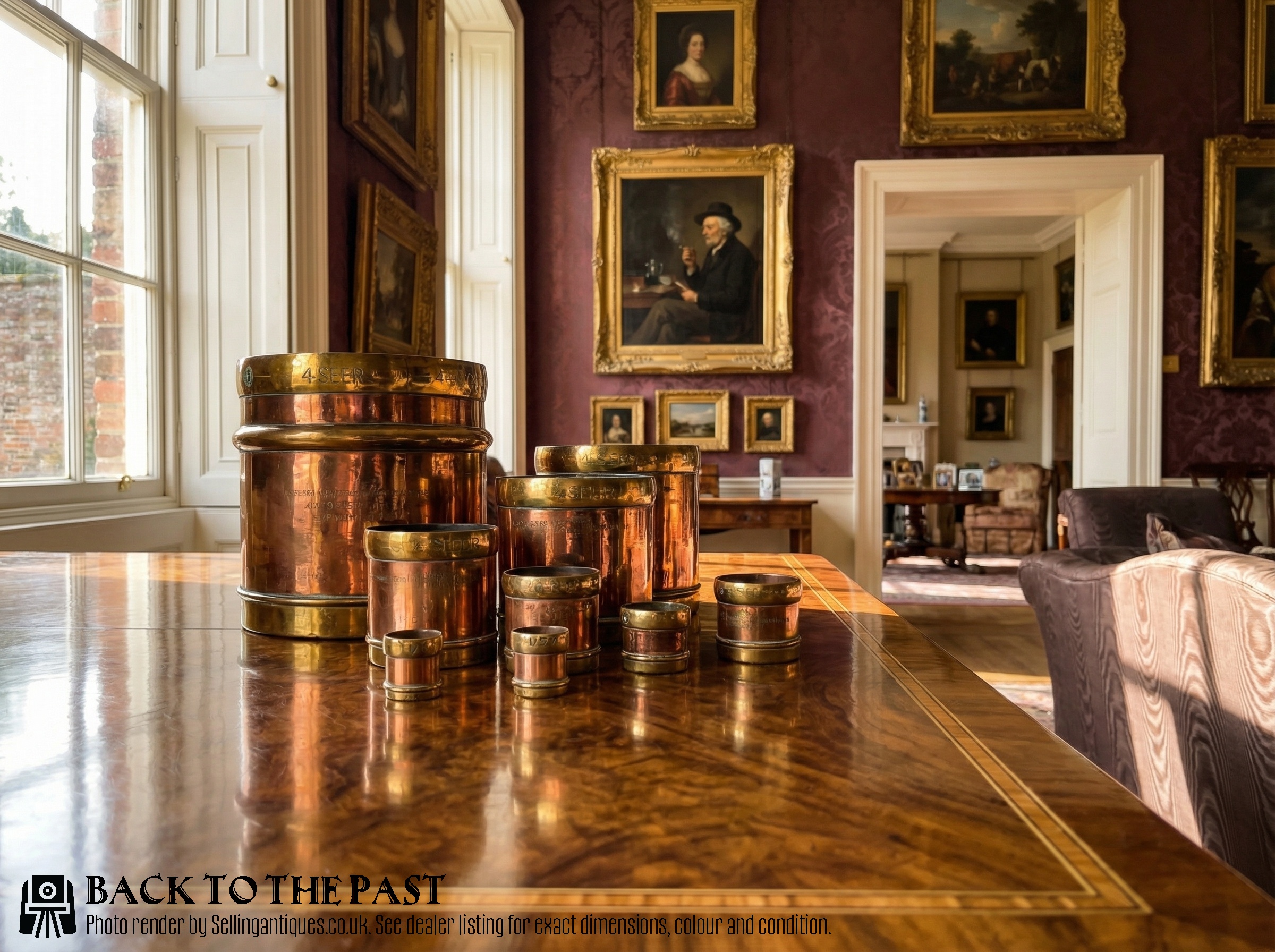
A Rare Set of 9 Copper and Brass Seer Measures, 19th Century
Priced at £995 from Desired Effect Antiques Ltd
The 2026 retail price guide for Antique Measures is drawn from a proprietary archive of over 1.1 million retail prices indexed by Sellingantiques since 2003. This guide relies exclusively on their own internal data; no external sources or auction records are used.
Analysing nearly 25 years of UK antique market history alongside current retail values, the data indicates that typical UK retail prices for Antique Measures range between £100 and £1,500. Entry-level prices generally fall under £100 and premium examples upwards of £1,500.
Stamped verification marks denote official testing. These small indents cluster around the upper rim or collar.
Handles vary by region and era. Scottish examples often feature heavy, squared shapes compared to the curved English loop.
Check the capacity stamps. Most bear a clear volumetric label like a pint, gill, or gallon.
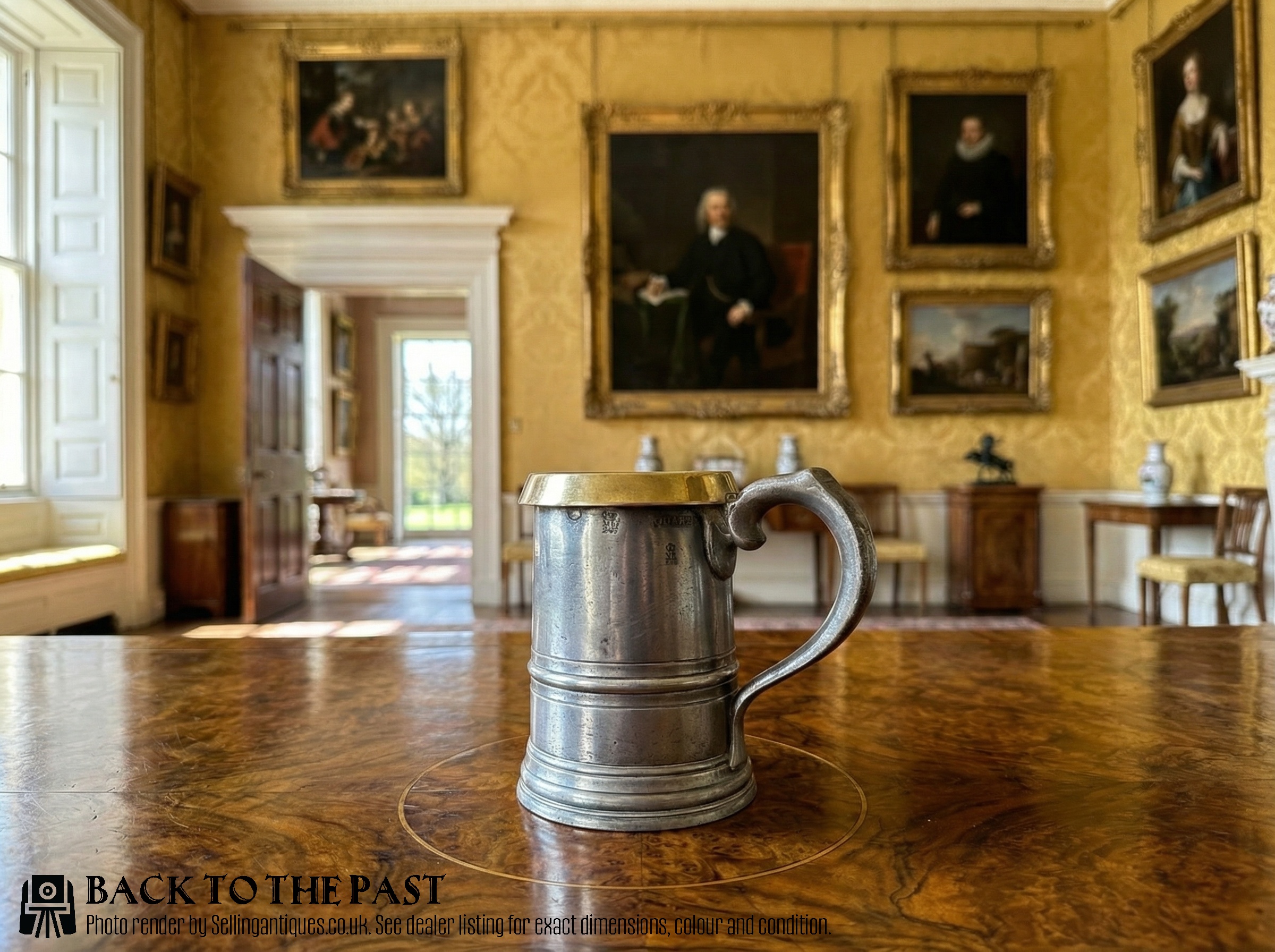
Victorian Quart Measure (2 Pints ), Victorian
Priced at £130 from Frank Craig Antiques
Early metal vessels were cast in multiple brass moulds. Makers soldered the body halves together before finishing on a lathe.
Wooden forms relied on tight joinery. Coopers steamed oak staves to bend them around a solid circular base.
Rolled sheet copper replaced cast metal for industrial use, offering lighter weight and better crack resistance.
"The word gill represents a quarter of a pint. Different regions maintained varying definitions of this size well into the nineteenth century."
"Some inspectors carried portable testing kits. They travelled with precision weights and water gauges packed into custom mahogany cases."
"Many base metals were recycled. Broken pieces melted down easily to form new stock for the next generation of trade."
Based on almost 25 years of Sellingantiques UK antique market data, Antique Measures appeared 923 times (out of 1,100,000 antiques) which gives it a rarity score of 83/100.
This score measures scarcity within the Sellingantiques archive only and is not a survey of the entire antiques market, so these statistics may not be indicative of the general availability of Antique Measures elsewhere.
Wash them in warm soapy water using a soft cloth. Dry the metal immediately to prevent water spots forming on the surface.
Avoid abrasive metal polishes. These strip away the dark grey patina that collectors prefer. Harsh scrubbing damages the historical finish.
Wooden antiques often spent decades in agricultural settings. Barns exposed them to harsh chemicals, damp floors, and pest treatments that soak deep into the grain.
Line the interior before putting any food inside. A simple glass bowl or a cloth napkin barrier keeps your fresh produce away from the old timber.
That stands for Victoria Regina. It shows an inspector checked the capacity during Queen Victoria's reign.
Inspectors added that lead intentionally to correct the volume. When a merchant submitted a vessel for testing, it often held slightly more than the legal standard allowed.
Adding molten lead to the base reduced the internal capacity just enough to make it accurate. It served as a functional adjustment rather than damage.
Please note: This Antique Measures guide and its associated pricing data are provided for general informational purposes only. It does not constitute formal financial, investment, or appraisal advice and should not be relied upon as the sole basis for any commercial activity, purchasing, or sales decisions. Sellingantiques.co.uk accepts no liability for any actions taken in reliance on this information. Always consult with a qualified professional or independent appraiser.
