

A 2026 Guide by Sellingantiques

A Late 19th Century Brass Club Fender with Upholstered Seat, 19th Century
Priced at £1,650 from Blank Canvas Antiques
Look at the wide hearths of late Victorian country houses. That is where antique club fenders first gained real popularity.
Gentlemen's clubs in London adopted them rapidly during the Edwardian period to maximise seating near the open fire.
Earlier plain fenders simply stopped coals rolling onto the rug.
Adding a padded seat turned a simple safety barrier into a piece of social furniture.
Few antique club fenders carry maker's marks. You'll mostly find anonymous work by provincial blacksmiths and brass founders.
Large London retailers like Shoolbred & Co supplied them during the late nineteenth century.
Some Edwardian ironmongery catalogues feature standard patterns that local workshops could adapt to a client's hearth dimensions.

Upholstered 19th Century Steel Club Fender, 1890
Priced at £2,400 from Blank Canvas Antiques
The 2026 retail price guide for Antique Club Fenders is drawn from a proprietary archive of over 1.1 million retail prices indexed by Sellingantiques since 2003. This guide relies exclusively on their own internal data; no external sources or auction records are used.
Analysing nearly 25 years of UK antique market history alongside current retail values, the data indicates that typical UK retail prices for Antique Club Fenders range between £800 and £2,300. Entry-level prices generally fall under £800 and premium examples upwards of £2,300.
The gap in the centre of the seating. This allows clear access to tend the fire.
Balusters form the upright supports, usually turned or twisted metal rods.
Notice the heavy base plate. It anchors the structure firmly to the floor.
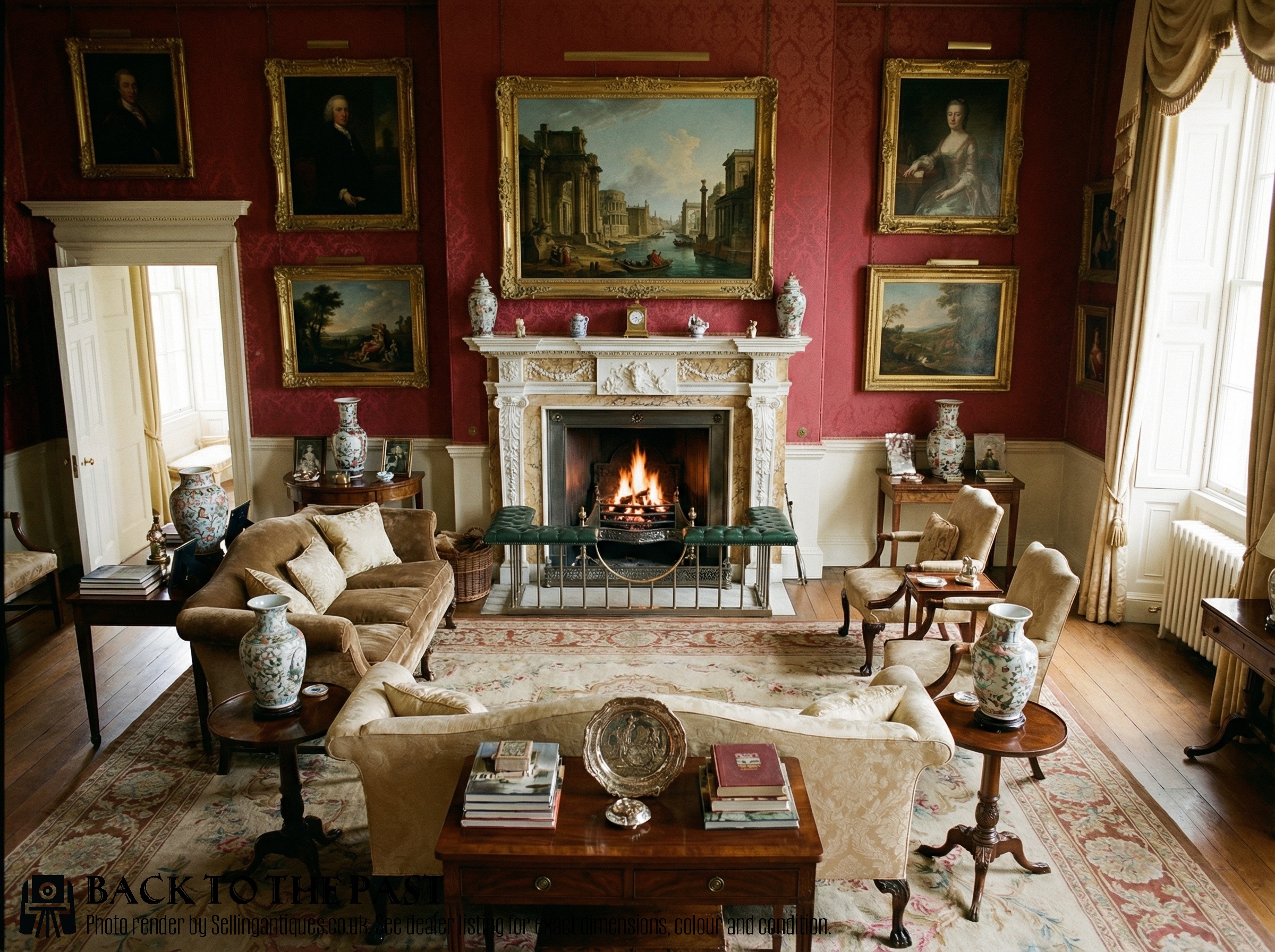
Country House Club Fender with Green Leather, 1940
Priced at £2,200 from A Brookes
Threaded construction. Makers passed solid metal rods through hollow brass tubes to create strong but lighter uprights.
Traditional corner joints on the base kerb feature heavy internal iron brackets bolted tight.
Turn it over. You'll see where upholsterers stretched tough hide over a wooden core, securing it with rows of individual metal tacks.
"Built-in accessories. Some designs included small brackets to hold a glass or a poker."
"They provide a good way to create extra seating in a room without taking up wall space."
"The hollow dip in the middle was sometimes made wide enough to fit a coal scuttle through."
Based on almost 25 years of Sellingantiques UK antique market data, Antique Club Fenders appeared 653 times (out of 1,100,000 antiques) which gives it a rarity score of 88/100.
This score measures scarcity within the Sellingantiques archive only and is not a survey of the entire antiques market, so these statistics may not be indicative of the general availability of Antique Club Fenders elsewhere.
It isn't easy to alter the width of a metal base. You have to cut the main kerb and weld or bolt in a new section of matching metal.
Most dealers recommend finding an antique club fender that already fits your hearth. The corner returns are set at fixed angles and they don't adapt well to being stretched.
Depth varies widely. Some project far into the room. Others stay tight to the grate. It depends on what the original client commissioned.
Measure the stone hearth before buying. The base plate needs to sit flat on the solid stone rather than overlapping onto floorboards or carpet.
It depends on the condition. Old hide has character but it can be brittle.
A good upholsterer can save the original padding and just replace the top cover. They'll often reuse the antique brass studs.
You leave them to tarnish. A bright mirror finish looks wrong in a period room.
Most people just dust the metalwork. If you want a dull gleam, a quick wipe with a dry cloth once a month is enough.
Please note: This Antique Club Fenders guide and its associated pricing data are provided for general informational purposes only. It does not constitute formal financial, investment, or appraisal advice and should not be relied upon as the sole basis for any commercial activity, purchasing, or sales decisions. Sellingantiques.co.uk accepts no liability for any actions taken in reliance on this information. Always consult with a qualified professional or independent appraiser.
