


A 2026 Guide by Sellingantiques
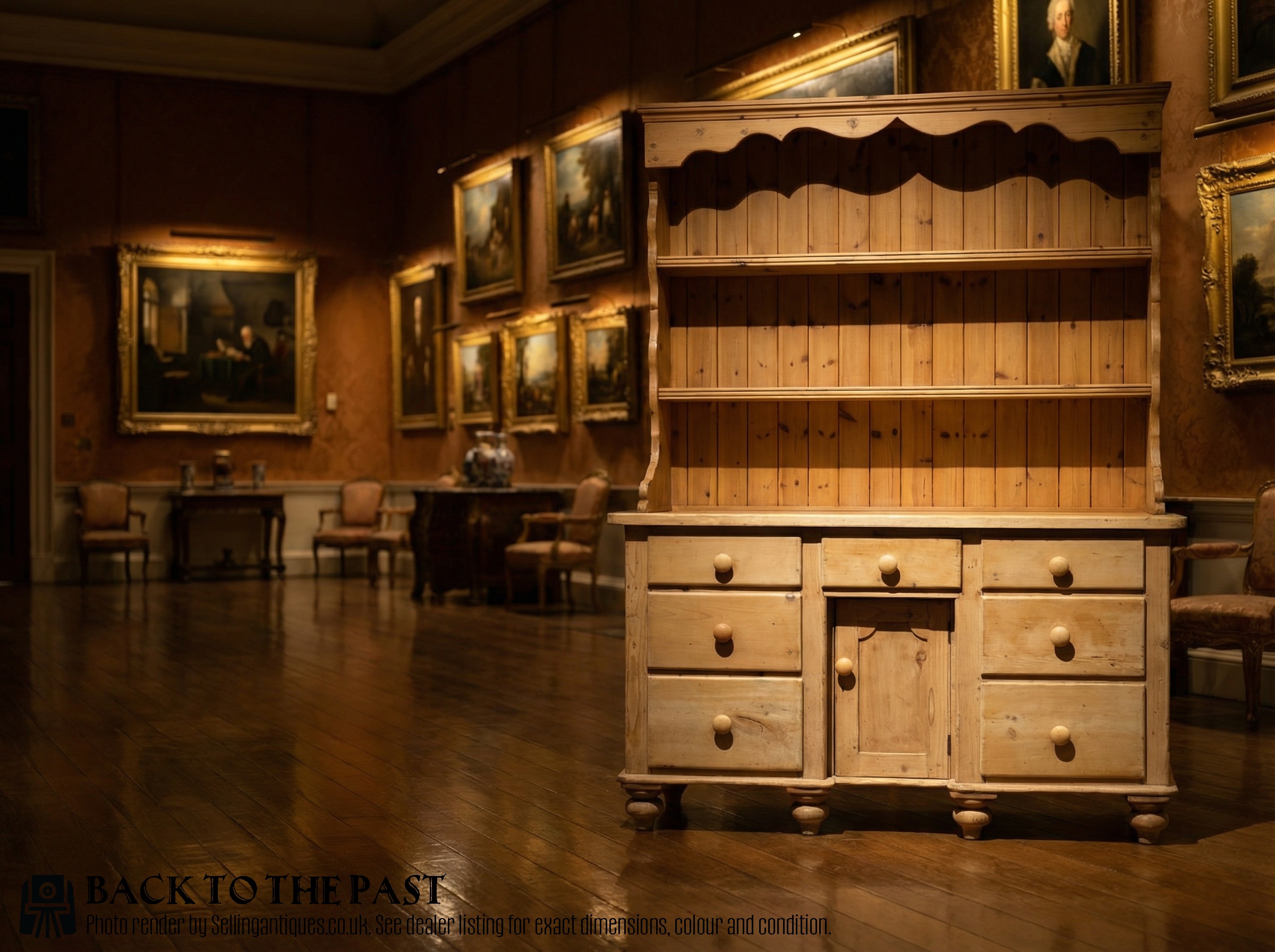
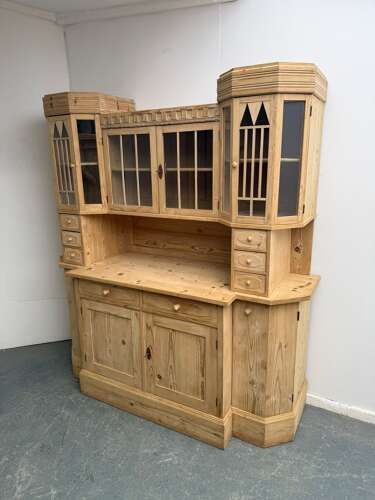
Pine Dresser in Two Sections., 1900
Priced at £695 from Antiques Online Ltd
Farmhouse staples. Most antique pine dressers originated in rural homes across Britain and Ireland during the nineteenth century.
Look closely at regional differences across the category. Welsh dressers often feature enclosed cupboard bases, while southern English types rely on an open pot-board to store large vessels near the floor.
They're practical working furniture. The top rack held the daily plates ready for the next meal.
Paint was common originally. Many were stripped back to bare wood during the late twentieth century.
Most antique pine dressers carry no maker's name. Local estate carpenters built them for specific cottages or farmhouses.
Don't expect a stamped drawer or a pasted label. Rural workshops producing these rarely branded their output.
Regional styles act as a signature instead. A dog-kennel centre base suggests a northern English or Scottish origin.
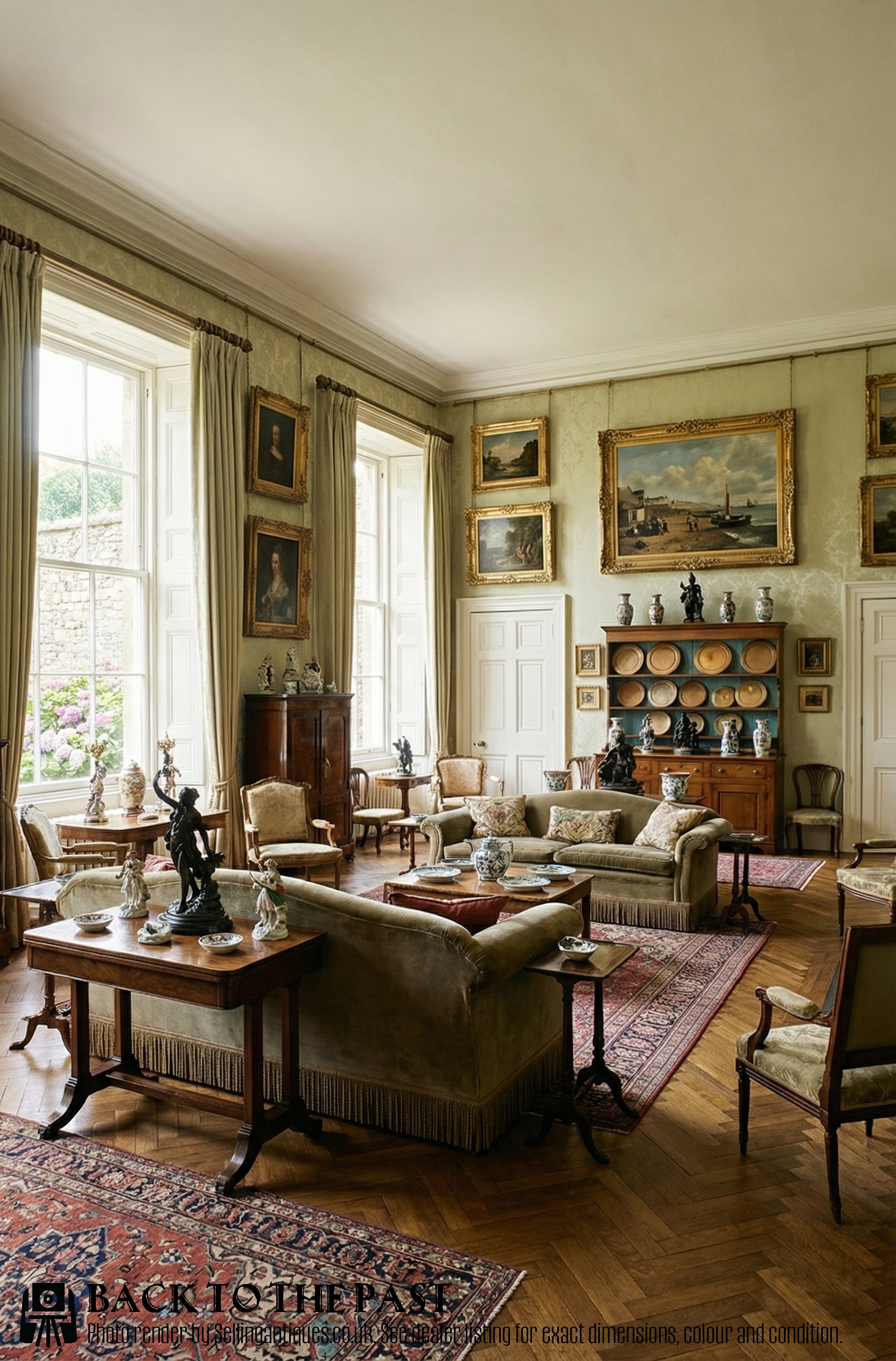
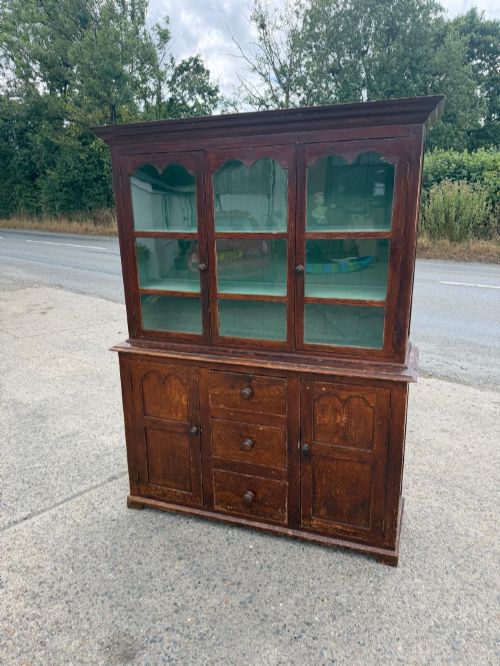
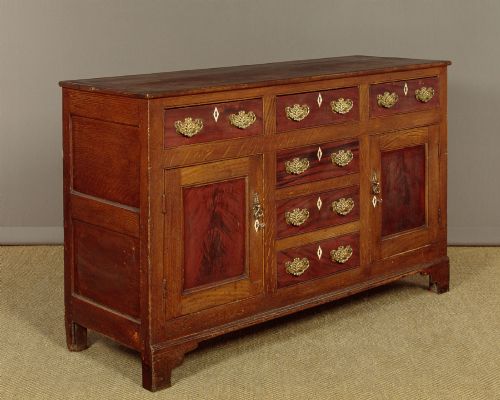
Small Pretty 18th Century Welsh Pine Dresser, 18th Century
Priced at £2,750 from Abersoch Antiques
The 2026 retail price guide for Antique Pine Dressers is drawn from a proprietary archive of over 1.1 million retail prices indexed by Sellingantiques since 2003. This guide relies exclusively on their own internal data; no external sources or auction records are used.
Analysing nearly 25 years of UK antique market history alongside current retail values, the data indicates that typical UK retail prices for Antique Pine Dressers range between £600 and £2,500. Entry-level prices generally fall under £600 and premium examples upwards of £2,500.
Iron or turned wooden cup handles usually sit on the drawer fronts.
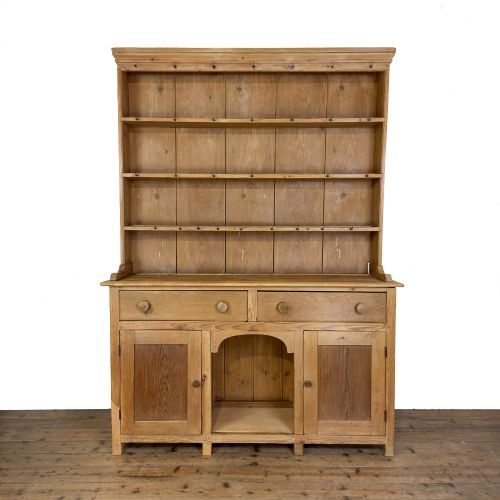
Search for a moulded cornice at the top. This caps the rack and stops dust settling on the upper shelves.
Grooves cut into the upper shelf surfaces. They catch the rim of a plate to stop it sliding forward.

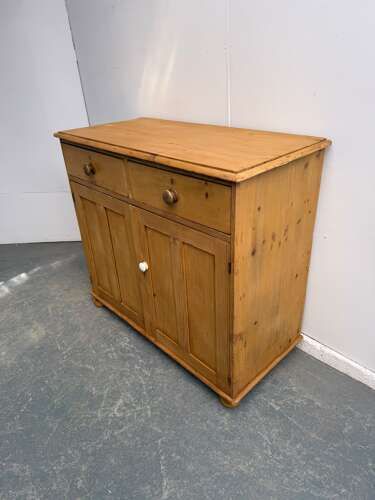
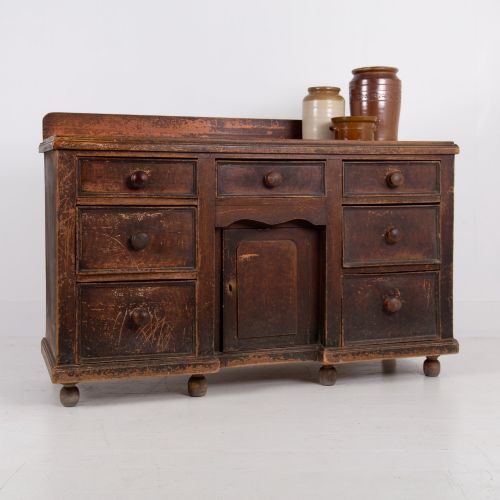
Early 20th Century Painted Pine Dresser & Rack, 1930
Priced at £875 from Brookside Antiques
Pegged mortise and tenon joints hold the main frame together. This allows the timber to move without splitting.
Drawer bottoms slide into grooves cut into the sides. Early makers nailed them straight into the carcase.
Turn the piece around to see the back. The boards overlap each other or use tongue and groove.
"Many base sections separate from the upper racks. This made them easy to move up narrow cottage staircases."
"The hooks screwed into the fascia boards served a distinct purpose. They held small handled jugs directly over the plates."
"Tucked behind the cornice you often find a narrow hidden shelf. People stored small items out of sight up there."
Based on almost 25 years of Sellingantiques UK antique market data, Antique Pine Dressers appeared 2572 times (out of 1,100,000 antiques) which gives it a rarity score of 60/100.
This score measures scarcity within the Sellingantiques archive only and is not a survey of the entire antiques market, so these statistics may not be indicative of the general availability of Antique Pine Dressers elsewhere.
Use a soft cloth lightly dampened with mild soapy water. Wipe the surface quickly and never let water sit on the wood.
Once dry, apply a clear beeswax polish using a soft rag. Buff it out after a few minutes to protect the grain and stop the timber drying out.
A dresser base remains a useful piece of furniture. Many lost their racks decades ago when styles changed.
Floating shelves above the base work well. It serves the original purpose without forcing a mismatch.
Antique pine dressers were built for domestic storage rather than plumbing. The timber structure can usually support a ceramic sink if the frame is sound and the joints remain tight.
You'll need to alter the carcase to fit pipes and taps. The top surface also requires thorough sealing because splash damage rots old pine over time.
Sticking drawers usually mean the wooden runners have worn down or the carcase has settled out of square. Check the bottom edges of the drawer sides for friction wear.
Rubbing a block of dry paraffin wax along the runners often solves minor sticking. The wax acts as a dry lubricant and helps the timber glide.
If the wood is badly worn, a carpenter can glue a thin strip of matching pine to the runner to build the level back up.
Please note: This Antique Pine Dressers guide and its associated pricing data are provided for general informational purposes only. It does not constitute formal financial, investment, or appraisal advice and should not be relied upon as the sole basis for any commercial activity, purchasing, or sales decisions. Sellingantiques.co.uk accepts no liability for any actions taken in reliance on this information. Always consult with a qualified professional or independent appraiser.
