




A 2026 Guide by Sellingantiques
Provincial cabinetmakers began building large storage pieces to hold growing collections of domestic faience during the eighteenth century.
Antique French dressers often doubled as status symbols in rural homes.
Look at the regional variations. Normandy examples stand much taller than those made in Brittany or Provence.
Different areas favoured distinct carved motifs reflecting local agricultural harvests and maritime trades.
Provincial workshops operated as small family enterprises rather than stamped Parisian guilds.
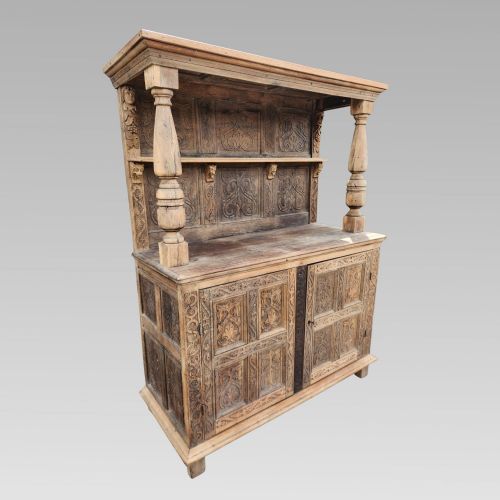
Craftsmen in Arles became famous for deep, rhythmic relief carving on solid walnut panels.
Bresse cabinetmakers built distinctive examples using pale ash alongside darker fruitwoods to create bold contrasting details.
The 2026 retail price guide for Antique French Dressers is drawn from a proprietary archive of over 1.1 million retail prices indexed by Sellingantiques since 2003. This guide relies exclusively on their own internal data; no external sources or auction records are used.
Analysing nearly 25 years of UK antique market history alongside current retail values, the data indicates that typical UK retail prices for Antique French Dressers range between £800 and £3,500. Entry-level prices generally fall under £800 and premium examples upwards of £3,500.
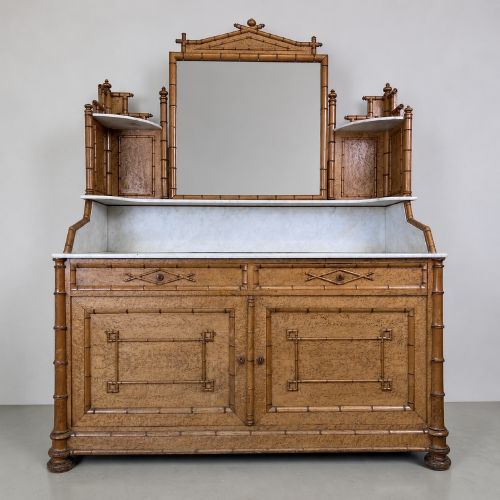
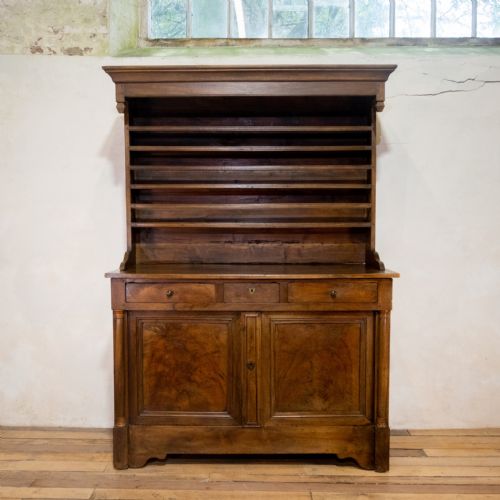
Open plate racks form the upper section on a true vaisselier, separated by a narrow gallery or spindle tier.
Deep lower cupboards usually feature panelled doors securing a single, robust shelf inside.
Notice the apron. A shaped or carved frieze runs right along the bottom edge between the front feet.
Thick boards were jointed together using deep mortise and tenon frames held fast by dry wooden pegs.
Turn the drawers around. Thick hand-cut dovetails join the drawer fronts to the sides.
Carved details were cut directly into the solid door panels rather than applied as separate glued mouldings.
"Upper display shelves often feature a narrow groove carved near the back edge to stop plates sliding forward."
"Some regional designs incorporate a central working clock built straight into the middle of the upper plate rack."
"The iron hardware was frequently polished with local beeswax alongside the timber to prevent rust."
Based on almost 25 years of Sellingantiques UK antique market data, Antique French Dressers appeared 797 times (out of 1,100,000 antiques) which gives it a rarity score of 85/100.
This score measures scarcity within the Sellingantiques archive only and is not a survey of the entire antiques market, so these statistics may not be indicative of the general availability of Antique French Dressers elsewhere.
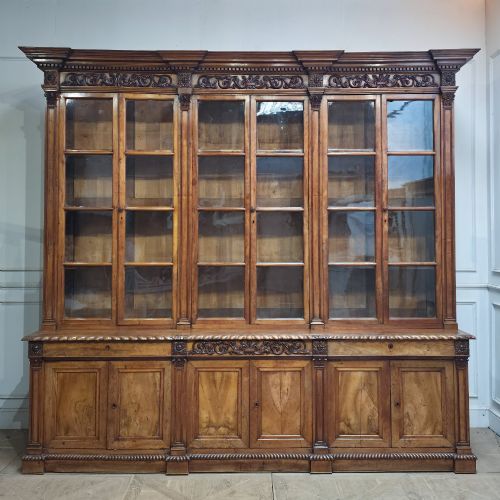
Most antique French dressers split into at least two sections. The upper rack or glazed cabinet simply lifts off the lower base board.
The heavy top cornice will often lift away as a separate piece too. This makes moving large pieces through narrow doorways far easier than you might expect.
You need enough room to lift the upper section high enough to clear any location dowels on the base. Two or three inches of clearance above the highest point of the cornice usually proves sufficient.
Sometimes the very top moulding drops on last. If the piece uses a separate drop-on cornice, you can slide it into place from the front rather than lifting it down from above.
French provincial cabinetmakers typically used long iron fiche hinges. These rely on a solid pin dropping into a hollow barrel.
They offer no simple screw adjustment. If a door drops, dealers sometimes place a tiny brass washer inside the hinge barrel to raise the whole door back into alignment.
Base shelves in early pieces sit on integrated timber cleats fixed to the side panels. They often form an active part of the internal structure, preventing the side walls from bowing inwards.
Removing them requires cutting the shelf out. Altering the carcase structure like this compromises the stability of the entire base. It is far better to seek out a piece with suitable spacing from the start.
Please note: This Antique French Dressers guide and its associated pricing data are provided for general informational purposes only. It does not constitute formal financial, investment, or appraisal advice and should not be relied upon as the sole basis for any commercial activity, purchasing, or sales decisions. Sellingantiques.co.uk accepts no liability for any actions taken in reliance on this information. Always consult with a qualified professional or independent appraiser.
