
There are no results to show on this page for that combination of filters:
Neoclassical Serpentine Desks
A 2026 Guide by Sellingantiques
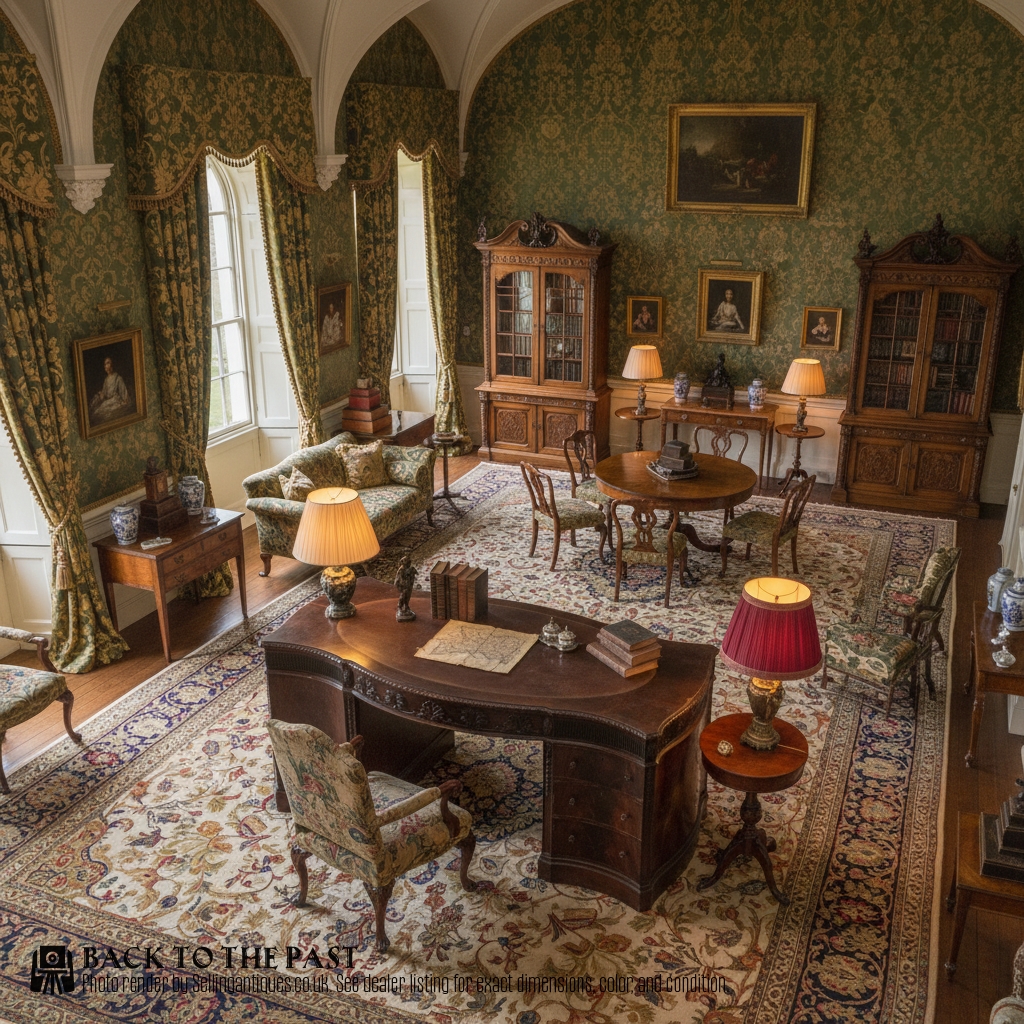
Mahogany Serpentine Shaped Pedestal Desk, Victorian
Priced at £8,500 from Butchoff Antiques Ltd.
The serpentine shape emerged during the mid-eighteenth century. It arrived as cabinetmakers looked for ways to soften the rigid lines of earlier Georgian case furniture.
Thomas Chippendale published designs featuring this undulating front in his Director. His patterns helped popularise antique serpentine desks across Britain and its colonies.
Demand peaked in the late eighteenth century. Merchants and wealthy estate owners wanted grander furniture for their new library rooms.
Look at the transition into the nineteenth century. The sweeping curves eventually gave way to the straighter, heavier lines favoured during the Regency period.
Thomas Chippendale produced strong examples of these desks during the mid-to-late eighteenth century. His workshop supplied them to various stately homes.
Gillows of Lancaster also manufactured antique serpentine desks late in the eighteenth century. Their order books contain sketches of mahogany case furniture with similar curved fronts.
William Hallett worked in London during the mid-Georgian period. His firm supplied serpentine case pieces to wealthy patrons expanding their country estates.

Georgian Chippendale Style Mahogany Serpentine Desk, 1920
Priced at £1,600 from The Antique Furniture Company
The 2026 retail price guide for Antique Serpentine Desks is drawn from a proprietary archive of over 1.1 million retail prices indexed by Sellingantiques since 2003. This guide relies exclusively on their own internal data; no external sources or auction records are used.
Analysing nearly 25 years of UK antique market history alongside current retail values, the data indicates that typical UK retail prices for Antique Serpentine Desks range between £800 and £5,000. Entry-level prices generally fall under £800 and premium examples upwards of £5,000.
The undulating front is the main draw. It swells outwards at the ends and dips inwards toward the centre kneehole.
Chamfered corners often frame the main body. These vertical edges soften the visual transition from the front to the flat sides.
Check the arrangement of the drawers. A long single drawer usually sits above a central kneehole, flanked by banks of shorter drawers.
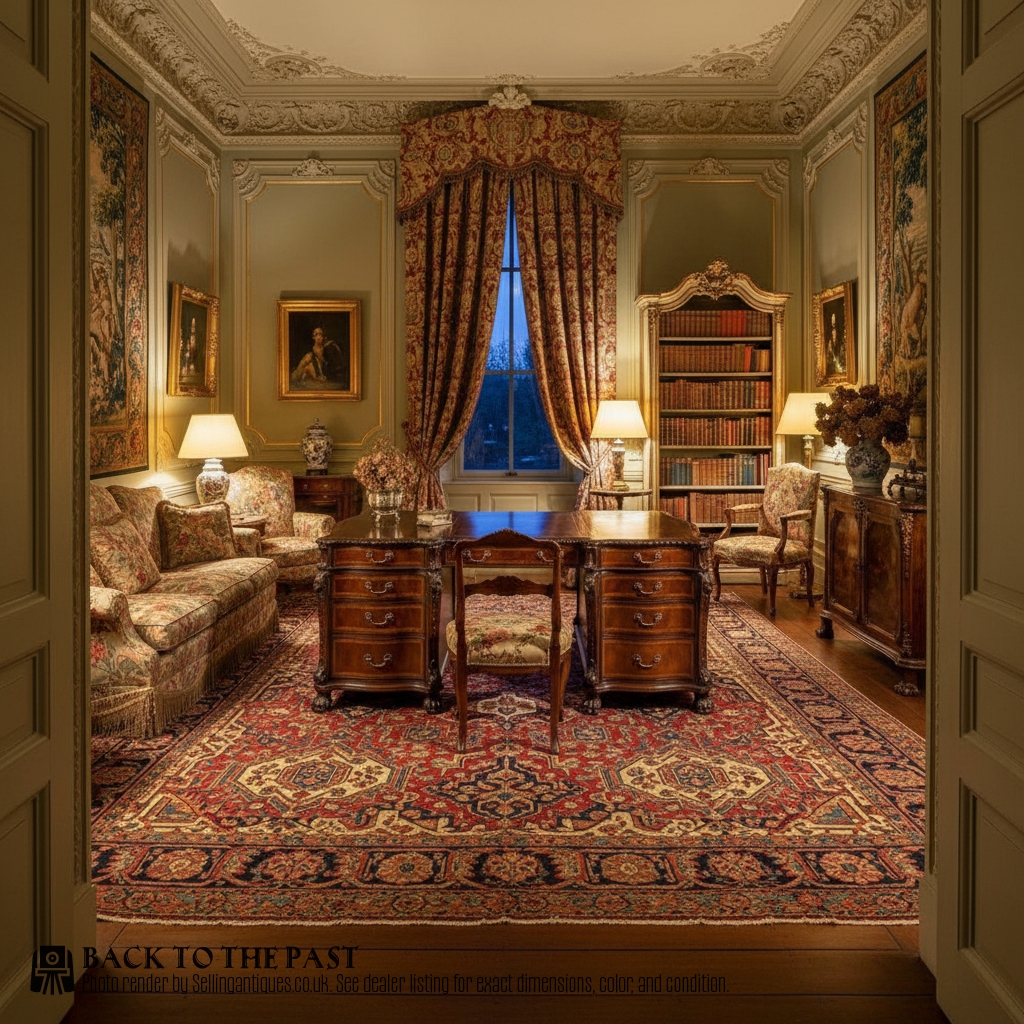
Outstanding Quality Large Antique Carved Figured Mahogany Serpentine Shaped Partners Desk, 1920
Priced at £18,850 from London City Antiques
Creating the shaped drawer fronts required building up layers of wood. Cabinetmakers glued thick sections of pine together before cutting the sweeping curve.
Applying veneer to an undulating surface tested the maker. They used heated sandbags to press the expensive mahogany firmly onto the shaped carcase.
Notice the precision in the dovetail joints. Cutting straight pins and tails into a curved drawer front demanded high-level geometry and saw control.
"The inward curve at the centre actually serves an ergonomic purpose. It allows you to sit closer to the writing surface comfortably."
"Creating that flowing shape meant wasting a large amount of internal timber. Only affluent clients could justify paying for such material loss."
"Some examples feature hidden compartments tucked behind the central kneehole cupboard. These secret drawers slid out from the main structure via concealed internal springs."
Based on almost 25 years of Sellingantiques UK antique market data, Antique Serpentine Desks appeared 587 times (out of 1,100,000 antiques) which gives it a rarity score of 89/100.
This score measures scarcity within the Sellingantiques archive only and is not a survey of the entire antiques market, so these statistics may not be indicative of the general availability of Antique Serpentine Desks elsewhere.
Dense hardwoods and solid pine carcases make them quite heavy. You'll struggle to lift a one-piece desk with just two people.
Take the drawers out before trying to move it. That removes a fair portion of the weight and gives you better handholds inside the empty frame.
Not on all of them. Many antique serpentine desks from the eighteenth century were built as a single solid unit. The continuous top and base mouldings lock the whole carcase together.
Later nineteenth-century variations sometimes break down into three pieces for transport. Look closely at the seams where the pedestals meet the top to see if it comes apart.
If it's a single carcase, you have to measure your turning circle on the landing. The depth of the serpentine front often catches people out on tight staircases.
They're mostly used for storing ledgers and tall account books. The recessed space keeps them out of the way while you sit at the front.
Some have a single fixed shelf inside.
Most were designed to stand flat against a wall in a study or library. The backs are usually plain pine or deal boards, often stained dark but left unfinished.
If you want to use it as a freestanding piece, look for a partner's desk instead. Those were built to be viewed from all sides, with dummy drawers or cupboards on the reverse face.
Occasionally, you find a standard serpentine desk that a previous owner has had veneered on the back. It isn't original, but it solves the problem of a rough rear panel.
Please note: This Antique Serpentine Desks guide and its associated pricing data are provided for general informational purposes only. It does not constitute formal financial, investment, or appraisal advice and should not be relied upon as the sole basis for any commercial activity, purchasing, or sales decisions. Sellingantiques.co.uk accepts no liability for any actions taken in reliance on this information. Always consult with a qualified professional or independent appraiser.
