





A 2026 Guide by Sellingantiques
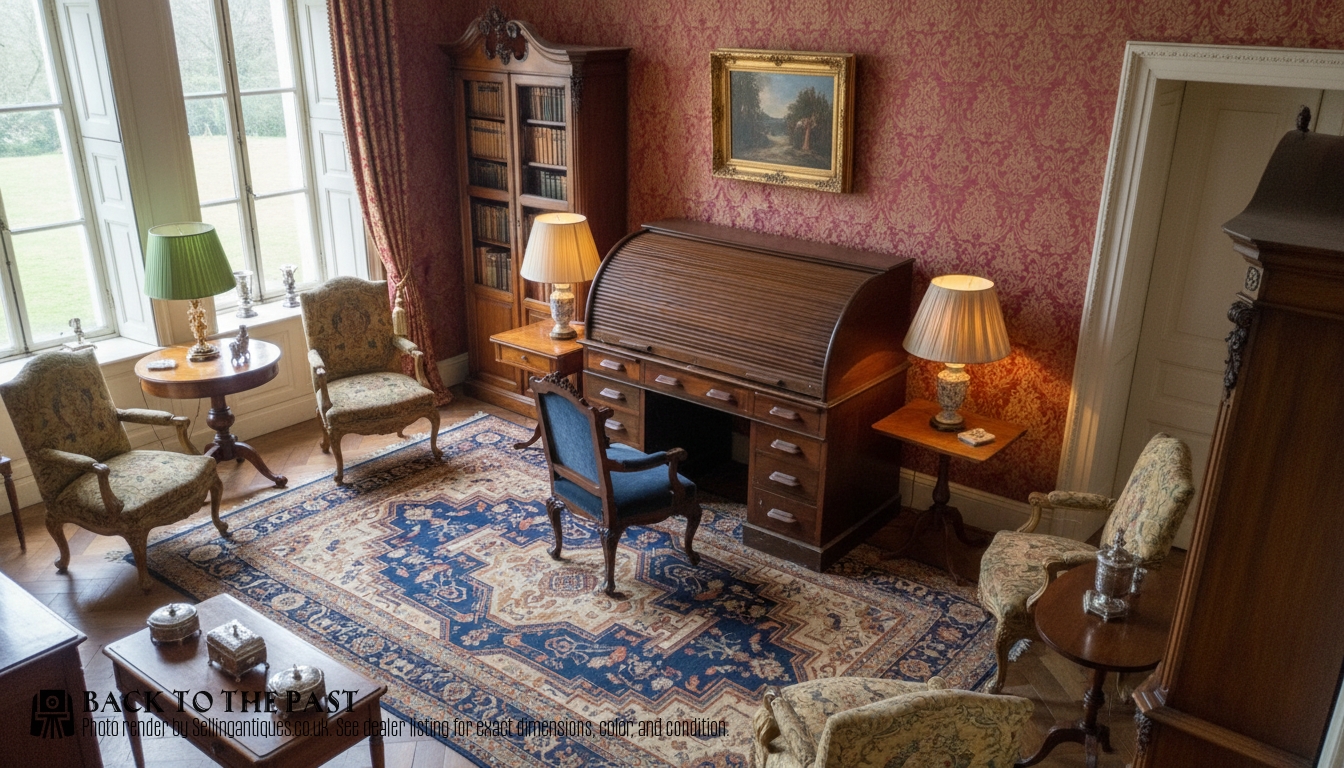
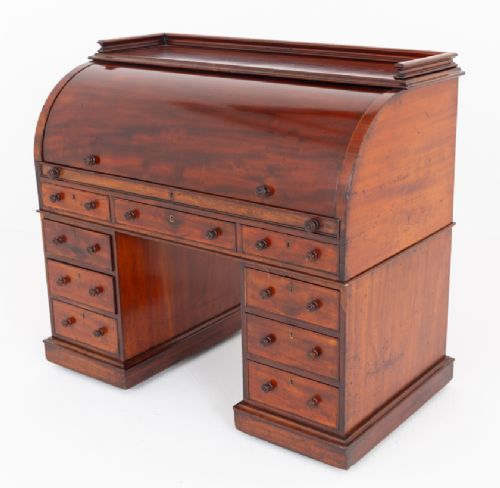
Large Mahogany Tambour Top Roll Top Pedestal Desk., 1900
Priced at £385 from Rupert Hitchcox Antiques
Developed directly from the rigid cylinder desk during the late nineteenth century.
Notice how the design allowed office clerks to secure their paperwork instantly when leaving the room.
Commercial expansion drove the massive demand for antique roll top desks across Europe and America.
Peak production years running right up to the outbreak of the First World War.
Cutler and Son of Buffalo pioneered the distinctive flexible tambour design in the late nineteenth century.
Look for the Derby Desk Company label inside the central drawer of exported oak roll tops.
A massive output from Angus of London supplied British commercial hubs.
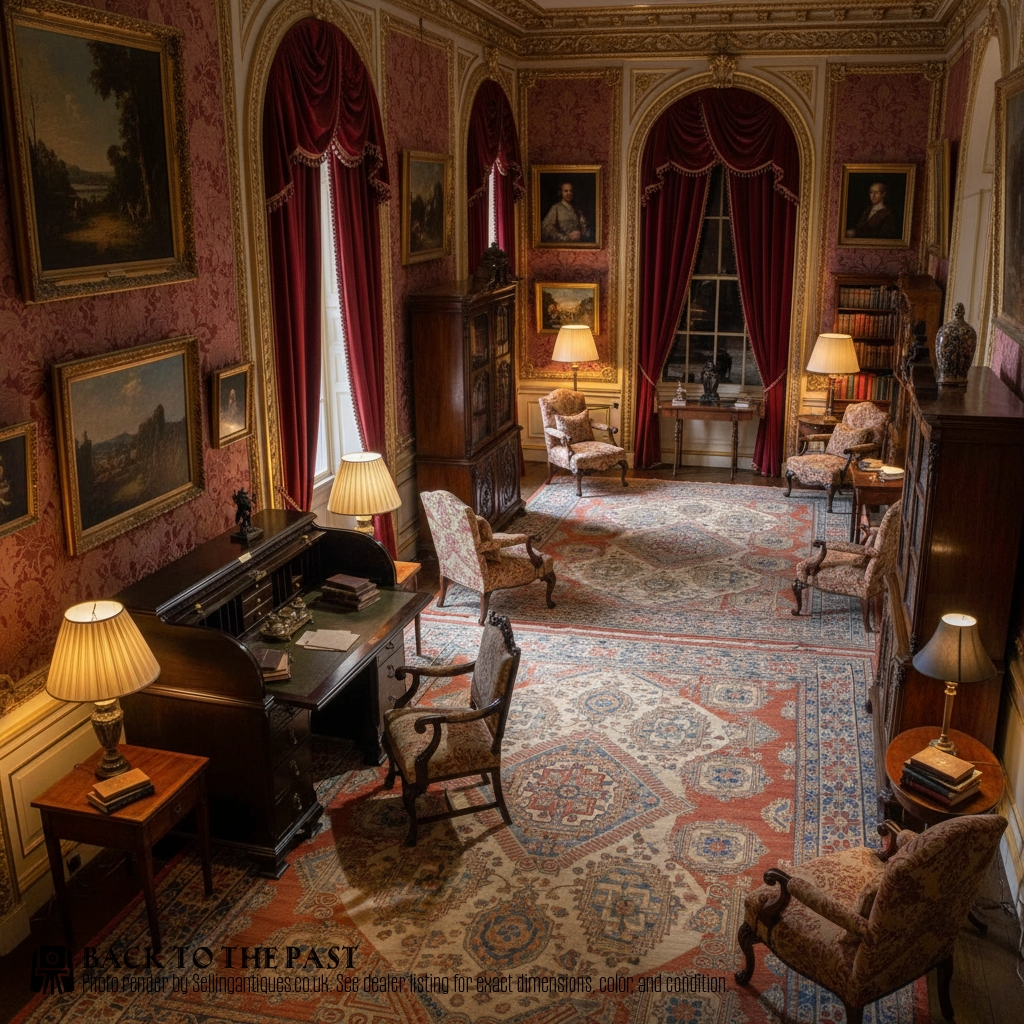
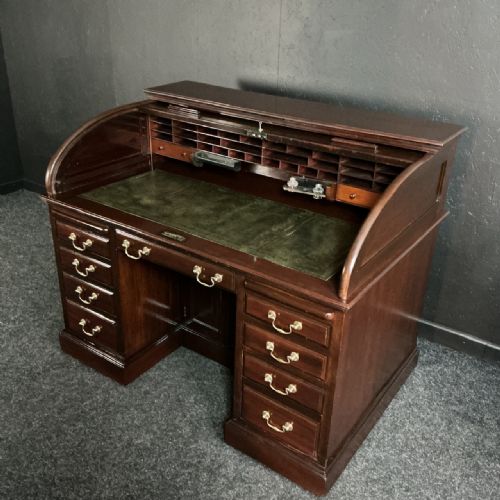
Early 20th Century Chippendale Style Mahogany Desk, 1920
Priced at £1,875 from witchantiques.com
The 2026 retail price guide for Antique Roll Top Desks is drawn from a proprietary archive of over 1.1 million retail prices indexed by Sellingantiques since 2003. This guide relies exclusively on their own internal data; no external sources or auction records are used.
Analysing nearly 25 years of UK antique market history alongside current retail values, the data indicates that typical UK retail prices for Antique Roll Top Desks range between £600 and £3,200. Entry-level prices generally fall under £600 and premium examples upwards of £3,200.
Twin pedestals containing graduated drawers sit beneath a wide rectangular writing surface.
Small pigeonholes and tiny drawers fill the upper gallery section.
Pull the tambour down to engage the locking mechanism that secures the side drawers automatically.
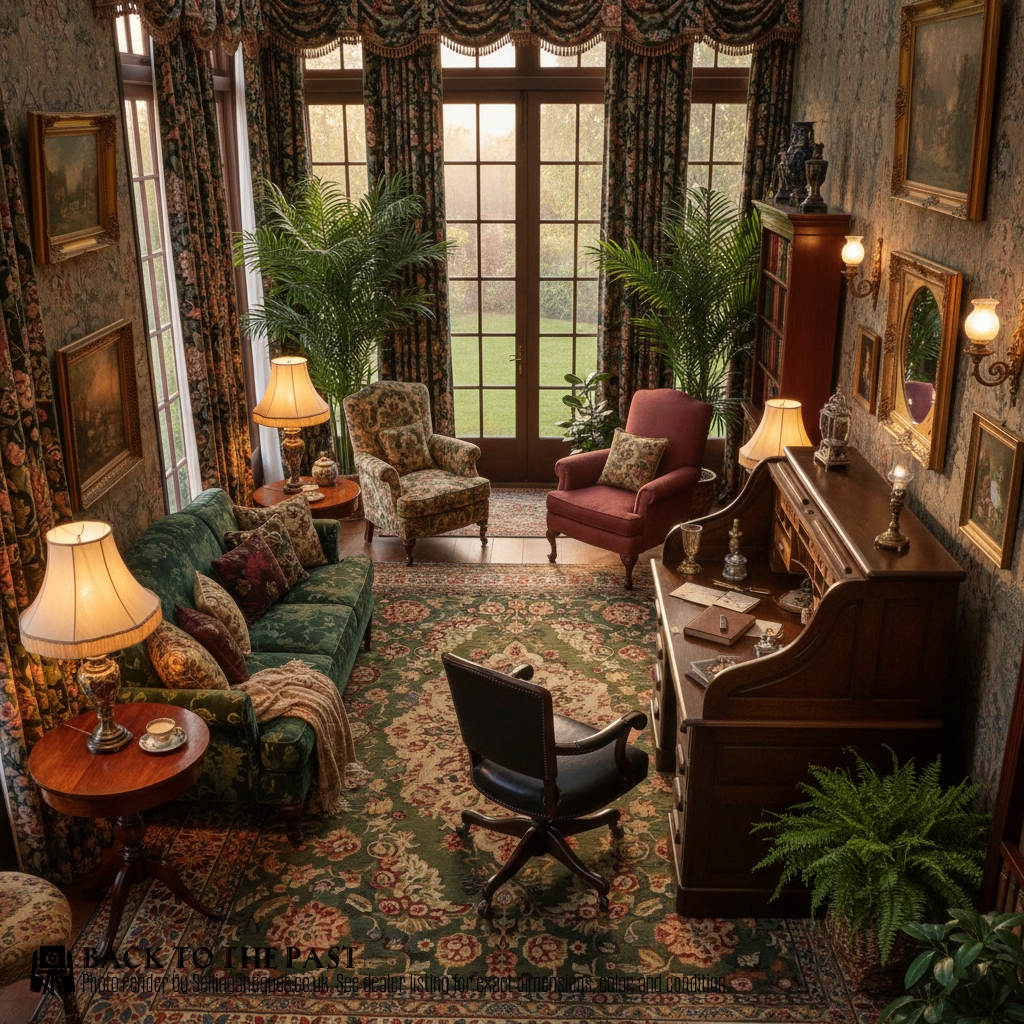
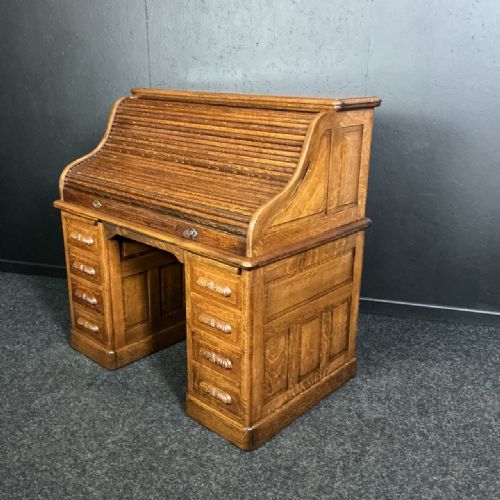
Late Victorian Oak Roll Top Desk, Victorian
Priced at £3,250 from witchantiques.com
Machine-cut dovetails begin to appear in the drawer sides of later antique roll top desks.
Steam bending shaped the heavy oak side panels into that familiar curved profile.
Inspect the tambour slats for interlocking moulded edges designed to keep dust out.
"You'll find many large desks break down into three manageable sections for easy transport up narrow stairs."
"Clever internal mechanisms lock all the side drawers simultaneously when the main lid closes."
"Look closely at the gallery to find hidden pen rests and secret compartments built into the pigeonholes."
Based on almost 25 years of Sellingantiques UK antique market data, Antique Roll Top Desks appeared 967 times (out of 1,100,000 antiques) which gives it a rarity score of 82/100.
This score measures scarcity within the Sellingantiques archive only and is not a survey of the entire antiques market, so these statistics may not be indicative of the general availability of Antique Roll Top Desks elsewhere.
Most late nineteenth-century models feature an automatic locking mechanism. When you pull the tambour down to the desk surface, it depresses a peg at the back.
This peg controls wooden locking bars inside the pedestals. Once the main shutter locks, all the lower side drawers are secured at once.
Tambour shutters jam for several reasons. Sometimes a paper slips behind the wooden slats and blocks the internal runners. More often, the old canvas backing has started to perish and a slat has twisted out of alignment.
Fixing them involves removing the wooden back panel of the desk. You then pull the entire tambour curtain out from the rear. Once out, the canvas can be replaced and the tracking grooves cleaned.
They weigh a lot. Solid oak and thick veneers make moving a whole one very difficult.
Most makers designed them to dismantle. The gallery and top surface lift off the twin pedestals.
Many people use these antiques as modern home offices. The central writing surface usually provides ample space for a laptop and a secondary screen.
Cable management takes a little thought. Most antique roll top desks have a gap at the back of the writing surface where the tambour drops down. You can often run thin cables through this space without drilling new holes in the carcase.
Please note: This Antique Roll Top Desks guide and its associated pricing data are provided for general informational purposes only. It does not constitute formal financial, investment, or appraisal advice and should not be relied upon as the sole basis for any commercial activity, purchasing, or sales decisions. Sellingantiques.co.uk accepts no liability for any actions taken in reliance on this information. Always consult with a qualified professional or independent appraiser.
