


A 2026 Guide by Sellingantiques
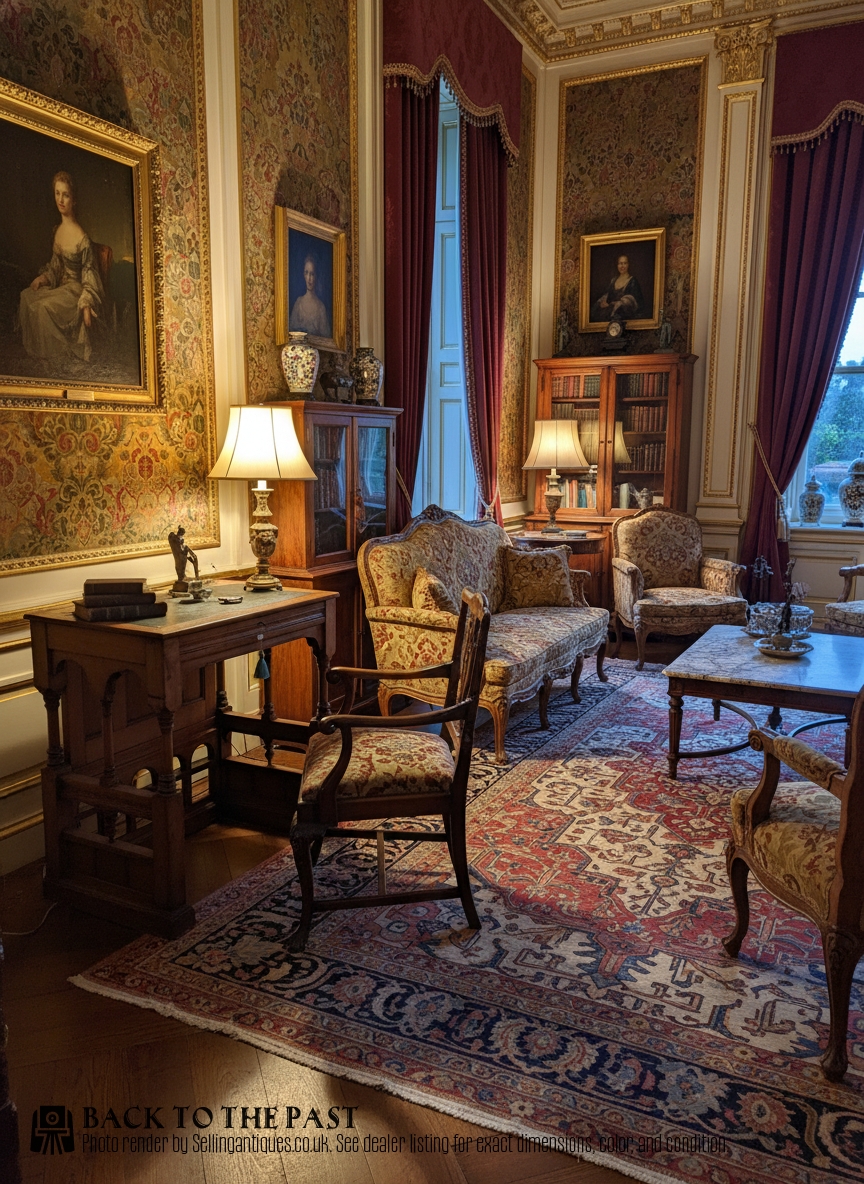
Antique 1890s Clarks Desk Made by Simpsons of Kendall for the Town Hall, 1890
Priced at £695 from Pendle Antiques
Built for counting houses and railway offices during the nineteenth century.
These tall workspaces were standard issue before typewriters flattened the modern office layout.
Look at the steepness of the slope. Standing at one kept a clerk awake during long shifts.
Banks ordered antique clerks desks in continuous rows to hold dozens of workers side by side.
They were replaced gradually by pedestal desks when office administration changed.
Documented makers rarely signed antique clerks desks. Most were supplied by provincial joiners fulfilling commercial contracts.
Large furnishing firms like Maple & Co supplied some late nineteenth-century examples to major London banks.
Check railway company records. Their workshops turned out hundreds of these tall sloped frames for stationmasters.

Pine Clerks Desk and Stool, 1900
Priced at £595 from Desired Effect Antiques Ltd
The 2026 retail price guide for Antique Clerks Desks is drawn from a proprietary archive of over 1.1 million retail prices indexed by Sellingantiques since 2003. This guide relies exclusively on their own internal data; no external sources or auction records are used.
Analysing nearly 25 years of UK antique market history alongside current retail values, the data indicates that typical UK retail prices for Antique Clerks Desks range between £400 and £1,500. Entry-level prices generally fall under £400 and premium examples upwards of £1,500.
A hinged lid usually lifts to reveal a deep storage well for ledgers.
Lift the top. Small internal pigeonholes sit at the back to keep receipts sorted.
Tall legs raise the working surface to chest height. Sometimes a footrest stretches across the bottom.
Early examples rely on pegged mortise and tenon joints to hold those legs rigid.
Machine-cut dovetails appear in the drawers of later Victorian models. Factories churned them out.
Turn the desk over. You'll spot heavy screws and bracket blocks reinforcing the carcase on later versions.
"Many were built in matched pairs to face each other. Partners could pass documents across the top."
"Notice the steep slope. Standing at one naturally forces a straight back and improves posture."
"Hidden compartments. They occasionally hide behind the main pigeonholes, found by pressing the dividers sideways."
Based on almost 25 years of Sellingantiques UK antique market data, Antique Clerks Desks appeared 300 times (out of 1,100,000 antiques) which gives it a rarity score of 94/100.
This score measures scarcity within the Sellingantiques archive only and is not a survey of the entire antiques market, so these statistics may not be indicative of the general availability of Antique Clerks Desks elsewhere.
Most antique versions sit around 40 to 42 inches at the front lip. That suits average heights well when standing.
Taller users sometimes add wooden blocks under the legs. You can also buy an adjustable drafting stool if you want to sit.
Solid timber warps when left in damp conditions or placed next to a hot radiator. The cells in the wood expand unevenly, causing a permanent bow across the wide flat board.
A cabinetmaker can sometimes relieve the tension by cutting kerfs into the underside and clamping it flat. It takes time and requires re-gluing.
Often, it is easier to replace the lid entirely if the warp is severe. A good restorer will match the old timber and finish.
Old ink sinks deep into the grain. Surface sanding rarely removes it.
Leave the stains alone. They show the desk was used in a busy office.
Bare wood slopes are very common. Many counting houses ordered plain timber tops because they took hard wear from heavy ledgers being dragged across them.
Leather tops cost more and were usually reserved for senior clerks or bank managers. The softer surface made writing with a dip pen much easier.
If yours is bare wood, it was likely built that way. Look at the edges. A leather top usually sits inside a shallow recessed border.
Please note: This Antique Clerks Desks guide and its associated pricing data are provided for general informational purposes only. It does not constitute formal financial, investment, or appraisal advice and should not be relied upon as the sole basis for any commercial activity, purchasing, or sales decisions. Sellingantiques.co.uk accepts no liability for any actions taken in reliance on this information. Always consult with a qualified professional or independent appraiser.
