38,829  PAGES BROWSED TODAY PAGES TODAY 146  ANTIQUES UPLOADED TODAY NEW ARRIVALS
ID #SA986969
FOR SALE
£3,500
Email
Save
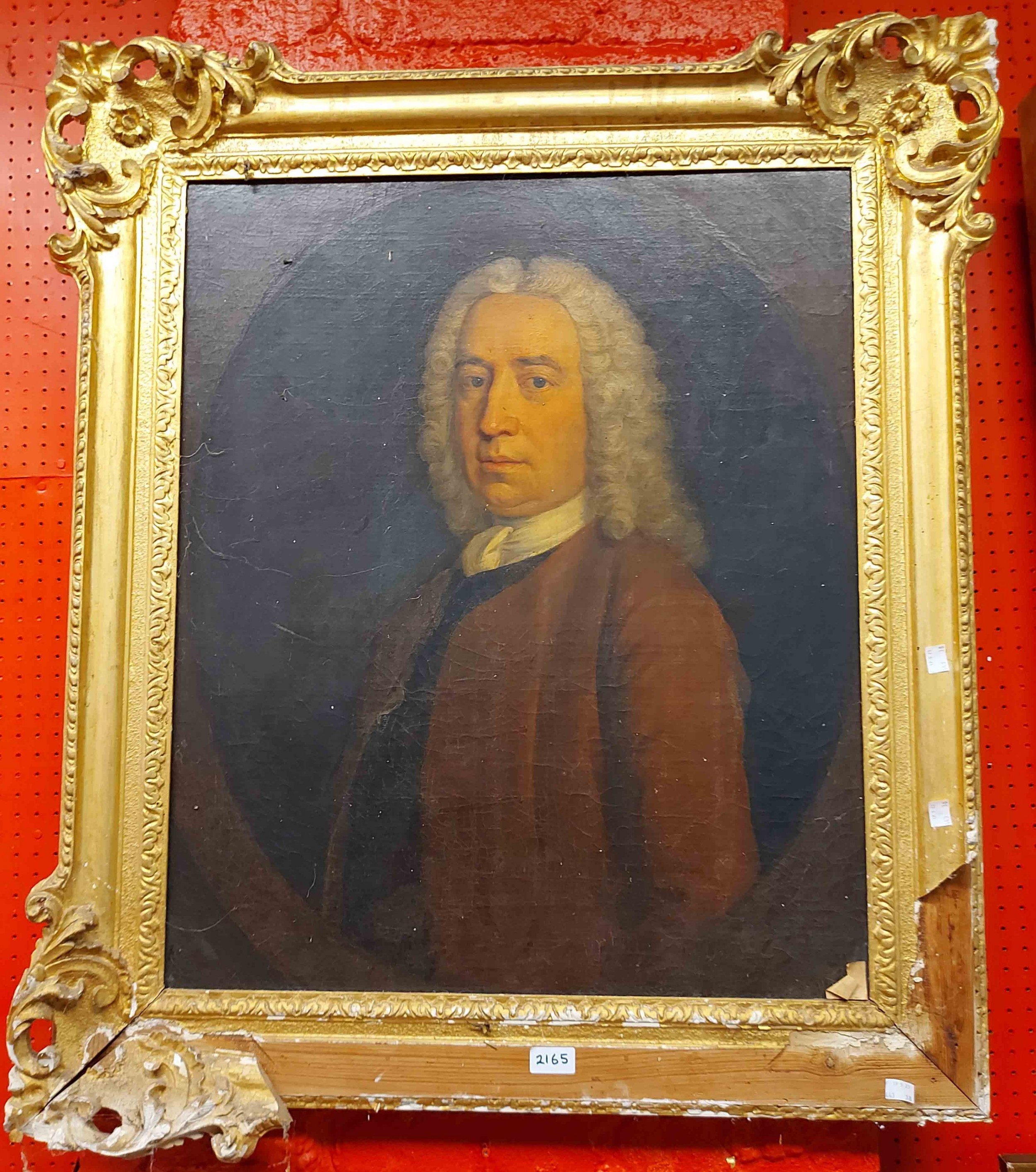
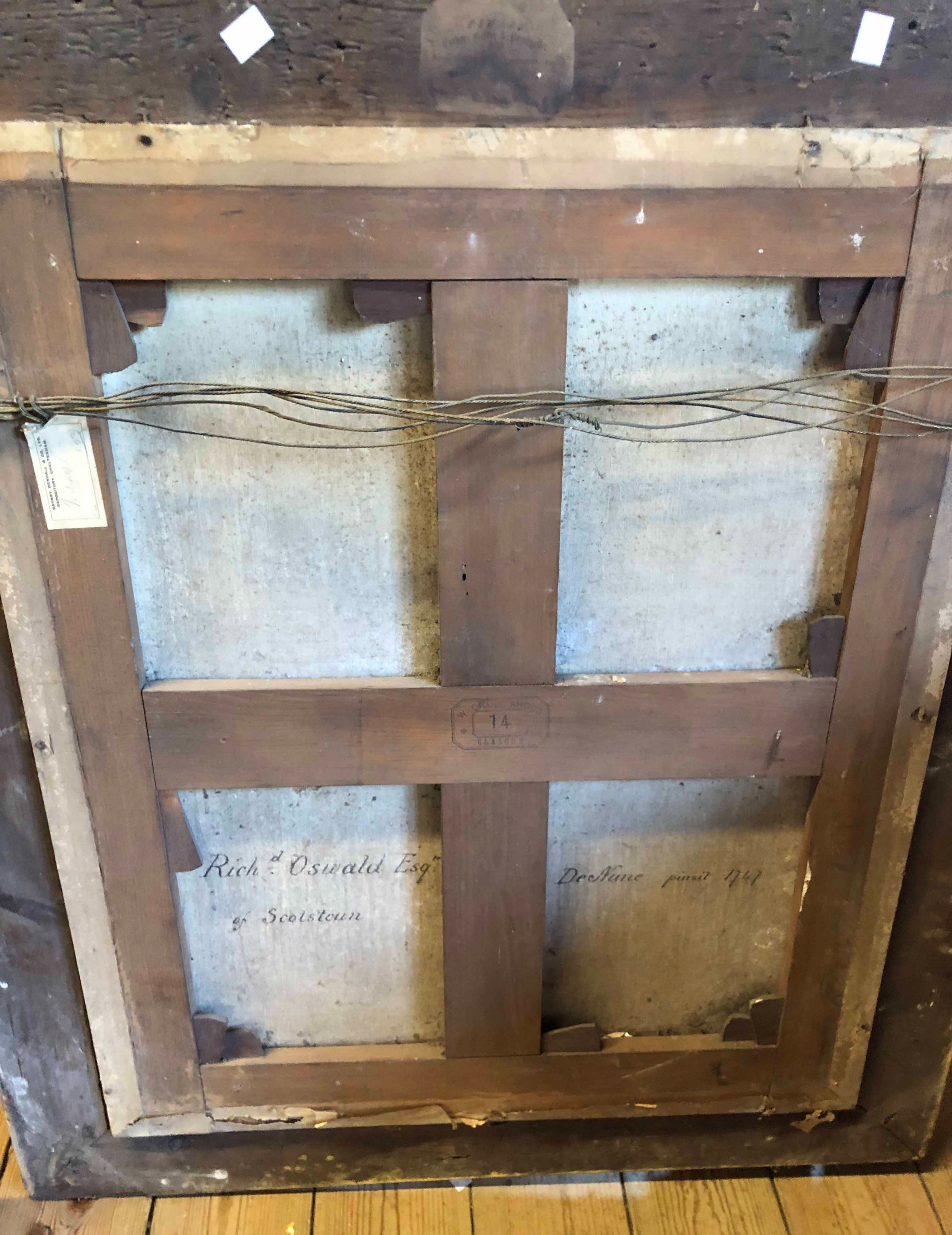
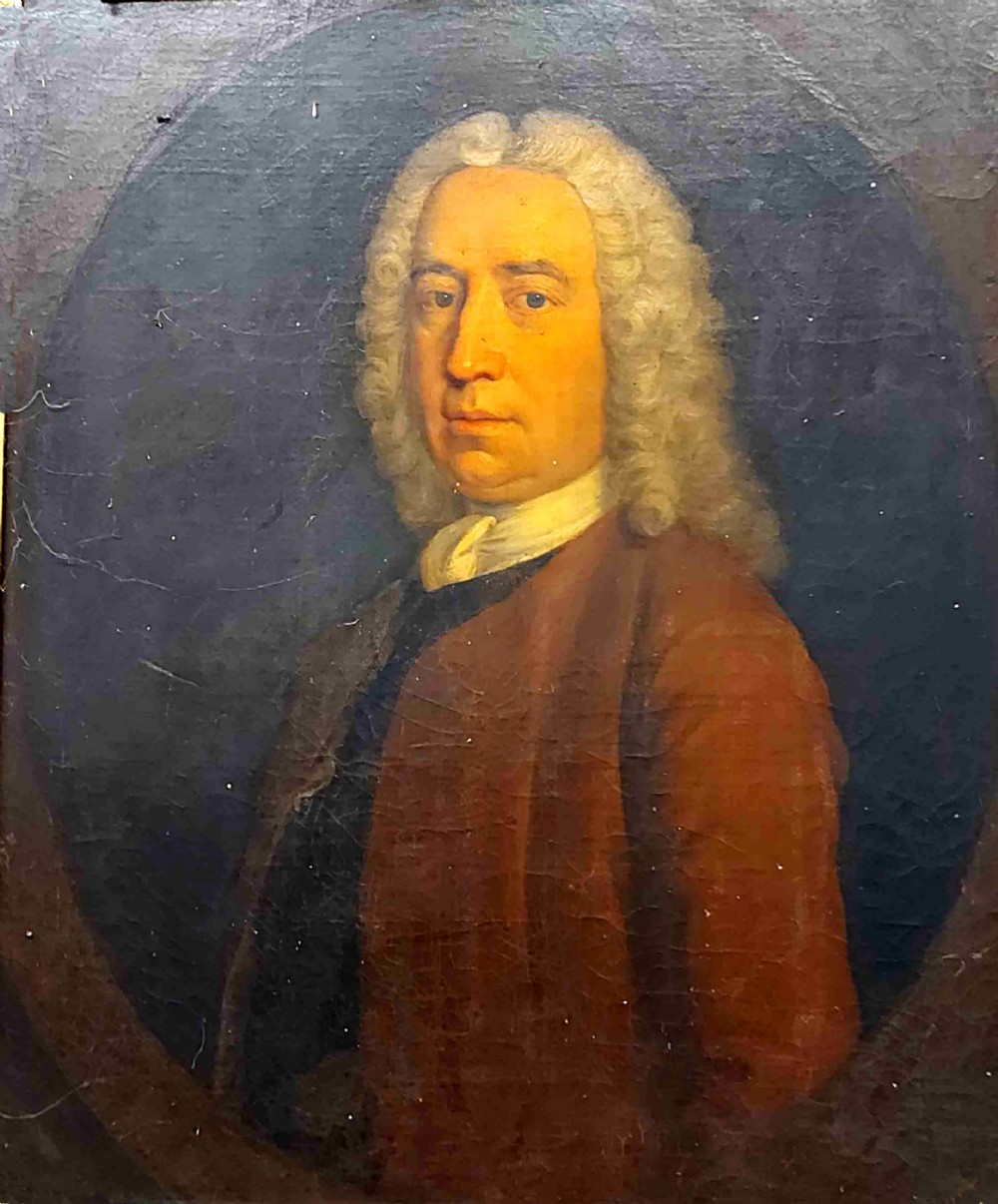
William Denune 1715-1750 Portrait of Richard Oswald 1687–1763 of Scotstoun inscribed Signed and Dated on the Reverse " Richd Oswald Esq / of Scotstoun / De Nune Pinxit 1747"
Artware Fineart
for sale €4,095     $4,445
£3,500

Artware Fineart

Sellingantiques Verified Since Sep 2008
View Dealers Stock Page
Id #SA986969
PDF SHARE
SAVE

William Denune 1715-1750 Portrait of Richard Oswald 1687–1763 of Scotstoun inscribed Signed and Dated on the Reverse " Richd Oswald Esq / of Scotstoun / De Nune Pinxit 1747"

18th century
For Sale by Artware Fineart
Description

William Denune 1715-1750

Portrait of Richard Oswald (1705 – 1784) Merchant, Slave trader, Government adviser & British peace commissioner

inscribed signed and dated on the reverse " Richd Oswald Esq / of Scotstoun / De Nune Pinxit 1747"
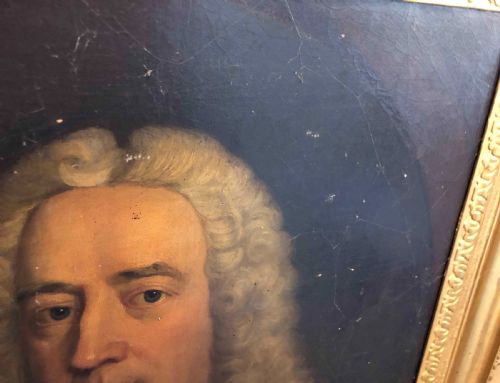
oil on canvas

76.20 x 63.50 cm.

Provenance

By Direct family descent

?

In 1751, Alexander (1694–1766) and Richard Oswald (1687–1763), merchants in Glasgow and slave traders, bought Scotstoun, an estate of 1,000 acres. It included the lands of Balshagray to the west of Partick, stretching from the River Clyde to Great Western Road.  The Scotstoun estate contained about 1,000 acres and stretched from the River Clyde to Great Western Road. It included not only the districts which we now know as Scotstoun and Whiteinch, but also Claythorn (Whittingehame Drive area) and lands around the former Knightswood Hospital.     In fact by the late 1800’s the estate belonging to the Smiths of Jordanhill was almost surrounded by Oswald lands.     In earlier times the Jordanhill Estate had included parts of Scotstoun and Gartnavel but they had been sold off to the Oswalds.   Scotstoun Estate had, in the distant past,  belonged to the house of Montgomerie but after 200 years they sold it in 1634 to John Hutchison, town clerk of Glasgow (no relation to the George Hutchison who founded Hutchison’s Hospital etc.)  A couple of generations later the estate was sold in 1691 to William Walkinshaw, a Glasgow Merchant.   William Walkinshaw’s eldest son John, who inherited the estate from his father, held Jacobite views and in 1715 he had to flee the country.   As a result, under a recently passed Act, (for encouragement of loyal superiors, vassals, landlords and tenants in Scotland) the ninth Earl of Eglinton  claimed and obtained the estate through a final decree from the Court of Session in 1719.   In 1729 Lord Eglinton conveyed Scotstoun estate to his grandson Alexander the sixth Earl of Galloway.    In 1750 the Earl sold the estate to William Crawfurd, a Glasgow merchant who was the eldest son of Matthew Crawfurd of Balshagray.    There is a footnote in the old document to point out that these Crawfurds (with a “u”)  of Scotstoun and Balshagray were not  related to the Crawfords (with an “o”) of Jordanhill who were Crawfords of Kilbirnie.      There is some confusion about this in Jordanhill since the Crawfurd Theatre at the College (Strathclyde University Campus) and Crawfurd House in Jordanhill School are both spelt with the “u”.   See the history of the Smiths of Jordanhill at  http://www.wsmclean.com/Smiths.htm    
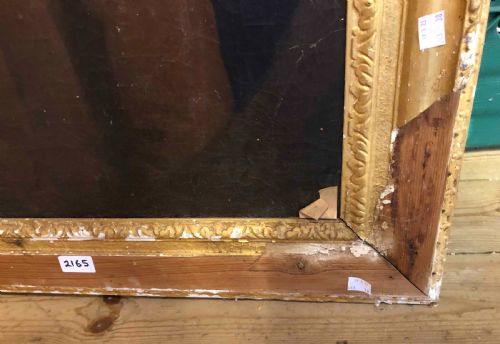
 

After the problems of the 1715 period had blown over, John Walkinshaw reappeared from exile and tried to reclaim his former estate, opposed obviously by Matthew Crawfurd.   The matter was referred to arbitration and the estate was conveyed to Matthew’s son William Crawfurd.   The Crawfurd family thus owned both Scotstoun and Balshagray estates. 
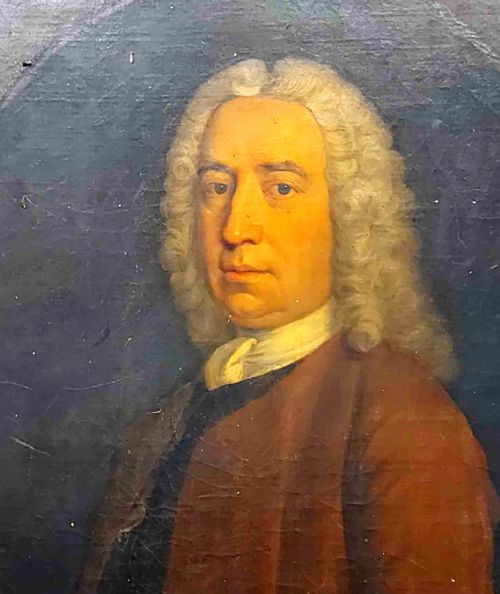
 In 1751 Scotstoun estate was sold to Richard and Alexander Oswald, two brothers and Glasgow merchants.    In 1759 they acquired Balshagray.      The Oswald Family History   James Oswald was the son of a well-to-do Burgess of Kirkwall in Orkney, who came over to the mainland in the middle of the seventeenth century and settled in Wick.    He had two sons, James and George who were both ministers.    James was an Episcopal minister and George was a Presbyterian minister.   James (the Episcopalian minister, 1654 –1699) had two sons Richard (1687 – 1766) and Alexander (1694 – 1763) who were rich merchants and shipowners.    The brothers built themselves a grand mansion in the Stockwell area of Glasgow called “Oswald’s Land with great cellars below to store tobacco and wines but it was demolished around 1875 to make way for the new bridge being built for the Union Railway Company.    They bought Scotstoun estate in 1751.   They were bachelors and died at Scotstoun House (which had been built by the above mentioned William Walkinshaw).   Th

Physical Dimensions
Height
76.2cm (30.00")
Width
63.5cm (25.00")
Depth
2cm (0.79")
Declaration

Artware Fineart has dated this Georgian Oil Portrait Painting to the 18th Century.

Reference Numbers
Sellingantiques Reference
SA986969
Dealers Internal Reference
4785
Description
William Denune 1715-1750
Portrait of Richard Oswald (1705 – 1784) Merchant, Slave trader, Government adviser & British peace commissioner.
Artware Fineart

inscribed signed and dated on the reverse " Richd Oswald Esq / of Scotstoun / De Nune Pinxit 1747"

fig 1. A mid-eighteenth-century oil painting depicting a gentleman with a powdered wig, white cravat, and brown coat set within a painted feigned oval frame.
fig 1. William Denune 1715-1750 Portrait of Richard Oswald 1687–1763 of Scotstoun inscribed Signed and Dated on the Reverse " Richd Oswald Esq / of Scotstoun / De Nune Pinxit 1747"

oil on canvas

76.20 x 63.50 cm.

Provenance

By Direct family descent

?

In 1751, Alexander (1694–1766) and Richard Oswald (1687–1763), merchants in Glasgow and slave traders, bought Scotstoun, an estate of 1,000 acres. It included the lands of Balshagray to the west of Partick, stretching from the River Clyde to Great Western Road.  The Scotstoun estate contained about 1,000 acres and stretched from the River Clyde to Great Western Road. It included not only the districts which we now know as Scotstoun and Whiteinch, but also Claythorn (Whittingehame Drive area) and lands around the former Knightswood Hospital.     In fact by the late 1800’s the estate belonging to the Smiths of Jordanhill was almost surrounded by Oswald lands.     In earlier times the Jordanhill Estate had included parts of Scotstoun and Gartnavel but they had been sold off to the Oswalds.   Scotstoun Estate had, in the distant past,  belonged to the house of Montgomerie but after 200 years they sold it in 1634 to John Hutchison, town clerk of Glasgow (no relation to the George Hutchison who founded Hutchison’s Hospital etc.)  A couple of generations later the estate was sold in 1691 to William Walkinshaw, a Glasgow Merchant.   William Walkinshaw’s eldest son John, who inherited the estate from his father, held Jacobite views and in 1715 he had to flee the country.   As a result, under a recently passed Act, (for encouragement of loyal superiors, vassals, landlords and tenants in Scotland) the ninth Earl of Eglinton  claimed and obtained the estate through a final decree from the Court of Session in 1719.   In 1729 Lord Eglinton conveyed Scotstoun estate to his grandson Alexander the sixth Earl of Galloway.    In 1750 the Earl sold the estate to William Crawfurd, a Glasgow merchant who was the eldest son of Matthew Crawfurd of Balshagray.    There is a footnote in the old document to point out that these Crawfurds (with a “u”)  of Scotstoun and Balshagray were not  related to the Crawfords (with an “o”) of Jordanhill who were Crawfords of Kilbirnie.      There is some confusion about this in Jordanhill since the Crawfurd Theatre at the College (Strathclyde University Campus) and Crawfurd House in Jordanhill School are both spelt with the “u”.   See the history of the Smiths of Jordanhill at  http://www.wsmclean.com/Smiths.htm    

fig 2. A mid-eighteenth-century oil painting depicting a gentleman with a powdered wig, white cravat, and brown coat set within a painted feigned oval frame.
fig 2. William Denune 1715-1750 Portrait of Richard Oswald 1687–1763 of Scotstoun inscribed Signed and Dated on the Reverse " Richd Oswald Esq / of Scotstoun / De Nune Pinxit 1747"


After the problems of the 1715 period had blown over, John Walkinshaw reappeared from exile and tried to reclaim his former estate, opposed obviously by Matthew Crawfurd.   The matter was referred to arbitration and the estate was conveyed to Matthew’s son William Crawfurd.   The Crawfurd family thus owned both Scotstoun and Balshagray estates. 

fig 3. A mid-eighteenth-century oil painting depicting a gentleman with a powdered wig, white cravat, and brown coat set within a painted feigned oval frame.
fig 3. William Denune 1715-1750 Portrait of Richard Oswald 1687–1763 of Scotstoun inscribed Signed and Dated on the Reverse " Richd Oswald Esq / of Scotstoun / De Nune Pinxit 1747"

 In 1751 Scotstoun estate was sold to Richard and Alexander Oswald, two brothers and Glasgow merchants.    In 1759 they acquired Balshagray.      The Oswald Family History   James Oswald was the son of a well-to-do Burgess of Kirkwall in Orkney, who came over to the mainland in the middle of the seventeenth century and settled in Wick.    He had two sons, James and George who were both ministers.    James was an Episcopal minister and George was a Presbyterian minister.   James (the Episcopalian minister, 1654 –1699) had two sons Richard (1687 – 1766) and Alexander (1694 – 1763) who were rich merchants and shipowners.    The brothers built themselves a grand mansion in the Stockwell area of Glasgow called “Oswald’s Land with great cellars below to store tobacco and wines but it was demolished around 1875 to make way for the new bridge being built for the Union Railway Company.    They bought Scotstoun estate in 1751.   They were bachelors and died at Scotstoun House (which had been built by the above mentioned William Walkinshaw).   Th

Height
76.2cm (30.00")
Width
63.5cm (25.00")
Depth
2cm (0.79")
Date of Manufacture

Artware Fineart has dated this Georgian Oil Portrait Painting to the 18th Century.

Reference Numbers
Sellingantiques Ref
SA986969
Dealers Internal Ref
4785
Artware Fineart
Sellingantiques verified Since Sep 2008
Dealer Profile

You can view the stock and full dealer information on the Artware Fineart Profile Page
PDF SHARE
SAVE
A mid-eighteenth-century oil painting depicting a gentleman with a powdered wig, white cravat, and brown coat set within a painted feigned oval frame.
1 / 11
Archive I A mid-eighteenth-century oil painting depicting a gentleman with a powdered wig, white cravat, and brown coat set within a painted feigned oval frame.

William Denune 1715-1750 Portrait of Richard Oswald 1687–1763 of Scotstoun inscribed Signed and Dated on the Reverse " Richd Oswald Esq / of Scotstoun / De Nune Pinxit 1747"

Archive II A mid-eighteenth-century oil painting depicting a gentleman with a powdered wig, white cravat, and brown coat set within a painted feigned oval frame. View II
Archive III A mid-eighteenth-century oil painting depicting a gentleman with a powdered wig, white cravat, and brown coat set within a painted feigned oval frame. View III
Archive IV A mid-eighteenth-century oil painting depicting a gentleman with a powdered wig, white cravat, and brown coat set within a painted feigned oval frame. View IV
Archive V A mid-eighteenth-century oil painting depicting a gentleman with a powdered wig, white cravat, and brown coat set within a painted feigned oval frame. View V
Archive VI A mid-eighteenth-century oil painting depicting a gentleman with a powdered wig, white cravat, and brown coat set within a painted feigned oval frame. View VI
Archive VII A mid-eighteenth-century oil painting depicting a gentleman with a powdered wig, white cravat, and brown coat set within a painted feigned oval frame. View VII
Archive VIII A mid-eighteenth-century oil painting depicting a gentleman with a powdered wig, white cravat, and brown coat set within a painted feigned oval frame. View VIII
Archive IX A mid-eighteenth-century oil painting depicting a gentleman with a powdered wig, white cravat, and brown coat set within a painted feigned oval frame. View IX
Archive X A mid-eighteenth-century oil painting depicting a gentleman with a powdered wig, white cravat, and brown coat set within a painted feigned oval frame. View X
Archive XI A mid-eighteenth-century oil painting depicting a gentleman with a powdered wig, white cravat, and brown coat set within a painted feigned oval frame. View XI
FURTHER BROWSING

Visitors also looked at these ⇣

Enlarged Archival View
Telephone 07958 699 645
Location
18 La Gare
51 Surrey Row
London
SE1 0BZ
United Kingdom
Verified Since Sep 2008
Items For Sale 243
Items Sold 223
Artware Fineart
Verified Since Sep 2008
View Dealer Info
Location: 18 La Gare , 51 Surrey Row , London , SE1 0BZ , United Kingdom
Verified
Sep 2008
For Sale
243
Sold
223
A mid-eighteenth-century oil painting depicting a gentleman with a powdered wig, white cravat, and brown coat set within a painted feigned oval frame.
William Denune 1715-1750 Portrait of Richard Oswald 1687–1763 of Scotstoun inscribed signed and dated on the reverse " Richd Oswald Esq / of Scotstoun / De Nune Pinxit 1747"
Ref: SA986969
A mid-eighteenth-century oil painting depicting a gentleman with a powdered wig, white cravat, and brown coat set within a painted feigned oval frame.
Detail View 1
Detail View 2
Detail View 3
Detail View 4
Detail View 5
Detail View 6
Detail View 7
Detail View 8
Detail View 9
Detail View 10
Archival Detail
Every single antique dealer on our platform is individually approved by our internal team. We verify their professional trade history, ethical standards, and photographic quality to ensure a secure, high-standard buying environment. Upon joining, every dealer agrees to a strict 9-point code of conduct. While issues can occasionally arise, our dealers typically resolve them swiftly and directly with the buyer. In fact, since our founding in 2002, Sellingantiques has only had to step in to help resolve an issue on roughly five occasions—a true testament to the quality of our dealers and their dedication to your happiness.
Our dealers are highly experienced in packing and shipping fragile, high-value antiques. Because you are in direct contact with the dealer, you will be able to easily go through all available shipping and insurance options together to ensure your item arrives safely.
Antiques are the ultimate green purchase. By choosing historical pieces over newly manufactured goods, you completely eliminate the carbon footprint of modern mass production while preserving exceptional, timeless craftsmanship.

Georgian portraiture from this period frequently depicts sitters in formal attire, incorporating elements such as powdered wigs, structured coats, and cravats. Paintings often utilized a feigned oval spandrel composition to focus attention on the subjects face against a muted background.

Artists during this era applied hand-ground oil pigments onto stretched hand-woven linen or canvas supports. Frames were typically carved wood finished with gold leaf or dark varnishes, while stretchers were joined with wooden keys.

Authentic period paintings display natural craquelure patterns across the paint surface that align with the age of the canvas. Examination of the canvas weave, stretcher construction, iron tacks, and historical lining or inscriptions on the reverse helps confirm period origin.

Historic portraits provide visual contrast when hung above contemporary sideboards, mantelpieces, or amidst modern minimalism. Pairing dark eighteenth-century oil paintings with tailored furniture highlights the texture and historical character of the artwork.

Keep the canvas away from direct sunlight, excess humidity, and fluctuating heat sources to prevent paint flaking or canvas warping. Cleaning should be performed exclusively by a trained art conservator using appropriate non-abrasive solvents.
items
Add keywords to the filter
Price
£100
£250000
Era
Movements
Material
Origin
Stock Location
Freshness
Online Payments
Categories