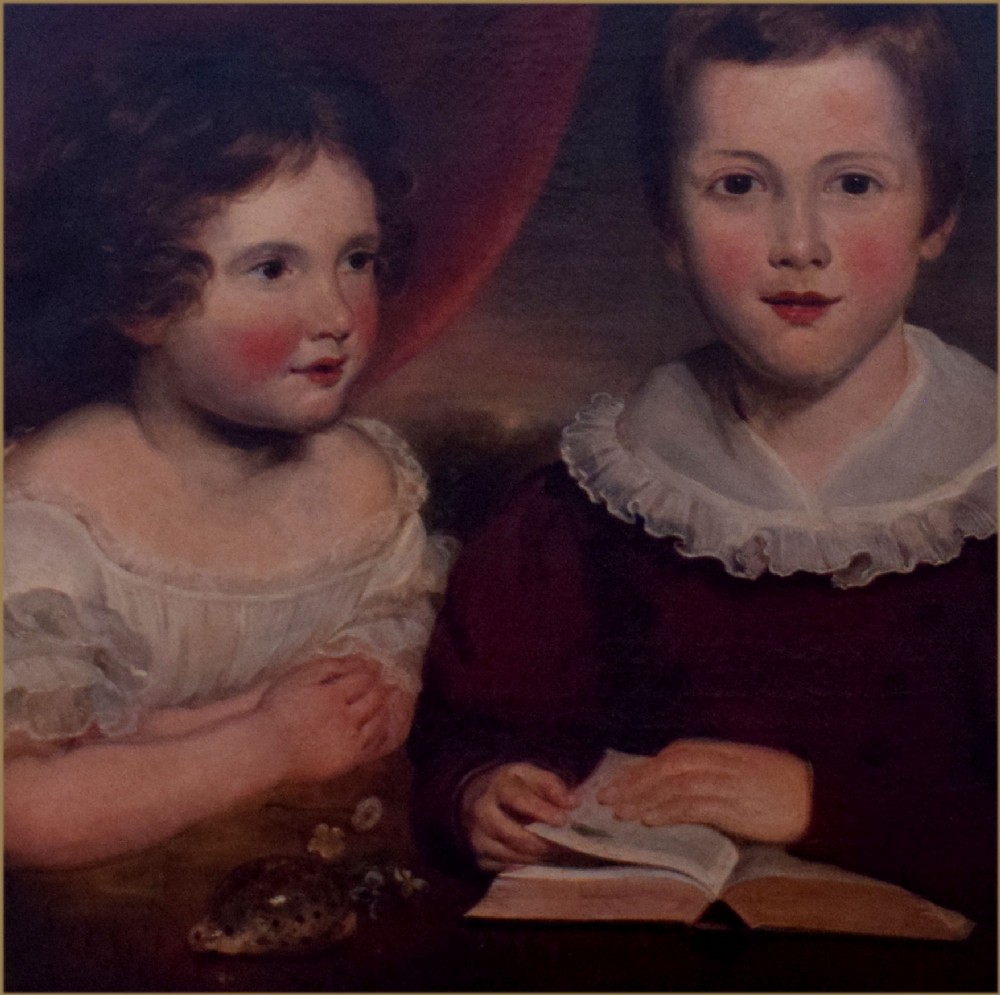
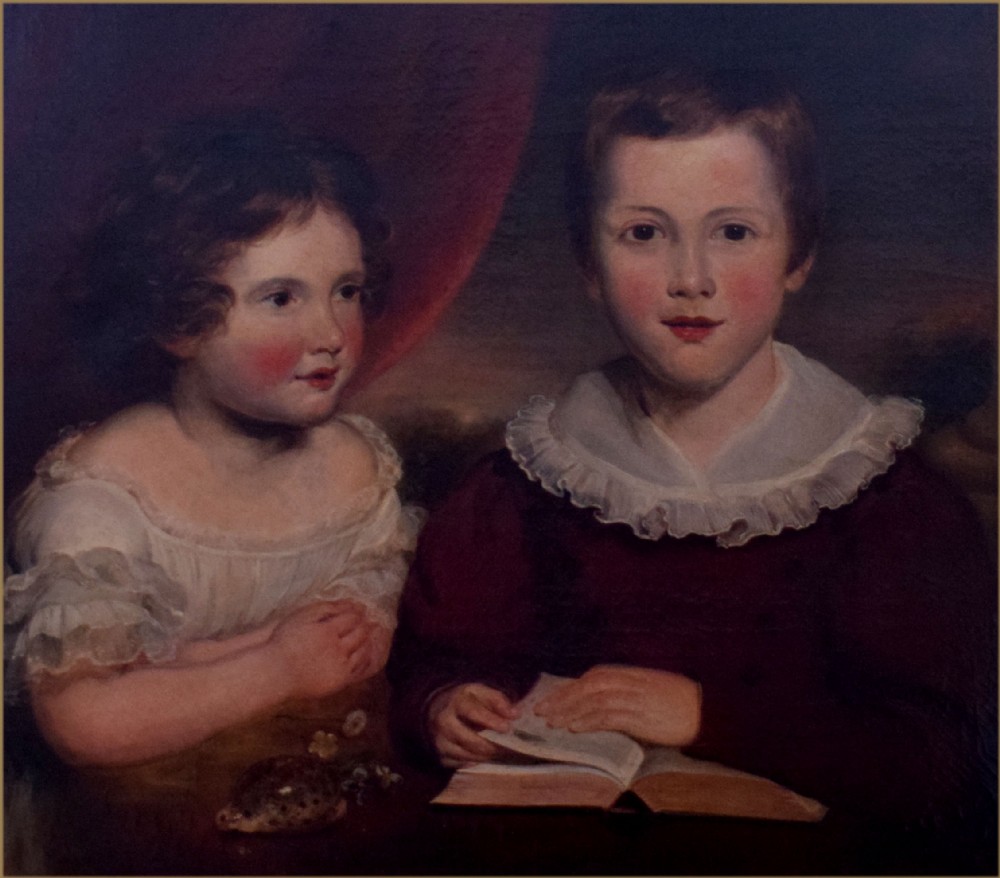
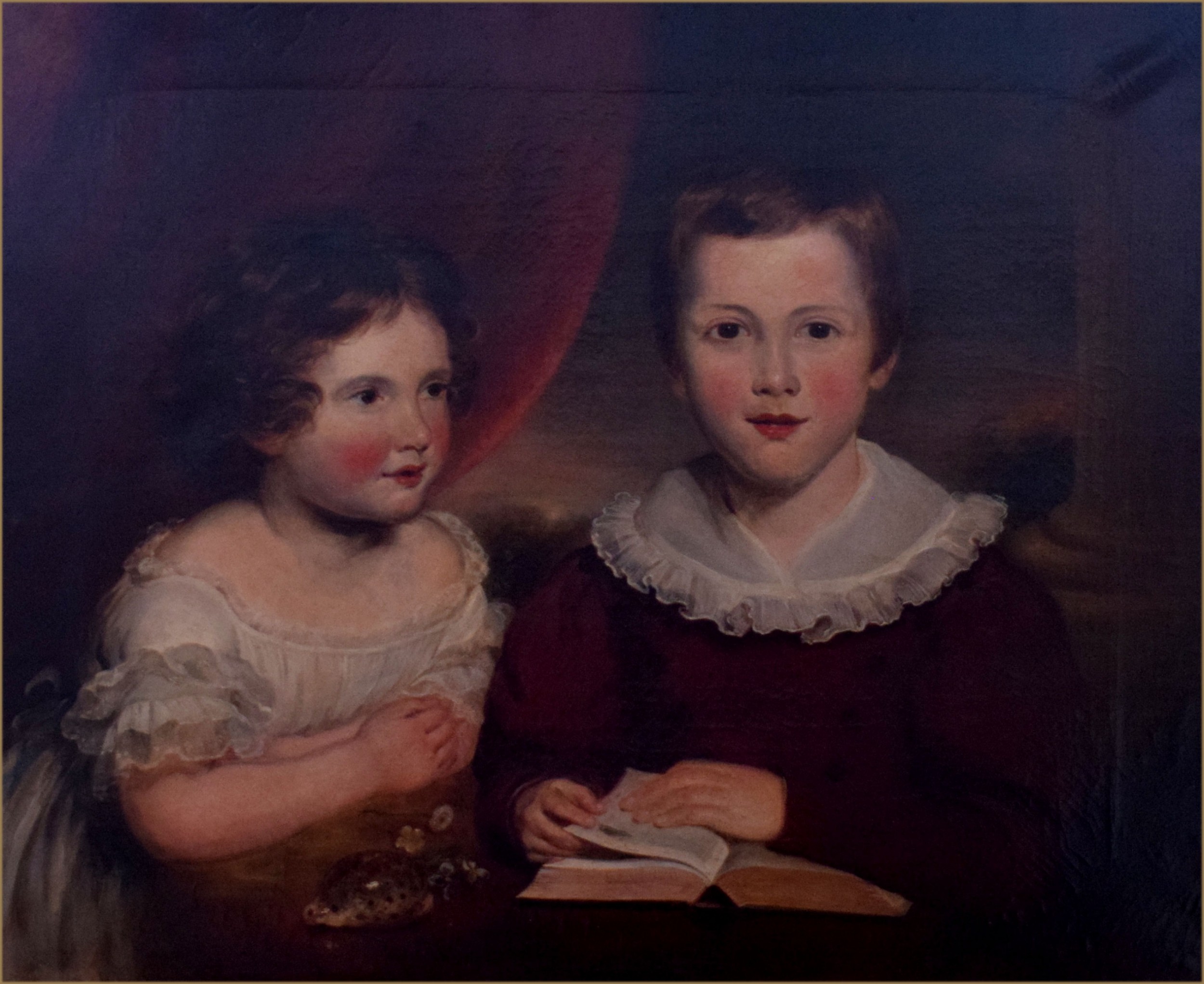
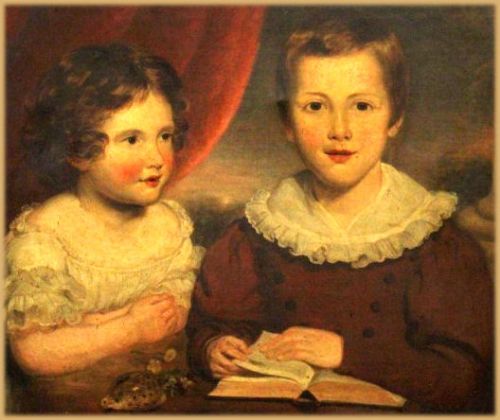
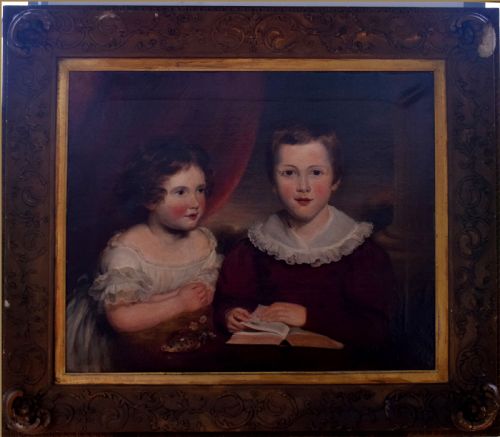
Artware Fineart has dated this Georgian Oil Portrait Painting to the 18th Century.
oil on canvas
64 x 76 cm. (25 x 30 in.)
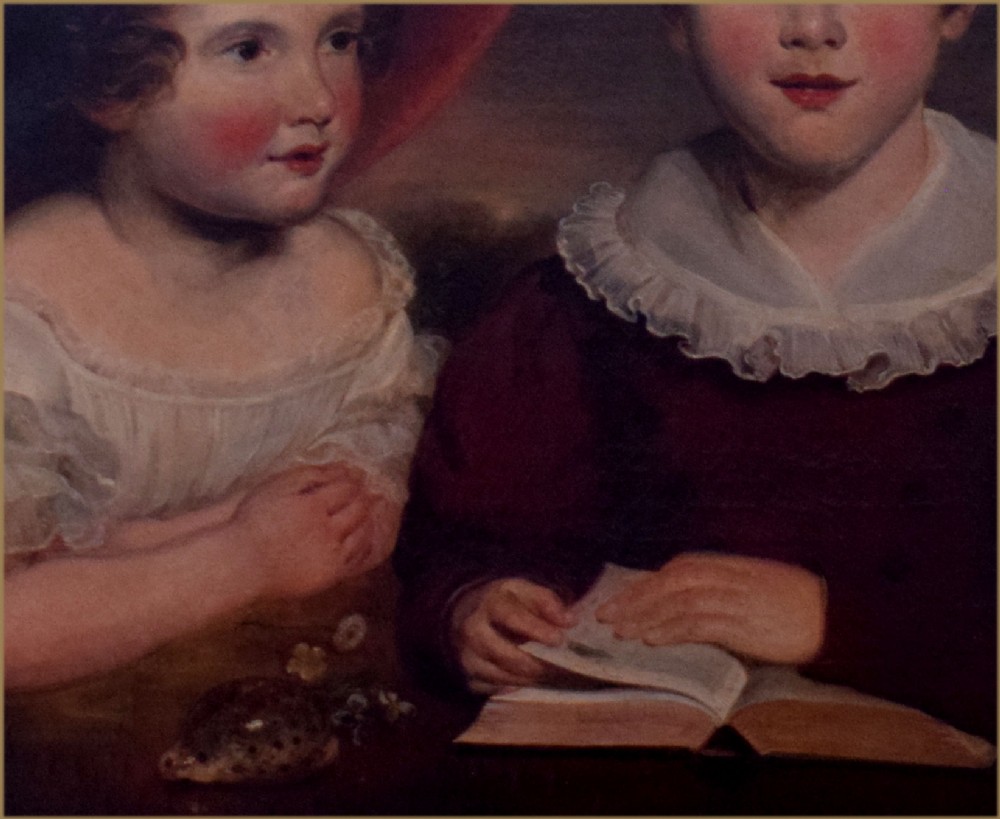
Despite the fact that this species does not occur in the Mediterranean Sea, shells of the tiger cowrie and the related panther cowrie, Cypraea pantherina, have been unearthed at Pompeii, the ancient Roman city near Naples, Italy, where these shells may have been used as some form of ornament. It is also conceivable that the shells were part of a natural history collection. There was an interest in natural history at the time, as exemplified by Pliny the Elder who wrote extensively about seashells in his book Natural History and who died investigating the eruption of Vesuvius.
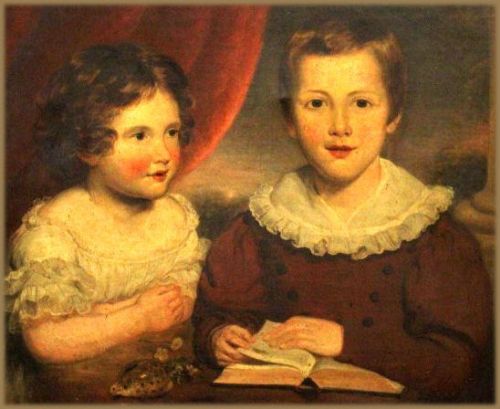
The shells of this species of cowry are still popular among shell collectors, and are also used as a decorative object, even in modern times.
The shell of Cypraea tigris is believed to help to facilitate childbirth: some women in Japan hold a shell of this species during childbirth. Large cowry shells such as that of this species were used in Europe in the recent past as a frame over which sock heels were stretched for darning, i.e. instead of using a darning egg. The cowry's smooth surface allows the darning needle to be positioned under the cloth more easily than when using a darning mushroom made of wood.
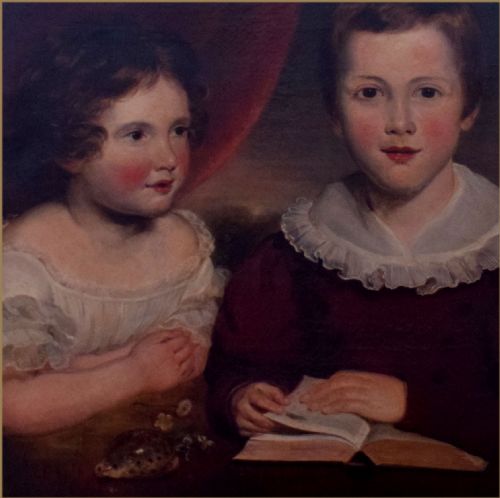
Throughout the late eighteenth and nineteenth-century the mania for seashells steadily swelled; they featured on Christmas cards, and adorned countless keepsakes, jewellery, and furniture. The Gradgrind nursery in Charles Dickens’ Hard Times is equipped with a “little conchological cabinet, a little metallurgical cabinet, and a little mineralogical cabinet”, whilst, inspired by works of natural history, men and women scoured the seashore for conchological specimens. Conchology, unlike other branches of natural history such as zoology or mineralogy was easily accessible to everyone, and did not require specialist equipment. It also had the added bonus of including inanimate specimens that were not subject to disease or decay.
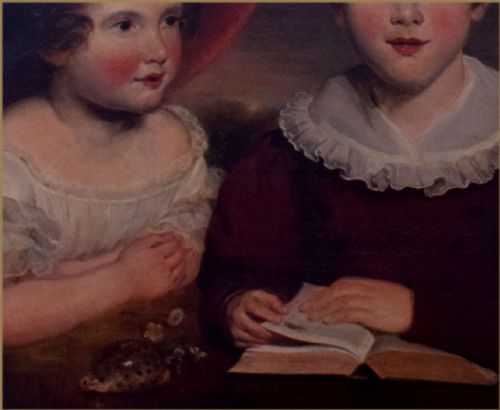
Victorian women made use of their collection in various handicraft projects. Many put together imitation bouquets: using various miniature shells to create the desired flower.
Soon enough collectors, having exhausted the beaches of Britain, took to harvesting more impressive shells from overseas. An army of merchants, catering for the increasing demand, set up shop in London.The name of the global oil company “Shell” is, oddly enough, a reminder of the victorian love of conchology.
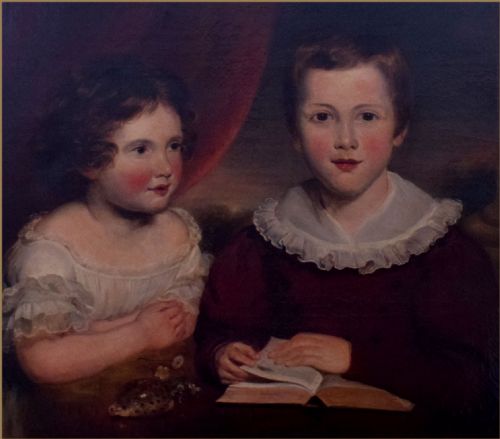
In 1833 one Marcus Samuel opened such a shop selling shells, curios, and other trinkets to natural history enthusiasts. By 1851 Marcus was described in the census as a ‘shell merchant’ and was listed as proprietor of ‘The Shell Shop’ in Houndsditch. He later formed the ‘Shell Transport and Trading Company.’ In 1882 his son (Marcus Junior) while travelling in the Caspian Sea, saw a potential for exporting oil from the region. He commissioned the world’s first purpose-built oil tanker and named the tanker the Murex, Latin for a type of snail shell, as a nod to the company’s beginnings. The first logo (1901) was a mussel shell, but by 1904 it was replaced with a scallop shell.
Artist Biography
John Russell, (1745–1806), portrait painter and astronomer, was born on 29 March 1745 at 32 High Street, Guildford, the second child of John Russell (1711–1804), book- and printseller, five times mayor of Guildford, and an artist himself (his Prospects of Guildford were engraved and published in 1759 and 1782), and his wife, Ann Parvish (1719–1775).
John Russell was baptized in the ruins of Holy Trinity Church, Guildford, and educated at the local grammar school before winning premiums at the Society of Arts in 1759 and 1760. He was then apprenticed to the painter Fran
Artware Fineart has dated this Georgian Oil Portrait Painting to the 18th Century.
You can view the stock and full dealer information on the Artware Fineart Profile Page

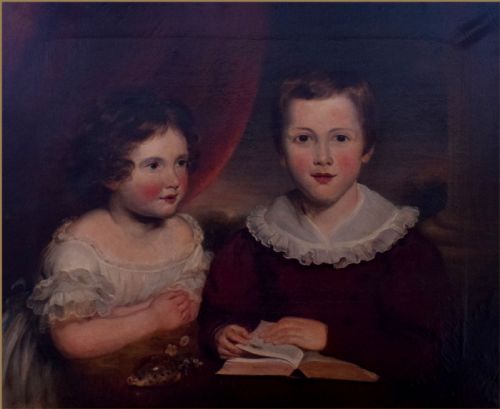
John Russell, Ra, 1745-1806 Portrait of a Young Girl and Her Brother Seated at a Table with an Open Book and a Tiger Cowrie Shell