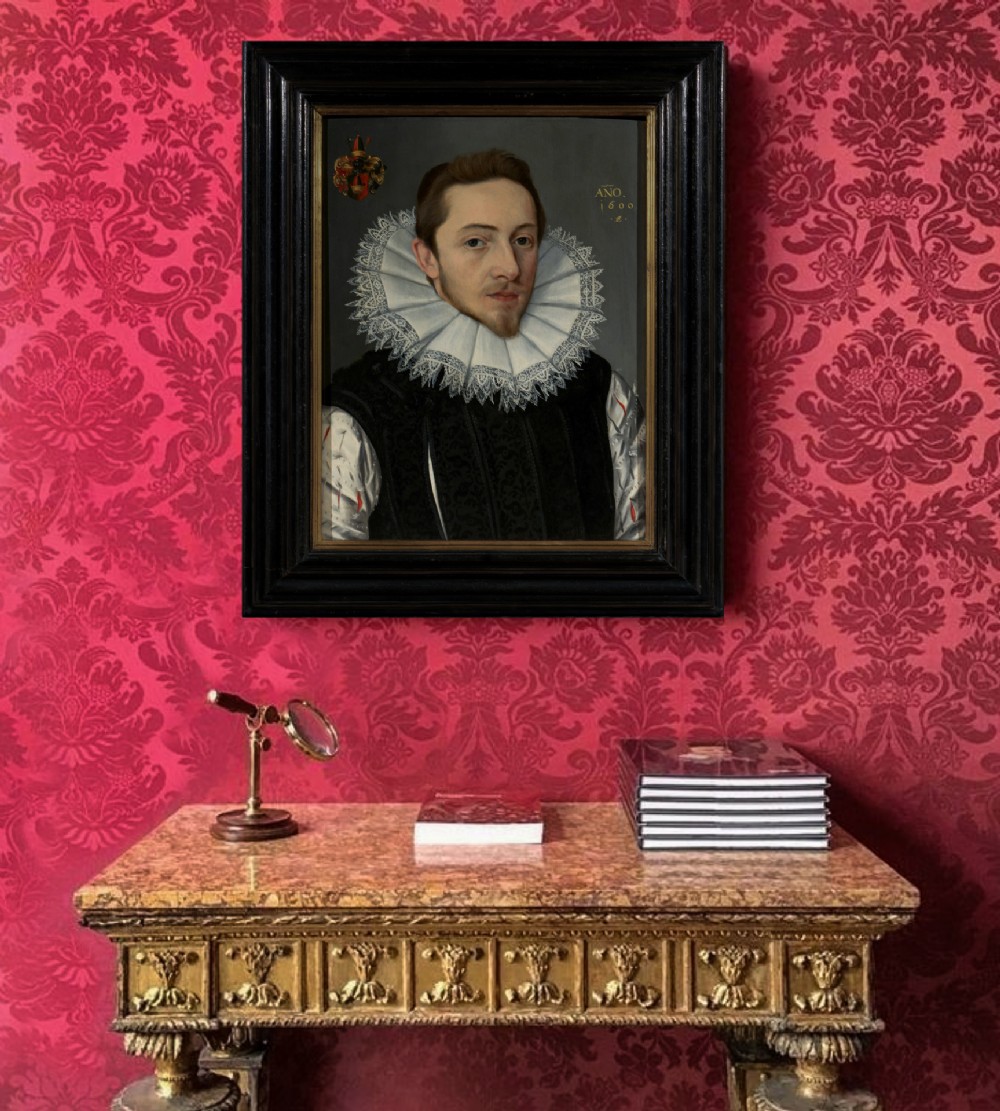
Titan Fine Art has dated this piece to the 16th Century.
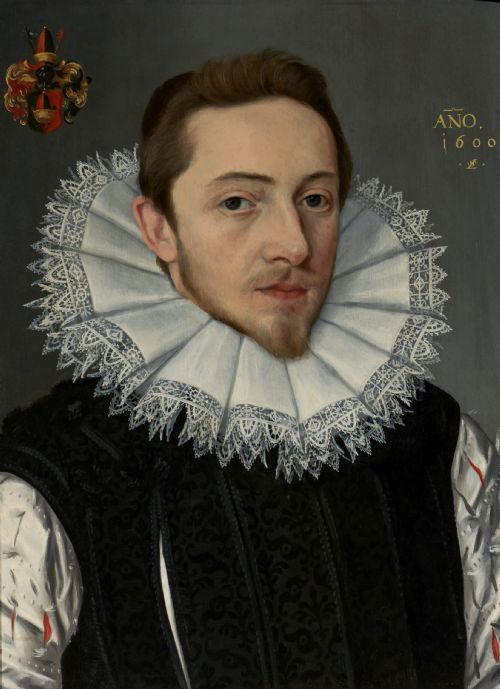
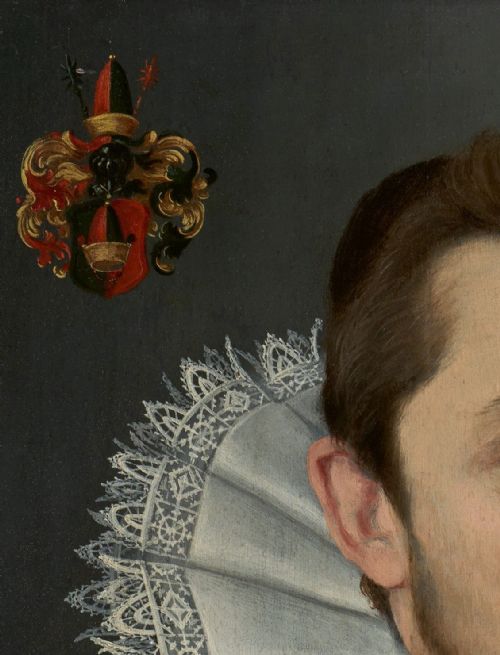
The fundamental principle governing portraits at this time was the recording and defining in visual terms the position of a sitter in society. The expensive fabrics, the attire, and the grand coat-of-arms as seen in the present portrait proclaim to every onlooker that this is a superior being. It is an exquisite example from the period.
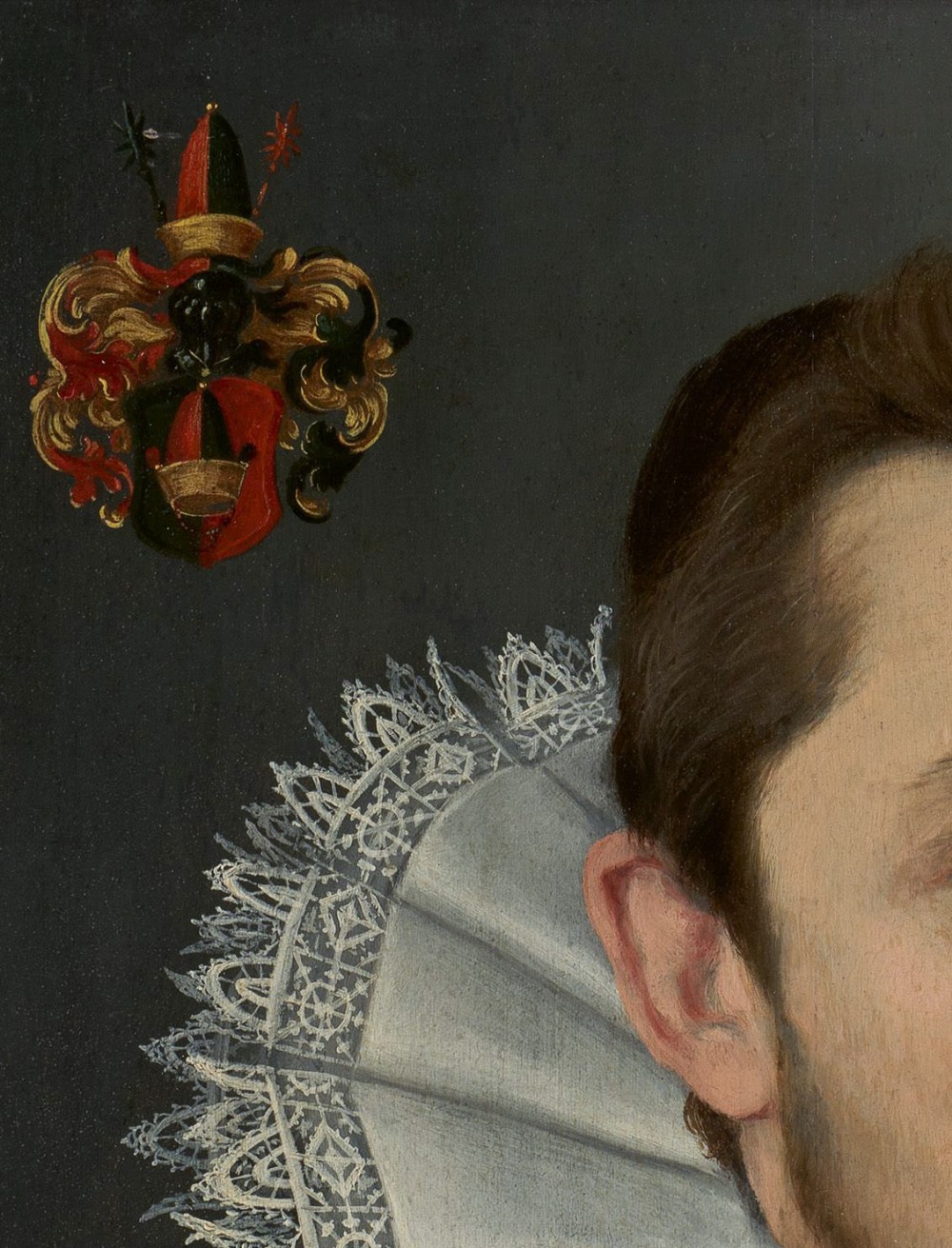
The coat-of-arms on the portrait is that of the noble Mühlegg (also Mülegg, Mühleck, Mullegg) family, who originated from the town of Bregenz (Vorarlberg, Austria) but later settled in Nürnberg, where the artist was active. They were also notable merchants and bankers. In genealogical terms the arms on the shield may be blazoned: Per pale Sable and Gules a pointed[?] Hat counterchanged turned up the chinstrap and finial[?] Or. The crest upon the helm may be blazoned: A pointed Hat per pale Gules and Sable turned up the finial[?] Or issuant from each side of the turn-up a Mace that on the dexter Sable that on the sinister Gules.
Johann Siebmacher’s Wappen Buch, an enormous and richly illustrated publication of Germanic arms, states that Martin Mühlegg, head of the court of Bregenz, moved to the thriving town of Nürnberg, bringing a large fortune with him. He had two sons, Heinrich (1538-1604) and Hans (born 1550) - both became members of the ‘großen Rath’ (the town council) in 1577. His first son, Heinrich, had three sons: Paul, Heinrich (the younger) (c.1575-1654) (married Susanna Groland in 1596) and Hans (married Magdalene Fürleger in 1599). His second son Hans, married Barbara Cronbergerin (who lived to see 54 grandchildren and 3 great-grandchildren when she was 80 years old), was the father of Johann Christoph (died in Augburg in 1646) and Johann Heinrich, who is believed to be the last of his name and arms in Nürnberg.
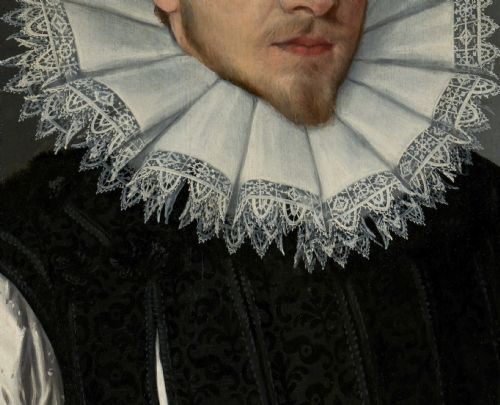
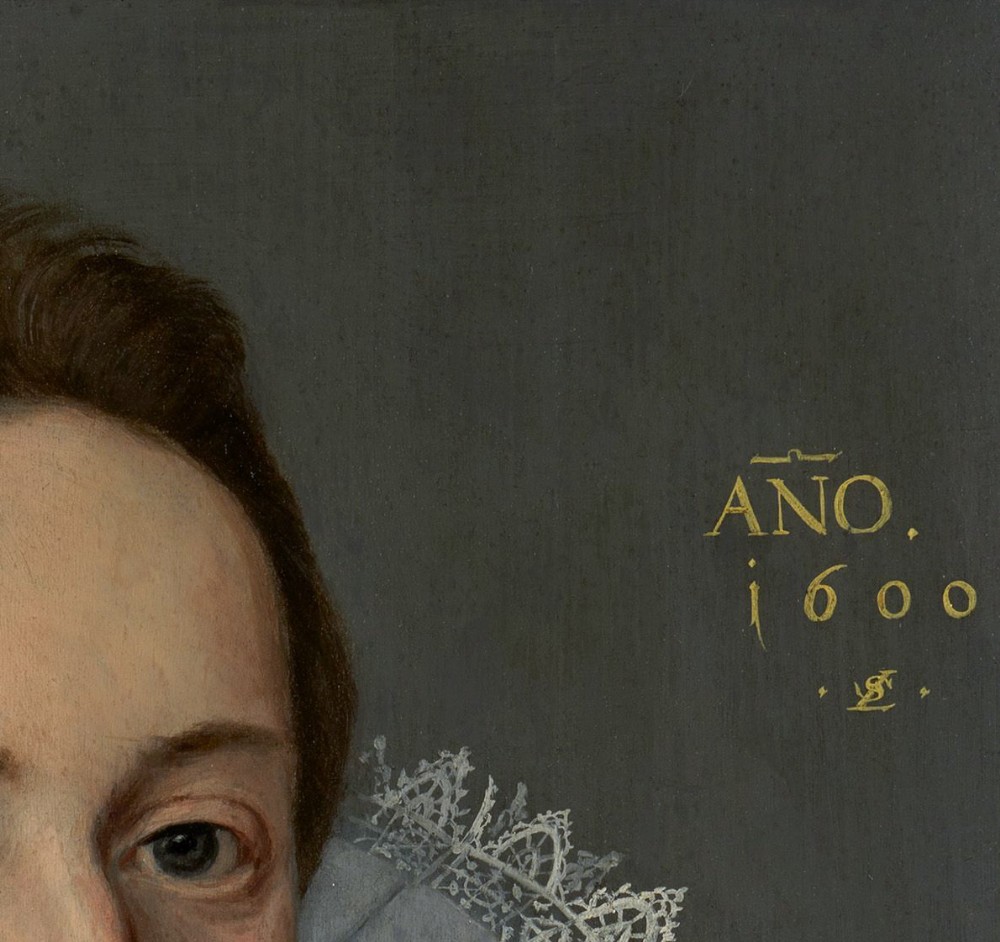
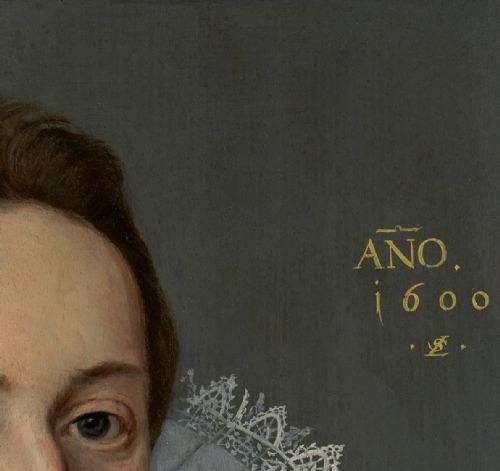
Our portrait is dated 1600 and depicts a young man who is about 25 years of age. It is difficult to ascertain conclusively which of the sons of Heinrich and Hans Mühlegg the portrait depicts - as five members of this family were alive in 1600 – but, by far, the most likely candidate is Heinrich (the younger), as subsequent editions of Siebmacher’s work, although with some inconsistences in the colours, ascribe the arms and crest specifically to him. It also states that Heinrich died in 1654 at the age of 80 years; he would have been about 25 years old in 1600. Siebmacher’s compendium was first published in 1605 and therefore his listing may also be contemporaneous with Strauch’s painting, lending further strength to this identification.
Lorenz Strauch was born in Nürnberg where he worked as a prominent portrait painter for the local patricians, but also painted architecture. He was educated by his father Hans Strauch and influenced by the Flemish portrait painter Nicolas Neufchatel. His portrait of Johann Neudorfer and his son is in the Alte Pinakothek in Munich. A self-portrait from 1614 can be found at the Germanisches Nationalmuseum in Nürnberg. His son, Hans Johann (born 1597), was also a painter.
Literature: Wappen Buch, Siemacher, 1873 edition [vol.5, table 72, p.44], written entry: Müllegg, Heinrich, died 1654 at the age of 80 years, of Nuremberg.
Provenance: Private collection Germany
Much more info at: www.titanfineart.com
Titan Fine Art has dated this piece to the 16th Century.
Specialist in 17th & 18thc portraits. Highly curated selection, museum-level research & pro conservation. Exceptional art, expertly vetted.
You can view the stock and full dealer information on the Titan Fine Art Profile Page
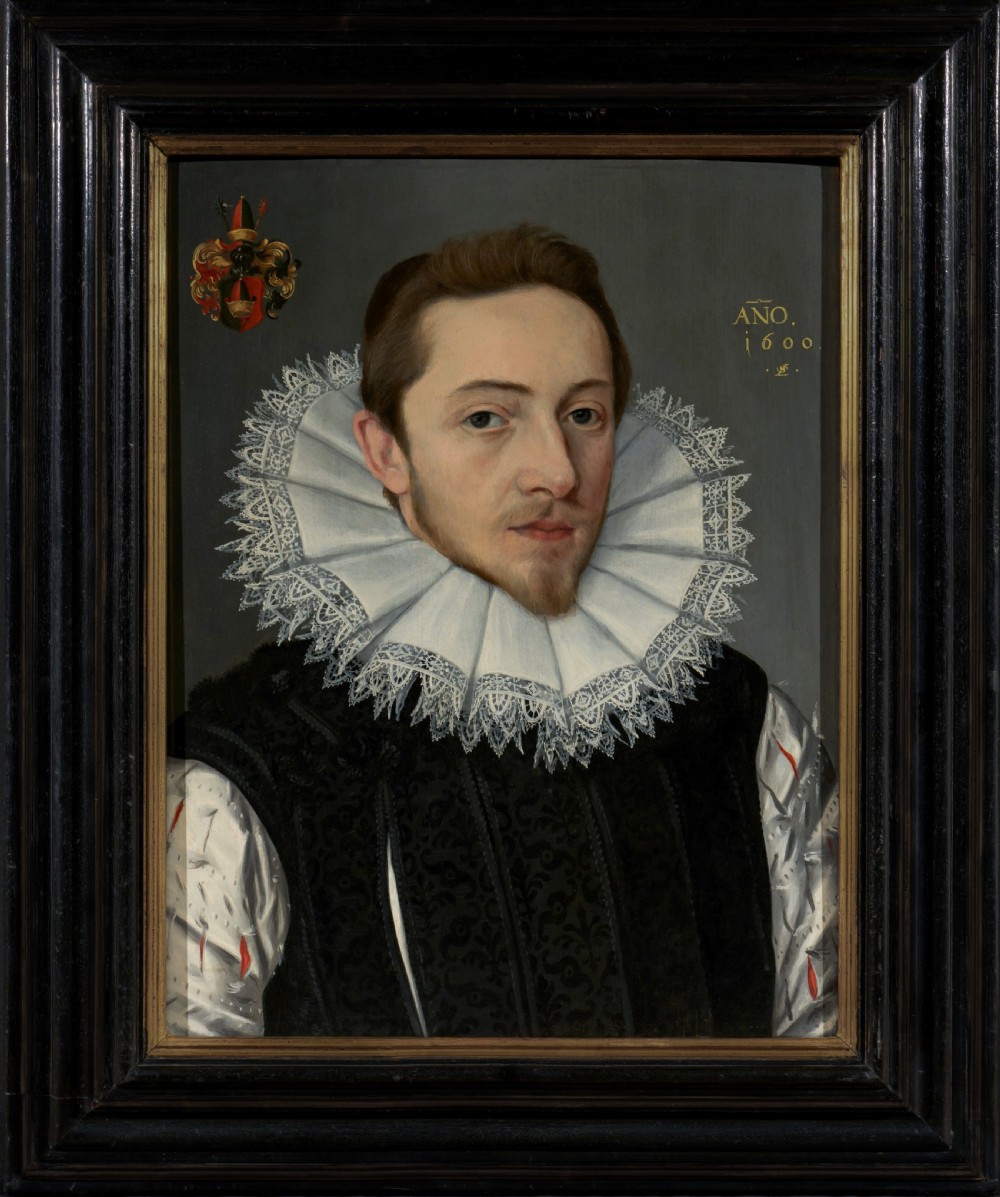

Portrait of Heinrich Mühlegg, the Younger (C.1575-1654), Monogrammed and Dated 1600; by Lorenz Strauch (1554-C.1630), Oil on Panel Painting