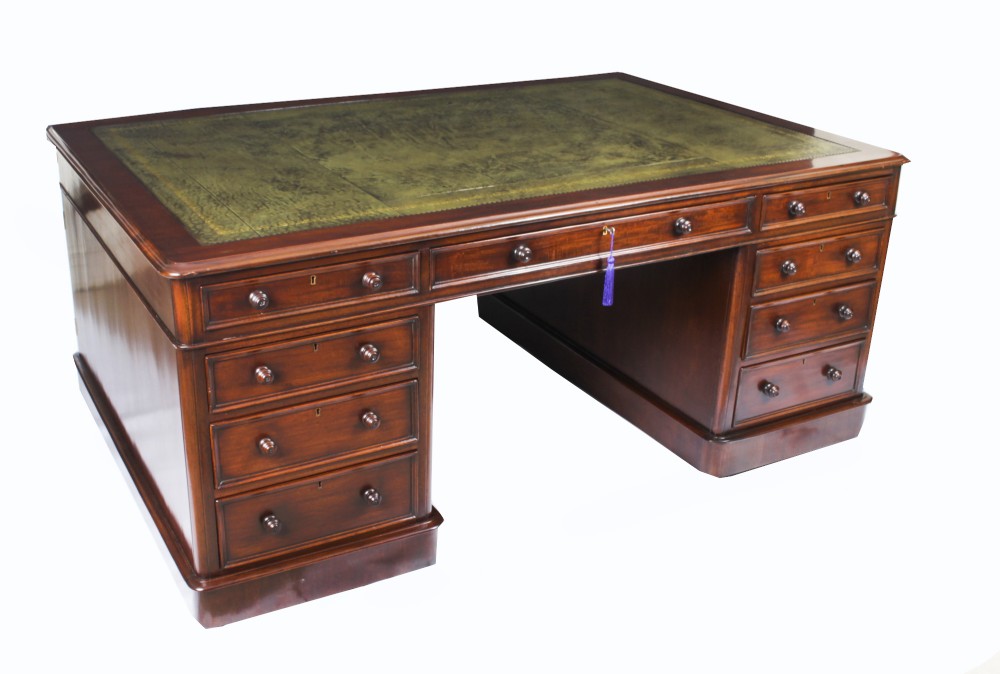
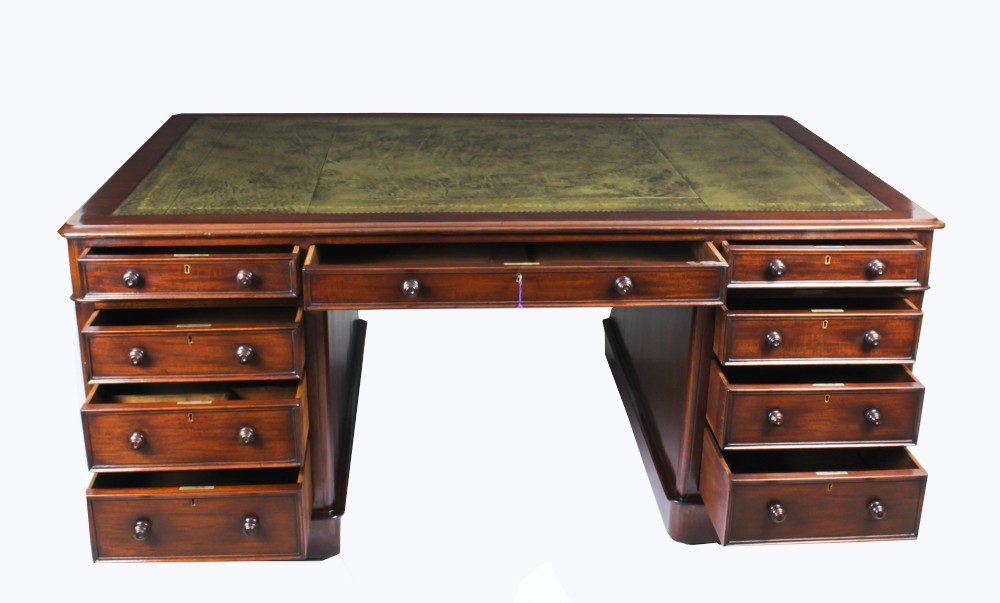
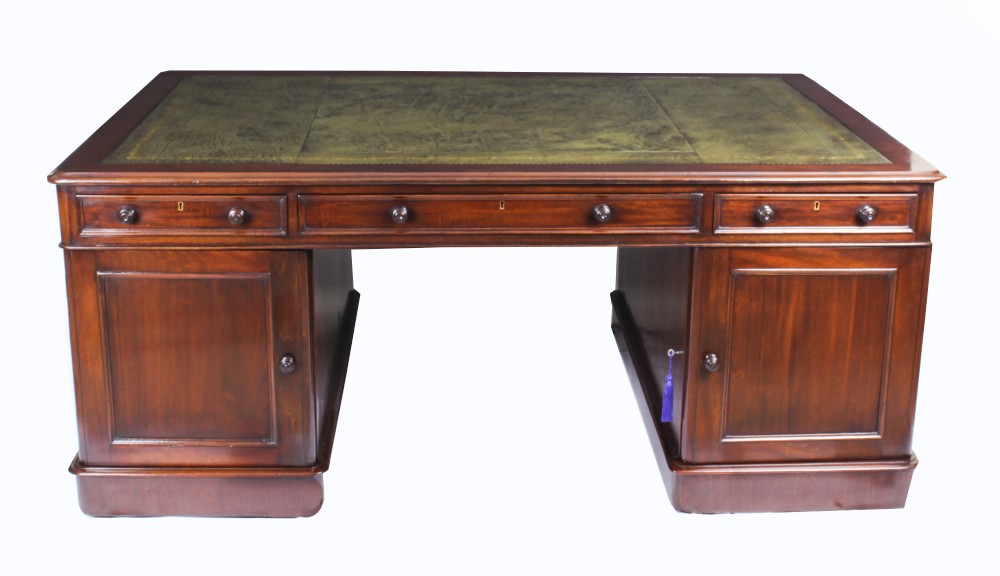
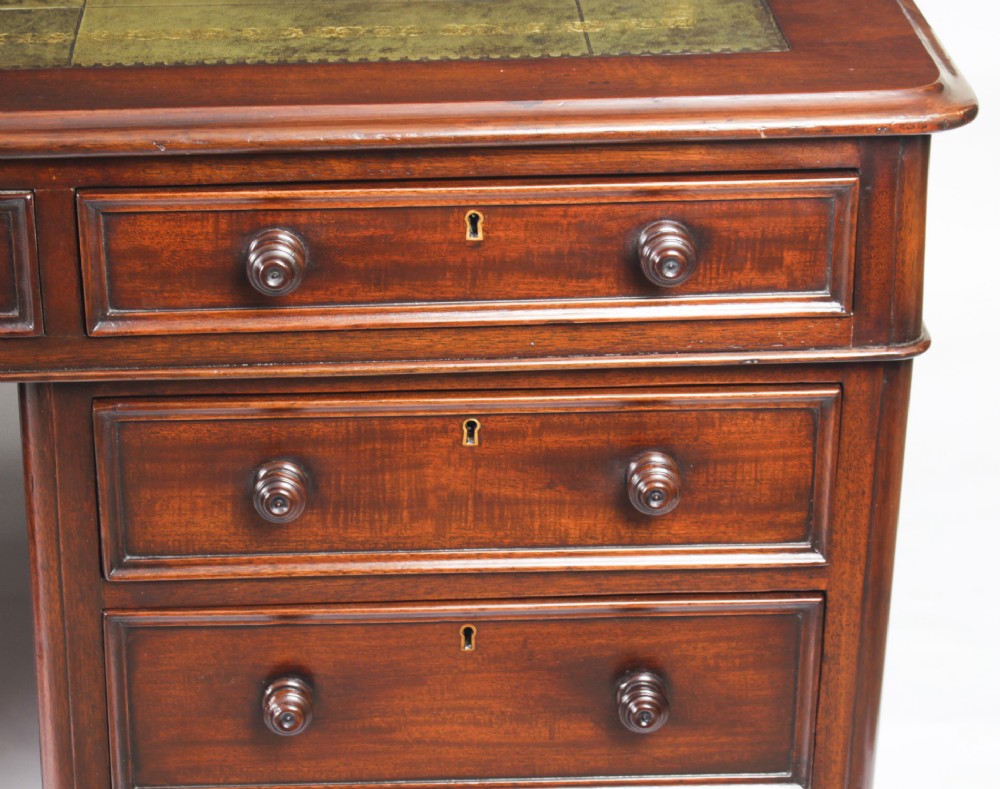
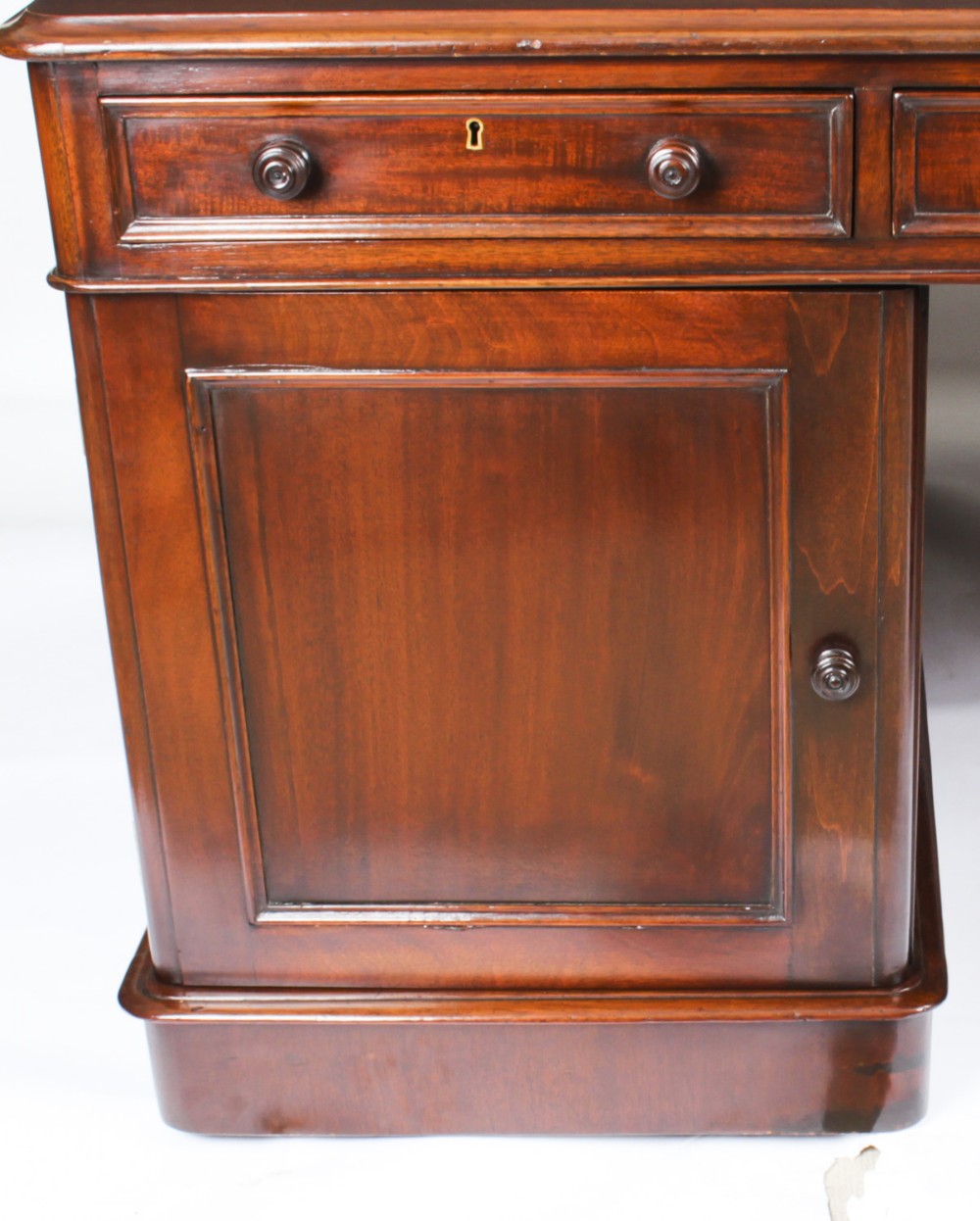
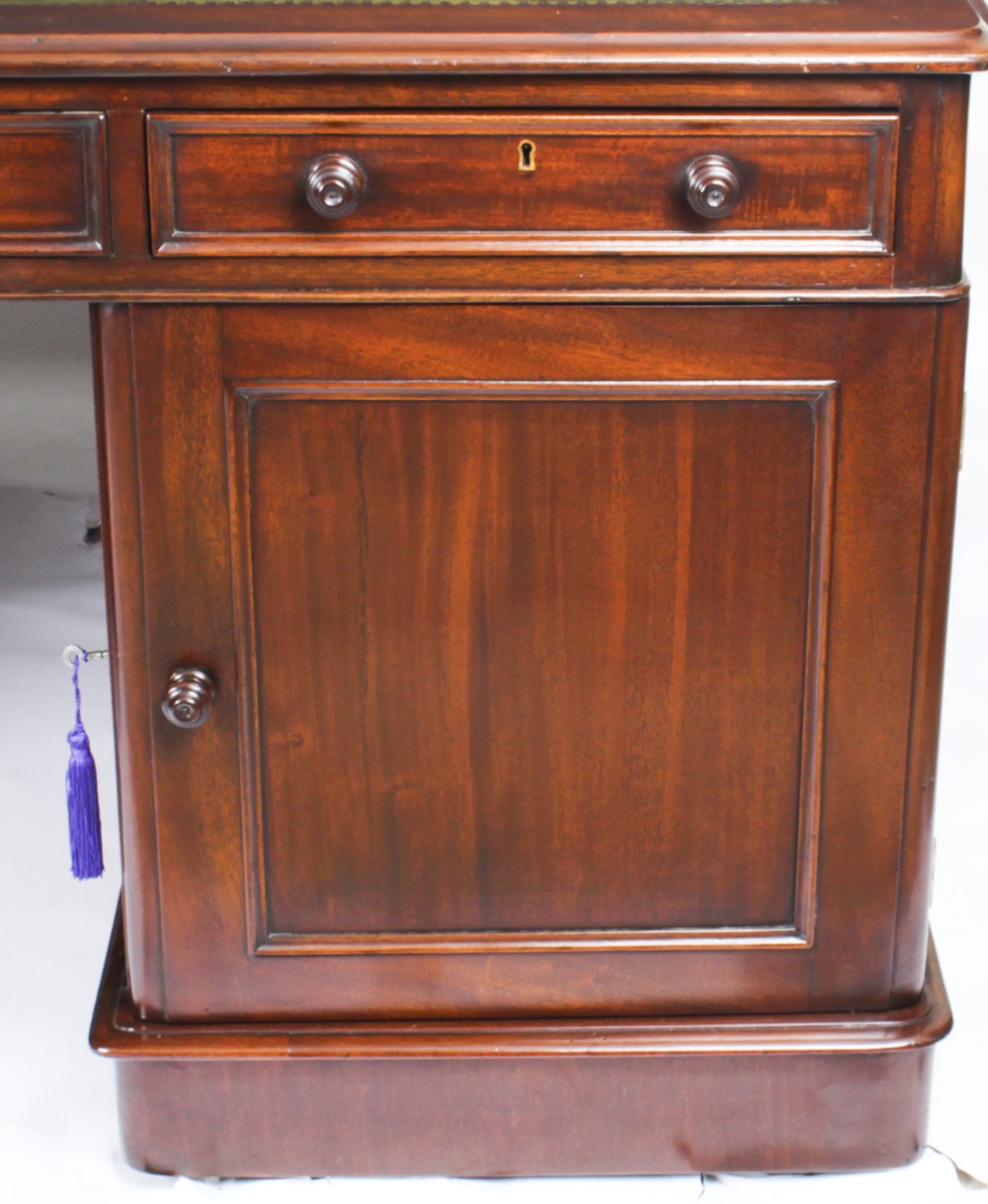
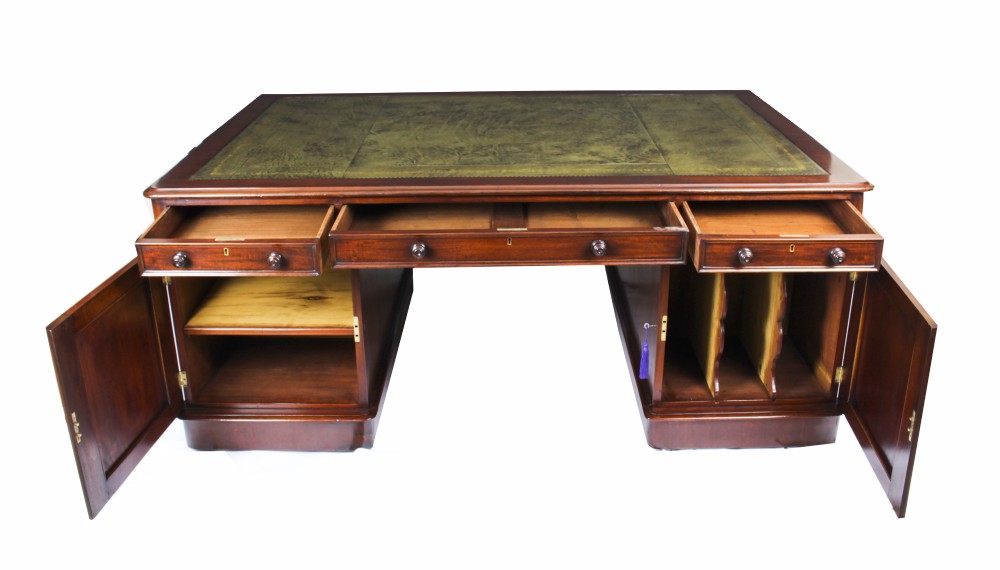
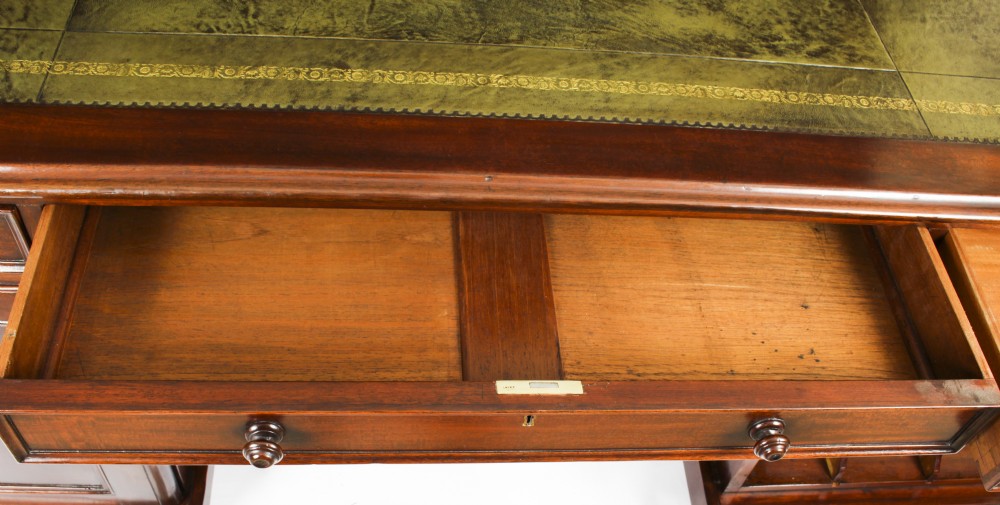
This is a fine and substantial antique Victorian mahogany partners pedestal partners desk, Circa 1860 in date.
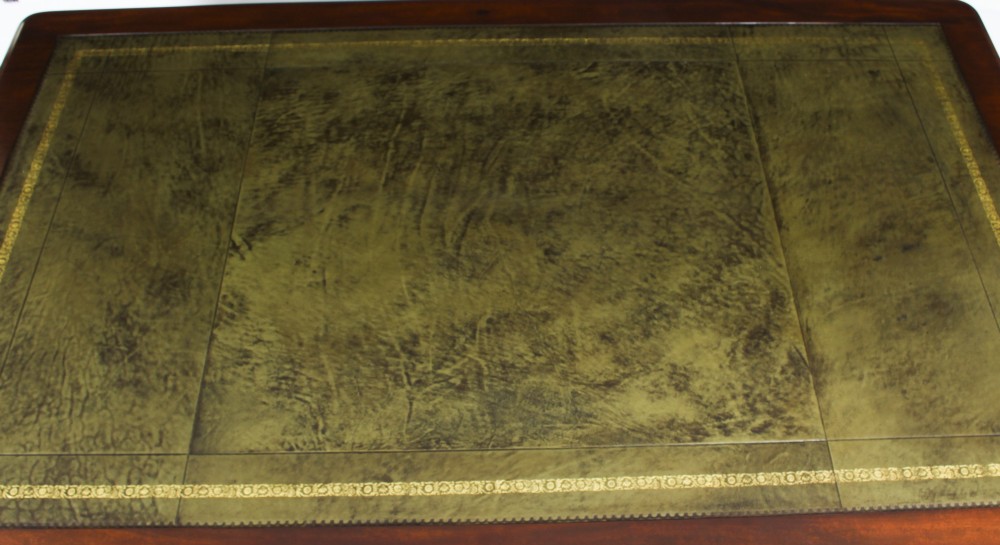
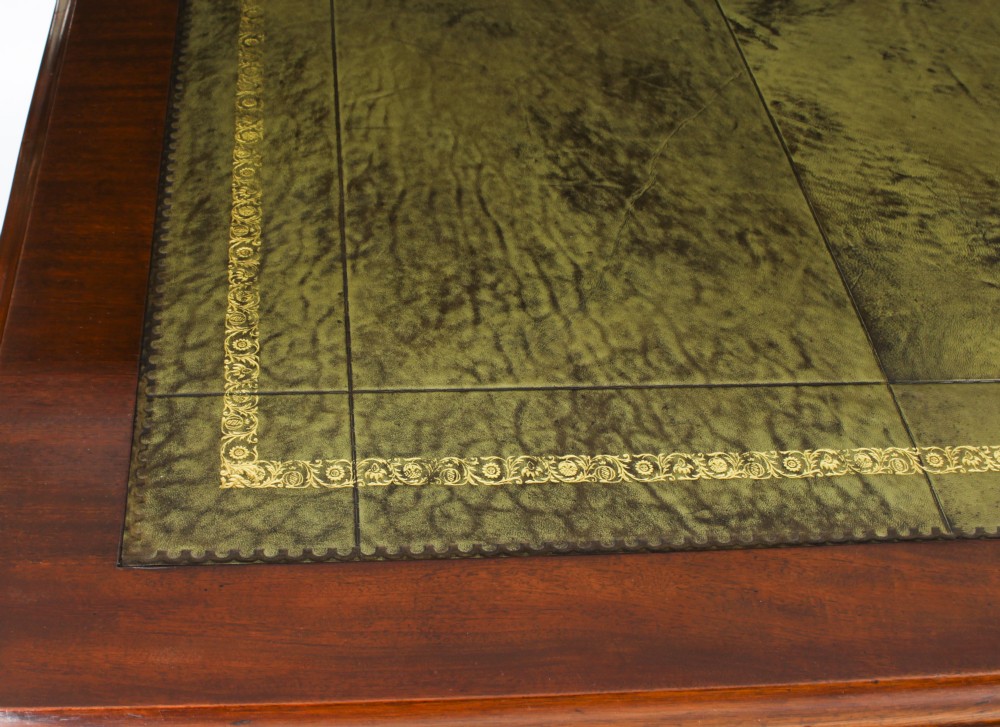
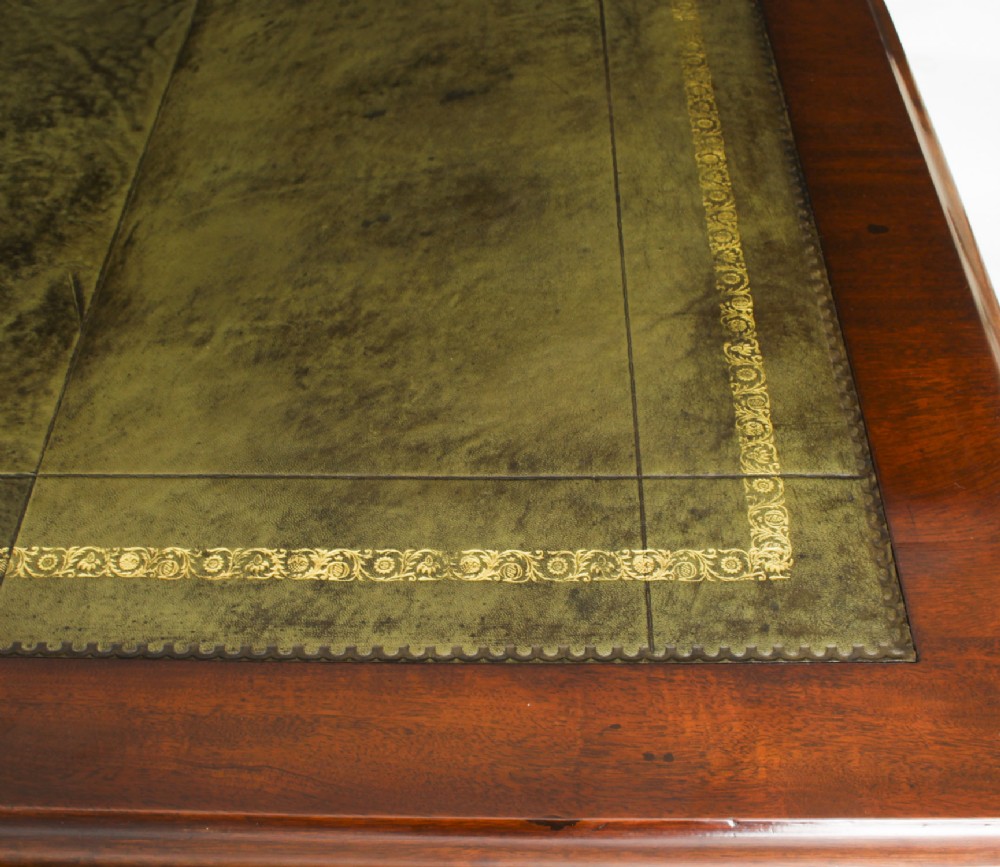
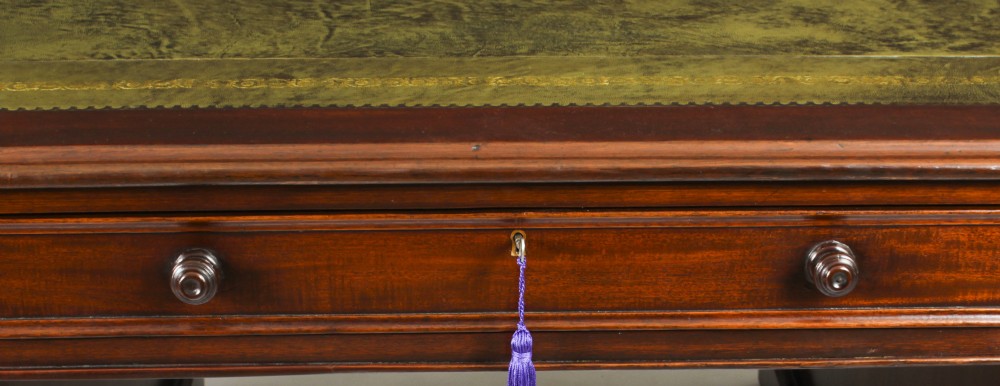
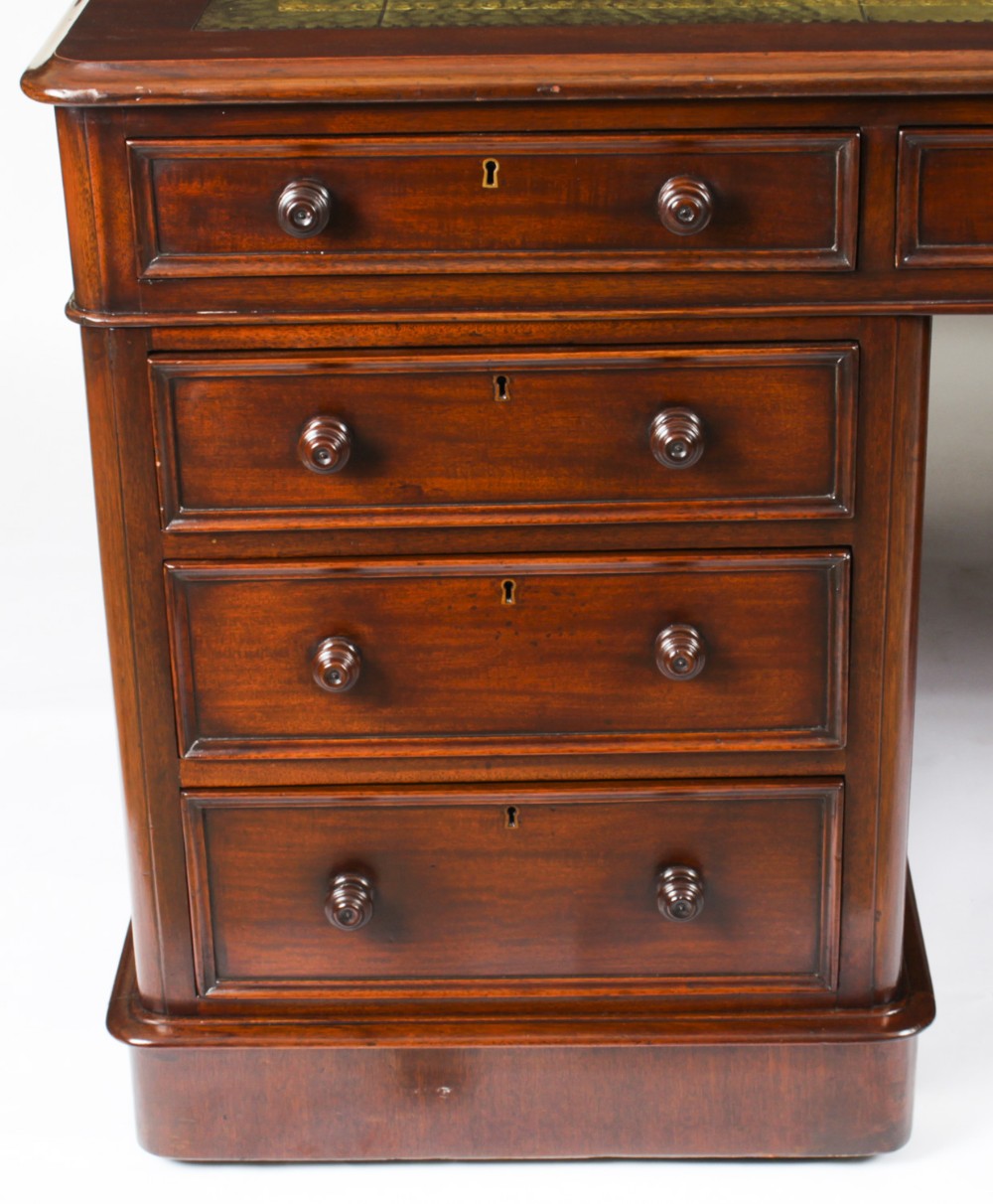
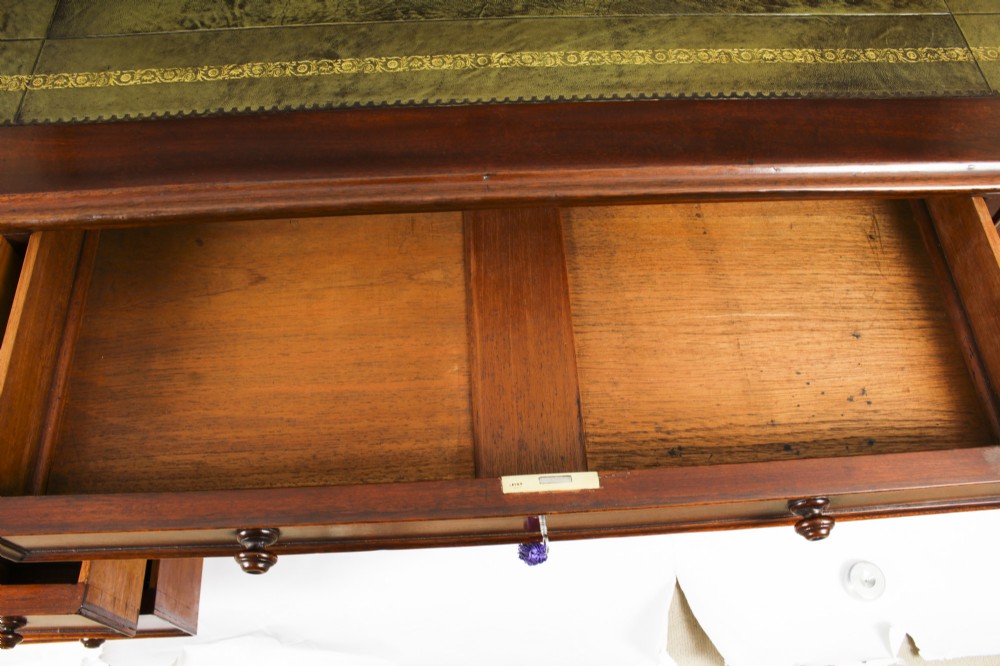
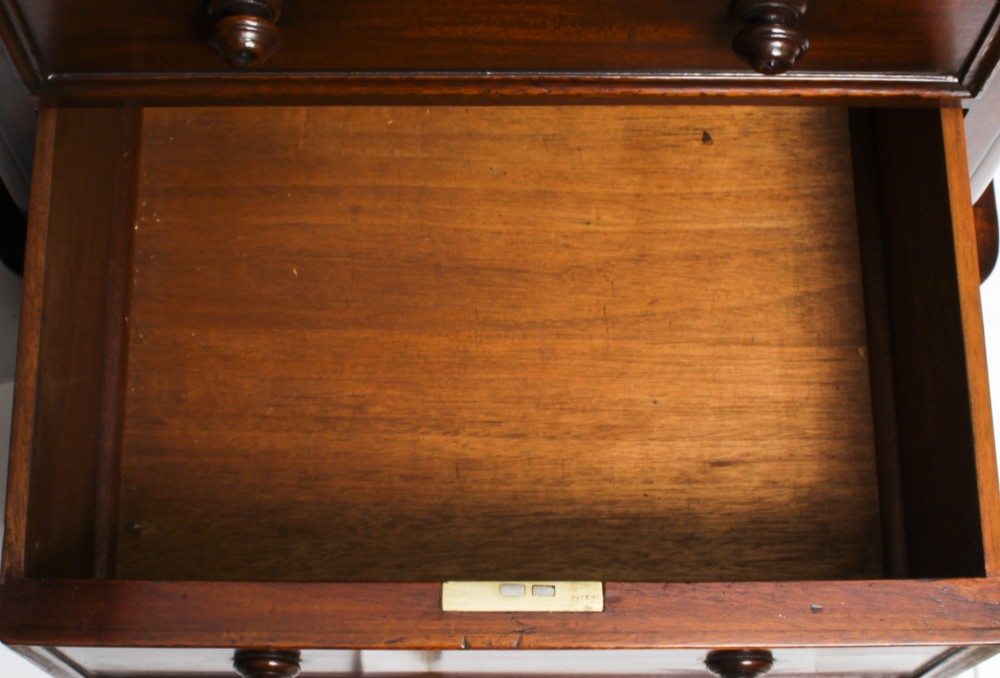
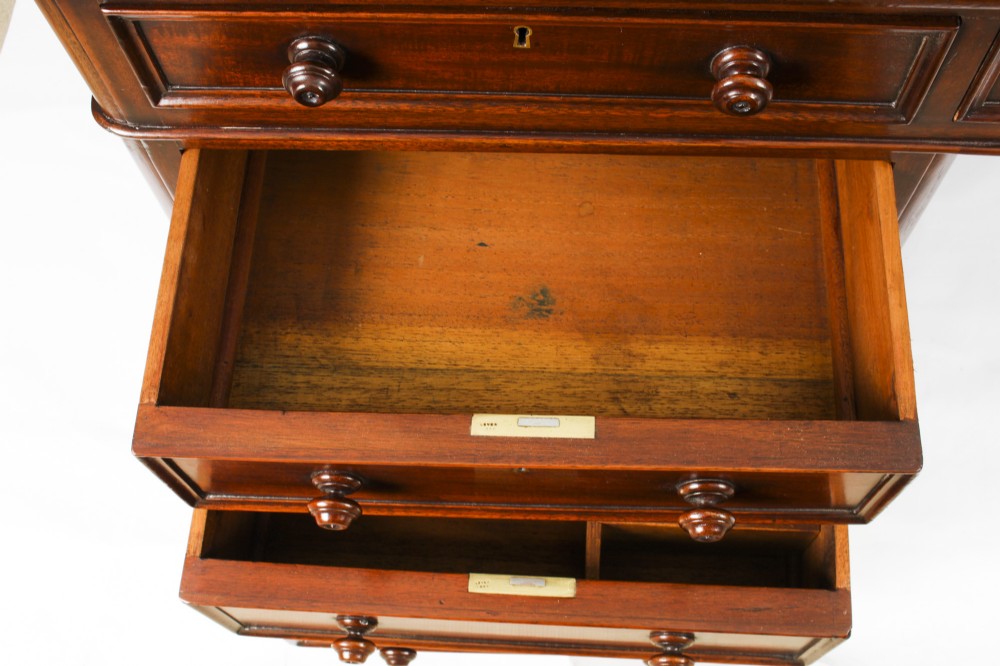
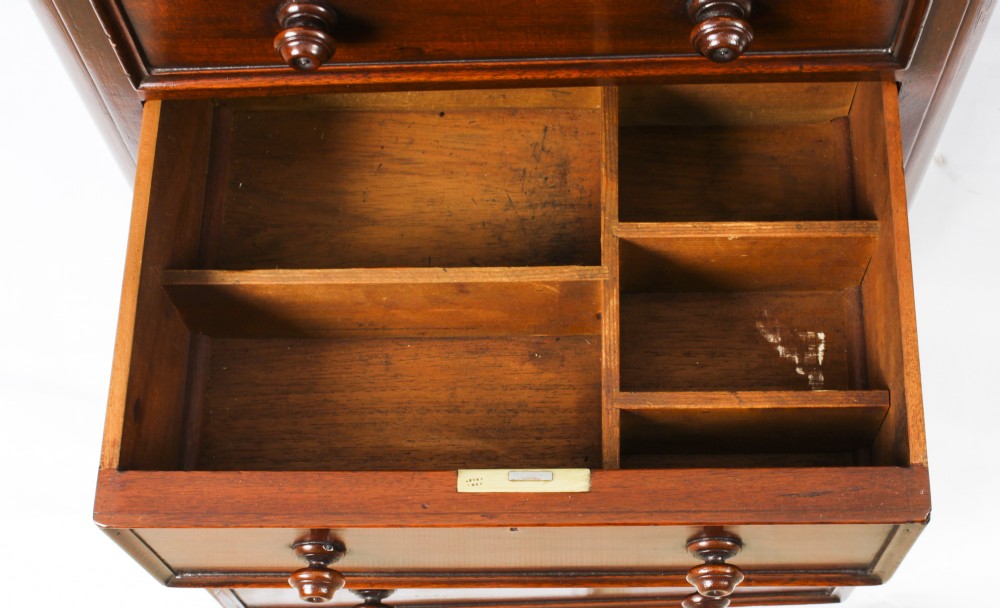
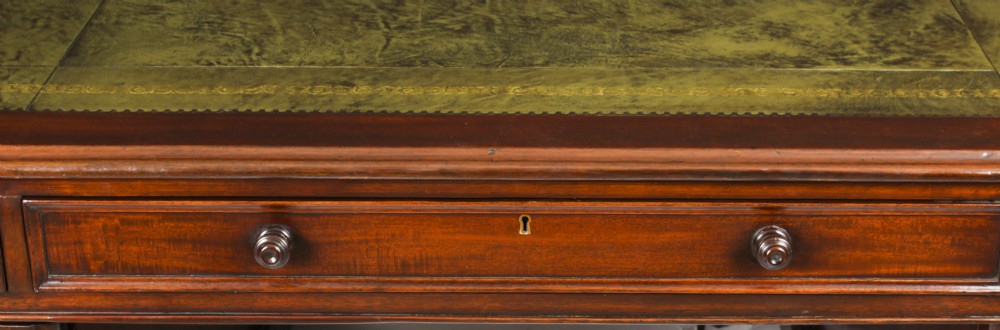
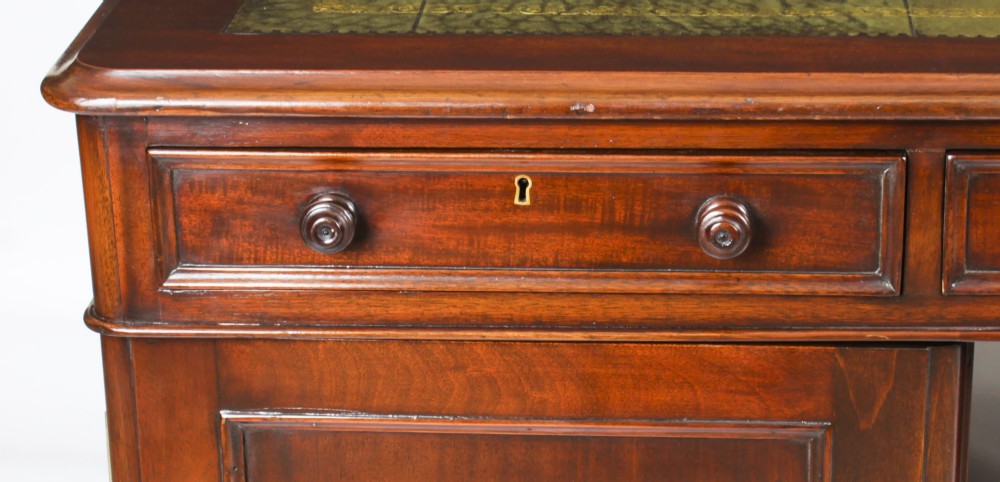
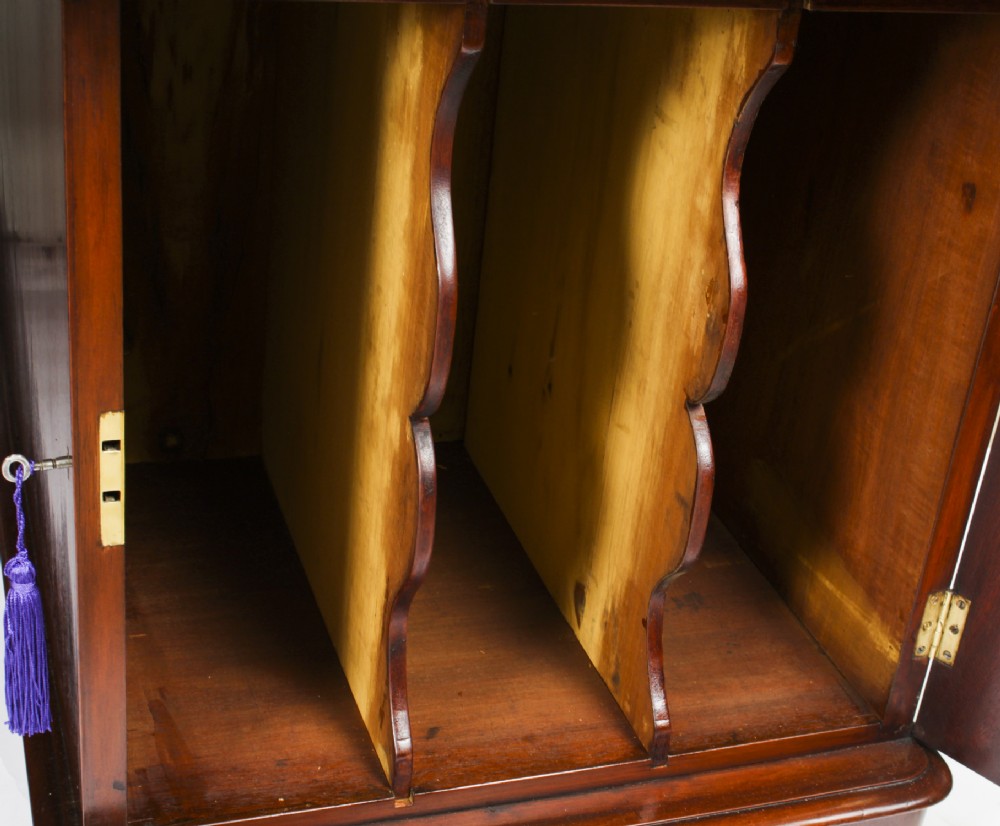
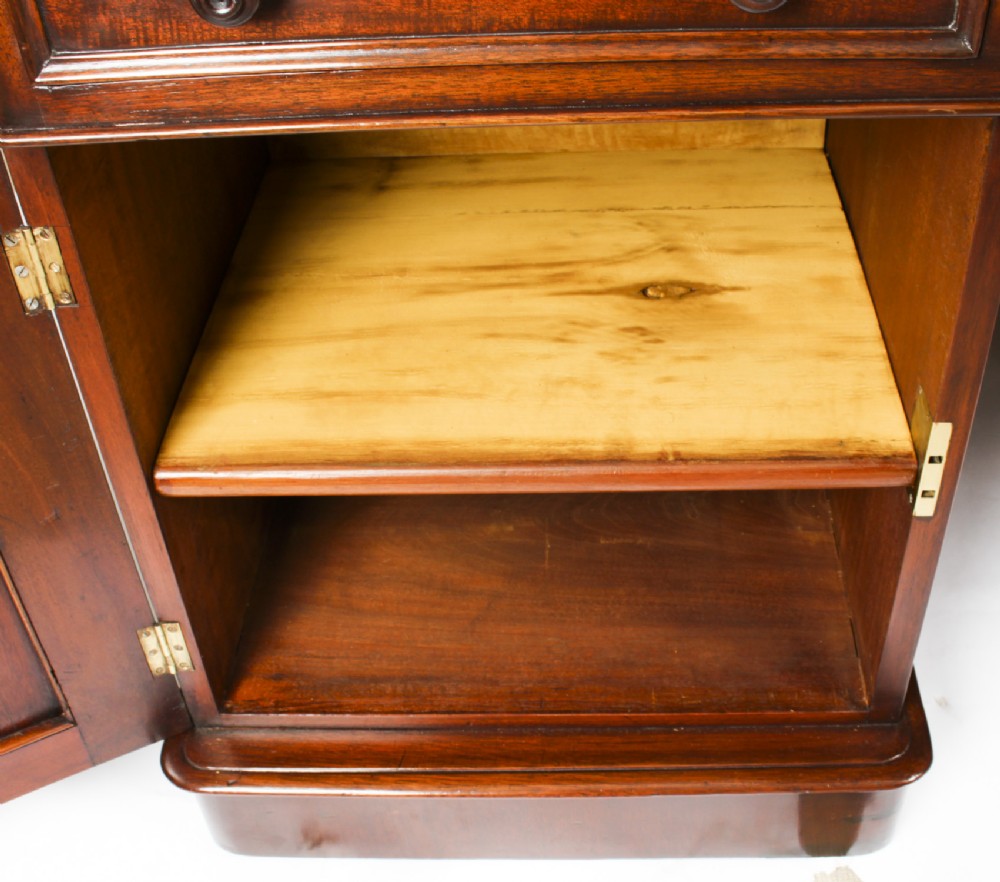
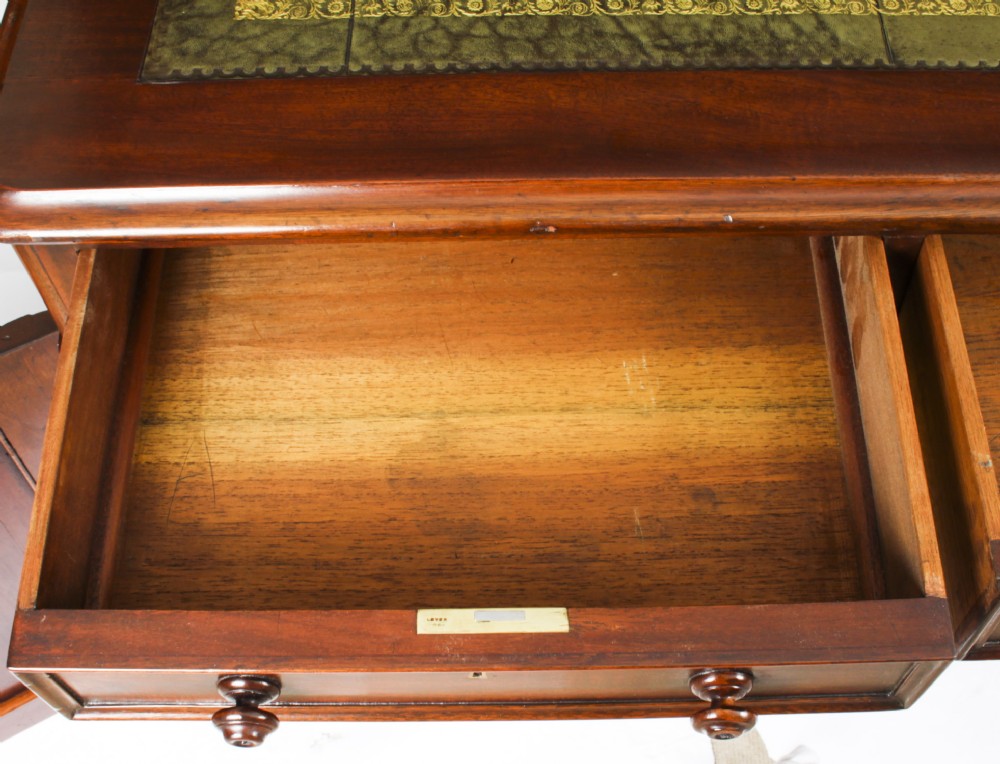
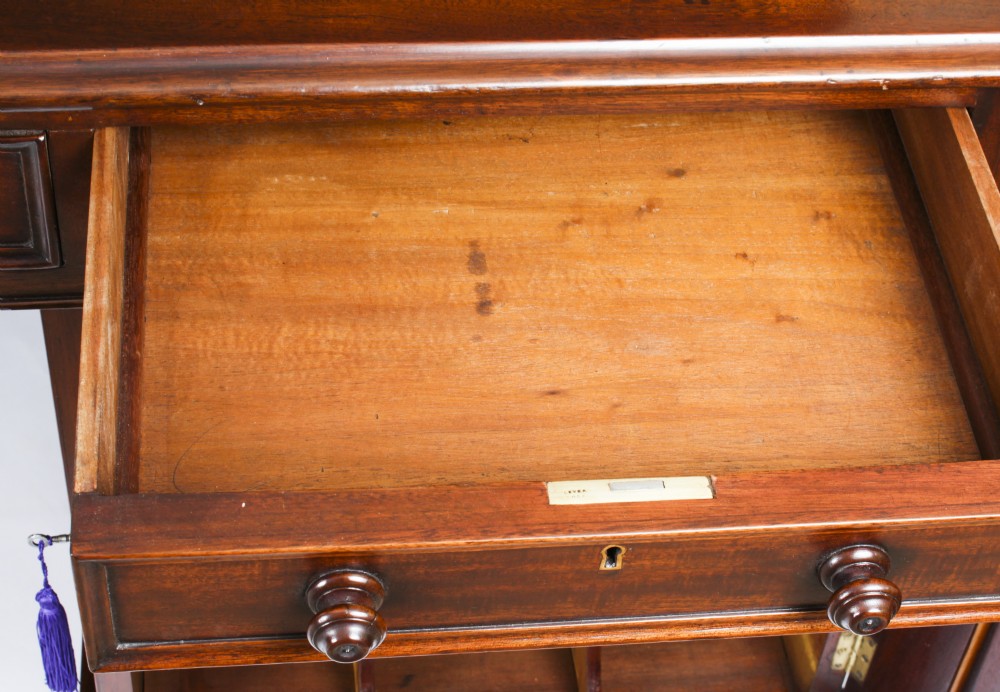
The desk is made from beautiful flame mahogany and features a stunning gilt tooled green leather writing surface. It is fitted with three frieze drawers to either side, one side has three further drawers in each pedestal while the other side has a cupboard in each pedestal, the drawer linings are of solid mahgoany
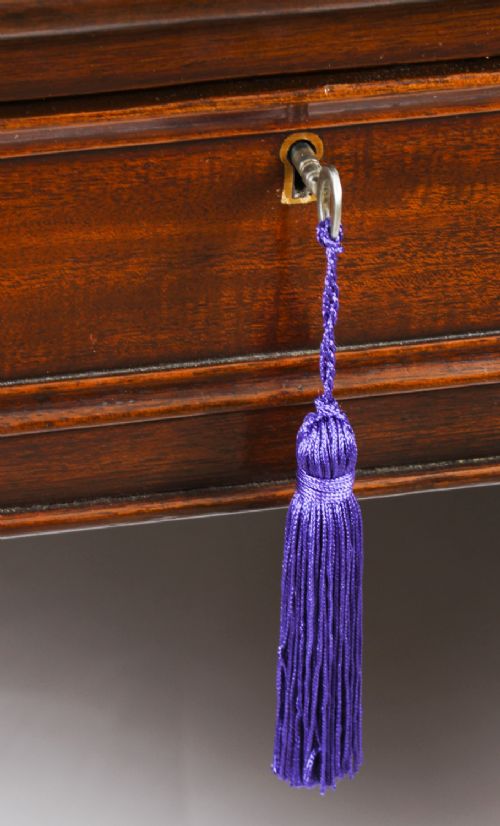
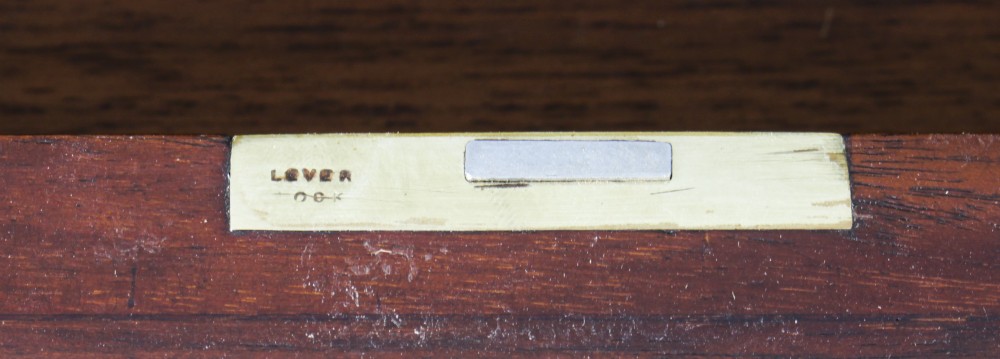
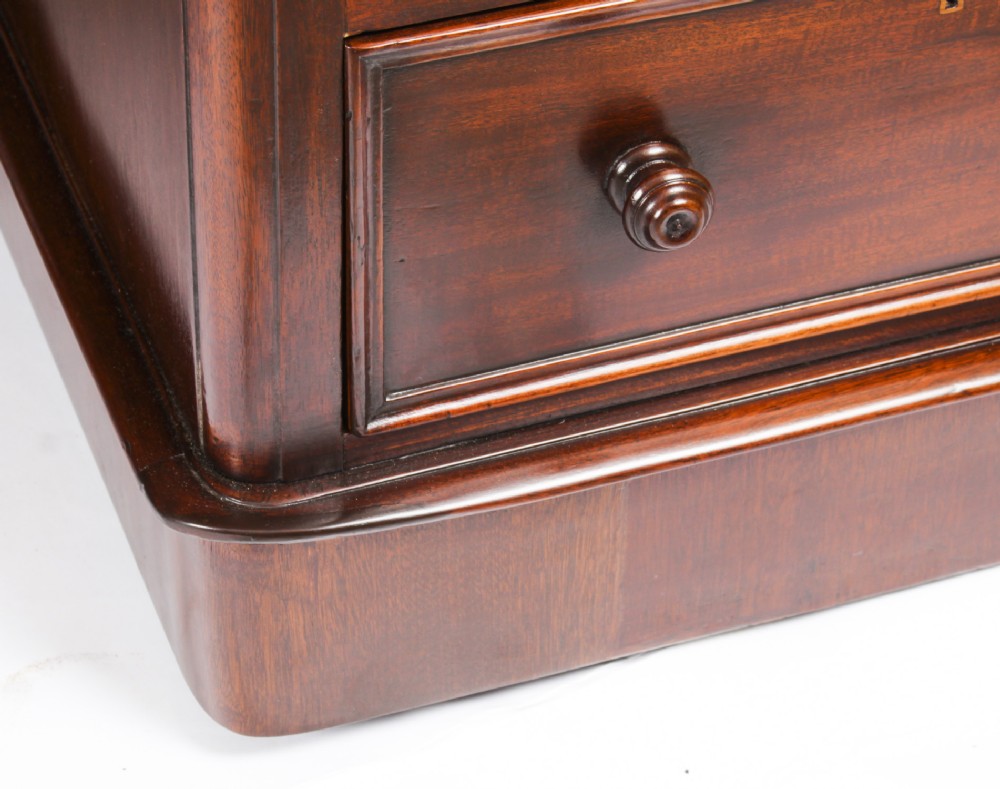
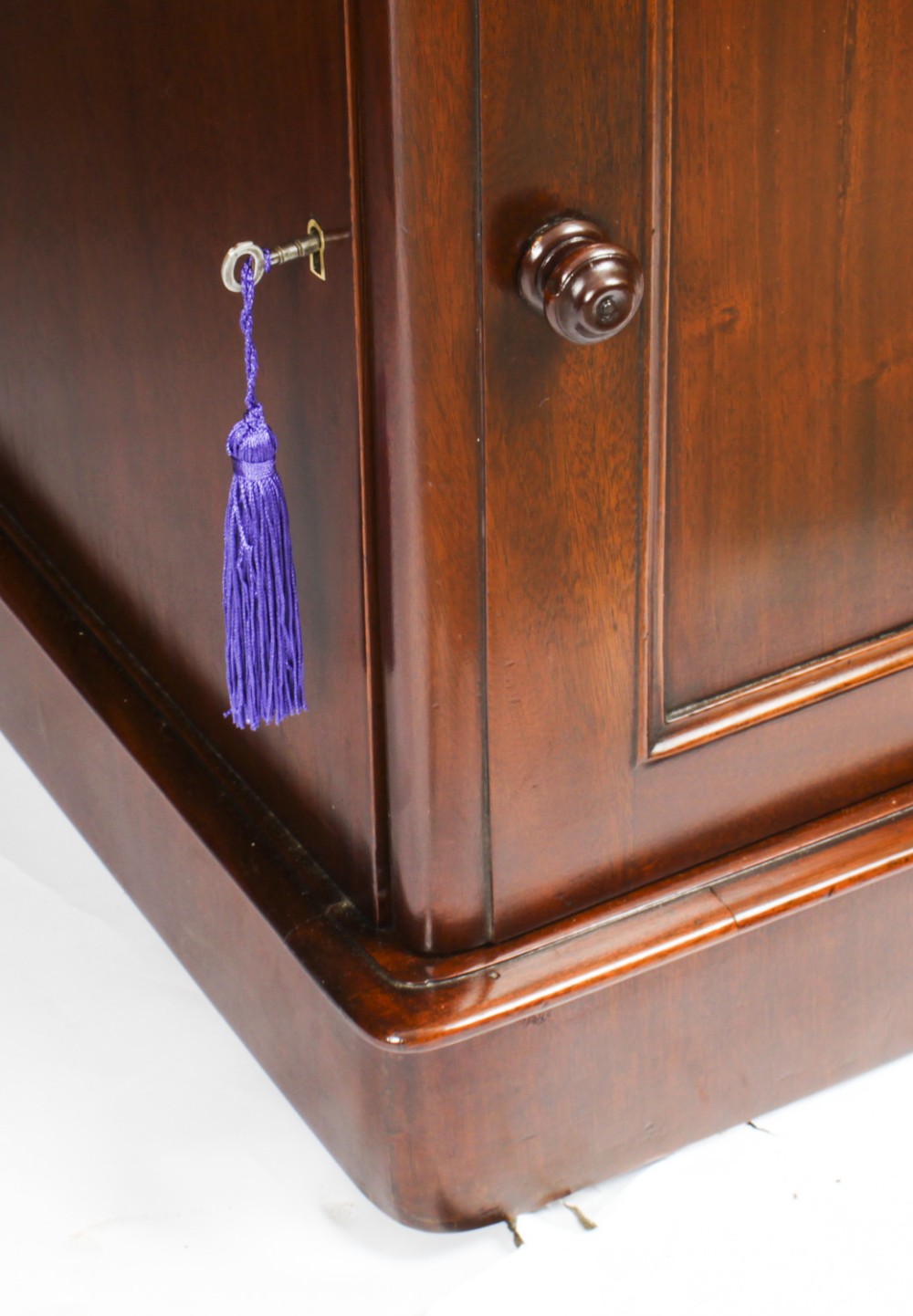
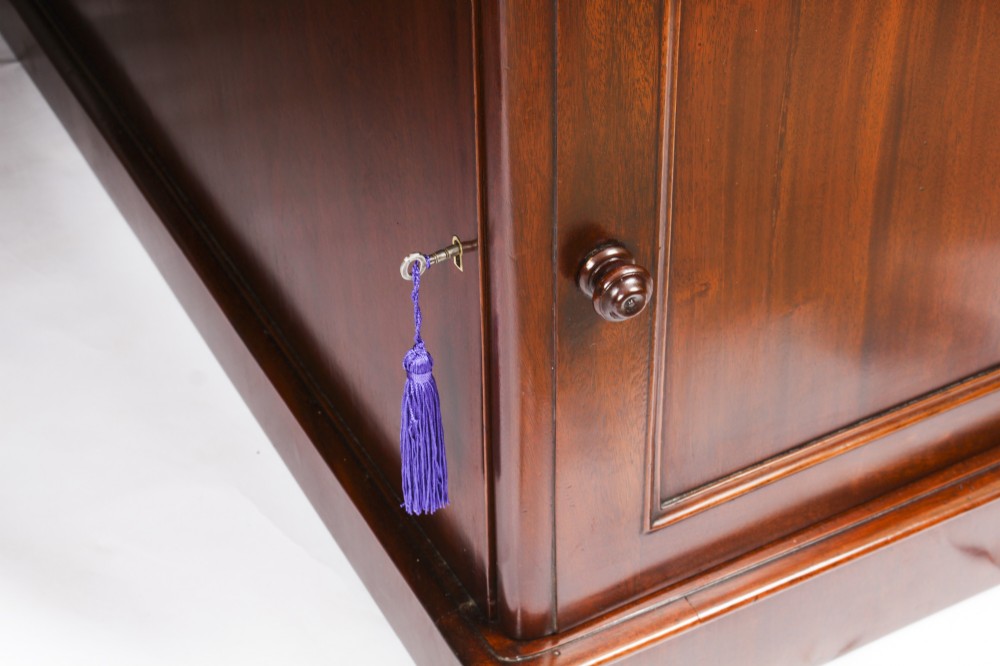
The drawers and cupboards are beutifully panelled and feature their original knobs, working locks and keys.
Install the elegance of a bygone era to a special place in your home with this fabulous antique partners pedestal desk.
Condition:
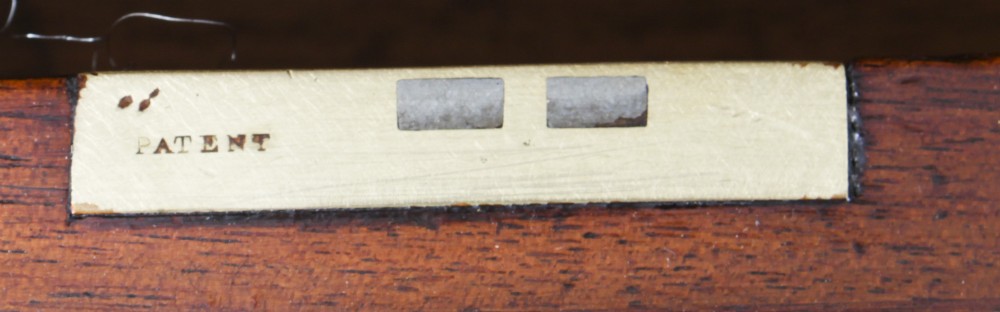
In excellent condition having been beautifully cleaned polished and releathered in our workshops, please see photos for confirmation.
Dimensions in cm:
Height 78 x Width 183 x Depth 120
Height 61 x Width 76 - Kneehole dimensions
Dimensions in inches:
Height 2 foot, 7 inches x Width 6 foot x Depth 3 foot, 11 inches
Height 2 foot x Width 2 foot, 6 inches - Kneehole dimensions
Mahogany
is probably one of the largest ‘families’ of hardwood, having many different varieties within its own species.
Mahogany has been used for centuries in shipbuilding, house building, furniture making etc and is the core structure of just about every 19th-century vanity box, dressing case or jewellery box. It became more of a Victorian trend to dress Mahogany with these decorative veneers, such as Rosewood, Kingwood, Burr Walnut and Coromandel, so that the actual Mahogany was almost hidden from view.
Mahogany itself is a rich reddish brown wood that can range from being plain in appearance to something that is so vibrant, figured and almost three dimensional in effect.
Although Mahogany was most often used in its solid form, it also provided some beautifully figured varieties of veneer like ‘Flame’ Mahogany and ‘Fiddleback’ Mahogany (named after its preferred use in the manufacture of fine musical instruments).
Cuban Mahogany was so sought after, that by the late 1850's, this particular variety became all but extinct.
Our reference: A1890