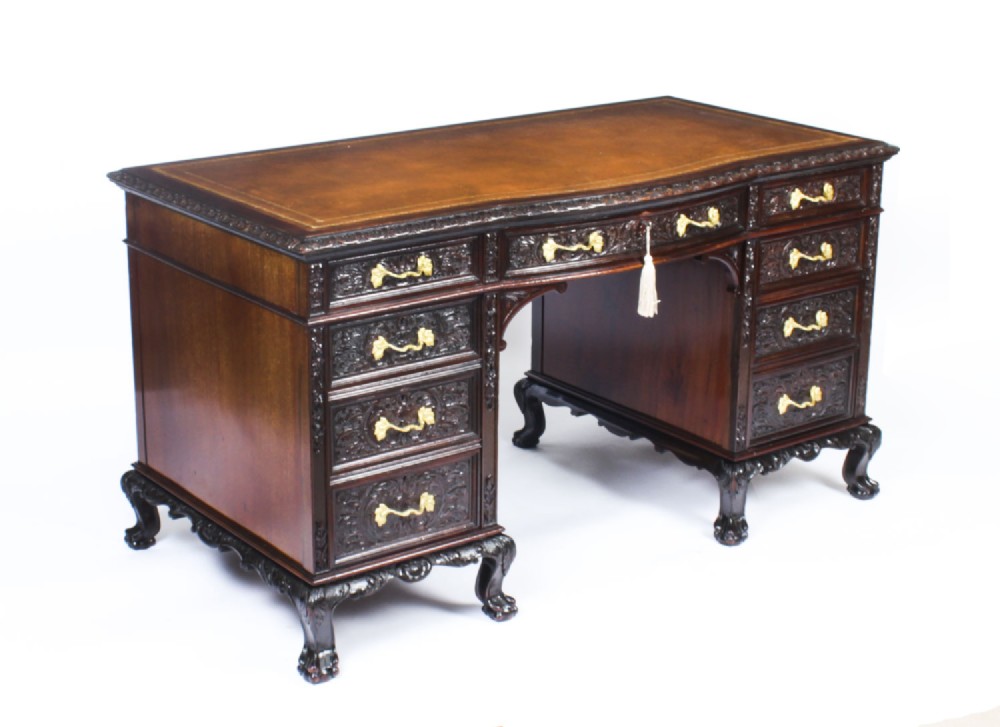
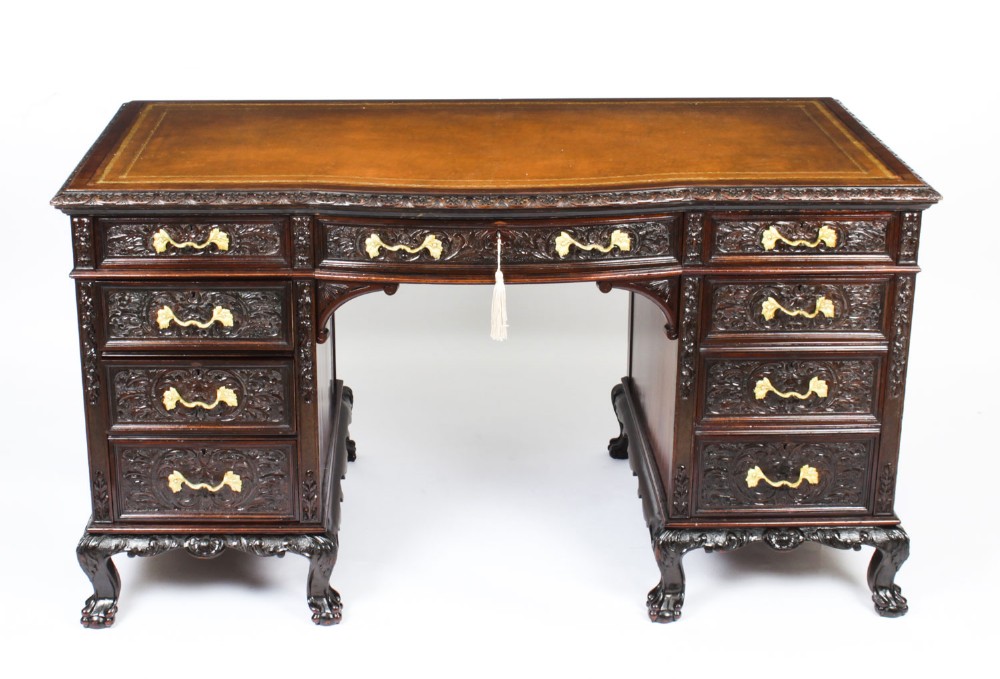
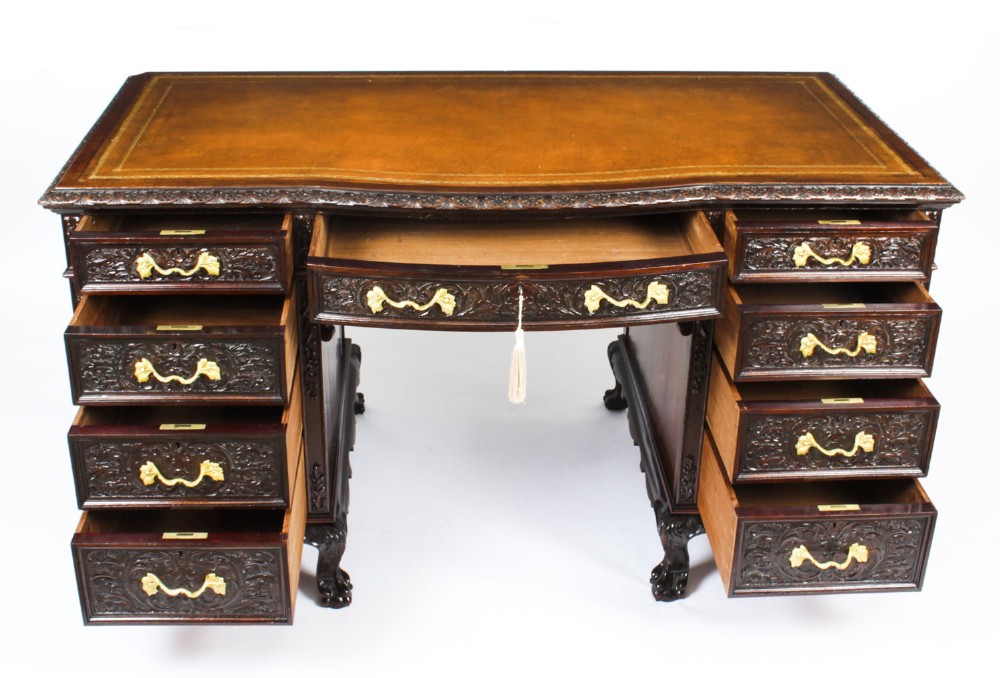
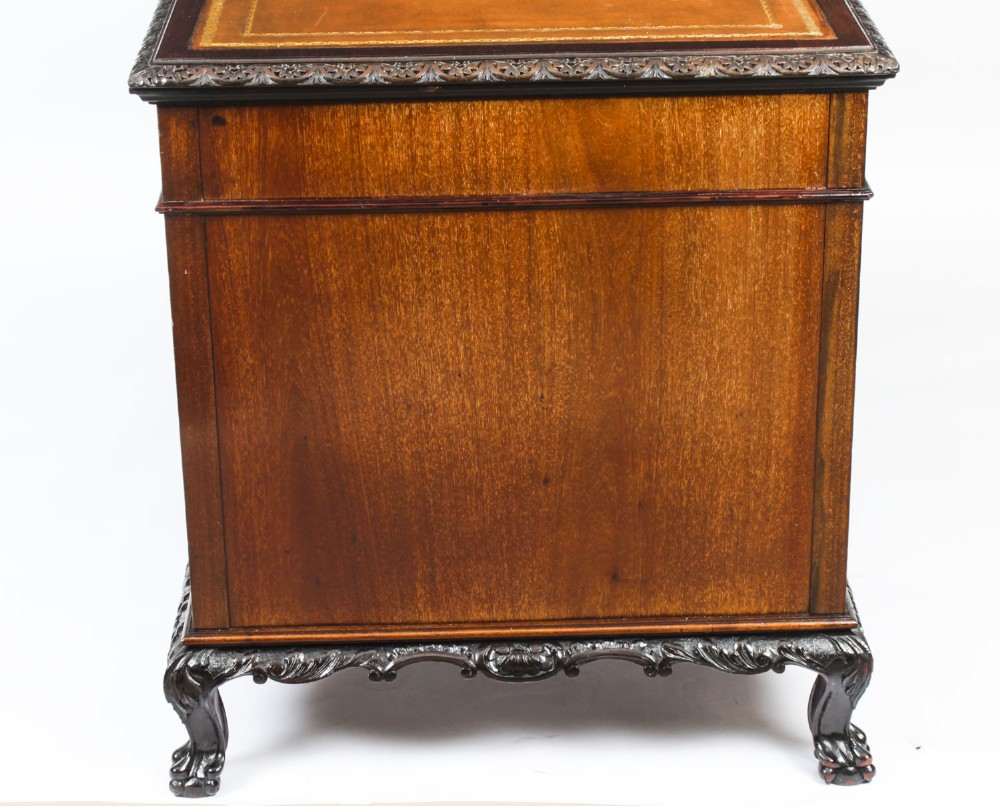
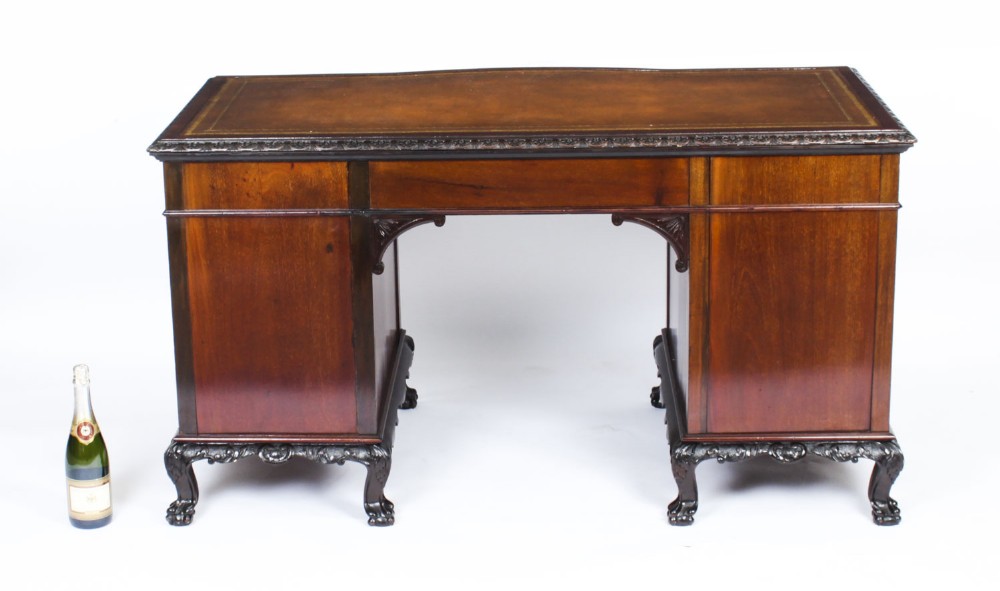
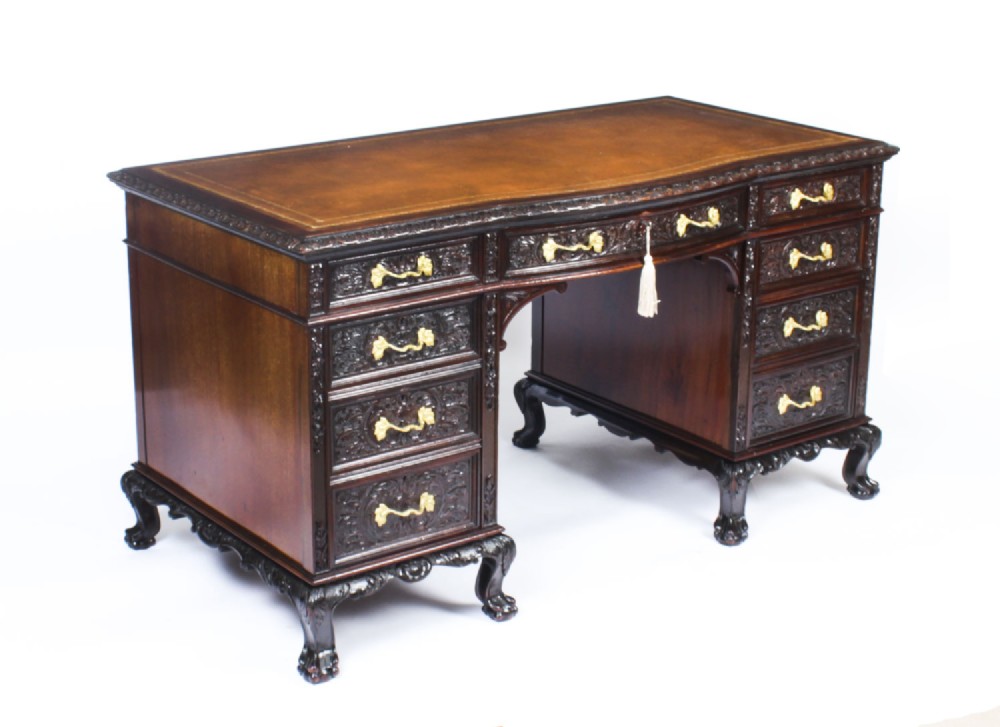
This is a beautiful antique Edwardian Period mahogany kneehole desk, circa 1900 in date.
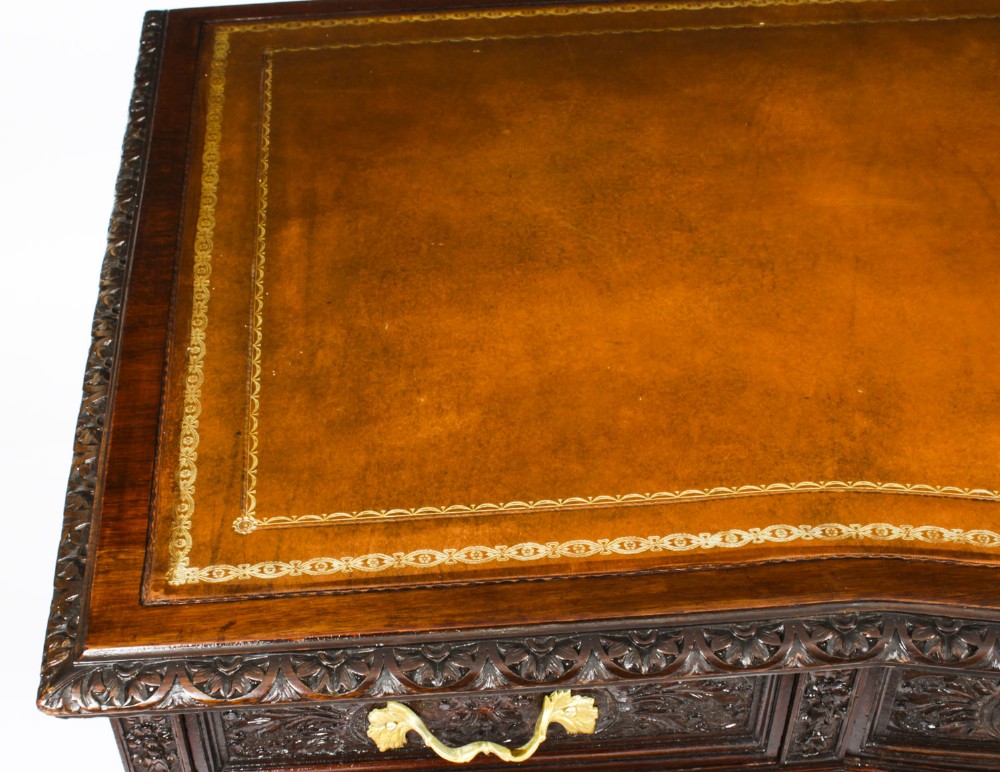
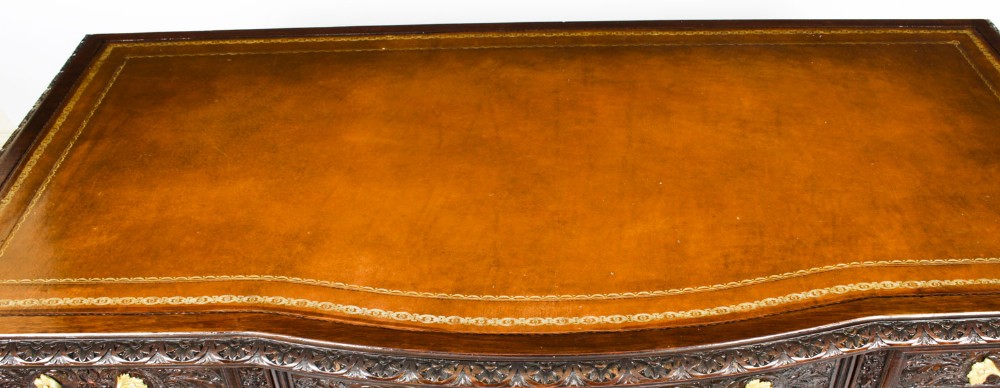
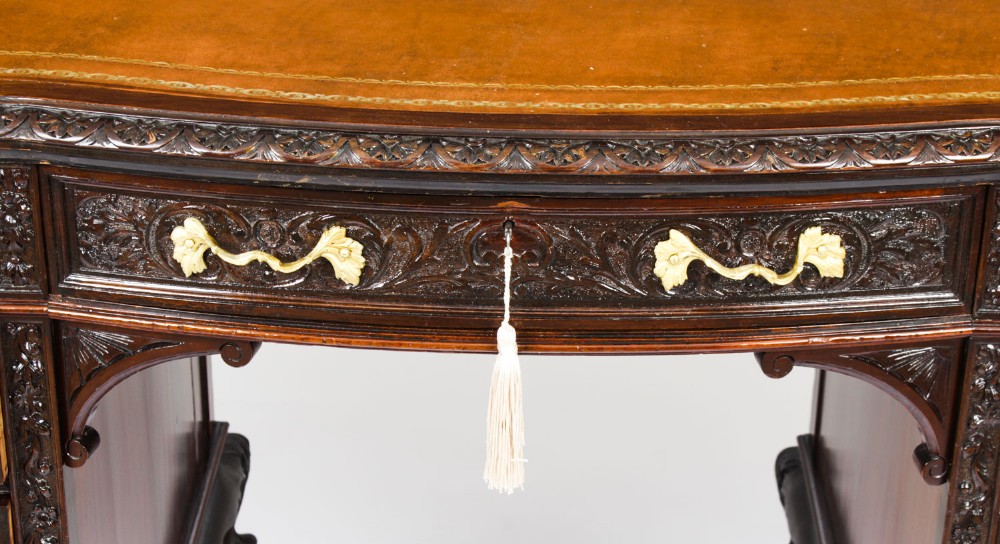
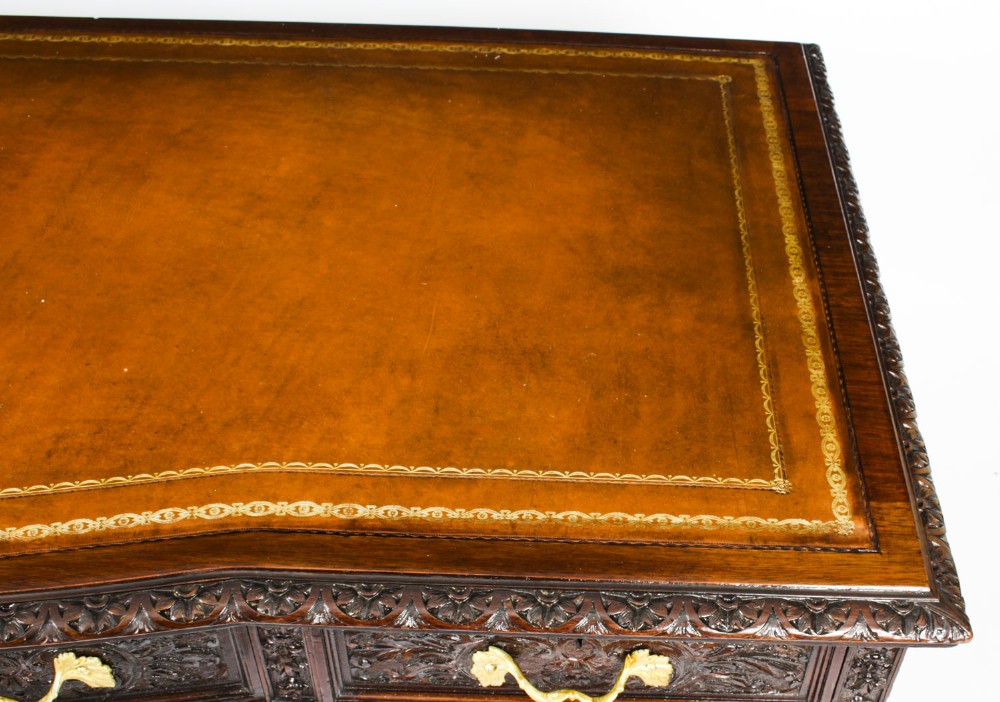
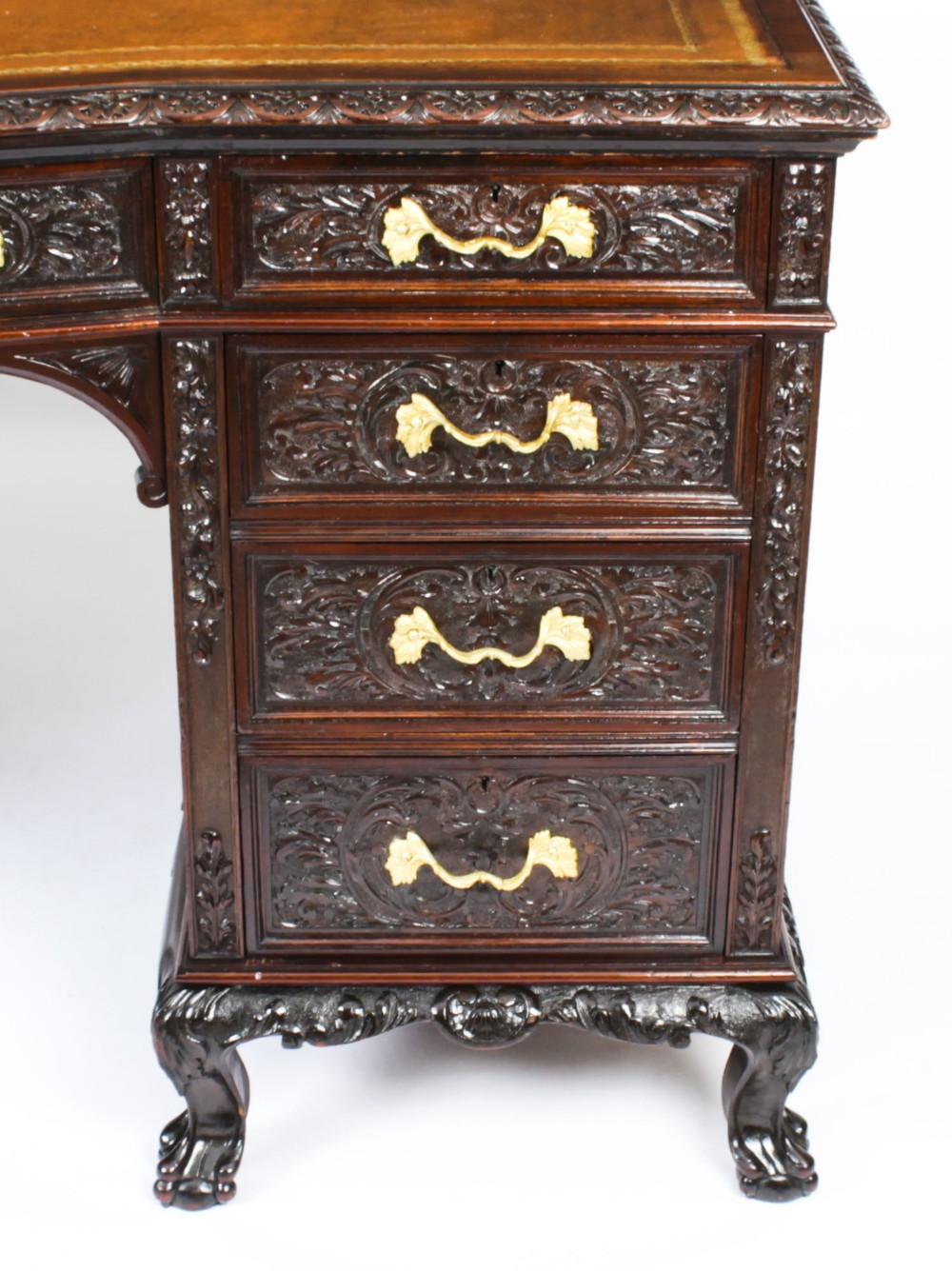
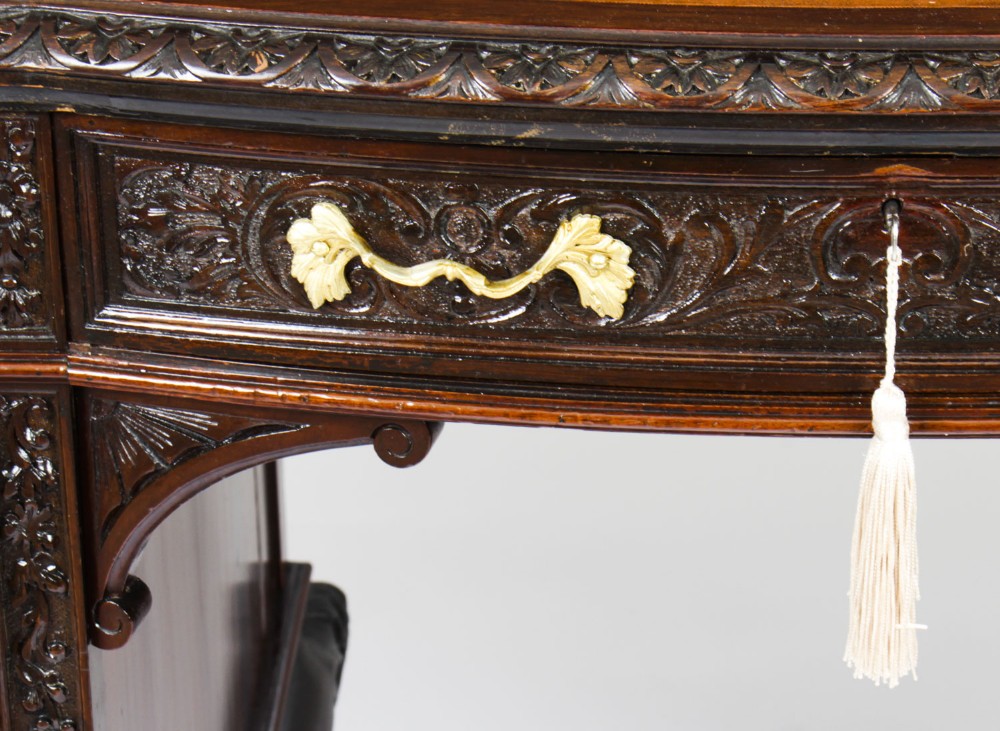
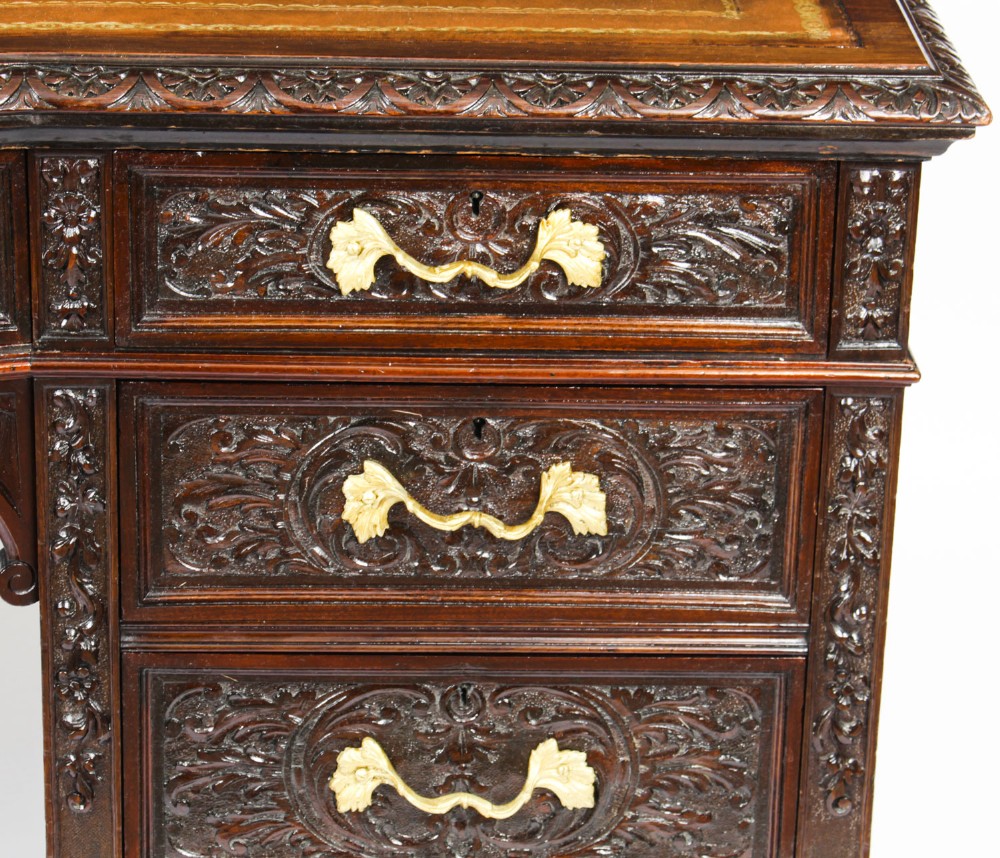
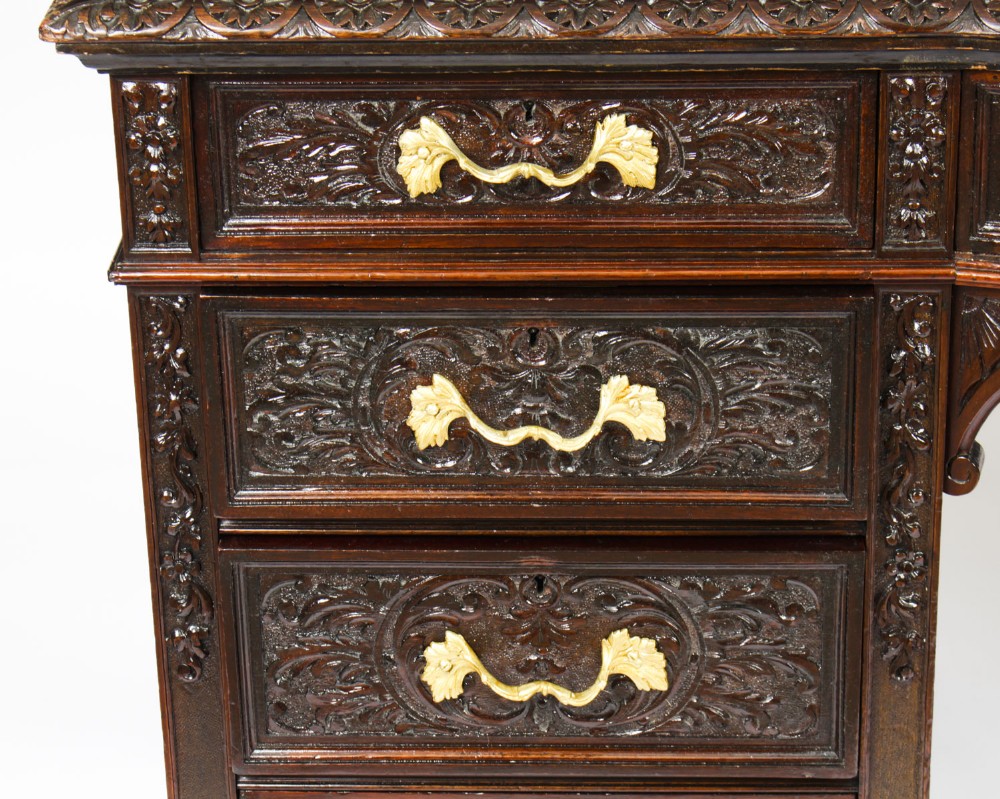
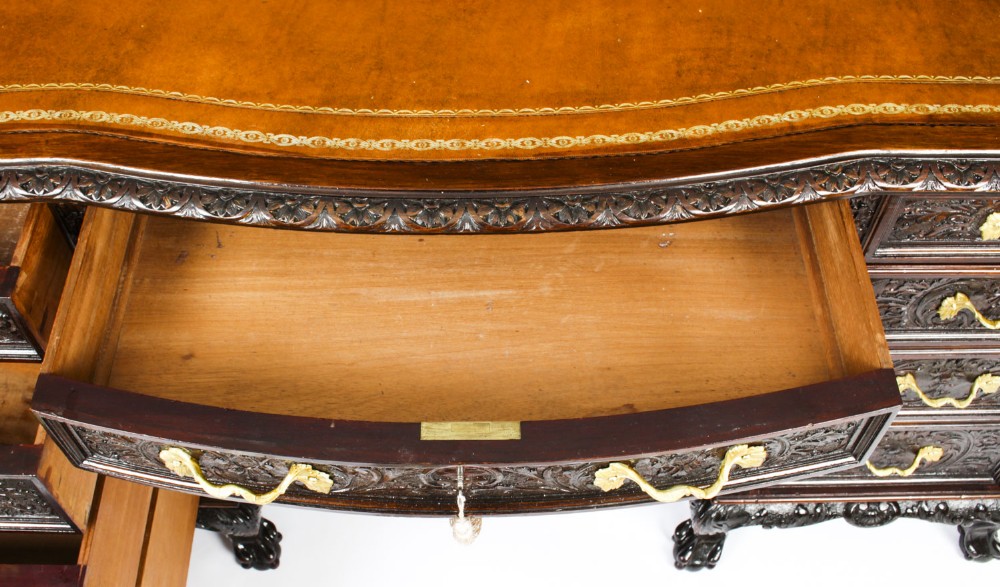
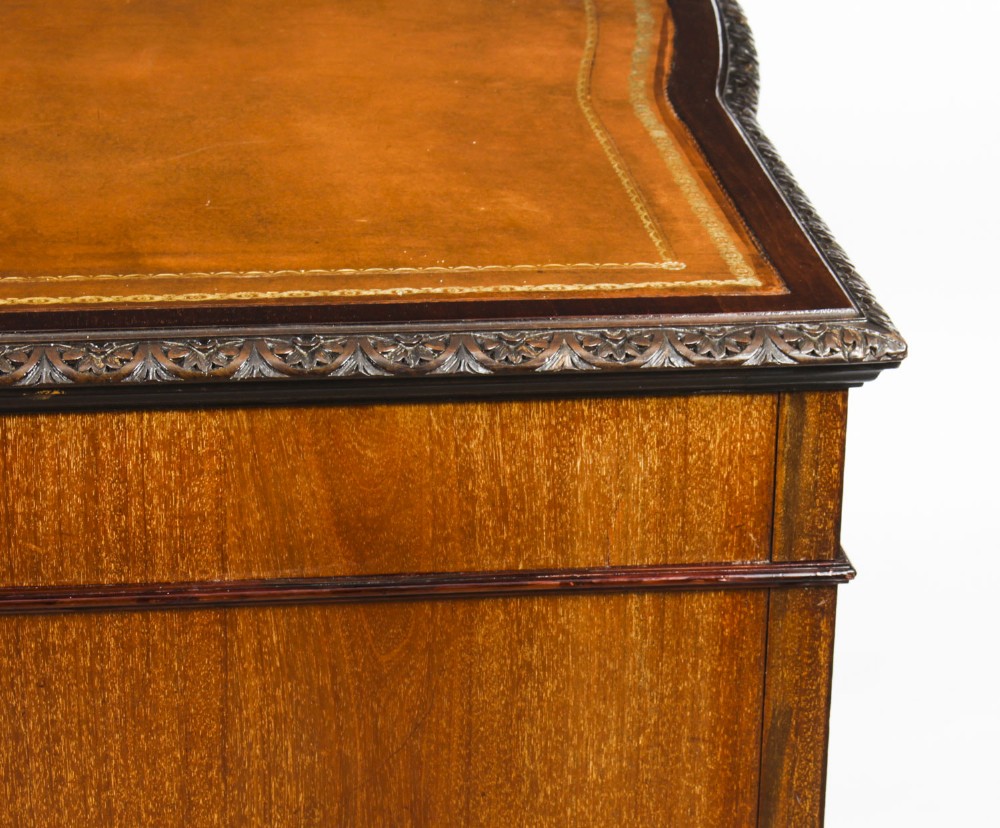
The desk features a beautifully moulded top with an inset gold tooled tan leather writing surface and foliate carved border,and is serpentine in shape with wonderful foliate carved decoration.
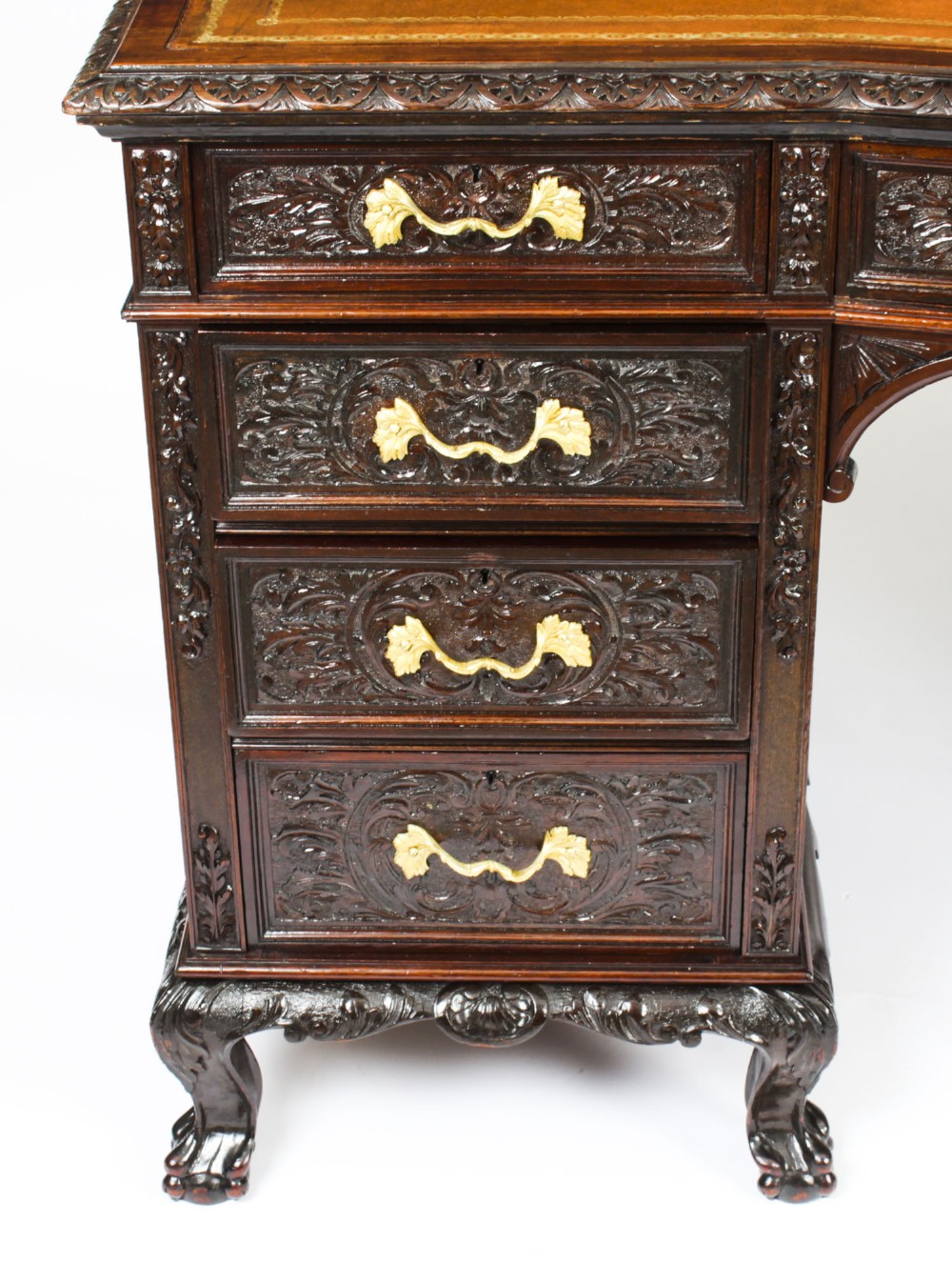
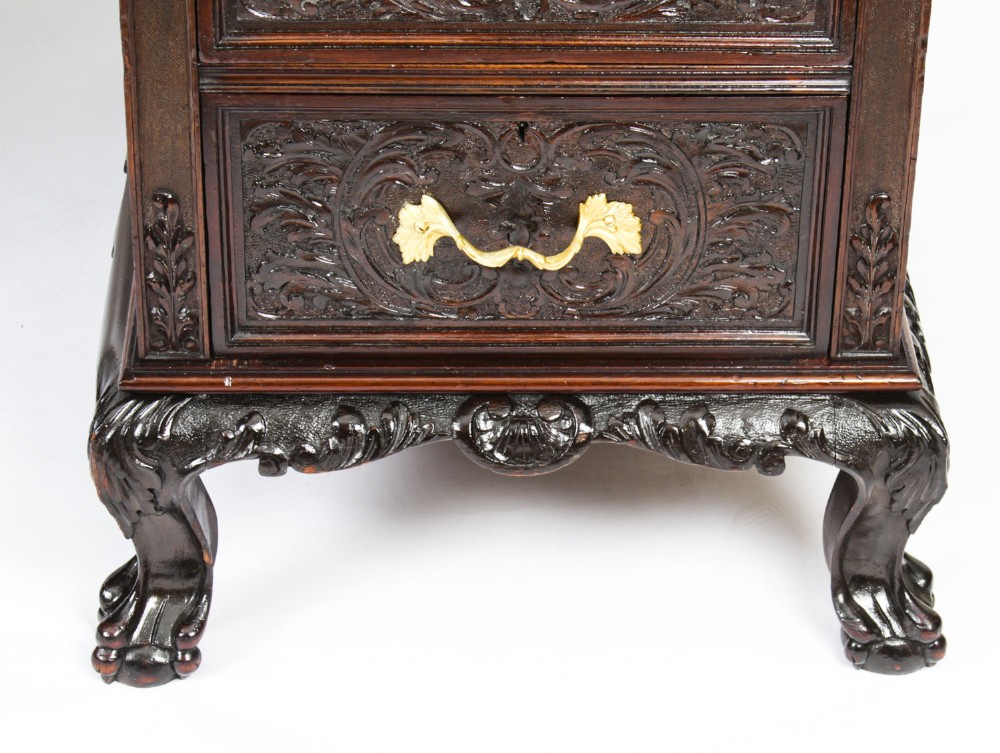
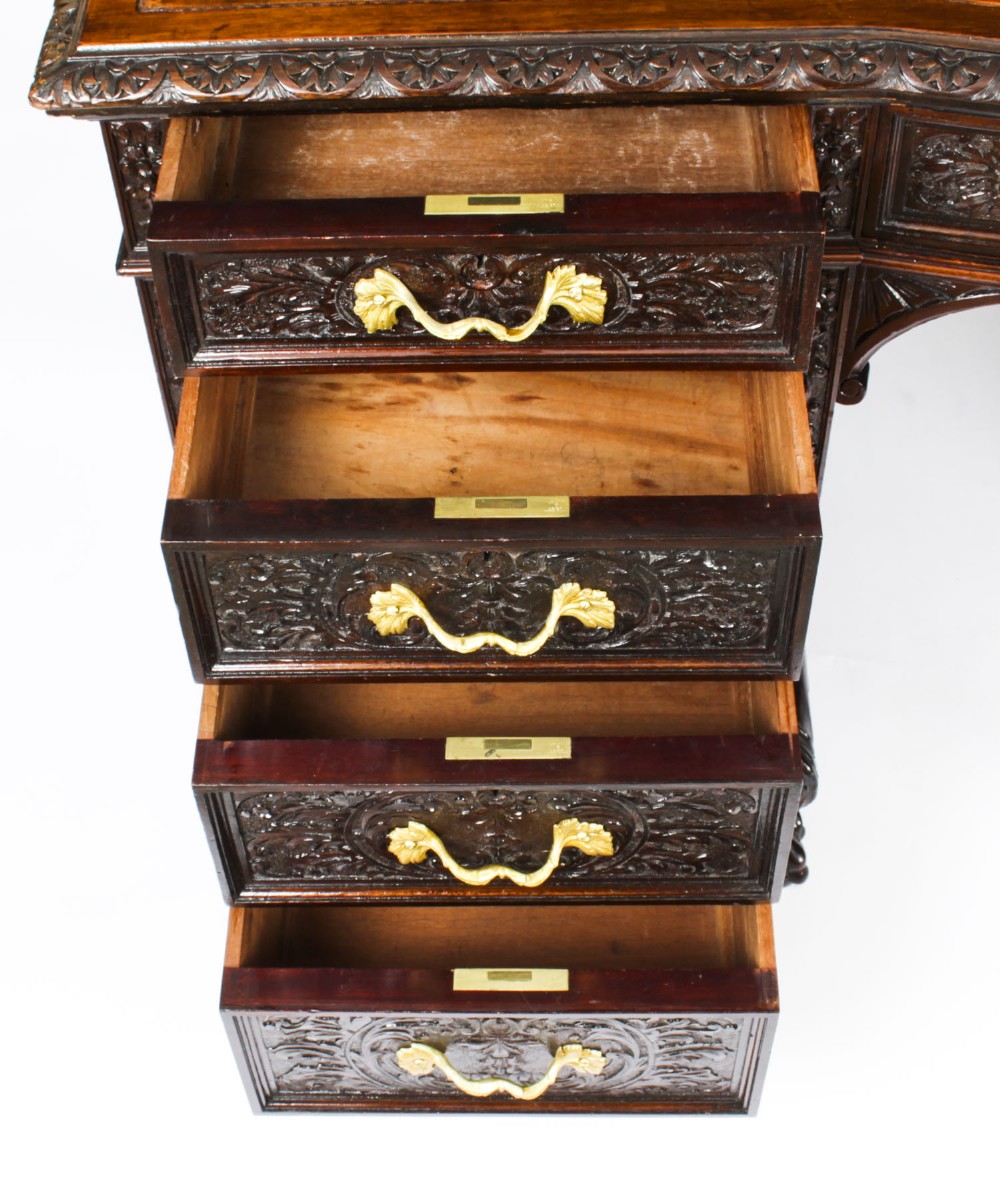
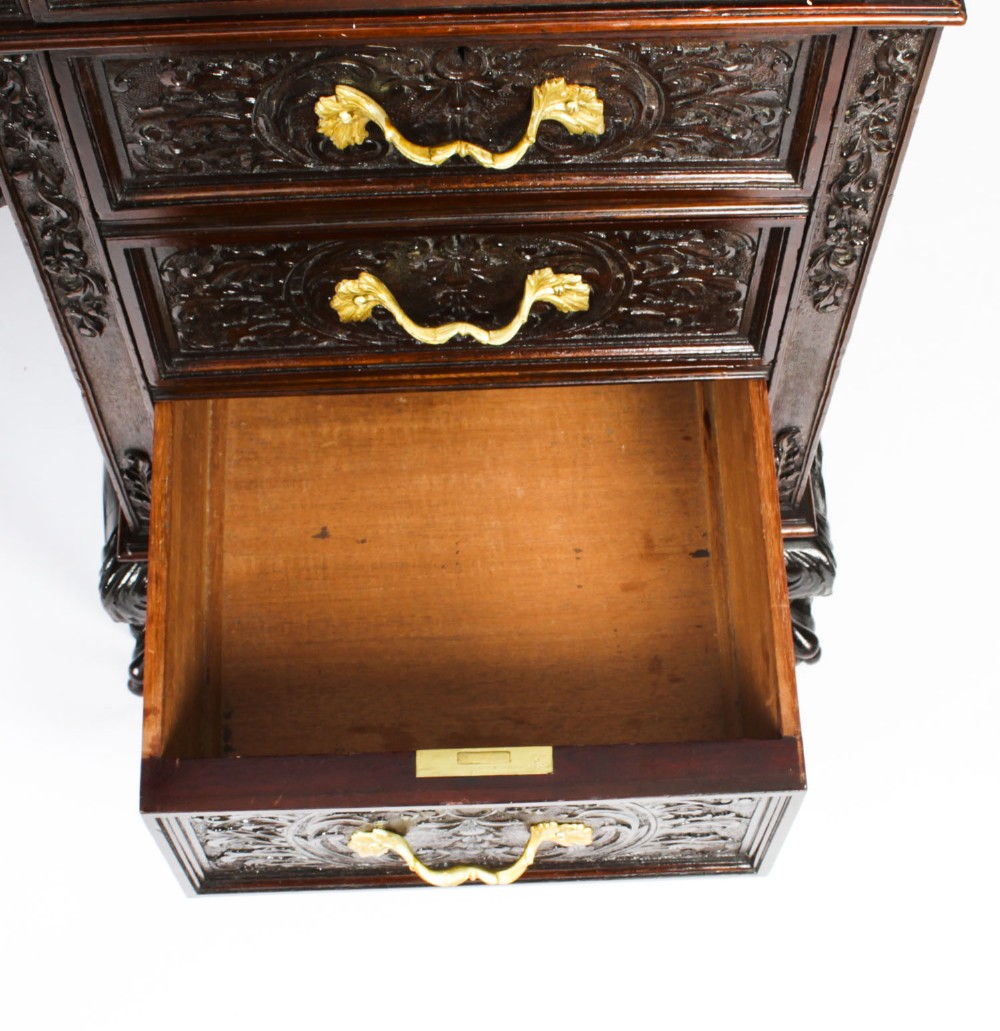
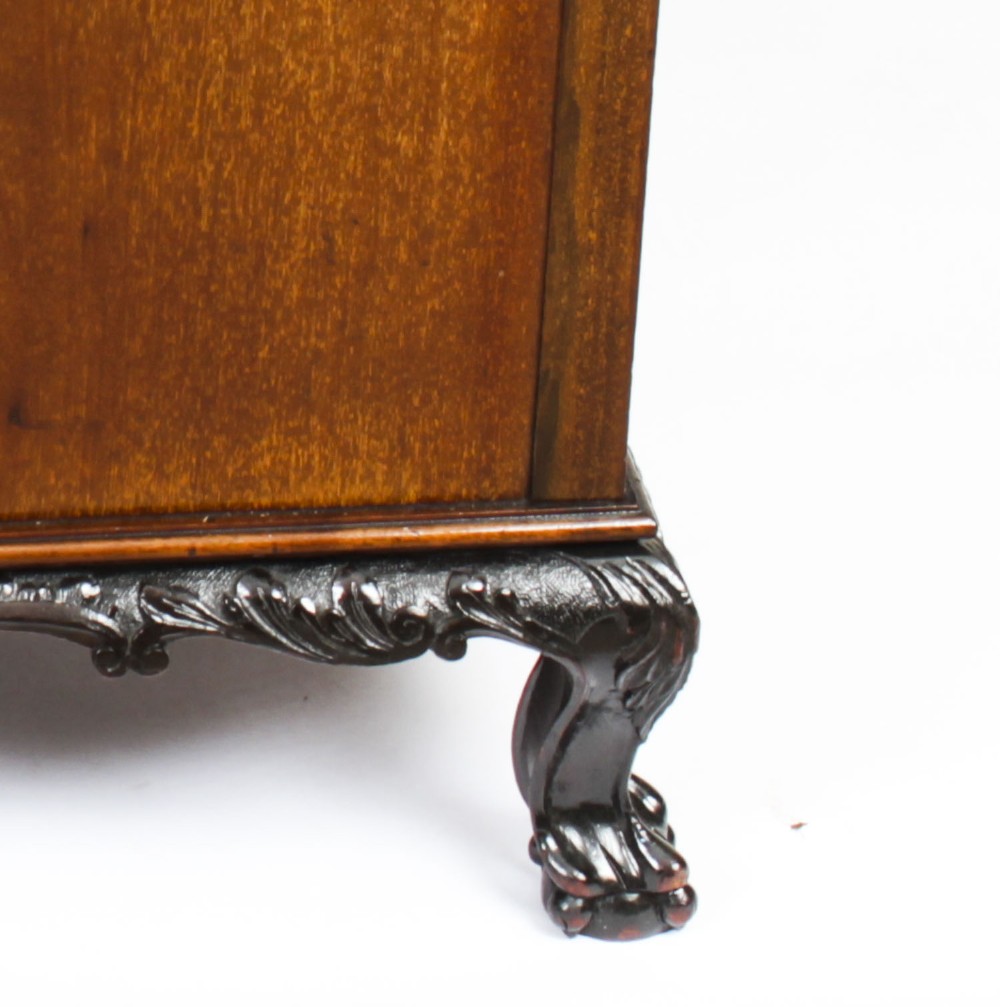
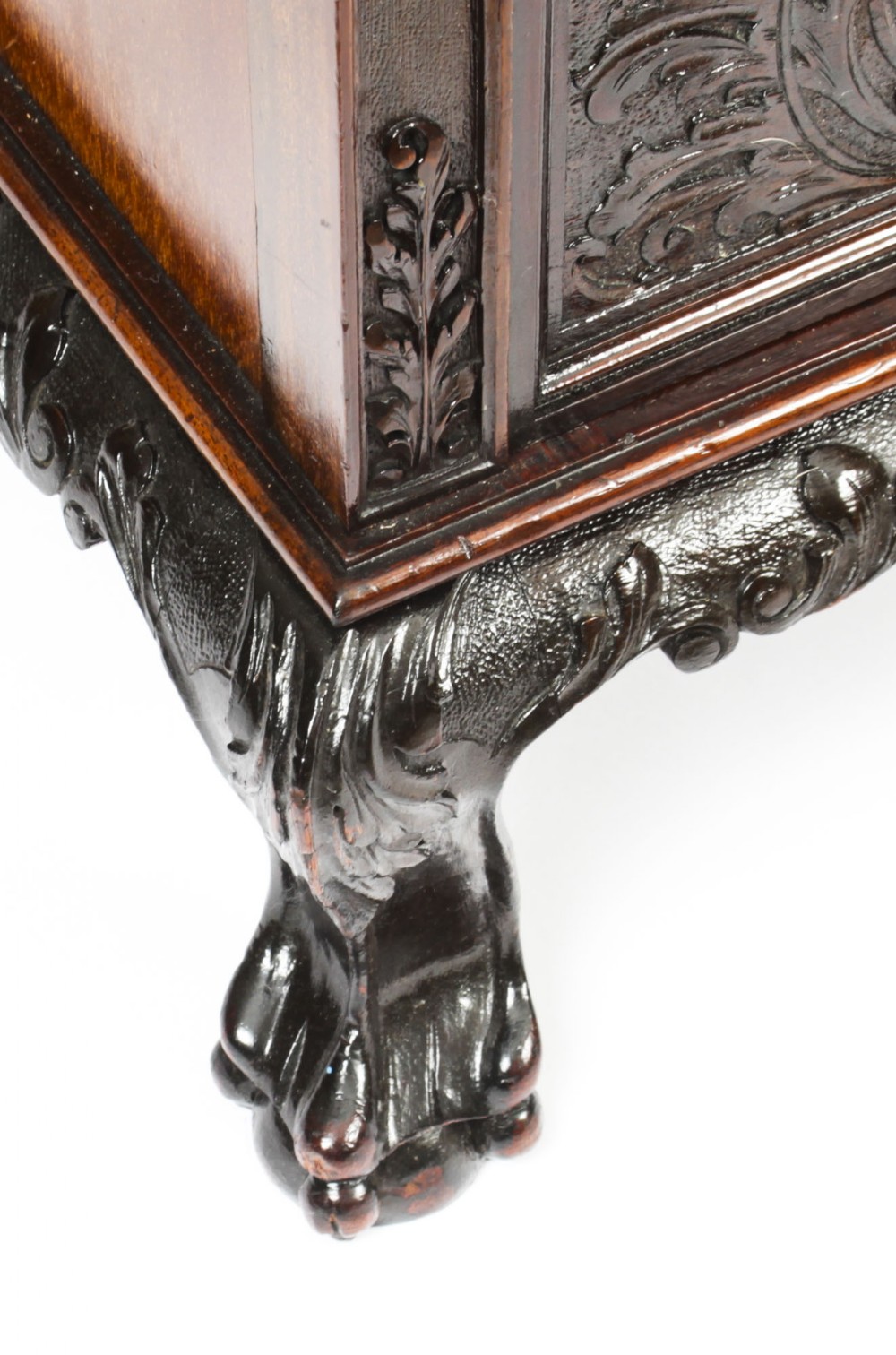
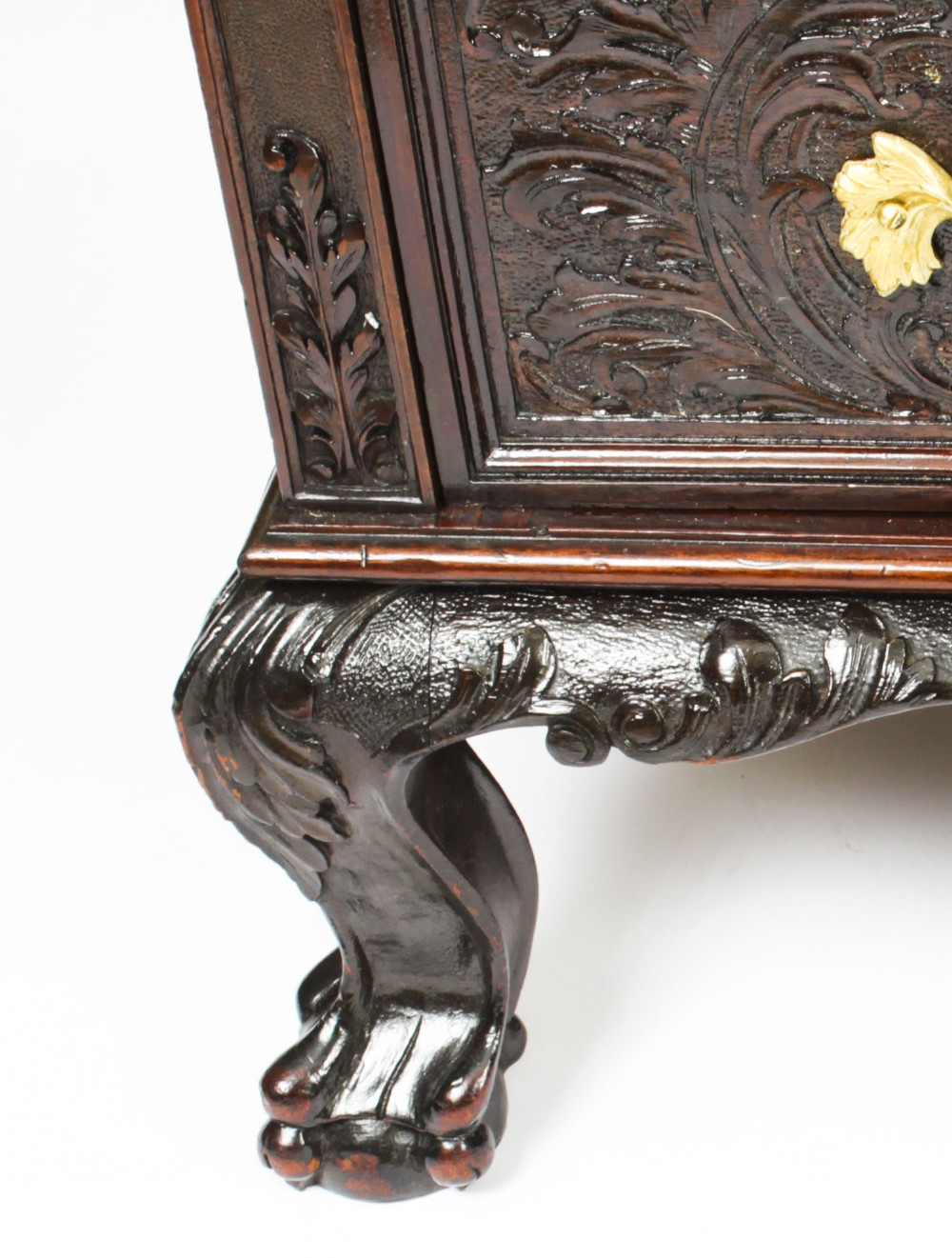
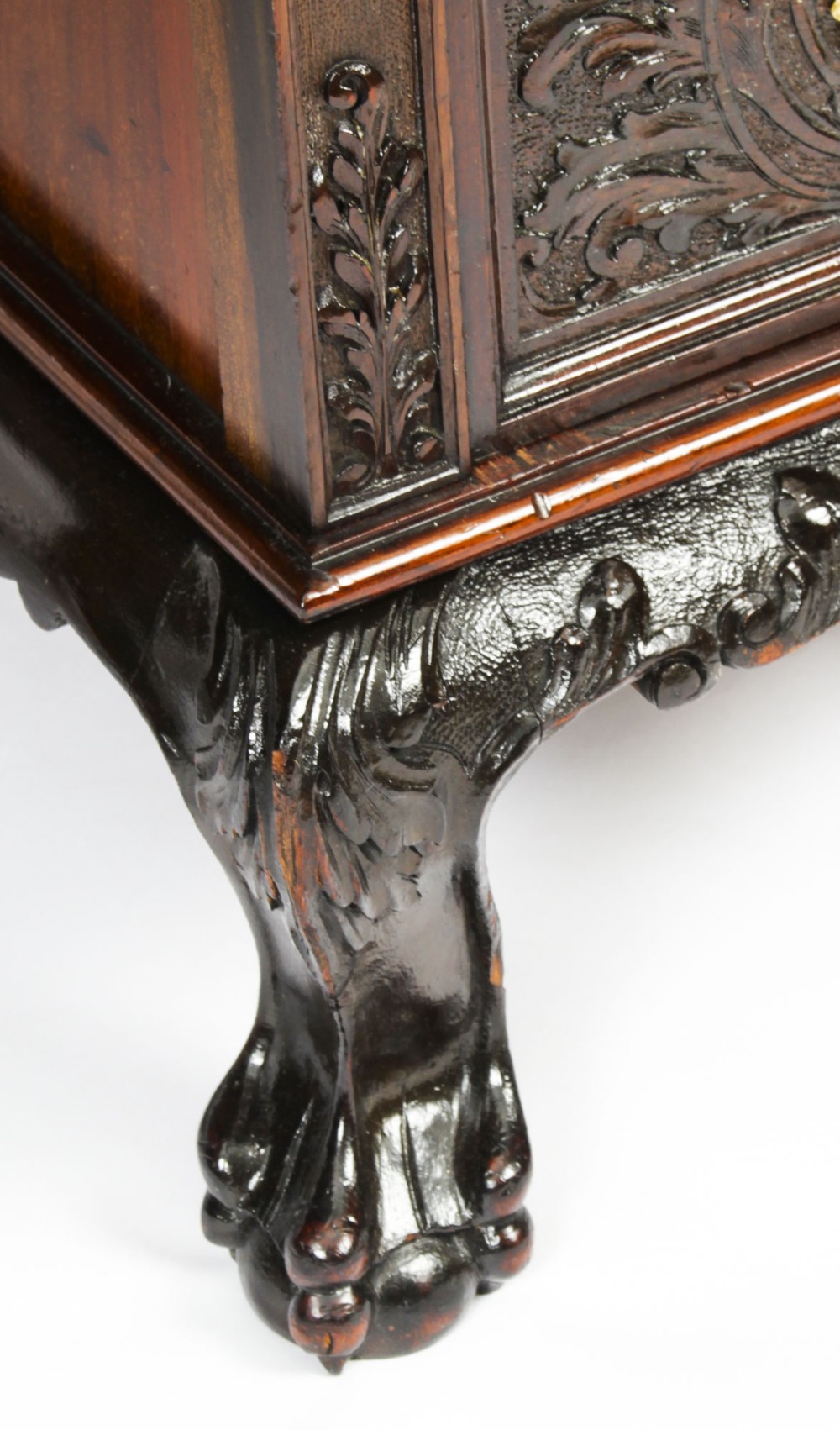
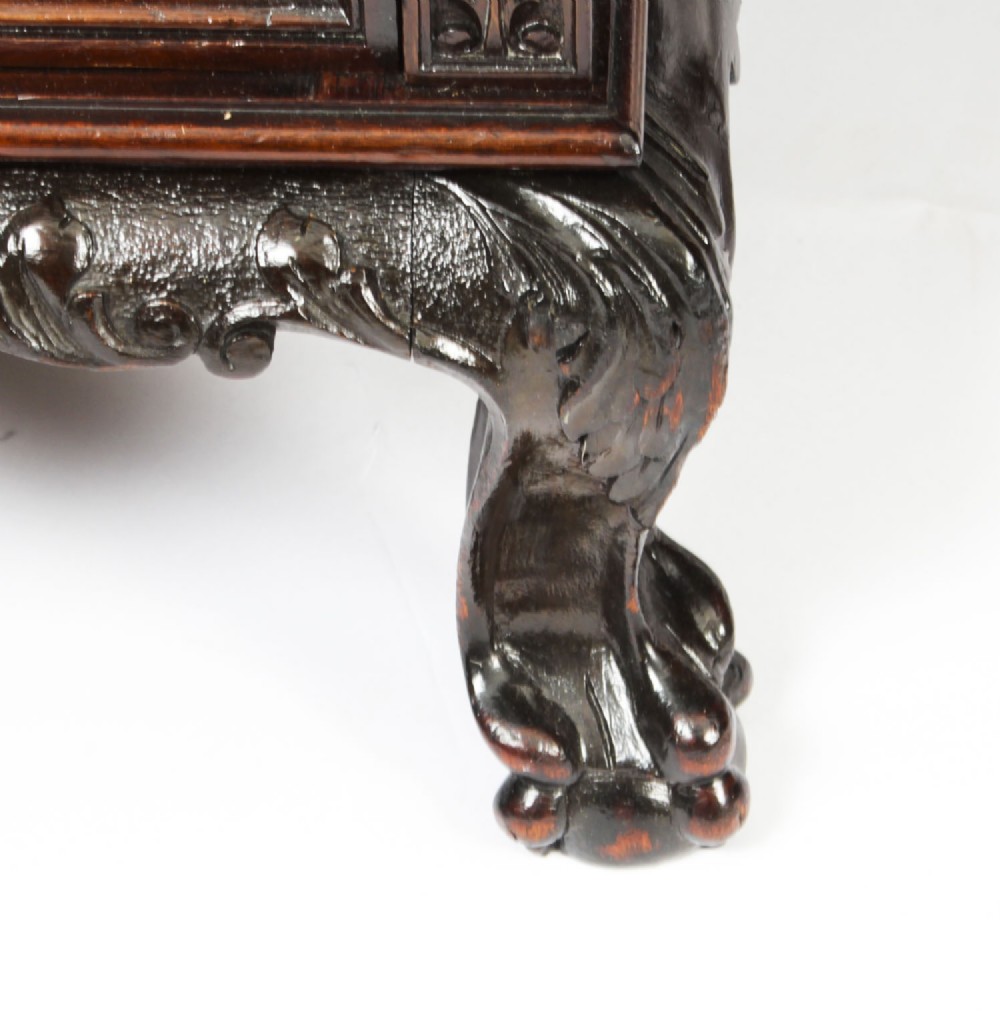
There is a central frieze drawer over a knee hole flanked by four drawers, fitted with the original decorative ormolu handles. The desk is raised on carved ball and claw feet and is finished all round, so it is freestanding.
The mahogany has aged to a golden shade with a striking grain and good patina. It is in very good condition and has been beautifully cleaned using a traditional form of wax finishing.
Instil the elegance of a bygone era to a special place in your home with this glorious antique desk.
Complete with original working locks and key.
Condition:
In excellent condition having been cleaned polished and waxed, please see photos for confirmation.
Dimensions in cm:
Height 75 x Width 137 x Depth 71
Dimensions in inches:
Height 2 foot, 5 inches x Width 4 foot, 6 inches x Depth 2 foot, 4 inches
Edwardian Period (1900 - 1910)
The Edwardian era saw the beginning of a new century with a new king and a new style of interior design. The heavy, dark, cluttered look of the Victorian era was gone, and in its place, something much lighter and more cheerful.
Some of the most famous designer for this era include:
Thomas Sheraton -furniture
Louis Comfort Tiffany- lighting
René Lalique- glassware
Edwardian Style
This early 20th century style had an eclectic feel to it, and drew from elements of Georgian, Medieval and Tudor style. Light, airy, and simplicity of detail were key principles of this era.
Edwardian Furniture
Bamboo and wicker was the material of preference in Edwardian times. This added to the already delicate and breezy nature of the style. Other furniture was reproductions, drawing influence from baroque, rococo and empire style. The wing chair is a classic shape, and upholstery favoured chintz and damask in pale colours.
Edwardian Colour
Shifting away from the darkness of the Victorian interior, colours were fresh and light, with an informal feel. Patterns were feminine, with flowers and floral designs being highly favoured. Colours were predominantly pastels: blue, lilacs, greens, yellows and grays. The floral theme was complemented by the liberal use of fresh flower arrangements. Living rooms often took darker colours such as dark green for fabrics, complemented with cream walls.
Our reference: A1855