6,510  PAGES BROWSED TODAY PAGES TODAY 0  ANTIQUES UPLOADED TODAY NEW ARRIVALS
ID #SA75931
FOR SALE
£8,000
Email
Save
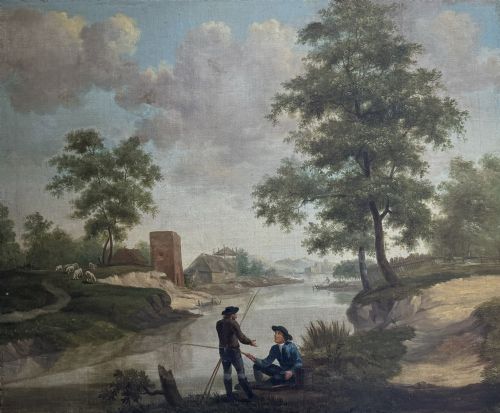
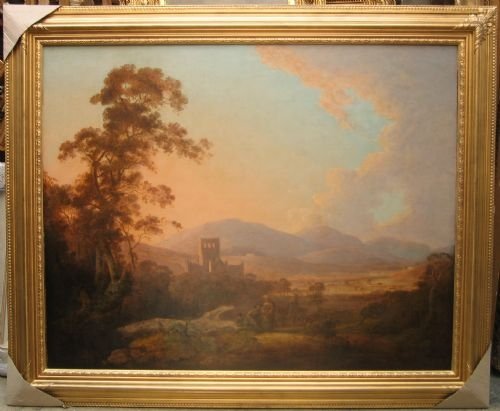
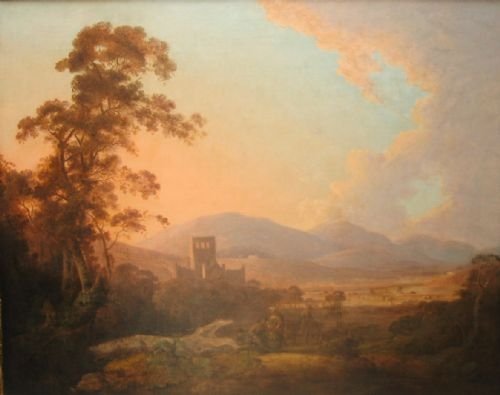
Melrose Abbey with the River Tweed Beyond, Attributed to Julius Caeser Ibbetson (1759-1817)
Artware Fineart
for sale €9,360     $10,160
£8,000

Artware Fineart

Sellingantiques Verified Since Sep 2008
View Dealers Stock Page
Id #SA75931
PDF SHARE
SAVE

Melrose Abbey with the River Tweed Beyond, Attributed to Julius Caeser Ibbetson (1759-1817)

18th century
For Sale by Artware Fineart
Description

Oil on canvas

101.60 x 127.00cm; 40.00 x 50.00ins

frame 54.1/2 x 44in. (138 x 112 cm. )

Ibbetson was born at Farnley Moor, Leeds. He was the second child of Richard Ibbetson, a clothier from Yorkshire. According to his Memoir, his mother fell on the ice and went into labor prematurely, causing him to be delivered by caesarean section and resulting in a middle name he attempted to hide throughout his life. Ibbetson was probably educated in a local Moravian community and then by Quakers in Leeds. According to James Mitchell in the Oxford Dictionary of National Biography, the "unusual thoroughness" of his education "is reflected in the fluent prose, both of his published painting manuals and of his regular, often entertaining, and rewarding correspondence with patrons". Ibbetson was apprenticed to John Fletcher, a ship painter in Hull, from 1772 to 1777. He then moved to London, where for the next ten years he was primarily a picture restorer for a Clarke of Leicester Fields. In 1782 wrote an account of his life and sent it to the artist Benjamin West which was transcribed by Joseph Farington in 1805. Around 1780, Ibbetson married his first wife, Elizabeth.
In 1785, Ibbetson began exhibiting at the Royal Academy with View of North Fleet. Mitchell calls George Biggin (1783), which is one of Ibbetson's earliest known works, "an accomplished full-length portrait in the Gainsborough tradition, [which] should be considered as a milestone in the development of an artist who was entirely self-taught". Through the efforts of Captain William Baillie in 1787, Ibbetson was made draughtsman to Colonel Charles Cathcart on the first British embassy to Peking (Beijing); he made many watercolor drawings of the animals and plants on the journey. While he was away, his Ascent of George Biggin, esq. from St. George's Fields, June 29th 1785 was exhibited at the Royal Academy to great critical and popular acclaim.
In 1789, Ibbetson went to visit the Viscount Mountstuart at Cardiff Castle in Wales. He spent decades drawing the scenery there and, according to Mitchell, "[h]is detailed watercolours of iron furnaces, coal staithes, and copper mines foreshadow the work of Joseph Wright of Derby and J. M. W. Turner and constitute an important record of the early industrial developments in that region, but are less well known than his more numerous scenes of folk life and picturesque scenery." After a visit to the Isle of Wight in 1790, he began painting shipwrecks and smugglers. David Murray, 2nd Earl of Mansfield, and his wife commissioned Ibbetson to decorate Kenwood House, in 1794. This distracted him from the death of his wife and caring for their three children. Her death had "provoked a minor nervous breakdown, exacerbated by near destitution", but the Kenwood project relieved that stress. Four years later, he moved to Liverpool to work for Thomas Vernon. In 1801 he married his second wife, Bella Thompson, and moved to Ambleside.
Ibbetson acquired several generous patrons in Liverpool and in Edinburgh: William Roscoe, Sir Henry Nelthorpe, and the Countess of Balcarress. The last prompted him to write and publish his instruction manual An Accidence, or Gamut, of Painting in Oil (1803). In 1803, he met the Yorkshire philanthropist William Danby and in 1805 moved to Masham to be near him. The next 14 years of his life were the most settled of his life.

Ibbetson died on 13 October 1817 and was buried in the churchyard of St Mary's, Masham.

Physical Dimensions
Height
146cm (57.48")
Width
120cm (47.24")
Depth
4cm (1.57")
Declaration

Artware Fineart has dated this Georgian Landscape Oil Painting to the 18th Century.

Reference Numbers
Sellingantiques Reference
SA75931
Dealers Internal Reference
3139
Description
Oil on canvas

101.60 x 127.00cm; 40.00 x 50.00ins

frame 54.1/2 x 44in. (138 x 112 cm. )

Ibbetson was born at Farnley Moor, Leeds. He was the second child of Richard Ibbetson, a clothier from Yorkshire. According to his Memoir, his mother fell on the ice and went into labor prematurely, causing him to be delivered by caesarean section and resulting in a middle name he attempted to hide throughout his life. Ibbetson was probably educated in a local Moravian community and then by Quakers in Leeds. According to James Mitchell in the Oxford Dictionary of National Biography, the "unusual thoroughness" of his education "is reflected in the fluent prose, both of his published painting manuals and of his regular, often entertaining, and rewarding correspondence with patrons". Ibbetson was apprenticed to John Fletcher, a ship painter in Hull, from 1772 to 1777.

He then moved to London, where for the next ten years he was primarily a picture restorer for a Clarke of Leicester Fields.
Artware Fineart

In 1782 wrote an account of his life and sent it to the artist Benjamin West which was transcribed by Joseph Farington in 1805. Around 1780, Ibbetson married his first wife, Elizabeth.

fig 1. An antique oil painting depicting the ruins of Melrose Abbey situated in a sprawling valley landscape under a warm sunset sky.
fig 1. Melrose Abbey with the River Tweed Beyond, Attributed to Julius Caeser Ibbetson (1759-1817)

In 1785, Ibbetson began exhibiting at the Royal Academy with View of North Fleet. Mitchell calls George Biggin (1783), which is one of Ibbetson's earliest known works, "an accomplished full-length portrait in the Gainsborough tradition, [which] should be considered as a milestone in the development of an artist who was entirely self-taught". Through the efforts of Captain William Baillie in 1787, Ibbetson was made draughtsman to Colonel Charles Cathcart on the first British embassy to Peking (Beijing); he made many watercolor drawings of the animals and plants on the journey. While he was away, his Ascent of George Biggin, esq. from St. George's Fields, June 29th 1785 was exhibited at the Royal Academy to great critical and popular acclaim.

fig 2. An antique oil painting depicting the ruins of Melrose Abbey situated in a sprawling valley landscape under a warm sunset sky.
fig 2. Melrose Abbey with the River Tweed Beyond, Attributed to Julius Caeser Ibbetson (1759-1817)

In 1789, Ibbetson went to visit the Viscount Mountstuart at Cardiff Castle in Wales. He spent decades drawing the scenery there and, according to Mitchell, "[h]is detailed watercolours of iron furnaces, coal staithes, and copper mines foreshadow the work of Joseph Wright of Derby and J. M. W. Turner and constitute an important record of the early industrial developments in that region, but are less well known than his more numerous scenes of folk life and picturesque scenery." After a visit to the Isle of Wight in 1790, he began painting shipwrecks and smugglers. David Murray, 2nd Earl of Mansfield, and his wife commissioned Ibbetson to decorate Kenwood House, in 1794. This distracted him from the death of his wife and caring for their three children. Her death had "provoked a minor nervous breakdown, exacerbated by near destitution", but the Kenwood project relieved that stress. Four years later, he moved to Liverpool to work for Thomas Vernon. In 1801 he married his second wife, Bella Thompson, and moved to Ambleside.

fig 3. An antique oil painting depicting the ruins of Melrose Abbey situated in a sprawling valley landscape under a warm sunset sky.
fig 3. Melrose Abbey with the River Tweed Beyond, Attributed to Julius Caeser Ibbetson (1759-1817)

Ibbetson acquired several generous patrons in Liverpool and in Edinburgh: William Roscoe, Sir Henry Nelthorpe, and the Countess of Balcarress. The last prompted him to write and publish his instruction manual An Accidence, or Gamut, of Painting in Oil (1803). In 1803, he met the Yorkshire philanthropist William Danby and in 1805 moved to Masham to be near him. The next 14 years of his life were the most settled of his life.

Ibbetson died on 13 October 1817 and was buried in the churchyard of St Mary's, Masham.

Height
146cm (57.48")
Width
120cm (47.24")
Depth
4cm (1.57")
Date of Manufacture

Artware Fineart has dated this Georgian Landscape Oil Painting to the 18th Century.

Reference Numbers
Sellingantiques Ref
SA75931
Dealers Internal Ref
3139
Artware Fineart
Sellingantiques verified Since Sep 2008
Dealer Profile

You can view the stock and full dealer information on the Artware Fineart Profile Page
PDF SHARE
SAVE
An antique oil painting depicting the ruins of Melrose Abbey situated in a sprawling valley landscape under a warm sunset sky.
1 / 4
Archive I An antique oil painting depicting the ruins of Melrose Abbey situated in a sprawling valley landscape under a warm sunset sky.

Melrose Abbey with the river Tweed beyond, Attributed to Julius Caeser Ibbetson (1759-1817)

Archive II An antique oil painting depicting the ruins of Melrose Abbey situated in a sprawling valley landscape under a warm sunset sky. View II
Archive III An antique oil painting depicting the ruins of Melrose Abbey situated in a sprawling valley landscape under a warm sunset sky. View III
Archive IV An antique oil painting depicting the ruins of Melrose Abbey situated in a sprawling valley landscape under a warm sunset sky. View IV
FURTHER BROWSING

Visitors also looked at these ⇣

Enlarged Archival View
Telephone 07958 699 645
Location
18 La Gare
51 Surrey Row
London
SE1 0BZ
United Kingdom
Verified Since Sep 2008
Items For Sale 243
Items Sold 223
Artware Fineart
Verified Since Sep 2008
View Dealer Info
Location: 18 La Gare , 51 Surrey Row , London , SE1 0BZ , United Kingdom
Verified
Sep 2008
For Sale
243
Sold
223
An antique oil painting depicting the ruins of Melrose Abbey situated in a sprawling valley landscape under a warm sunset sky.
Melrose Abbey with the river Tweed beyond, Attributed to Julius Caeser Ibbetson (1759-1817)
Ref: SA75931
An antique oil painting depicting the ruins of Melrose Abbey situated in a sprawling valley landscape under a warm sunset sky.
Detail View 1
Detail View 2
Detail View 3
Archival Detail
Every single antique dealer on our platform is individually approved by our internal team. We verify their professional trade history, ethical standards, and photographic quality to ensure a secure, high-standard buying environment. Upon joining, every dealer agrees to a strict 9-point code of conduct. While issues can occasionally arise, our dealers typically resolve them swiftly and directly with the buyer. In fact, since our founding in 2002, Sellingantiques has only had to step in to help resolve an issue on roughly five occasions—a true testament to the quality of our dealers and their dedication to your happiness.
Our dealers are highly experienced in packing and shipping fragile, high-value antiques. Because you are in direct contact with the dealer, you will be able to easily go through all available shipping and insurance options together to ensure your item arrives safely.
Antiques are the ultimate green purchase. By choosing historical pieces over newly manufactured goods, you completely eliminate the carbon footprint of modern mass production while preserving exceptional, timeless craftsmanship.

Georgian landscape painting typically features picturesque compositions, naturalistic lighting, and romantic representations of historical ruins or rural vistas, influenced by European classical landscape traditions.

Eighteenth-century oil paintings were executed using hand-ground mineral and organic pigments mixed with linseed or walnut oil, applied onto stretched flax canvas or wooden panels.

Authentication involves examining age-consistent craquelure patterns, natural timber stretcher oxidation, hand-forged canvas tacks, and period-appropriate pigment composition under ultraviolet light.

An antique landscape can serve as a focal point above a fireplace mantle or sideboard, complementing neutral walls and modern minimalist furniture with its warm earthy palette.

Keep the canvas away from direct sunlight, extreme humidity, and heat sources, and dust gently using a dry, soft natural-hair brush rather than liquid detergents.
items
Add keywords to the filter
Price
£100
£250000
Era
Movements
Material
Origin
Stock Location
Freshness
Online Payments
Categories