60,878  PAGES BROWSED TODAY PAGES TODAY 103  ANTIQUES UPLOADED TODAY NEW ARRIVALS
ID #SA599651
FOR SALE
£6,500
Email
Save
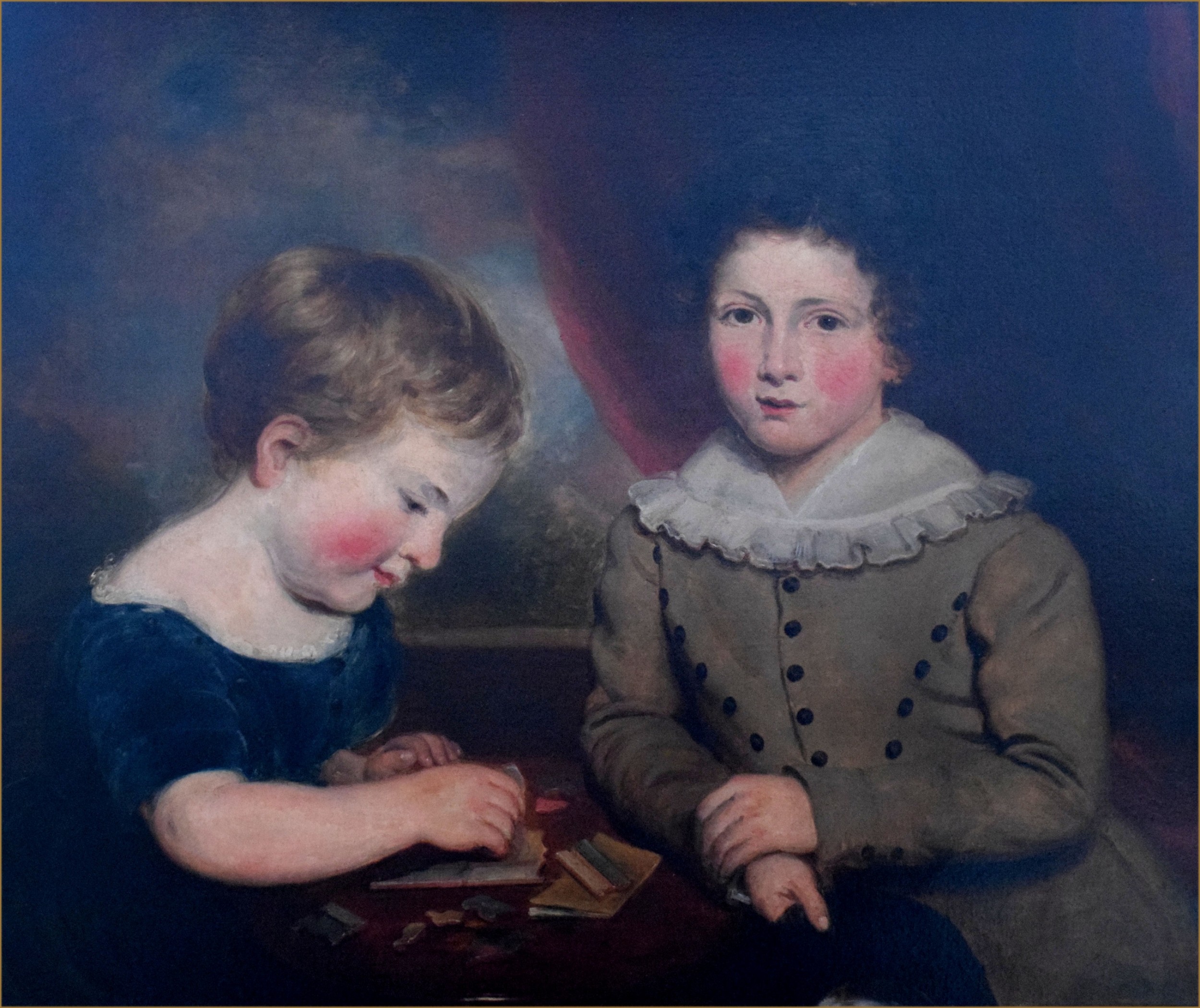
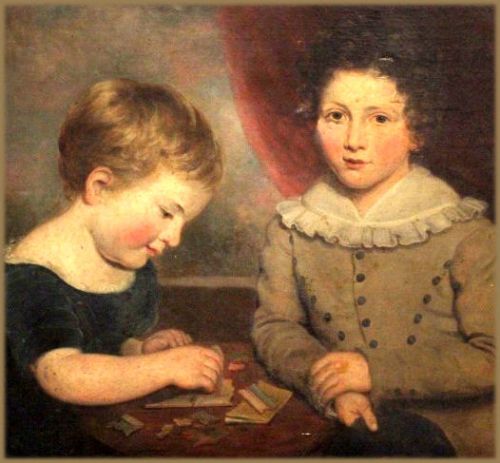
John Russell, Ra, 1745-1806 Portrait of a Young Boy with a Map Jigsaw Puzzle & His Brother Seated at a Table
Artware Fineart
for sale €7,605     $8,255
£6,500

Artware Fineart

Sellingantiques Verified Since Sep 2008
View Dealers Stock Page
Id #SA599651
PDF SHARE
SAVE

John Russell, Ra, 1745-1806 Portrait of a Young Boy with a Map Jigsaw Puzzle & His Brother Seated at a Table

18th century
For Sale by Artware Fineart
Description

John Russell, RA, 1745-1806

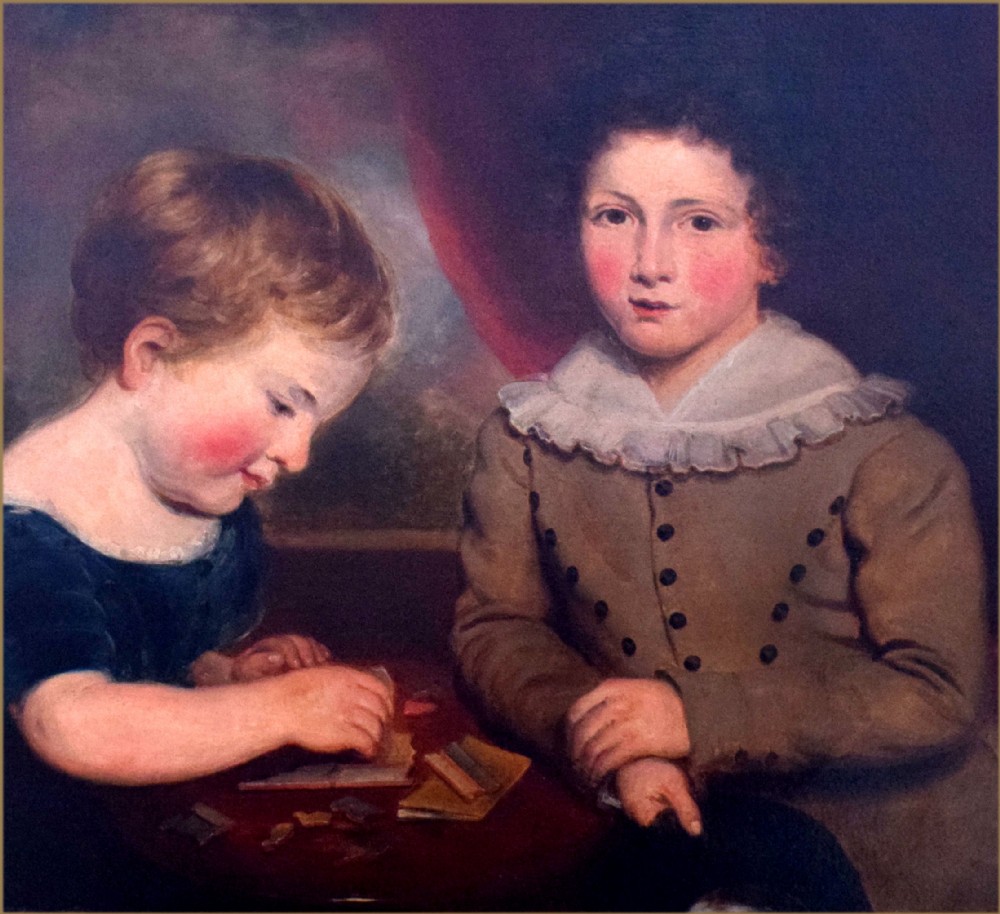
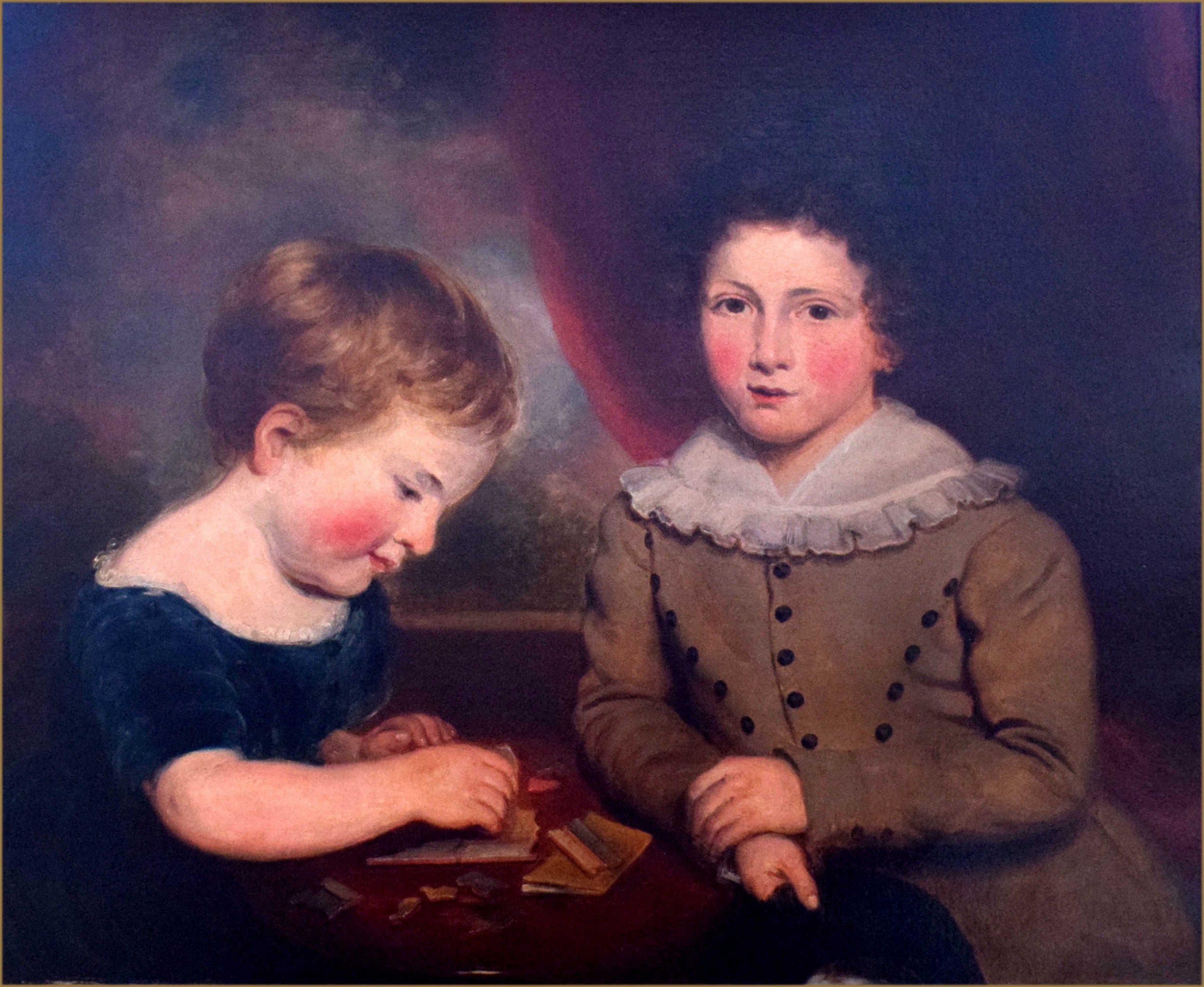
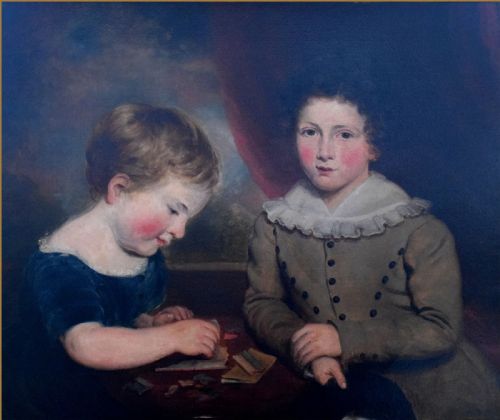
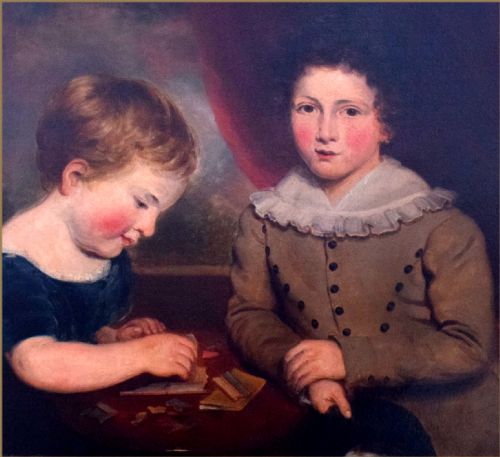
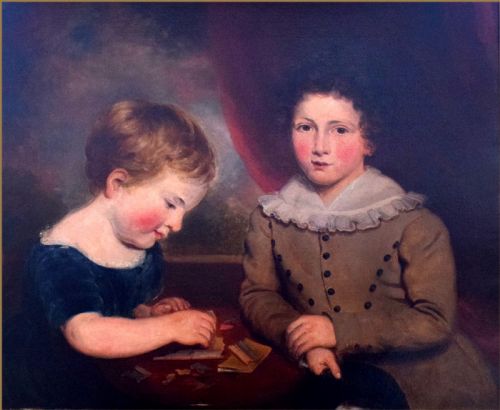
Portrait of a Young Boy with a Map Jigsaw Puzzle & His Brother seated at a Table

oil on canvas

64 x 76 cm. (25 x 30 in.)

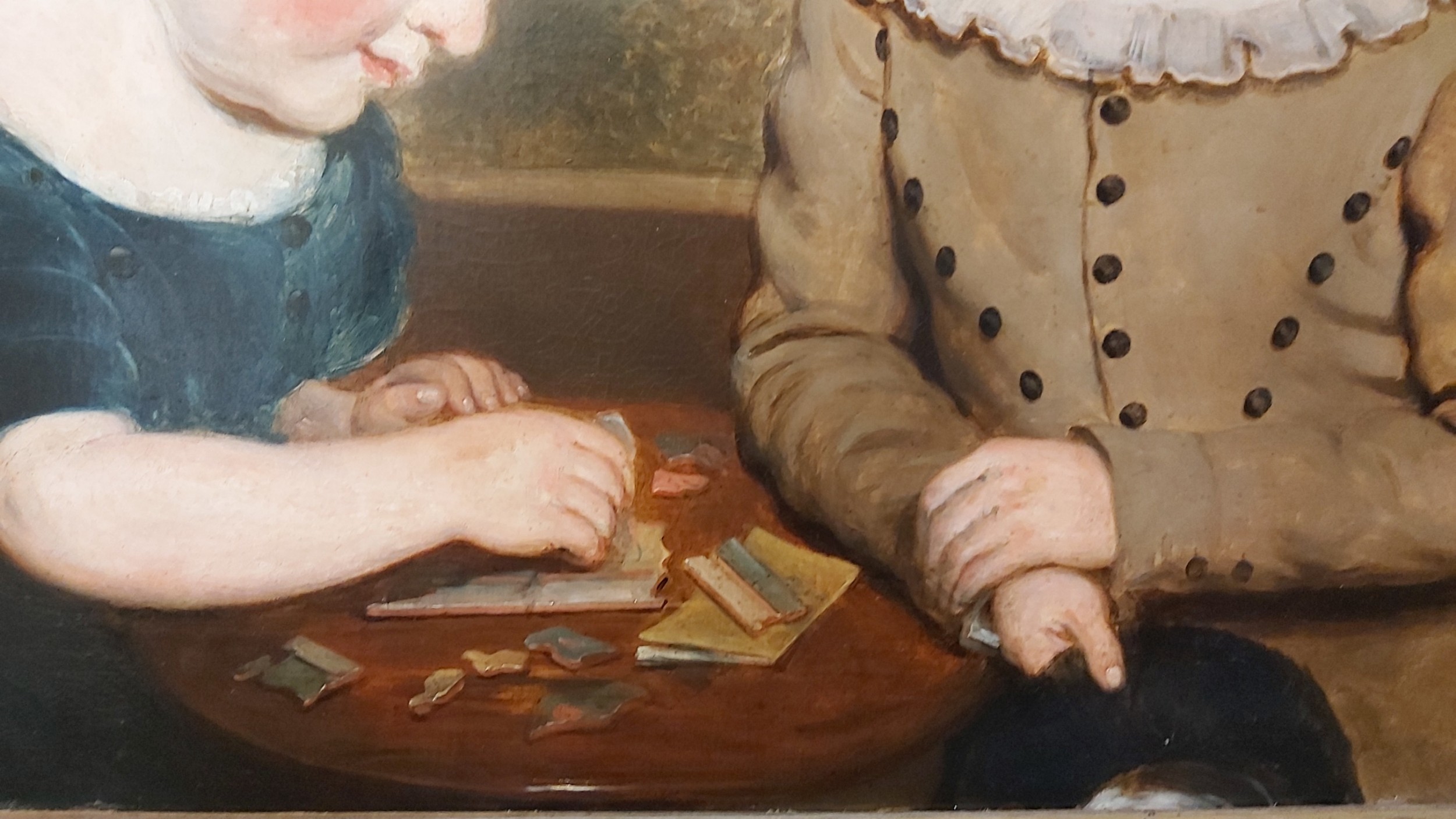
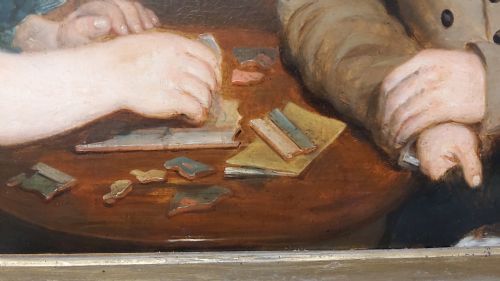
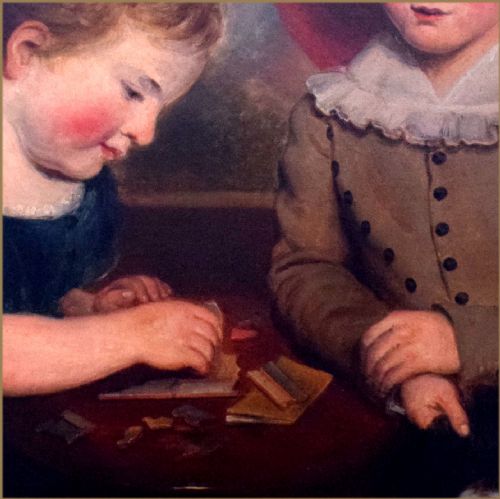
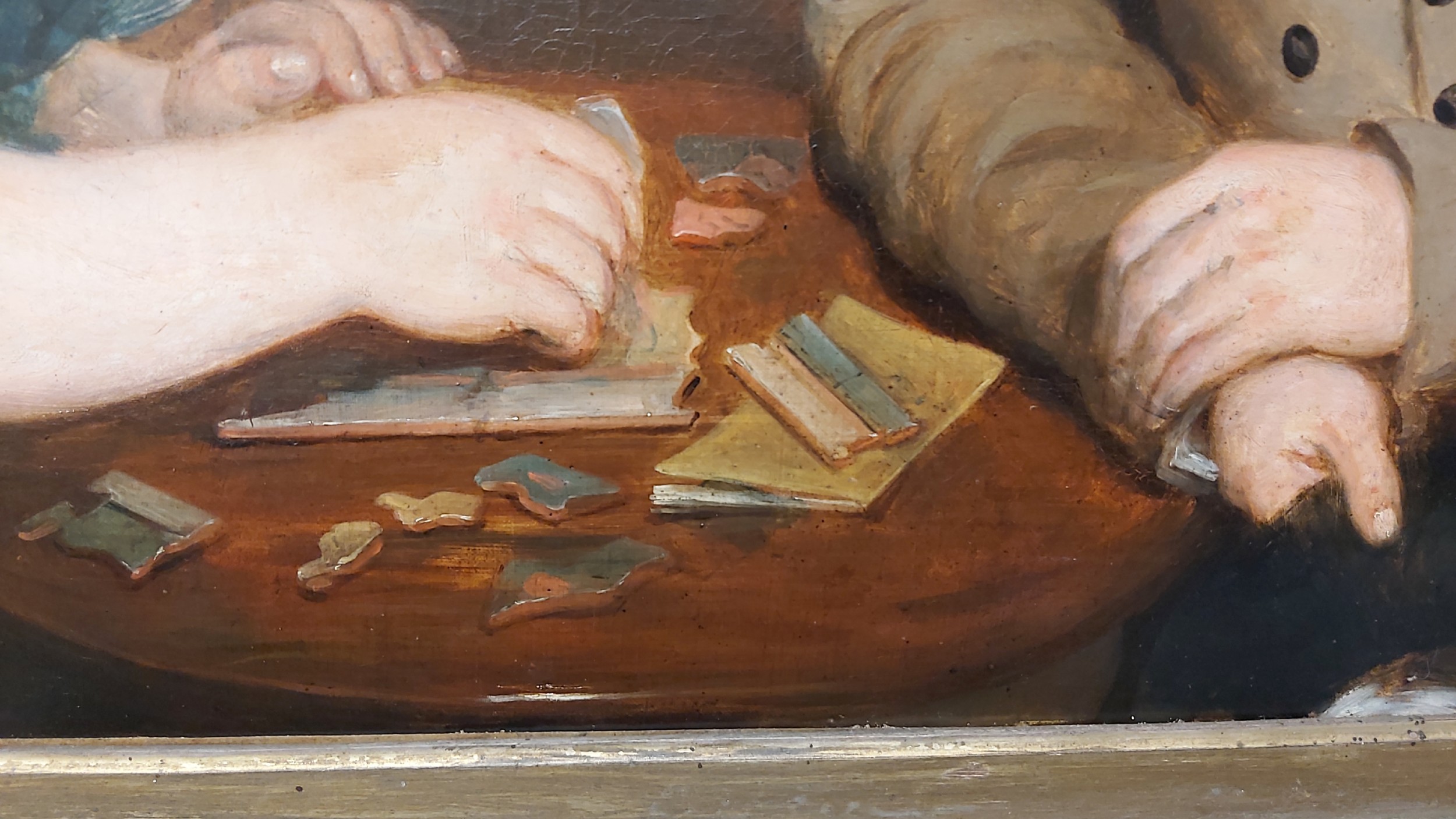
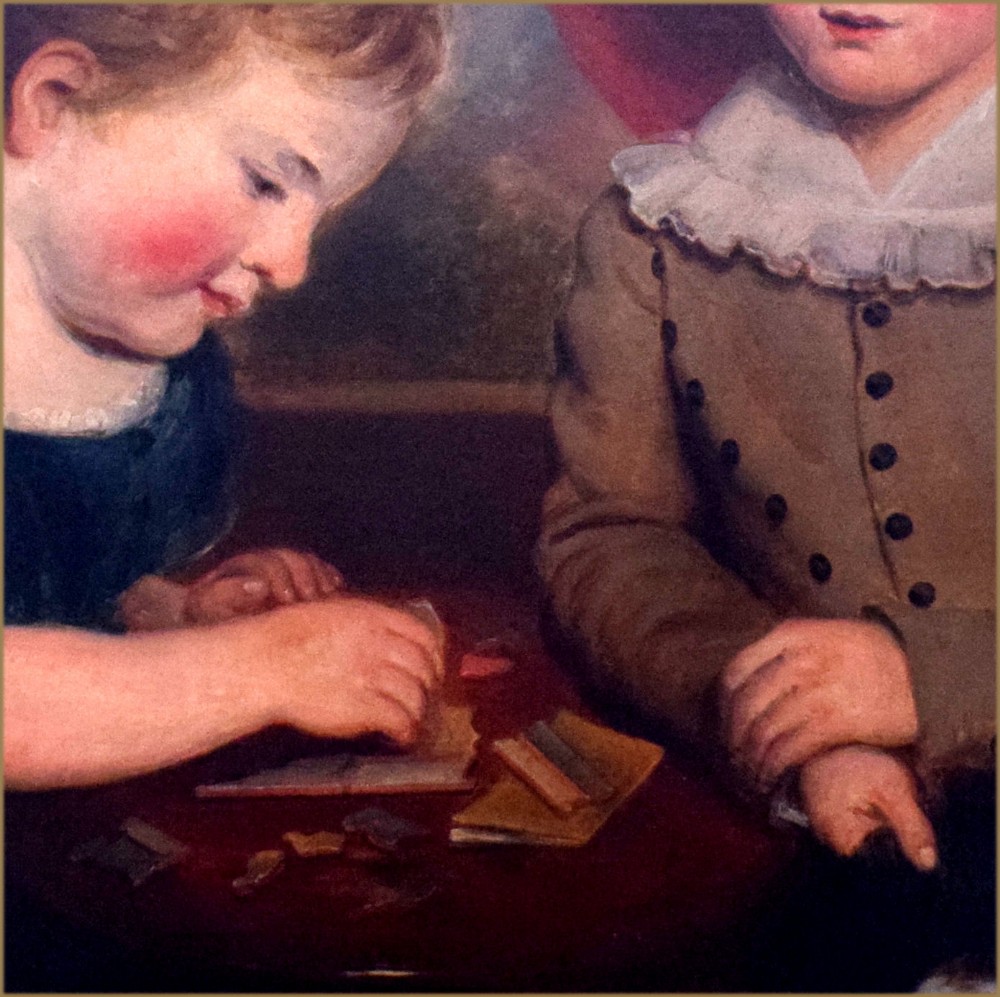
The Puzzle that the two boys are playing with is a geographical puzzle. However to the left there is an interlocking piece, and according to Linda Hannas “The English Jigsaw Puzzle, 1760 to 1890”, Wayland Publishers, London, 1972; interlocking border pieces (very useful) are a somewhat later invention, c. 1785. and that’s the time that explanatory books came with the didactical puzzles when they were sold. Such a booklet is depicted in the portrait.

A jigsaw puzzle is a tiling puzzle that requires the assembly of often oddly shaped interlocking and tessellating pieces. Each piece usually has a small part of a picture on it; when complete, a jigsaw puzzle produces a complete picture. In some cases, more advanced types have appeared on the market, such as spherical jigsaws and puzzles showing optical illusions.
Jigsaw puzzles were originally created by painting a picture on a flat, rectangular piece of wood, and then cutting that picture into small pieces with a jigsaw, hence the name. John Spilsbury, a London cartographer and engraver, is credited with commercializing jigsaw puzzles around 1760. Jigsaw puzzles have since come to be made primarily of cardboard.
Typical images found on jigsaw puzzles include scenes from nature, buildings, and repetitive designs. Castles and mountains are two traditional subjects. However, any kind of picture can be used to make a jigsaw puzzle; some companies offer to turn personal photographs into puzzles. Completed puzzles can also be attached to a backing with adhesive to be used as artwork.
During recent years, a range of jigsaw puzzle accessories including boards, cases, frames, and roll-up mats has become available that are designed to assist jigsaw puzzle enthusiasts. The engraver and cartographer John Spilsbury, of London, is believed to have produced the first jigsaw puzzle around 1760, using a marquetry saw. Early jigsaws, known as dissections, were produced by mounting maps on sheets of hardwood and cutting along national boundaries, creating a puzzle useful for the teaching of geography. Such "dissected maps" were used to teach the children of King George III and Queen Charlotte by royal governess Lady Charlotte Finch. The end product was an educational pastime, designed as an aid in teach British children their geography. The idea caught on and, until about 1820, jigsaw puzzles remained primarily educational tools.
Vermeer Jigsaw Puzzle, from PiatnikIn 1880, with the introduction of the treadle saw, what had previously been known as dissections (not a word with particularly enjoyable connotations in our own time) came to be known as jigsaw puzzles, although they were actually cut by a fretsaw, not a true jigsaw. Towards the end of the century plywood came to be used. With illustrations glued or painted on the front of the wood, pencil tracings of where to cut were made on the back. These pencil tracings can still be found on some of these older puzzles.
Cardboard puzzles were first introduced in the late 1800's, and were primarily used for children's puzzles. It was not until the 20th century that cardboard puzzles came to be die-cut, a process whereby thin strips of metal with sharpened edges - rather like a giant cookie-cutter - are twisted into intricate patterns and fastened to a plate. The "die" (which refers to this assembly of twisted metal on the plate) is placed in a press, which is pressed down on the cardboard to make the cut.
The name "jigsaw" came to be associated with the puzzle around 1880 when fretsaws became the tool of choice for cutting the shapes. Since fretsaws are distinct from jigsaws, the name appears to be a misnomer. Cardboard jigsaw puzzles appeared during the late 1800s, but were slow to replace the wooden jigsaw due to the manufacturer's belief that cardboard puzzles would be

Physical Dimensions
Height
64cm (25.20")
Width
76cm (29.92")
Depth
3cm (1.18")
Declaration

Artware Fineart has dated this Georgian Child Portrait Painting to the 18th Century.

Reference Numbers
Sellingantiques Reference
SA599651
Dealers Internal Reference
4034
Description
John Russell, RA, 1745-1806

Portrait of a Young Boy with a Map Jigsaw Puzzle & His Brother seated at a Table

oil on canvas

64 x 76 cm. (25 x 30 in.)

The Puzzle that the two boys are playing with is a geographical puzzle. However to the left there is an interlocking piece, and according to Linda Hannas “The English Jigsaw Puzzle, 1760 to 1890”, Wayland Publishers, London, 1972; interlocking border pieces (very useful) are a somewhat later invention, c. 1785. and that’s the time that explanatory books came with the didactical puzzles when they were sold. Such a booklet is depicted in the portrait.

A jigsaw puzzle is a tiling puzzle that requires the assembly of often oddly shaped interlocking and tessellating pieces.
Artware Fineart

Each piece usually has a small part of a picture on it; when complete, a jigsaw puzzle produces a complete picture. In some cases, more advanced types have appeared on the market, such as spherical jigsaws and puzzles showing optical illusions.

fig 1. A Georgian-era portrait painting depicting two young boys seated at a wooden table with a map puzzle.
fig 1. John Russell, Ra, 1745-1806 Portrait of a Young Boy with a Map Jigsaw Puzzle & His Brother Seated at a Table

Jigsaw puzzles were originally created by painting a picture on a flat, rectangular piece of wood, and then cutting that picture into small pieces with a jigsaw, hence the name. John Spilsbury, a London cartographer and engraver, is credited with commercializing jigsaw puzzles around 1760. Jigsaw puzzles have since come to be made primarily of cardboard.

fig 2. A Georgian-era portrait painting depicting two young boys seated at a wooden table with a map puzzle.
fig 2. John Russell, Ra, 1745-1806 Portrait of a Young Boy with a Map Jigsaw Puzzle & His Brother Seated at a Table

Typical images found on jigsaw puzzles include scenes from nature, buildings, and repetitive designs. Castles and mountains are two traditional subjects. However, any kind of picture can be used to make a jigsaw puzzle; some companies offer to turn personal photographs into puzzles. Completed puzzles can also be attached to a backing with adhesive to be used as artwork.

fig 3. A Georgian-era portrait painting depicting two young boys seated at a wooden table with a map puzzle.
fig 3. John Russell, Ra, 1745-1806 Portrait of a Young Boy with a Map Jigsaw Puzzle & His Brother Seated at a Table

During recent years, a range of jigsaw puzzle accessories including boards, cases, frames, and roll-up mats has become available that are designed to assist jigsaw puzzle enthusiasts. The engraver and cartographer John Spilsbury, of London, is believed to have produced the first jigsaw puzzle around 1760, using a marquetry saw. Early jigsaws, known as dissections, were produced by mounting maps on sheets of hardwood and cutting along national boundaries, creating a puzzle useful for the teaching of geography. Such "dissected maps" were used to teach the children of King George III and Queen Charlotte by royal governess Lady Charlotte Finch. The end product was an educational pastime, designed as an aid in teach British children their geography. The idea caught on and, until about 1820, jigsaw puzzles remained primarily educational tools.

fig 4. A Georgian-era portrait painting depicting two young boys seated at a wooden table with a map puzzle.
fig 4. John Russell, Ra, 1745-1806 Portrait of a Young Boy with a Map Jigsaw Puzzle & His Brother Seated at a Table

Vermeer Jigsaw Puzzle, from PiatnikIn 1880, with the introduction of the treadle saw, what had previously been known as dissections (not a word with particularly enjoyable connotations in our own time) came to be known as jigsaw puzzles, although they were actually cut by a fretsaw, not a true jigsaw. Towards the end of the century plywood came to be used. With illustrations glued or painted on the front of the wood, pencil tracings of where to cut were made on the back. These pencil tracings can still be found on some of these older puzzles.

fig 5. A Georgian-era portrait painting depicting two young boys seated at a wooden table with a map puzzle.
fig 5. John Russell, Ra, 1745-1806 Portrait of a Young Boy with a Map Jigsaw Puzzle & His Brother Seated at a Table

Cardboard puzzles were first introduced in the late 1800's, and were primarily used for children's puzzles. It was not until the 20th century that cardboard puzzles came to be die-cut, a process whereby thin strips of metal with sharpened edges - rather like a giant cookie-cutter - are twisted into intricate patterns and fastened to a plate. The "die" (which refers to this assembly of twisted metal on the plate) is placed in a press, which is pressed down on the cardboard to make the cut.

fig 6. A Georgian-era portrait painting depicting two young boys seated at a wooden table with a map puzzle.
fig 6. John Russell, Ra, 1745-1806 Portrait of a Young Boy with a Map Jigsaw Puzzle & His Brother Seated at a Table

The name "jigsaw" came to be associated with the puzzle around 1880 when fretsaws became the tool of choice for cutting the shapes. Since fretsaws are distinct from jigsaws, the name appears to be a misnomer. Cardboard jigsaw puzzles appeared during the late 1800s, but were slow to replace the wooden jigsaw due to the manufacturer's belief that cardboard puzzles would be

Height
64cm (25.20")
Width
76cm (29.92")
Depth
3cm (1.18")
Date of Manufacture

Artware Fineart has dated this Georgian Child Portrait Painting to the 18th Century.

Reference Numbers
Sellingantiques Ref
SA599651
Dealers Internal Ref
4034
Artware Fineart
Sellingantiques verified Since Sep 2008
Dealer Profile

You can view the stock and full dealer information on the Artware Fineart Profile Page

PDF SHARE
SAVE
A Georgian-era portrait painting depicting two young boys seated at a wooden table with a map puzzle.
1 / 8
Archive I A Georgian-era portrait painting depicting two young boys seated at a wooden table with a map puzzle.

John Russell, Ra, 1745-1806 Portrait of a Young Boy with a Map Jigsaw Puzzle & His Brother Seated at a Table
Archive II A Georgian-era portrait painting depicting two young boys seated at a wooden table with a map puzzle. View II
Archive III A Georgian-era portrait painting depicting two young boys seated at a wooden table with a map puzzle. View III
Archive IV A Georgian-era portrait painting depicting two young boys seated at a wooden table with a map puzzle. View IV
Archive V A Georgian-era portrait painting depicting two young boys seated at a wooden table with a map puzzle. View V
Archive VI A Georgian-era portrait painting depicting two young boys seated at a wooden table with a map puzzle. View VI
Archive VII A Georgian-era portrait painting depicting two young boys seated at a wooden table with a map puzzle. View VII
Archive VIII A Georgian-era portrait painting depicting two young boys seated at a wooden table with a map puzzle. View VIII
FURTHER BROWSING

Visitors also looked at these ⇣

Enlarged Archival View
Telephone 07958 699 645
Location
18 La Gare
51 Surrey Row
London
SE1 0BZ
United Kingdom
Verified Since Sep 2008
Items For Sale 243
Items Sold 223
Artware Fineart
Verified Since Sep 2008
View Dealer Info
Location: 18 La Gare , 51 Surrey Row , London , SE1 0BZ , United Kingdom
Verified
Sep 2008
For Sale
243
Sold
223
A Georgian-era portrait painting depicting two young boys seated at a wooden table with a map puzzle.
John Russell, RA, 1745-1806 Portrait of a Young Boy with a Map Jigsaw Puzzle & His Brother seated at a Table
Ref: SA599651
A Georgian-era portrait painting depicting two young boys seated at a wooden table with a map puzzle.
Detail View 1
Detail View 2
Detail View 3
Detail View 4
Detail View 5
Detail View 6
Detail View 7
Archival Detail
Every single antique dealer on our platform is individually approved by our internal team. We verify their professional trade history, ethical standards, and photographic quality to ensure a secure, high-standard buying environment. Upon joining, every dealer agrees to a strict 9-point code of conduct. While issues can occasionally arise, our dealers typically resolve them swiftly and directly with the buyer. In fact, since our founding in 2002, Sellingantiques has only had to step in to help resolve an issue on roughly five occasions—a true testament to the quality of our dealers and their dedication to your happiness.
Our dealers are highly experienced in packing and shipping fragile, high-value antiques. Because you are in direct contact with the dealer, you will be able to easily go through all available shipping and insurance options together to ensure your item arrives safely.
Antiques are the ultimate green purchase. By choosing historical pieces over newly manufactured goods, you completely eliminate the carbon footprint of modern mass production while preserving exceptional, timeless craftsmanship.

Georgian portraiture is characterised by soft directional lighting, classical compositions, and detailed representation of contemporary attire and domestic objects. Artists of this era focused on capturing social status and familial connections through subtle expressions and balanced interior backgrounds.

Paintings from the Georgian era were predominantly created using oil paints or soft pastels applied to hand-woven linen canvas, wood panels, or heavy paper. Frames were typically handcrafted from carved timber coated with gesso and gold leaf gilding.

Authentic period pieces exhibit age-appropriate craquelure patterns across the paint layer, natural oxidisation on the reverse of the canvas, and hand-forged nails or wooden pegs holding the canvas to hand-cut stretcher bars.

Position the portrait as a focal point above a mantelpiece or sideboard to create a visual anchor. Pairing historical portraiture with minimalist modern furniture produces an engaging juxtaposition of historical eras.

Display the artwork away from direct sunlight, extreme temperature fluctuations, and high humidity to prevent pigment fading and canvas warping. Dust gently with a soft, dry microfibre brush and consult a professional conservator for cleaning or restoration.
items
Add keywords to the filter
Price
£100
£250000
Era
Movements
Material
Origin
Stock Location
Freshness
Online Payments
Categories