25,415  PAGES BROWSED TODAY PAGES TODAY 75  ANTIQUES UPLOADED TODAY NEW ARRIVALS
ID #SA342096
FOR SALE
£3,500
Email
Save
Circle of Bartholomeus Van Der Helst 1613- 1670
Artware Fineart
for sale €4,095     $4,445
£3,500

Artware Fineart

Sellingantiques Verified Since Sep 2008
View Dealers Stock Page
Id #SA342096
PDF SHARE
SAVE

Circle of Bartholomeus Van Der Helst 1613- 1670

17th century
For Sale by Artware Fineart
Description

Circle of Bartholomeus Van der Helst 1613- 1670

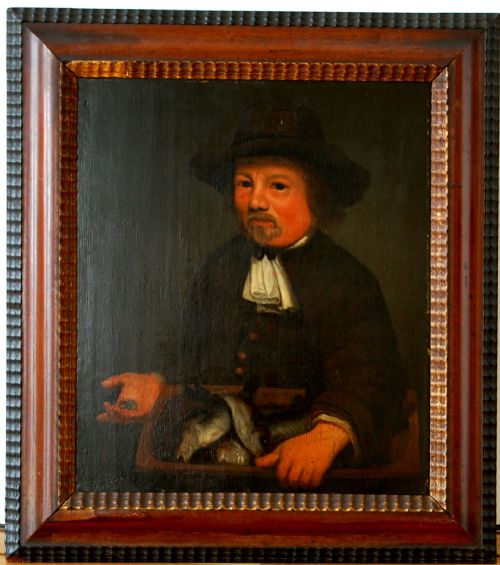
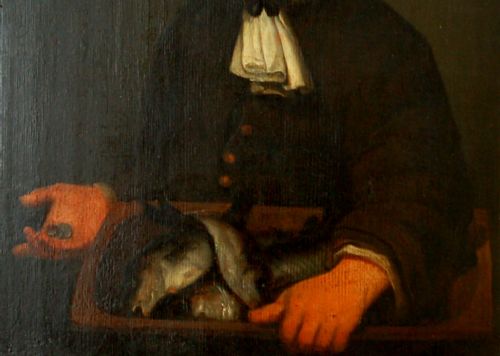
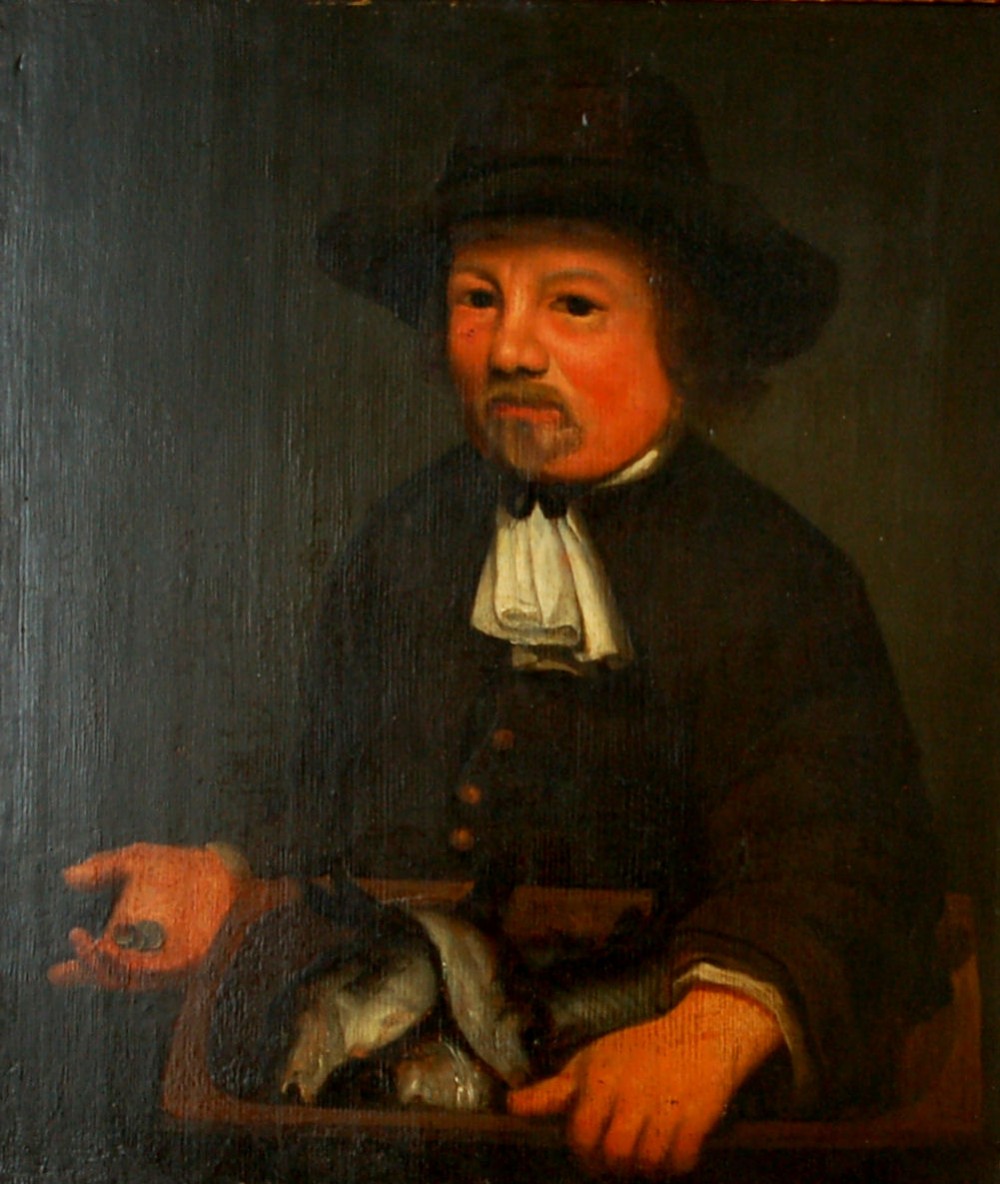
A Street Vendor Selling Herrings

oil on oak panel

40 x 35 cm. (15.3/4 x 13.3/4 in.)

Along with agriculture, the Dutch fishing industry formed part of the economic base of the northern Netherlands. Like the Baltic grain trade, it also contributed to the rise of Dutch the shipping industry.The backbone of the fishing industry was the North Sea herring fishery, which was quite advanced and included a form of “factory” ship called the herring bus. The herring bus was developed in the fifteenth century in order to allow the herring catch to be processed with salt at sea. This permitted the herring ship to remain at sea longer and increased the range of the herring fishery. Herring was an important export product for the Netherlands particularly to inland areas, but also to the Baltic offsetting Baltic grain imports.
The herring fishery reached its zenith in the first half of the seventeenth century. Estimates put the size of the herring fleet at roughly 500 busses and the catch at about 20,000 to 25,000 lasts (roughly 33,000 metric tons) on average each year in the first decades of the seventeenth century. The herring catch as well as the number of busses began to decline in the second half of the seventeenth century, collapsing by about the mid-eighteenth century when the catch amounted to only about 6000 lasts. This decline was likely due to competition resulting from a reinvigoration of the Baltic fishing industry that succeeded in driving prices down, as well as competition within the North Sea by the Scottish fishing industry.
Artist Biography

Born in Haarlem, the son of a Haarlem innkeeper, Van der Helst moved to Amsterdam some time before 1636, for he was married there in that year. His first dated picture, a group portrait of the regents of the Walloon Orphanage (currently the location of Maison Descartes in Amsterdam), dates from 1637. It is unknown from whom he learned to paint, but in Haarlem he must have at least known the work of Frans Hals, who like him, never traveled to Italy and specialized in portraiture. Hals refused even to travel to Amsterdam to paint the lucrative schuttersstukken, and a few years after the trekschuit made commuting to Amsterdam possible in 1632 he attempted this in 1636 with the De Magere Compagnie, but gave it up and let Pieter Codde finish it. As the son of an innkeeper with ever-increasing trekschuit patrons, van der Helst would have seen immediately the importance of this and the relative value of Amsterdam above Haarlem. In any case, he moved to Amsterdam and in 1639 he won his own schutterstuk commission, The company of Captain Roelof Bicker and Lieutenant Jan Michielsz Blaeuw. In Amsterdam he may well have trained with Nicolaes Eliaszoon Pickenoy.

Physical Dimensions
Height
78cm (30.71")
Width
48cm (18.90")
Depth
3cm (1.18")
Declaration

Artware Fineart has dated this Dutch Golden Age Portrait to the 17th Century.

Reference Numbers
Sellingantiques Reference
SA342096
Dealers Internal Reference
3724
Description
Circle of Bartholomeus Van der Helst 1613- 1670

A Street Vendor Selling Herrings

oil on oak panel

40 x 35 cm. (15.3/4 x 13.3/4 in.)

Along with agriculture, the Dutch fishing industry formed part of the economic base of the northern Netherlands.
Artware Fineart

Like the Baltic grain trade, it also contributed to the rise of Dutch the shipping industry.The backbone of the fishing industry was the North Sea herring fishery, which was quite advanced and included a form of “factory” ship called the herring bus. The herring bus was developed in the fifteenth century in order to allow the herring catch to be processed with salt at sea. This permitted the herring ship to remain at sea longer and increased the range of the herring fishery. Herring was an important export product for the Netherlands particularly to inland areas, but also to the Baltic offsetting Baltic grain imports.

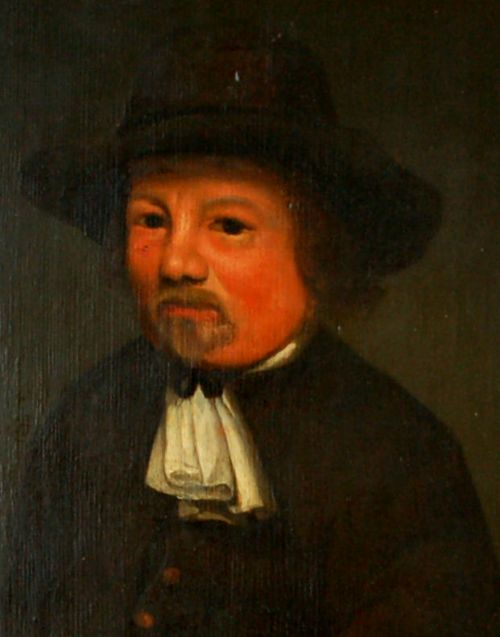
fig 1. A seventeenth-century Dutch oil painting depicting a man in a black hat and white collar seated beside a tray of fish while holding coins.
fig 1. Circle of Bartholomeus Van Der Helst 1613- 1670

The herring fishery reached its zenith in the first half of the seventeenth century. Estimates put the size of the herring fleet at roughly 500 busses and the catch at about 20,000 to 25,000 lasts (roughly 33,000 metric tons) on average each year in the first decades of the seventeenth century. The herring catch as well as the number of busses began to decline in the second half of the seventeenth century, collapsing by about the mid-eighteenth century when the catch amounted to only about 6000 lasts. This decline was likely due to competition resulting from a reinvigoration of the Baltic fishing industry that succeeded in driving prices down, as well as competition within the North Sea by the Scottish fishing industry.

fig 2. A seventeenth-century Dutch oil painting depicting a man in a black hat and white collar seated beside a tray of fish while holding coins.
fig 2. Circle of Bartholomeus Van Der Helst 1613- 1670

Artist Biography

Born in Haarlem, the son of a Haarlem innkeeper, Van der Helst moved to Amsterdam some time before 1636, for he was married there in that year. His first dated picture, a group portrait of the regents of the Walloon Orphanage (currently the location of Maison Descartes in Amsterdam), dates from 1637. It is unknown from whom he learned to paint, but in Haarlem he must have at least known the work of Frans Hals, who like him, never traveled to Italy and specialized in portraiture. Hals refused even to travel to Amsterdam to paint the lucrative schuttersstukken, and a few years after the trekschuit made commuting to Amsterdam possible in 1632 he attempted this in 1636 with the De Magere Compagnie, but gave it up and let Pieter Codde finish it. As the son of an innkeeper with ever-increasing trekschuit patrons, van der Helst would have seen immediately the importance of this and the relative value of Amsterdam above Haarlem. In any case, he moved to Amsterdam and in 1639 he won his own schutterstuk commission, The company of Captain Roelof Bicker and Lieutenant Jan Michielsz Blaeuw. In Amsterdam he may well have trained with Nicolaes Eliaszoon Pickenoy.

Height
78cm (30.71")
Width
48cm (18.90")
Depth
3cm (1.18")
Date of Manufacture

Artware Fineart has dated this Dutch Golden Age Portrait to the 17th Century.

Reference Numbers
Sellingantiques Ref
SA342096
Dealers Internal Ref
3724
Artware Fineart
Sellingantiques verified Since Sep 2008
Dealer Profile

You can view the stock and full dealer information on the Artware Fineart Profile Page
PDF SHARE
SAVE
A seventeenth-century Dutch oil painting depicting a man in a black hat and white collar seated beside a tray of fish while holding coins.
1 / 4
Archive I A seventeenth-century Dutch oil painting depicting a man in a black hat and white collar seated beside a tray of fish while holding coins.

Circle of Bartholomeus Van Der Helst 1613- 1670
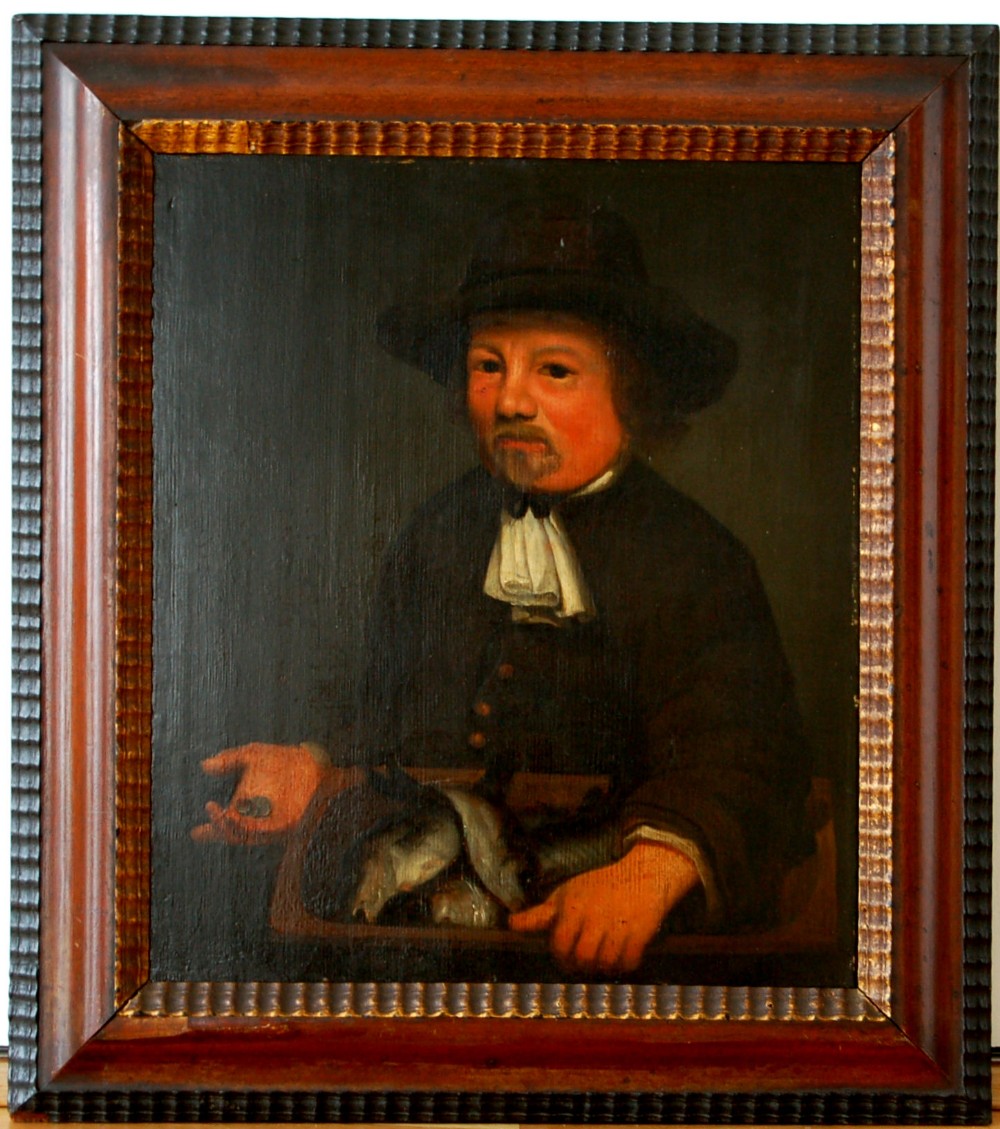
Archive II A seventeenth-century Dutch oil painting depicting a man in a black hat and white collar seated beside a tray of fish while holding coins. View II
Archive III A seventeenth-century Dutch oil painting depicting a man in a black hat and white collar seated beside a tray of fish while holding coins. View III
Archive IV A seventeenth-century Dutch oil painting depicting a man in a black hat and white collar seated beside a tray of fish while holding coins. View IV
FURTHER BROWSING

Visitors also looked at these ⇣

Enlarged Archival View
Telephone 07958 699 645
Location
18 La Gare
51 Surrey Row
London
SE1 0BZ
United Kingdom
Verified Since Sep 2008
Items For Sale 243
Items Sold 223
Artware Fineart
Verified Since Sep 2008
View Dealer Info
Location: 18 La Gare , 51 Surrey Row , London , SE1 0BZ , United Kingdom
Verified
Sep 2008
For Sale
243
Sold
223
A seventeenth-century Dutch oil painting depicting a man in a black hat and white collar seated beside a tray of fish while holding coins.
Circle of Bartholomeus Van der Helst 1613- 1670
Ref: SA342096
A seventeenth-century Dutch oil painting depicting a man in a black hat and white collar seated beside a tray of fish while holding coins.
Detail View 1
Detail View 2
Detail View 3
Archival Detail
Every single antique dealer on our platform is individually approved by our internal team. We verify their professional trade history, ethical standards, and photographic quality to ensure a secure, high-standard buying environment. Upon joining, every dealer agrees to a strict 9-point code of conduct. While issues can occasionally arise, our dealers typically resolve them swiftly and directly with the buyer. In fact, since our founding in 2002, Sellingantiques has only had to step in to help resolve an issue on roughly five occasions—a true testament to the quality of our dealers and their dedication to your happiness.
Our dealers are highly experienced in packing and shipping fragile, high-value antiques. Because you are in direct contact with the dealer, you will be able to easily go through all available shipping and insurance options together to ensure your item arrives safely.
Antiques are the ultimate green purchase. By choosing historical pieces over newly manufactured goods, you completely eliminate the carbon footprint of modern mass production while preserving exceptional, timeless craftsmanship.

Seventeenth-century Dutch Golden Age portraiture focuses on detailed realism, naturalistic proportions, and subtle light play. Artists of this era frequently depicted prosperous merchants, tradespeople, and civic figures against subdued dark backgrounds to highlight face and costume details.

Paintings from this period were typically created using hand-ground mineral and earth pigments bound in linseed or walnut oil. These were painted onto primed oak wooden panels or stretched linen canvases.

Authentic period paintings display natural craquelure consistent with age, period-appropriate timber or canvas backing, hand-forged hardware, and historical pigment composition under technical analysis.

A dark historic oil painting creates an appealing focal point when mounted above a sideboard or console table against neutral or deep-toned walls. Accentuate the artwork with targeted picture lighting to bring out rich shadow detail.

Keep oil paintings in a climate-controlled room away from direct sunlight, high humidity, and heat sources. Surface dust should be removed lightly with a soft brush, leaving varnish cleaning and structural repairs to professional conservators.
items
Add keywords to the filter
Price
£100
£250000
Era
Movements
Material
Origin
Stock Location
Freshness
Online Payments
Categories