7,524  PAGES BROWSED TODAY PAGES TODAY 0  ANTIQUES UPLOADED TODAY NEW ARRIVALS
ID #SA398445
FOR SALE
£4,500
Email
Save
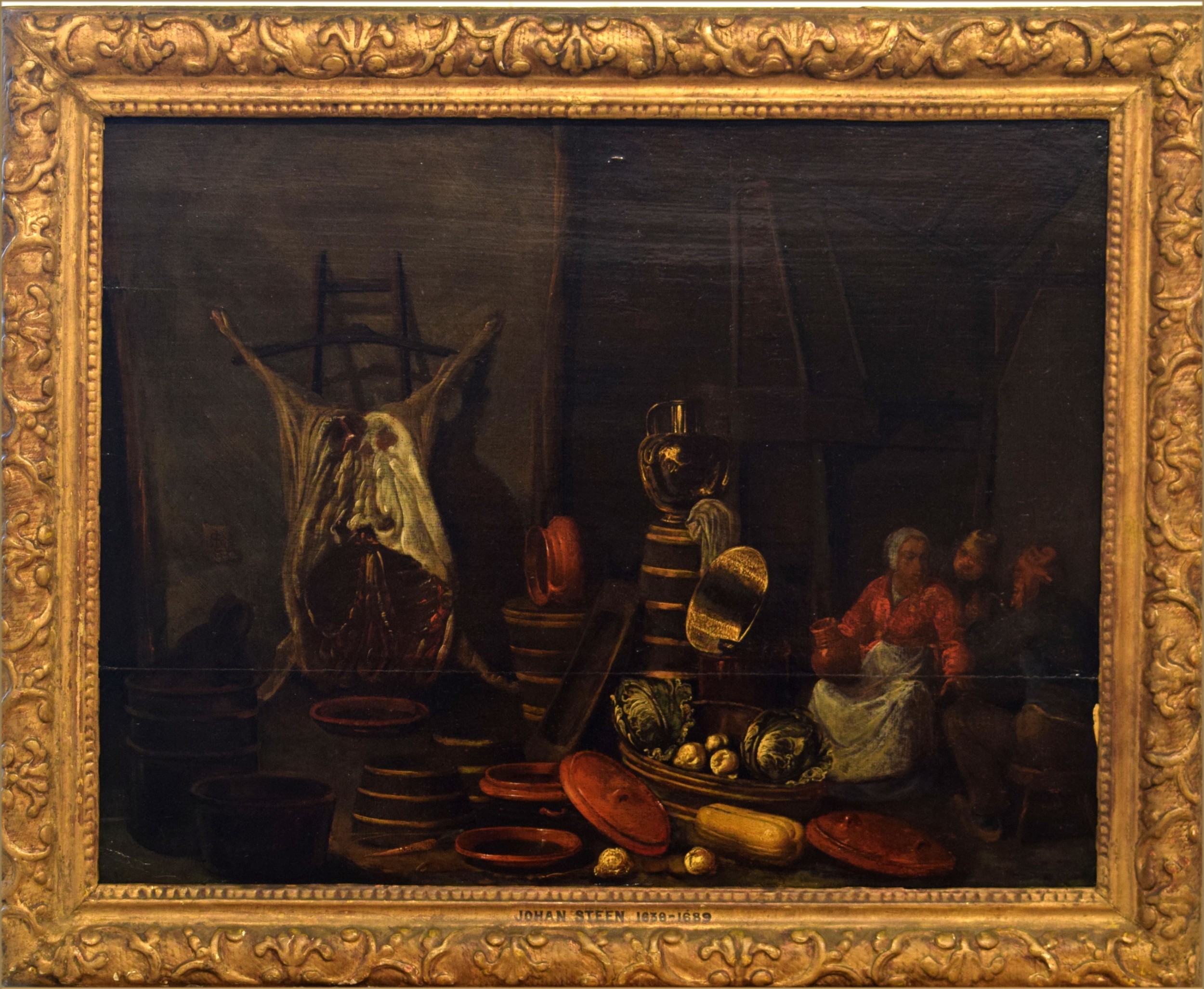
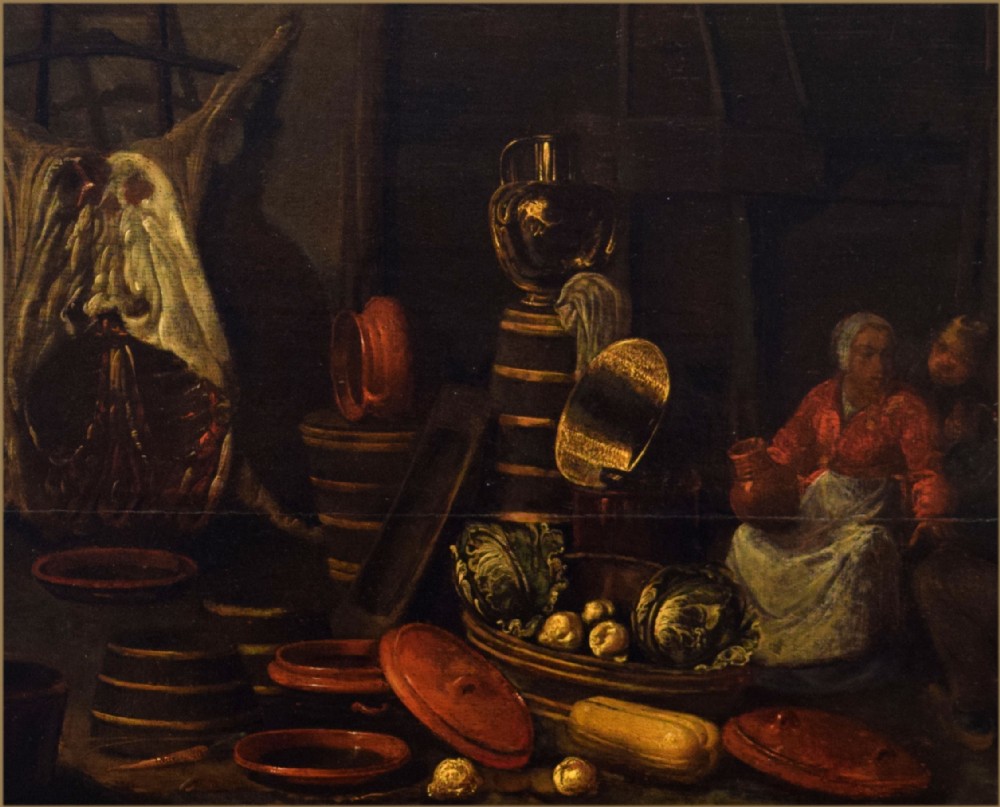
Circle of Jan Steen, 1629 - 1679 Servants Merrymaking in a Kitchen Interior
Artware Fineart
for sale €5,265     $5,715
£4,500

Artware Fineart

Sellingantiques Verified Since Sep 2008
View Dealers Stock Page
Id #SA398445
PDF SHARE
SAVE

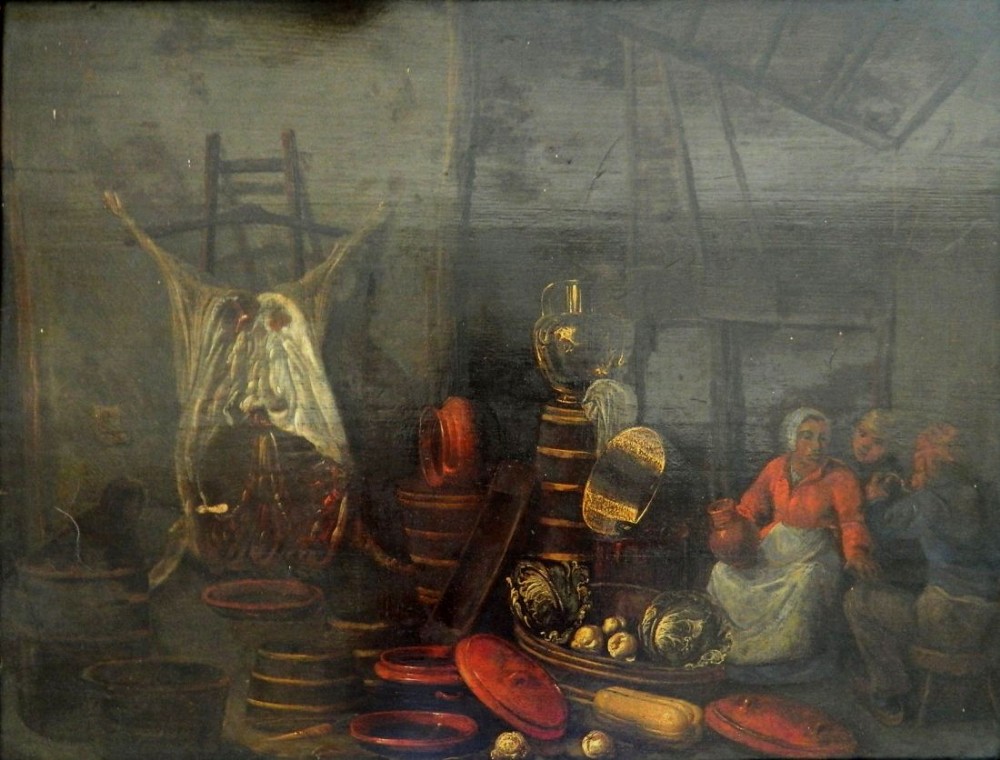
Circle of Jan Steen, 1629 - 1679 Servants Merrymaking in a Kitchen Interior

17th century
For Sale by Artware Fineart
Description

Circle of Jan Steen, 1629 - 1679

Servants Merrymaking in a Kitchen Interior

oil on panel

16 x 20 in. (41 x 51 cm.)

Jan Steen, in full Jan Havickszoon Steen (born c. 1626, Leiden, Netherlands—died February 3, 1679, Leiden), Dutch painter of genre, or everyday, scenes, often lively interiors bearing a moralizing theme.
Steen is unique among leading 17th-century Dutch painters for his humour; he has often been compared to the French comic playwrightMolière, his contemporary, and indeed both men treated life as a vast comedy of manners. Some of the artist’s biblical and classical paintings such asAntony and Cleopatra (1667) may have been inspired by the contemporary stage. His portraits of rhetoricians, such asRhetoricians at a Window (1658–65), attest to his interest in these groups of amateur actors.
Steen was enrolled at the University of Leiden in 1646 and in 1648 was one of the founding members, along with Gabriel Metsu and others, of the Leidenpainters’ Guild of St. Luke. His early teachers seem to have been the historical painter Nicolaus Knupfer at Utrecht, genre and landscape painter Adriaen van Ostade at Haarlem, and the landscapist Jan van Goyen at The Hague. In 1649 Steen married van Goyen’s daughter and settled at The Hague for the next few years. He moved toDelft in 1654 and to Haarlem in 1661. In 1670 he was back in Leiden, and in 1673 he married again.
In Steen’s landscapes, including his winter scenes, small earthy figures recall those of Adriaen and ofIsack van Ostade. In his later works the figures are larger, less crowded, and more individually characterized. He shows them playing cards or the bowling game called skittles, or carousing, as inSkittle Players Outside an Inn (c. 1660). His frequent use of inns probably reflects his own background as the son of a brewer and sometime brewer and tavernkeeper himself. He was a master at capturing subtleties of facial expression, especially in children. His best works display great technical skill, particularly in the handling of colour.
During Steen’s last years, his paintings began to anticipate the Rococo style of the 18th century, becoming increasingly elegant and somewhat less energetic, as in the Serenade (c. 1675), and showing a heavy French influence and an increased flamboyance.

Declaration

Artware Fineart has dated this Dutch Golden Age Oil Painting to the 17th Century.

Reference Numbers
Sellingantiques Reference
SA398445
Dealers Internal Reference
3760
Description
Circle of Jan Steen, 1629 - 1679

Servants Merrymaking in a Kitchen Interior

oil on panel

16 x 20 in. (41 x 51 cm.)

Jan Steen, in full Jan Havickszoon Steen (born c.

1626, Leiden, Netherlands—died February 3, 1679, Leiden), Dutch painter of genre, or everyday, scenes, often lively interiors bearing a moralizing theme.
Artware Fineart
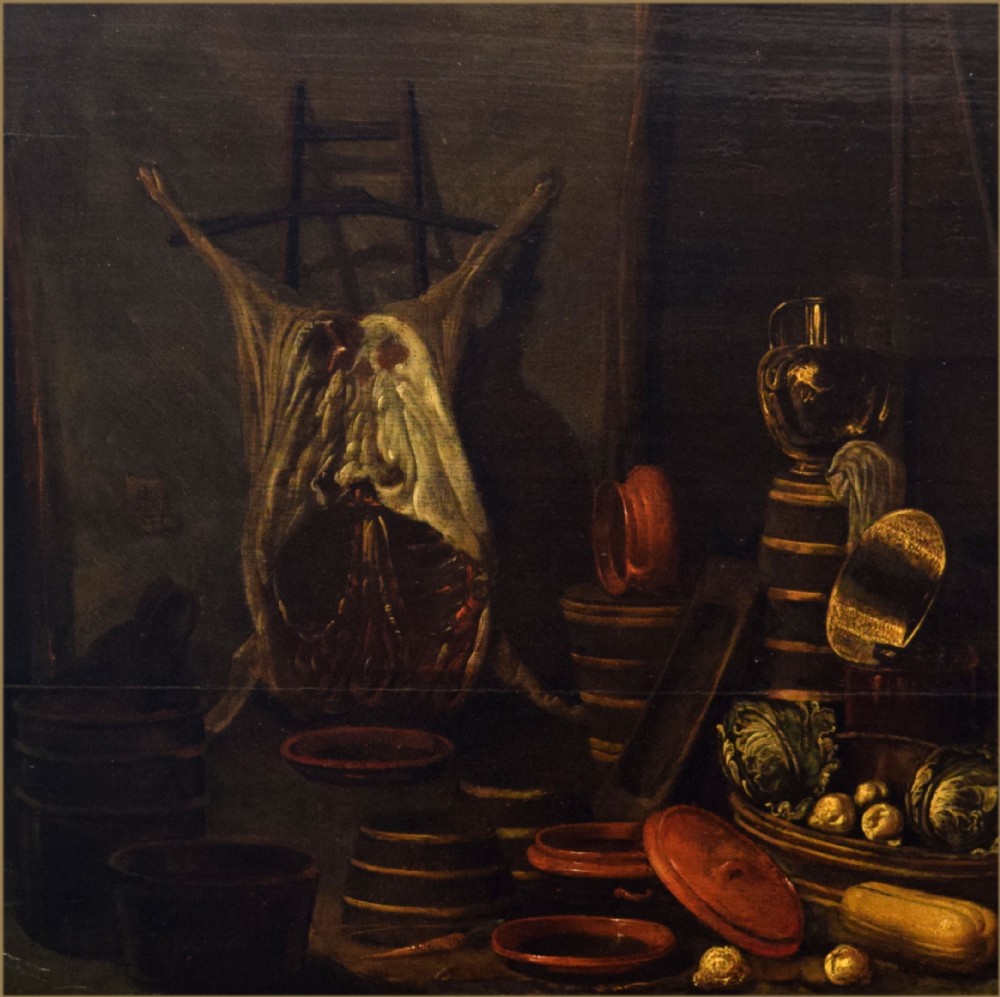
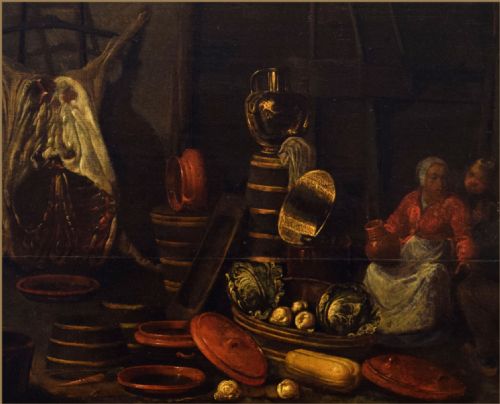
fig 1. A seventeenth-century Dutch Golden Age style oil painting depicting a rustic kitchen interior with figures gathered amongst earthenware pots, copper vessels, and vegetables.
fig 1. Circle of Jan Steen, 1629 - 1679 Servants Merrymaking in a Kitchen Interior

Steen is unique among leading 17th-century Dutch painters for his humour; he has often been compared to the French comic playwrightMolière, his contemporary, and indeed both men treated life as a vast comedy of manners. Some of the artist’s biblical and classical paintings such asAntony and Cleopatra (1667) may have been inspired by the contemporary stage. His portraits of rhetoricians, such asRhetoricians at a Window (1658–65), attest to his interest in these groups of amateur actors.

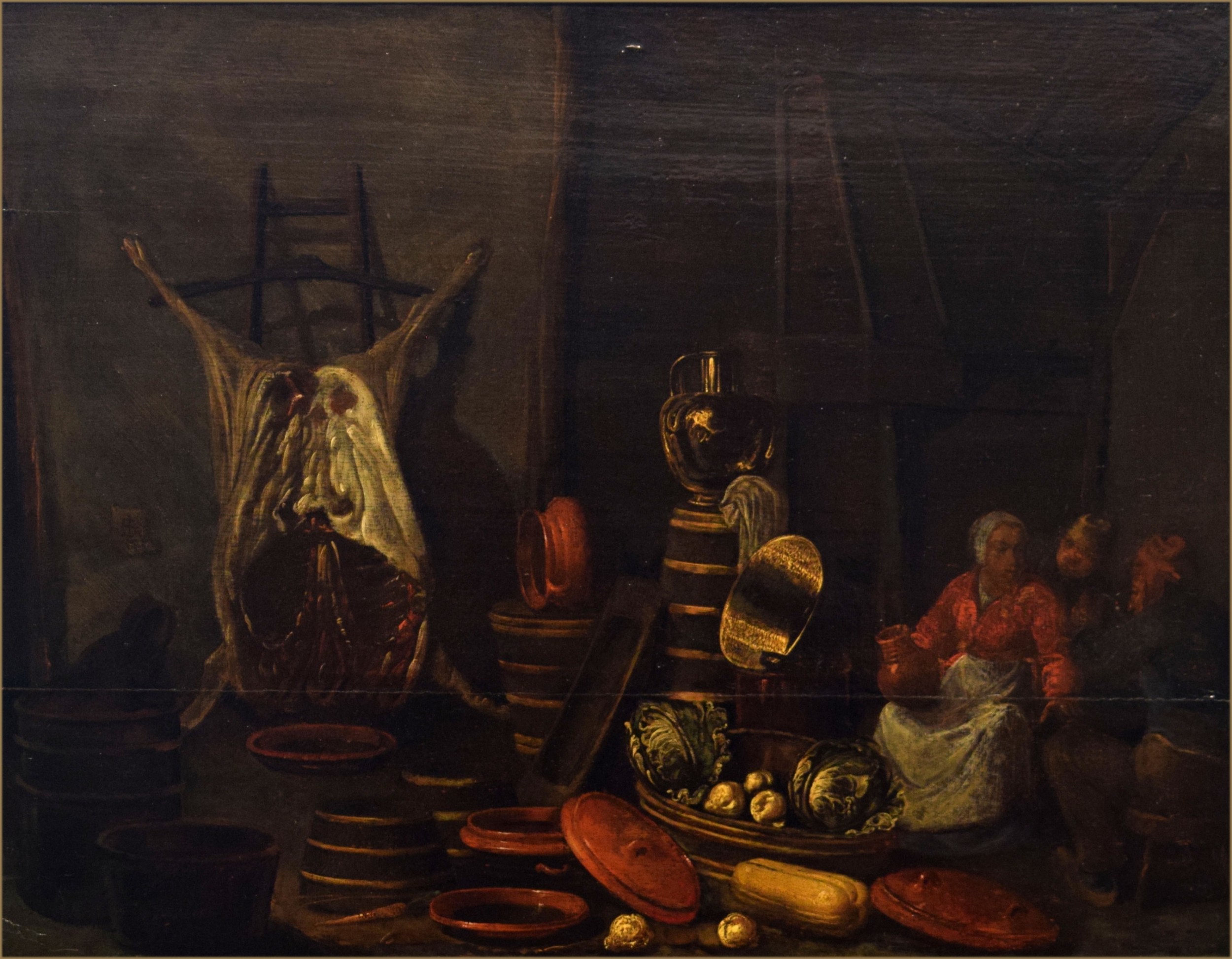
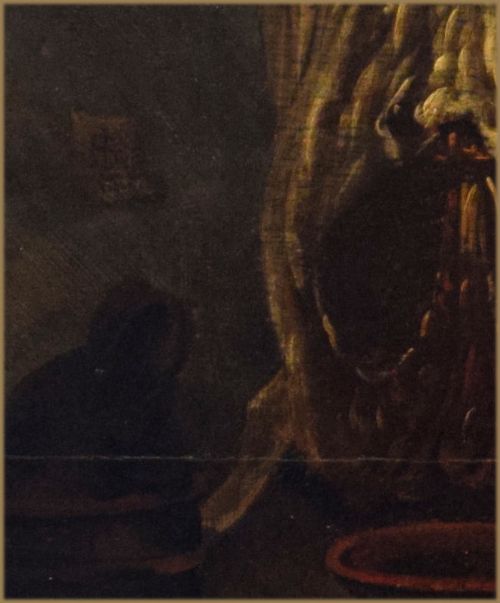
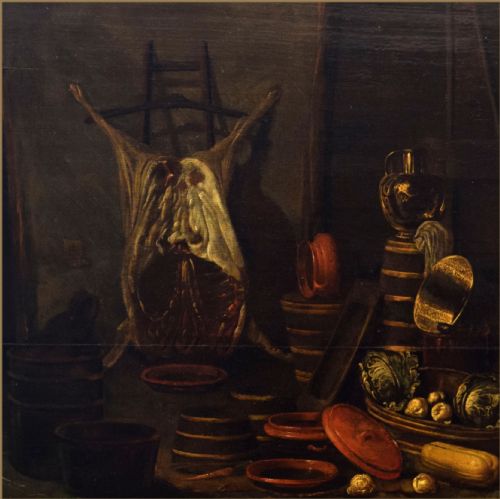
fig 2. A seventeenth-century Dutch Golden Age style oil painting depicting a rustic kitchen interior with figures gathered amongst earthenware pots, copper vessels, and vegetables.
fig 2. Circle of Jan Steen, 1629 - 1679 Servants Merrymaking in a Kitchen Interior

Steen was enrolled at the University of Leiden in 1646 and in 1648 was one of the founding members, along with Gabriel Metsu and others, of the Leidenpainters’ Guild of St. Luke. His early teachers seem to have been the historical painter Nicolaus Knupfer at Utrecht, genre and landscape painter Adriaen van Ostade at Haarlem, and the landscapist Jan van Goyen at The Hague. In 1649 Steen married van Goyen’s daughter and settled at The Hague for the next few years. He moved toDelft in 1654 and to Haarlem in 1661. In 1670 he was back in Leiden, and in 1673 he married again.

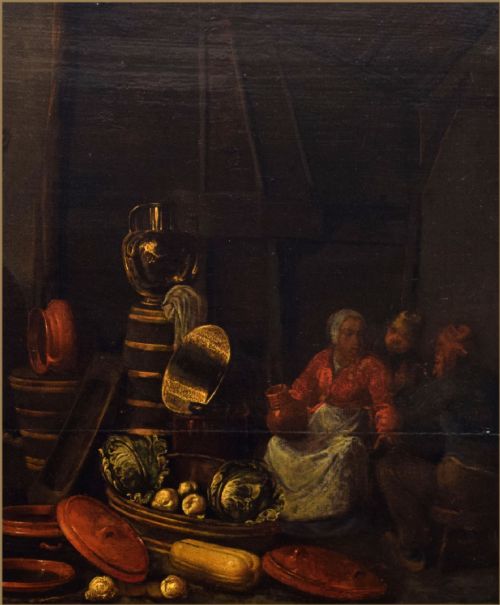
fig 3. A seventeenth-century Dutch Golden Age style oil painting depicting a rustic kitchen interior with figures gathered amongst earthenware pots, copper vessels, and vegetables.
fig 3. Circle of Jan Steen, 1629 - 1679 Servants Merrymaking in a Kitchen Interior

In Steen’s landscapes, including his winter scenes, small earthy figures recall those of Adriaen and ofIsack van Ostade. In his later works the figures are larger, less crowded, and more individually characterized. He shows them playing cards or the bowling game called skittles, or carousing, as inSkittle Players Outside an Inn (c. 1660). His frequent use of inns probably reflects his own background as the son of a brewer and sometime brewer and tavernkeeper himself. He was a master at capturing subtleties of facial expression, especially in children. His best works display great technical skill, particularly in the handling of colour.

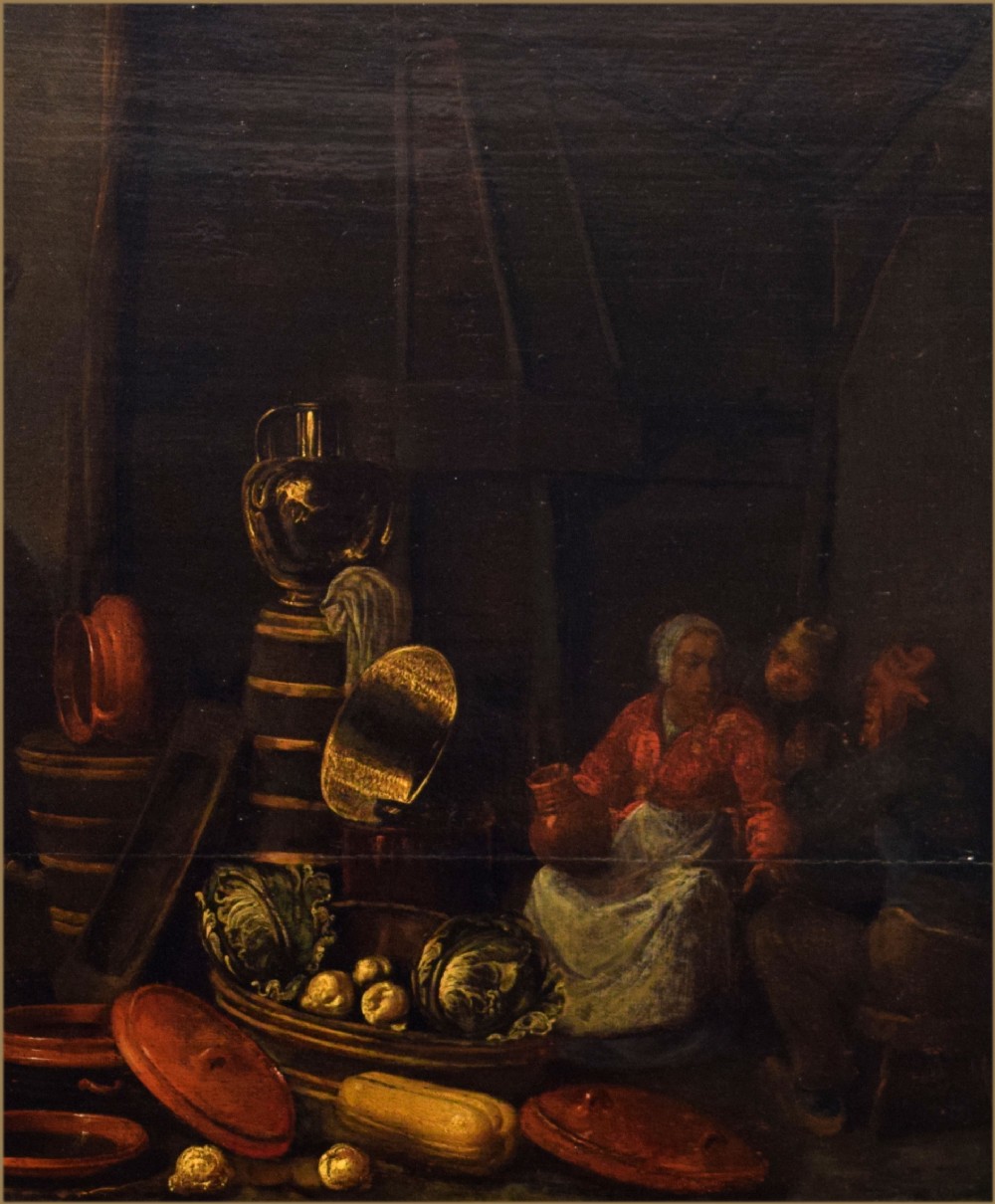
fig 4. A seventeenth-century Dutch Golden Age style oil painting depicting a rustic kitchen interior with figures gathered amongst earthenware pots, copper vessels, and vegetables.
fig 4. Circle of Jan Steen, 1629 - 1679 Servants Merrymaking in a Kitchen Interior

During Steen’s last years, his paintings began to anticipate the Rococo style of the 18th century, becoming increasingly elegant and somewhat less energetic, as in the Serenade (c. 1675), and showing a heavy French influence and an increased flamboyance.

Date of Manufacture

Artware Fineart has dated this Dutch Golden Age Oil Painting to the 17th Century.

Reference Numbers
Sellingantiques Ref
SA398445
Dealers Internal Ref
3760
Artware Fineart
Sellingantiques verified Since Sep 2008
Dealer Profile

You can view the stock and full dealer information on the Artware Fineart Profile Page
PDF SHARE
SAVE
A seventeenth-century Dutch Golden Age style oil painting depicting a rustic kitchen interior with figures gathered amongst earthenware pots, copper vessels, and vegetables.
1 / 8
Archive I A seventeenth-century Dutch Golden Age style oil painting depicting a rustic kitchen interior with figures gathered amongst earthenware pots, copper vessels, and vegetables.

Circle of Jan Steen, 1629 - 1679 Servants Merrymaking in a Kitchen Interior
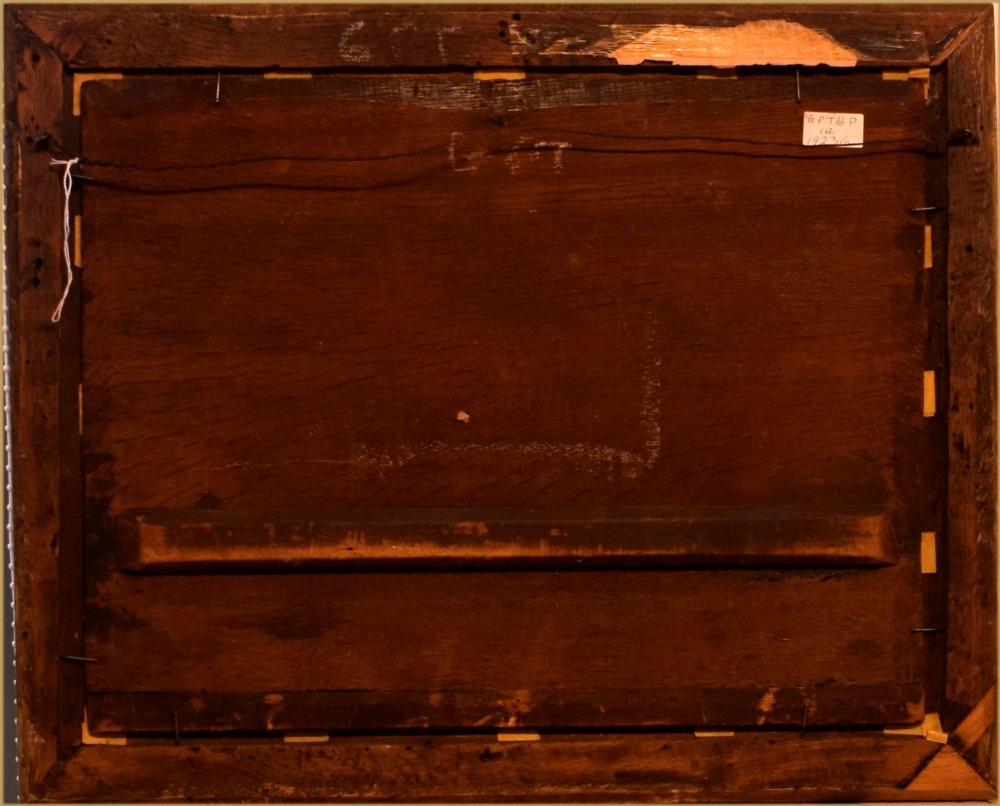
Archive II A seventeenth-century Dutch Golden Age style oil painting depicting a rustic kitchen interior with figures gathered amongst earthenware pots, copper vessels, and vegetables. View II
Archive III A seventeenth-century Dutch Golden Age style oil painting depicting a rustic kitchen interior with figures gathered amongst earthenware pots, copper vessels, and vegetables. View III
Archive IV A seventeenth-century Dutch Golden Age style oil painting depicting a rustic kitchen interior with figures gathered amongst earthenware pots, copper vessels, and vegetables. View IV
Archive V A seventeenth-century Dutch Golden Age style oil painting depicting a rustic kitchen interior with figures gathered amongst earthenware pots, copper vessels, and vegetables. View V
Archive VI A seventeenth-century Dutch Golden Age style oil painting depicting a rustic kitchen interior with figures gathered amongst earthenware pots, copper vessels, and vegetables. View VI
Archive VII A seventeenth-century Dutch Golden Age style oil painting depicting a rustic kitchen interior with figures gathered amongst earthenware pots, copper vessels, and vegetables. View VII
Archive VIII A seventeenth-century Dutch Golden Age style oil painting depicting a rustic kitchen interior with figures gathered amongst earthenware pots, copper vessels, and vegetables. View VIII
FURTHER BROWSING

Visitors also looked at these ⇣

Enlarged Archival View
Telephone 07958 699 645
Location
18 La Gare
51 Surrey Row
London
SE1 0BZ
United Kingdom
Verified Since Sep 2008
Items For Sale 243
Items Sold 223
Artware Fineart
Verified Since Sep 2008
View Dealer Info
Location: 18 La Gare , 51 Surrey Row , London , SE1 0BZ , United Kingdom
Verified
Sep 2008
For Sale
243
Sold
223
A seventeenth-century Dutch Golden Age style oil painting depicting a rustic kitchen interior with figures gathered amongst earthenware pots, copper vessels, and vegetables.
Circle of Jan Steen, 1629 - 1679 Servants Merrymaking in a Kitchen Interior
Ref: SA398445
A seventeenth-century Dutch Golden Age style oil painting depicting a rustic kitchen interior with figures gathered amongst earthenware pots, copper vessels, and vegetables.
Detail View 1
Detail View 2
Detail View 3
Detail View 4
Detail View 5
Detail View 6
Detail View 7
Archival Detail
Every single antique dealer on our platform is individually approved by our internal team. We verify their professional trade history, ethical standards, and photographic quality to ensure a secure, high-standard buying environment. Upon joining, every dealer agrees to a strict 9-point code of conduct. While issues can occasionally arise, our dealers typically resolve them swiftly and directly with the buyer. In fact, since our founding in 2002, Sellingantiques has only had to step in to help resolve an issue on roughly five occasions—a true testament to the quality of our dealers and their dedication to your happiness.
Our dealers are highly experienced in packing and shipping fragile, high-value antiques. Because you are in direct contact with the dealer, you will be able to easily go through all available shipping and insurance options together to ensure your item arrives safely.
Antiques are the ultimate green purchase. By choosing historical pieces over newly manufactured goods, you completely eliminate the carbon footprint of modern mass production while preserving exceptional, timeless craftsmanship.

Dutch Golden Age genre paintings typically depict everyday scenes of domestic life, taverns, and kitchens, focusing on lower or middle-class subjects. Popularised in the seventeenth century, these works often combine realistic detail with symbolic still-life elements and dramatic lighting techniques.

Artists during this period primarily executed works using oil pigments bound with linseed or walnut oil on oak wood panels or linen canvas ground with natural gesso. Pigments were ground from natural minerals, earth oxides, and organic sources.

Authentic works from this era display specific craquelure patterns in the paint layer, natural wood grain or canvas weave consistent with historical preparation, and hand-applied gesso layers. Examination under ultraviolet light often reveals historic restorations and aged varnish layer oxidisation.

Frame the artwork in a simple dark wood or gilded frame to bridge historical and modern aesthetics. Position the piece above a sideboard or console table with accent lighting to highlight the deeper tonal variations within the canvas.

Keep the canvas in a climate-controlled room away from direct sunlight, excess moisture, and direct heat sources. Surface dust should only be removed using a dry, soft camel-hair brush, avoiding moisture or commercial cleaning solvents.
items
Add keywords to the filter
Price
£100
£250000
Era
Movements
Material
Origin
Stock Location
Freshness
Online Payments
Categories