

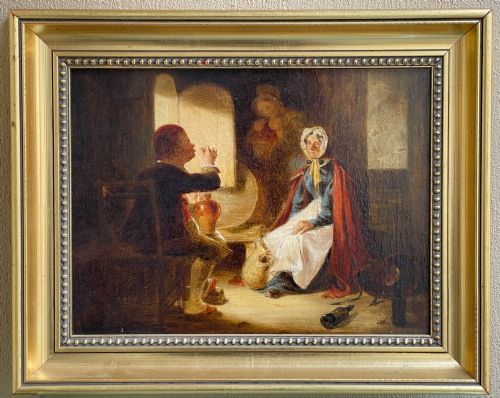


Dutch Genre Scene Painting
Dutch genre scene painting captures everyday life through intimate interior and tavern moments that remain deeply compelling to collectors.
Dutch Genre Scene Painting
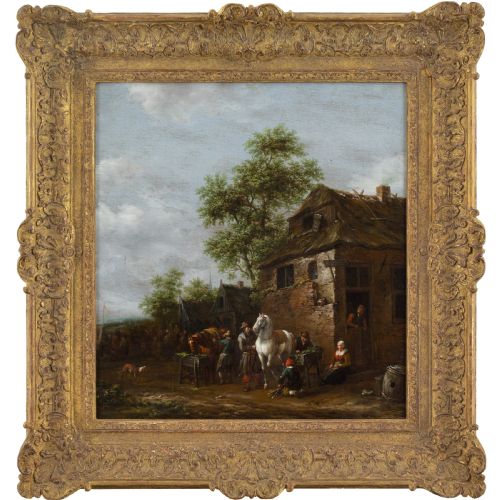
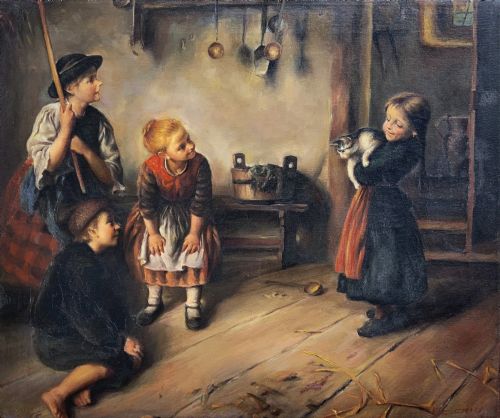
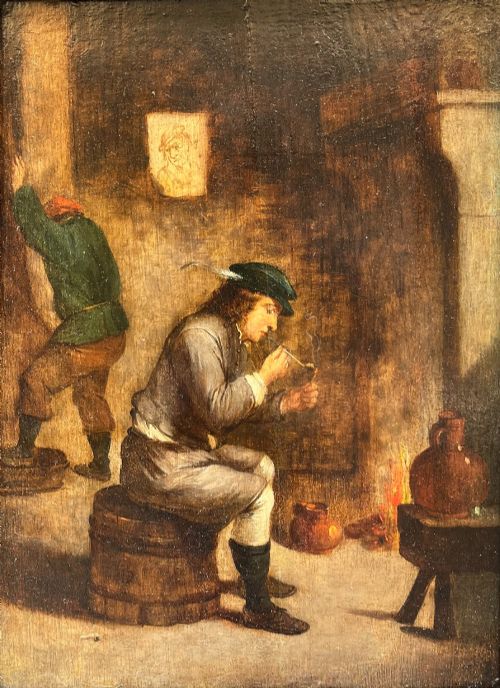
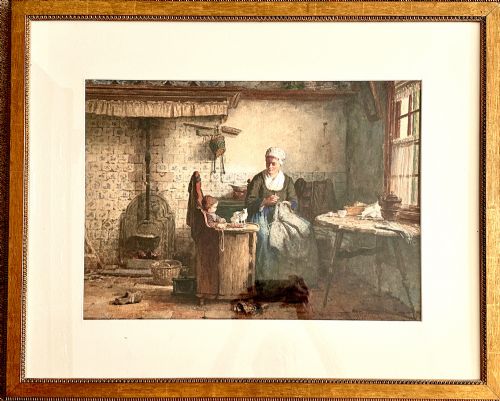
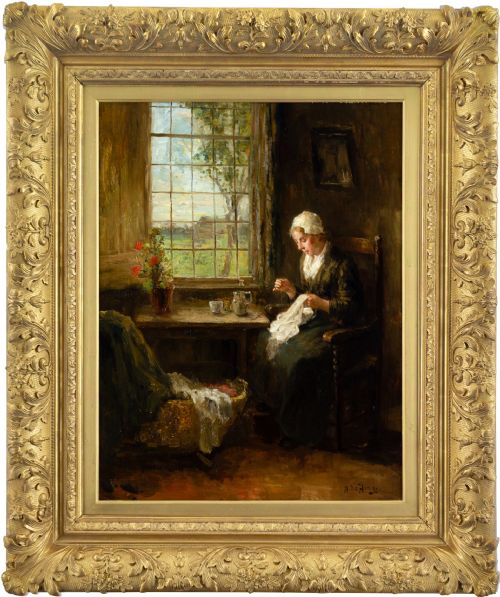
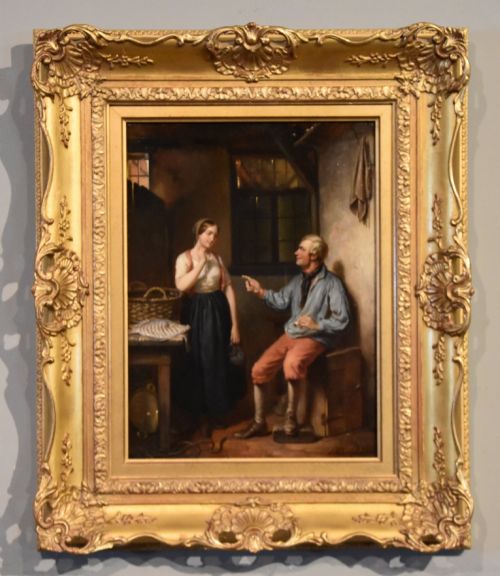
A Dutch genre scene painting portrays domestic interiors, tavern gatherings, and daily labour rather than grand historical or religious subjects. You will find works spanning the seventeenth century up to the mid-twentieth century, including later copies and works in the manner of earlier masters.
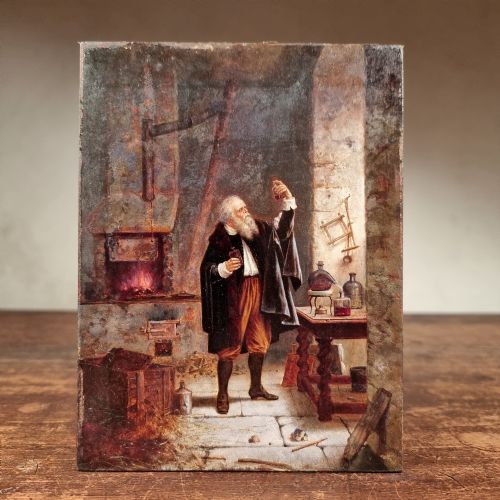
The pieces on this page range from small seventeenth-century panels to nineteenth-century watercolours and oils on canvas. Many reflect the enduring influence of the Dutch Golden Age, showing peasants, children, and domestic workers engaged in ordinary tasks.
Common formats include oil on canvas and oil on wood panel, framed in periods spanning from ornate giltwood to simpler traditional mouldings. Subjects often feature tavern interiors, hearth scenes, and quiet domestic moments captured by artists working in the Dutch and Flemish traditions.
Materials and construction
These works are executed primarily in oil paint on canvas or prepared wood panels, though watercolours on paper also appear. Panels of oak provide a rigid and durable support for many of the earlier compositions.
Frames utilise materials such as gesso, gold leaf, and giltwood to complement the rich tones of the oil paintings. Pigments are applied with varying brushwork, from the tight, detailed finish of the Golden Age style to the looser realism of the nineteenth century.
Among the domestic interiors and tavern scenes, one Dutch canvas captures the quiet charm of a dog receiving its dinner by the hearth.
Judging quality in genre works
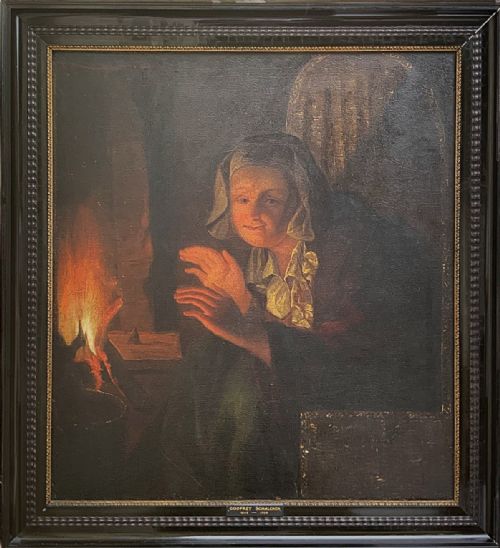
Quality rests in the handling of light and shadow, particularly in interior scenes where illumination emanates from a single hearth or window. The finesse of the brushwork in rendering facial expressions and textiles separates masterworks from routine studio copies.
The condition of the support, whether canvas or oak panel, and the preservation of the original pigment layer determine the integrity of the piece. Superior examples retain their original depth and tonal contrast without heavy overpainting.
David Teniers·Hendrik Valkenberg·Bernard De Hoog·Jacob Akkersdijk·Godfried Schalcken·Quirijn Van Brekelenkamp·Ludolf de Jongh·Madeline Hughes·Willem Johannes Martens·Reinier de la Haye·Jan Steen
The Dutch Genre Scene Painting Glossary
- Genre painting
- A depiction of everyday subjects, ordinary people, and domestic scenes rather than heroic narratives. These works document the daily habits and social life of past centuries.
- Oil on panel
- A painting executed on a wooden board, commonly oak in northern European works. This rigid support offers stability and a smooth surface for detailed brushwork.
- Dutch School
- A grouping of artists sharing stylistic traditions originating in the Netherlands during the seventeenth century. Later painters often worked in the manner of this established school.
- Giltwood
- Wood carved and covered with a thin layer of gold leaf or metallic powder. It is frequently found on the traditional frames housing these historic paintings.
- Manner of
- A term indicating a work created in the style of a specific master without being an original production by that artist. It reflects the strong emulation of historical techniques.
Dutch Genre Scene Painting: Frequently Asked Questions
What is a Dutch genre scene painting?
It is an artwork depicting ordinary people in everyday settings, such as domestic interiors, kitchens, or taverns. These pieces focus on the daily routines and social habits of ordinary life.
The style developed significantly during the Dutch Golden Age and continued to inspire artists across subsequent centuries who painted domestic scenes and rural life.
How can I tell an old panel from a modern one?
Examination of the wood grain, preparation layers, and framing edges reveals the age of the support. Oak panels from earlier centuries show distinct ageing and construction methods.
Experts look at the interaction of the oil paint with the ground layer to determine whether a panel belongs to the seventeenth or eighteenth century.
Where should I hang a genre painting?
These works suit traditional reception rooms, studies, or hallways where their intimate scale can be appreciated up close. They pair well with period interiors and wooden furniture.
Avoid placing them in direct sunlight or damp environments to protect the oil paint and giltwood frames from degradation.
What does after an artist mean?
The designation indicates that the painting is a later copy or a tribute executed in the style of a recognised master. It allows collectors to own works that capture the aesthetic of famous painters.
Such pieces often date from the nineteenth century when the demand for seventeenth-century Dutch styles was particularly strong.