59,277  PAGES BROWSED TODAY PAGES TODAY • 243 ANTIQUES UPLOADED TODAYNEW ARRIVALS
GIFTS
243 ITEMS ADDED TODAY
Sort Order
Items Per Page
Browse Categories
Sort order
Relevant Links
Items per page
ID #SA1245928
FOR SALE
£8,250
Email Phone
Save
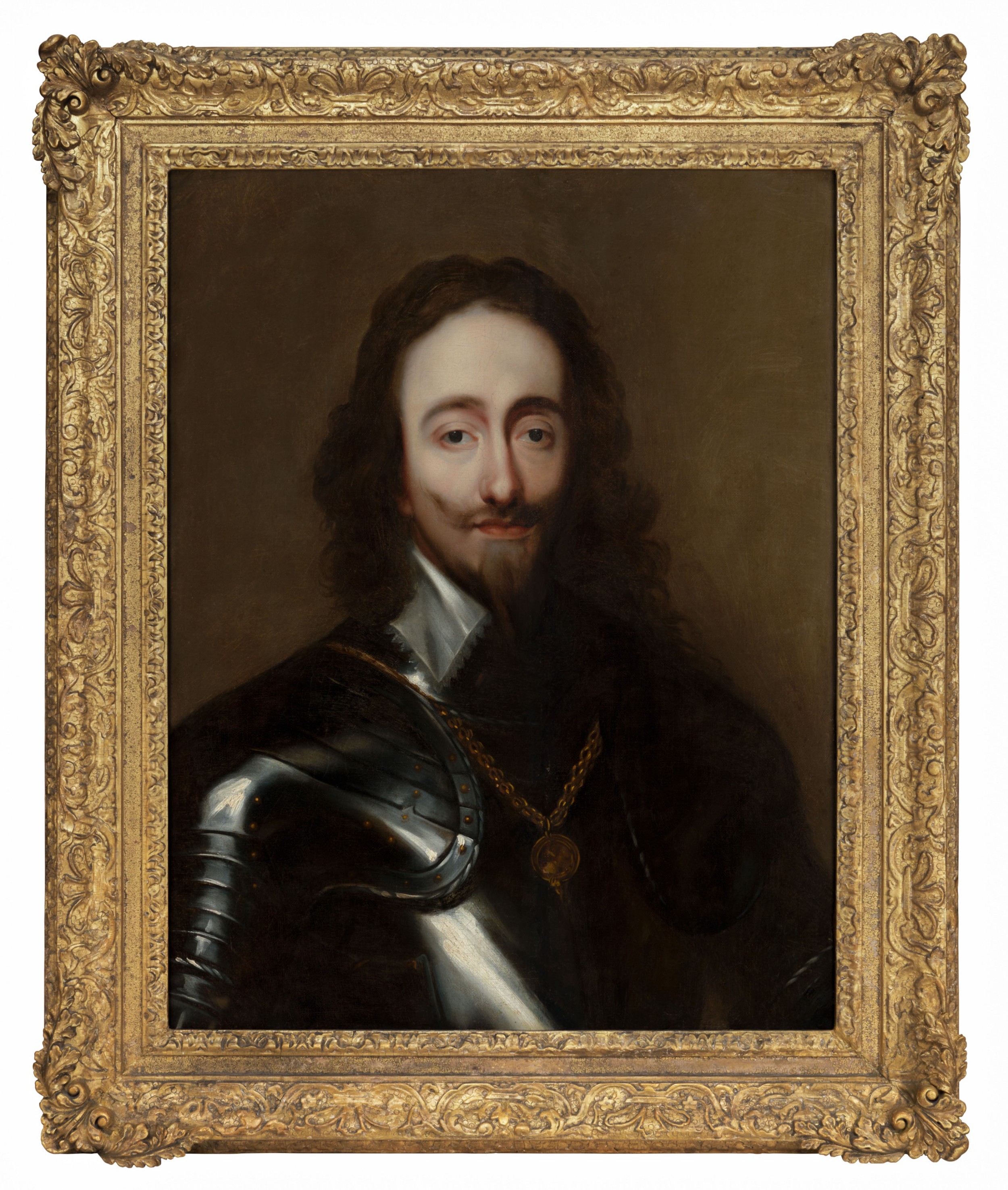
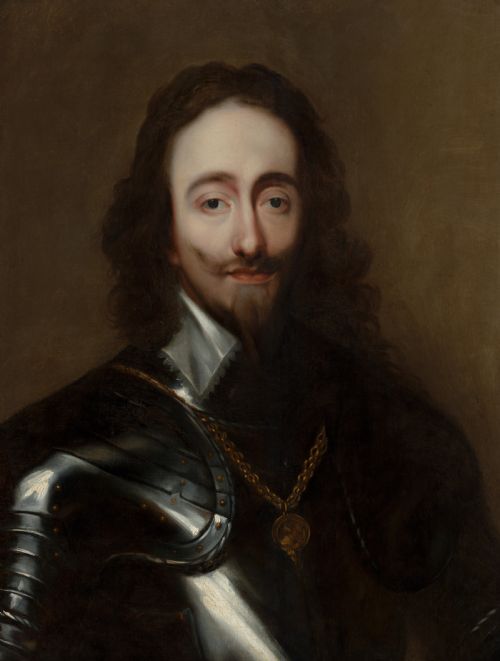
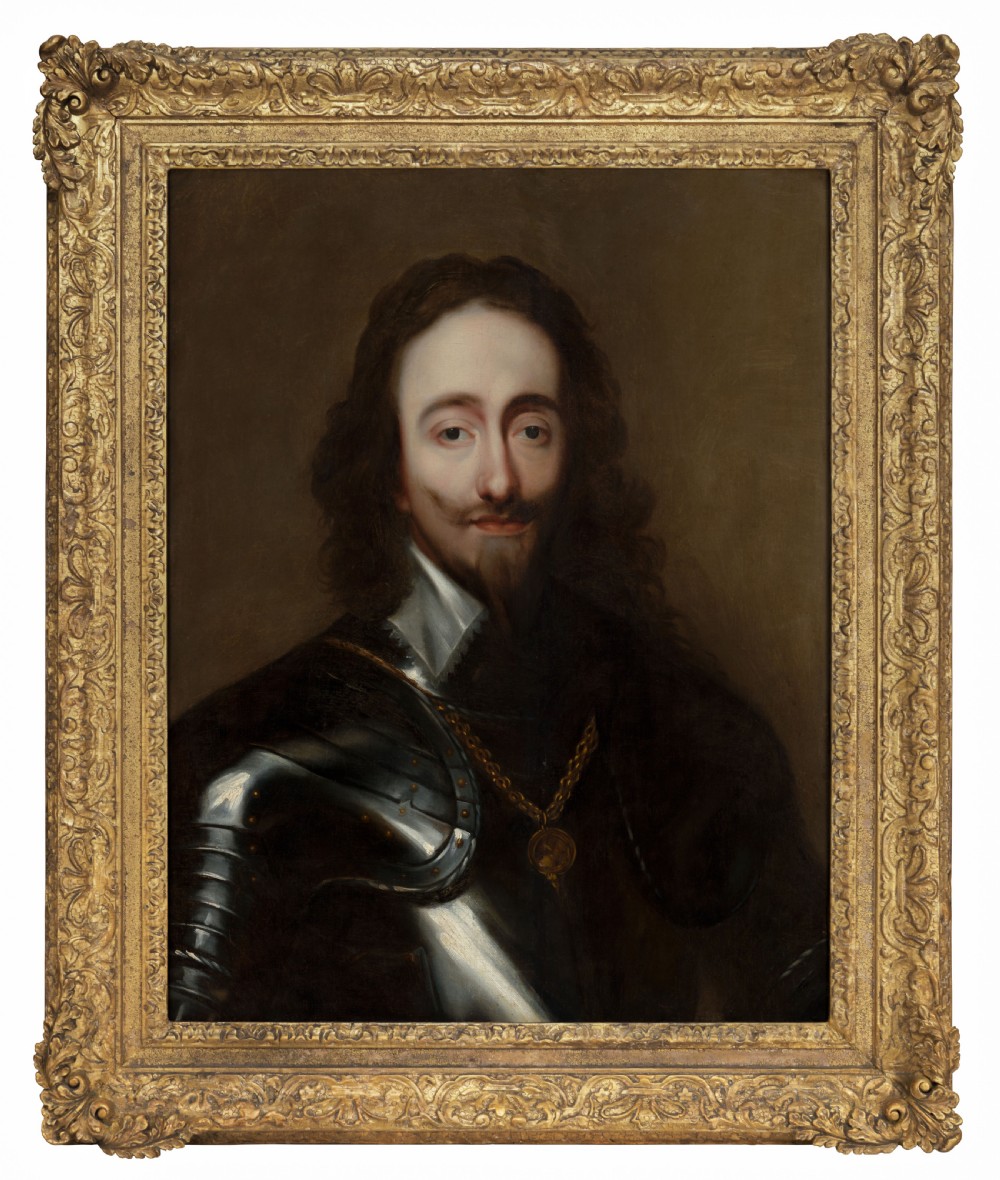
Portrait of a Gentleman, King Charles I (1600–1649), in Armour, After Sir Anthony Van Dyck (1599–1641); Anglo-flemish School C.1670–1720
For sale by Titan Fine Art
for sale €9,653     $10,478
£8,250
Titan Fine Art

Titan Fine Art

Sellingantiques Verified Since Jul 2016
Browse dealers 20 items
  • About Us
    Specialist in 17th & 18thc portraits. Highly curated selection, museum-level research & pro conservation. Exceptional art, expertly vetted.
Id #SA1245928
PDF SHARE
SAVE

Portrait of a Gentleman, King Charles I (1600–1649), in Armour, After Sir Anthony Van Dyck (1599–1641); Anglo-flemish School C.1670–1720

17th century
For Sale by Titan Fine Art
Description

This handsome and unusually intimate image of King Charles I brings one of Sir Anthony van Dyck’s most commanding royal inventions into a scale ideally suited to private display. Against a restrained brown background, the King emerges with remarkable immediacy: his pale face framed by luxuriant dark hair, his polished armour catching flashes of silvery light, and the gold chain and badge of the Order of the Garter providing the principal note of splendour. Stripped of the architectural and ceremonial apparatus found in many royal portraits, the composition concentrates instead upon the qualities that made Van Dyck’s image of Charles so memorable — refinement, chivalric authority and an almost melancholy elegance. The present painting is particularly interesting because the accumulated visual and comparative evidence points not towards a much later historicist copy, but probably to the later seventeenth century, when memories of Charles I, the Civil Wars and the restored Stuart monarchy remained powerfully alive.

The composition derives from Van Dyck’s celebrated portrait of Charles I preserved in the collection of the Duke of Norfolk at Arundel Castle, a work generally dated to about 1635–36.

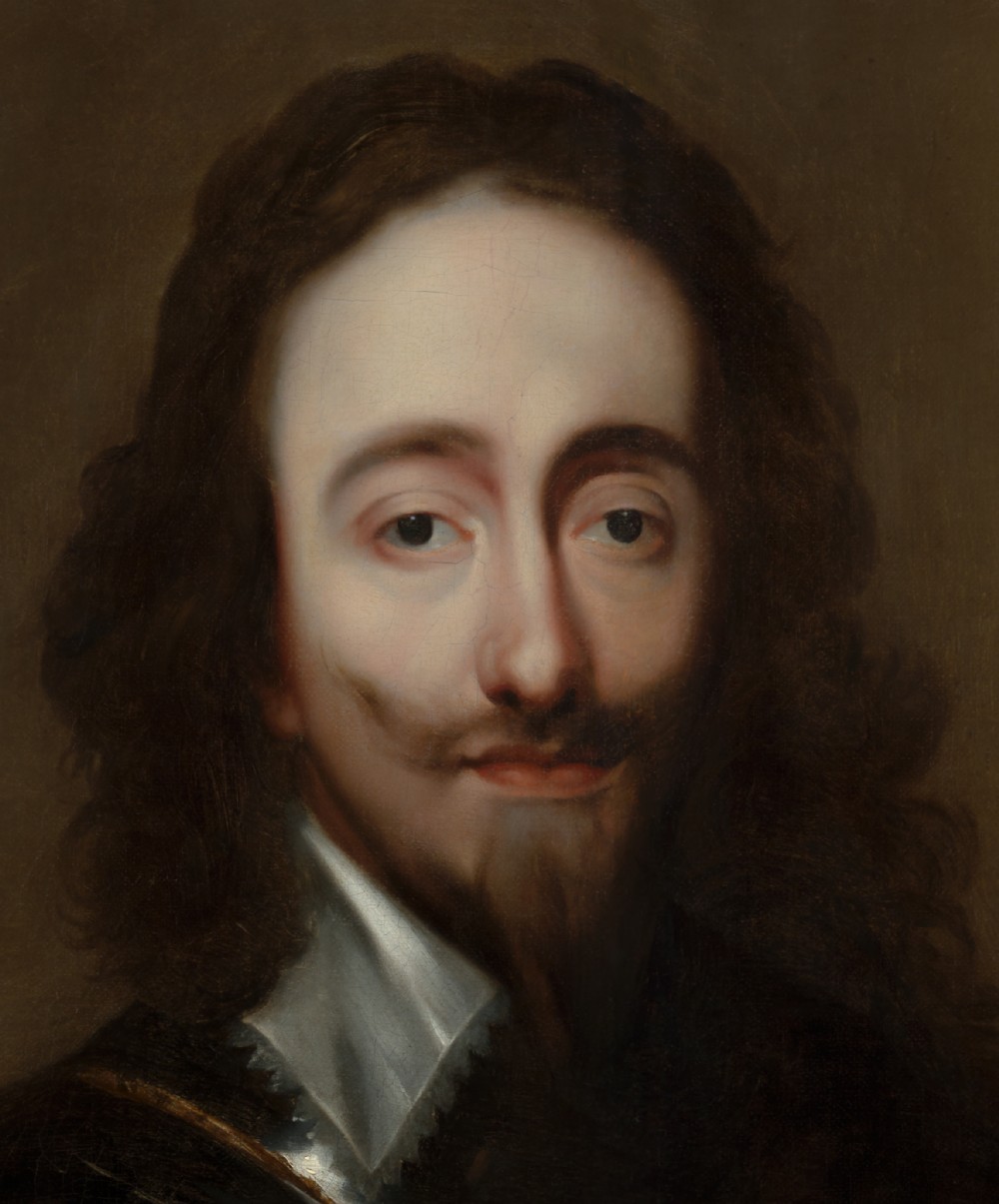
Charles is shown almost frontally, his head turning only slightly while his eyes look quietly to one side. This subtle displacement is crucial to the portrait’s effect: it prevents the image from becoming rigidly heraldic and gives the sitter an unexpectedly introspective quality. A gold chain crosses the breast and supports the insignia of the Order of the Garter, whose badge — the Lesser George — represents St George overcoming the dragon. Charles was Sovereign of the Order, and its insignia was more than decoration: it identified him with the ancient chivalric traditions of English monarchy.

The prototype of the present portrait was created during the most outwardly magnificent, but politically dangerous, years of Charles’s reign. On 30 January 1649 he was executed outside the Banqueting House at Whitehall. The execution also helps explain why portraits such as the present work continued to be produced. During Charles’s lifetime important royal likenesses were necessarily replicated. Portraits were instruments of government, diplomacy, dynastic identity and patronage; approved images were required for royal residences, aristocratic houses, ambassadors and foreign courts. A successful composition by Van Dyck could therefore generate studio repetitions, independent copies and engravings while the original sitter was still alive. Professional copyists formed an important part of this visual economy. Henry Stone, for example, is specifically recorded as a portrait painter and copyist who frequently copied Van Dyck, while the Flemish-born Remigius van Leemput produced reduced copies of important royal pictures; his celebrated 1667 copy of Holbein’s Whitehall mural was made for Charles II and preserved a composition subsequently destroyed in the Whitehall fire.

After 1649, however, the meaning of such copies altered. Charles’s death generated an extraordinarily powerful culture of commemoration.

The portrait is presented in a substantial carved and gilded wood frame of Baroque character, enriched with dense scrolling foliage, floral and shell-like ornament, pronounced corner elements and a narrow leaf-moulded sight edge.

What makes this picture particularly appealing is the unusual combination of historical importance, manageable scale and visual authority. More than three centuries after it was probably painted, the portrait still performs the function for which such images were created: it makes the absent king vividly present. It combines the romance of the Caroline court, the tragedy of the Civil War and regicide, the culture of Royalist remembrance and the enduring prestige of Van Dyck’s portraiture in a single highly

Date of Manufacture

Titan Fine Art has dated this King Charles I Portrait to the 17th Century.
Physical Dimensions
Height
89cm (35.04")
Width
73cm (28.74")
Depth
6cm (2.36")
Reference Numbers
Sellingantiques Reference
SA1245928
Dealers Notes

Much more info about this item at: www.titanfineart.com

In a market saturated with available paintings, Titan Fine Art offers a specially curated selection. Each piece is meticulously chosen based on technical merit, provenance, and decorative appeal, professionally conserved and researched, ensuring our clients view only the finest examples of British and European art.

With over 20 years of expertise and 1,000+ works placed with collectors and institutions, we are one of the most prolific specialists in 17th and 18th-century portraiture. We combine a scholarly approach with museum-level rigor to replace the uncertainty of the open market with absolute confidence.

Why Buy From Titan Fine Art?

• Expertly Curated Selection

We act as your expert eye, selecting only high-quality works that offer genuine historical and artistic value.

• Museum-Level Research

Each portrait is supported by extensive academic research, often exceeding 40 hours, to establish attribution, sitter identity, and historical context.

• Professional Conservation

All paintings are carefully cleaned and stabilised by professional conservators, and are presented ready to hang.

• Transparent Pricing

No buyer’s premium or hidden fees—unlike auction houses, where additional costs can add 25–35%.

• Export Pricing Advantage

Reduced pricing is available for works exported outside the UK.

• Specialist Global Shipping

We manage the entire process, including custom crating, export documentation, and fully tracked delivery worldwide.

• Buy with Confidence

A 7-day return policy and the option to pay in GBP, USD, or EUR for convenience and transparency.

• Original Period Frames

Many works retain their original carved and gilded frames, which are works of art in their own right and enhance both historical authenticity and decorative impact.

• Personal Advisory Service

We work directly with collectors and interior designers, offering guidance on selection, scale, and placement—including bespoke room mock-ups on request.

Subscribe to our monthly 'new item alert' to be the first to hear about new works

Description
This handsome and unusually intimate image of King Charles I brings one of Sir Anthony van Dyck’s most commanding royal inventions into a scale ideally suited to private display. Against a restrained brown background, the King emerges with remarkable immediacy: his pale face framed by luxuriant dark hair, his polished armour catching flashes of silvery light, and the gold chain and badge of the Order of the Garter providing the principal note of splendour. Stripped of the architectural and ceremonial apparatus found in many royal portraits, the composition concentrates instead upon the qualities that made Van Dyck’s image of Charles so memorable — refinement, chivalric authority and an almost melancholy elegance. The present painting is particularly interesting because the accumulated visual and comparative evidence points not towards a much later historicist copy, but probably to the later seventeenth century, when memories of Charles I, the Civil Wars and the restored Stuart monarchy remained powerfully alive.
“
The composition derives from Van Dyck’s celebrated portrait of Charles I preserved in the collection of the Duke of Norfolk at Arundel Castle, a work generally dated to about 1635–36.
Titan Fine Art
fig 1. An oil portrait of King Charles I depicted in steel armour with a white collar, presented inside a carved gilded frame.
fig 1. Portrait of a Gentleman, King Charles I (1600–1649), in Armour, After Sir Anthony Van Dyck (1599–1641); Anglo-flemish School C.1670–1720

Charles is shown almost frontally, his head turning only slightly while his eyes look quietly to one side. This subtle displacement is crucial to the portrait’s effect: it prevents the image from becoming rigidly heraldic and gives the sitter an unexpectedly introspective quality. A gold chain crosses the breast and supports the insignia of the Order of the Garter, whose badge — the Lesser George — represents St George overcoming the dragon. Charles was Sovereign of the Order, and its insignia was more than decoration: it identified him with the ancient chivalric traditions of English monarchy.
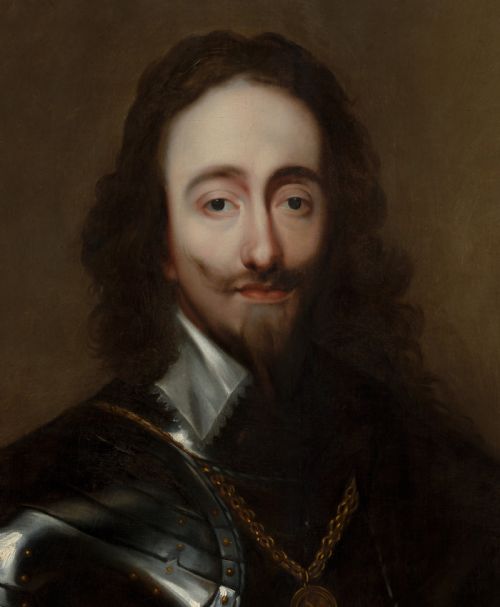
fig 2. An oil portrait of King Charles I depicted in steel armour with a white collar, presented inside a carved gilded frame.
fig 2. Portrait of a Gentleman, King Charles I (1600–1649), in Armour, After Sir Anthony Van Dyck (1599–1641); Anglo-flemish School C.1670–1720

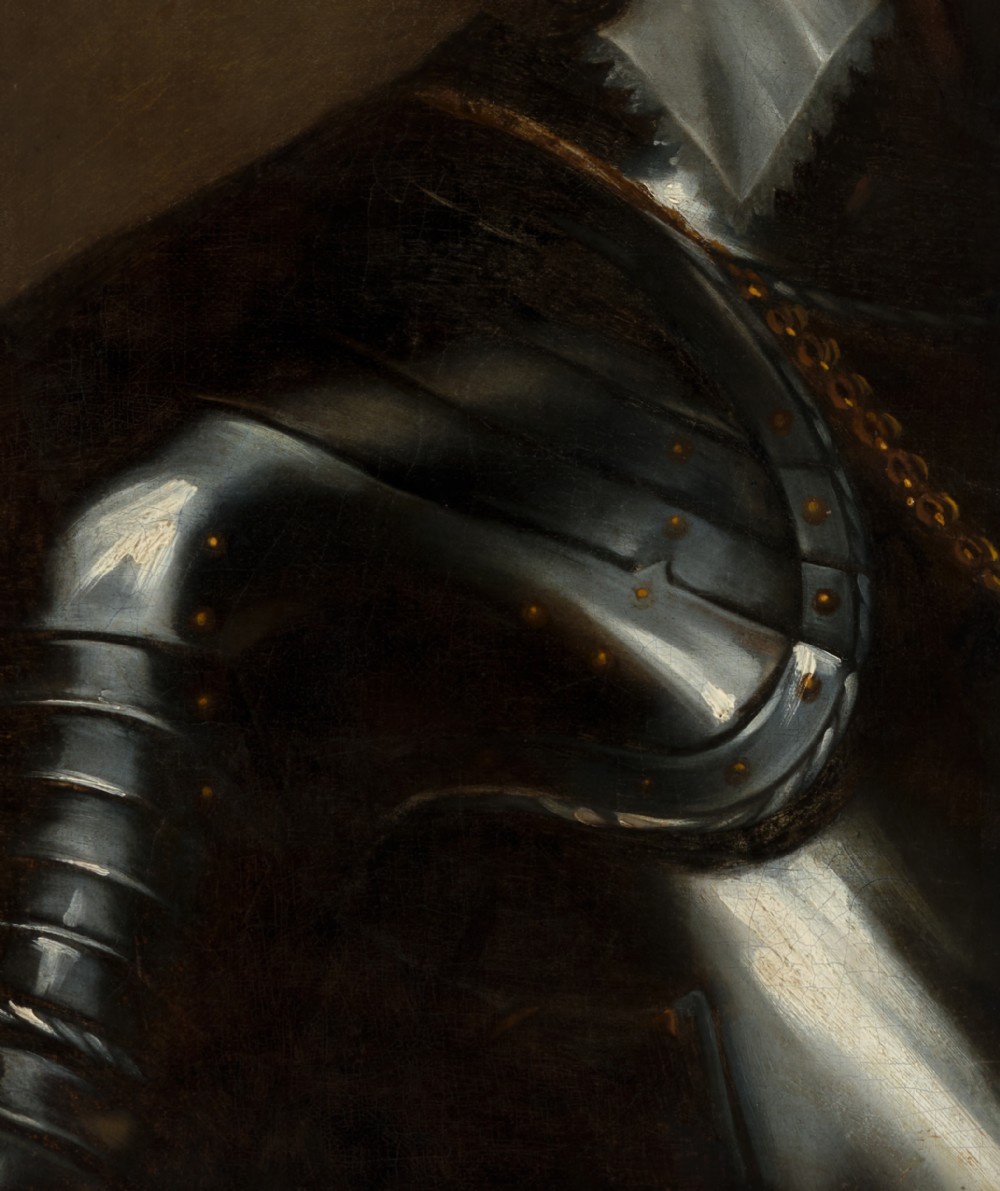
The prototype of the present portrait was created during the most outwardly magnificent, but politically dangerous, years of Charles’s reign. On 30 January 1649 he was executed outside the Banqueting House at Whitehall. The execution also helps explain why portraits such as the present work continued to be produced. During Charles’s lifetime important royal likenesses were necessarily replicated. Portraits were instruments of government, diplomacy, dynastic identity and patronage; approved images were required for royal residences, aristocratic houses, ambassadors and foreign courts. A successful composition by Van Dyck could therefore generate studio repetitions, independent copies and engravings while the original sitter was still alive. Professional copyists formed an important part of this visual economy. Henry Stone, for example, is specifically recorded as a portrait painter and copyist who frequently copied Van Dyck, while the Flemish-born Remigius van Leemput produced reduced copies of important royal pictures; his celebrated 1667 copy of Holbein’s Whitehall mural was made for Charles II and preserved a composition subsequently destroyed in the Whitehall fire.
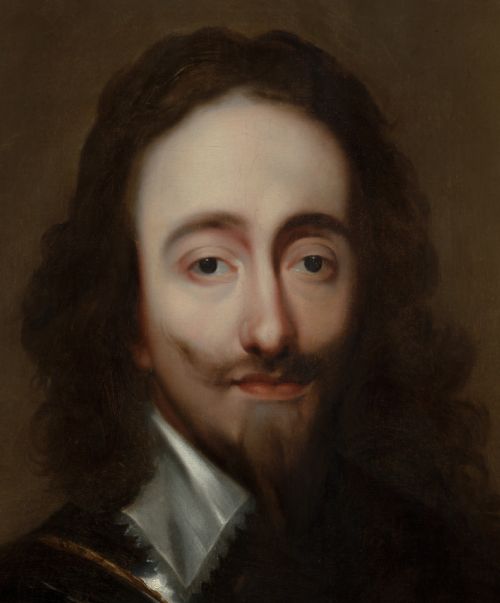
fig 3. An oil portrait of King Charles I depicted in steel armour with a white collar, presented inside a carved gilded frame.
fig 3. Portrait of a Gentleman, King Charles I (1600–1649), in Armour, After Sir Anthony Van Dyck (1599–1641); Anglo-flemish School C.1670–1720

After 1649, however, the meaning of such copies altered. Charles’s death generated an extraordinarily powerful culture of commemoration.

The portrait is presented in a substantial carved and gilded wood frame of Baroque character, enriched with dense scrolling foliage, floral and shell-like ornament, pronounced corner elements and a narrow leaf-moulded sight edge.
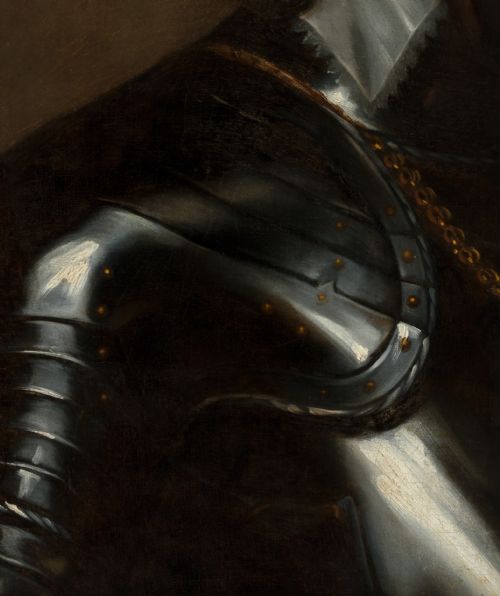
fig 4. An oil portrait of King Charles I depicted in steel armour with a white collar, presented inside a carved gilded frame.
fig 4. Portrait of a Gentleman, King Charles I (1600–1649), in Armour, After Sir Anthony Van Dyck (1599–1641); Anglo-flemish School C.1670–1720

What makes this picture particularly appealing is the unusual combination of historical importance, manageable scale and visual authority. More than three centuries after it was probably painted, the portrait still performs the function for which such images were created: it makes the absent king vividly present. It combines the romance of the Caroline court, the tragedy of the Civil War and regicide, the culture of Royalist remembrance and the enduring prestige of Van Dyck’s portraiture in a single highly

Date of Manufacture

Titan Fine Art has dated this King Charles I Portrait to the 17th Century.

Height
89cm (35.04")
Width
73cm (28.74")
Depth
6cm (2.36")
Reference Numbers
Sellingantiques Ref
SA1245928
Titan Fine Art
Titan Fine Art
Sellingantiques verified Since Jul 2016

Specialist in 17th & 18thc portraits. Highly curated selection, museum-level research & pro conservation. Exceptional art, expertly vetted.

Dealer Profile

You can view the stock and full dealer information on the Titan Fine Art Profile Page
PDF SHARE
SAVE
An oil portrait of King Charles I depicted in steel armour with a white collar, presented inside a carved gilded frame.
1 / 5
Archive I An oil portrait of King Charles I depicted in steel armour with a white collar, presented inside a carved gilded frame.

Portrait of a Gentleman, King Charles I (1600–1649), in Armour, After Sir Anthony Van Dyck (1599–1641); Anglo-flemish School C.1670–1720
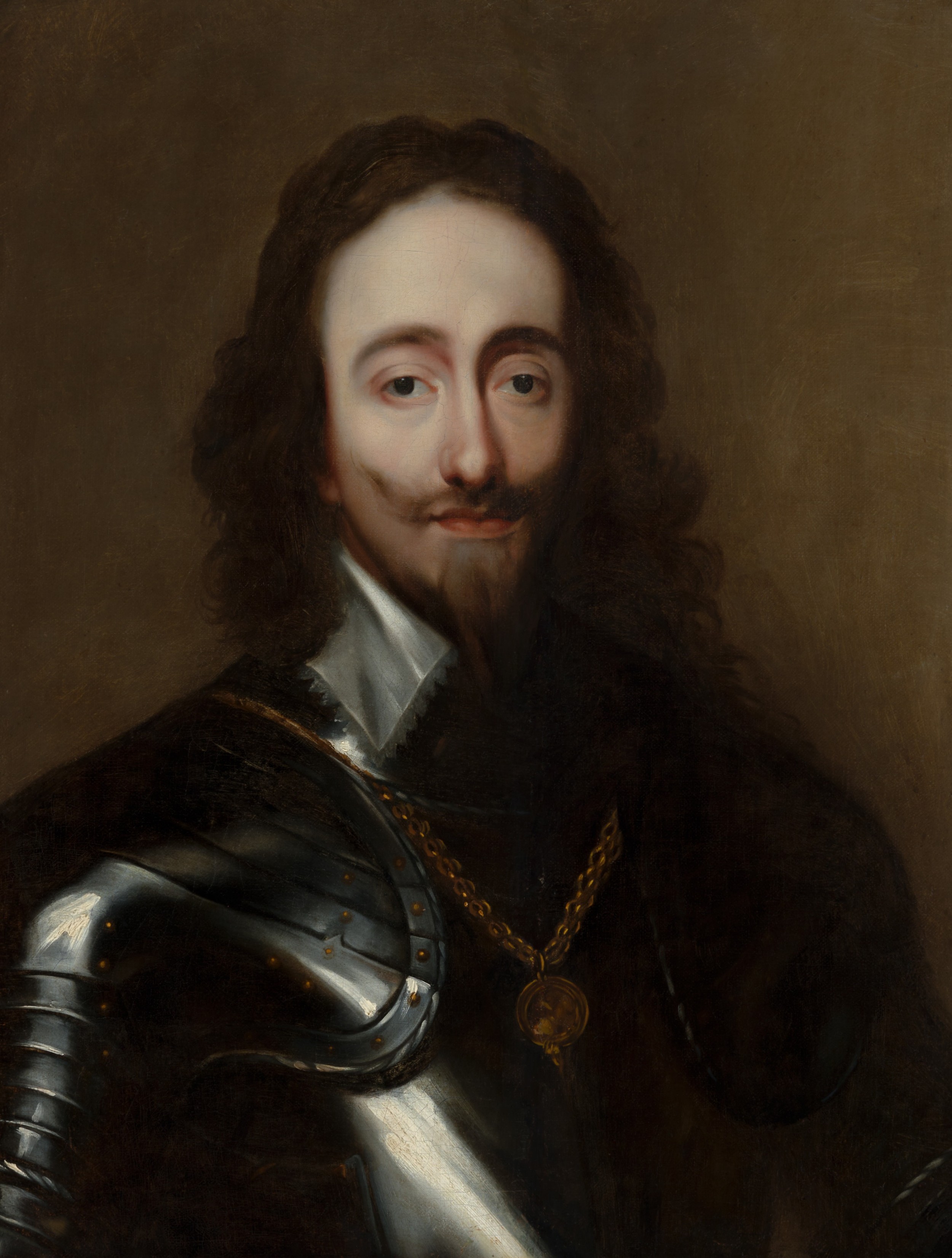
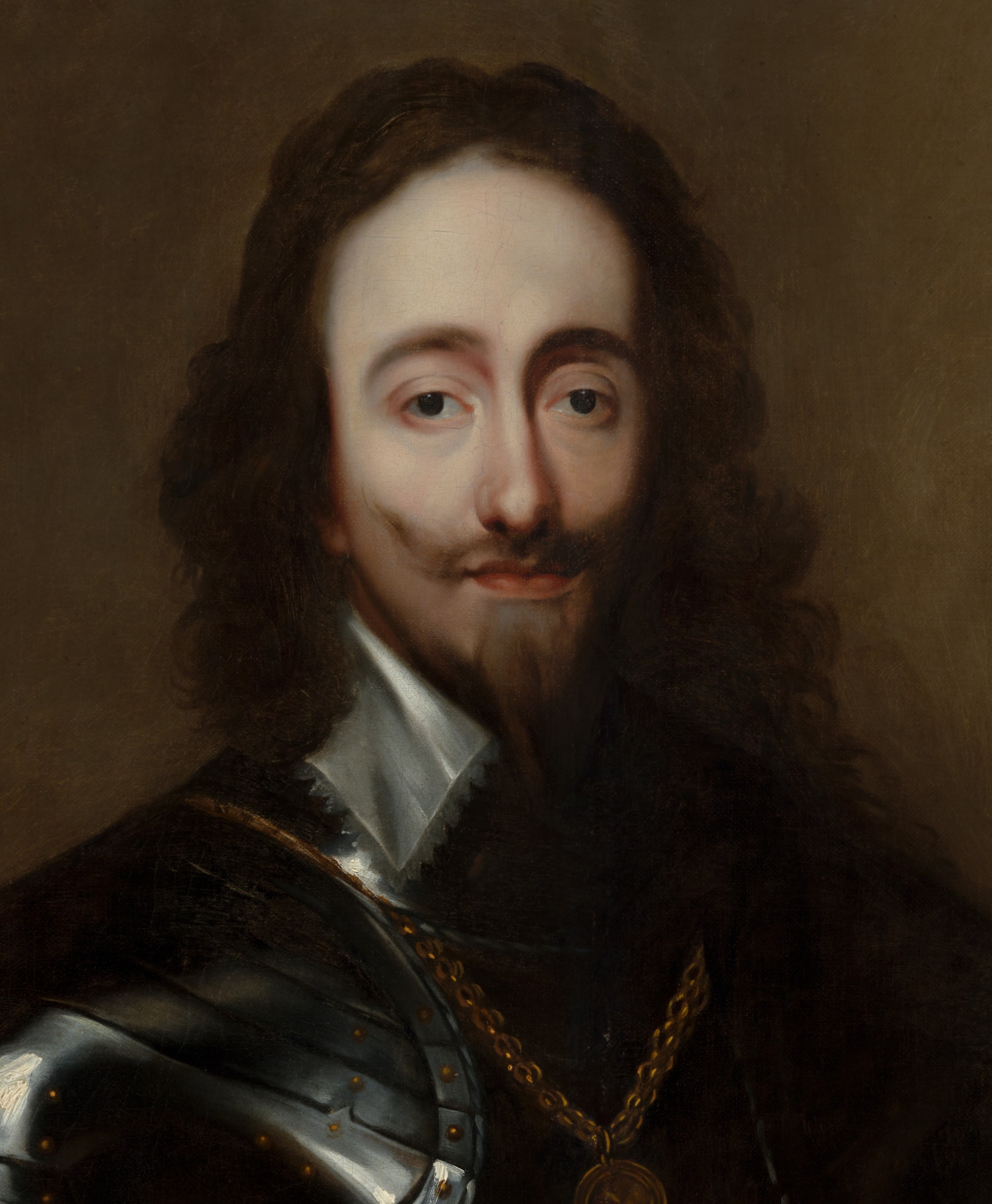
Archive II An oil portrait of King Charles I depicted in steel armour with a white collar, presented inside a carved gilded frame. View II
Archive III An oil portrait of King Charles I depicted in steel armour with a white collar, presented inside a carved gilded frame. View III
Archive IV An oil portrait of King Charles I depicted in steel armour with a white collar, presented inside a carved gilded frame. View IV
Archive V An oil portrait of King Charles I depicted in steel armour with a white collar, presented inside a carved gilded frame. View V
Enlarged Archival View
Telephone 07875 412 111
Location
London
United Kingdom
Dealer Profile Page sellingantiques.co.uk/titan
Verified Since Jul 2016
Items For Sale 20
Items Sold 407
Titan Fine Art
Titan Fine Art
Verified Since Jul 2016
View Dealer Info
Location: London, United Kingdom
Verified
Jul 2016
For Sale
20
Sold
407
An oil portrait of King Charles I depicted in steel armour with a white collar, presented inside a carved gilded frame.
Portrait of a Gentleman, King Charles I (1600–1649), in Armour, after Sir Anthony van Dyck (1599–1641); Anglo-Flemish School c.1670–1720
Ref: SA1245928
An oil portrait of King Charles I depicted in steel armour with a white collar, presented inside a carved gilded frame.
Detail View 1
Detail View 2
Detail View 3
Detail View 4
Archival Detail
Every single antique dealer on our platform is individually approved by our internal team. We verify their professional trade history, ethical standards, and photographic quality to ensure a secure, high-standard buying environment. Upon joining, every dealer agrees to a strict 9-point code of conduct. While issues can occasionally arise, our dealers typically resolve them swiftly and directly with the buyer. In fact, since our founding in 2002, Sellingantiques has only had to step in to help resolve an issue on roughly five occasions—a true testament to the quality of our dealers and their dedication to your happiness.
Our dealers are highly experienced in packing and shipping fragile, high-value antiques. Because you are in direct contact with the dealer, you will be able to easily go through all available shipping and insurance options together to ensure your item arrives safely.
Antiques are the ultimate green purchase. By choosing historical pieces over newly manufactured goods, you completely eliminate the carbon footprint of modern mass production while preserving exceptional, timeless craftsmanship.
Written by Sellingantiques from the dealer’s photographs and listing
  • ObjectOil Paintings
  • Period17th century
  • StyleBaroque
  • MaterialOil on Canvas, Giltwood Frame
  • ColourDark Brown and Gold
  • MotifsCarved acanthus frame, Polished plate armour, Lace collar, Pointed beard
  • SizeH 89 cm (35 in) x W 73 cm (29 in) x D 6 cm (2 in)

Sir Anthony van Dyck was the principal court painter to King Charles I, establishing a refined style of royal portraiture. Following his death, workshop artists and subsequent seventeenth-century painters continued to copy and adapt his iconic compositions to meet ongoing demand for royal imagery.

Painters during this period primarily applied oil pigments onto hand-woven linen canvas prepared with an organic ground layer. Frames were typically constructed from carved timber finished with water gilding over a reddish bole coat.

Authentic period works display natural age craquelure across the paint surface, historic canvas lining or stretcher marks, and hand-carved joinery on the frame. Chemical analysis of pigments and examination under ultraviolet light further confirm age-appropriate materials and historic restorations.

A dark oil portrait creates a focal point when placed above a fireplace mantel or paired with minimalist, clean-lined furniture. The contrast between historical portraiture and modern wall finishes highlights both the texture of the painting and the surrounding decor.

Keep the artwork away from direct sunlight, high humidity, and heat sources to prevent cracking or warping. Dust the frame gently with a soft dry brush, and consult a professional conservator for surface cleaning or canvas repairs.
items
Add keywords to the filter
Price
£100
£250000
Era
Period
Style
Material
Origin
Stock Location
Recently Added
Online Payments
Categories