Miles Barton Art and Interiors has dated this 18th Century Oil Portrait to the 18th Century.
Framed: 92 x 79 cm (36 x 31 in)
Canvas: 76 x 63.5 cm (30 x 25 in)
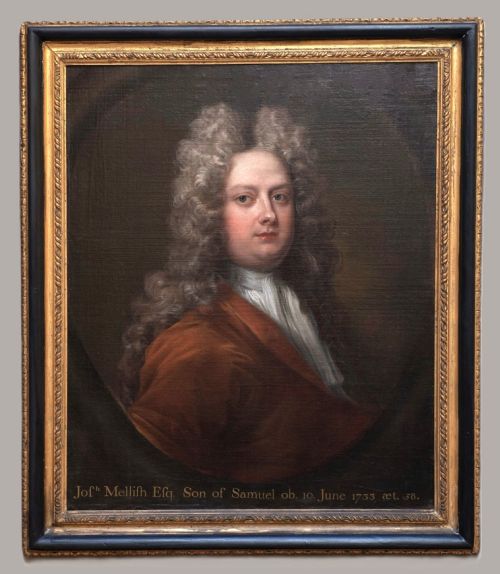
This portrait will be included in the complete paintings catalogue of Charles Jervas by Caroline Pegum to be published in Volume 87 of the Walpole Society
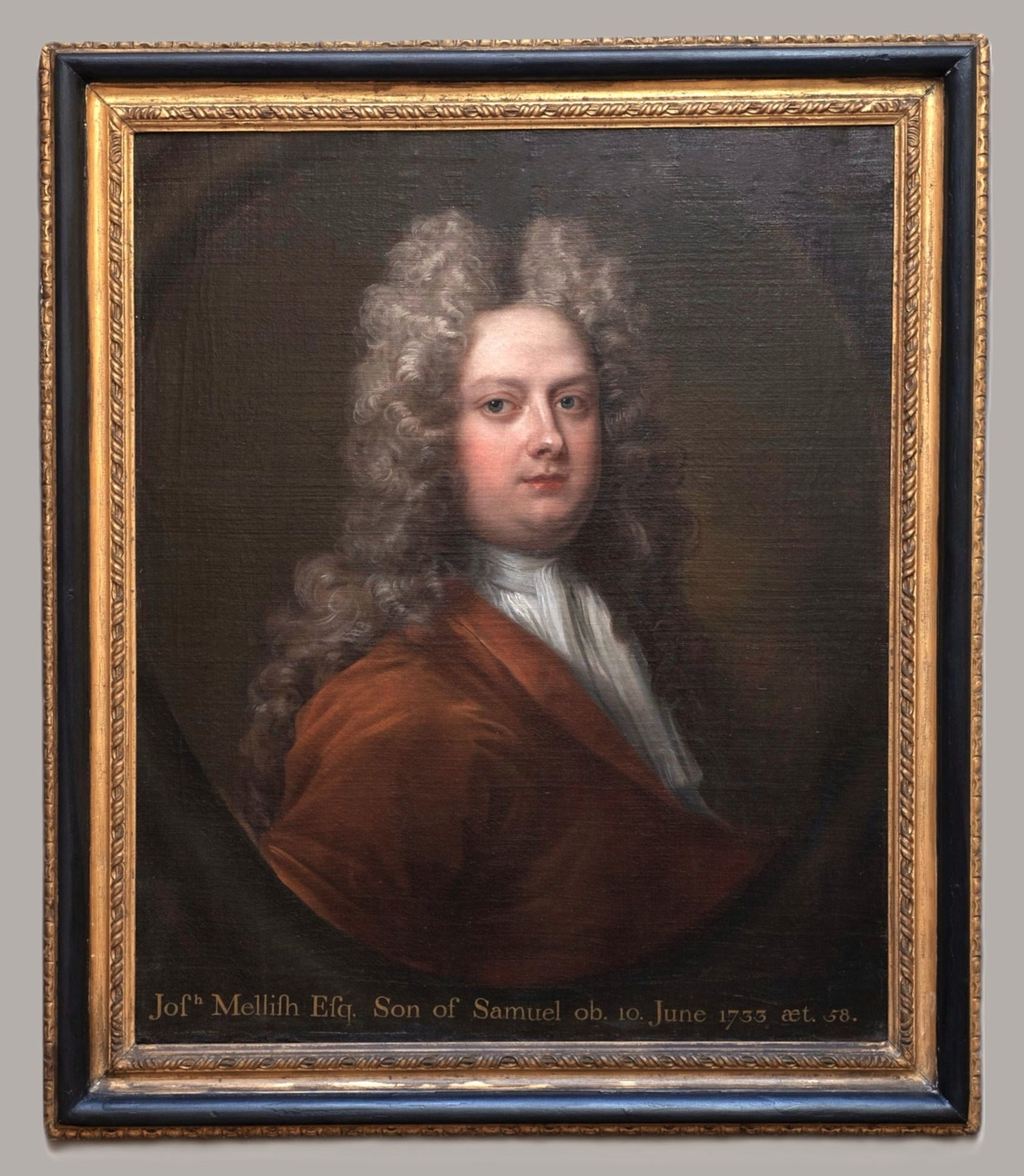
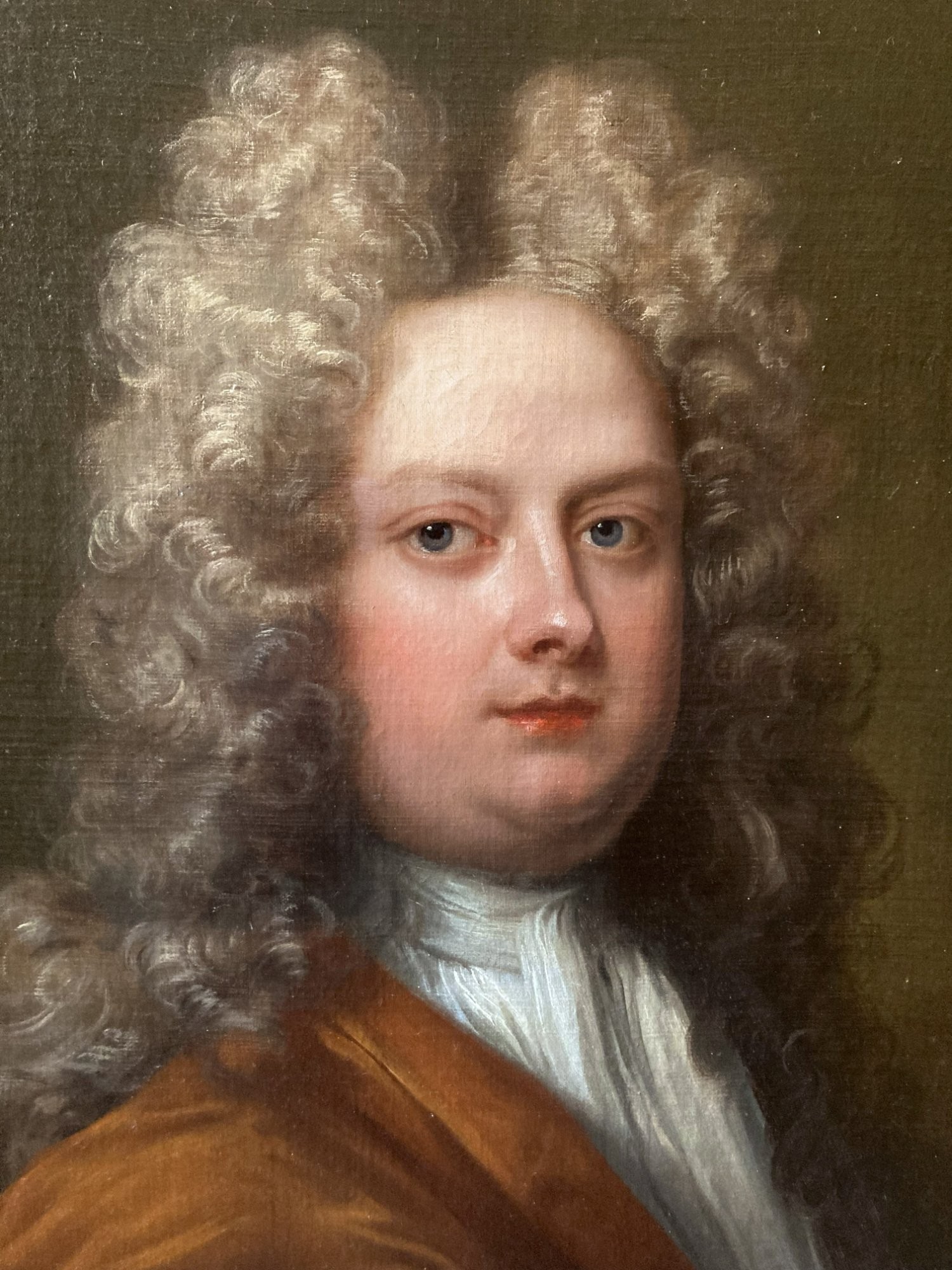
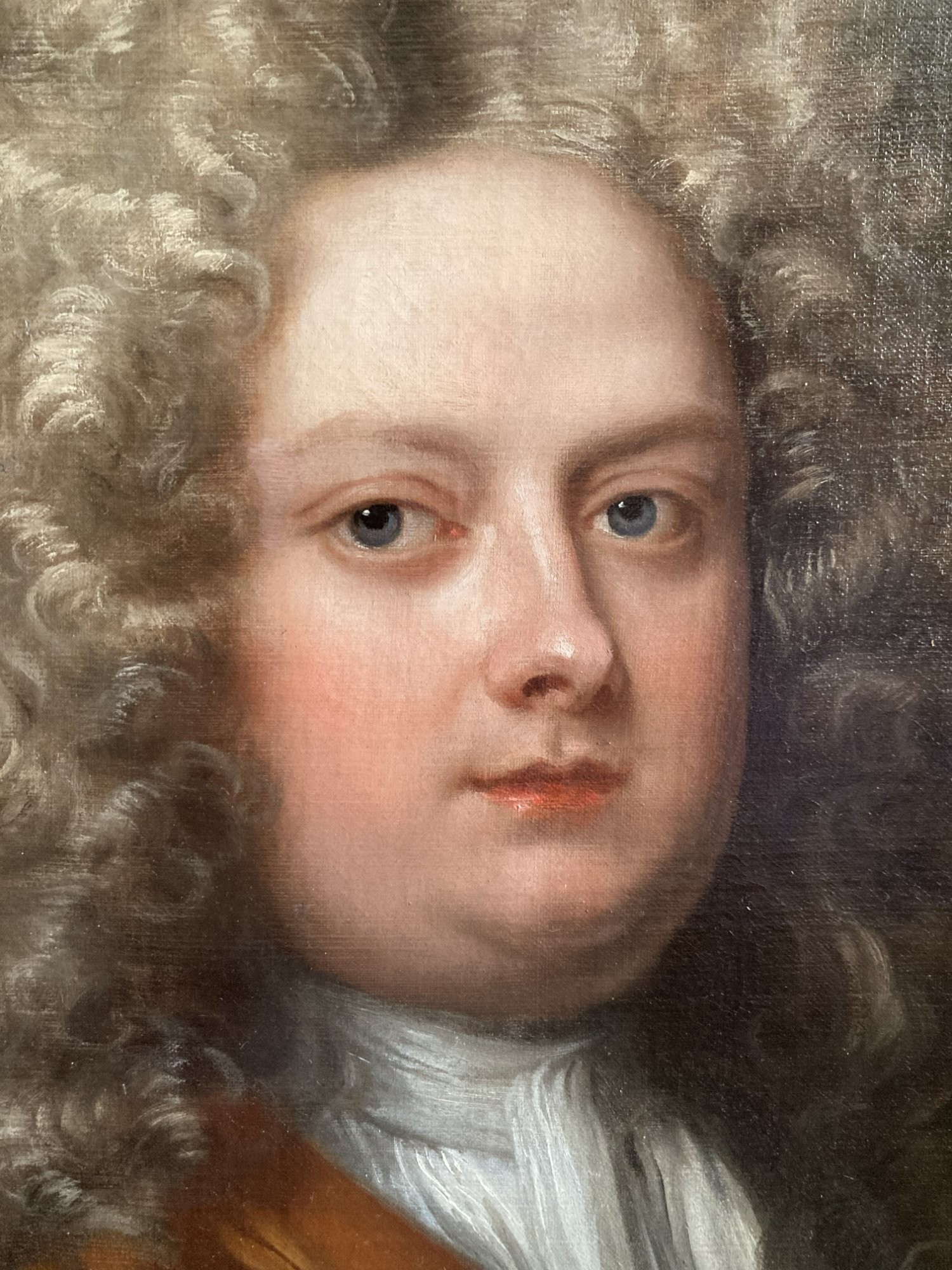
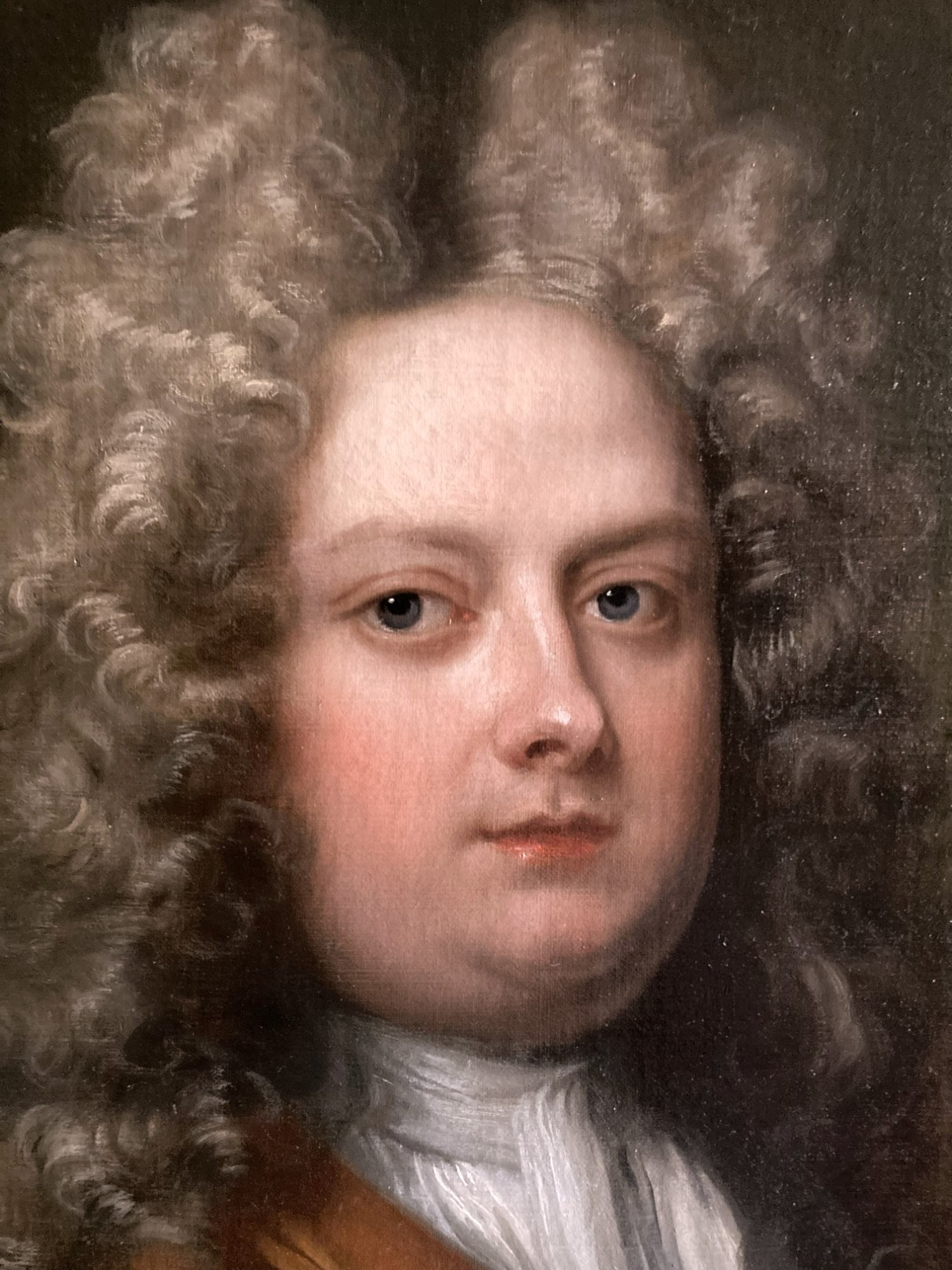
The portrait depicts Joseph Mellish, an eighteenth-century gentleman presented in a classic half-length format within a softly painted oval frame or cartouche. He is captured in three-quarter profile, gazing forward with a calm and dignified expression characteristic of British portraiture from the era. He wears a voluminous, highly styled grey wig that cascades over his shoulders, perfectly framing a face rendered with smooth skin tones and a hint of color in the cheeks. A crisp white scarf surrounds his neck beneath a rich, reddish-brown coat or mantle.
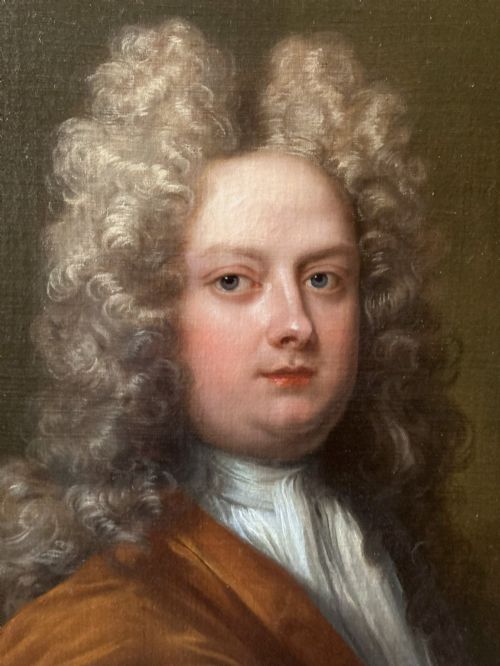
A later 18th century inscription along the lower margin of the canvas anchors the subject's identity and life dates, noting in elegant period script that he was the son of Samuel and passed away on June 10, 1733, at fifty-eight years of age. The composition uses dramatic chiaroscuro, with a deep, shadowed background that focuses all light onto the subject's face and garments, emphasizing his social standing and presence.
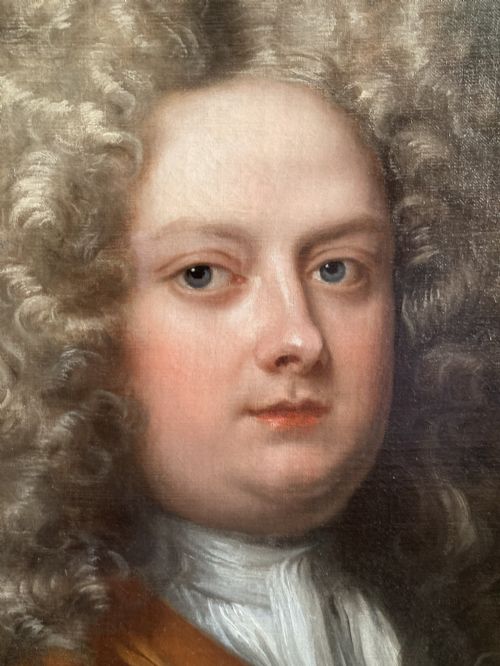
In 1635 John Mellish, a merchant tailor of London, bought the estate of Blyth in Nottinghamshire. His son, a wealthy Oporto merchant, dying unmarried, left Blyth in 1703 to his cousin Joseph Mellish, whose portrait is presented here. Mellish entered Clare College, Cambridge in 1692 and the Inner Temple the following year. He married Dorothea Gore, daughter Sir William Gore, Lord Mayor of London around 1707 a union which would have helped to consolidate both the family business interests in London together with their political ambitions in the north of England.
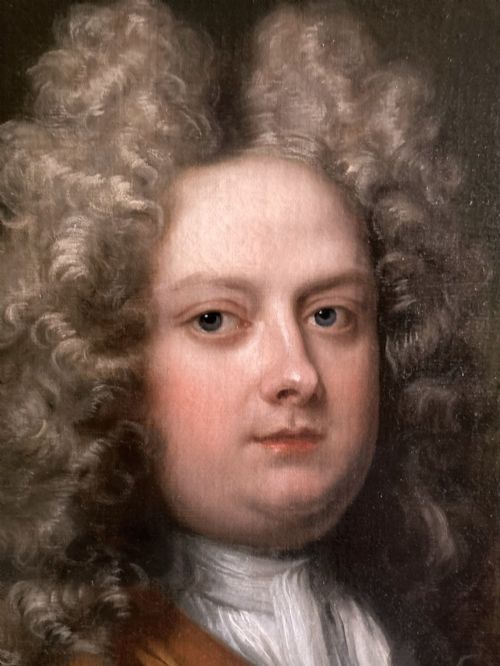
He was one of the earliest and most important political supporters in Nottinghamshire of Thomas Pelham Holles, 1st Duke of Newcastle, whose father had been MP of the county. This allegiance was to benefit Mellish’s son William who sought political office and was given positions in the exchequer, customs and the treasury, simultaneously augmenting his family’s position and wealth. The Duke of Newcastle and his wife were both painted by Jervas and therefore Mellish’s choice of artist might have been motivated by political approval as much as any other personal reason.
Charles Jervas was an Irish portrait painter and translator. By the mid-1690s he was in London, where he stayed and trained with Sir Godfrey Kneller. Between 1698 and 1708 Jervas studied in Paris and Rome, and acted as an agent for British art collectors. On his return to London he set up a successful portrait studio. With the help of his patron, Prime Minister Robert Walpole, Jervas secured the post of King’s painter. In this capacity he painted King George II, Queen Caroline and Prince William, Duke of Cumberland.
This portrait of Mellish was painted by Jervas around 1710. The large florid wig and the elegant, sumptuous gown compare favourably to other works by the artist from this period and is a striking example of his method of painting.
Miles Barton Art and Interiors has dated this 18th Century Oil Portrait to the 18th Century.
British and european pictures and works of art from the 17th to 20th century
You can view the stock and full dealer information on the Miles Barton Art and Interiors Profile Page
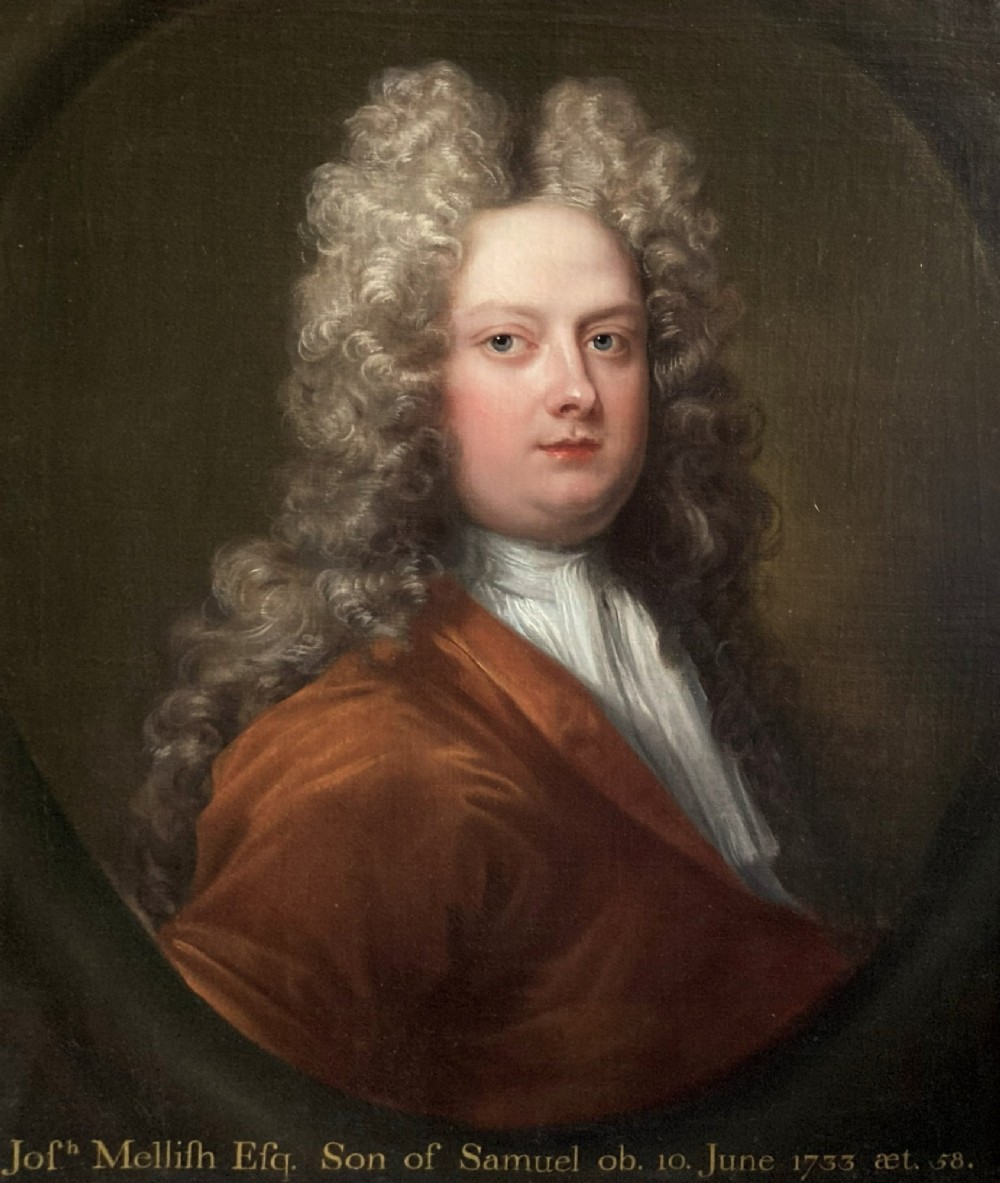
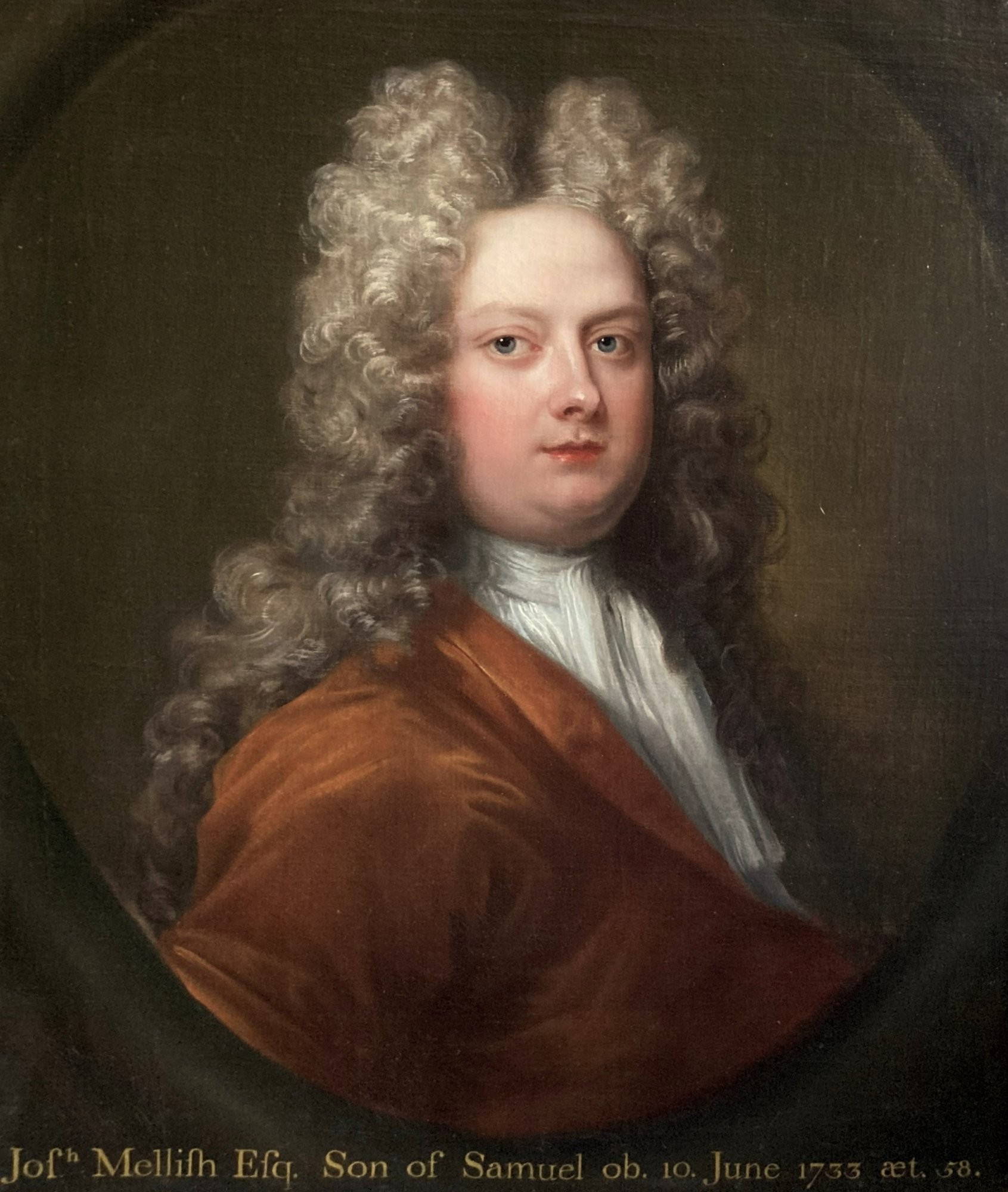
Portrait of Joseph Mellish (1675-1733) by Charles Jervas (1675-1739) Oil on Canvas