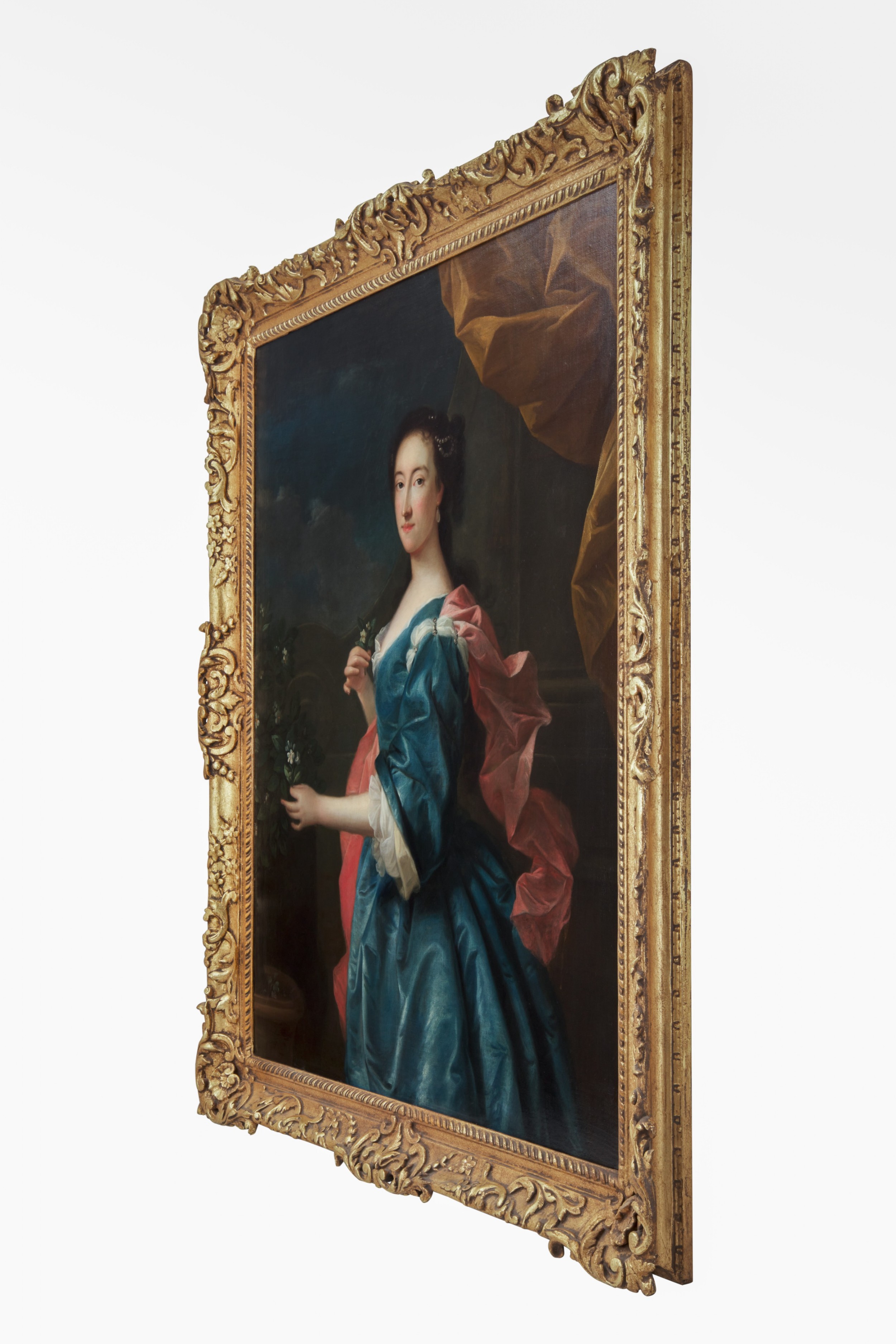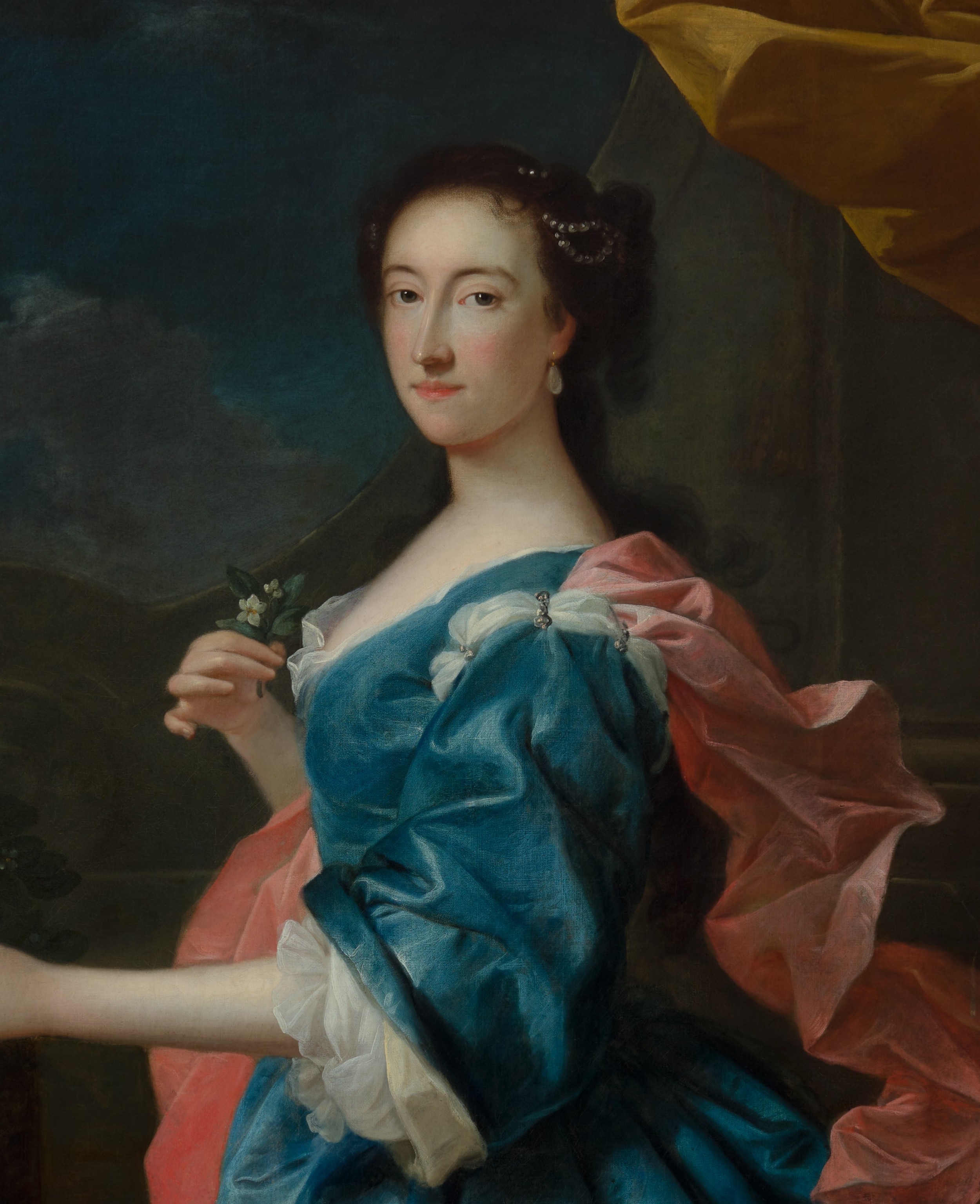
Titan Fine Art has dated this Georgian Oil Portrait Painting to the 18th Century.
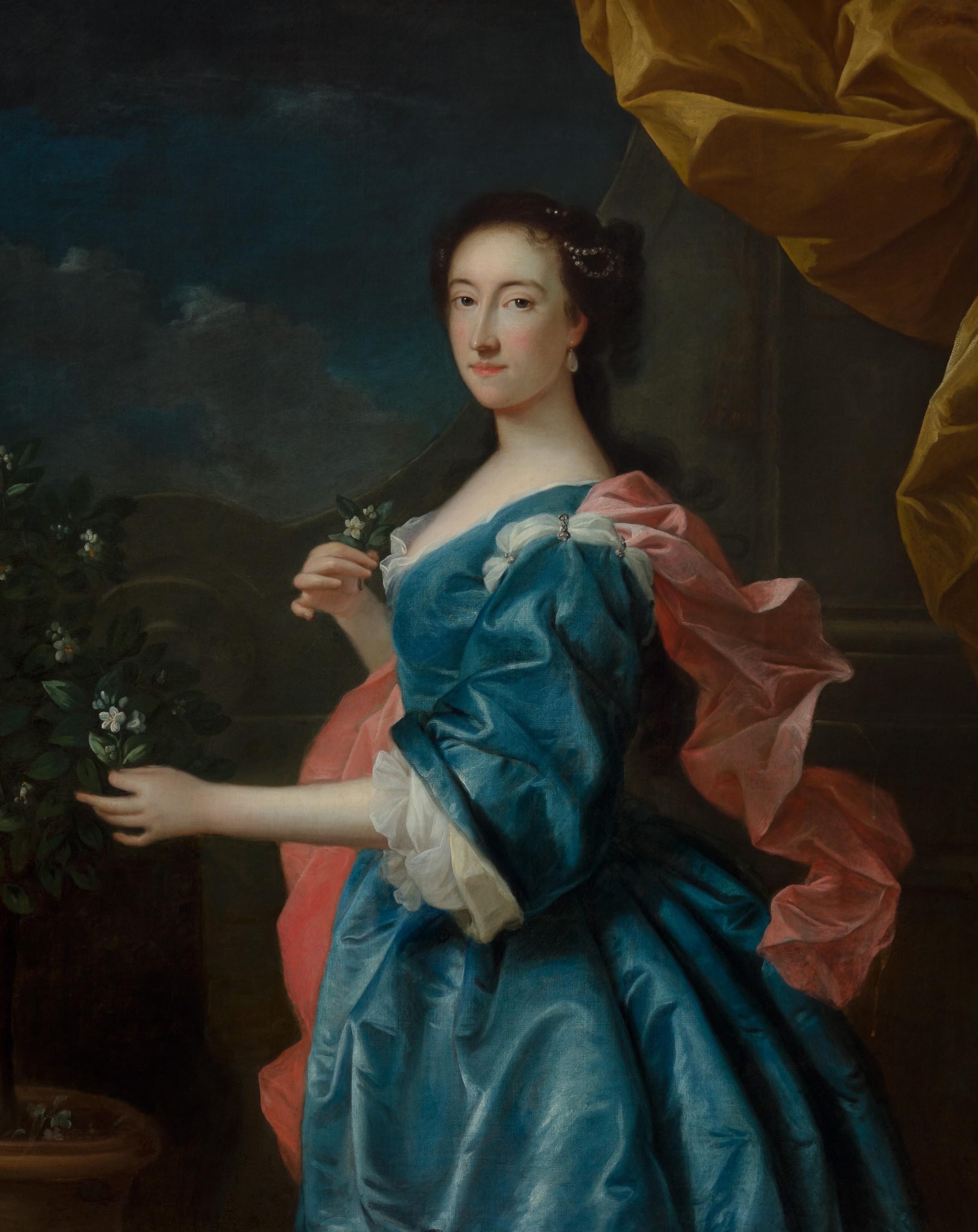
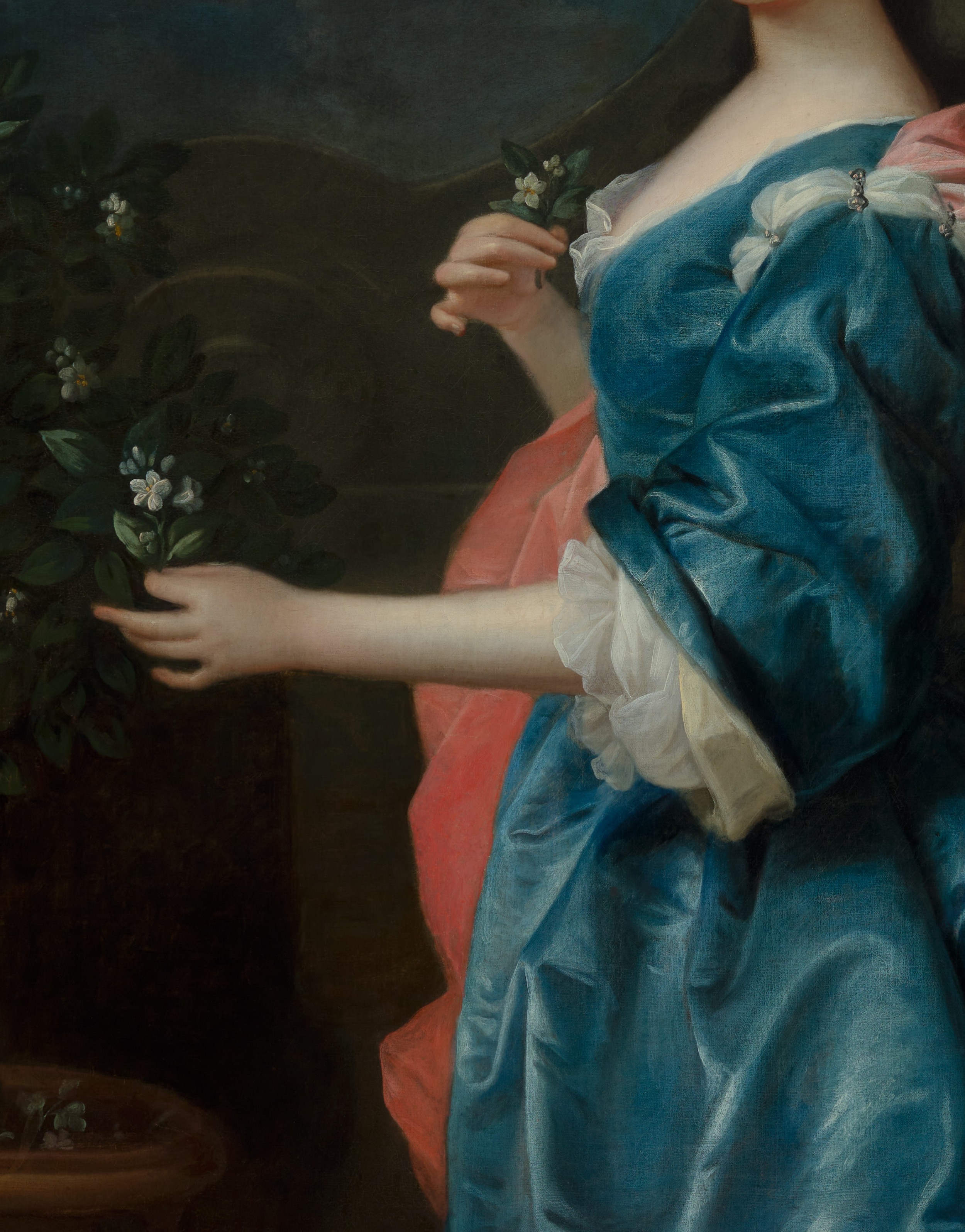
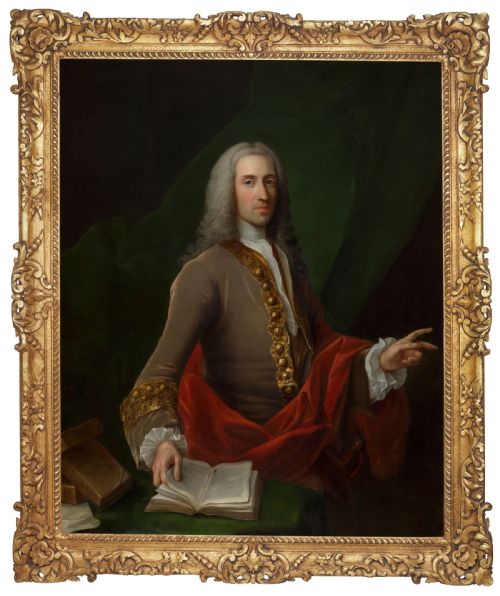
Its combination of pendant format and conspicuous orange blossom strongly raises the possibility that the two works were commissioned to celebrate a marriage or the establishment of a new household.
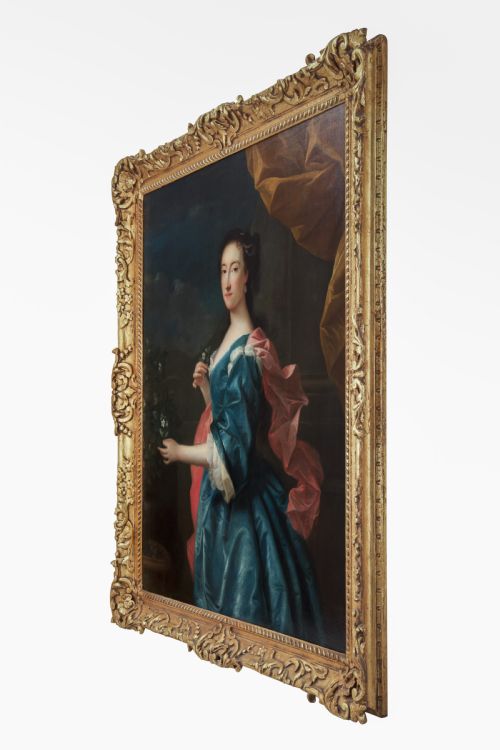
The painting presents in excellent condition, with the principal passages of the face, hands, costume, drapery and botanical detail retaining exceptional decorative clarity. The portrait is housed in a substantial carved and gilded frame of George II/Rococo character, with pierced acanthus scrolls, flowerheads, enriched corner and centre ornaments and a narrow gadrooned sight edge. Its warm gilding responds particularly successfully to the gold curtain and the saturated blue and pink of the costume.
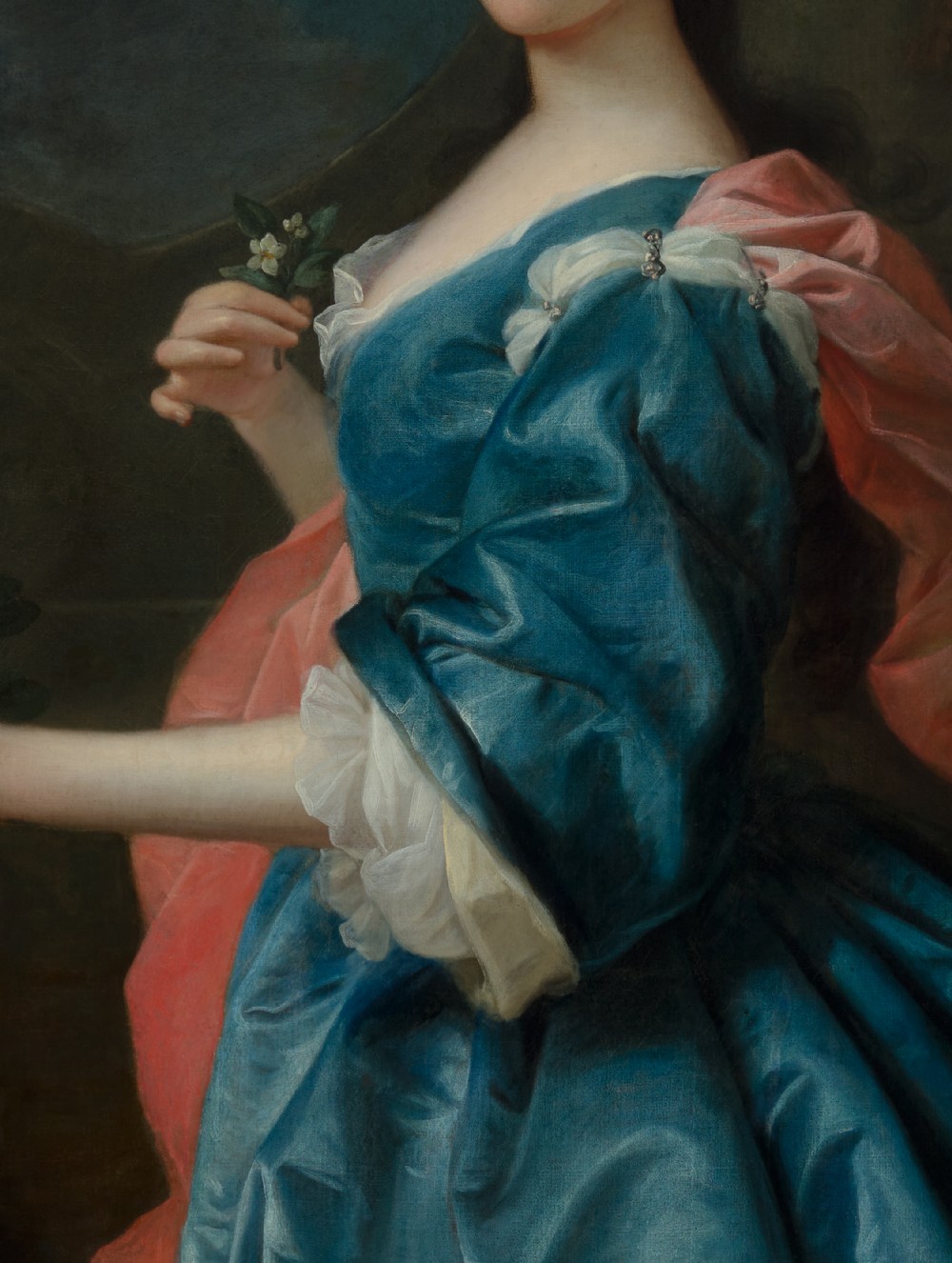
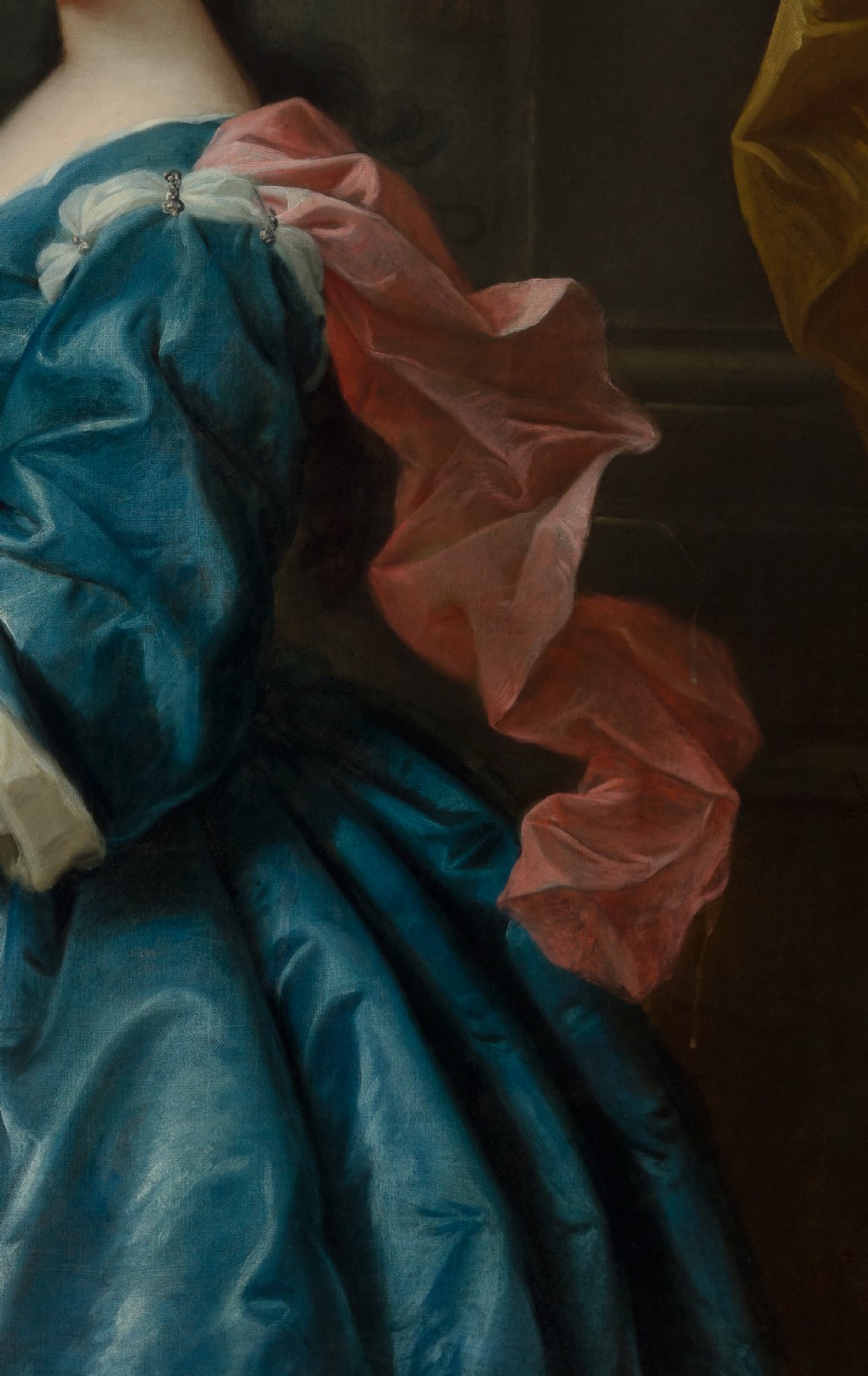
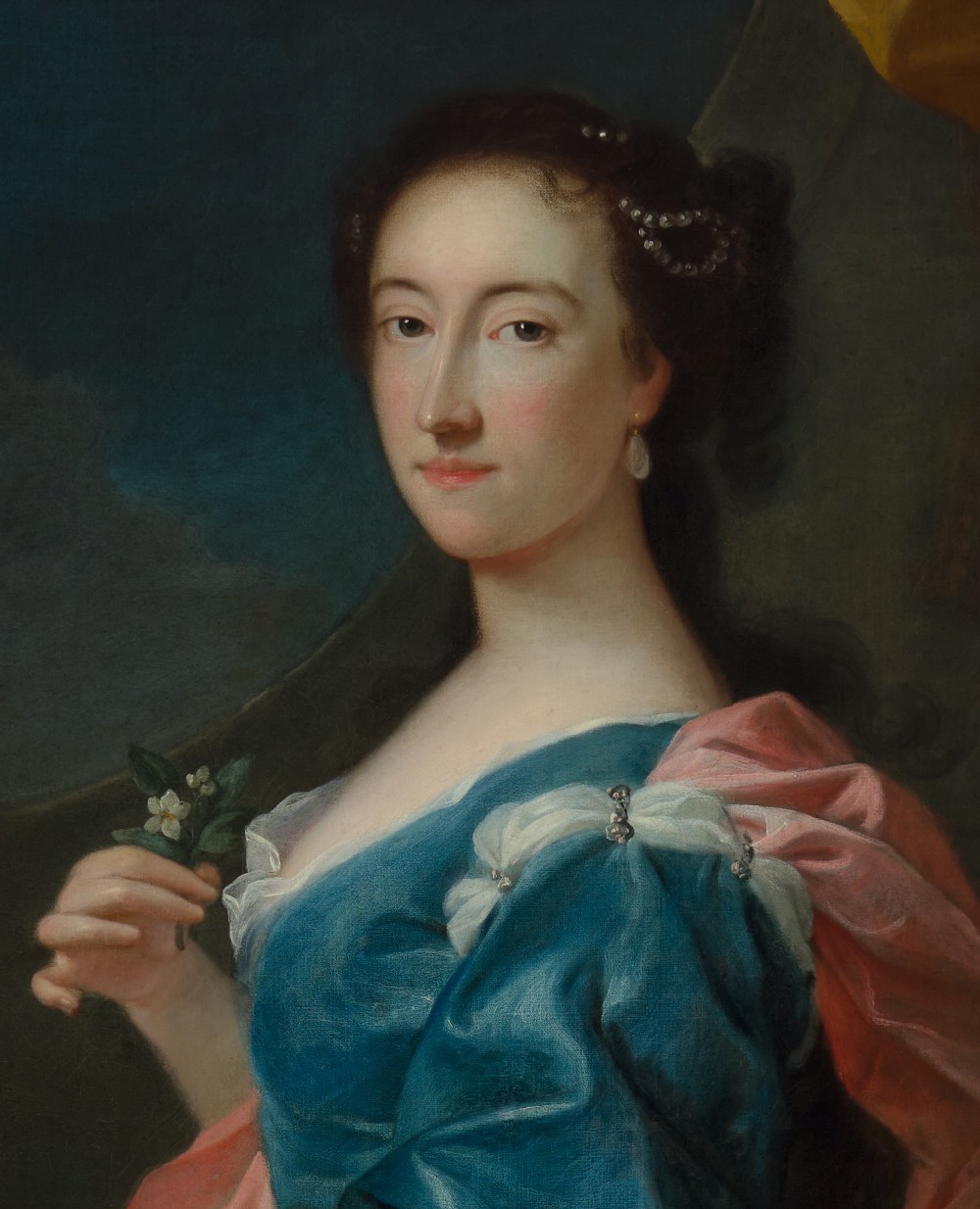
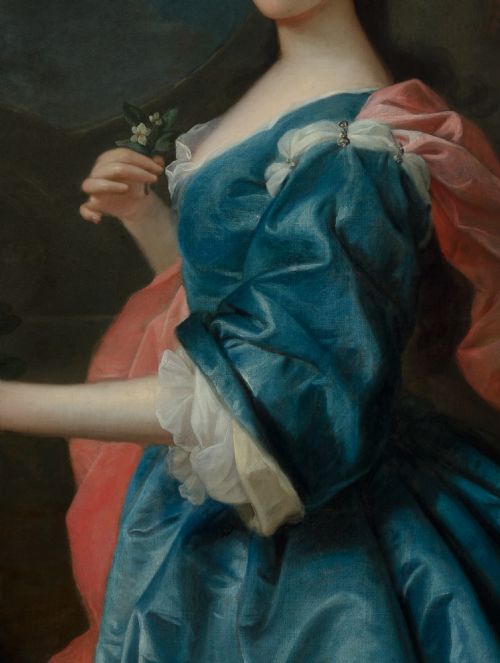
The sitter is represented three-quarter-length, her figure turned gently across the canvas while her face is brought into calm communication with the viewer. Her gown is a tour de force of painted texture. Brilliant blue silk catches the light across the bodice and ample skirt in folds that range from intense turquoise to silvery blue, while white linen emerges in loosely gathered ruffles at the elbows.
These details are particularly suggestive in relation to the identification of the sitter, said to be Agatha Halyburton, first wife of James Douglas, later 14th Earl of Morton. Agatha was the daughter—and according to historical genealogical accounts the heiress—of James Halyburton of Pitcur in Angus, representative of an old Scottish landed family. She was baptised at Kettins on 1 June 1711 and married James Douglas before 1731. She became Countess of Morton when her husband succeeded to the earldom in January 1738, and died in Edinburgh on 12 December 1748, aged only thirty-seven. A portrait made circa 1730–35 would thus show her between approximately nineteen and twenty-four years old, remarkably consistent with the apparent youth of the woman represented here.
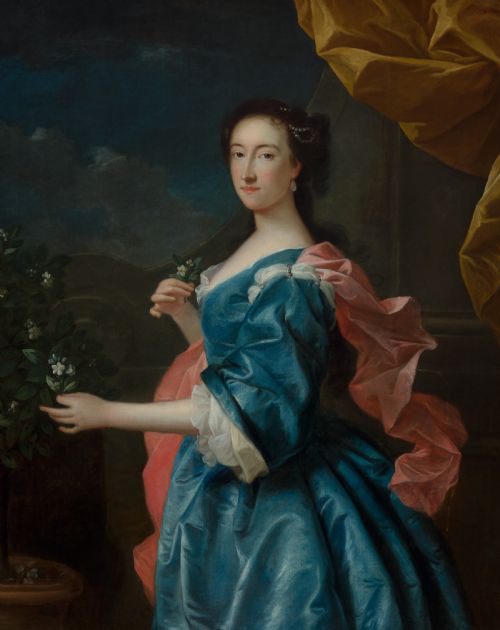
The possibility that this was an early marriage portrait of Agatha is therefore attractive. A commission around 1730–31 would show her at about nineteen or twenty, newly married and entering one of Scotland's great aristocratic families, while the prominently displayed orange blossom provides precisely the iconography one might expect in a commemorative portrait of a young bride.
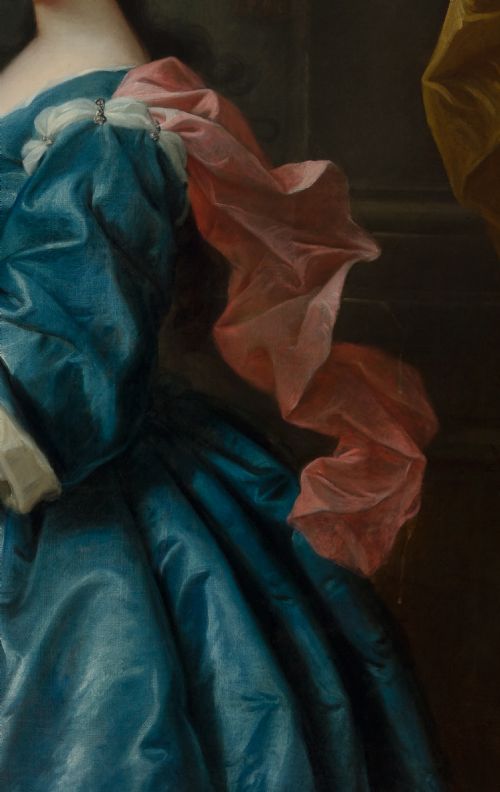
The attribution to Jeremiah Davison is itself persuasive while remaining properly qualified. Davison was born in London about 1695 to Scottish parents and established a successful London portrait practice before being encouraged by James Murray, 2nd Duke of Atholl, to work in Scotland in the later 1730s. Through the Atholl connection he gained access to a substantial network of Scottish aristocratic patrons and subsequently returned to London, where he died in 1745.
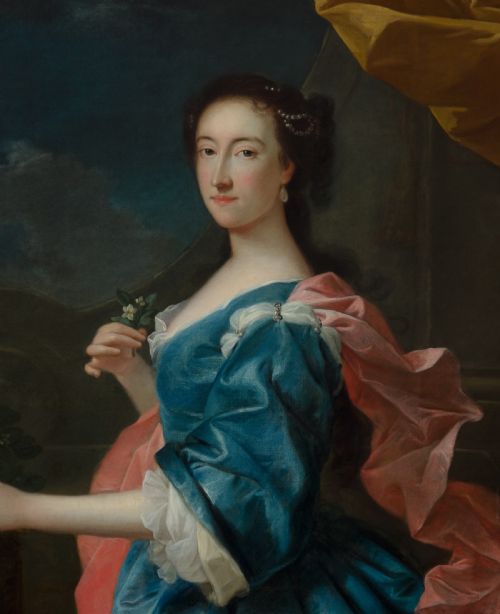
As an independent work, the portrait possesses exceptional decorative appeal. Its excellent condition and impressive carved and gilded frame allow it to be displayed immediately, while the serious Davison attribution and plausible identification with Agatha Halyburton provide substantial historical interest. It offers the collector the combination most desirable in an eighteenth-century portrait: visual beauty, scale, fine preservation, and an aristocratic context.
Full description at: www.titanfineart.com
Titan Fine Art has dated this Georgian Oil Portrait Painting to the 18th Century.
Specialist in 17th & 18thc portraits. Highly curated selection, museum-level research & pro conservation. Exceptional art, expertly vetted.
You can view the stock and full dealer information on the Titan Fine Art Profile Page
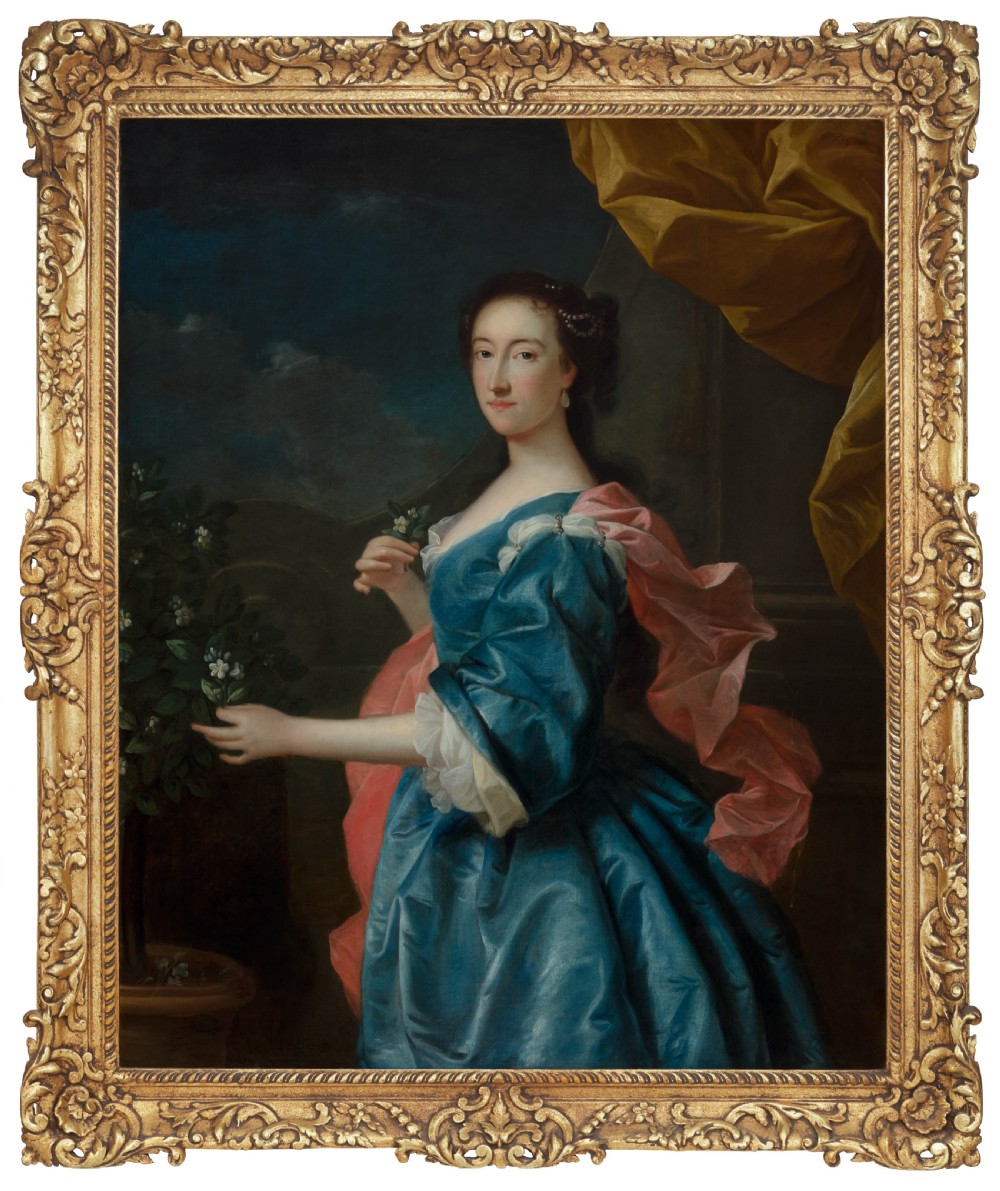
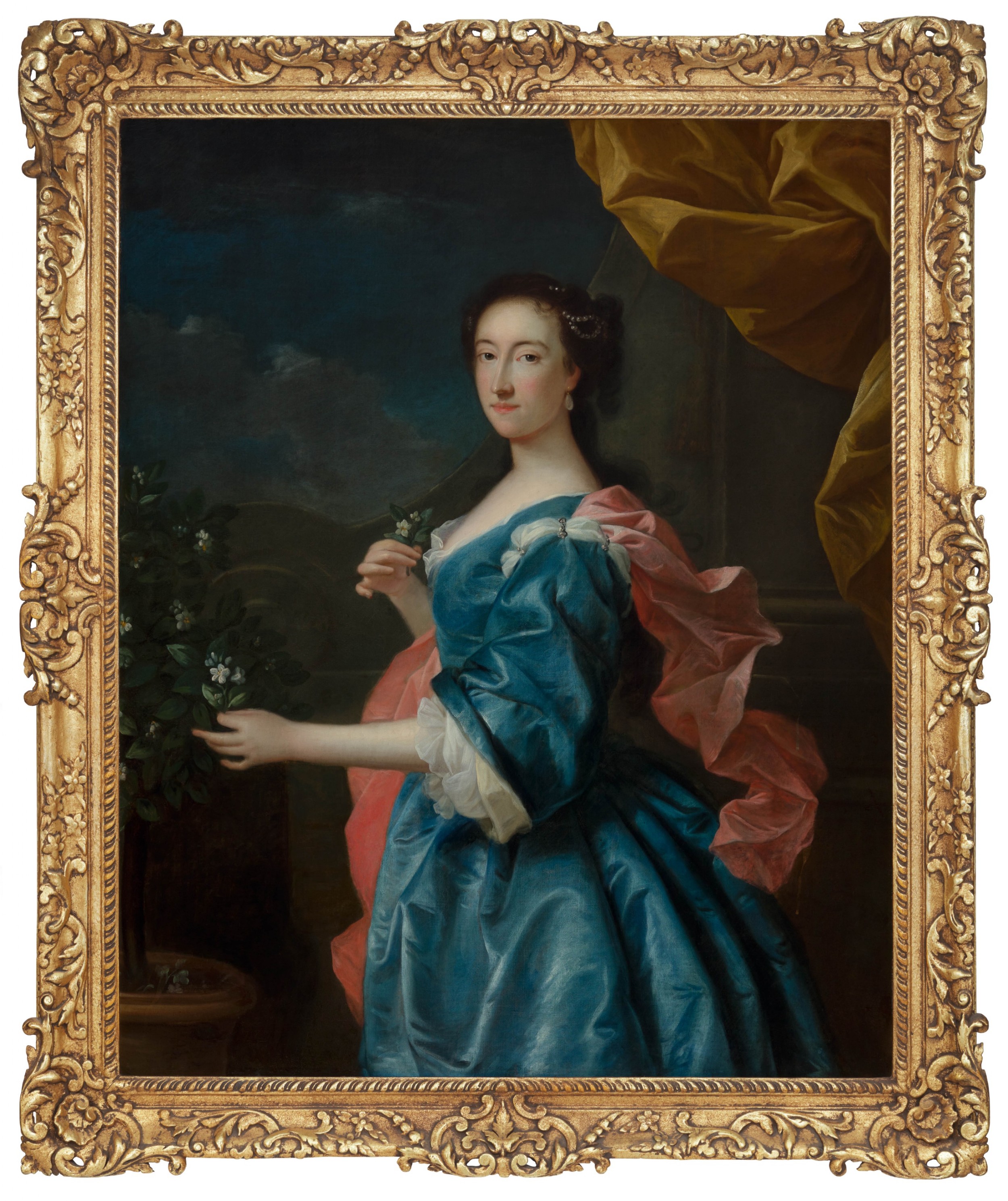
Portrait of a Lady, Agatha Halyburton, Later Countess of Morton (Baptised 1711–1748), with an Orange Tree and Orange Blossom; Attributed to Jeremiah Davison (C.1695–1745)