41,013  PAGES BROWSED TODAY PAGES TODAY 84  ANTIQUES UPLOADED TODAY NEW ARRIVALS
Sort Order
Items Per Page
ID #SA1226087
FOR SALE
£0
Email
Save
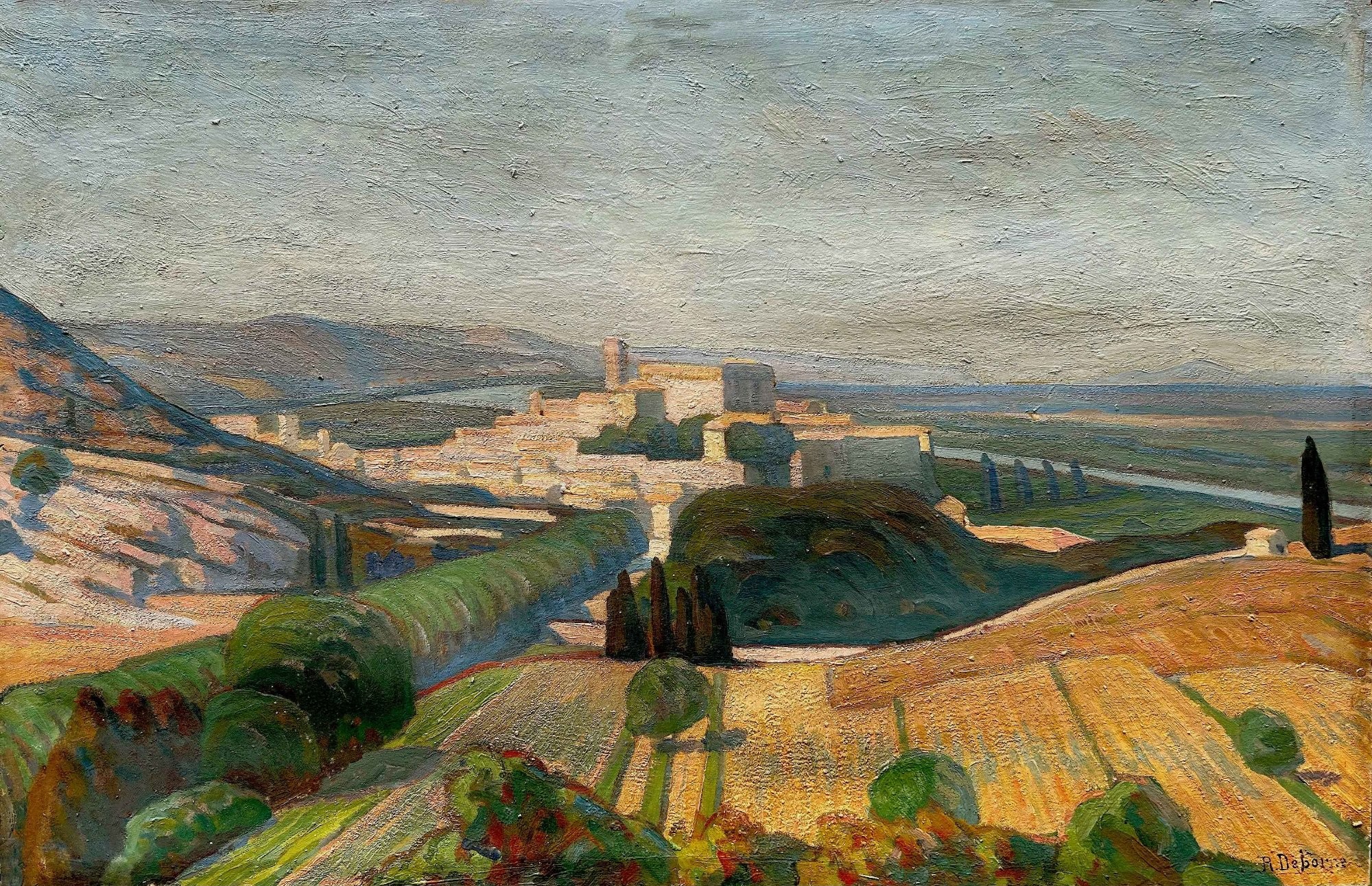
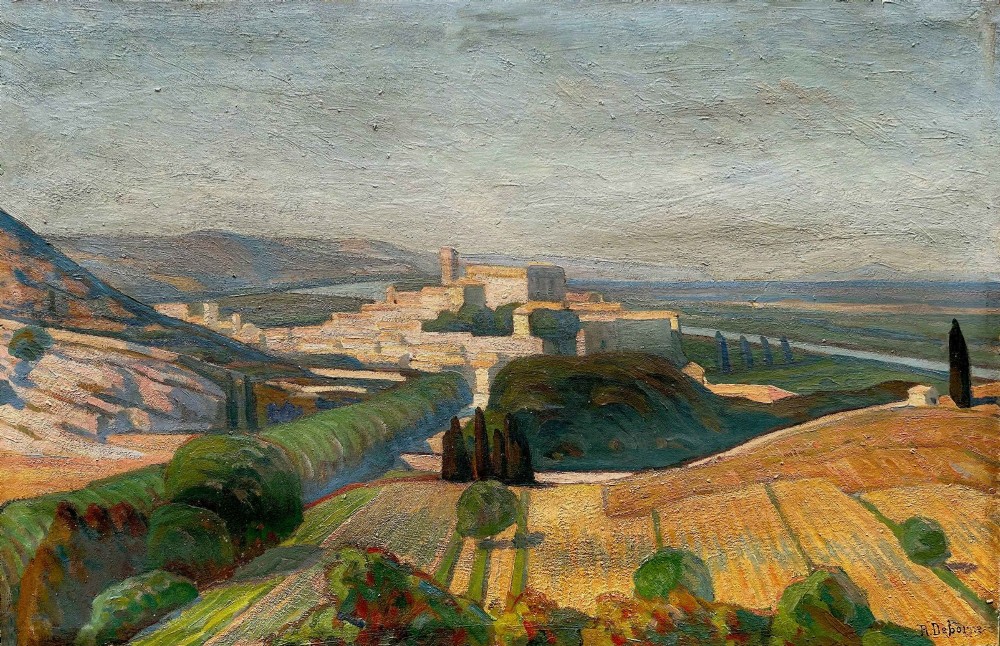
Robert Deborne Across the Fields Post-impressionist Painting
Darnley Fine Art
saved for later €0     $0
£0

Darnley Fine Art

Sellingantiques Verified Since Jul 2026
View Dealers Stock Page
Id #SA1226087
PDF SHARE
SAVE

Robert Deborne Across the Fields Post-impressionist Painting

1900 - 1920
For Sale by Darnley Fine Art
Description

Robert Deborne

1870 - 1944

Across the Fields

Oil on canvas, signed lower right

Image size: 41 1/4 x 27 inches (105 x 68.5 cm)

Provenance

Family Estate

Robert Deborne

Robert François Abel Deborne was born in 1870 in Viviers, a small cathedral city in the south of France. His father was a wealthy landowner and his mother was a member of a prestigious wine producing dynasty, located in nearby Gigondas. Little is known about Deborne’s childhood, but given his parentage it is likely to have been a comfortable one. He attended school in Viviers and then went to the École Nationale Supérieure des Beaux-Arts in Lyon. Here he resided in the Rue Fournet in the Brotteaux district.

In 1900, Deborne moved to Meudon, a suburb in Paris. Here he married Marie Morel and they had two children Jacques (1904 – 1976) and May (dates unknown).

At the Paris Salon of 1903, Deborne exhibited a nude study entitled Femme au Miroir, which has sadly since been lost. In 1905, he participated in the Salon d’Automne, a breakaway exhibition established by Renoir and Rodin as a rival to the summer Salon, which many artists felt had become too bureaucratic and conservative. At this very Salon, in 1905, the Fauvism movement was sensationally launched - a movement that Deborne was part of.

The Deborne family moved to Corsica in 1911, but the happiness was not to last. Shortly before the First World War, Deborne abandoned his family on the island and returned to his birthplace in Viviers. Here, he was able to pursue his passion for painting without encumbrance or distraction.

He exhibited many times at the Salon du Sud-Est over the following years, mainly landscapes of Vivarais and the neighbouring Rhone regions. There is no evidence that Deborne followed any profession at all, preferring instead to dedicate his life to his painting. Given his wealthy background, it is no great surprise that he felt no need to host solo exhibitions or engage with any patrons or dealers during his lifetime, as he had no need to earn his living. A legacy from a maiden aunt named Anna Barruol (on the wine-producing side of the family) also helped in this regard, enabling him to set up a studio at number 4, Avenue de la Station in Viviers in 1929.

Leading a rather solitary existence, Deborne was often to be seen carrying his easel, canvas and paintbox down the quiet country lanes of Viviers , apparently usually under the shelter of an oversized hat. He mainly stayed within the Vivirais region, with occasional excursions to the banks of the Rhone nearer to the location of his maternal family’s chateau and vineyards. He painted en plein air, returning again and again to the same locations to capture the differences in the seasons. In fact, all his known paintings only depict the various landscapes during the spring, summer and autumn – there are no known winter scenes. This seasonal approach is also part of the reason that Deborne did not exhibit at the Paris Salon and instead favoured the Salon d’Automne. The Paris Salon took place in summer, when Deborne was on his painting excursions in his local area. One of his few companions on these expeditions was the Post-Impressionist artist Paul Signac, who became close friends with Deborne after they exhibited together at the Salon du Sud-Est. Signac would often visit Deborne in Viviers, where he would reside at the Villa les Maraniousques.

In 1942, the Nazi forces occupied Viviers. Deborne hid his works in his studio, but passed away in July of 1944, only two months before the liberation of his hometown. His works remained safely hidden in his workshop for over 80 years, until the artist’s grandson stumbled across Deborne’s hidden trove. It is perhaps for this reason that Deborne’s works have been neglected by the Post-Impressionist canon.

Declaration

Darnley Fine Art has dated this Post Impressionist Landscape Painting to the 1920s.

Reference Numbers
Sellingantiques Reference
SA1226087
Description
Robert Deborne

1870 - 1944

Across the Fields

Oil on canvas, signed lower right

Image size: 41 1/4 x 27 inches (105 x 68.5 cm)

Provenance

Family Estate

Robert Deborne

Robert François Abel Deborne was born in 1870 in Viviers, a small cathedral city in the south of France.
Darnley Fine Art

His father was a wealthy landowner and his mother was a member of a prestigious wine producing dynasty, located in nearby Gigondas. Little is known about Deborne’s childhood, but given his parentage it is likely to have been a comfortable one. He attended school in Viviers and then went to the École Nationale Supérieure des Beaux-Arts in Lyon. Here he resided in the Rue Fournet in the Brotteaux district.

In 1900, Deborne moved to Meudon, a suburb in Paris. Here he married Marie Morel and they had two children Jacques (1904 – 1976) and May (dates unknown).

At the Paris Salon of 1903, Deborne exhibited a nude study entitled Femme au Miroir, which has sadly since been lost. In 1905, he participated in the Salon d’Automne, a breakaway exhibition established by Renoir and Rodin as a rival to the summer Salon, which many artists felt had become too bureaucratic and conservative. At this very Salon, in 1905, the Fauvism movement was sensationally launched - a movement that Deborne was part of.

The Deborne family moved to Corsica in 1911, but the happiness was not to last. Shortly before the First World War, Deborne abandoned his family on the island and returned to his birthplace in Viviers. Here, he was able to pursue his passion for painting without encumbrance or distraction.

He exhibited many times at the Salon du Sud-Est over the following years, mainly landscapes of Vivarais and the neighbouring Rhone regions. There is no evidence that Deborne followed any profession at all, preferring instead to dedicate his life to his painting. Given his wealthy background, it is no great surprise that he felt no need to host solo exhibitions or engage with any patrons or dealers during his lifetime, as he had no need to earn his living. A legacy from a maiden aunt named Anna Barruol (on the wine-producing side of the family) also helped in this regard, enabling him to set up a studio at number 4, Avenue de la Station in Viviers in 1929.

Leading a rather solitary existence, Deborne was often to be seen carrying his easel, canvas and paintbox down the quiet country lanes of Viviers , apparently usually under the shelter of an oversized hat. He mainly stayed within the Vivirais region, with occasional excursions to the banks of the Rhone nearer to the location of his maternal family’s chateau and vineyards. He painted en plein air, returning again and again to the same locations to capture the differences in the seasons. In fact, all his known paintings only depict the various landscapes during the spring, summer and autumn – there are no known winter scenes. This seasonal approach is also part of the reason that Deborne did not exhibit at the Paris Salon and instead favoured the Salon d’Automne. The Paris Salon took place in summer, when Deborne was on his painting excursions in his local area. One of his few companions on these expeditions was the Post-Impressionist artist Paul Signac, who became close friends with Deborne after they exhibited together at the Salon du Sud-Est. Signac would often visit Deborne in Viviers, where he would reside at the Villa les Maraniousques.

In 1942, the Nazi forces occupied Viviers. Deborne hid his works in his studio, but passed away in July of 1944, only two months before the liberation of his hometown. His works remained safely hidden in his workshop for over 80 years, until the artist’s grandson stumbled across Deborne’s hidden trove. It is perhaps for this reason that Deborne’s works have been neglected by the Post-Impressionist canon.

Date of Manufacture

Darnley Fine Art has dated this Post Impressionist Landscape Painting to the 1920s.

Reference Numbers
Sellingantiques Ref
SA1226087
Darnley Fine Art
Sellingantiques verified Since Jul 2026
Dealer Profile

You can view the stock and full dealer information on the Darnley Fine Art Profile Page
PDF SHARE
SAVE
A Post-Impressionist oil painting on canvas depicting a hilltop village amidst ochre fields and green trees under a pale sky.
1 / 1
Archive I A Post-Impressionist oil painting on canvas depicting a hilltop village amidst ochre fields and green trees under a pale sky.

Robert Deborne Across the Fields Post-impressionist Painting

FURTHER BROWSING

Visitors also looked at these ⇣

Enlarged Archival View
Telephone 0207 379 0499
Location
2-4 Cecil Court
London
WC2N 4HE
United Kingdom

Opening Times
Monday to Saturday: 10:30 - 5:30
(excluding Bank Holidays)
Dealer Profile Page sellingantiques.co.uk/dfa
Verified Since Jul 2026
Items For Sale 76
Darnley Fine Art
Verified Since Jul 2026
View Dealer Info
Location: 2-4 Cecil Court, London, WC2N 4HE, United Kingdom, , Opening Times, Monday to Saturday: 10:30 - 5:30, (excluding Bank Holidays)
Verified
Jul 2026
For Sale
76
A Post-Impressionist oil painting on canvas depicting a hilltop village amidst ochre fields and green trees under a pale sky.
Robert Deborne Across the Fields Post-Impressionist Painting
Ref: SA1226087
A Post-Impressionist oil painting on canvas depicting a hilltop village amidst ochre fields and green trees under a pale sky.
Archival Detail
Every single antique dealer on our platform is individually approved by our internal team. We verify their professional trade history, ethical standards, and photographic quality to ensure a secure, high-standard buying environment. Upon joining, every dealer agrees to a strict 9-point code of conduct. While issues can occasionally arise, our dealers typically resolve them swiftly and directly with the buyer. In fact, since our founding in 2002, Sellingantiques has only had to step in to help resolve an issue on roughly five occasions—a true testament to the quality of our dealers and their dedication to your happiness.
Our dealers are highly experienced in packing and shipping fragile, high-value antiques. Because you are in direct contact with the dealer, you will be able to easily go through all available shipping and insurance options together to ensure your item arrives safely.
Antiques are the ultimate green purchase. By choosing historical pieces over newly manufactured goods, you completely eliminate the carbon footprint of modern mass production while preserving exceptional, timeless craftsmanship.

Post-Impressionist landscape painting emerged as a reaction against Impressionism, focusing on geometric structure, simplified forms, and expressive colour choices rather than purely optical reflections of light.

Artists from this movement primarily utilised oil pigments applied to stretched linen canvas or wooden panels, frequently incorporating thick application techniques known as impasto.

Authentic works from the early twentieth century often display signature artist marks, period-correct canvas weave, natural craquelure patterning in the paint layer, and historical provenance or gallery labels on the reverse.

Display the artwork above a neutral sideboard or mantelpiece to allow its warm ochre and green tones to serve as a focal point without competing with contemporary furnishings.

Keep the artwork away from direct sunlight, extreme humidity, and heat sources. Dust gently using a soft, dry brush, and consult a professional conservator for deep cleaning or varnish restoration.
items
Add keywords to the filter
Price
£100
£250000
Era
Movements
Material
Origin
Stock Location
Freshness
Online Payments
Categories