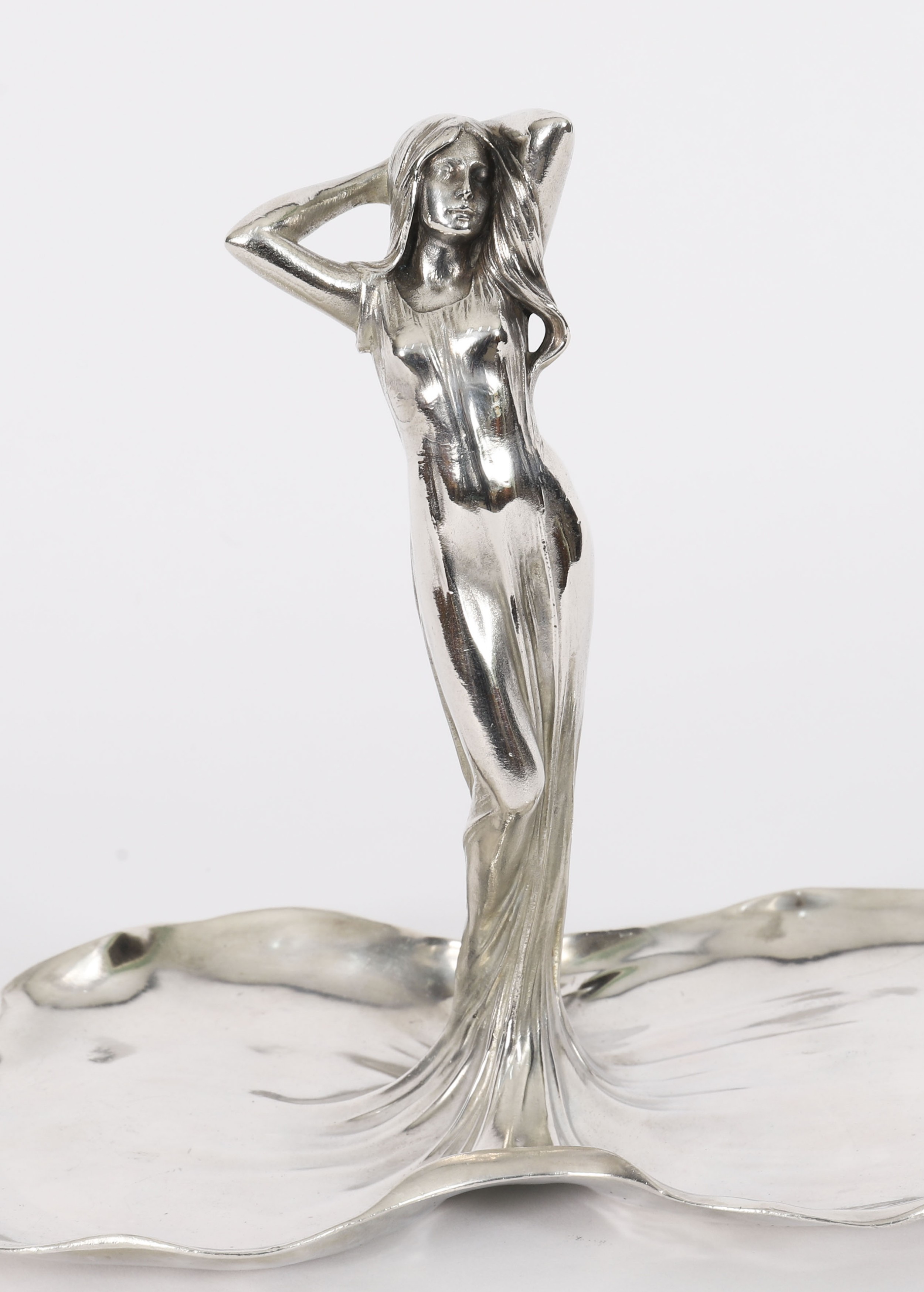
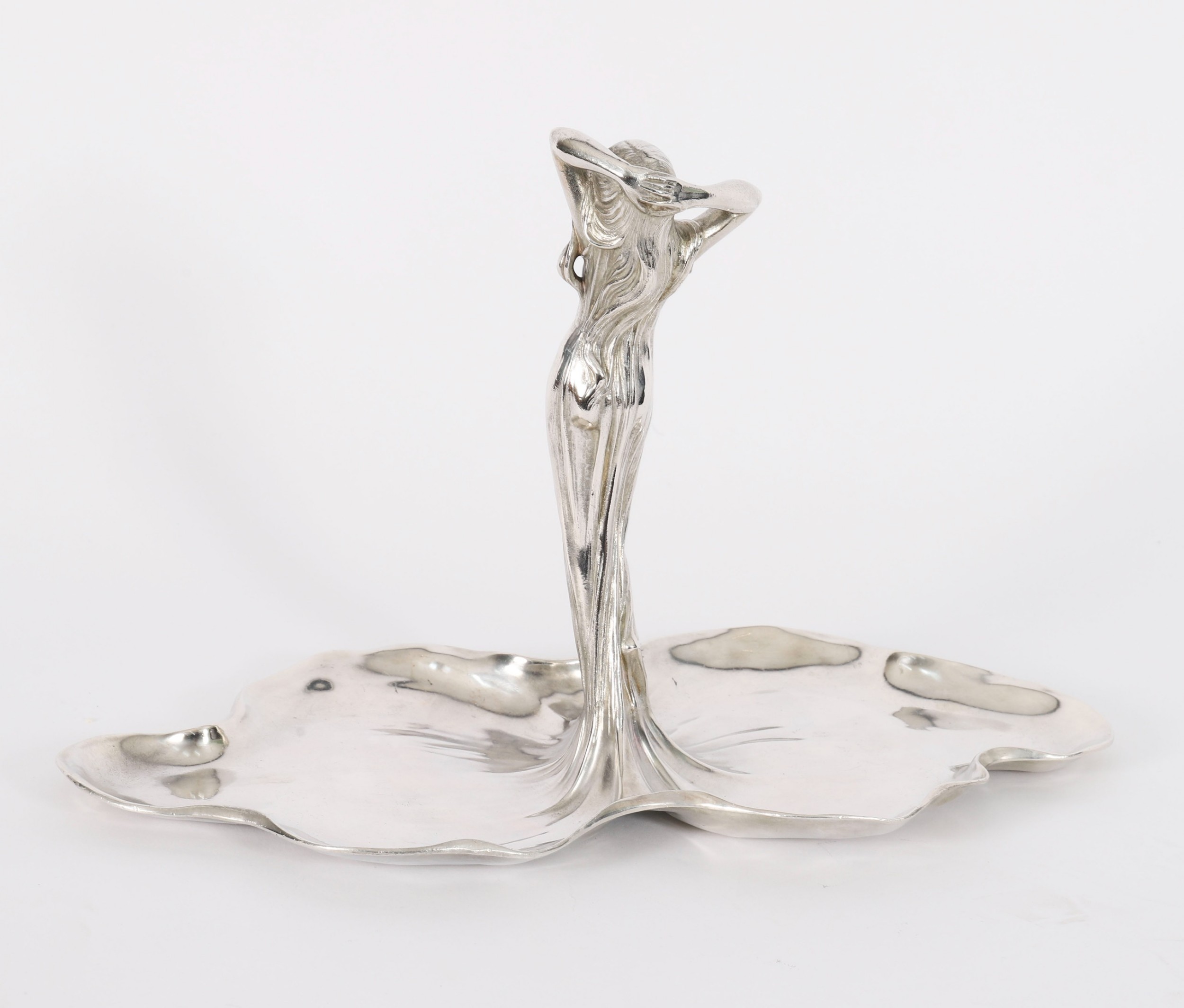
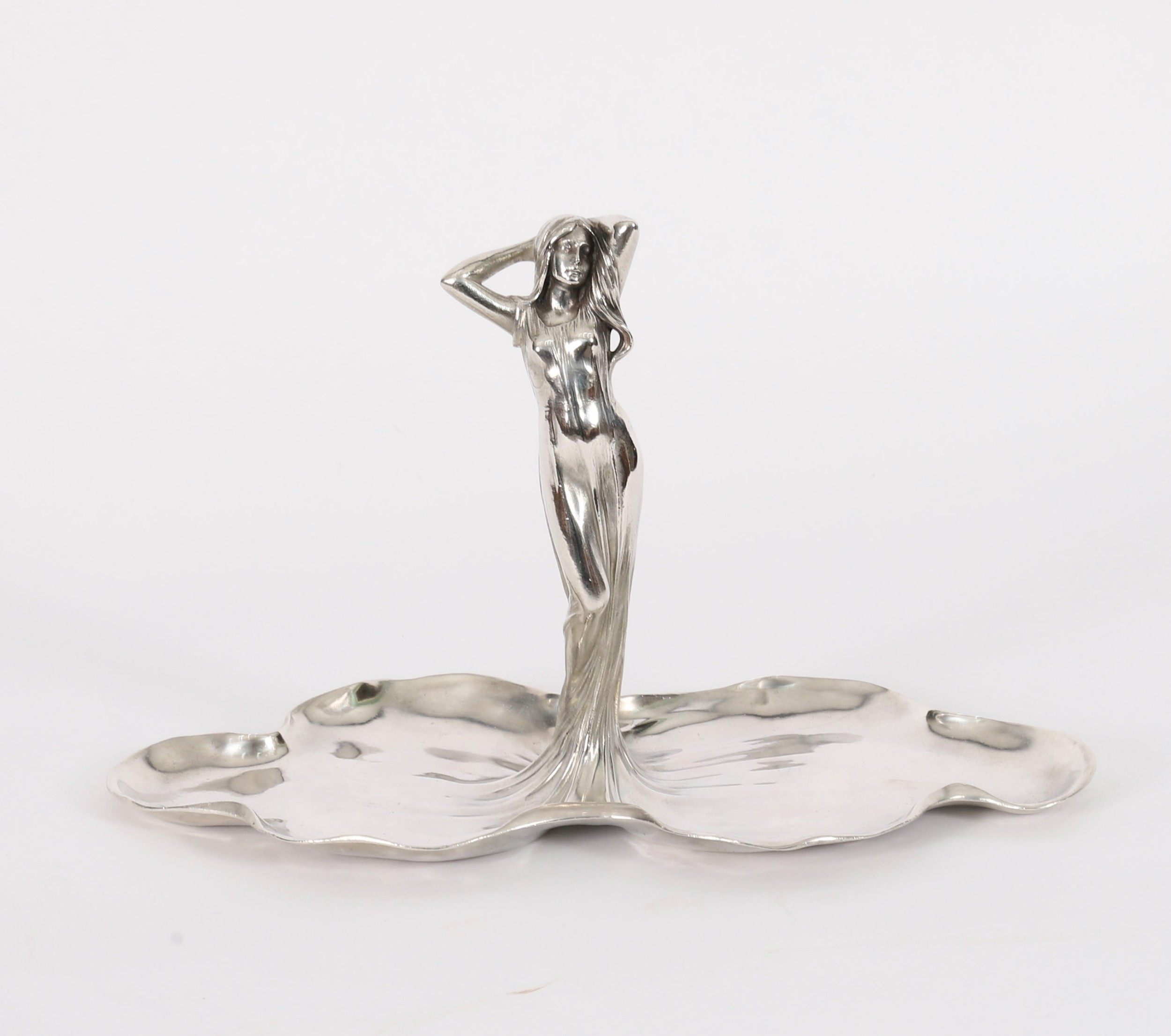
Regent Antiques has dated this piece to the 1900s.
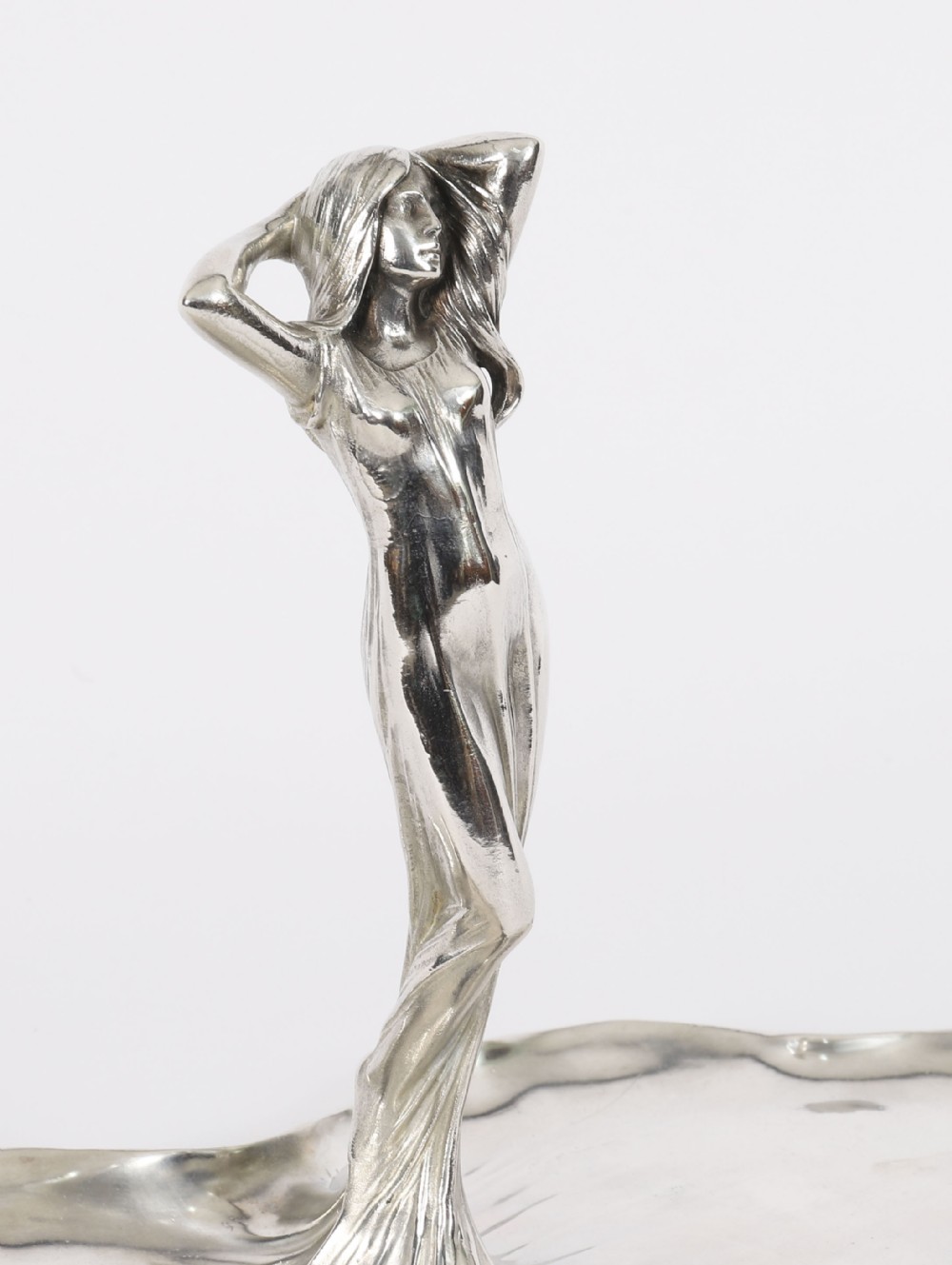
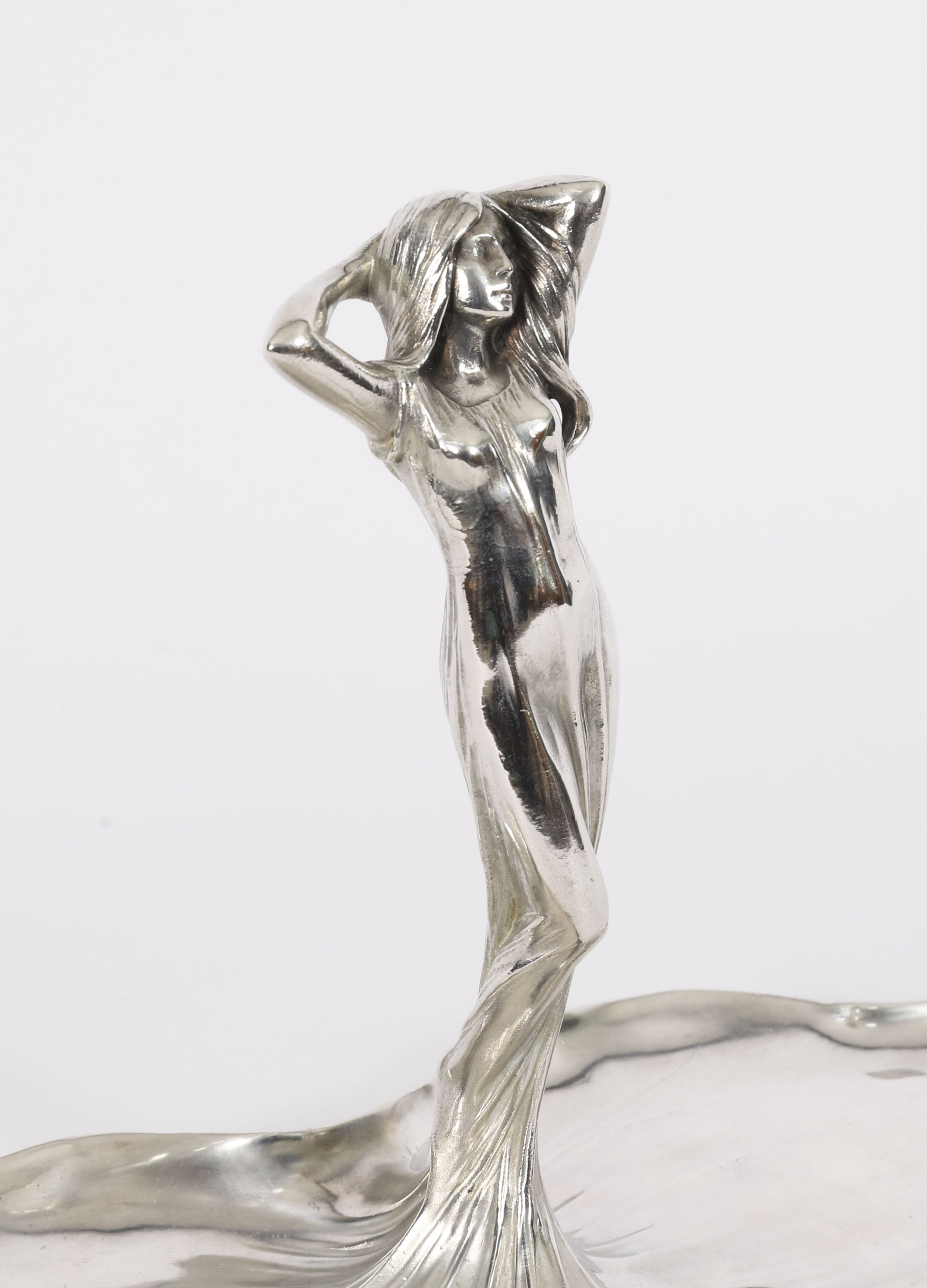
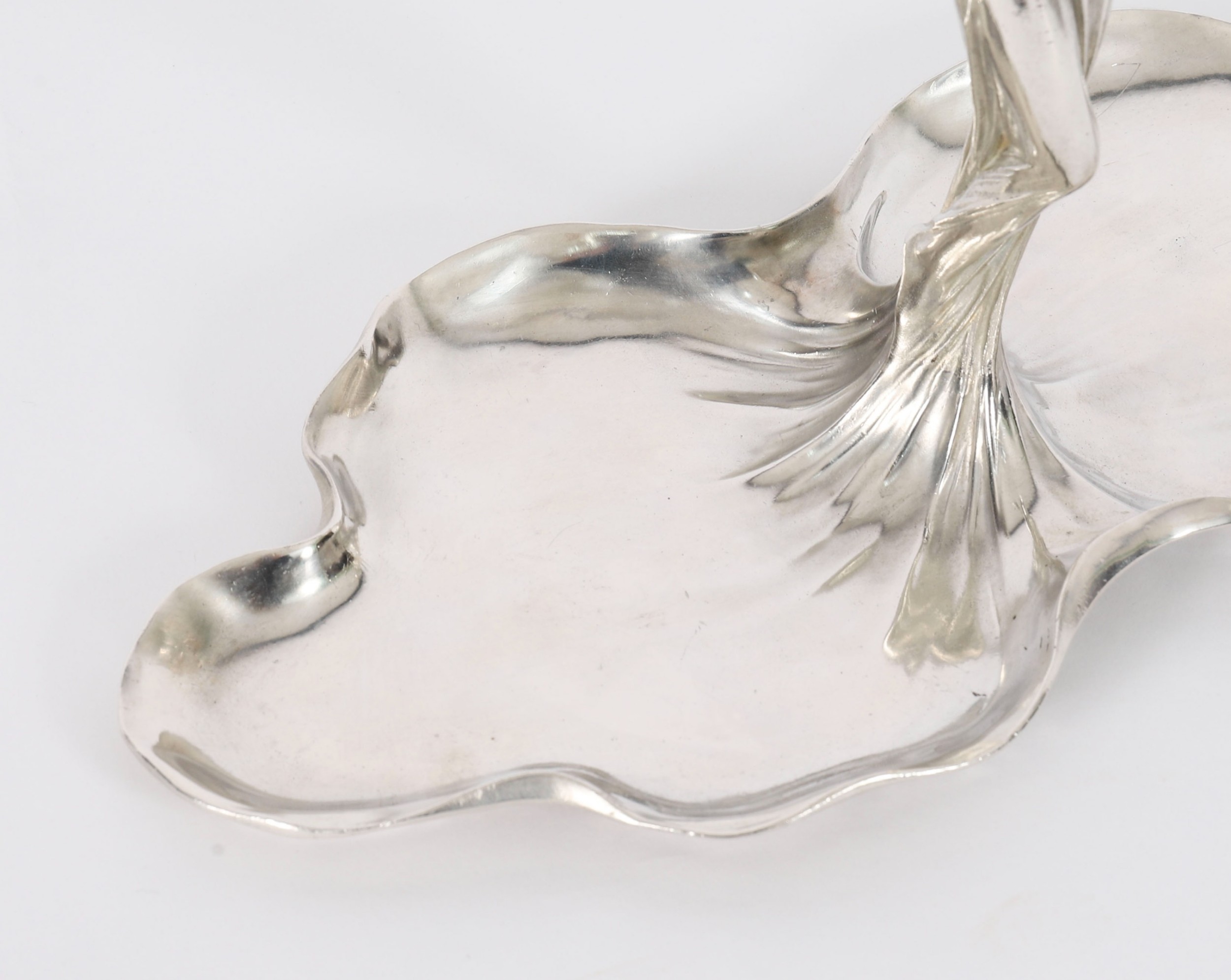
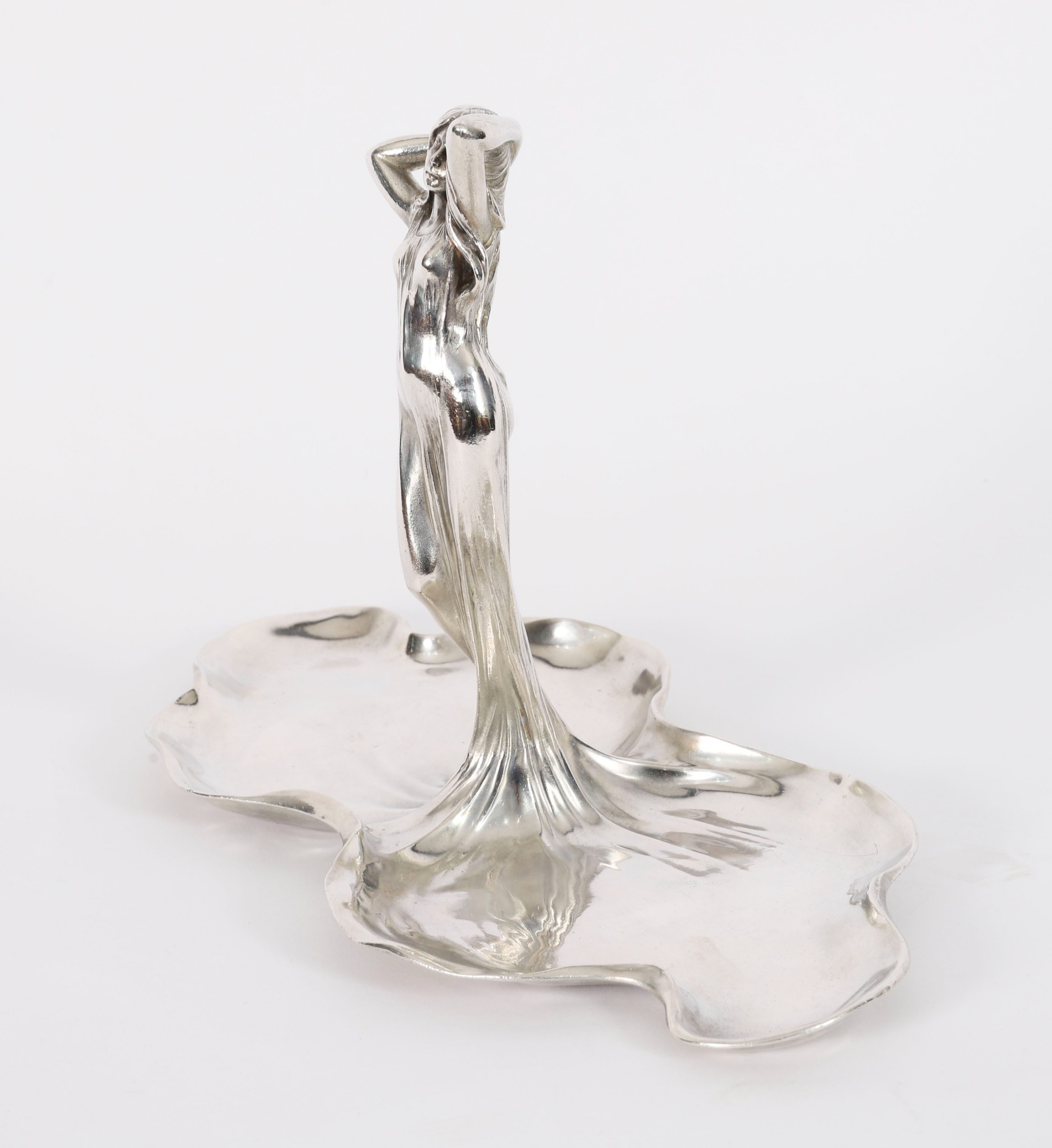
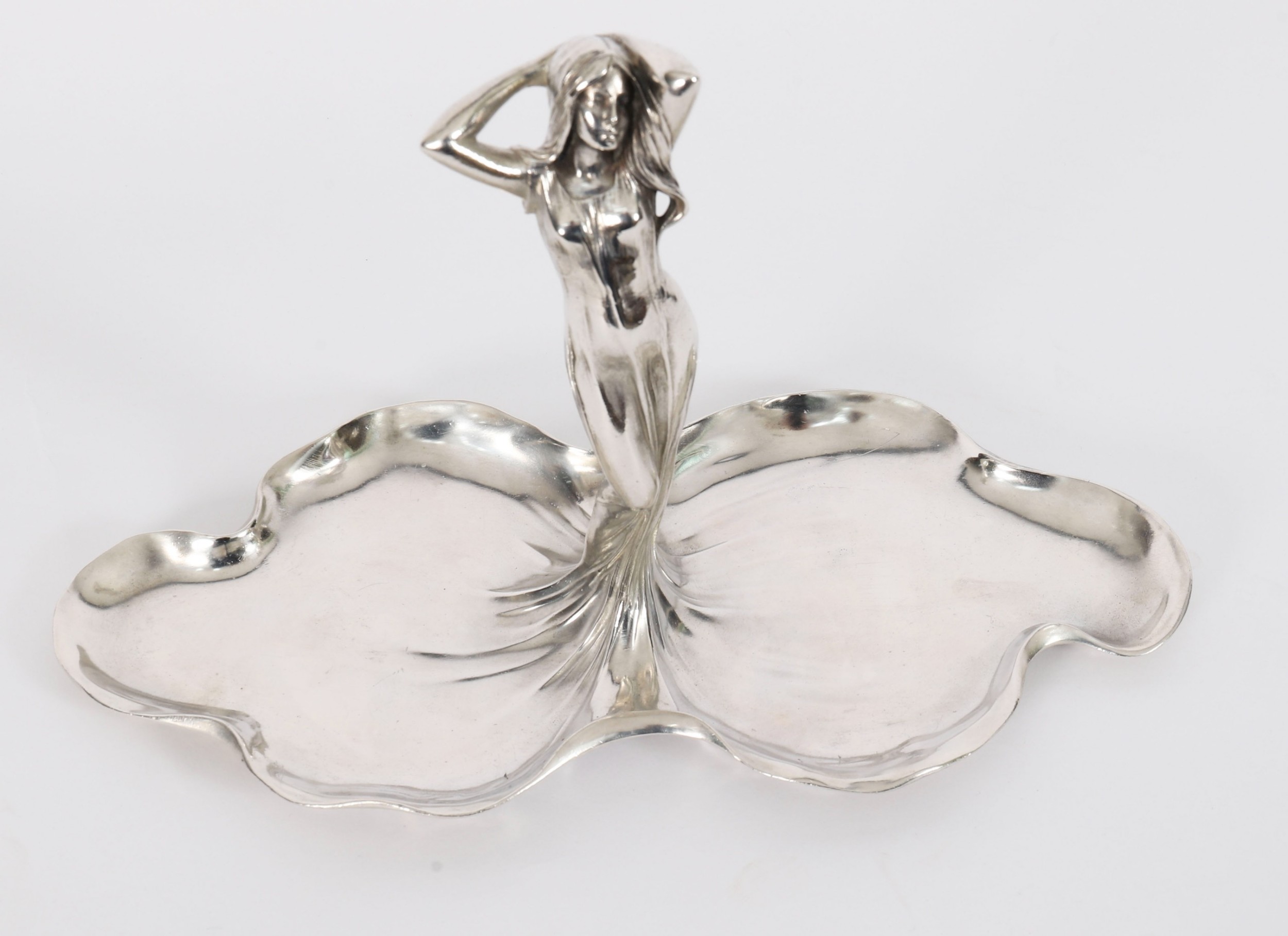
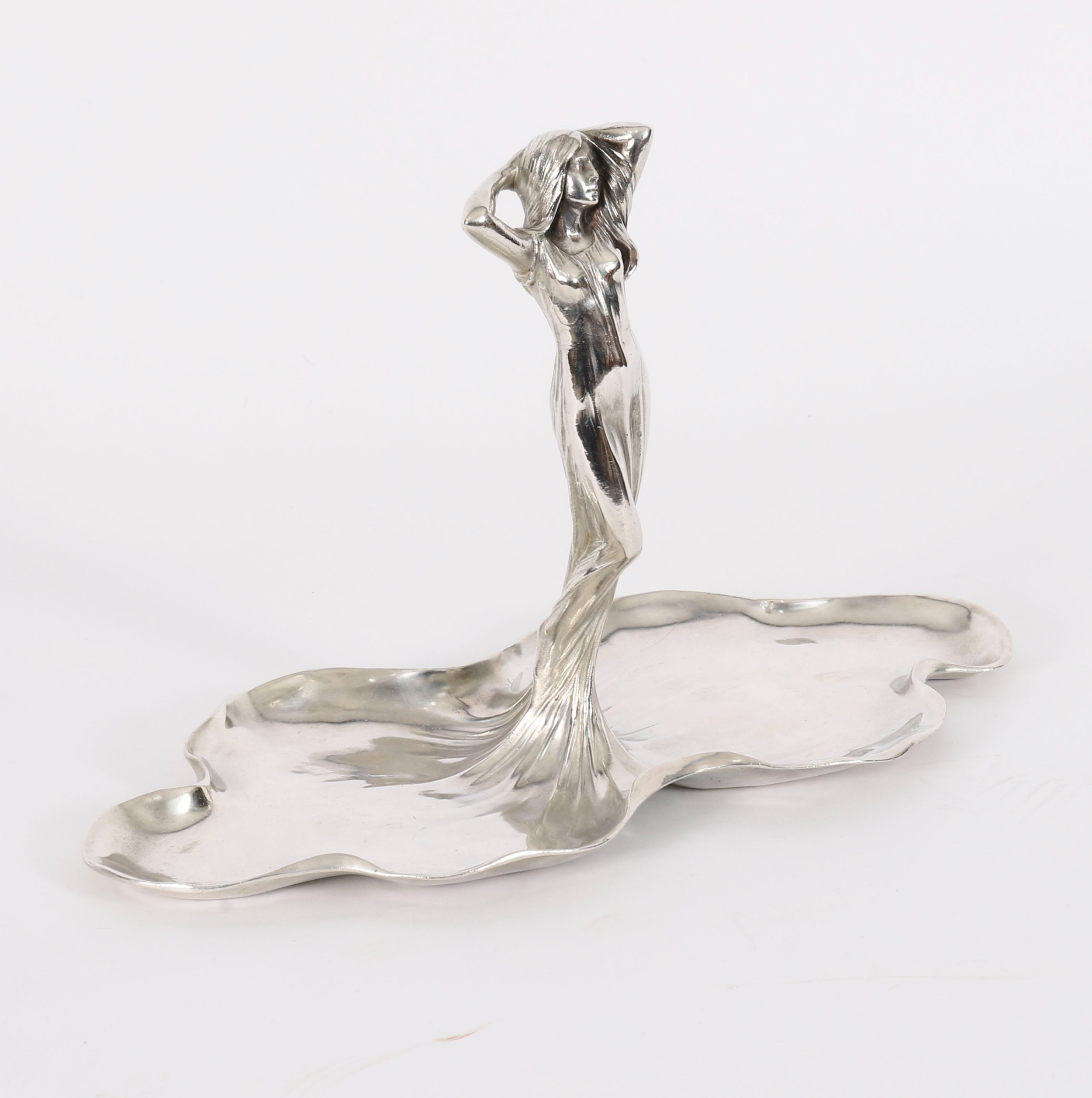
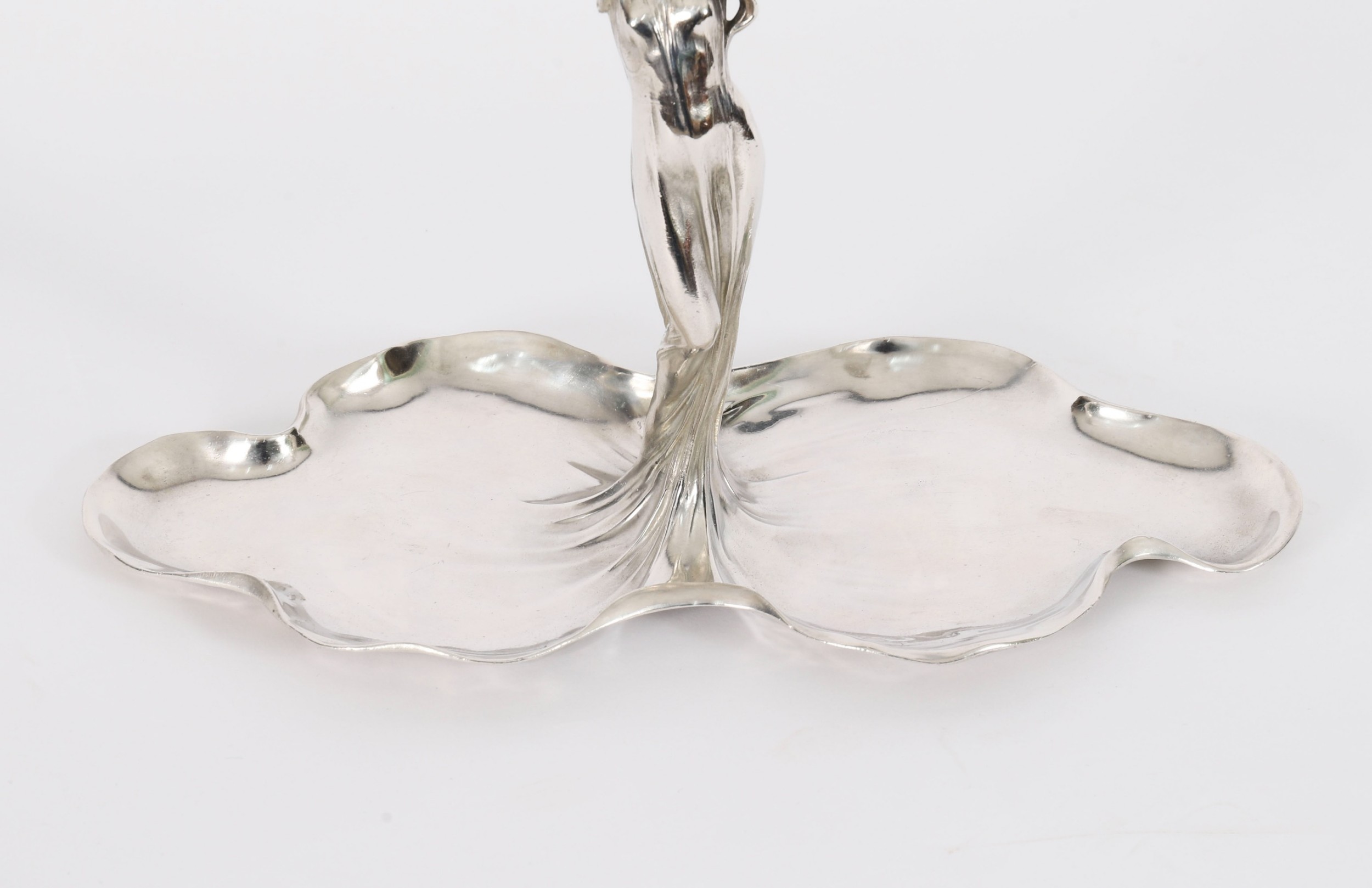
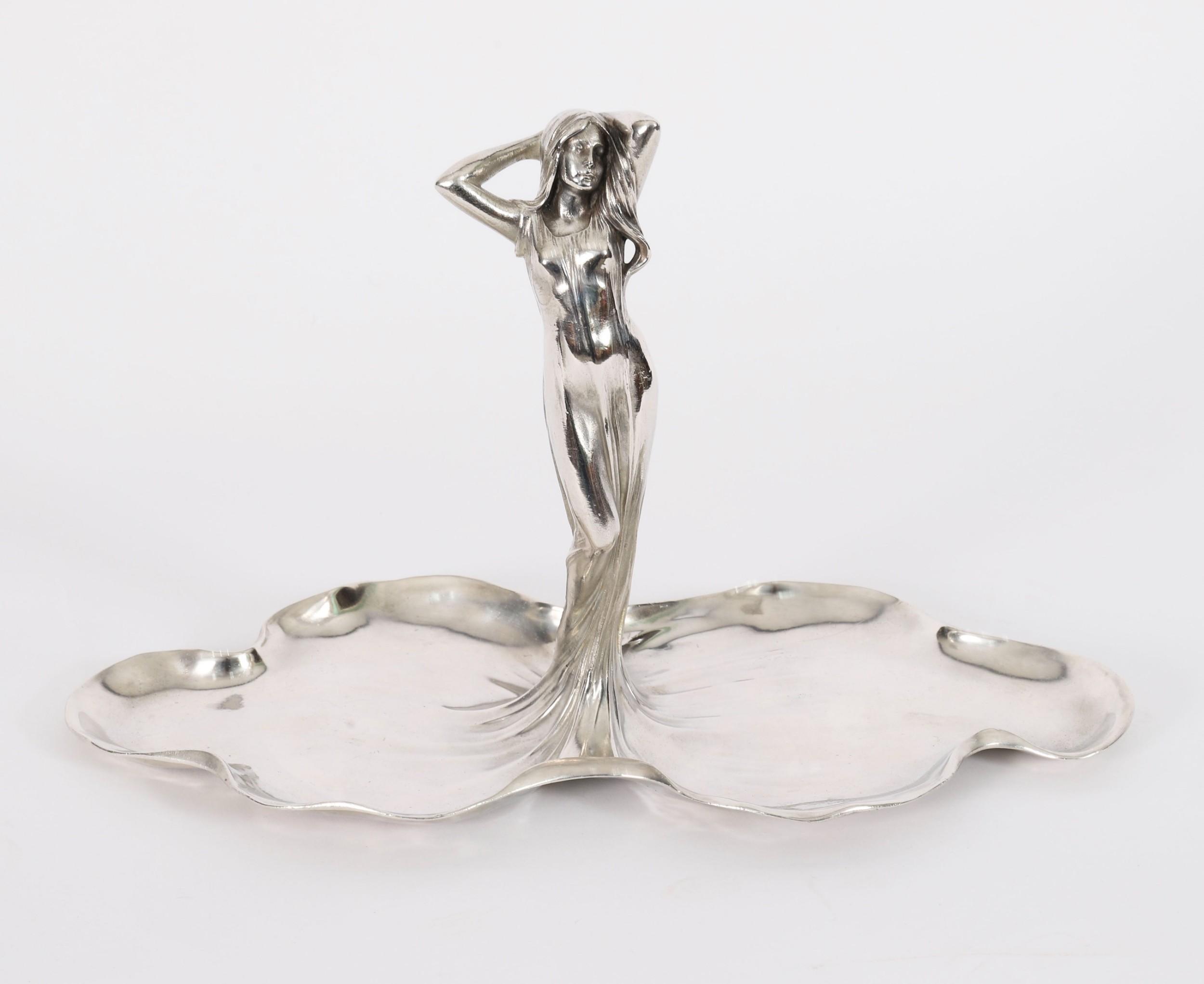
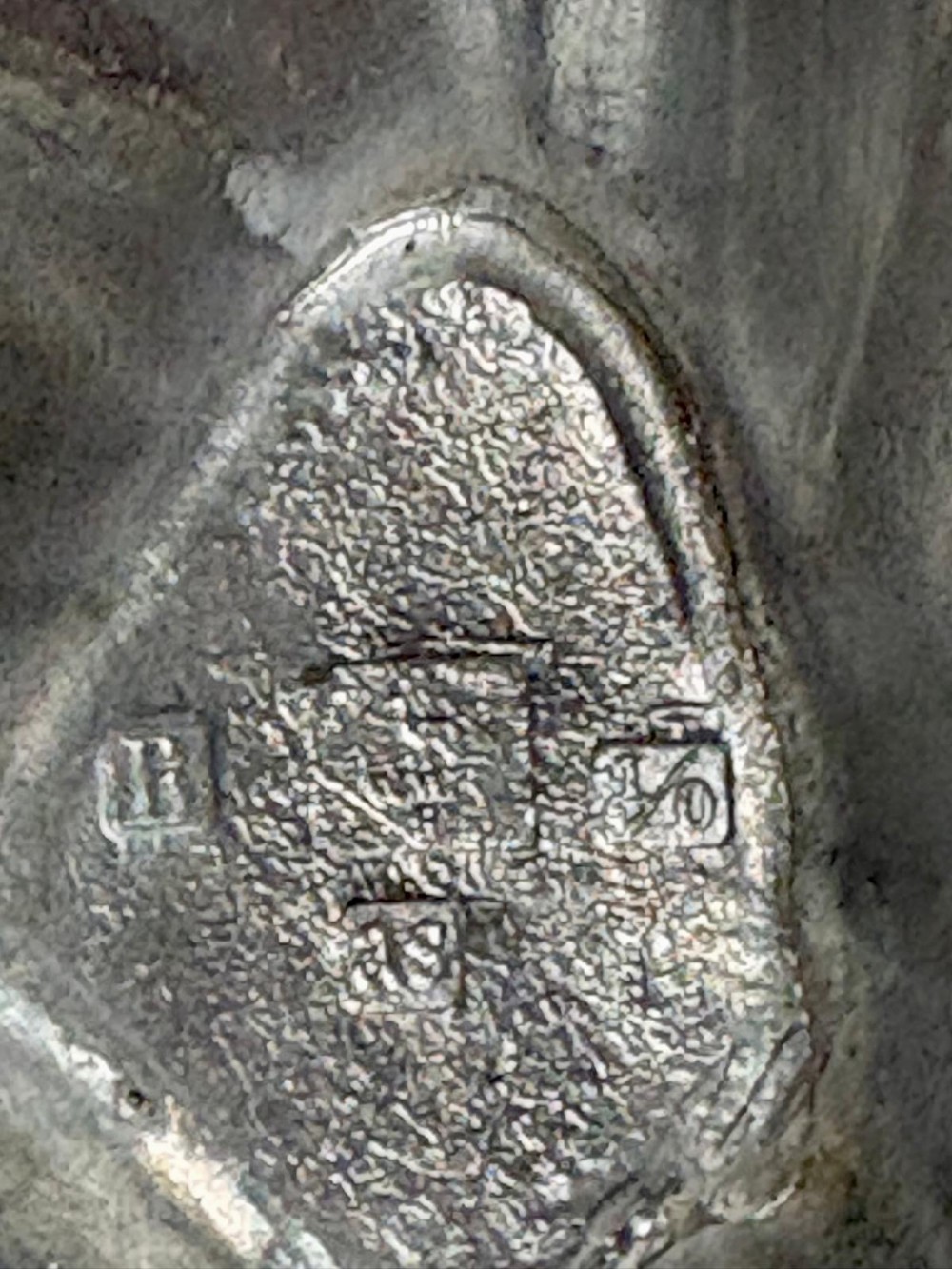
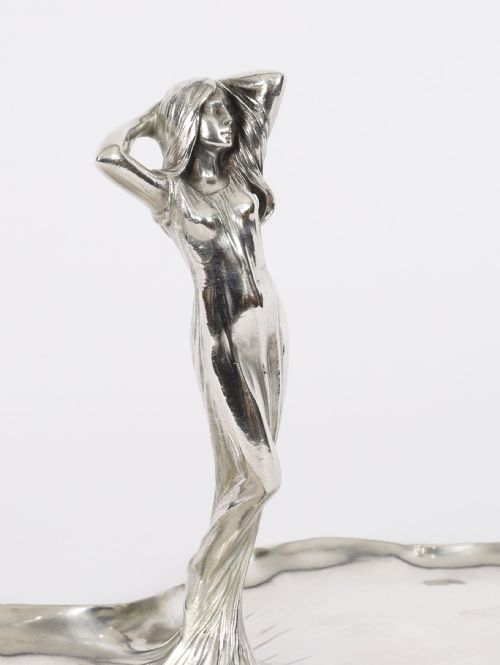
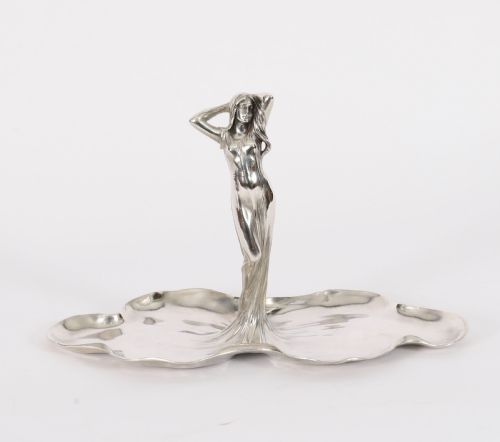
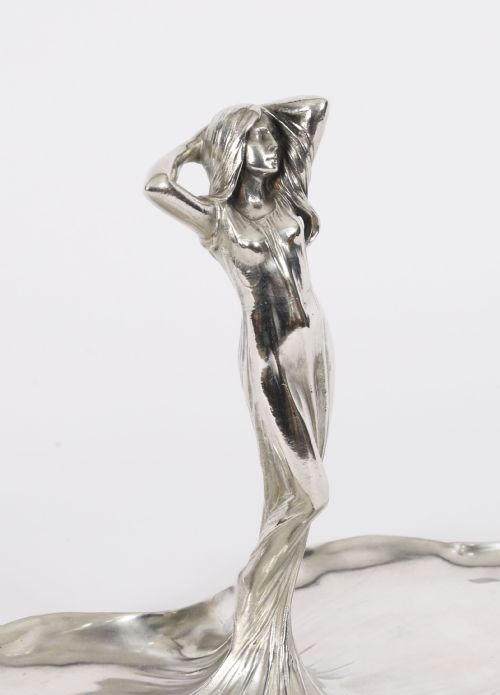
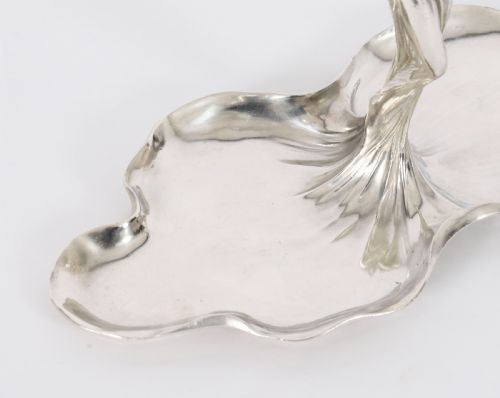
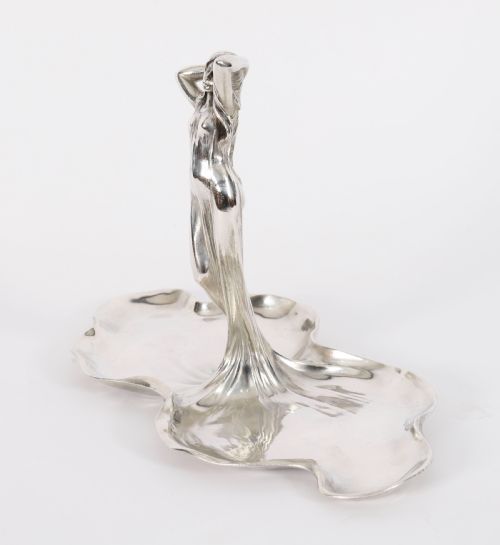
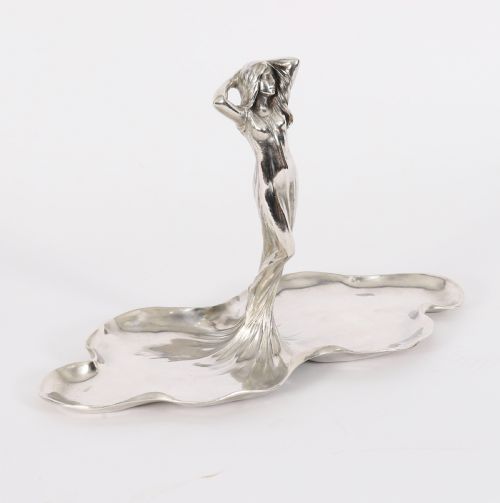
Depicting a female figure in a long, flowing diaphanous dress, the train forming the double-sided tray, marked to the underside with 'AS' for antique silver finish, 'B' for Britannia metal and 'I/O' for normal thickness silver plate, along with the WMF ostrich mark.
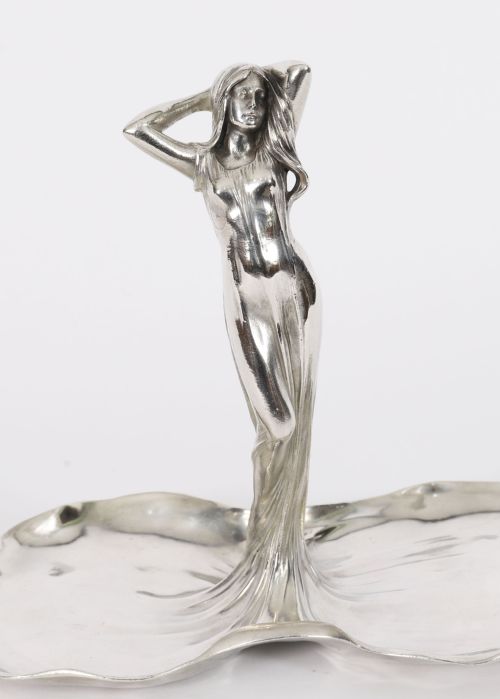
This exquisite casket could house anything from trinkets, keys, sweets to jewellery.
Whatever you choose to use this item for you are sure to do it in style.
Condition:
In excellent condition with no dings, dents or signs of repair. Please see photos for confirmation.
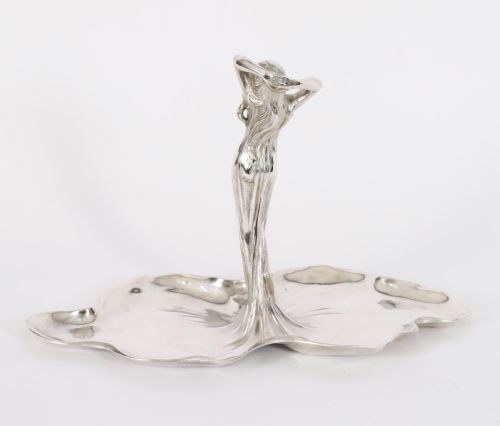
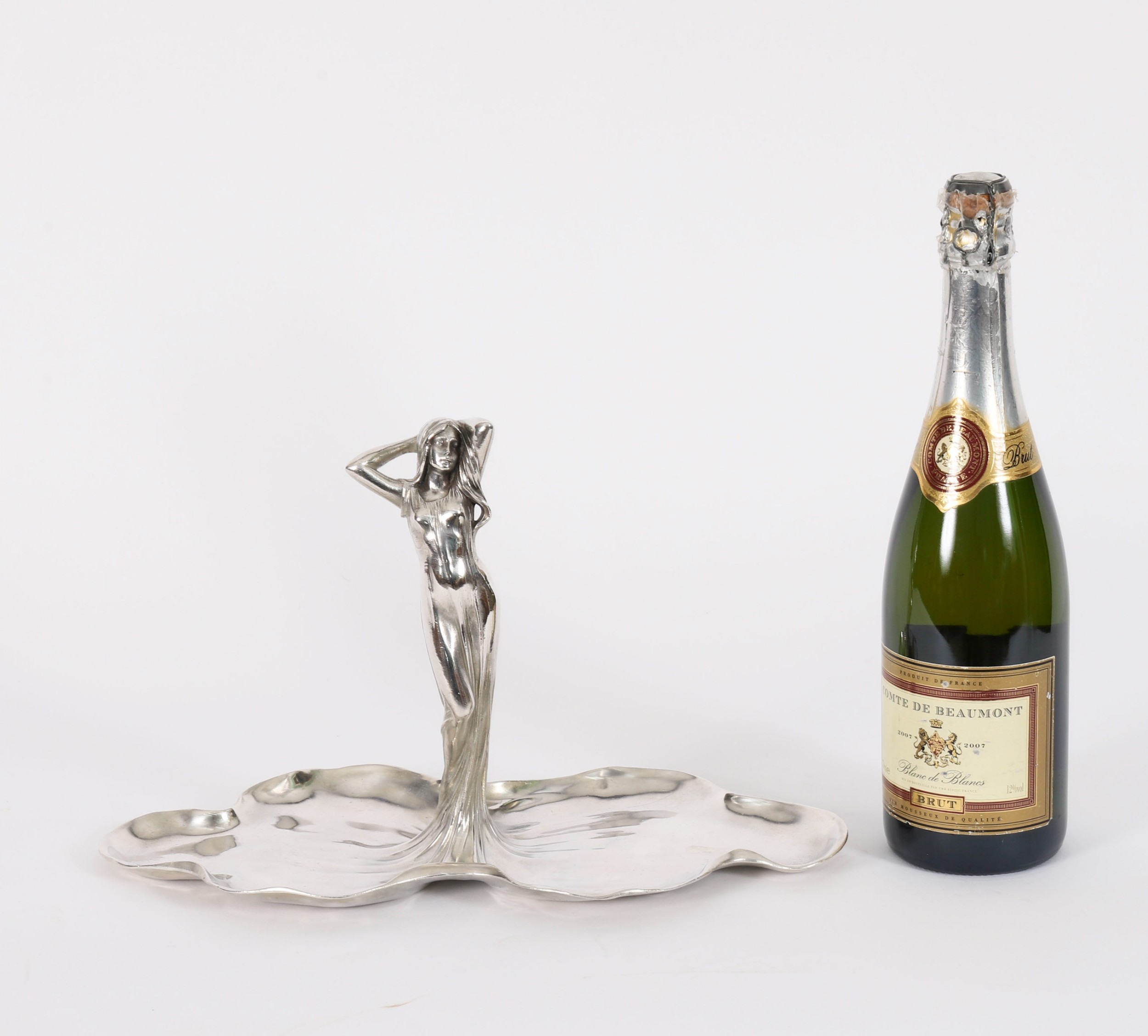
Dimensions in cm:
Height 22 cm x Width 35.5 cm x Depth 17 cm
Dimensions in inches:
Height 9 inches x Width 1 foot, 2 inches x Depth 7 inches
WMF
This was the second company to be founded by Straub - previously in 1850, from the nucleus of a small repair workshop, which he had set up to work on the construction of Geislingen's famous railway incline, he had founded Maschinenfabrik Geislingen. This company was involved mainly in manufacturing mill turbines and traded throughout Europe.
As early as 1862, the young company distinguished itself by winning a gold medal at the World Exhibition in London. In 1866, following the departure of the brothers Louis and Friedrich Schweizer, the company was renamed Straub & Sohn" (Straub & Son). The company showroom, built in 1868 in Berlin, gradually evolved to become the company's first retail outlet. Three years later, the company was already employing 60 workers. By 1880, the number of employees had grown to approximately 200 and the company was already producing 960 different items.
1880 saw the merger between Straub & Sohn and "Ritter & Co.", Esslingen, to form a public limited company under the name of Wurttembergische Metallwarenfabrik. At the time of the merger, Ritter & Co.'s Esslingen factory was already using the electroplating method of silver plating and had the more modern production facilities at its disposal. Straub's company, on the other hand, was the more profitable of the two.
1892 saw the development of a special technique for silver plating cutlery, whereby the silver is distributed in a way that, at the points of the cutlery most exposed to wear and tear, the coating is twice as thick as elsewhere. This process was patented and is still in use today. Known nowadays as 'Perfect Hard Silver plating' the technique remains exclusive to WMF.
Under Carl Hugele the company gained international standing. At the turn of the century the factory in Geislingen employed 3,000 workers. By 1910, this number had already grown to 4,000, making WMF the largest company in Wurttemberg at this time. Sales catalogues were printed in twelve languages. Subsidiary companies in London, Warsaw and Vienna opened up export markets.
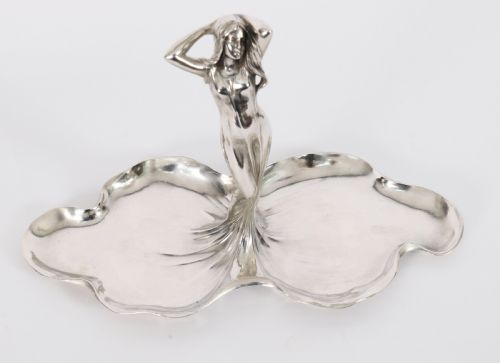
Under the direction of Albert Mayer the WMF studio was influenced by the art nouveau style. The product range was modernized and considerably extended. In 1905 WMF acquired a majority holding of the Cologne company Orivit AG, which manufactured products from "Orivit", a tin alloy.
As of 1925, products created by the Contemporary Decorative Products Department (NKA) made their debut on the market. This department was set up under the direction of Hugo Debach in order to establish the name of WMF amongst consumers interested in art and design. This department was responsible for producing the special "Ikora" finish, which has earned an important place in the annals of art history. The "Ikora" brand name referred to a specific method of treating the surface of the metal, by which layers of coating were applied in a partly chemic
Regent Antiques has dated this piece to the 1900s.
We specialise in english and continental furniture, silver, porcelain and decorative items.
You can view the stock and full dealer information on the Regent Antiques Profile Page
Regent Antiques is a registered member of LAPADA CINOA
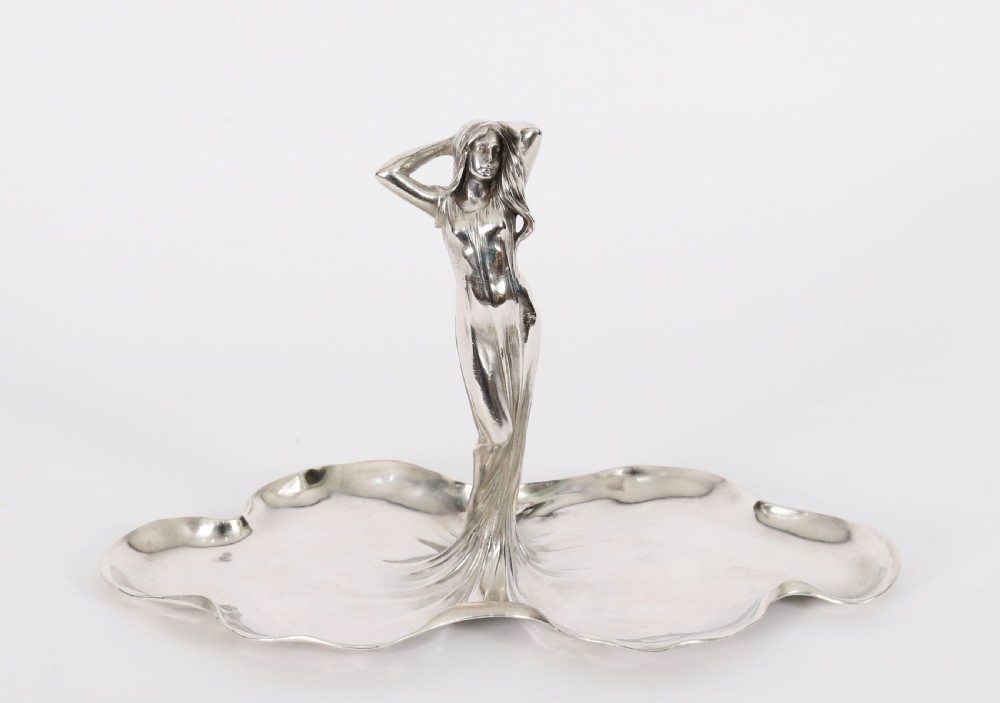
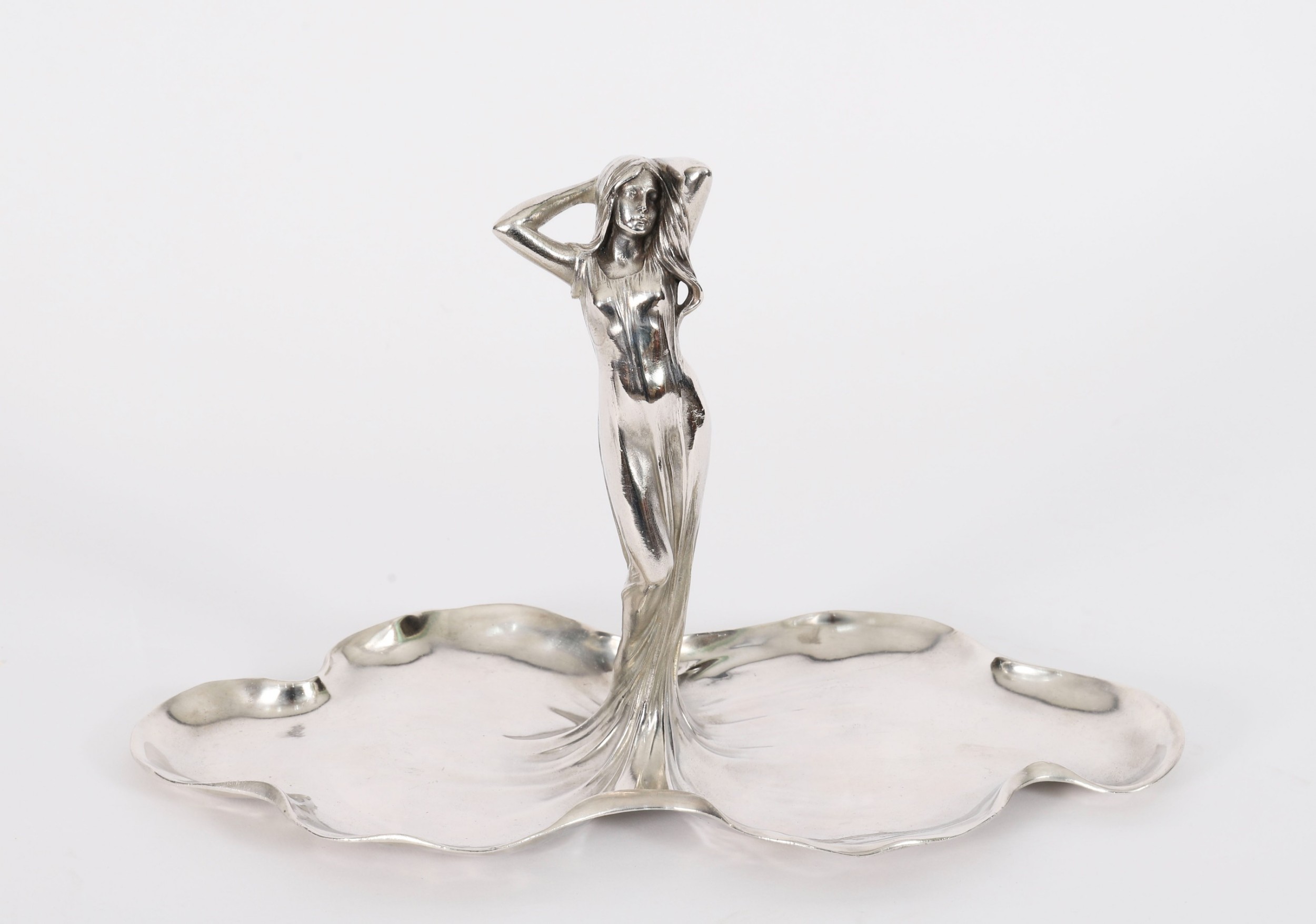
Antique German Wmf Silver Plated Sweets / Visiting Card / Key/ Tray Circa 1900