



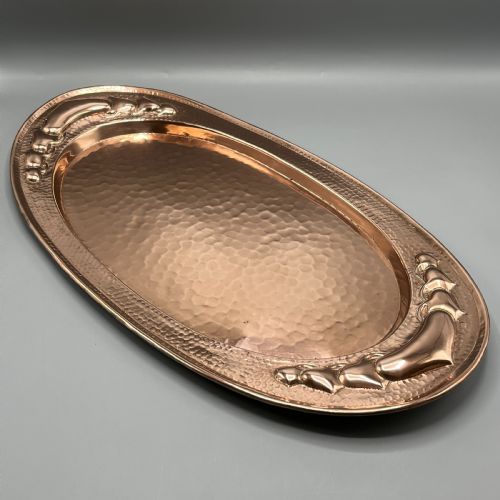


Art Nouveau Tray
An art nouveau tray brings organic lines and flowing floral motifs into daily service, combining utility with distinct turn-of-the-century craftsmanship.
Art Nouveau Tray
When you search for an art nouveau tray, you encounter metalware designed during the height of the movement spanning the late nineteenth and early twentieth centuries. These domestic objects serve various functions, appearing as card trays, crumb trays, pen trays, and decorative dishes alongside larger serving pieces.
Materials and construction
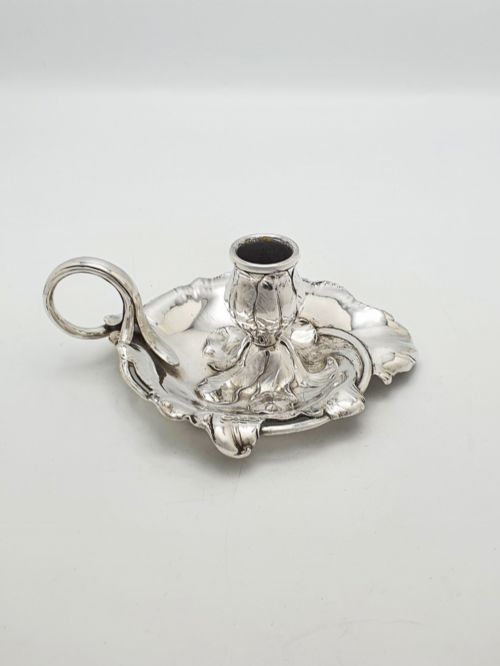
Makers utilised versatile base metals such as pewter, Britannia metal, and copper, which allowed for fluid casting and manual hammering. Silver plating and gilt bronze also appear, giving surfaces a reflective sheen that complements the curvilinear designs.
Techniques combine machine milling with hand finishing, notably in the repousse copper work and hammered surfaces produced by prominent workshops. Oak and other timbers appear in structural pieces like tray tables and hall stands, integrating metal insets into wooden frames.
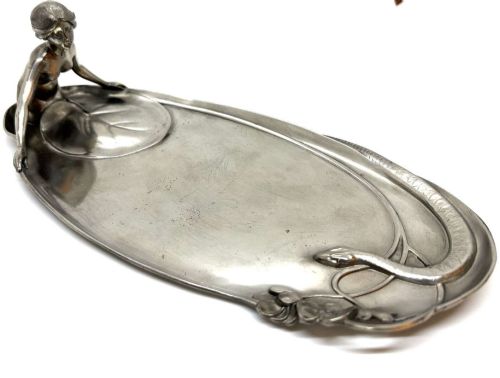
Several trays feature mischievous serpents sharing space with maiden figures, proving nature was delightfully unruly at the turn of the century.
Distinguishing quality
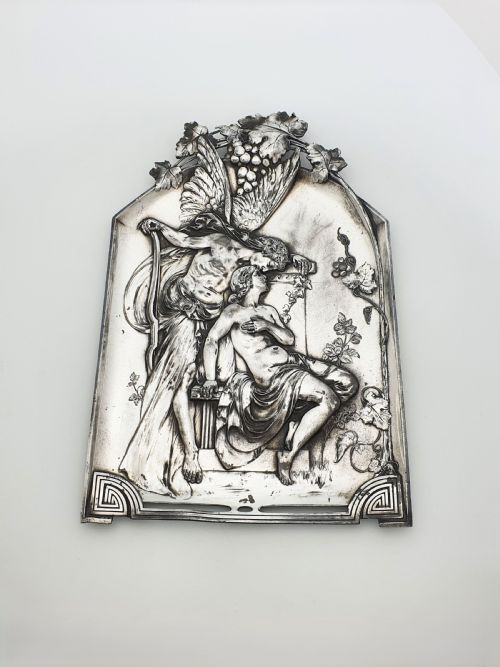
The calibre of a piece rests upon the crispness of the cast relief and the sensitivity of the hand-hammered surface work. Superior examples display sharply defined figural details, such as maiden figures or floral stems, without the softening of edges that indicates worn moulds.
The integrity of the original finish also separates standard production items from finer studio output. Patination that highlights the natural texture of copper, pewter, or bronze elevates the visual impact of the design.
WMF·Orivit·Liberty & Co.·Georges Van Der Straeten·Maurice Dufrene
The Art Nouveau Tray Glossary
- Repousse
- A metalworking technique where the metal is hammered from the reverse side to form a raised design on the front. This method creates tactile, three-dimensional floral and organic motifs on copper trays.
- Pewter
- A malleable alloy traditionally composed of tin alloyed with copper and antimony. It provides a durable, soft-lustre material favoured for card trays and desk accessories.
- Jugendstil
- The German manifestation of the art nouveau movement, characterised by dynamic, linear wave forms. Pieces bearing this descriptor often originate from continental metalwork manufacturers.
- Britannia metal
- A specific type of British pewter alloy known for its silvery appearance and ability to take a fine polish. Manufacturers utilised it for cast tableware and decorative dishes.
- Vide poche
- A small receptacle intended for emptying pockets of coins, keys, or cards upon entering a room. These desk accessories and card trays often feature figural maiden designs.
Art Nouveau Tray: Frequently Asked Questions
What is an art nouveau tray used for?
These pieces function as desk accessories, card receivers, or serving dishes for calling cards and small domestic items.
Historically placed in hallways or on writing desks, they held everyday pocket contents with decorative flair.
How do I clean a copper or pewter tray?
Maintenance requires gentle dusting and avoiding abrasive polishes that strip the historic patination from the metal.
Preserving the original surface sheen protects the subtle hammer marks and cast details characteristic of the period.
Are these pieces marked by makers?
Many examples bear factory stamps, designer ciphers, or model numbers stamped into the underside of the base or rim.
Identifying marks help attribute items to specific continental workshops or British metalsmiths active around nineteen hundred.
How do I date an art nouveau tray?
Dating relies on stylistic markers, materials like Britannia metal or solid copper, and any accompanying maker hallmarks.
Items typically align with the aesthetic movements spanning from the late Victorian period through the Edwardian era.