Brave Fine Art has dated this piece to the 19th Century.
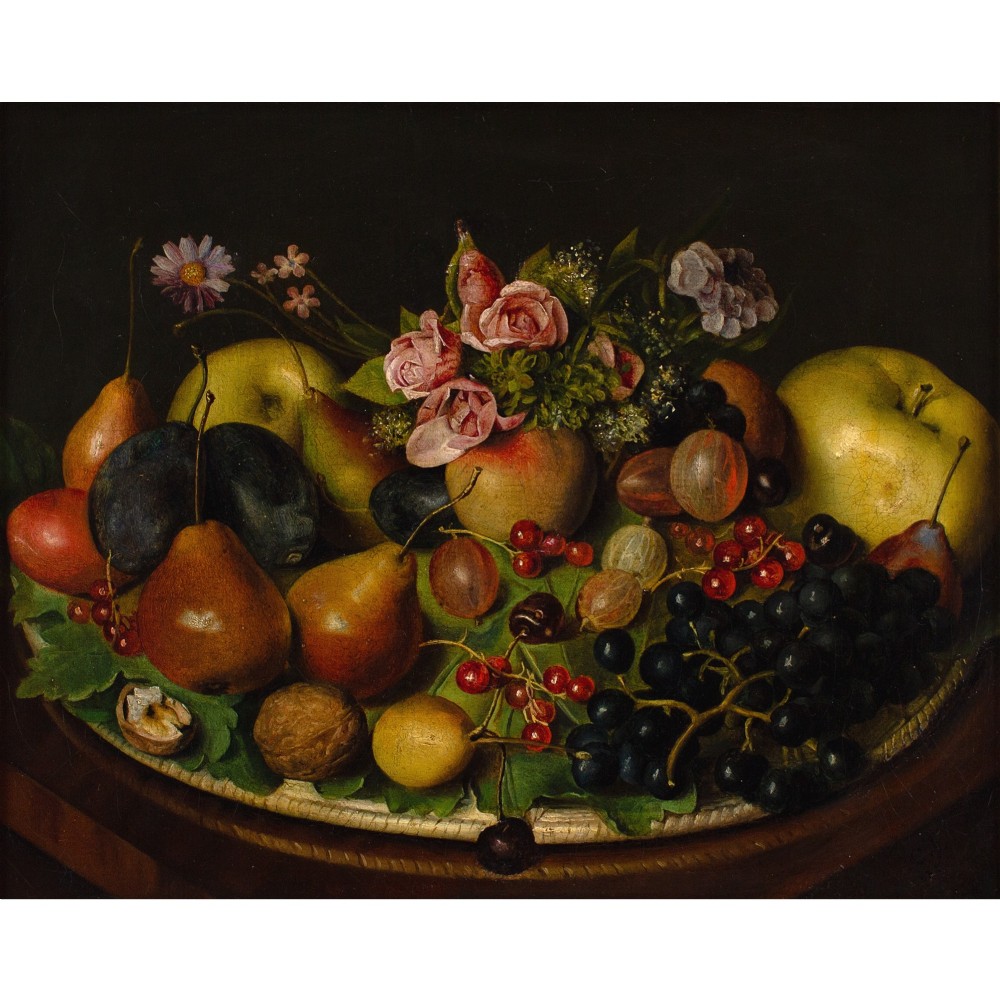
It’s a fine example from the period and its spirit is bound to the 17th-century Dutch Golden Age.
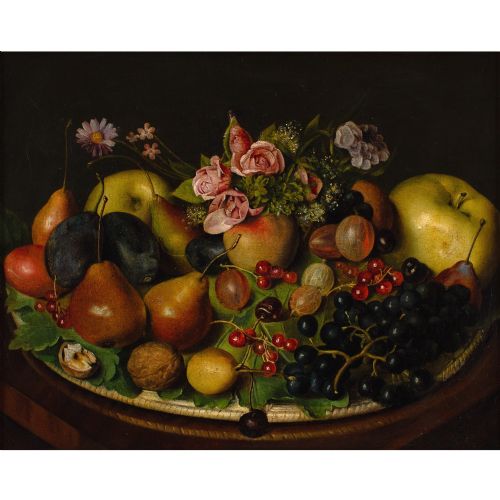
Stylistically, it’s a little reminiscent of works by Balthasar van der Ast (1593/94-1657) and it’s highly conceivable that the artist studied his oeuvre during their academic training. One such German who modelled his style on the Dutch masters was Johann Wilhelm Preyer (1803-1889), who trained at the Düsseldorf Kunstakademie before travelling to The Hague and Amsterdam.
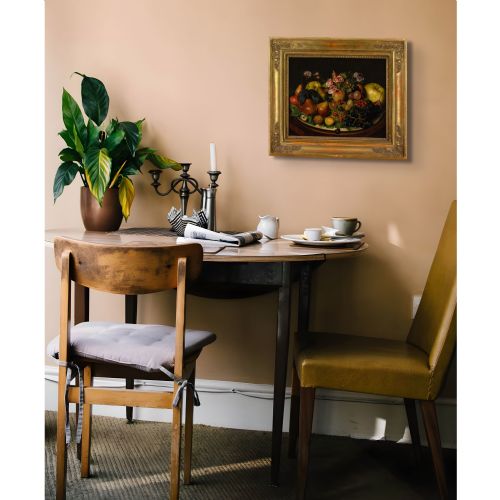
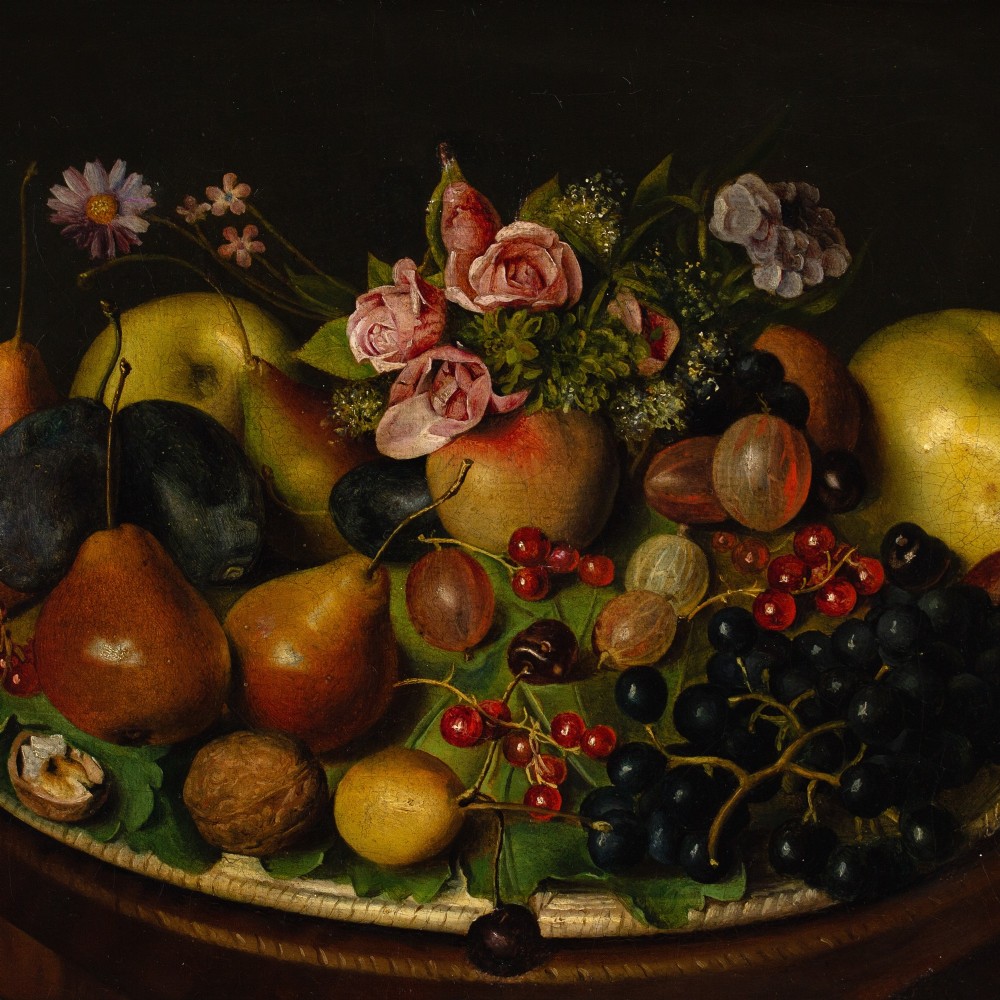
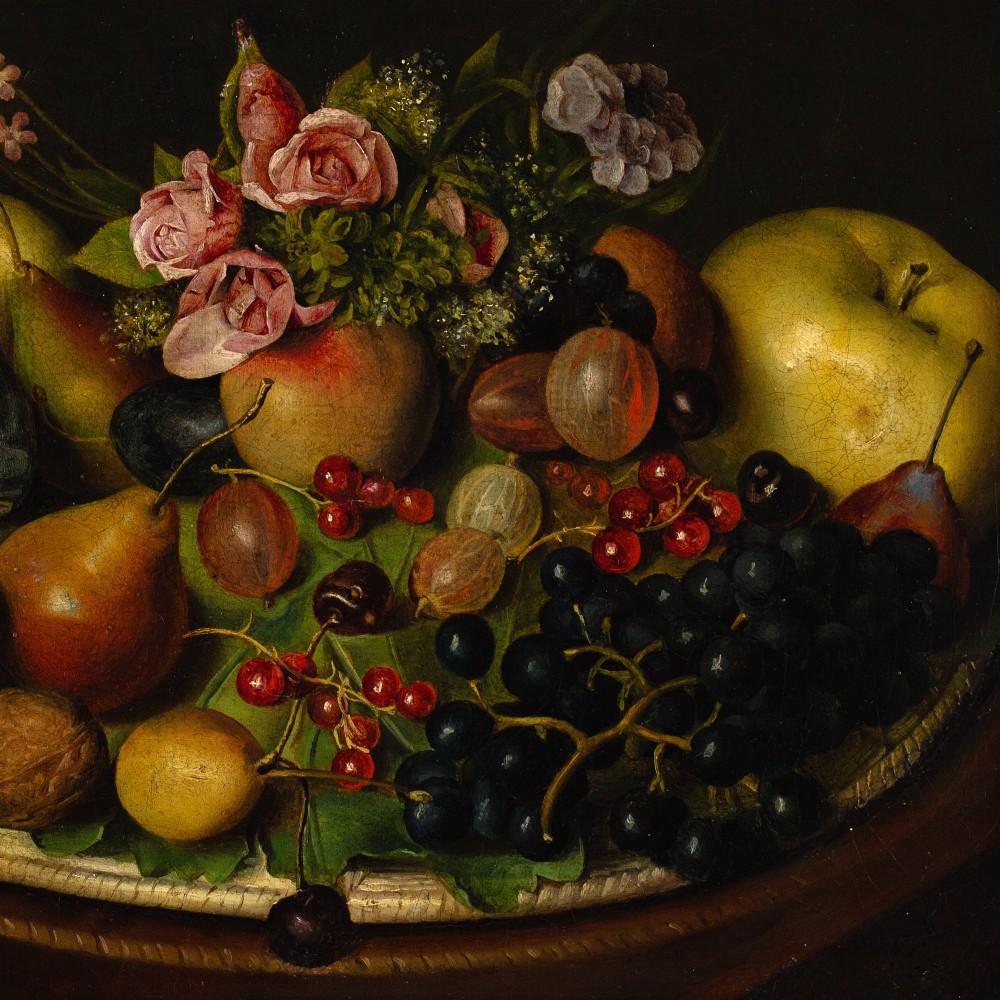
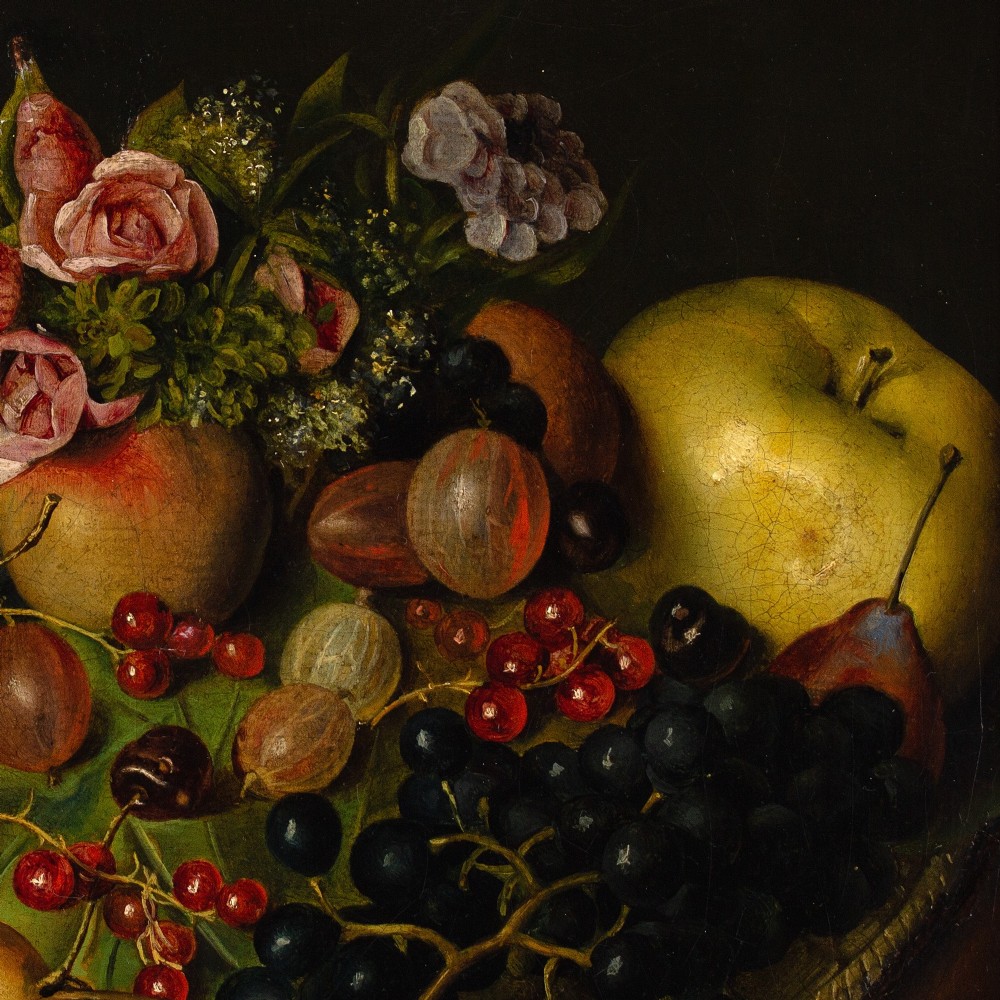
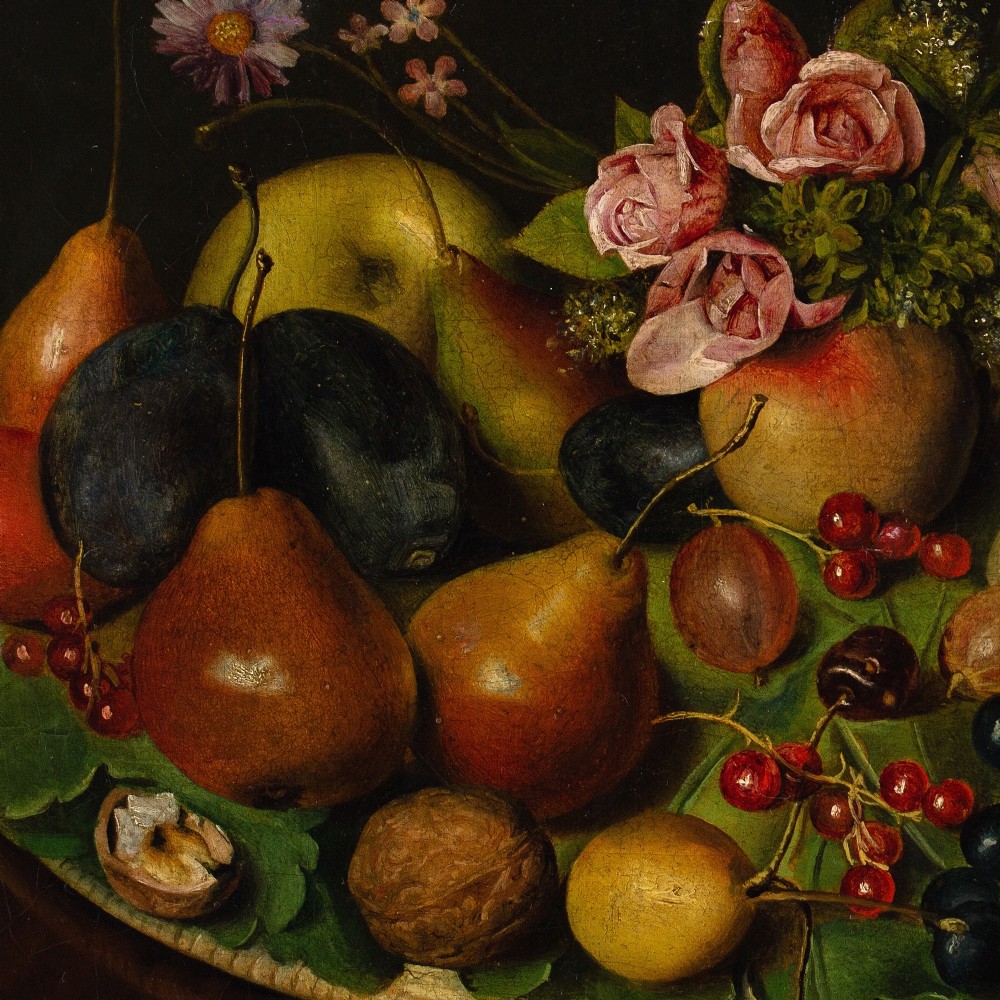
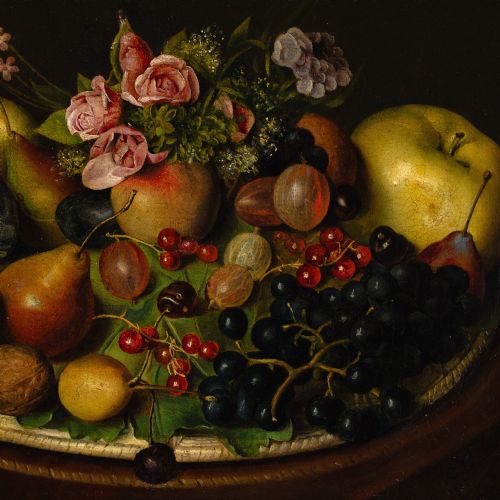
The precise handling evidenced in this piece, coupled with its skilful description of light and shade, results in a three-dimensional effect, as if the platter is emerging into one’s room. It’s a celebratory feast for the eyes - a veritable smorgasbord of colour and texture.
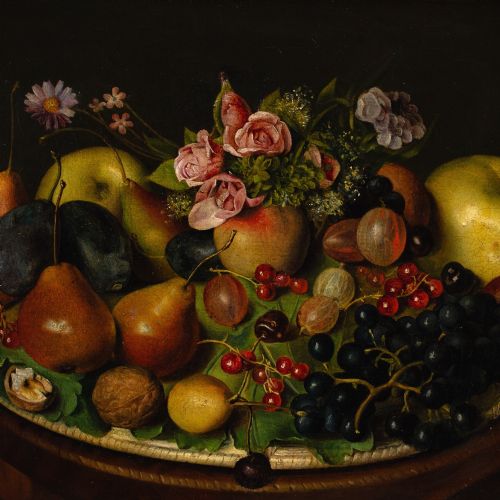
But aside from its aesthetic qualities, if we delve a little deeper, there are symbolic connotations to stimulate the mind. Pears, for example, often represent fertility due to the associations of their shape with the female form. And walnuts, along with representing discernment, also carry symbolic undertones relating to the male anatomy. Given the proximity of the pears and the walnuts, coupled with the presence of roses, is this perhaps a representation of fertility and love?
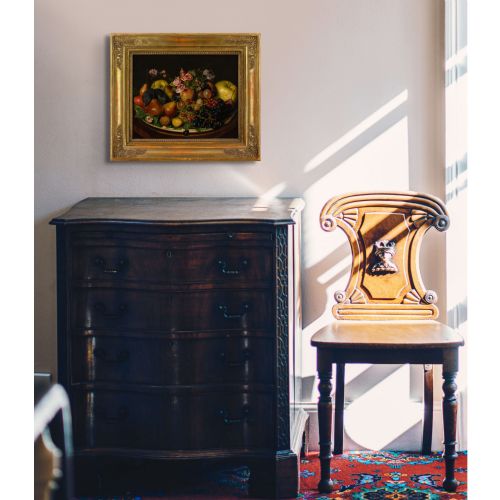
Monogrammed, dated and held in a period gilt frame, which could be original.
Medium: Oil on paper laid on canvas
Overall size: 18” x 15½” / 46cm x 39cm
Year of creation: 1835
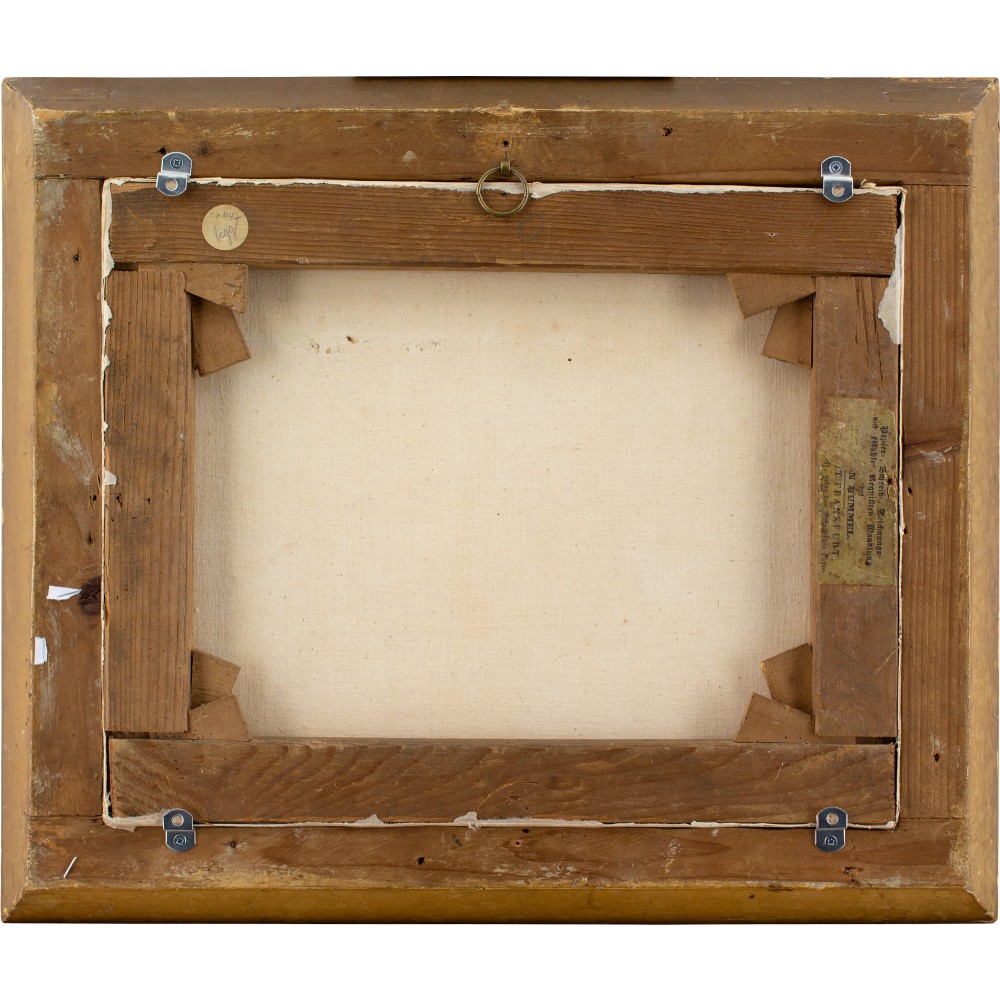
Labels & Inscriptions: Frankfurt-based supplier’s label on the reverse, which is partially legible and reads ‘Hummel’.
Provenance: Private collection, Vienna, Austria.
Condition: Cleaned. Canvas relined. Fine craquelure throughout. The paint layer is stable. Frame with various marks and showing its age.
Our reference: BRV2116
Brave Fine Art has dated this piece to the 19th Century.
Exquisite antique paintings that capture the imagination.
You can view the stock and full dealer information on the Brave Fine Art Profile Page
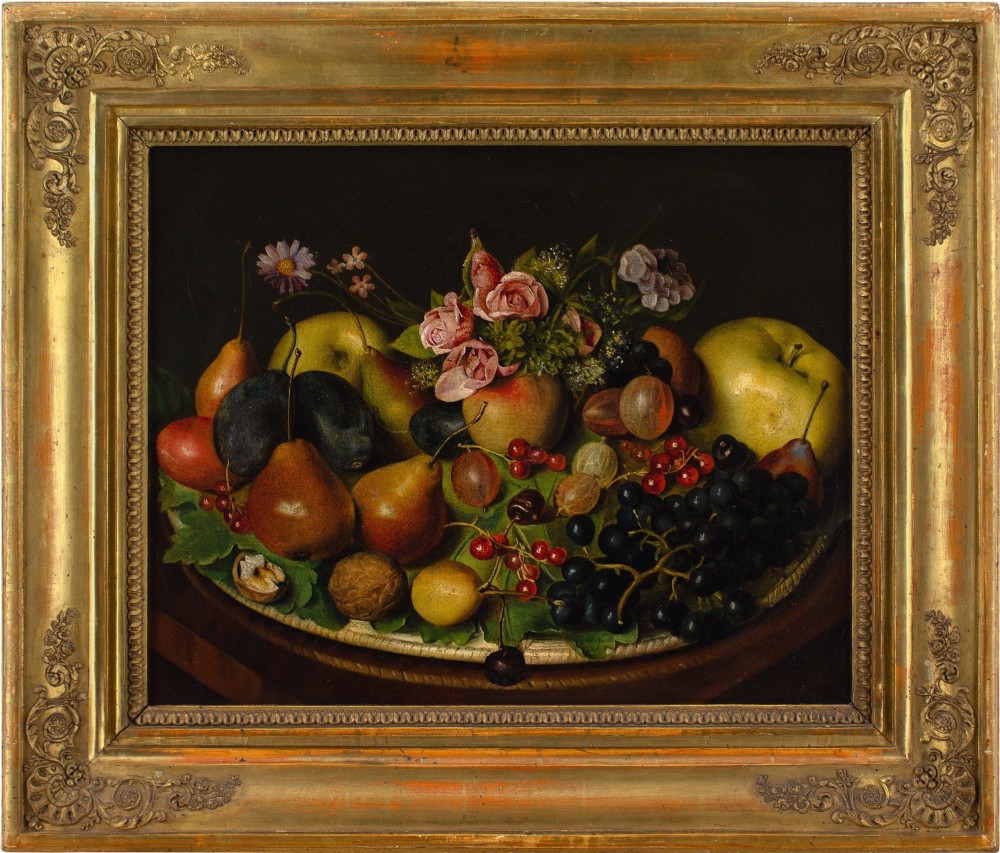
Mid-19th-century German School, Still Life with Plums, Grapes, Gooseberries & Roses - Antique Oil Painting