



Classical Still Life
A classical still life brings the quiet arrangement of fruit, flowers and vessels onto canvas, offering the enduring charm of painted form.
Classical Still Life
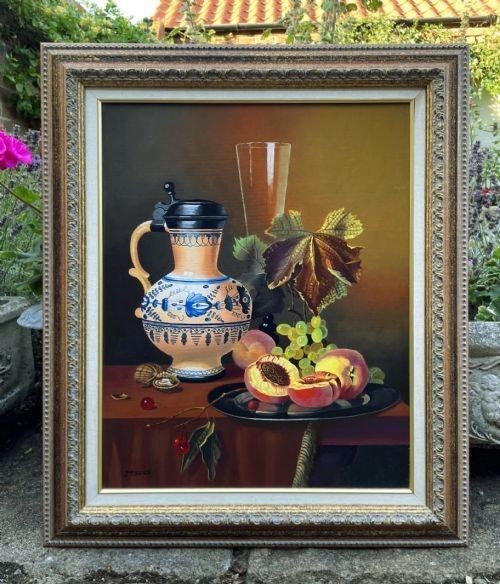
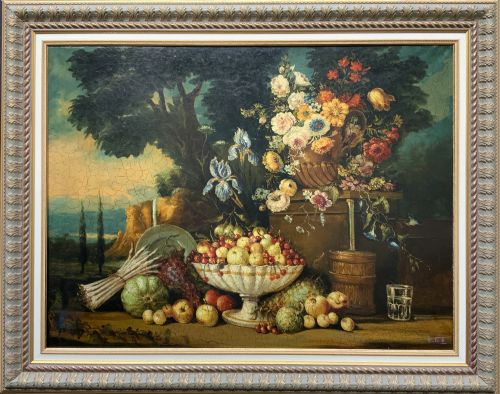
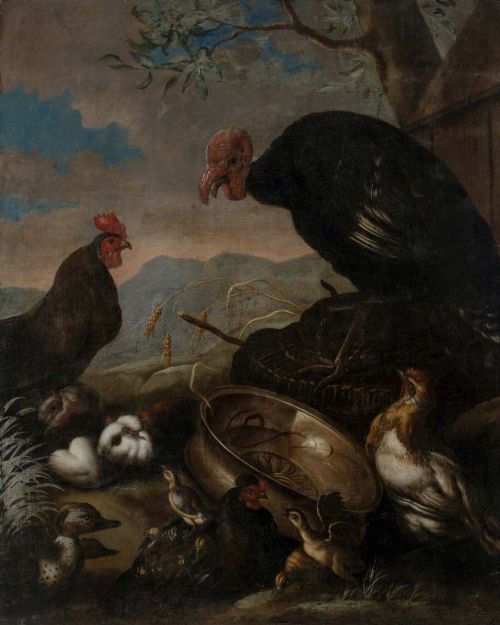
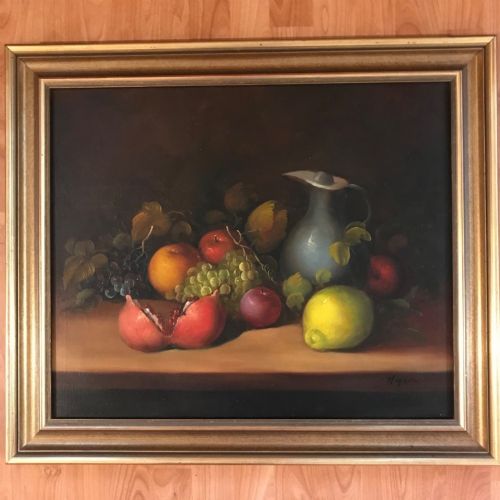
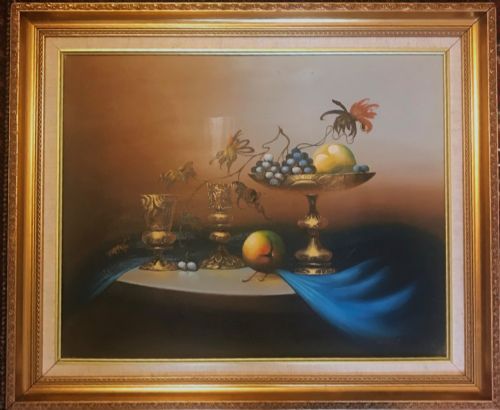
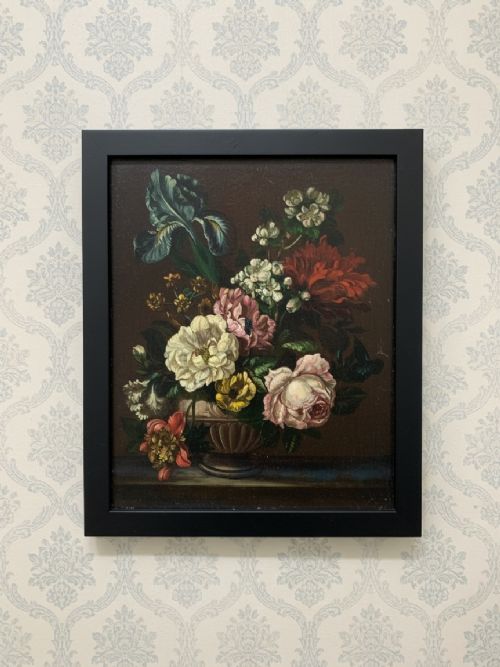
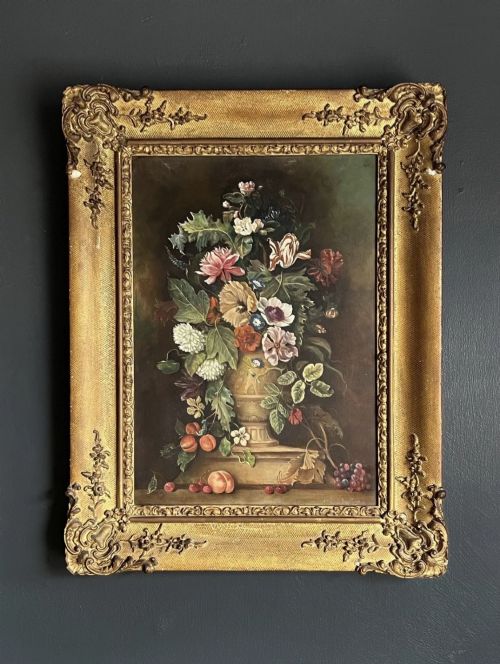
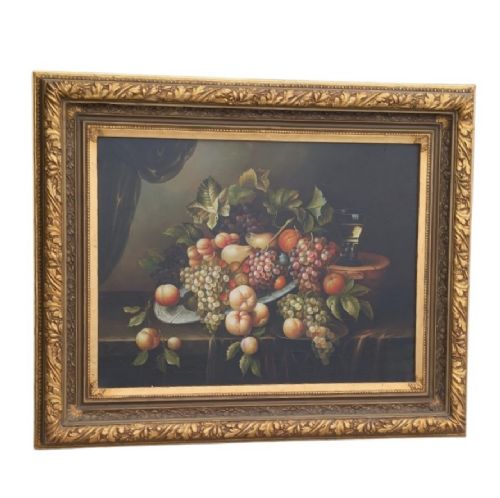
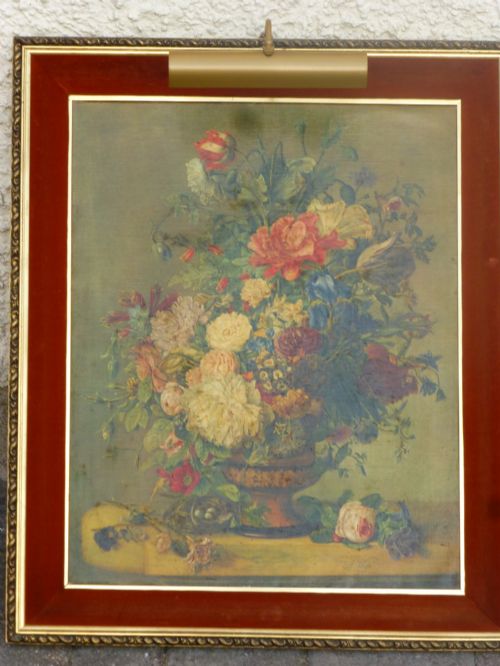
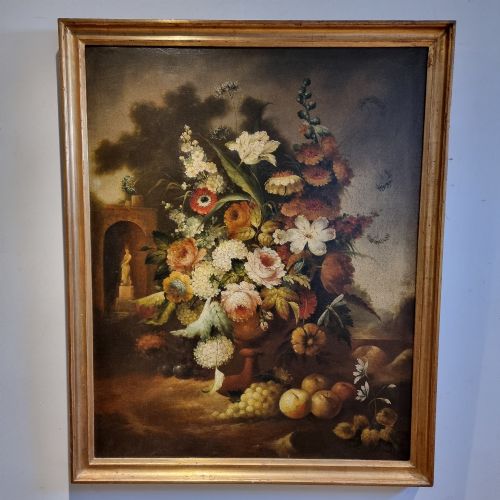
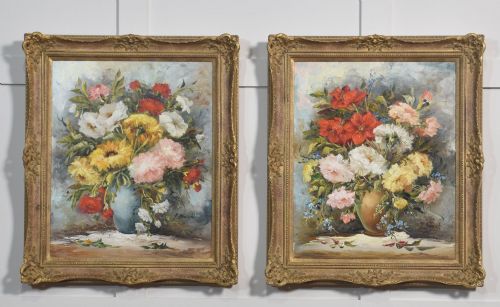
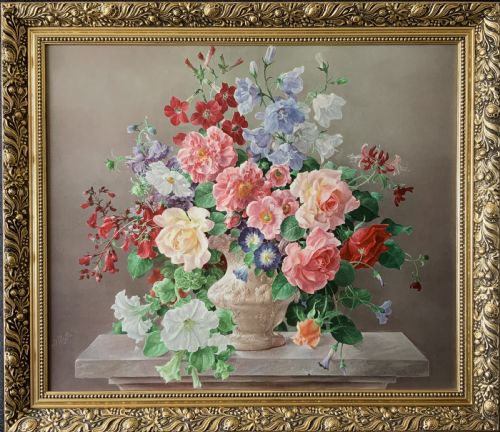
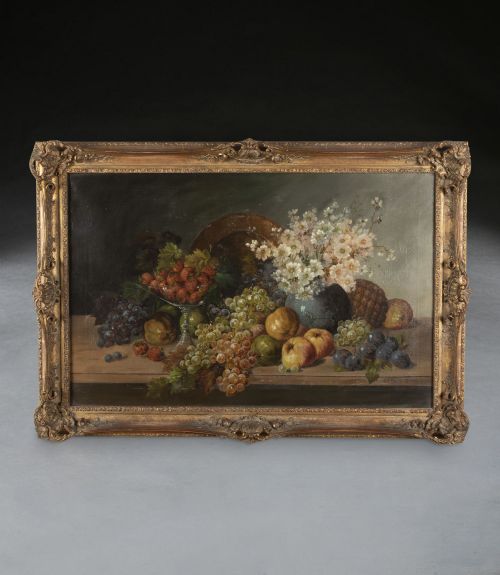
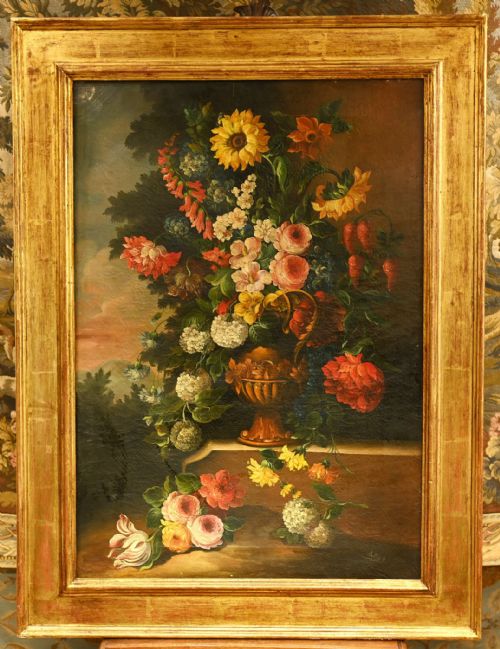
When searching for a classical still life, you encounter oil paintings on canvas and panel alongside watercolours and oleographs spanning the seventeenth century through to the mid-twentieth century. These works depict arranged subjects such as fruit, flowers, birds, and banquets, drawing on Dutch Baroque and classical traditions.
The versions most common on this page date from the nineteenth and twentieth centuries, often adopting eighteenth-century styles or Dutch golden age motifs. Artists render these compositions in formats ranging from modest studies to large wall art pairs housed in gilt gesso frames.
How they were made
These works rely on oil paint applied to canvas or wood panels, building up rich textures for subjects like fruit skins, flower petals, and woven baskets. Painters utilise traditional layering techniques to capture light and shadow across the tabletop arrangements.
Many paintings are housed in frames constructed from wood, finished with gesso and gilt. These gilded wood surrounds provide the decorative borders characteristic of period presentation.
Classical Still Life Retail Price Guide 2026
Typical asking prices for classical still life among the pieces listed under this phrase on Sellingantiques today, from the lower quarter to the upper quarter. They describe what is for sale here now, not the wider market.
Listings feature oil on canvas alongside oil on panel and wood boards, spanning periods from the 17th century to 1960.
What varies in quality
The distinction between works rests upon the handling of light, shadow, and proportion within the painted composition. Skilled brushwork brings depth and tactile realism to fruit, foliage, and inanimate objects, whereas lesser examples rely on flat application and stiff arrangements.
Materials also influence the piece, particularly the finesse of the supporting wood or canvas and the craftsmanship of the gilt gesso frame. Original frames matched to the era carry greater artistic coherence than later replacements.
Angelo Maria Crivelli·Gaspar Peeter Verbruggen·Jean Baptiste Isabey·Jozsef Molnar·Manuela Bonati·William Duffield·Henry Schouten·Jabez Bligh·Bela Balogh·John Robertson Reid
The Classical Still Life Glossary
- Oil on canvas
- Pigments suspended in a drying oil medium applied to a stretched woven fabric support. This surface provides the primary medium for the majority of these paintings.
- Gilt gesso
- A plaster-like material applied to wood frames and coated with gold leaf. This technique creates ornate, reflective borders suited to traditional artworks.
- Dutch Golden Age Style
- An artistic approach emulating the detailed realism and dramatic lighting of seventeenth-century Netherlands painting. It governs many of the floral and fruit compositions seen here.
- Oleograph
- A mechanical reproduction printed in oil colours to simulate an oil painting. These prints capture the appearance of brushwork on canvas or paper.
- Baroque
- An artistic style characterised by dynamic movement, rich detail, and strong contrasts between light and dark. It informs the dramatic arrangement of several listed paintings.
Classical Still Life: Frequently Asked Questions
What subjects appear in these paintings?
The compositions focus on arranged inanimate objects, most frequently fruit, flowers, baskets, and table vessels. Some examples incorporate birds, fowl, or architectural ruins into the background setting.
These motifs draw directly from historical Dutch and Flemish traditions, prioritising balanced arrangements of natural forms.
Are these paintings original works?
The selection includes original oil paintings executed by named and anonymous artists, alongside period oleograph prints and watercolours. Listings specify the exact medium used for each individual piece.
Buyers find both direct hand-painted creations and vintage reproduction studies representing different production tiers.
How do I date a classical still life?
Dating relies on the recorded period of the work, the style of the brushwork, and the characteristics of the canvas and frame. Seventeenth-century examples display specific Baroque techniques distinct from nineteenth-century academic or twentieth-century revival pieces.
Signatures, artist records, and material ageing further assist in establishing the timeframe of creation.
How should I display a gilt framed painting?
These works suit traditional wall displays where the gilt gesso frame can catch natural light without direct exposure to harsh sunlight. Adequate wall space allows larger multi-foot paintings or pairs to anchor a room effectively.
Stable indoor humidity preserves both the canvas support and the delicate composition of the wooden frame.