
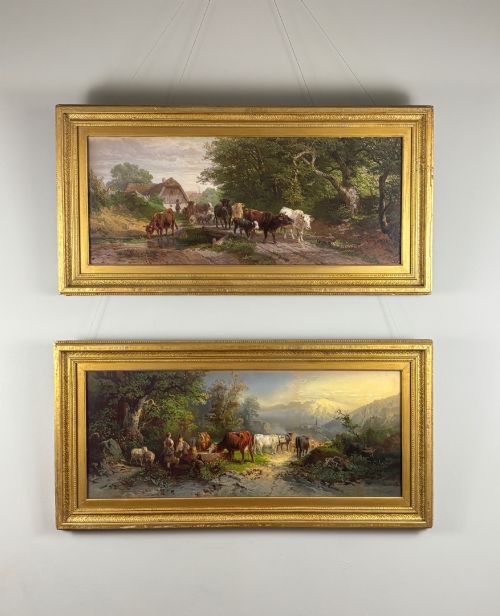


German School Painting
A german school painting captures centuries of continental portraiture, dramatic landscapes, and religious devotion through masterly brushwork.
German School Painting
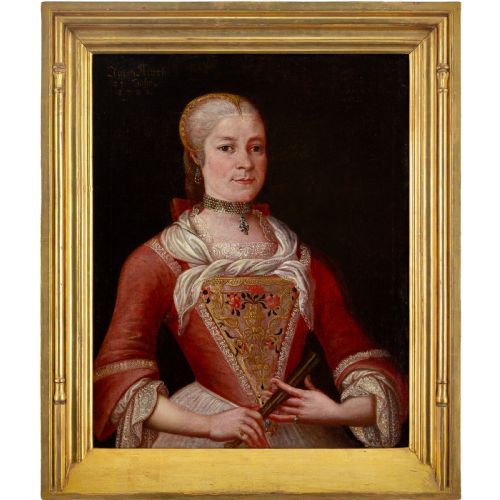
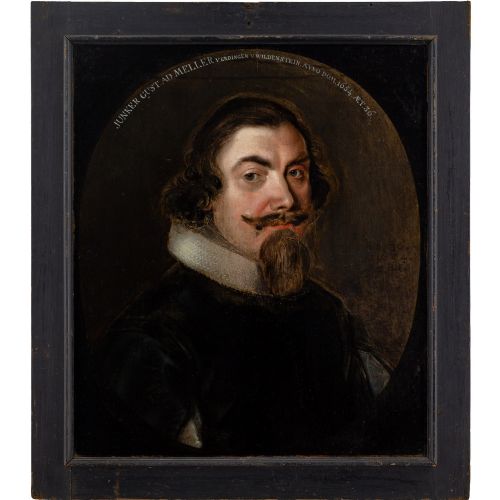
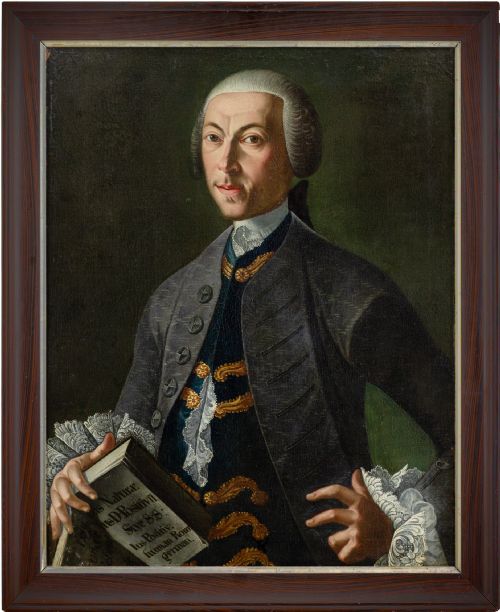
A german school painting encompasses regional European fine art created across centuries, ranging from seventeenth-century religious panels to twentieth-century expressionist canvases. When exploring this selection, buyers frequently encounter formal portraiture depicting aristocrats, merchants, and clergy members rendered in oils.
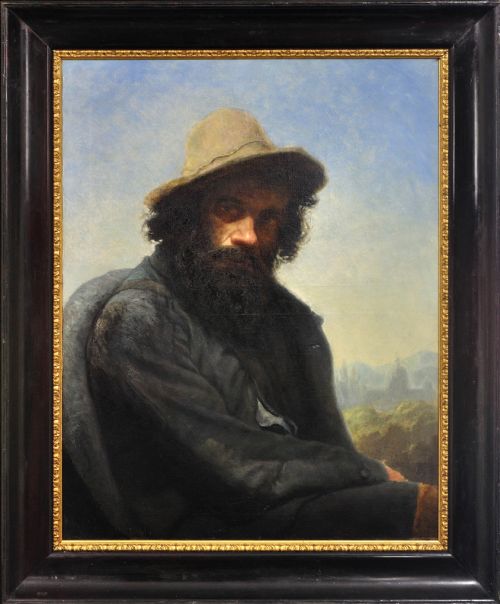
The category extends beyond portraiture into landscapes, still lifes, and genre scenes reflecting distinct regional aesthetics such as Bavarian or Hessian traditions. These works document evolving continental tastes through varied stylistic movements including the baroque, rococo, realism, and expressionism.
Materials and Construction
Makers utilised oil paint applied to prepared canvas or wooden panels, building rich textures and deep colour tones through layered glazes. Many works retain their original wood frames, sometimes embellished with gold leaf or giltwood mouldings that complement the central composition.
Support methods shifted over time from sturdy timber panels favoured in earlier centuries to woven canvas stretched over wooden frames for larger landscapes and portraits. Pigments were manipulated to achieve subtle shifts in light, particularly in portraiture and interior domestic scenes.
Listings feature works executed in oil on canvas or wood, spanning the seventeenth to the twentieth century.
Evaluating Quality and Execution
Quality in these artworks rests upon the surety of the draughtsmanship, the sensitivity of facial rendering in portraits, and the handling of atmospheric perspective in landscapes. Superior examples demonstrate confident brush control and a deliberate command of light that brings depth to fabrics, flesh, and foliage.
The preservation of the original paint layer and the condition of the supporting canvas or wooden panel significantly influence the integrity of the piece. Consideration is also given to the historical context of the frame, where period-appropriate giltwood enhances the visual impact of the painting.
Albin Mattenheimer·Johann Friedrich Voltz·Joseph Emmanuel Weiser
The German School Painting Glossary
- Canvas
- A heavy woven fabric stretched across a wooden frame to serve as a support for oil paintings. It provides a flexible yet durable surface that absorbs primer and oil pigment effectively.
- Giltwood
- Timber that has been coated with a thin layer of gold leaf or gold paint, frequently utilised for ornate antique picture frames. This finish adds a reflective border that frames the dark tones of older canvases.
- Genre Painting
- Artwork depicting scenes from everyday life, ordinary people, and domestic interiors rather than grand historical or religious subjects. These pieces offer insight into the social history of the period.
- Baroque
- An artistic style prevalent during the seventeenth and eighteenth centuries characterised by dramatic lighting, deep shadows, and emotional intensity. Works from this movement often display dynamic compositions and rich colour palettes.
- Expressionism
- A modernist movement emerging in the twentieth century where artists prioritized emotional experience over physical reality through bold colours and distorted forms. This approach appears in later continental school works.
- Panel Painting
- A flat piece of wood used as a structural support for an artwork instead of canvas. Painters prepared the timber surface with gesso to create a smooth ground before applying oil pigments.
German School Painting: Frequently Asked Questions
What defines a german school painting?
A german school painting refers to artwork produced by artists trained or working within German-speaking regions across various historical periods. The designation groups together regional stylistic traditions rather than a single workshop.
These pieces span centuries of artistic development, encompassing portraits, landscapes, and religious subjects created in oils on canvas or wood.
How are periods identified?
Periods are determined through stylistic analysis, costume details, subject matter, and physical evidence such as panel construction or canvas preparation. Early works often display religious or aristocratic themes executed in baroque or rococo styles.
Later nineteenth and twentieth-century examples shift towards realism, impressionism, and expressionism, reflecting contemporary European art movements of those eras.
Where were these paintings displayed?
Historically, these artworks hung in churches, aristocratic residences, civic buildings, and bourgeois homes depending on their subject matter and commission. Religious panels adorned altars, while portraits commemorated family lineages in private salons.
Landscapes and still lifes typically decorated domestic interiors, serving as decorative focal points for dining rooms and studies.
How do I care for an oil painting?
Oil paintings require stable environmental conditions away from direct sunlight, excessive humidity, and rapid temperature fluctuations to prevent canvas slackening and paint cracking. Dust should be removed gently from the surface and frame using a soft, dry brush.
Professional conservation is recommended for any structural repairs or deep cleaning to preserve the integrity of the original pigment and varnish layers.