29,022  PAGES BROWSED TODAY PAGES TODAY • 105 ANTIQUES UPLOADED TODAYNEW ARRIVALS
GIFTS
105 ITEMS ADDED TODAY
Sort Order
Items Per Page
Antiques dealer?
Join as a Seller
Browse Categories
Sort order
Relevant Links
Items per page
sold SA1120644
Sorry, but this item has been sold.
Regent Antiques

Regent Antiques

Sellingantiques Verified Since Sep 2016
Browse dealers 639 items
  • About Us
    We specialise in english and continental furniture, silver, porcelain and decorative items.
  • Trade Associations
    Regent Antiques is a registered member of LAPADA  CINOA
Id #SA1120644
SHARE
SAVE

Antique William IV Sofa Design by John Taylor C1830 19th Century

19th century
Sold 24 March 2025 · Regent Antiques
This “Antique William IV Sofa Design by John Taylor C1830 19th Century” found a buyer.

It was listed by Regent Antiques. Sold pieces stay on Sellingantiques as a record of what has passed through, and the next one is rarely far away.

Description

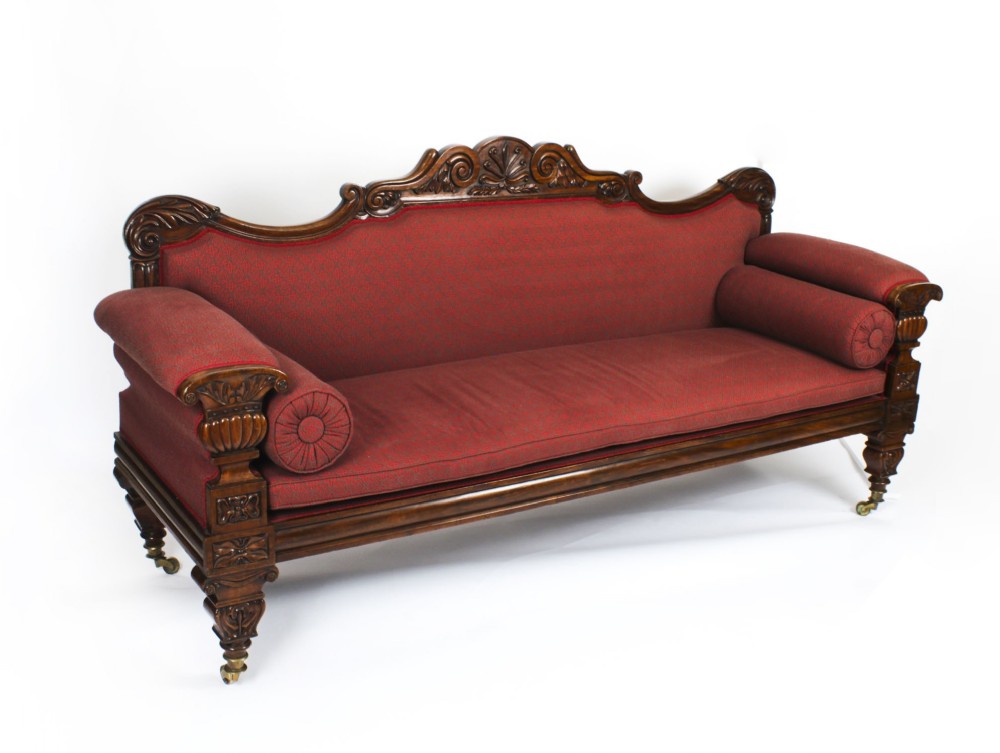
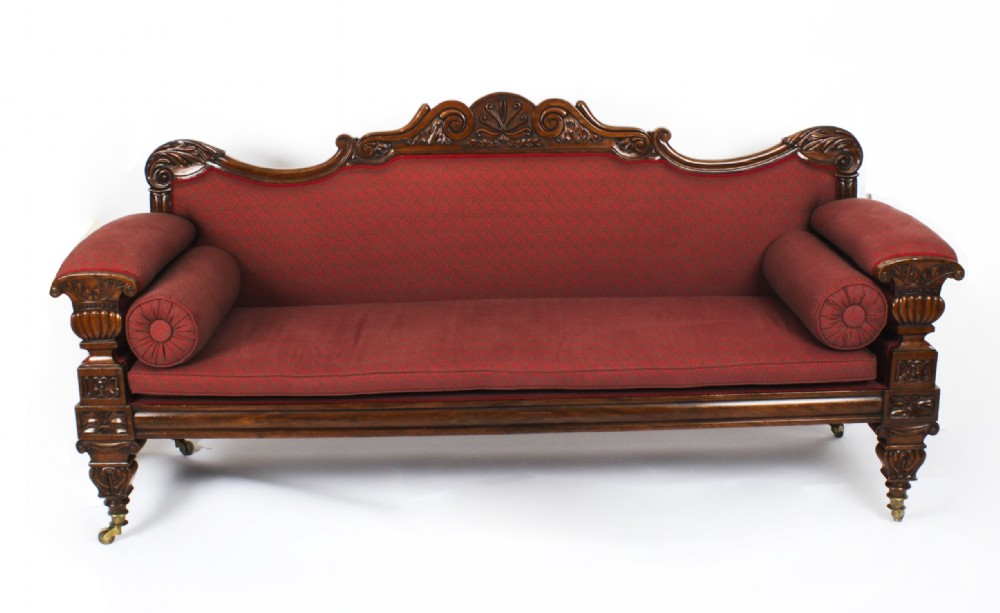
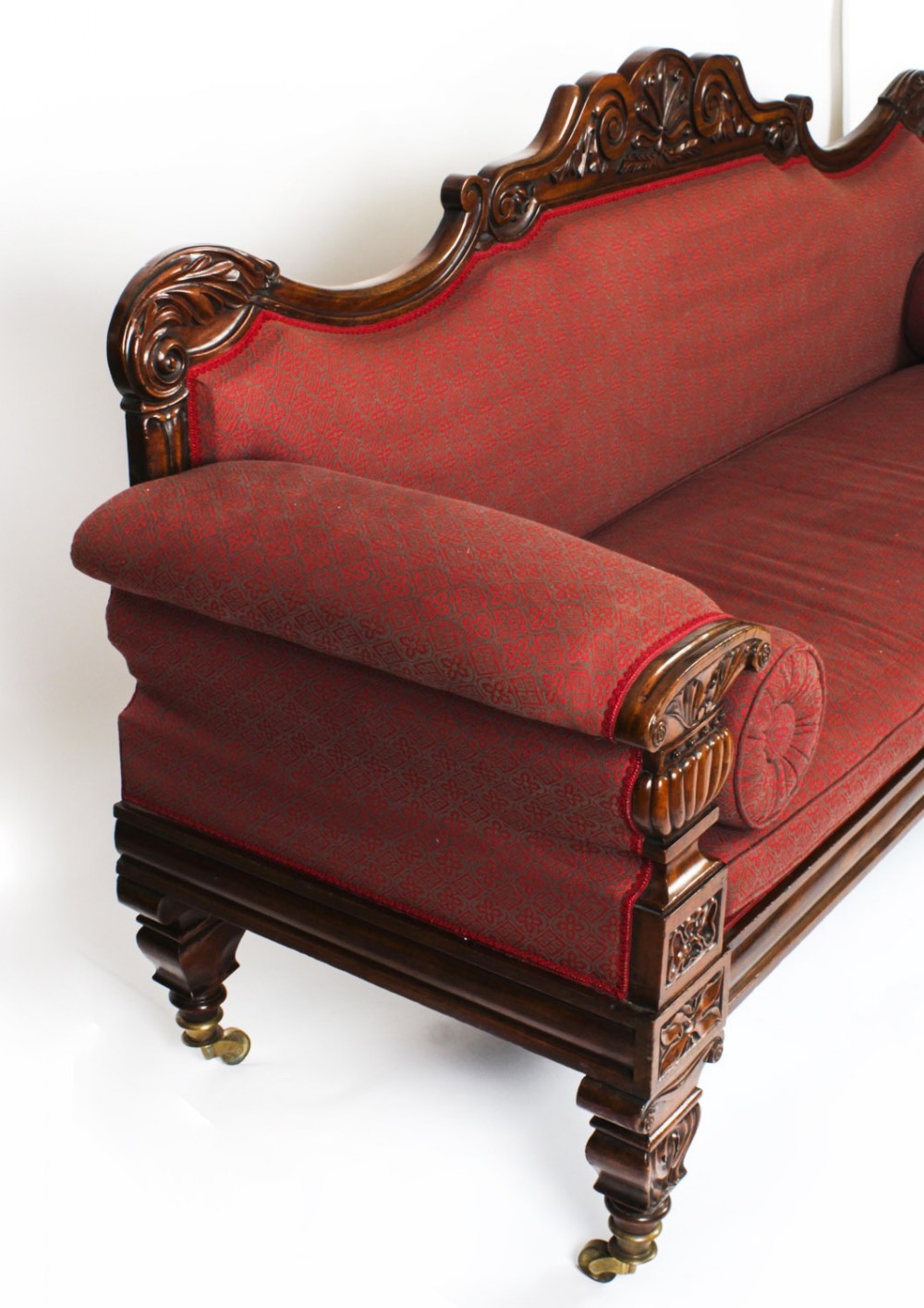
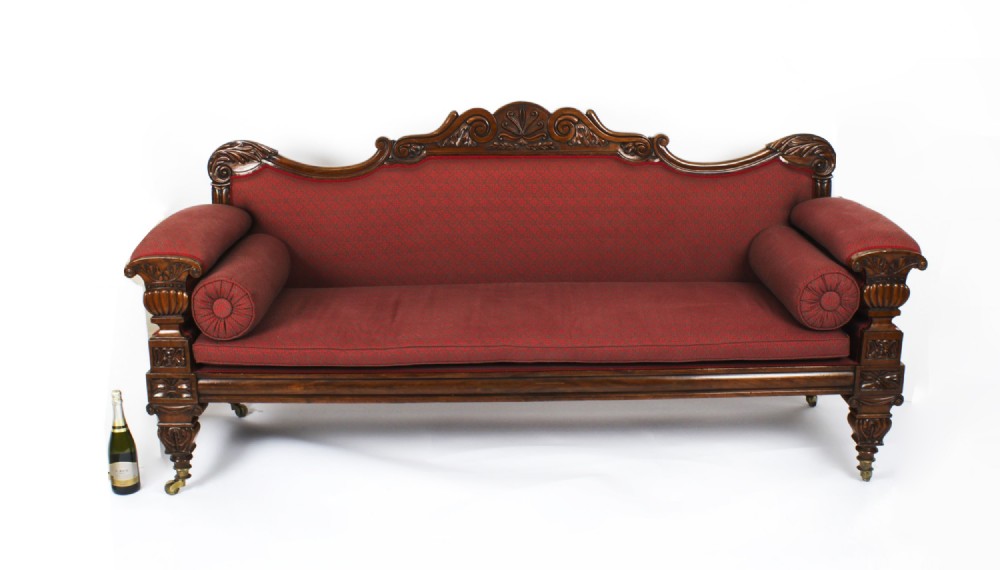
This is a superb quality antique William IV  mahogany sofa, after a design by John Taylor, circa 1830 in date.

At this time, England was importing the best quality mahogany from its colonies, the frame and the baluster turned legs are constructed of solid hand carved mahogany.

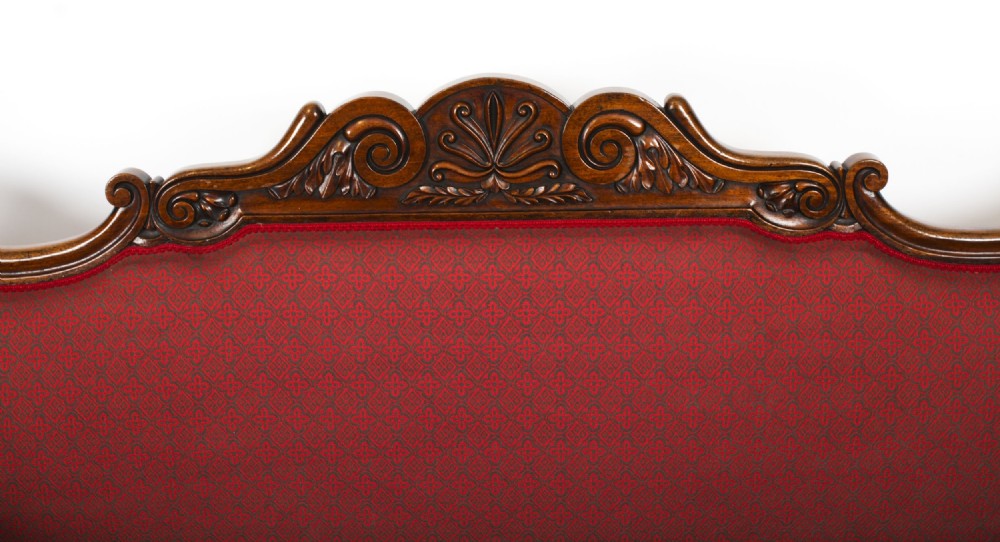
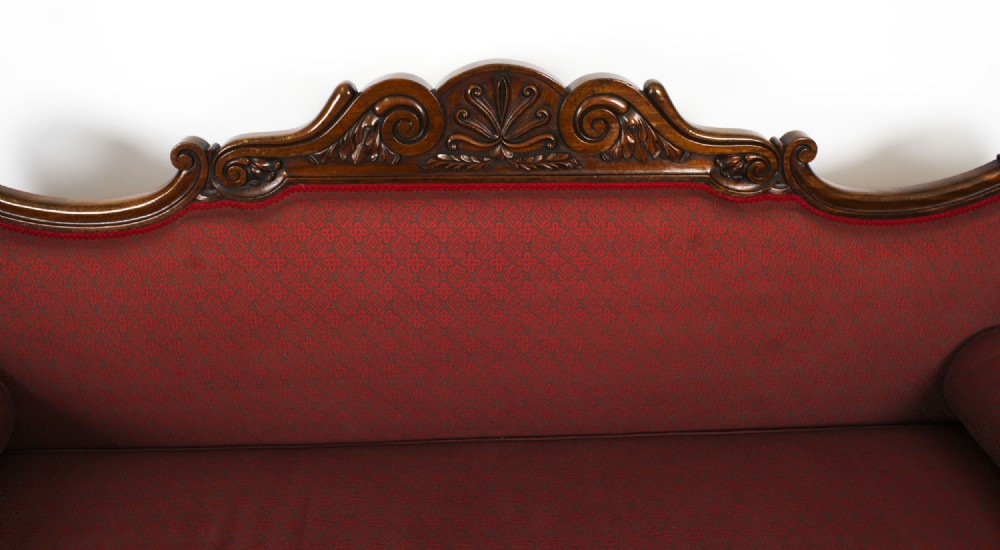
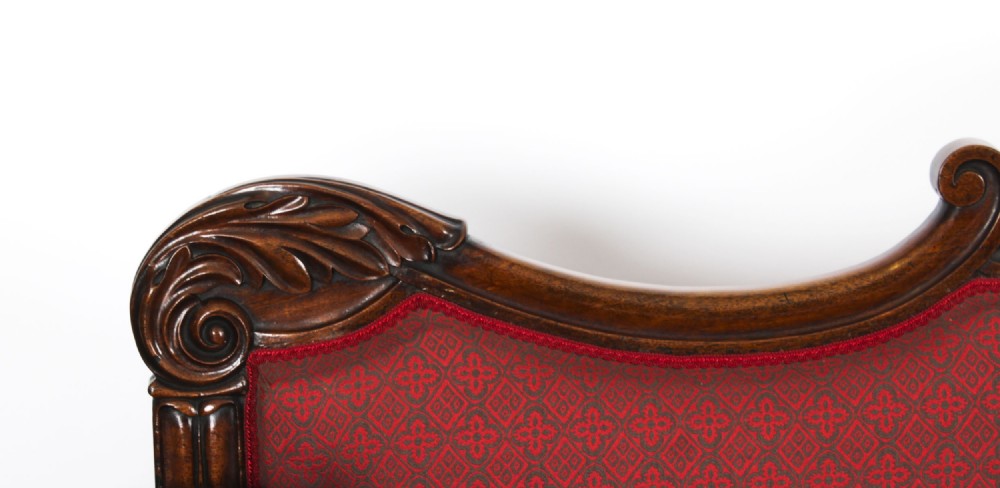
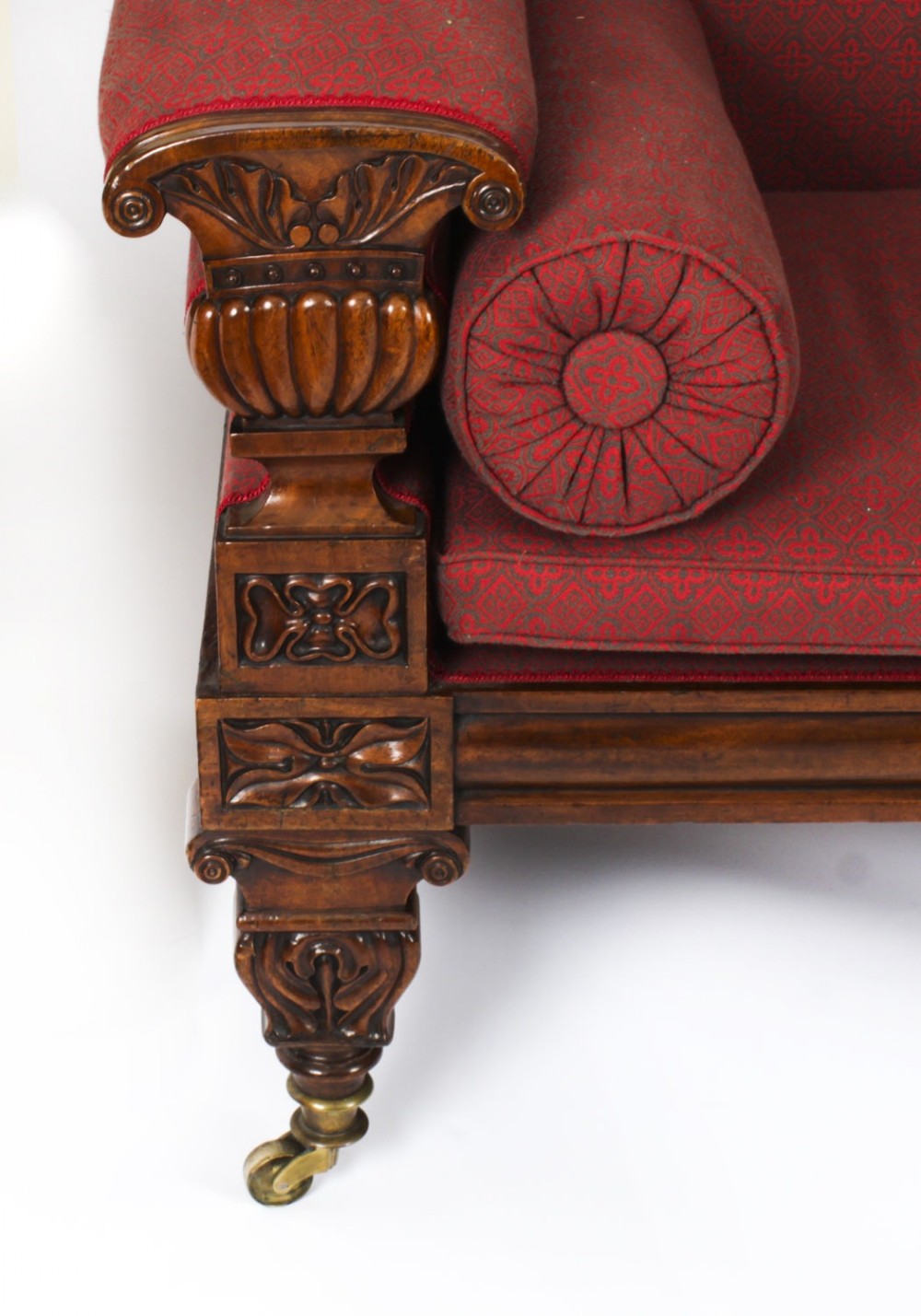
The frame carved with scrolls, leaves and palmettes, features an attractive foliate carved back rail with wonderful scroll ends and an elegant moulded frieze.

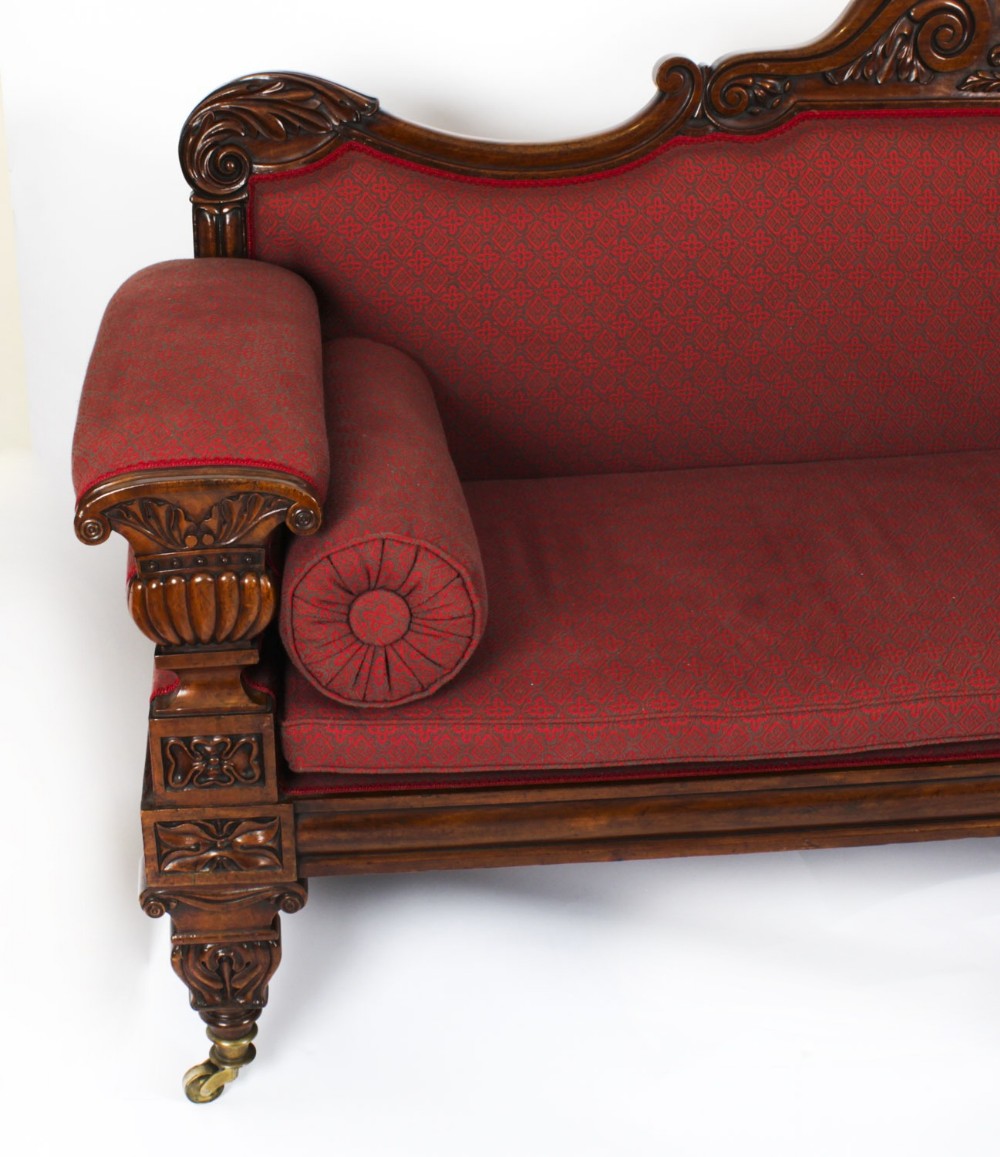
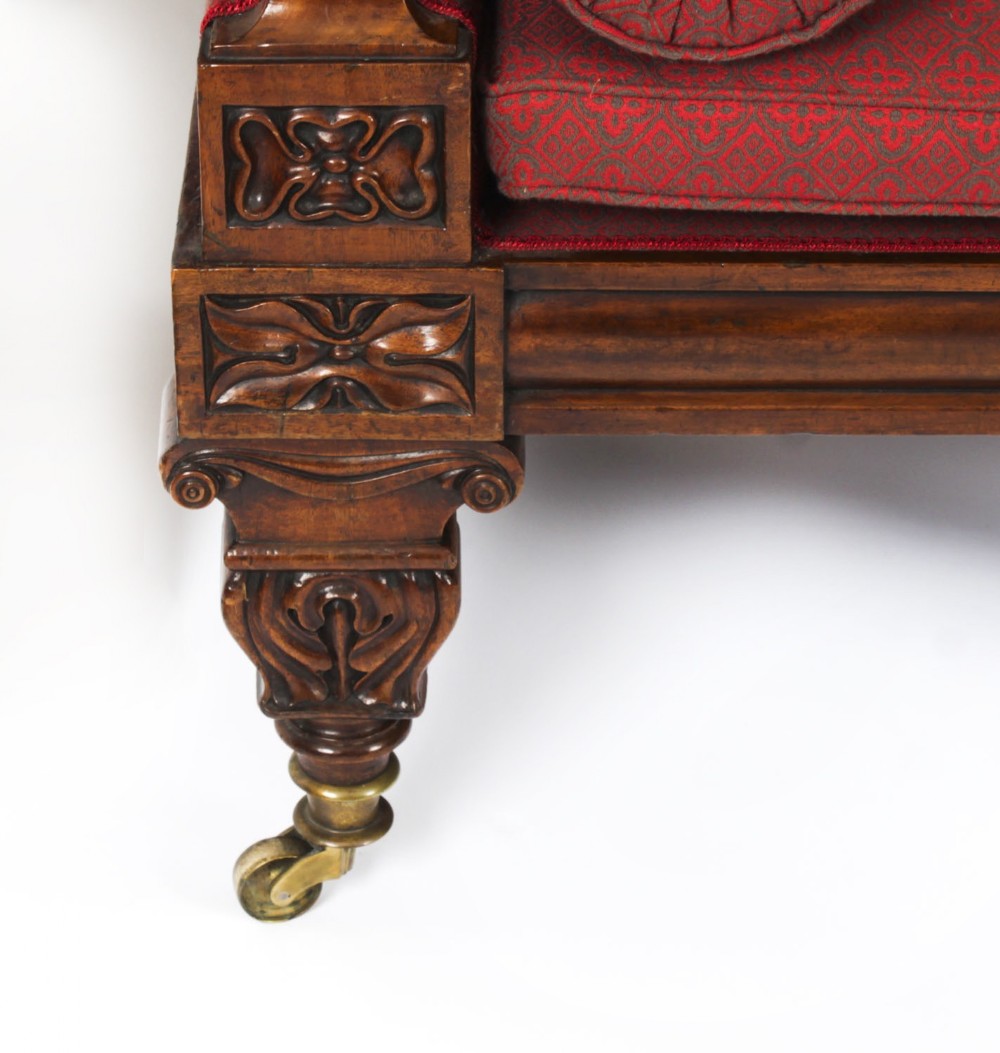
Decorative carved cartouches can be seen at the top of the turned and fluted legs that terminate in elegant brass cap castors.

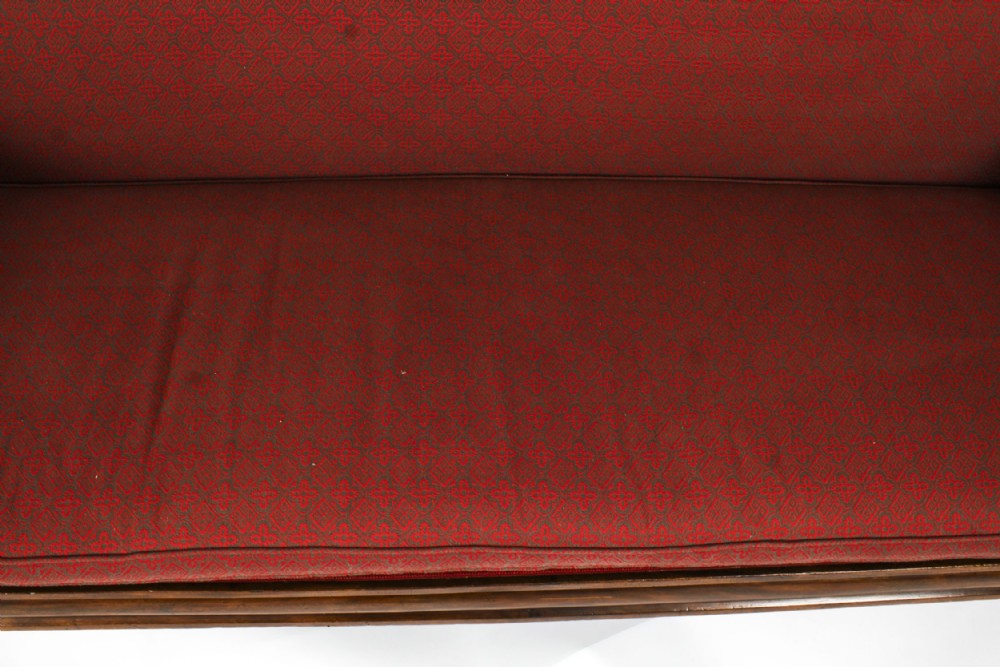
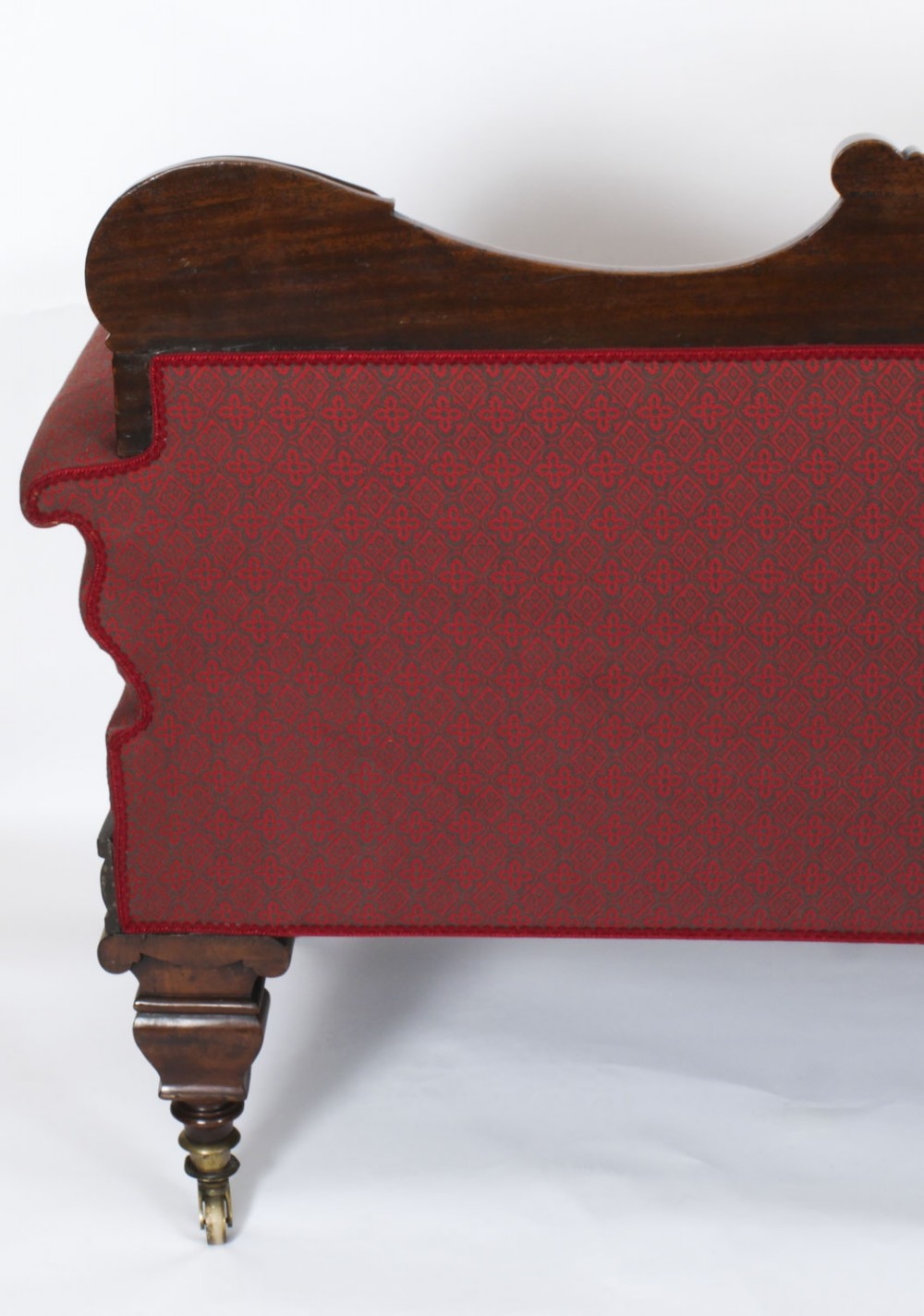
The couch has been newly upholstered in a patterned burgundy fabric with squab and bolster cushions

Will look stunning wherever you decide to place it.

Condition:

In really excellent condition having been beautifully cleaned waxed and reupholstered in our workshops, please see photos for confirmation.

Dimensions in cm:

Height 108 cm x Width 227 cm x Depth 68 cm

Dimensions in inches:

Height 3 foot, 6 inches x Width 7 foot, 5 inches x Depth 2 foot, 3 inches

This sofa is very similar to a design by John Taylor, the Covent Garden upholsterer who had formerly served as an 'artist' in the 'Elegant Furniture Warehouse' established in New Bond Street by George Oakley (d. 1840). Taylor's 'Dress Sofa' pattern was published in the February 1821 edition of R. Ackermann's, ‘The Repository of Arts.’

William IV - the brief reign of William IV (1830 – 1837) marked a period of transition between the Regency period (which had been an age of innovation based on revivalist styles such as ancient Egypt, and the Grecian designs) and the Victorian era.

William IV furniture is similar in style to Regency furniture with many of the designs from the Regency period being copied but often executed in a much heavier manner with chairs, tables and other items being coarser and clumsier in appearance when compared with those made during the Regency period.

Popular pieces produced during this period include tilt top dining tables and pillared extendable tables. Sofa tables and drum tables were also favoured at the time as were sideboards and card tables. Heavy brass fittings were a prominent feature such as lion’s paw feet on tables.  Chairs frequently sported sabre legs to the back with stumpy bulbous turned legs to the front.  The rope twist carved back was also much in favour.

This period also saw the introduction of the more exotic timbers such as  zebra wood.  With the Industrial Revolution getting under way furniture making saw the increased use of mechanisation a trend set to accelerate during the Victorian period.

This short, but important transitional period eventually gave way to the romanticism of the Victorians but the furniture it produced was usually of good quality and it remains sought after and desirable today.

Mahogany

is probably one of the largest ‘families’ of hardwood, having many different varieties within its own species.

Mahogany has been used for centuries in ship building, house building, furniture making etc and is the core structure of just about every 19th century vanity box, dressing case or jewellery box. It became more of a Victorian trend to dress Mahogany with these decorative veneers, such as King wood, Burr Walnut and Coromandel, so that the actual Mahogany was almost hidden from view.

Mahogany itself is a rich reddish brown wood that can range from being plain in appearance to something that is so vibrant, figured and almost three dimensional in effect.

Although Mahogany was most often used in its solid form, it also provided some beautifully figured varieties of veneer like ‘Flame’ Mahogany and ‘Fiddleback’ Mahogany (named after its preferred use in the manufacture of fine musical instruments).

Cuban Mahogany was so sought after, that by the late 1850's, this particular variety became all but extinct.

Date of Manufacture

Regent Antiques has dated this Antique William IV Sofa to the 1800s.

Physical Dimensions
Height
108cm (42.52")
Width
227cm (89.37")
Depth
68cm (26.77")
Reference Numbers
Sellingantiques Reference
SA1120644
Dealers Internal Reference
A4304
An antique mahogany William IV sofa featuring red patterned upholstery, scrolled arms, and carved wooden feet with brass castors.Detail view 1Detail view 2Detail view 3Detail view 4Detail view 5Detail view 6Detail view 7Detail view 8Detail view 9Detail view 10Detail view 11Detail view 12Detail view 13
SOLD6+ MONTHS AGO
1 / 14
1800s · SA1120644
Antique William IV Sofa Design by John Taylor C1830 19th Century
Sorry, but this item has been sold.
Description
This is a superb quality antique William IV  mahogany sofa, after a design by John Taylor, circa 1830 in date.

At this time, England was importing the best quality mahogany from its colonies, the frame and the baluster turned legs are constructed of solid hand carved mahogany.

The frame carved with scrolls, leaves and palmettes, features an attractive foliate carved back rail with wonderful scroll ends and an elegant moulded frieze.

Decorative carved cartouches can be seen at the top of the turned and fluted legs that terminate in elegant brass cap castors.

The couch has been newly upholstered in a patterned burgundy fabric with squab and bolster cushions

Will look stunning wherever you decide to place it.

Condition:

In really excellent condition having been beautifully cleaned waxed and reupholstered in our workshops, please see photos for confirmation.

Dimensions in cm:

Height 108 cm x Width 227 cm x Depth 68 cm

Dimensions in inches:

Height 3 foot, 6 inches x Width 7 foot, 5 inches x Depth 2 foot, 3 inches

This sofa is very similar to a design by John Taylor, the Covent Garden upholsterer who had formerly served as an 'artist' in the 'Elegant Furniture Warehouse' established in New Bond Street by George Oakley (d. 1840). Taylor's 'Dress Sofa' pattern was published in the February 1821 edition of R. Ackermann's, ‘The Repository of Arts.’

William IV - the brief reign of William IV (1830 – 1837) marked a period of transition between the Regency period (which had been an age of innovation based on revivalist styles such as ancient Egypt, and the Grecian designs) and the Victorian era.

William IV furniture is similar in style to Regency furniture with many of the designs from the Regency period being copied but often executed in a much heavier manner with chairs, tables and other items being coarser and clumsier in appearance when compared with those made during the Regency period.

Popular pieces produced during this period include tilt top dining tables and pillared extendable tables. Sofa tables and drum tables were also favoured at the time as were sideboards and card tables. Heavy brass fittings were a prominent feature such as lion’s paw feet on tables.  Chairs frequently sported sabre legs to the back with stumpy bulbous turned legs to the front.  The rope twist carved back was also much in favour.

This period also saw the introduction of the more exotic timbers such as  zebra wood.  With the Industrial Revolution getting under way furniture making saw the increased use of mechanisation a trend set to accelerate during the Victorian period.

This short, but important transitional period eventually gave way to the romanticism of the Victorians but the furniture it produced was usually of good quality and it remains sought after and desirable today.

Mahogany

is probably one of the largest ‘families’ of hardwood, having many different varieties within its own species.

Mahogany has been used for centuries in ship building, house building, furniture making etc and is the core structure of just about every 19th century vanity box, dressing case or jewellery box. It became more of a Victorian trend to dress Mahogany with these decorative veneers, such as King wood, Burr Walnut and Coromandel, so that the actual Mahogany was almost hidden from view.

Mahogany itself is a rich reddish brown wood that can range from being plain in appearance to something that is so vibrant, figured and almost three dimensional in effect.

Although Mahogany was most often used in its solid form, it also provided some beautifully figured varieties of veneer like ‘Flame’ Mahogany and ‘Fiddleback’ Mahogany (named after its preferred use in the manufacture of fine musical instruments).

Cuban Mahogany was so sought after, that by the late 1850's, this particular variety became all but extinct.
Date1800s
Height108cm (42.52")
Width227cm (89.37")
Depth68cm (26.77")
ReferenceSA1120644
Dealer's referenceA4304
Regent Antiques
Regent AntiquesSellingantiques verified since Sep 2016

We specialise in english and continental furniture, silver, porcelain and decorative items.

Member of LAPADA CINOA

SHARE
SAVE
Archive I An antique mahogany William IV sofa featuring red patterned upholstery, scrolled arms, and carved wooden feet with brass castors. SOLD6+ MONTHS AGO

Antique William IV Sofa Design by John Taylor C1830 19th Century

Archive II An antique mahogany William IV sofa featuring red patterned upholstery, scrolled arms, and carved wooden feet with brass castors. View II
Archive III An antique mahogany William IV sofa featuring red patterned upholstery, scrolled arms, and carved wooden feet with brass castors. View III
Archive IV An antique mahogany William IV sofa featuring red patterned upholstery, scrolled arms, and carved wooden feet with brass castors. View IV
Archive V An antique mahogany William IV sofa featuring red patterned upholstery, scrolled arms, and carved wooden feet with brass castors. View V
Archive VI An antique mahogany William IV sofa featuring red patterned upholstery, scrolled arms, and carved wooden feet with brass castors. View VI
Archive VII An antique mahogany William IV sofa featuring red patterned upholstery, scrolled arms, and carved wooden feet with brass castors. View VII
Archive VIII An antique mahogany William IV sofa featuring red patterned upholstery, scrolled arms, and carved wooden feet with brass castors. View VIII
Archive IX An antique mahogany William IV sofa featuring red patterned upholstery, scrolled arms, and carved wooden feet with brass castors. View IX
Archive X An antique mahogany William IV sofa featuring red patterned upholstery, scrolled arms, and carved wooden feet with brass castors. View X
Archive XI An antique mahogany William IV sofa featuring red patterned upholstery, scrolled arms, and carved wooden feet with brass castors. View XI
Archive XII An antique mahogany William IV sofa featuring red patterned upholstery, scrolled arms, and carved wooden feet with brass castors. View XII
Archive XIII An antique mahogany William IV sofa featuring red patterned upholstery, scrolled arms, and carved wooden feet with brass castors. View XIII
Archive XIV An antique mahogany William IV sofa featuring red patterned upholstery, scrolled arms, and carved wooden feet with brass castors. View XIV
Enlarged Archival View
Location
Manor Warehouse
318 Green Lanes
London
N4 1BX
United Kingdom
Verified Since Sep 2016
Items For Sale 639
Items Sold 2,756
Regent Antiques
Regent Antiques
Verified Since Sep 2016
View Dealer Info
Location: Manor Warehouse, 318 Green Lanes, London, N4 1BX, United Kingdom
Verified
Sep 2016
For Sale
639
Sold
2,756
An antique mahogany William IV sofa featuring red patterned upholstery, scrolled arms, and carved wooden feet with brass castors.
Antique William IV Sofa Design by John Taylor C1830 19th Century
Ref: SA1120644
An antique mahogany William IV sofa featuring red patterned upholstery, scrolled arms, and carved wooden feet with brass castors.
Detail View 1
Detail View 2
Detail View 3
Detail View 4
Detail View 5
Detail View 6
Detail View 7
Detail View 8
Detail View 9
Detail View 10
Detail View 11
Detail View 12
Detail View 13
Archival Detail
Every single antique dealer on our platform is individually approved by our internal team. We verify their professional trade history, ethical standards, and photographic quality to ensure a secure, high-standard buying environment. Upon joining, every dealer agrees to a strict 9-point code of conduct. While issues can occasionally arise, our dealers typically resolve them swiftly and directly with the buyer. In fact, since our founding in 2002, Sellingantiques has only had to step in to help resolve an issue on roughly five occasions—a true testament to the quality of our dealers and their dedication to your happiness.
Our dealers are highly experienced in packing and shipping fragile, high-value antiques. Because you are in direct contact with the dealer, you will be able to easily go through all available shipping and insurance options together to ensure your item arrives safely.
Antiques are the ultimate green purchase. By choosing historical pieces over newly manufactured goods, you completely eliminate the carbon footprint of modern mass production while preserving exceptional, timeless craftsmanship.
Written by Sellingantiques from the dealer’s photographs and listing
  • ObjectSofas
  • Period19th century
  • StyleWilliam IV
  • MaterialMahogany, Brass, Upholstery Fabric
  • ColourRed
  • MotifsScroll arms, Carved crest rail, Turned legs, Brass castors
  • SizeH 108 cm (43 in) x W 227 cm (89 in) x D 68 cm (27 in)

The William IV style spans the 1830s, acting as a transitional bridge between the Regency period and early Victorian eras, typically characterised by robust classical proportions and heavy scrollwork.

Master craftsmen typically utilized dense tropical hardwoods like solid mahogany, often combined with hand-turned wooden frames, horsehair stuffing, and brass castors for mobility.

Authenticity is usually determined by inspecting the internal joinery, hand-carved scrolling wooden details, traditional upholstery methods, and the presence of period-appropriate brass castors.

Pairing a historic carved wooden settee with minimalist modern surroundings or rich textures creates a balanced focal point that highlights the historical craftsmanship.

Keep wooden frames conditioned and away from direct sunlight to prevent timber cracking, and use professional dry-cleaning methods for period-appropriate textiles.
items
Add keywords to the filter
Price
£100
£250000
Era
Period
Style
Material
Origin
Stock Location
Recently Added
Online Payments
Categories