29,612  PAGES BROWSED TODAY PAGES TODAY • 122 ANTIQUES UPLOADED TODAYNEW ARRIVALS
GIFTS
122 ITEMS ADDED TODAY
Sort Order
Items Per Page
Antiques dealer?
Join as a Seller
Browse Categories
Sort order
Relevant Links
Items per page
sold SA1114738
Sorry, but this item has been sold.
Regent Antiques

Regent Antiques

Sellingantiques Verified Since Sep 2016
Browse dealers 639 items
  • About Us
    We specialise in english and continental furniture, silver, porcelain and decorative items.
  • Trade Associations
    Regent Antiques is a registered member of LAPADA  CINOA
Id #SA1114738
SHARE
SAVE

Antique Victorian Pollard Oak Wellington Chest by Edwards & Roberts 19th C

19th century
Sold 24 October 2025 · Regent Antiques
This “Antique Victorian Pollard Oak Wellington Chest by Edwards & Roberts 19th C” found a buyer.

It was listed by Regent Antiques. Sold pieces stay on Sellingantiques as a record of what has passed through, and the next one is rarely far away.

Description

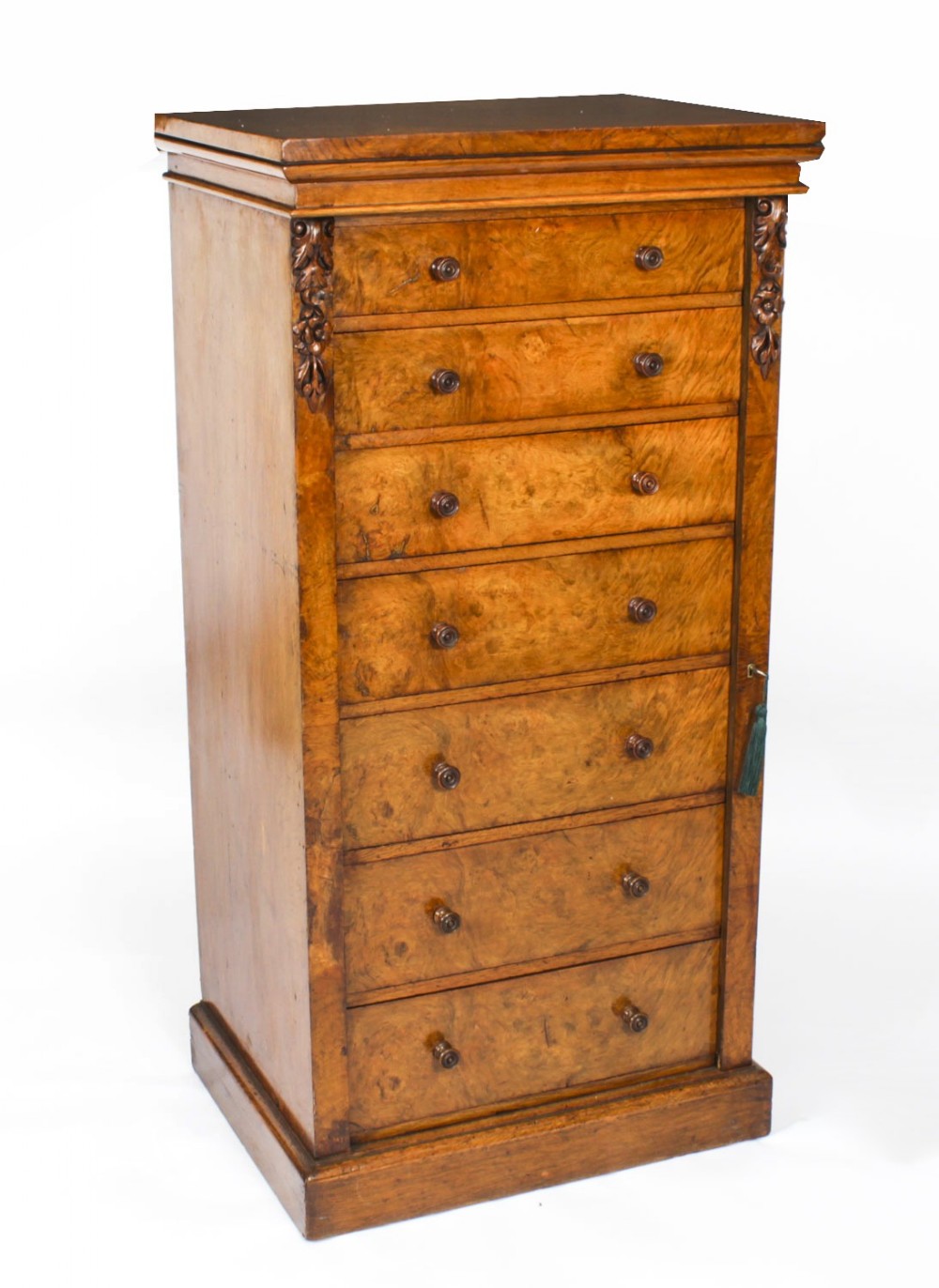
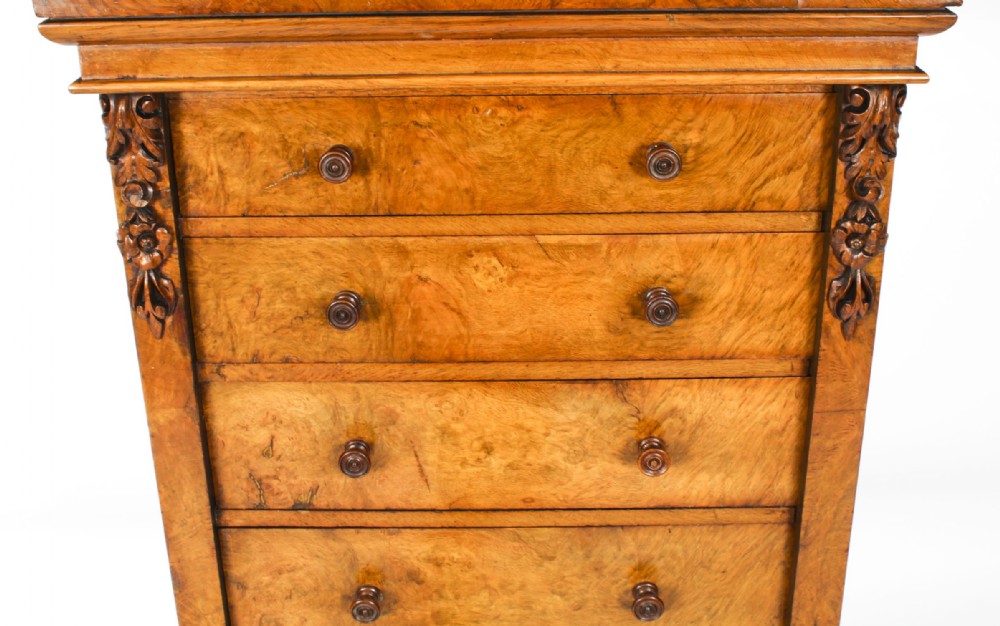
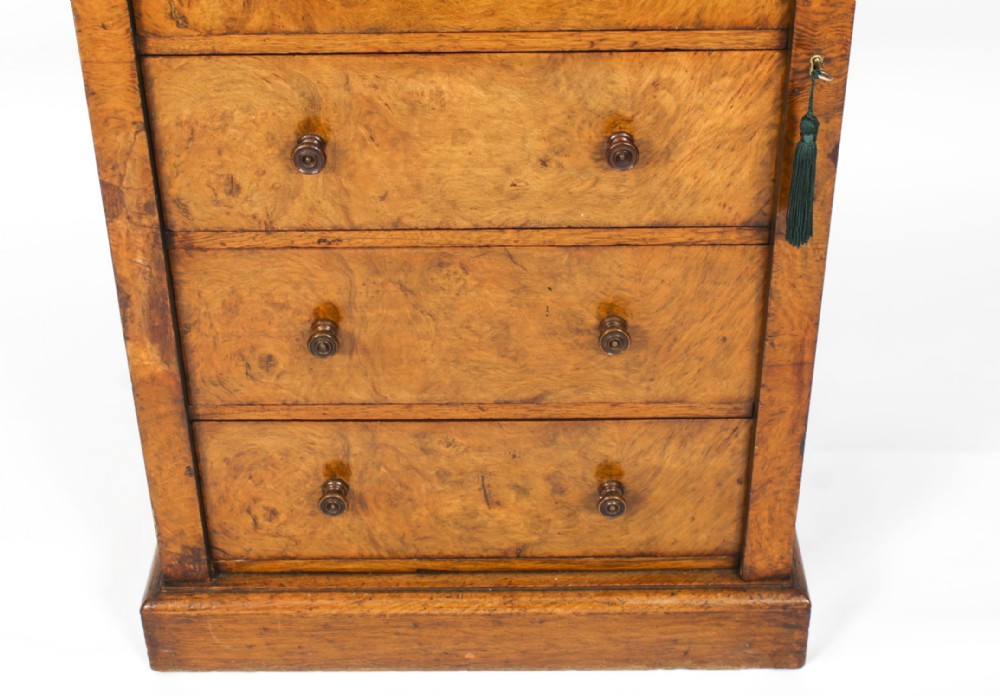
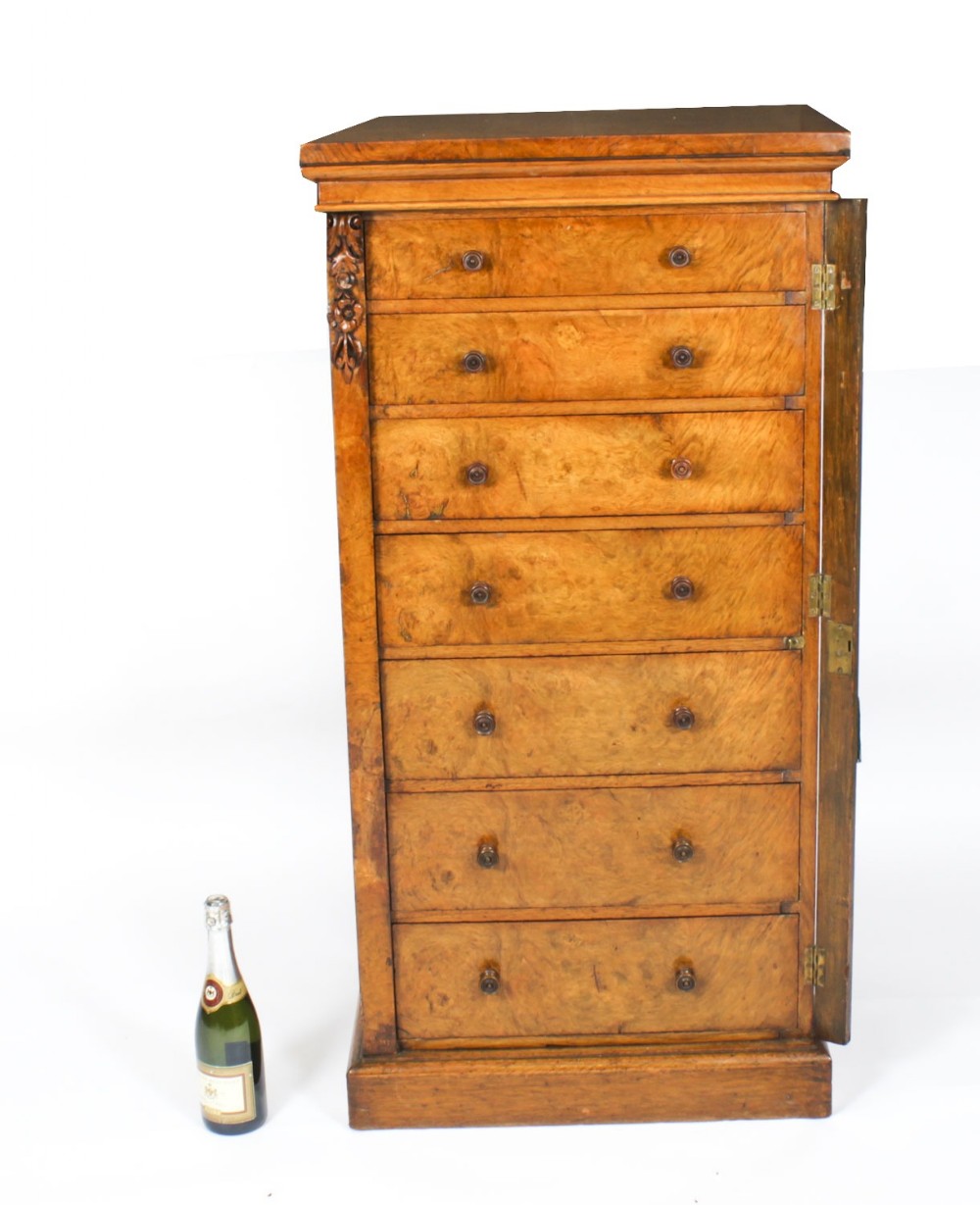
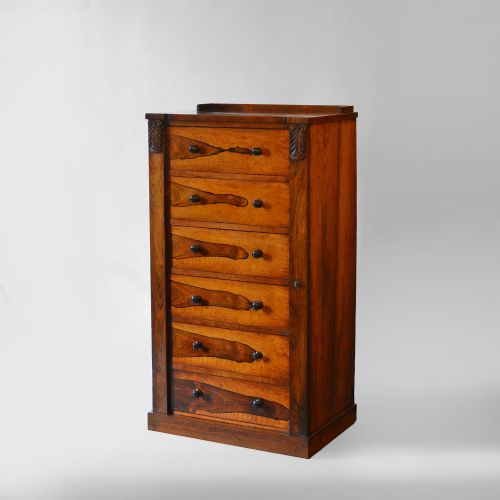
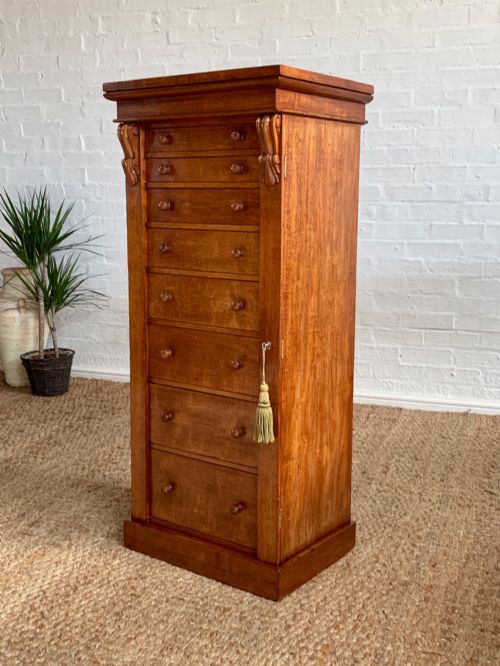
A fine antique and rare Victorian pollard oak Wellington chest by the renowned London retailer and cabinet maker Edwards and Roberts, Circa 1860 in date.


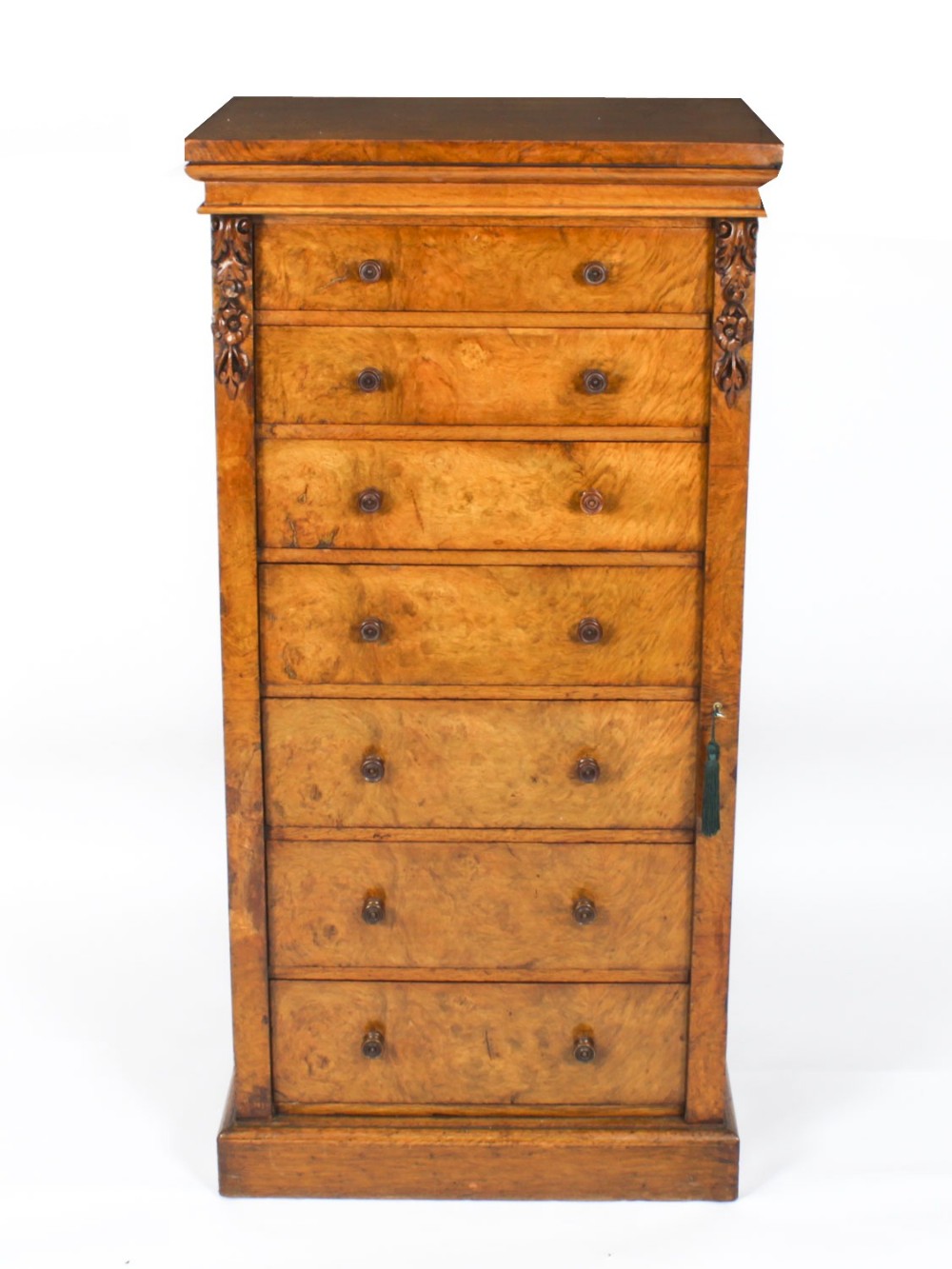
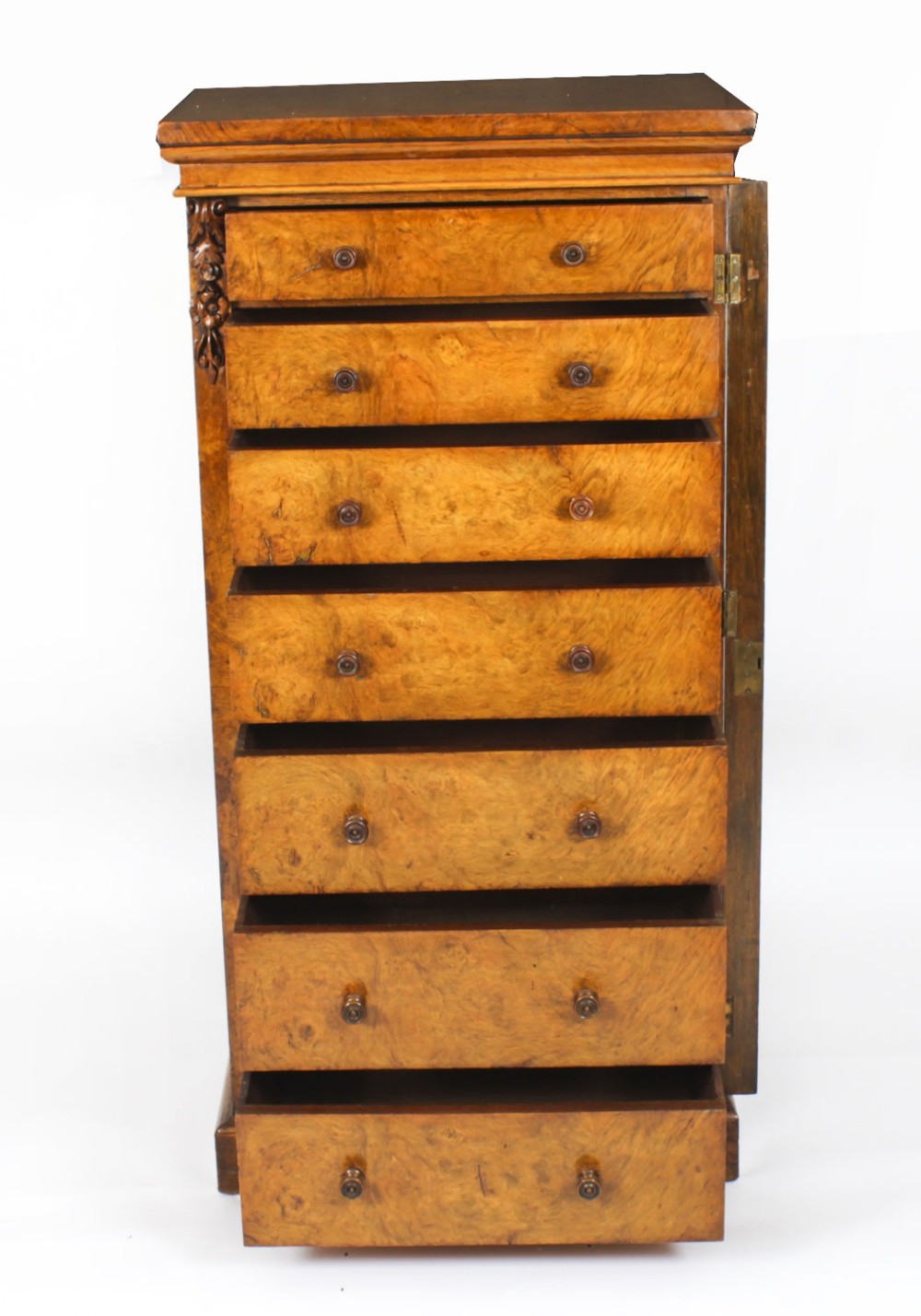
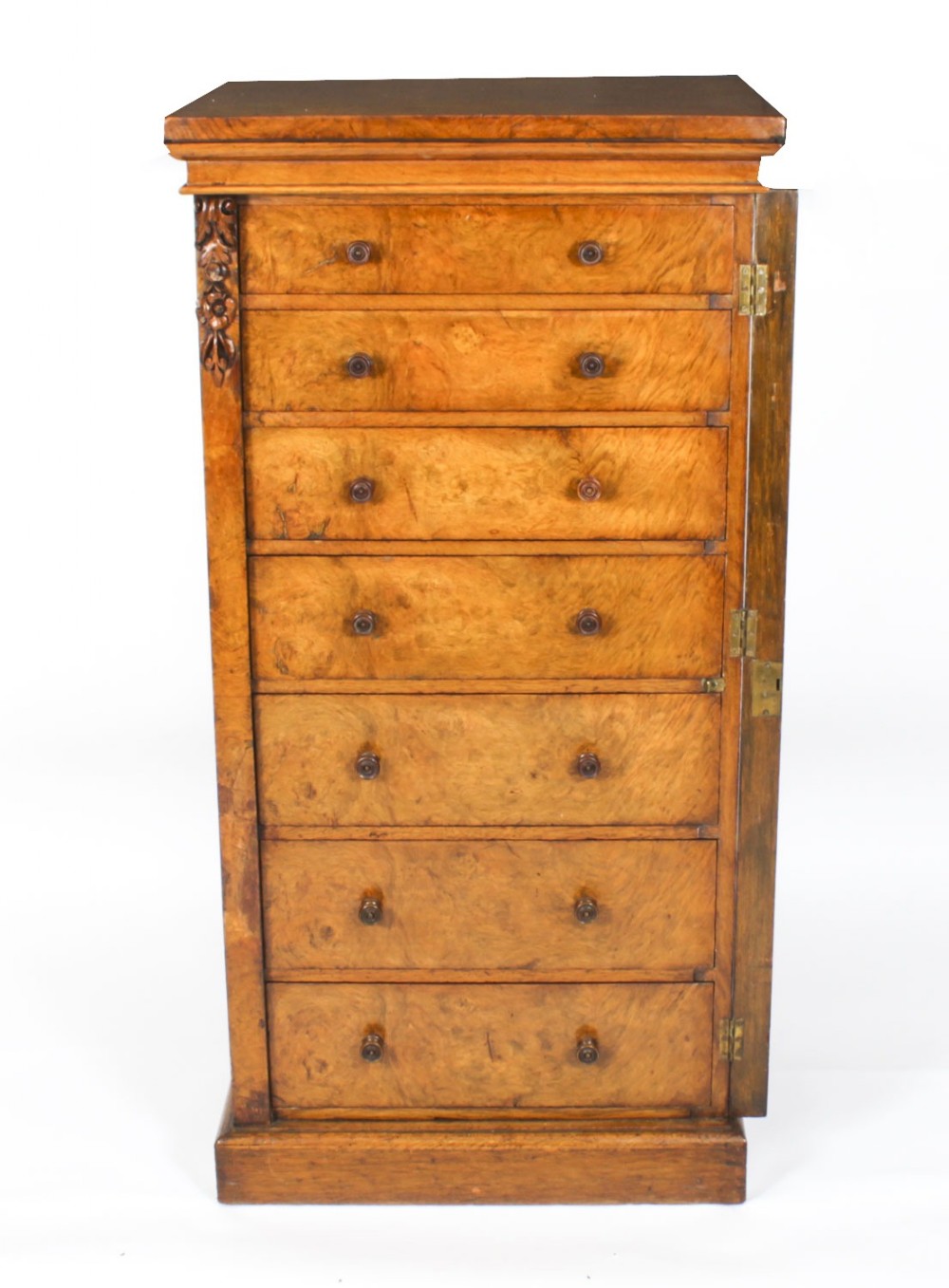
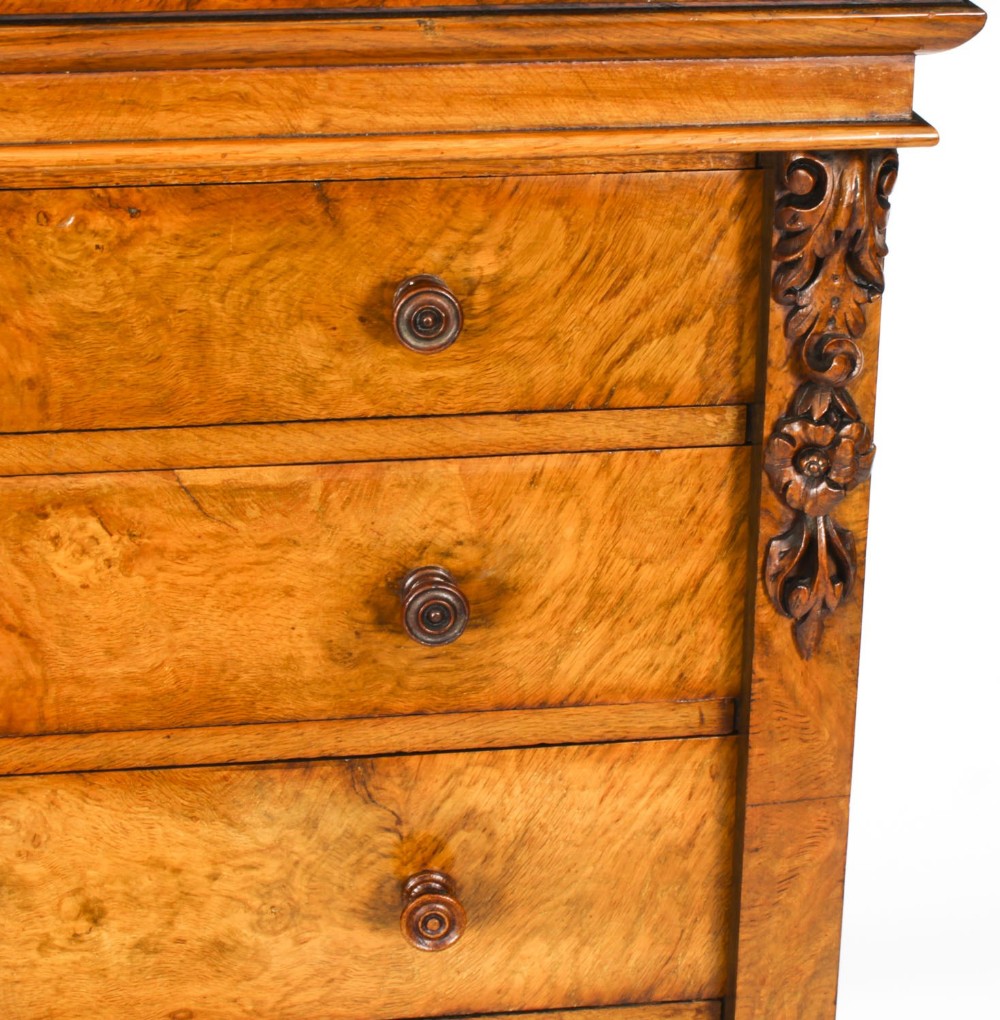
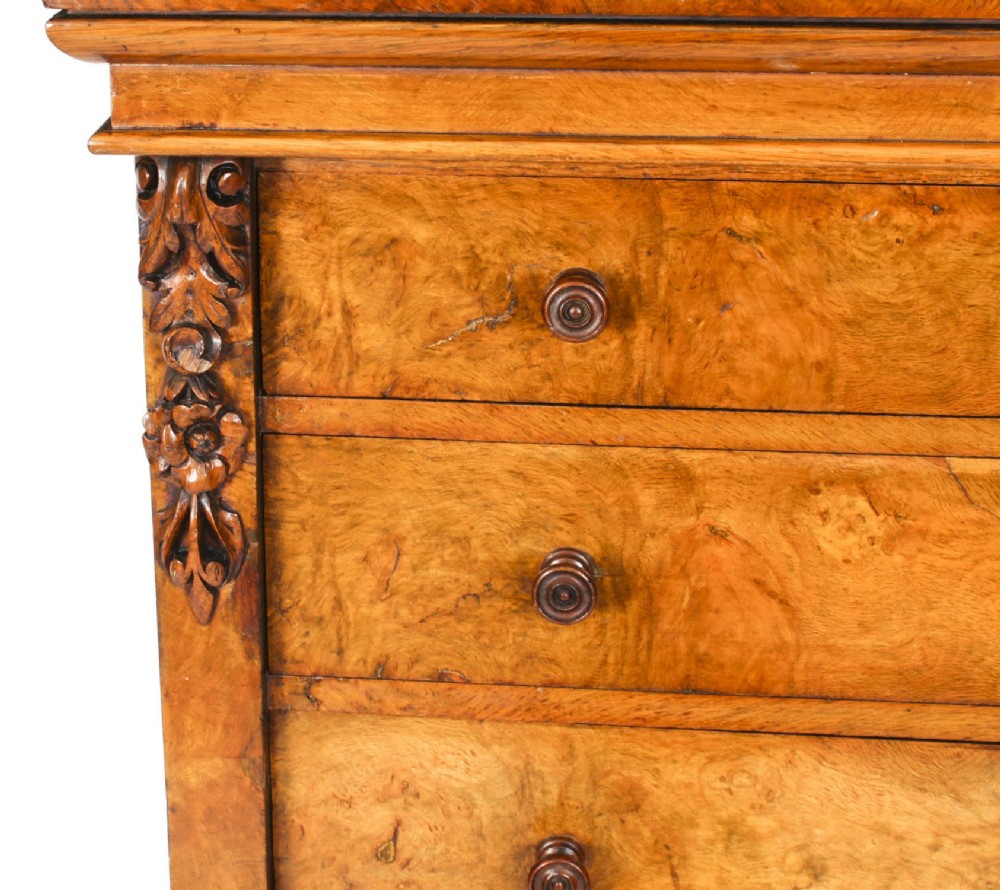
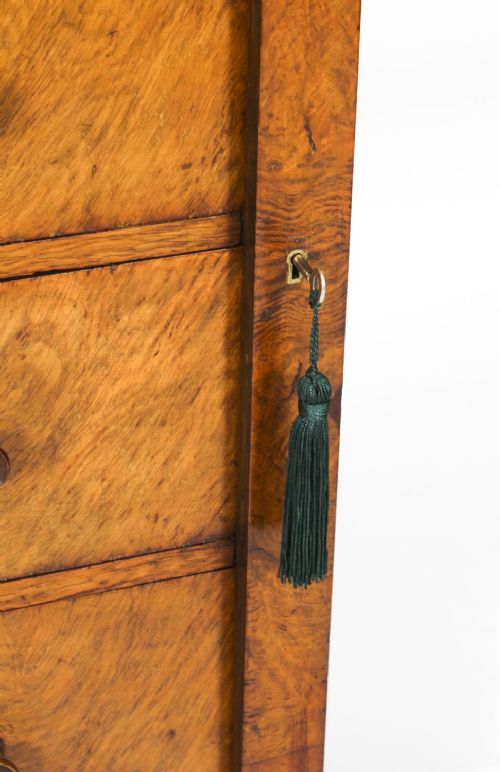
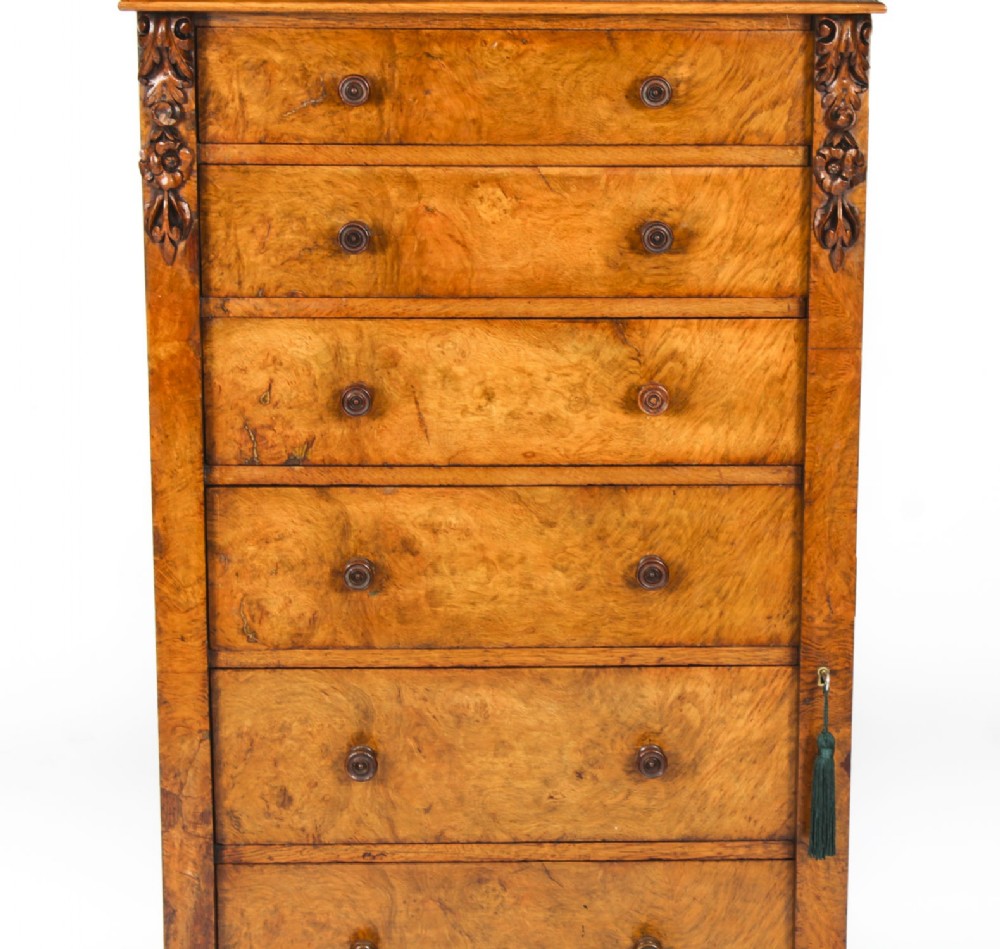
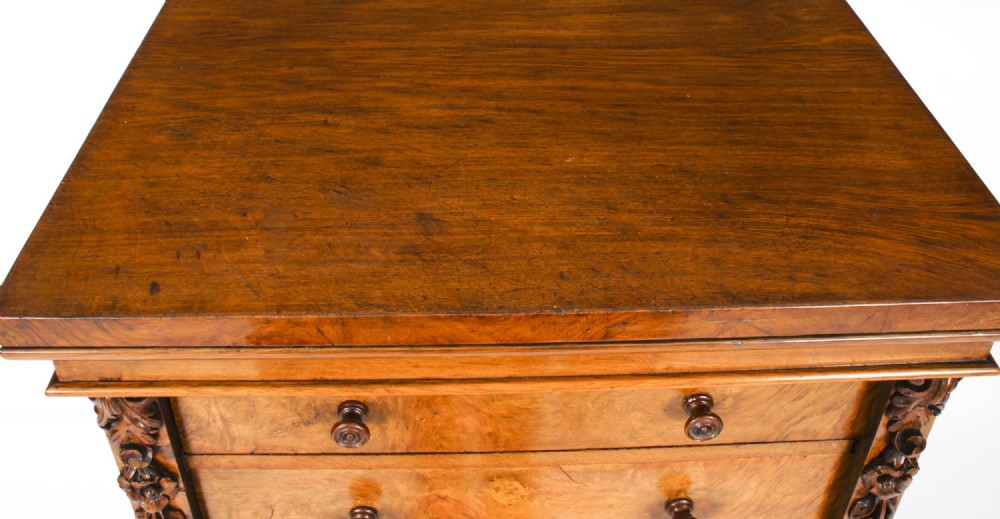
It is of superb design and features seven graduated drawers with a hinged locking pilaster to one side capped with carved foliate trails.


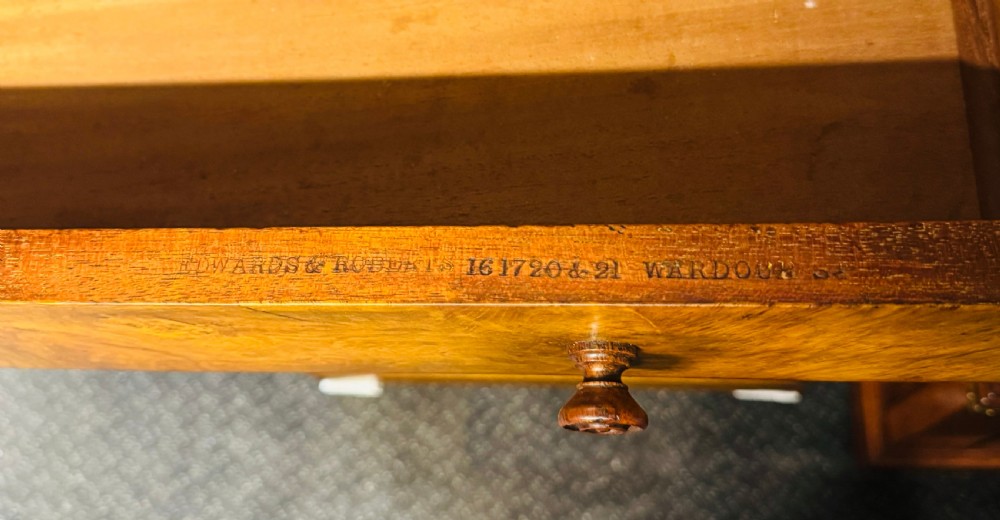
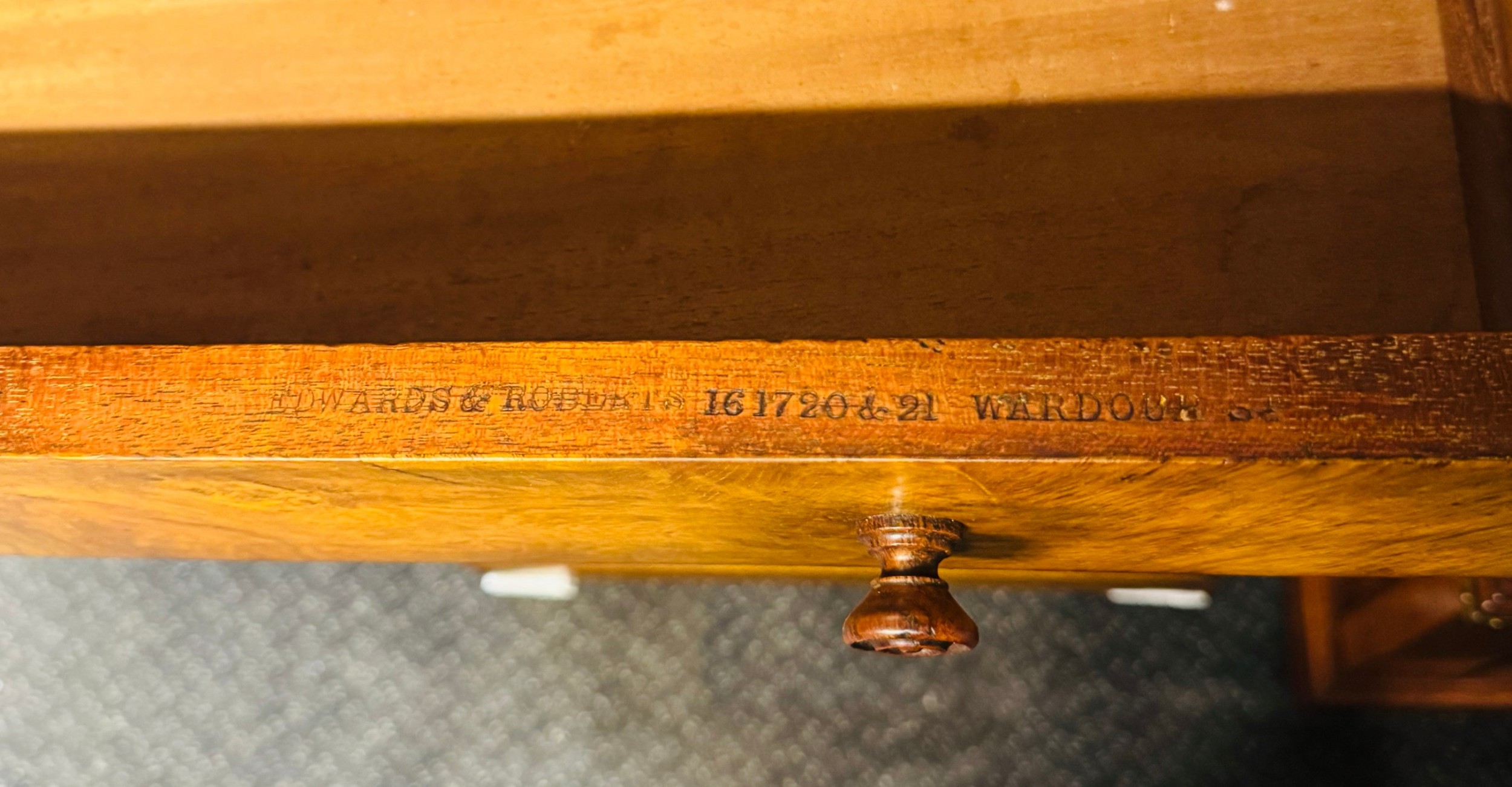
The second drawer from the top is stamped ‘EDWARDS & ROBERTS 16 17 20 & 21 WARDOUR ST’.


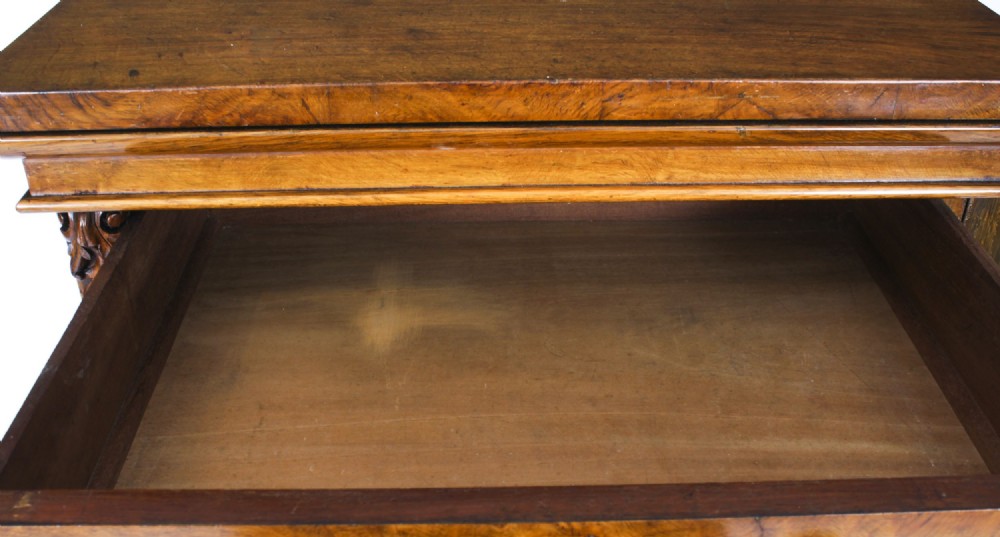
Complete with working lock, original key and raised on a plinth base.


It is a beautiful example of Victorian simplicity and practicality.


Condition:

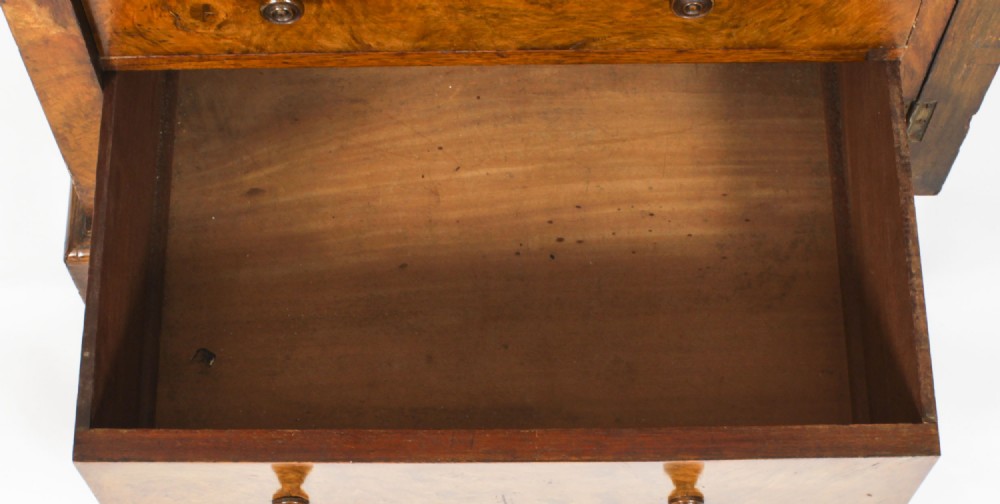
In really excellent original condition having only been beautifully cleaned and waxed in our workshops, please see photos for confirmation.


Dimensions in cm:

Height 125 cm x Width 62 cm x Depth 49 cm

Dimensions in inches:

Height 4 feet, 1 inch x Width 2 foot x Depth 1 foot, 7 inches

Edwards & Roberts 

The firm Edwards & Roberts was  one of the best English antique furniture cabinet makers of the second half of the eighteenth century. The company was founded in 1845 and by 1854 was trading as ‘Edwards & Roberts’, 21 Wardour Street, Antique and Modern Cabinet Makers and Importers of Ancient Furniture’. By 1892 they occupied more than a dozen buildings in Wardour Street, where they continued to trade until the end of the century.

They became one of the leading London cabinet makers and retailers producing high quality furniture and working in a variety of styles, both modern and revivalist. Their business also involved retailing, adapting and restoring the finest antique furniture and there are many examples of their earlier furniture with later embellishments bearing their stamp. The quality of timber used was always the best quality with fine burr walnuts and lighter toned satinwood as they specialised in marquetry, inlay and ormolu.

Pollard Oak

Pollarding is a pruning system in which the upper branches of a tree are removed, promoting a dense head of foliage and branches. It has been common in Europe since medieval times and is practised today in urban areas worldwide, primarily to maintain trees at a predetermined height. The bole of the tree, constantly cut back over a period of years, will eventually form a lump, or ‘burr’, which when sawn for veneer, gives a lovely grained, swirling figure.

The effect is similar to that of burr walnut with its distinctive speckled grain. Burrs, or ‘burls’, are growths which appear on the side of tree trunks, resulting from a tree undergoing some form of stress. They may be caused by an injury, virus or fungus.

During the 19th century great strides were made in the mechanisation of cabinet making. Marc Isambard Brunel [ Isambard Kingdom’s father] built the first steam driven saw mill, and invented a circular saw that could be used to cut veneers thinly and evenly for the first time. He also developed the first hydraulic veneer press. The figured wood cut from burrs and pollards is notoriously difficult to cut and lay: the wild grain which makes it so attractive results in a very delicate, brittle veneer. The new machines enabled the Victorian craftsmen to make the most of these beautiful timbers.

Our reference: A4225

Date of Manufacture

Regent Antiques has dated this Victorian Pollard Oak Wellington Chest to the 1860s.

Physical Dimensions
Height
125cm (49.21")
Width
62cm (24.41")
Depth
49cm (19.29")
Reference Numbers
Sellingantiques Reference
SA1114738
Dealers Internal Reference
A4225
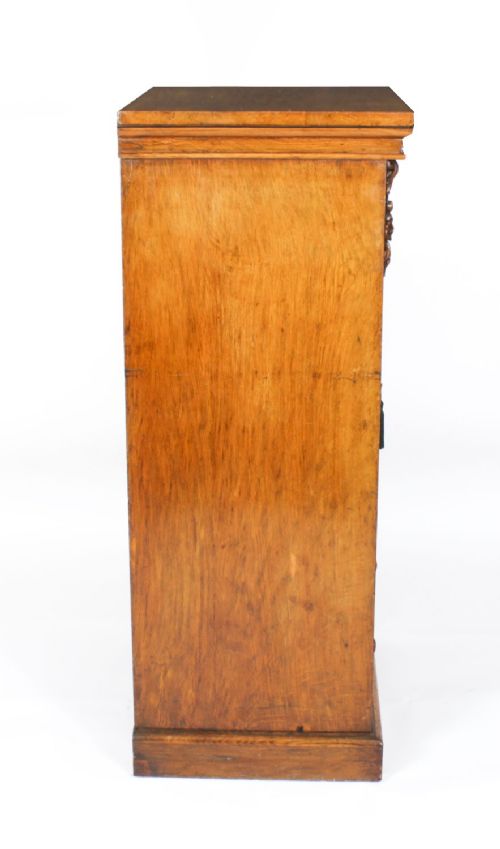
A tall, narrow Victorian Wellington chest made of figured pollard oak features seven stacked drawers with turned wooden knobs and a side locking mechanism.Detail view 1Detail view 2Detail view 3Detail view 4Detail view 5Detail view 6Detail view 7Detail view 8Detail view 9Detail view 10Detail view 11Detail view 12Detail view 13Detail view 14Detail view 15
SOLD6+ MONTHS AGO
1 / 16
1860s · SA1114738
Antique Victorian Pollard Oak Wellington Chest by Edwards & Roberts 19th C
Sorry, but this item has been sold.
Description
A fine antique and rare Victorian pollard oak Wellington chest by the renowned London retailer and cabinet maker Edwards and Roberts, Circa 1860 in date.


It is of superb design and features seven graduated drawers with a hinged locking pilaster to one side capped with carved foliate trails.


The second drawer from the top is stamped ‘EDWARDS & ROBERTS 16 17 20 & 21 WARDOUR ST’.


Complete with working lock, original key and raised on a plinth base.


It is a beautiful example of Victorian simplicity and practicality.


Condition:

In really excellent original condition having only been beautifully cleaned and waxed in our workshops, please see photos for confirmation.


Dimensions in cm:

Height 125 cm x Width 62 cm x Depth 49 cm

Dimensions in inches:

Height 4 feet, 1 inch x Width 2 foot x Depth 1 foot, 7 inches

Edwards & Roberts 

The firm Edwards & Roberts was  one of the best English antique furniture cabinet makers of the second half of the eighteenth century. The company was founded in 1845 and by 1854 was trading as ‘Edwards & Roberts’, 21 Wardour Street, Antique and Modern Cabinet Makers and Importers of Ancient Furniture’. By 1892 they occupied more than a dozen buildings in Wardour Street, where they continued to trade until the end of the century.

They became one of the leading London cabinet makers and retailers producing high quality furniture and working in a variety of styles, both modern and revivalist. Their business also involved retailing, adapting and restoring the finest antique furniture and there are many examples of their earlier furniture with later embellishments bearing their stamp. The quality of timber used was always the best quality with fine burr walnuts and lighter toned satinwood as they specialised in marquetry, inlay and ormolu.

Pollard Oak

Pollarding is a pruning system in which the upper branches of a tree are removed, promoting a dense head of foliage and branches. It has been common in Europe since medieval times and is practised today in urban areas worldwide, primarily to maintain trees at a predetermined height. The bole of the tree, constantly cut back over a period of years, will eventually form a lump, or ‘burr’, which when sawn for veneer, gives a lovely grained, swirling figure.

The effect is similar to that of burr walnut with its distinctive speckled grain. Burrs, or ‘burls’, are growths which appear on the side of tree trunks, resulting from a tree undergoing some form of stress. They may be caused by an injury, virus or fungus.

During the 19th century great strides were made in the mechanisation of cabinet making. Marc Isambard Brunel [ Isambard Kingdom’s father] built the first steam driven saw mill, and invented a circular saw that could be used to cut veneers thinly and evenly for the first time. He also developed the first hydraulic veneer press. The figured wood cut from burrs and pollards is notoriously difficult to cut and lay: the wild grain which makes it so attractive results in a very delicate, brittle veneer. The new machines enabled the Victorian craftsmen to make the most of these beautiful timbers.

Our reference: A4225
Date1860s
Height125cm (49.21")
Width62cm (24.41")
Depth49cm (19.29")
ReferenceSA1114738
Dealer's referenceA4225
Regent Antiques
Regent AntiquesSellingantiques verified since Sep 2016

We specialise in english and continental furniture, silver, porcelain and decorative items.

Member of LAPADA CINOA

SHARE
SAVE
Archive I A tall, narrow Victorian Wellington chest made of figured pollard oak features seven stacked drawers with turned wooden knobs and a side locking mechanism. SOLD6+ MONTHS AGO

Antique Victorian Pollard Oak Wellington Chest by Edwards & Roberts 19th C

Archive II A tall, narrow Victorian Wellington chest made of figured pollard oak features seven stacked drawers with turned wooden knobs and a side locking mechanism. View II
Archive III A tall, narrow Victorian Wellington chest made of figured pollard oak features seven stacked drawers with turned wooden knobs and a side locking mechanism. View III
Archive IV A tall, narrow Victorian Wellington chest made of figured pollard oak features seven stacked drawers with turned wooden knobs and a side locking mechanism. View IV
Archive V A tall, narrow Victorian Wellington chest made of figured pollard oak features seven stacked drawers with turned wooden knobs and a side locking mechanism. View V
Archive VI A tall, narrow Victorian Wellington chest made of figured pollard oak features seven stacked drawers with turned wooden knobs and a side locking mechanism. View VI
Archive VII A tall, narrow Victorian Wellington chest made of figured pollard oak features seven stacked drawers with turned wooden knobs and a side locking mechanism. View VII
Archive VIII A tall, narrow Victorian Wellington chest made of figured pollard oak features seven stacked drawers with turned wooden knobs and a side locking mechanism. View VIII
Archive IX A tall, narrow Victorian Wellington chest made of figured pollard oak features seven stacked drawers with turned wooden knobs and a side locking mechanism. View IX
Archive X A tall, narrow Victorian Wellington chest made of figured pollard oak features seven stacked drawers with turned wooden knobs and a side locking mechanism. View X
Archive XI A tall, narrow Victorian Wellington chest made of figured pollard oak features seven stacked drawers with turned wooden knobs and a side locking mechanism. View XI
Archive XII A tall, narrow Victorian Wellington chest made of figured pollard oak features seven stacked drawers with turned wooden knobs and a side locking mechanism. View XII
Archive XIII A tall, narrow Victorian Wellington chest made of figured pollard oak features seven stacked drawers with turned wooden knobs and a side locking mechanism. View XIII
Archive XIV A tall, narrow Victorian Wellington chest made of figured pollard oak features seven stacked drawers with turned wooden knobs and a side locking mechanism. View XIV
Archive XV A tall, narrow Victorian Wellington chest made of figured pollard oak features seven stacked drawers with turned wooden knobs and a side locking mechanism. View XV
Archive XVI A tall, narrow Victorian Wellington chest made of figured pollard oak features seven stacked drawers with turned wooden knobs and a side locking mechanism. View XVI
FURTHER BROWSING

Visitors also looked at these ⇣

Enlarged Archival View
Location
Manor Warehouse
318 Green Lanes
London
N4 1BX
United Kingdom
Verified Since Sep 2016
Items For Sale 639
Items Sold 2,756
Regent Antiques
Regent Antiques
Verified Since Sep 2016
View Dealer Info
Location: Manor Warehouse, 318 Green Lanes, London, N4 1BX, United Kingdom
Verified
Sep 2016
For Sale
639
Sold
2,756
A tall, narrow Victorian Wellington chest made of figured pollard oak features seven stacked drawers with turned wooden knobs and a side locking mechanism.
Antique Victorian Pollard Oak Wellington Chest by Edwards & Roberts 19th C
Ref: SA1114738
A tall, narrow Victorian Wellington chest made of figured pollard oak features seven stacked drawers with turned wooden knobs and a side locking mechanism.
Detail View 1
Detail View 2
Detail View 3
Detail View 4
Detail View 5
Detail View 6
Detail View 7
Detail View 8
Detail View 9
Detail View 10
Detail View 11
Detail View 12
Detail View 13
Detail View 14
Detail View 15
Archival Detail
Every single antique dealer on our platform is individually approved by our internal team. We verify their professional trade history, ethical standards, and photographic quality to ensure a secure, high-standard buying environment. Upon joining, every dealer agrees to a strict 9-point code of conduct. While issues can occasionally arise, our dealers typically resolve them swiftly and directly with the buyer. In fact, since our founding in 2002, Sellingantiques has only had to step in to help resolve an issue on roughly five occasions—a true testament to the quality of our dealers and their dedication to your happiness.
Our dealers are highly experienced in packing and shipping fragile, high-value antiques. Because you are in direct contact with the dealer, you will be able to easily go through all available shipping and insurance options together to ensure your item arrives safely.
Antiques are the ultimate green purchase. By choosing historical pieces over newly manufactured goods, you completely eliminate the carbon footprint of modern mass production while preserving exceptional, timeless craftsmanship.
Written by Sellingantiques from the dealer’s photographs and listing
  • ObjectChest of Drawers
  • Period19th century
  • StyleVictorian
  • MaterialPollard Oak, Oak
  • ColourWarm Brown
  • MotifsFigured wood grain, Turned wooden knobs, Hinged locking stile, Carved corbels
  • SizeH 125 cm (49 in) x W 62 cm (24 in) x D 49 cm (19 in)

A Wellington chest is a tall, narrow set of drawers traditionally featuring a hinged locking stile on one side that secures all the drawers with a single key. Originating in the early 19th century during the Regency and Victorian eras, the style is popularly believed to have been named after the Duke of Wellington, though this remains a matter of historical debate.

These chests are typically constructed from solid timber frames lined with high-quality secondary woods like pine or oak, and faced with decorative veneers such as pollard oak, mahogany, or burr walnut. Traditional construction involves hand-cut dovetail joints for the drawer boxes and mortise-and-tenon framing for the carcase.

Authenticity is indicated by period-appropriate joinery, such as hand-cut dovetails, uneven timber shrinkage, and hand-turned wooden knobs. The locking mechanism should operate via a hinged vertical locking bar held in place by a working brass lock, and the interior drawer linings should show consistent patination and wear appropriate to the age.

A Wellington chest functions well as a tall nightstand or as supplementary storage in tight spaces due to its vertical proportions. Its rich wood tones complement both neutral contemporary decor and traditional spaces, where it can be styled simply with minimal objects on the top surface to highlight the grain.

Maintain antique veneer by keeping the piece away from direct sunlight and heat sources to prevent cracking and fading. Clean the surface periodically with a soft, lint-free cloth and apply a microcrystalline wax sparingly to nourish the wood without building up a heavy residue.
items
Add keywords to the filter
Price
£100
£250000
Era
Period
Style
Material
Origin
Stock Location
Recently Added
Online Payments
Categories