


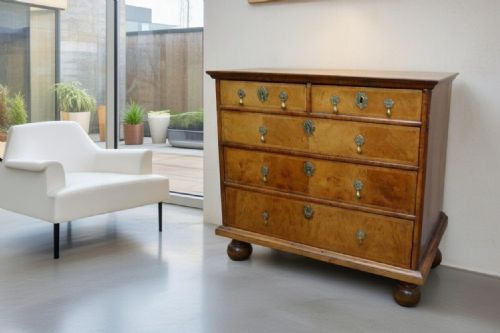
Burr Oak Drawers
Burr oak drawers bring rich, swirling grain and warmth to any room, offering practical storage through centuries of craftsmanship.
Burr Oak Drawers
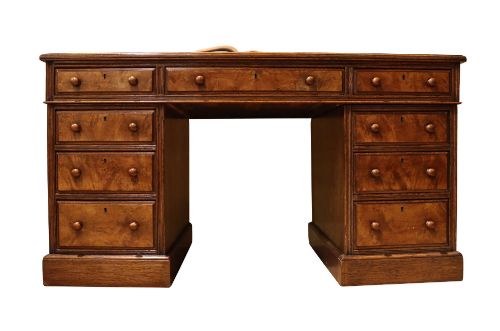
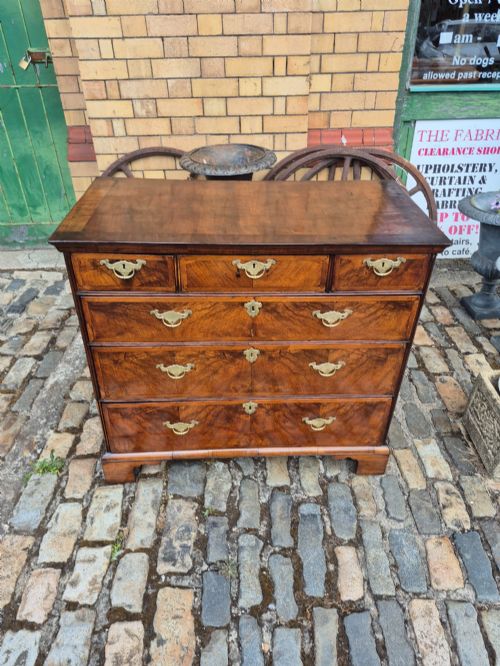
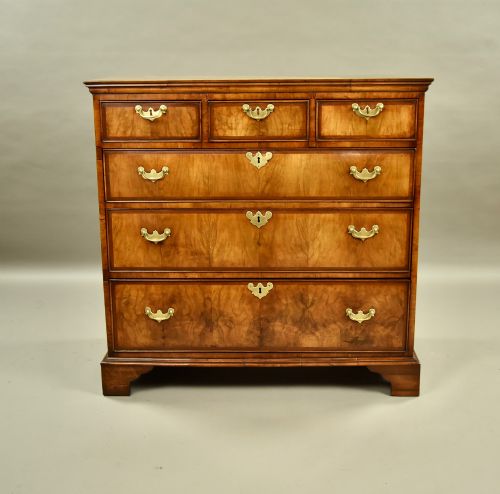
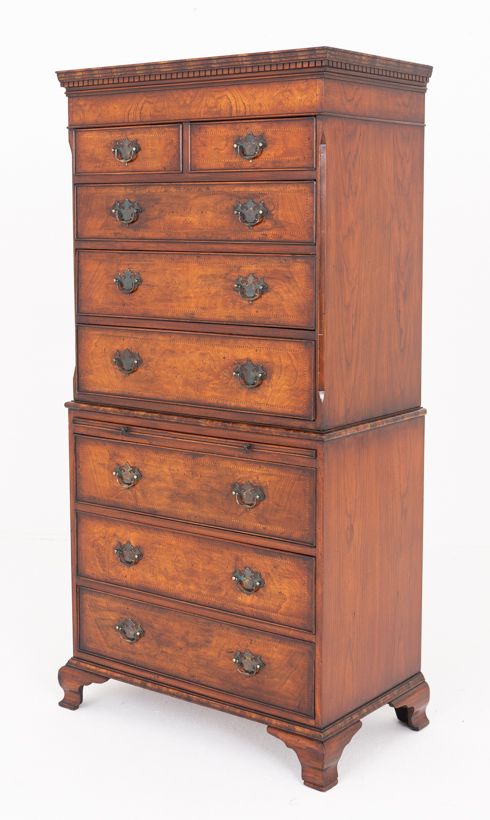
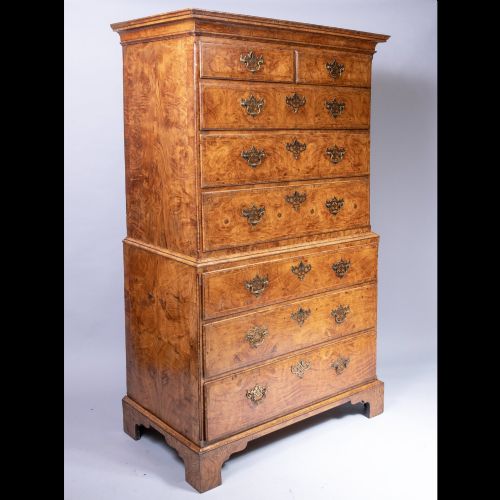
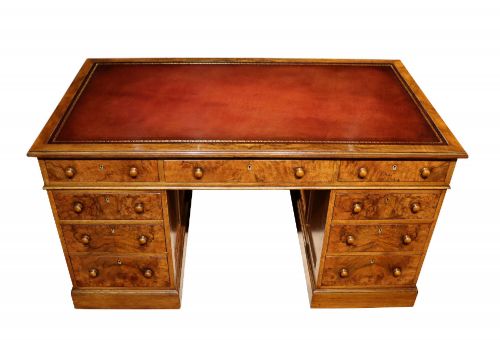
Burr oak drawers encompass a variety of forms including chests of drawers, pedestal desks, tallboys, and miniature chests. When searching for burr oak drawers, buyers encounter pieces primarily from the Victorian era and the nineteenth century, alongside earlier eighteenth-century examples and later works up to nineteen-twenty.
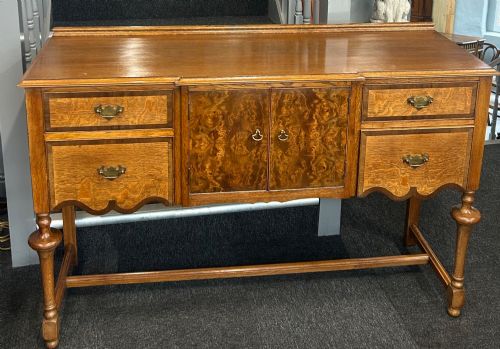
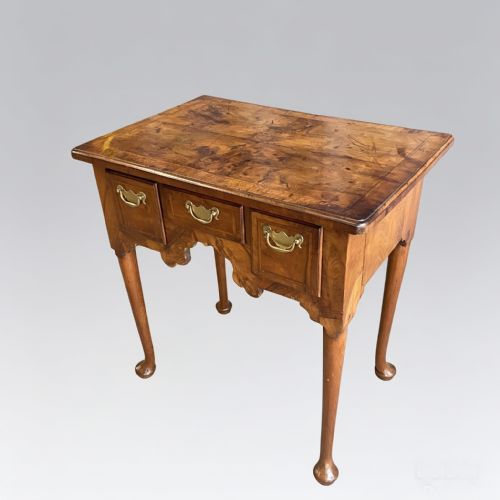
These items frequently combine oak carcases with striking burr oak, burr walnut, or pollard oak drawer fronts and panels. Alongside standard chests, the selection includes specialised forms such as lowboys, sideboards, and secretaire chests featuring brass handles and leather inserts.
Materials and construction methods
Cabinet makers utilised solid oak for structural carcases while applying highly figured burr veneers to drawer fronts to highlight the knotted timber growth. Secondary timbers such as elm, walnut, and mahogany appear alongside brass hardware and leather writing surfaces.
Joinery techniques ranged from traditional dovetailed drawer construction in eighteenth-century workshops to nineteenth-century pedestal and sideboard framing. Makers matched contrasting timbers like pollard oak and plain oak to frame the decorative burr panels.
Listings feature eighteenth-century, nineteenth-century, and Victorian periods using oak, burr walnut, elm, and pollard oak.
Assessing quality in burr oak furniture
Quality rests heavily on the selection and matching of the timber figure across the drawer fronts and panels. Dense, highly active burr patterns demonstrate superior material choice compared to plainer grain arrangements.
The precision of the cabinetwork, integrity of secondary linings, and retention of original brass handles or leather inserts distinguish finer workshop output from simpler vernacular pieces.
Whytock & Reid of Edinburgh·Lambs of Manchester
The Burr Oak Drawers Glossary
- Burr oak
- A growth deformity in the oak tree that produces swirling, knotted grain patterns. Cabinet makers slice these formations into thin veneers for decorative drawer fronts.
- Tallboy
- A tall chest of drawers standing upon another chest or base section. These pieces date across the eighteenth and nineteenth centuries.
- Lowboy
- A small oak or walnut table with drawers, often used as a dressing table or side table during the eighteenth century.
- Pedestal desk
- A large writing desk comprising two banks of drawers supporting a top surface, frequently trimmed with leather.
- Pollard oak
- Timber taken from trees that have been pollarded, producing dense clusters of branches and highly decorative grain figures similar to burr timber.
Burr Oak Drawers: Frequently Asked Questions
What is burr oak?
Burr oak comes from a tree growth that creates knotted, highly patterned wood grain.
Cabinet makers slice this wood into decorative veneers for drawer fronts.
How do I date a chest?
Dating relies on construction methods, timber choices, and hardware styles across periods.
Eighteenth-century pieces differ significantly in drawer joinery from Victorian examples.
Are these pieces solid oak?
Most items combine a solid oak carcase with decorative burr veneers applied to the front.
Secondary timbers like elm and mahogany also support the primary structure.
Where should I place a desk?
Pedestal desks and davenport desks suit studies or living spaces requiring surface space.
Keep them away from direct heat sources to protect the wood and leather.