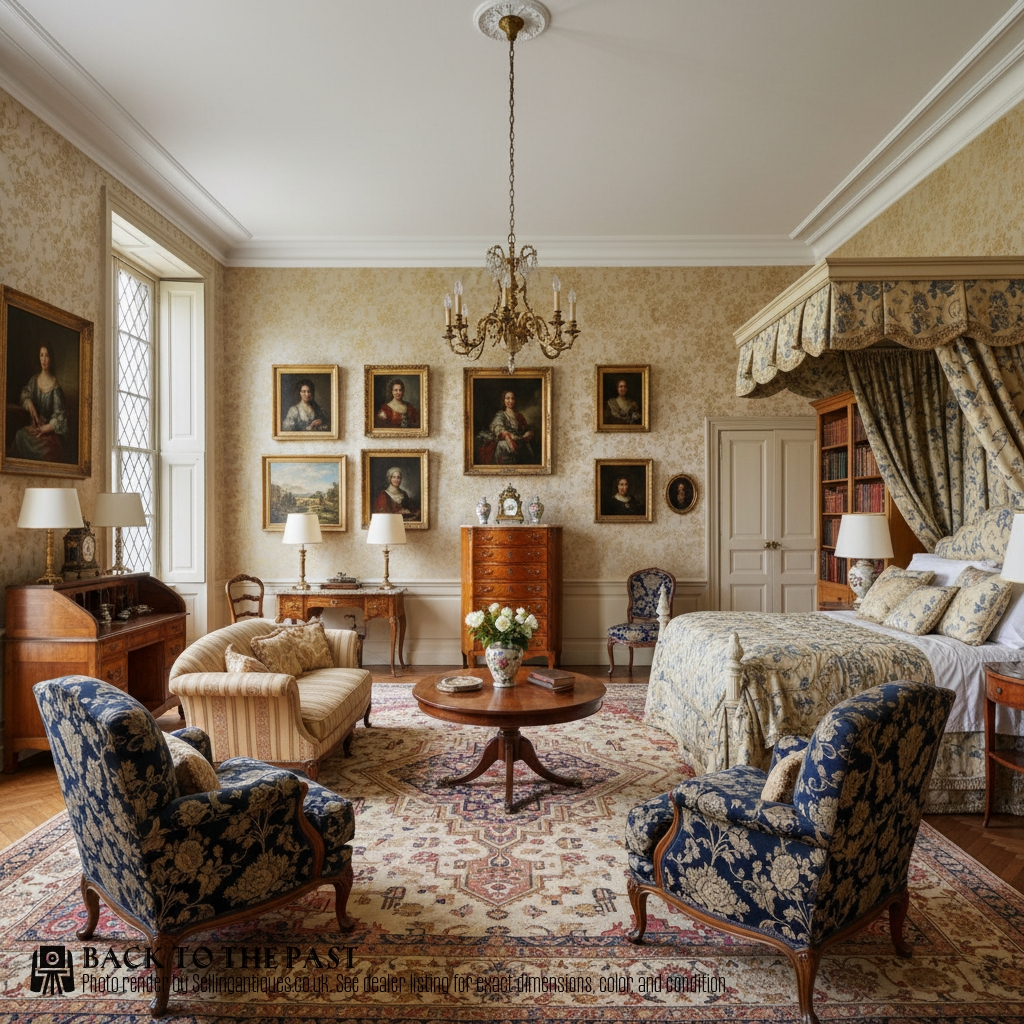
Whites Antiques has dated this piece to the 1910s.
W: 86.4cm (34") H: 127cm (50") D: 44.5cm (17.5")
French circa 1910-1920
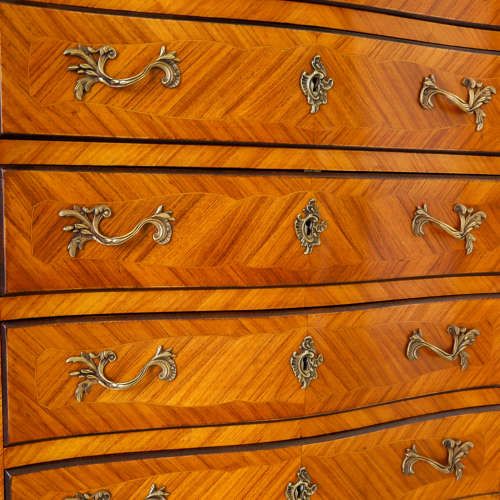
Geometric parquetry Kingwood veneer to the front and sides
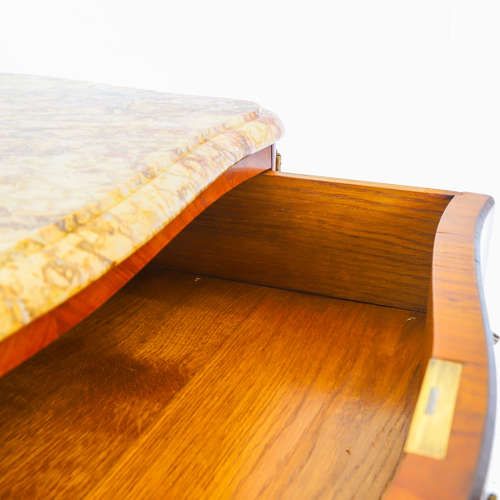
7 Oak lined Dovetailed Drawers with individual locks
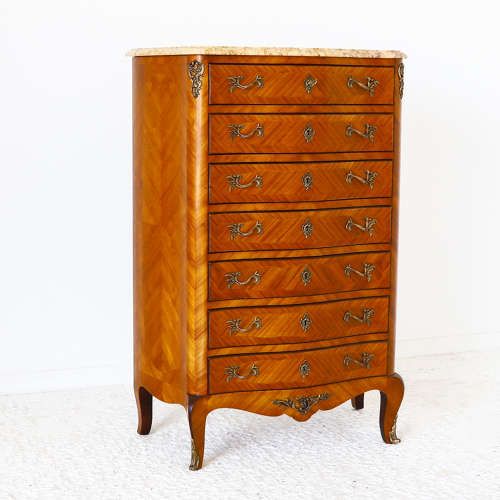
1 key for 7 all the locks
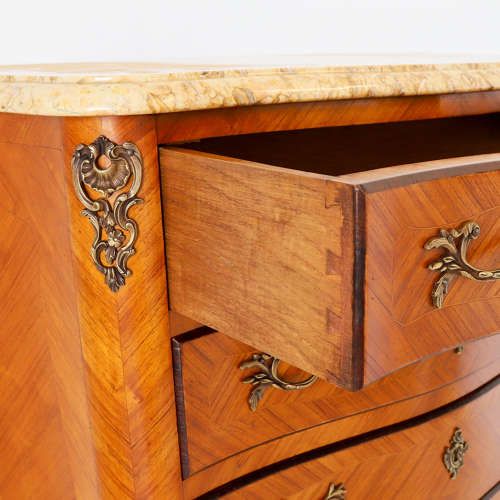
Ormolu(1) Mounts(2) throughout (see notes below)
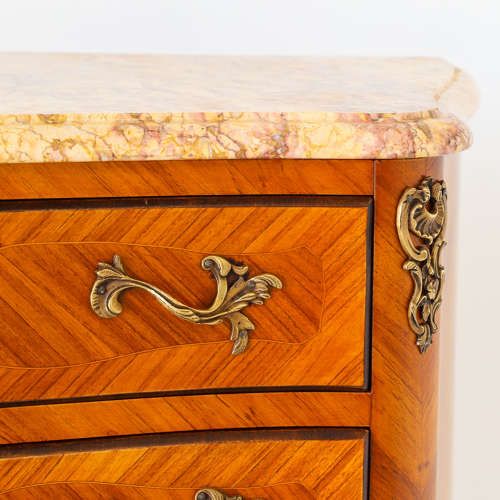
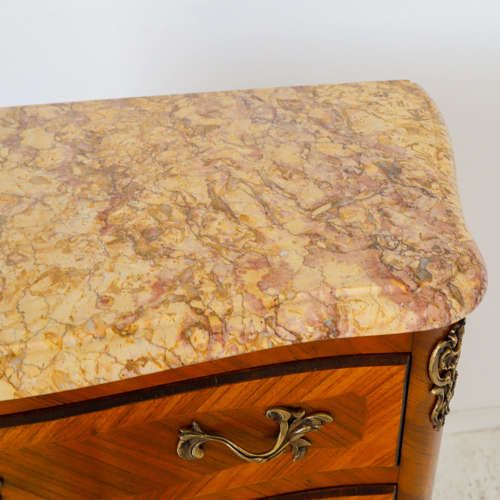
Brèche d’Alep(3) (Alep Breccia) Marble Top
Shaped apron and feet
It is styled after the timeless Louis XV era of furniture with its flowing cabriole legs and typically French hardware. It is a true keepsake of a once strong furniture industry where items were made to last and created with a passion and attention to detail.
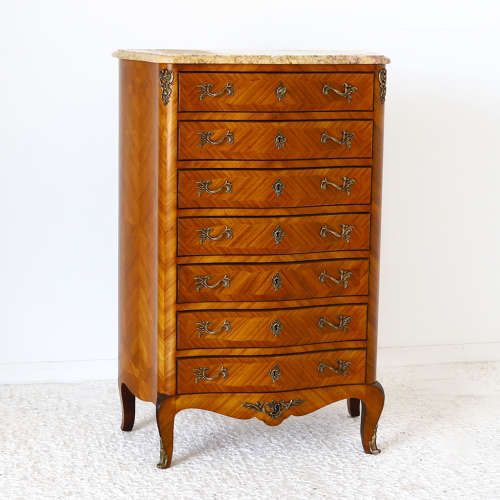
This fabulous item is presented in excellent overall condition and has beautifully figured kingwood veneers with chevron cross banding in a parquetry manner to the drawer fronts and sides, a stunning shaped and moulded edge Brèche d’Alep (Alep Breccia) Marble Top, Oak lined Dovetailed Drawer linings, Shaped Apron and Feet (also Ormolu mounted). The chest has original and crisply cast ormolu mounts, elegantly shaped drawer handles and escutcheon plates, decoration to the centre of the shaped frieze and to the front feet which are all original.
This is a very decorative and antique chest which is ideal for clothes, accessories or even filing and would look equally stunning in a traditional or contemporary setting in any room such as hallway, office or bedroom.
(1) Mounts
Mounts are used to describe bronze, brass and Ormolu adornments on furniture especially quality furniture in the rococo and classical revival style, and are also the cabinet maker's name for the metal fittings on furniture, such as hinges, locks and handles, and metal edges and guards which protect furniture from damage.
(2) Ormolu
Ormolu was popular with French craftsmen in the 18th, 19th and 20th Century for ornamental fittings for furniture, clocks and other decorative items. True ormolu is gilt bronze, that is bronze that has been coated with gold using a mercury amalgam. Due to the health risks associated with using mercury, this method of creating ormolu was discontinued in France in the 1830s. A substitute was developed consisting of about 75% copper and 25% zinc, however it was inferior to the bronze version. It was often lacquered to prevent it tarnishing
(3) Brèche d'Alep Marble (Alep Breccia)
Brèche d’Alep marble is a type of marble that has a yellow background with large rounded fragments of different colours, such as brown, grey, red or black. Brèche marbles are a category of marbles that are all made up of the same composition: the pressure and distortions at the time of the geological formation of the stone created a marble with large elements.
Brèche d'Alep marble was originally extracted from Syria, but in the 17th Century it was found in the South of France. It was extracted in the commune of Tholonet in Bouches-du-Rhône from 1712, then in Beaurecueil in 1735 and in Saint-Antonin in 1756. Even though it was extracted from a French quarry, it was given the far more exotic name of "Brèche d'Alep" (Alep Breccia), rather than "Tholonet Marble".
It was used extensively in Royal residences in order to promote French marble over Italian marble and subsequently became known known as "Brèche Madame" (Breccia Madam), as the aunts of Louis XVI (daughters of Louis XV) were using it to decorate their interiors. The Carnavalet museum in Paris conserves a Louis XV chest of drawers in Chinese lacquer with the top being made of Brèche d'Alep.
Brèche d'Alep marble has been widely used in the 18th, 19th century and 20th century, pa
Whites Antiques has dated this piece to the 1910s.
White's antiques collective is the perfect resource for both trade and private clients
You can view the stock and full dealer information on the Whites Antiques Profile Page

French Circa 1910-1920 Semainier Marble Top Chest of 7 Drawers